We have a brand new updated website! Click here to check it out!

SCHROCK: The cost of medical illiteracy

John Richard Schrock is a professor at Emporia State University.

Americans spend almost twice as much on health care as other developed countries, but generally have poorer health outcomes, according to a study released in the Journal of the American Medical Association. The analysis of data from 2013-2016 compared the U.S. with ten high-income countries: Australia, Canada, Denmark, Germany, France, the Netherlands, Japan, Sweden, Switzerland, and the United Kingdom.

The study found that in 2016, the U.S. spent 17.8% of GDP on health care while other countries only spent 9.6% (Australia) up to 12.4% (Switzerland). All ten of the other countries essentially covered every citizen (99-100%) with health insurance. The U.S. covered 90% of citizens with health insurance and had the highest proportion with private insurance.

Americans easily had the highest rate of overweight and obese citizens (70.1%) and the highest rate of infant mortality. U.S. life expectancy is the lowest of developed countries at 78.8 years and for the first time in modern history, future Americans will live shorter lives.

However, many pet theories for this rapid escalation of American health care costs were disproved. Some had blamed Americans for going to the doctor too often, but the U.S. has roughly similar rates of utilization as the other countries. With 2.6 doctors and 11.1 nurses per 1,000, our workforce was roughly equivalent to the other ten countries. So why the higher cost?

Medical doctor salaries were much higher. U.S. general practitioners average over $218,000 per year while pay ranges from $86,607 to $154,126 in the other countries. Nurses in America are also paid more. Even more dramatic is the cost of pharmaceuticals, where Americans average spending $1443 per capita annually compared to $466 to $939 in other countries. A few procedures did emerge as perhaps over-used in America, mainly knee surgery and C-sections. We also use more MRI and CT scans.

But a really important difference was “administrative costs” that gobbled up eight percent of the U.S. health care bill compared to only one to three percent in other countries. This points the finger at our bureaucracy of private insurance companies and at the complex electronic coding and added personnel required to manage continuously-updated digital record-keeping.

However, all of these measurable factors only accounted for 60% of the added cost of American health care, leaving 40% yet to be explained.

I propose that the majority of the remaining excess cost of American health care can be attributed to the steady decline in science literacy.

What was not measured—and admittedly, it would be hard to measure—is the average citizen’s understanding of anatomy and physiology, our owner’s manual. Across the United States, only a few states train high school teachers in biology. Instead, most train one-size-teach-all science teachers who receive little or no coursework in anatomy and physiology. Even in Kansas where we do license separate biology teachers, the large research universities do not require human anatomy and physiology. As a result, you cannot teach what you do not know.

This is not the case in the other developed countries where science makes up far more of the K–12 curriculum. For instance, in Germany, an average citizen can self-refer to a medical specialist because they have studied human anatomy and physiology as well as basic microbiology and diseases. In China, a mere high school graduate has learned more science than U.S. elementary teachers learn by the time they graduate college.

The result is that we have a population that is profoundly ignorant about their health. This basic medical illiteracy in turn costs us in bad lifestyle choices and wrong health care decisions. In addition, medical illiteracy contributes to indirect costs in higher medical insurance due to ignorant jury decisions.
Until we add a year of basic anatomy, physiology and microbiology to our high school curriculum, train enough biology teachers, and start graduating knowledgeable patients, we will continue paying this stupidity tax.

John Richard Schrock is a professor at Emporia State University.

1st Amendment: Are high schools teaching students to devalue free speech?

Lata Nott
It seems like every few months we’re treated to the results of a new survey that has something dismaying to report about how young people approach free speech. Last fall, the Brookings Institute reported that college students have a number of misconceptions about how the First Amendment works — a significant percentage believes that it doesn’t protect hate speech, and that it requires that an offensive speaker at a public university be matched with another speaker with an opposing view. Last week, a survey conducted by Gallup and the Knight Foundation found that 37 percent of college students think that shouting down an offensive campus speaker is acceptable; even more troubling, another 10 percent said that violence is also an acceptable tactic for silencing an offensive speaker.

Findings like these always lead to a lot of hand-wringing about the intolerance of today’s youth, followed by a backlash of editorials pointing out that campus protests — especially at elite colleges — are over-covered by the news media, usually topped off by internet commentators decrying liberal snowflakes and at least one columnist reminiscing about the ’60s at Berkeley. I enjoy that as much as the next person, but let’s skip it for today. Why do college students have a shaky understanding of the First Amendment and an aversion to opposing or controversial views?

The problem starts in high school. I’m not just referring to the lack of mandatory civic education in public schools. Even in schools where students do learn about the First Amendment, many school administrators don’t particularly want their students exercising their freedom of speech once they’ve learned about it.

Take the school walkouts that took place across the nation on March 14 to protest gun violence. About a week before that, my colleague Gene Policinski and I wrote a set of guidelines for students, teachers and school administrators trying to figure out how to approach the event. We advised students to weigh their options carefully, as their First Amendment rights would probably not protect them if their school decided to discipline them for taking part in the walkout. (Public schools can punish students for speech that “substantially disrupts” the learning environment, and a walkout could very well do just that.) But we also advised school administrators to think twice before defaulting to disciplinary action — “Given that we live in an age where there is much concern that young people don’t understand the Constitution or support free speech, punishing them for exercising it, even if…school administrators [have] that discretion, seems counterproductive.”

That’s why it saddened me to read that a high school in Arkansas decided to punish the three students who participated in the walkout by giving them a choice between a two-day suspension and corporal punishment. (Fun fact: corporal punishment is still legal in 22 states.) All of the students chose corporal punishment; one of them wrote a fair-minded and eloquent account of the experience for the Daily Beast:

“The punishment was not dealt with malice or cruelty, in fact, I have the utmost respect for all the adults involved. They were merely doing their job as the school board and school policy dictated…I believe that corporal punishment has no place in schools, even if it wasn’t painful to me. The idea that violence should be used against someone who was protesting violence as a means to discipline them is appalling.”

Even a two-day suspension seems disproportionate to the offense of leaving your classroom for seventeen minutes.

It was also disheartening for me to talk to the two high school journalists who published a meticulously-researched story about a fired teacher — and ended up having their story censored by the administration and their newspaper privileges revoked. As one of the journalists, Max Gordon, said, “[T]he whole point of a student newspaper is to teach the students. We want to grow and learn and experience these things, but if the administration tries to shut down any form of outside-the-box thinking…it really hampers the growth by journalists.”

And when educators emphasize obedience and conformity over the free expression, they need to think about what lessons they’re actually conveying.

Lata Nott is executive director of the First Amendment Center of the Newseum Institute. Contact her via email at [email protected], or follow her on Twitter at @LataNott.

Kansas man on parole jailed after weekend chase, crash

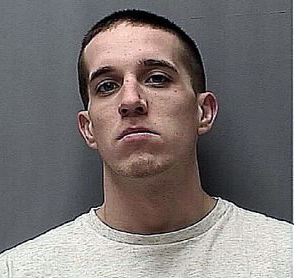
RENO COUNTY — A Kansas man faces serious charges after leading officers on a weekend chase and crash that injured three people.

Marr-photo KDOC

Police had taken a report of a stolen vehicle during the day Saturday  in the 500 Block of North Monroe in Hutchinson, according to  Police. 

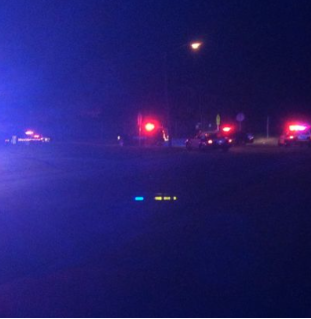
Just after 7 p.m. officers spotted the vehicle and attempted to make a traffic stop that led to the chase and eventual 2-vehicle crash in the 1900 Block of North Poplar. 

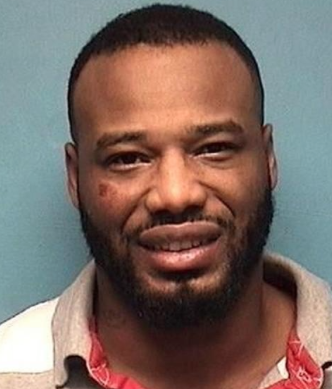
Police arrested the driver  Ethan Marr, 28, Hutchinson. He is jailed on a $39,250 Bond on requested charges of felony flee and elude, three counts of aggravated battery, burglary, theft of a vehicle, DUI, reckless driving and driving while suspended.

On February 28, Marr was discharged by the Kansas Department of Corrections  with nine convictions for theft, obstruction, drugs, burglary and criminal damage.

Marr was expected to make a first appearance in court Monday.

Cloudy, cool Monday

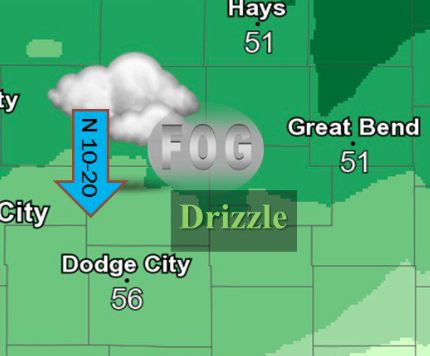
Today A 30 percent chance of showers and thunderstorms, mainly before 7am. Areas of dense fog before 10am. Otherwise, cloudy, with a high near 51. Northeast wind 9 to 11 mph becoming north northwest in the afternoon.

Tonight Mostly cloudy, with a low around 36. North wind 11 to 14 mph.

Tuesday Partly sunny, with a high near 54. North wind 9 to 14 mph.

Tuesday Night Mostly clear, with a low around 31. Northeast wind 5 to 7 mph becoming calm.

WednesdaySunny, with a high near 67.

Wednesday NightA 20 percent chance of rain after 1am. Partly cloudy, with a low around 36.

ThursdayA chance of rain before 8am, then a chance of rain and snow between 8am and 9am, then a chance of rain after 9am. Partly sunny, with a high near 53. Chance of precipitation is 50%.

Newman leads Kansas past Duke in OT for Final Four bid

OMAHA, Neb. (AP) – Malik Newman and top-seeded Kansas got past their Elite Eight road block on Sunday, knocking off second-seeded Duke 85-81 in overtime in a thrilling Midwest Region finale that clinched the Jayhawks’ first trip to the Final Four since 2012.

Newman scored all 13 of the Jayhawks’ points in overtime and finished with a career-high 32 to lead Kansas (31-7). The Jayhawks will face fellow top seed Villanova in San Antonio on Saturday after snapping a two-game losing skid in the regional finals.

This was college basketball at its best – two blue bloods trading blows for 45 minutes in what was arguably the best game of the tournament so far, one that featured 18 lead changes and 11 ties.

But Newman drilled his fifth and final 3 from the corner to make it 81-78 with 1:49 left. Newman followed with four straight free throws, and the Jayhawks defense stiffened enough to knock the favored Blue Devils out of the tournament.

Trevon Duval scored 20 points for Duke. Freshman star and future lottery pick Marvin Bagley added 16 points and 10 rebounds in what could have been his final game for Duke (29-8), which fell shy its first Final Four trip since winning the national title in 2015.

Grayson Allen had 12 points for the Blue Devils, but the senior’s 10-foot bank shot at the regulation buzzer went in and then out of the rim before spinning away to force overtime.

THE BIG PICTURE

Kansas: This might be the unlikeliest of coach Bill Self’s three Final Four squads. They are not stacked with obvious future NBA starters and they lost three times at home this season. But the Jayhawks banded together to win the Big 12’s regular season and conference titles and now the Midwest Region. By doing so, they proved to their coach that they were hardly soft – a claim that Self had made often earlier in the season.

Duke: The Blue Devils might see four of their freshman stars bolt for the NBA Draft, an expected exodus led by Bagley, a likely top-five pick. Duke will also lose Allen, one of the best players in school history. Don’t cry for Coach K, who has four five-star recruits committed to join the program next year. But this season will likely be remembered as a lost opportunity for a program that expects to make the Final Four more often than not.

Police: 17-year-old Kan. boy dead in Sunday shooting

SEDGWICK COUNTY —Law enforcement authorities are investigating a homicide and searching for suspect.

Just before 1 a.m. Sunday, police were dispatched to a disturbance with a weapon and shots being fired in the 800 block of South Pershing in Wichita, according to officer Paul Cruz.

Officers located a 17-year-old male victim in the back of a residence on South Pershing. The victim was pronounced deceased by EMS.

The suspect in this homicide is unknown. Anyone with information is asked to call Crime Stoppers at 316 267-2111.


FHSU men’s golf finishes sixth in spring opener

LAKEWOOD, Colo. – The Fort Hays State men’s golf team began their spring season with a sixth-place finish at the Bob Writz Invitational (Mar. 24-25), hosted by Colorado School of Mines at Bear Creek Golf Course, a 7,276-yard par-72 course.

Senior Skyler Tebo (78-81) led the Tigers for the week, posting a total score of 159 (15-over par) and a tied for 34th. Connor Schultz finished second on the team after firing rounds of 82 and 79 over the weekend. Schultz captured a solo 37th finish individually.

Seve Sites finished in a tie for 44th overall with rounds of 82 and 84. Lane Pauls captured a solo 47th place finish with rounds of 84 and 83. Mac McNish shot rounds of 89 and 79.

Colorado School of Mines took home the team title with an aggregate score of 590. Colorado Christian placed second as a team with a score of 604 and Nebraska-Kearney 610 place third. Fort Hays State had scores of 326 and 322 for a total of 648. Tim Amundson of Colorado School of Mines took home the individual crown with a 2-over par (146) score for the tournament.

The Tigers are back in action Monday and Tuesday this week (Mar. 26-27) as they compete in the Kansas Wesleyan Spring Invitational hosted at the Salina Country Club.

Murder trial set for Kan. man accused of shooting sleeping victim

HUTCHINSON, Kan. — A Kansas man charged with first-degree murder now has a trial date.

Moore -photo Reno Co.

Quinton Moore, 34,  is accused of shooting 42-year-old Clarence D. Allen multiple times in his head and neck while he slept in his bed at a residence at 1701 E. 30th in Hutchinson.

During a pretrial hearing Friday, Judge Tim Chambers set a motion deadline of April 27, with the trial scheduled for May 1.

However, District Attorney Keith Schroeder told the judge he’s still waiting on some of the forensics from the Kansas Bureau of Investigation. Judge Chambers said he would schedule the trial and inform the KBI it needs to make this a priority.

Moore remains jailed on a $500,000 bond.

Tiger baseball beats Bearcats to take first MIAA series

BOLIVAR, Mo. – The Fort Hays State baseball team earned an 8-3 victory over Southwest Baptist in the rubber match on Sunday. The Tigers won their first conference series of the season with the victory. FHSU improves to 11-18 overall and 3-13 in MIAA play, while the Bearcats dip to 9-19 on the season and 3-13 in the conference.

SBU started the game out on a good note with a run in the home half of the first inning. FHSU fired back with a run in the third on a passed ball, allowing Bryce Baumwart to come around and score.

The Tigers picked up four runs in the next inning after Baumwart singled through the left side, scoring Dayton Pomeroy from third. The Tigers added another run on the very next batter when Dawson Sramek reached on a fielding error, allowing Ryan Grasser to cross home plate. The Tigers were not done in the inning, however, when Addison Kaasch drew a bases-loaded walk. Alex Weiss then ripped an RBI single through the right side, scoring Sramek and topping off a four run frame for the Tigers.

SBU countered with a pair of runs in the home half of the fourth inning, cutting into the FHSU lead, this time 5-3. The Tigers added another run in the fifth when Baumwart hit a fly ball deep enough into left field, giving Cody Starkel enough time to tag up at third and make it home.

The Tigers scored a couple more runs in the ninth to seal the deal when Starkel blasted a solo shot for his fourth long ball of the season. Sramek earned his second RBI of the contest with a sac fly to center, scoring Grasser from third base. Sam Capps shut the door in the ninth after inducing two fly outs and a groundout in the process.

Baumwart put together a 2-for-4 career day with two runs and two RBI in the contest. Starkel produced two hits in five at-bats, with a double and his solo home run.

Ryan Ruder allowed three runs on nine hits, while striking out three batters in 4.2 innings of work. Cody Rottinghaus (2-0) picked up the victory after not allowing a Bearcat to cross home in 3.0 frames. Capps earned his fourth save of the season, shutting down the Bearcats with a four-out save.

The Tigers are back in action Tuesday when they come back home for a midweek clash with rival Nebraska-Kearney. First pitch against the Lopers is set for 6 p.m. and can be heard on KAYS (1400-AM).

Suspect jailed after Kan. deputy finds blood, rifle during traffic stop

DOUGLAS COUNTY –Law enforcement authorities are investigating a suspect on alleged poaching charges. Just after 3a.m. Saturday, Kansas game wardens were dispatched to a traffic stop in Douglas County, according to a social media report from the Kansas Department of Wildlife and Parks.

Photo courtesy KDWP&T Game Wardens

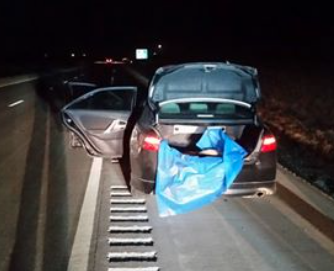
The sheriff’s deputy had observed blood coming out of the trunk of the car and a .22 caliber rifle in the passenger compartment.

Further investigation by the deputy and the warden resulted in discovery of a freshly killed deer in the vehicle’s trunk. The warden booked the driver of the car into the Douglas County jail on multiple charges relating to the poaching of the deer including taking a deer in closed season. All charges are pending.  Authorities did not release the suspect’s name.

Gov. signs controversial bill to lure poultry business to Kansas

TOPEKA, Kan. (AP) — Gov. Jeff Colyer has signed into law a measure aimed at luring large-scale poultry processors to set up shop in Kansas.

Colyer signed the bill on Tuesday. It passed in the Senate last month and in the House March 12.

It greatly expands the number of chickens growers can house in confined animal feeding operations (CAFOs) before they would be required to obtain a state environmental permit.

The Kansas Department of Agriculture and other agribusiness groups strongly supported the bill, arguing it would enable Kansas farmers to produce more “value-added” meat products for consumers.

But the bill came in the wake of a recent controversy in northeast Kansas where Tyson Foods proposed building a large-scale slaughter and processing plant in Tonganoxie, sparking widespread public opposition.

Tyson would rely on large-scale CAFOs such as those provided for in the bill to supply its chicken plant. Those facilities are owned by individual growers who buy and raise chickens on contract with Tyson.

Growers using what’s known as a dry manure processing system could house up to a third of a million birds at one location before being required to obtain a permit from the Kansas Department of Health and Environment, according to the bill. Such a permit would impose several requirements, including minimum set-back distances between the barns housing the chickens and other inhabitable buildings or property lines.

KC Man Charged with Using GPS to Track Murder Victim

KANSAS CITY – A Kansas City man has been charged in federal court with using a GPS tracking device to assist in the murder of a rival drug trafficker who was fatally shot in front of his 8-year-old daughter.

Brown-courtesy photo

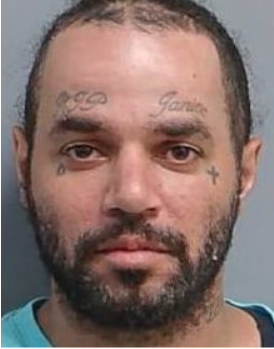
Lester Brown, 30, of Kansas City, was charged in a criminal complaint filed in the U.S. District Court in Kansas City, Mo., on Thursday. Brown remains in federal custody pending a detention hearing on Tuesday, March 27, 2018.

The federal criminal complaint charges Brown with using a GPS tracking device with the intent to commit a crime of violence, which resulted in the death of Christopher Harris, to further Brown’s marijuana trafficking operation.

According to an affidavit filed in support of the federal criminal complaint, Brown and Harris had a long-standing dispute over marijuana trafficking. Brown allegedly murdered Harris in front of Harris’s 8-year-old daughter on March 14, 2018, as Harris was returning his daughter to her mother’s residence. The murder, says the affidavit, was the culmination of conflicts between Brown and Harris’s competing marijuana distribution activities.

Independence police officers were dispatched to a residence on March 14, 2018, regarding a report of shots fired near the residence. Harris’s girlfriend, the mother of his daughter, reported that her boyfriend had been shot. When officers arrived, they discovered Harris suffering from a wound to the head. Harris was unresponsive, and was ultimately pronounced deceased.

An anonymous source told investigators that Brown orchestrated the shooting assault on Harris and enlisted the assistance of two other persons as shooters. Brown allegedly used a GPS tracking device, covertly placed on Harris’s vehicle, to track Harris’s movements.

The anonymous source described a long-standing grievance between Brown and Harris, and indicated it was this conflict which likely resulted in the assault and death of Harris. Harris’s former girlfriend and the mother of his 8-year-old daughter told investigators that Harris had recently told her about a confrontation between himself and Brown at a local shopping center within the two weeks preceding Harris’s death.

The anonymous source also told investigators that Brown distributes high-grade marijuana on his own and has attempted to join other distributors in the metropolitan area to expand his enterprise. Brown has allegedly engaged in robberies of other drug traffickers with the intent of stealing bulk quantities of high-grade marijuana and other illegal drugs to distribute himself. Brown allegedly enlisted the same two shooters to assist him in these robberies.

A second anonymous source told investigators that Brown also had deployed GPS tracking devices on the vehicles of other known distributors of illegal drugs that he intended to target for robberies.

The charge contained in this complaint is simply an accusation, and not evidence of guilt. Evidence supporting the charge must be presented to a federal trial jury, whose duty is to determine guilt or innocence.

KDADS requests applications for Kansas Prevention Collaborative grants

KDADS 

TOPEKA – The Kansas Department for Aging and Disability Services (KDADS) on March 23 announced the release of new Requests for Applications (RFAs) for the Kansas Prevention Collaborative-Community Initiative (KPCCI).

Communities across Kansas are eligible to apply for one-year planning-phase grants that will help assess community prevention needs, build local capacity and plan prevention efforts. Communities that have previously completed a KPCCI planning-grant cycle will be eligible to apply for a three-year implementation-phase grant, which will support their prevention efforts and build their capacity to apply for federal Drug-Free Communities funding.

Grantees will use these funds to address the problems of underage drinking and produce sustainable system changes in their communities.

The grant initiative is designed to allow communities to address local alcohol and other drug use concerns, but also to explore how behavioral health concerns, such as suicide, problem gambling and depression, can impact youth and adult drug use. Communities will utilize the Strategic Prevention Framework model designed by the Substance Abuse and Mental Health Services Administration (SAMHSA) to assess their local needs, build capacity and create a plan during this planning phase.

KDADS Secretary Tim Keck recognized the importance of addressing substance abuse concerns locally and in an integrated fashion, “KDADS remains committed to supporting prevention efforts at the local level in Kansas. We lose too many of our youth to behavioral health problems tied to substance use, problem gambling and suicidal behavior.”

“These Community Initiative grants are one part of our statewide prevention system. KDADS’ Behavioral Health Services Commission works with partners to provide training, technical assistance, communication, support and evaluation services to communities across the state. We encourage communities to get involved with behavioral health prevention efforts and become part of the Kansas Prevention Collaborative,” said Andy Brown, Prevention Program Manager at KDADS.

The communities awarded new KPCCI planning grants will receive $15,000 in prevention funding and be supported in their planning efforts by KDADS and its partners in the Kansas Prevention Collaborative (KPC). New KPCCI implementation grant recipients will receive $185,000 in prevention funding over three years. Total awards for all KPCCI grantee cohorts next year will be $602,000.

About the Kansas Prevention Collaborative

The Kansas Prevention Collaborative was created in 2015 in an effort to integrate and innovate behavioral health prevention efforts. A partnership of several different state, educational and provider agencies, the KPC’s goal is to expand prevention efforts to be more inclusive of mental health promotion, suicide prevention and problem gambling education and awareness, as well as to increase the availability of resources to adequately fund local-level prevention and promotion strategic plans. For more information, see https://www.kdads.ks.gov/commissions/behavioral-health/consumers-and-families/services-and-programs/kpc.

The KPC’s website can be viewed here: https://kansaspreventioncollaborative.org.

Copyright Eagle Radio | FCC Public Files | EEO Public File