We have a brand new updated website! Click here to check it out!

INSIGHT KANSAS: What we know right now about Kan. politics

Early this past Sunday morning, at the last minute, Kansas legislators passed a school funding bill of more than $500 million. The Supreme Court must still rule on its constitutionality, but the frantic maneuvering of last week allows Kansans to understand a lot about state politics as we head toward the end of the session and the 2018 elections.

Burdett Loomis, Professor, Political Science, College of Liberal Arts and Science, University of Kansas

#1. In contrast to 2017, when Senate Majority Leader Jim Denning joined with House Speaker Ron Ryckman to provide steady, even bold, leadership to override Governor Sam Brownback’s veto of income tax increases, the Senate remained adrift and leaderless up through the last moments of the 2018 regular session. President Susan Wagle remained incapable of leading her chamber, and Sen. Denning this year accompanied her in various strange and unproductive maneuvers that could well have derailed stopped the legislative process, despite the clear need to address the Supreme Court’s mandate on school funding.

After delaying the proceedings to demand passage of an unwise, unpassable constitutional amendment to strip the Court’s authority to require school funding, Denning joined Wagle to offer a low-ball, $250 million school finance figure that the Court would have rejected out of hand. Last year’s statesman, cited as a “best state legislator” by Governing magazine, took an unproductive, far-right turn in addressing the session’s top issue.

#2. Under pressure, bipartisan coalitions narrowly prevailed in both chambers. In the House, some Democrats opposed the final education bill because it did not spend enough, but the moderate Republican-Democratic coalition squeaked by. Notably, Speaker Ryckman provided the 63rd vote, as moderate Republicans made the difference.

#3. Although Governor Jeff Colyer endorsed the $500 million-plus House bill, he offered little leadership in pressing the Senate to make a deal. Sam Brownback did receive a bit of credit for suggesting $600 million in his January State of the State address, but that merely reflected the session-long conventional wisdom that $500-600 million would be a minimum to satisfy the Court.

#4. Governor Colyer, by backing the House bill, differentiated his position from that of Secretary of State Kris Kobach, who has been consistently willing to confront the Court and create a constitutional crisis. Colyer is saying, in essence, “I’m conservative, but I’m not willing to throw the state under a bus.” Kobach would drive the bus.

#5. Election threats failed. Senate President Wagle weighed in, threatening Senate chairs if they voted for the bill, and she and her Chamber of Commerce allies conjured up the vision of legions of far-right primary candidates who would receive generous funding to oppose House Republicans’ supporting the $500 million figure. These threats may be real, but 2018 scarcely seems a year to encourage GOP challenges in either primaries or the general election.

#6. Finally, and unsurprisingly, the school finance legislation has proved technically deficient, in that it appropriates $80 million less than the Legislature originally assumed. Given the pressure-cooker politics of the session’s last few days, this is understandable, but it demonstrates the dangers of rushed legislation. Rather than make a bunch of head feints, the Senate could have carefully worked the bill, but its leadership chose not to.

In a session with few notable leaders and increasing rancor, passing a funding package is significant. The bruising process demonstrated, however, that (a) the Kansas Legislature has not abandoned its highly partisan, unproductive ways of the 2011-2016 period and (b) the 2018 state legislative elections will be extremely important for the direction of the state.

Burdett Loomis is an emeritus professor at the University of Kansas.

NCK nursing sets community health fair for Saturday


Submitted

The NCK Tech nursing program will sponsor a community health fair from 9 a.m. to 2 p.m. Saturday at the National Guard Armory, 200 Main St.

The American Red Cross will host a blood drive in conjunction with the health fair.

Educational topics that will be addressed include ABO blood groups, diabetes, cardiovascular disease, vaccinations, opioid addiction and evidence-based practices. Pharmacy technicians will also have presentations.

Free blood pressure checks and finger stick blood sugars will be offered.


Docking Institute at Fort Hays State releases poll results for governor’s race

FHSU University Relations

Among the 19 candidates currently running for governor of Kansas, Republican Secretary of State Kris Kobach, independent businessman Greg Orman and Republican Lt. Gov. Jeff Colyer are the most widely known – Kobach by a lot – but Democratic State Sen. Laura Kelly is most popular among the people who know who she is.

That’s according to a poll by the Docking Institute of Public Affairs at Fort Hays State University. The survey sample was taken from contacts through random landline and cellphone numbers. Of 1,405 Kansas residents age 18 and older who were contacted, 367 completed the survey. The result is a 5.12-percent margin of error, meaning a 95-percent probability that the findings vary no more than plus or minus 5.12 percent from the value that would be found if the entire population of adult Kansas residents were surveyed.

The poll, conducted from March 19 to April 2, asked two questions. The first listed the 19 candidates asked respondents if they knew each candidate.

Among all the candidates, 85.2 percent knew of Kobach, 56.7 knew of Orman and Colyer’s name was recognized by 54.8 percent. At the bottom of the recognition list was Libertarian Ethan Randleas and Republican Dominic Scavuzzo, each at a rounded off 3.3 percent.

The second question asked respondents to rate the candidates they knew using a scale from zero to 10, with zero meaning highly negative and 10 meaning highly positive.

Kelly, currently the minority whip in the Kansas Senate, and three other Democrats topped that scale, Kelly with a total positive rating of 52 percent – 28.6 highly positive (nine or 10) and 23.4 percent somewhat positive (six through 8). Josh Svaty, former state representative, was second at 51.6 percent (25.8 and 25.8); former Wichita Mayor Carl Brewer was third at 47.3 percent (16.3 and 31.0); State Rep. Jim Ward, Kansas House minority leader, was fourth at 36.2 (11.7 and 24.5).

Orman was fifth, 9.9 and 23.7 for a total positive rating of 33.6.

The top Republican, Emporia physician Jim Barnett, had a total 31.3-percent positive rating, 3.9 percent highly positive and 27.4 percent somewhat positive.

The complete report can be found on the Docking Institute’s Kansas Speak page at www.fhsu.edu/docking/Kansas-Speaks/).

Eugene ‘Gene’ Bernard Hutfles

Eugene “Gene” Bernard Hutfles was born a the family farm south of Herndon, Kansas, the 3rd of 8 siblings. He passed away April 9, 2018 at the Collier Hospice Center in Wheat Ridge, CO at the age of 88.

Gene grew up at ‘The midway’ (the family farm midway between Atwood and Oberlin), attending high school 6 miles north in Herndon, KS where he participated in baseball, football and basketball, graduating in 1949, before enlisting in the United States Army, serving in Alaska from 1949 – 1951 during the Korean conflict.

After returning from the Army, he met Jannette Pollnow at a local dance; they were united in marriage at the St. Mary’s Church in Herndon on September 8, 1954. After several seasons of farming the family land north of the Midway, Gene and Jannette moved to Arvada, CO where they started a family, raising four children.

Gene was a self-taught carpenter, working in the Arvada area his whole career. In retirement he continued wood working and donating time and his creations to St. Joan of Arc church as well as his friends and relatives. He loved puttering around his home and garage making picture frames and other projects right up until the day her moved to hospice.

Gene is survived by his four children, son Terry (Pat), Chuck (girlfriend Teri) Andy (Sherry) and daughter LaDawn ‘Dee Dee’ (Brian) Towell; four grandchildren, Lee (fiance Megan) Hutfles, Hannah (Adrian) Dalstra, and Erick Smith; one great grandson August ‘ Augie’ Dalstra.

He was preceded in death by his beloved wife of 57 years, Jannette (Pollnow) Hutfles, his parents Frank & Mary Hutfles, brother Arnold Hutfles and sister Sylvia Satther.

Click HERE for service details.

Defense in Kansas bombing trial blames FBI

 STEPHAN BISAHA

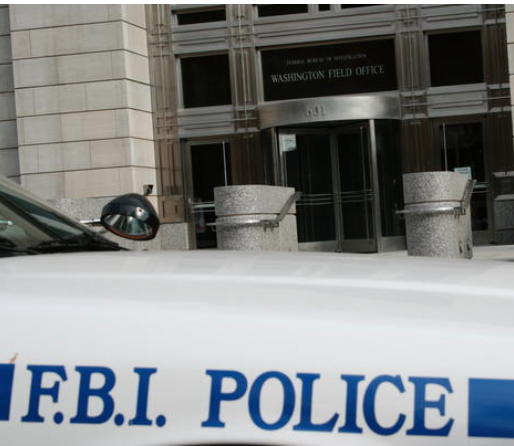
Attorneys defending three Kansas men accused of a bomb plot in Garden City are arguing there wouldn’t have been a plot without FBI manipulation.

NEW-YORK-CITY / FLICKR CREATIVE COMMONS

The defense is now calling its witnesses in the trial, which has entered its fourth week. That includes FBI agent Amy Kuhn, who took the witness stand Tuesday and Wednesday. She was one of the agents who headed the investigation that led to the arrest of the defendants.

The defense characterized Kuhn’s decisions while leading the investigation as strategically driven to build a case against the defendants. They also questioned why Kuhn hadn’t simply informed the three men they were aware of the plot and asked them to stop.

During cross-examination, Kuhn said her decisions were made based on evolving safety concerns from the “emerging threat” the defendants represented. She said recordings gathered by a paid informant showed the men to be distrustful of the government and that they had already discussed lying to law enforcement, making the FBI think a knock-on-the-door was unlikely to deter the men.

Defendants Patrick Stein, Gavin Wright and Curtis Allen are accused of plotting to bomb an apartment building in Garden City predominantly occupied by Muslim immigrants the day after the 2016 presidential election.

Dan Day, the paid informant whose recordings of the defendants are the backbone of government’s case, testified at the end of March. While the prosecution portrayed Day as a selfless hero, the defense said he was just looking for a paycheck and, along with the FBI, manipulated the defendants. In a list of suspected motives for Day’s cooperation, Kuhn listed “patriotism” first.

The three defendants have separate attorneys. Those representing Wright and Allen have portrayed their clients as less involved than the other defendants. Kuhn testified that Stein was clearly the most radical of the three, but Allen did drive much of the conservation.

At one point during her cross-examination by the prosecution, Kuhn read from what appeared to be Allen’s manifesto. It mentioned an attempt to give America a “forced wake up call.”

The trial is expected to last two more weeks.

Stephan Bisaha is an education reporter for the Kansas News Service. Follow him on Twitter @SteveBisaha.

City commission to vote on land purchase option

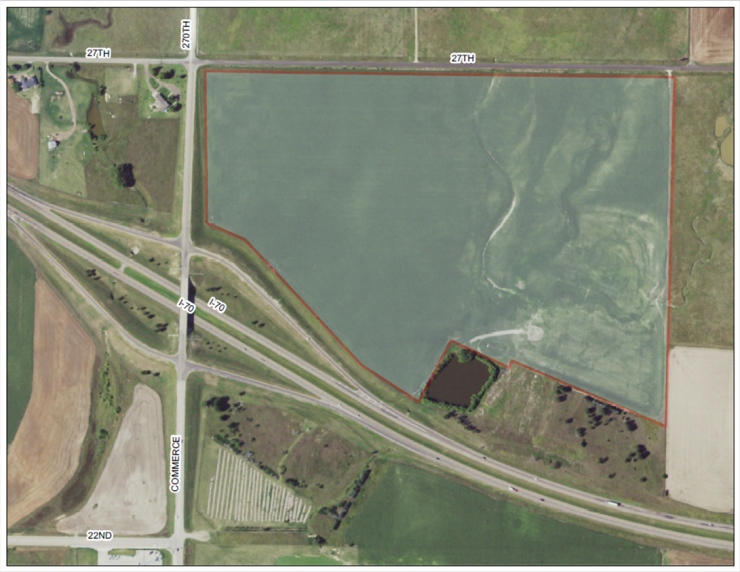
The city of Hays has the opportunity to purchase 93 acres of land just north of I-70.

By BECKY KISER
Hays Post

Hays city commissioners will vote Thursday night on an 18-month option to purchase 93 acres north of Interstate 70 near 27th and Commerce Parkway.

Hays City Manager Toby Dougherty has already approved $15,000 in earnest money to be paid to the property owner towards the $50,000 option.

Purchase price of the land is $800,000. The monies would be funded from the Commission Capital Reserve, which had a balance of $6.8 million on April 4.

The property has significant potential for future retail, commercial, and business park development.

Other agenda items include an update on the R9 Ranch and the Water Transfer Act from attorney David Traster, Wichita, and engineer Brian Meier, Burns & McDonnell.

Melissa Romme of Adams, Brown, Beran and Ball will present the city’s 2017 Audit.

The complete April 12 agenda can be seen here.

The meeting starts at 6:30 p.m. tonight in Hays City Hall, 1507 Main.

LETTER: Hospice workers ‘act as angels on this Earth’

December 5, 2016 our family met with a cancer doctor. She confirmed our fears, our Judy had terminal cancer, giving her around six months to live. That doctor didn’t know the amount of character, strength and determination Judy had.

Hospice Services was mentioned at that appointment and we somewhat turned a deaf ear to that suggestion. We are a strong, private family. We’d handle this chapter ourselves at home just like Judy wanted.

Seven months later, Judy was still fighting the fight, teaching us all how to die with dignity mixed with a little humor. As a family, we decided it was time to allow Hospice in to her home and our lives. Hospice was called in and even though we were dealing with this demon called cancer, we are here to tell you, our lives changed for the better when they came on board.

Our hospice team from Phillipsburg consisted of a doctor who visited Judy a few times at her home, a nurse, a social worker and later, a grief support team. Bringing this team into our lives was the best decision we made through this thirteen month journey.

From July 2017 through January 4th, 2018, our team came twice a week, staying with us as long as we needed them. They helped us find medicines to help Judy as well as assisted each one of us deal with our emotions and on going grief through this dying process. Most importantly, this hospice team assisted in fulfilling Judy’s wish to stay home through the illness and to die in her home surrounded by family.

On January 4th, 2018, the Good Lord called Judy home. Our hospice doctor came to visit Judy in the morning, when Judy asked how long she had, he answered a few hours to a couple of days. Judy chose a few hours. Our hospice nurse was with her and the family for 24 hours. The nurse continued to medicate Judy to keep her comfortable and explained the changes we were seeing in Judy as well as helping us deal with the emotions we were all going through.

Death, as we all know, is unpleasant, whether it happens fast or slow. We encourage you to invite a hospice team into your home and your lives if you or a loved one is facing a terminal illness. You will not regret having a support team to help the patient and the family through the journey.

It has been four months since Judy left us and our grief support team continues to check in on us and will do so up to two years.

Thank you hospice, may God continue to guide you and strengthen you all as you act as angels on this Earth.

The family of Judy Phillips
Bert Phillips, Travis and Monique Phillips and family, Steven and Nikki Hausler and family

Piano duo to perform at Fort Hays State University

FHSU University Relations

The Department of Music and Theatre and the International Piano Series at Fort Hays State University will host the Manno-Dean piano duo. The concert will be at 3:30 p.m. Sunday, April 15, in Sheridan Hall’s Beach/Schmidt Performing Arts Center.

The duo, Dr. Terrie Manno, professor of piano at Minnesota State University Moorhead, and Dr. Michael Dean, associate professor of music at Oklahoma Baptist University, is in its seventh season of performing.

They have entertained nationally and abroad with a repertoire that spans more than 400 years of music and features works by Aaron Copland, Manuel Infante, Witold Lutoslawski, Sergei Rachmaninoff, Johann Strauss and Nancy Beach.

Manno, a native of southern Calif., earned undergraduate and master’s degrees from California State University, Fresno, and received a Doctor of Musical Arts from the University of Arizona.

“She is a dedicated teacher and scholar who has spent the past three decades teaching and developing as an educator,” said Dr. Irena Ravitskaya, associate professor of music and theatre at FHSU. “Manno is an avid scholar on how musicians’ brains learn and process information, helping her students cultivate and deepen the mental focus they need for successful performance,” she said.

Dean earned undergraduate degrees in piano performance and mathematics from Minnesota State University before serving at OBU. He earned a master’s and doctorate degree from the University of Oklahoma.

“He serves as east district co-president of the Oklahoma Music Teachers Association and maintains an active schedule as a workshop clinician, adjudicator and faculty member,” said Ravitskaya.

In 2011, Dean was awarded the Promising Teacher Award for instructional excellence by OBU.

The concert is free and open to the public.

WINKEL: Talking tomatoes

Rip Winkel

Are you by chance wanting to get your tomatoes up and growing earlier than usual?

If you would like to have your tomato plants produce earlier in the year, there are certain things to keep in mind. Most people who try to get a jump on the season set their tomatoes out early and hope they do well. However, that may not be the best of plans, as tomatoes need certain requirements before they will grow well.  Those requirements are an acceptable soil temperature for root growth and an acceptable air temperature for both plant growth and fruit set.

Root Growth: Tomatoes need a soil temperature of at least 550 F to do well. Plastic mulch is most commonly used to warm the soil. Several days may be needed to raise the soil temperature. Check the soil temperature 2.5 inches deep in the soil at about 11:00 a.m. If that is not possible, check the temperature before leaving for work and again when you return and use the average of the two. It is best to lay a drip irrigation line before installing the plastic to make watering more convenient. (On laying down plastic, see the article below.)

Air Temperature: Plants must be protected from frost. Hot caps or water teepees are placed over the young plants to provide protection as well as provide a higher average temperature to encourage growth. Eventually the plants will outgrow the cover and start to develop flowers. But if the temperature goes below 550 F at night, tomato flowers may not set. The plant is not hurt, but the blossom will not set fruit, or, if it does set fruit, the fruit is often misshapen.


How early can you transplant into beds with plastic mulch? Start with a date about 2 weeks earlier than normal.

Laying Plastic Mulch
Plastic mulch is used often by commercial farmers, as well as home gardeners. Its employment is beneficial in controlling moisture levels around the root zone, as well as reducing and controlling weed infestations. It is also used to start vegetables such as tomatoes and melons earlier than normal.  Commercial growers use a machine to lay the mulch, but home gardeners must do this by hand.  Following are some tips on how this is done.

1. Fertilize according to soil test. You won’t be able to add fertilizer after the plastic is down.

2. Work the soil so that the bed can be easily shaped.
3. Use a garden hoe to form a trench along all edges of the plastic. The soil should be pulled to the outside of the bed. The trench should be formed six inches in from the edge of the plastic and extend along both sides and both ends. The trench should be deep and wide enough to bury six inches of plastic.

4. Lay a drip irrigation tube down the center of the bed. This isn’t absolutely necessary but it makes it much easier to water. Overhead watering will hit the plastic and roll off.

5. Lay the plastic down and cover the edges with soil. You need to slit the edge of the
plastic where the trickle irrigation tube enters the end of the bed.
6. Plant when the soil temperature reaches the correct temperature for the crop (550 F for tomatoes and 600 F for melons) at a 2.5-inch depth. Check the temperature at about 11:00 a.m. to get a good average temperature. Check for several days in a row to ensure the temperature is stable. And, have fun!

Rip Winkel is the Horticulture agent in the Cottonwood District (which includes Barton and Ellis counties) for K-State Research and Extension. You can contact him by e-mail at [email protected] or calling either 785-682-9430, or 620-793-1910.

Police continue search for Kansas shooting suspect

SHAWNEE COUNTY —Law enforcement authorities are investigating a shooting and searching for a suspect.

Harris -photo courtesy Topeka Police

Just after 4p.m. Wednesday, police were led to the 1100 block of SE Golden Street in Topeka for report of a shooting, according to Lt. Aaron Jones.

Witnesses in the area claimed they saw a suspect enter into a duplex on the east side of Golden Street and the victim was taken to a local hospital with serious injuries.

After surrounding the location for a period of time, officers searched the duplex finding no occupants.

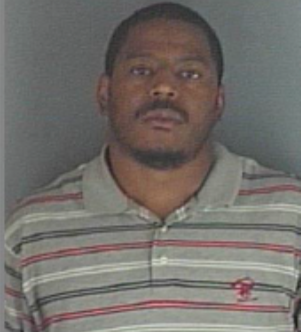
Information suggests that all parties involved were known to each other. The investigation is still very active, and a person of interest has been developed. The Topeka Police are in search of 29-year-old David Harris II. He may be armed, according to police.

Anyone with information on the crime is asked to call Topeka police.

Man charged with killing KC lawyer after $6M lawsuit judgment

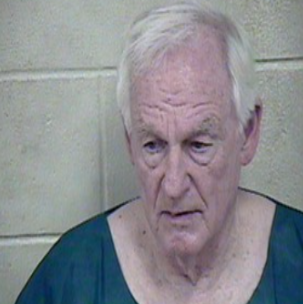
KANSAS CITY-(AP) – Authorities say an 80-year-old man who had lost a $5.75 million lawsuit to Kansas City attorney Tom Pickert has been charged in his death.

Jungerman -photo Jackson Co.

The Kansas City Star reports David Jungerman was charged Wednesday with first-degree murder and armed criminal action. Pickert was found shot to death Oct. 25 on the front porch of his home.

It was not immediately clear if Jungerman has an attorney yet.

A probable cause affidavit says Jungerman accidentally recorded himself saying he killed Pickert. It appeared he did not turn off the recorder he had been using during a court hearing.

Pickert practiced personal injury law. Jungerman is a farmer and maker of baby furniture who lives in Raytown.

Copyright Eagle Radio | FCC Public Files | EEO Public File