Kansans should thank those courageous state representatives, a coalition of Republicans and Democrats, who in the last hour of the last day of the recent legislative session withstood the tempting siren song of “return the windfall.” Even so every candidate seeking state office this year will face a headwind of windfall politics.
What exactly is this “windfall,” you ask?
H. Edward Flentje is professor emeritus at Wichita State University.
Generally, when federal and state income taxes are connected, as they are in Kansas, a tax cut at the federal level could result in a revenue gain at the state level. Last February the Kansas Department of Revenue offered “rough approximations” that the bump in Kansas could be as much as $138 million in the upcoming fiscal year. That figure represents at most a 3-to-4 percent increase in state income tax revenues or less than 2 percent of state general fund revenues.
The possibility of this bump prompted a frenzied cry by some legislators and special interests to “return the windfall!” Did those shouting out know how much should be returned? No. Did they know which taxpayers were actually affected? Of course not. Did they know to whom money should be returned? Not really.
What they came up with at the last minute was the height of fiscal irresponsibility, a cockamamie bill that threw a bunch of money at a dozen favored benefactors along with the fantasy of telling voters the windfall would be returned. Thankfully, the bill was defeated.
A bit of Kansas windfall history may have relevance here.
Less than two weeks before Election Day 1986, Republican Mike Hayden and Democrat Tom Docking were locked in a tightly contested race for governor. President Reagan had just signed major tax reform legislation. At a candidate forum in Johnson County both candidates hastily responded to a question that any windfall accruing to the state as a result of reform should be returned to taxpayers. Their rejoinder gave birth to “return the windfall” as a potent political force.
Hayden won the governorship that year, and windfall demands would complicate his management of state finance for the next three legislative sessions. By year three taxes had been cut, but the lengthy debate had exhausted many taxpayers, and the result fell short of their heightened expectations.
Current candidates for state office seeking advantage in windfall politics should thus be forewarned. The amount of any so-called windfall will be guesswork, particularly as taxpayers adjust behavior in response to state or national action. Whether a taxpayer benefits or not from federal tax changes will be unknown. So, returning any windfall will involve a calculation of guesswork with unknowns. That is not a great way to make state tax policy, and lawmakers should not expect political credit for their work.
More importantly, most Kansans remember seven years of financial mismanagement under Brownback and will be wary of candidates promising new tax cuts under the guise of returning the windfall. Voters will be looking with more favor toward candidates concerned about the condition of state finance: Has the state stopped skipping pension payments? Are highway funds no longer being swept? Is the state meeting statutory requirements for general fund balances? Has the state’s credit rating been restored? Has the state met its constitutional obligations for funding schools? Has the damage to essential services been repaired?
These are consequential questions for state government, and voters should beware of simple-minded “windfall politics” this election year.
Flentje is professor emeritus at Wichita State University and served with Kansas Governors Bennett and Hayden.
BARTON COUNTY — Law enforcement authorities are investigating a suspect for alleged animal cruelty.
Heater-photo Barton Co.
Just before 4p.m. Thursday, was contacted by the animal control officer with Golden Belt Humane Society contacted the Barton County Sheriff’s office.
He was requesting assistance with some animals that were locked in a motor home at All Seasons Mobile Home Park on Northwest 30 Road.
Deputies were advised the Humane Society had made several unsuccessful attempts to contact the owner of four or five dogs that were locked in a motorhome.
The owner of the animals was not being cooperative.
The ambient temperature at the time was about 85°F and inside of the motor home approximately 130°F.
Officers did not know and were unable to determine when the last time the animals were fed or watered. The dogs were also living in an extreme state of filth. Sheriff’s deputies forced entry into the vehicle and along with the animal control officer captured the dogs. The dogs were taken to the Golden belt Humane Society for necessary treatment and proper housing.
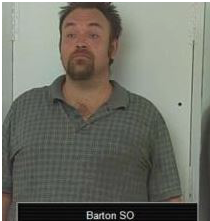
The owner of the dogs , identified as David L. Heater was located and arrested for animal credulity and booked into the Barton County Jail. Hester posted a $2500 bond and was released.
• Until recently, Lebanon, Kansas was designated the geographic center of the contiguous US, but now new measurements reveal it’s actually Agra, Kansas
• Historically, geographic centers were used as the location for the seats of county government
• A geographic center provides maximum accessibility to all parts of the region
• Such locations ensured government offices would be equally accessible to all
• They also give places a way to claim something unique and market the town
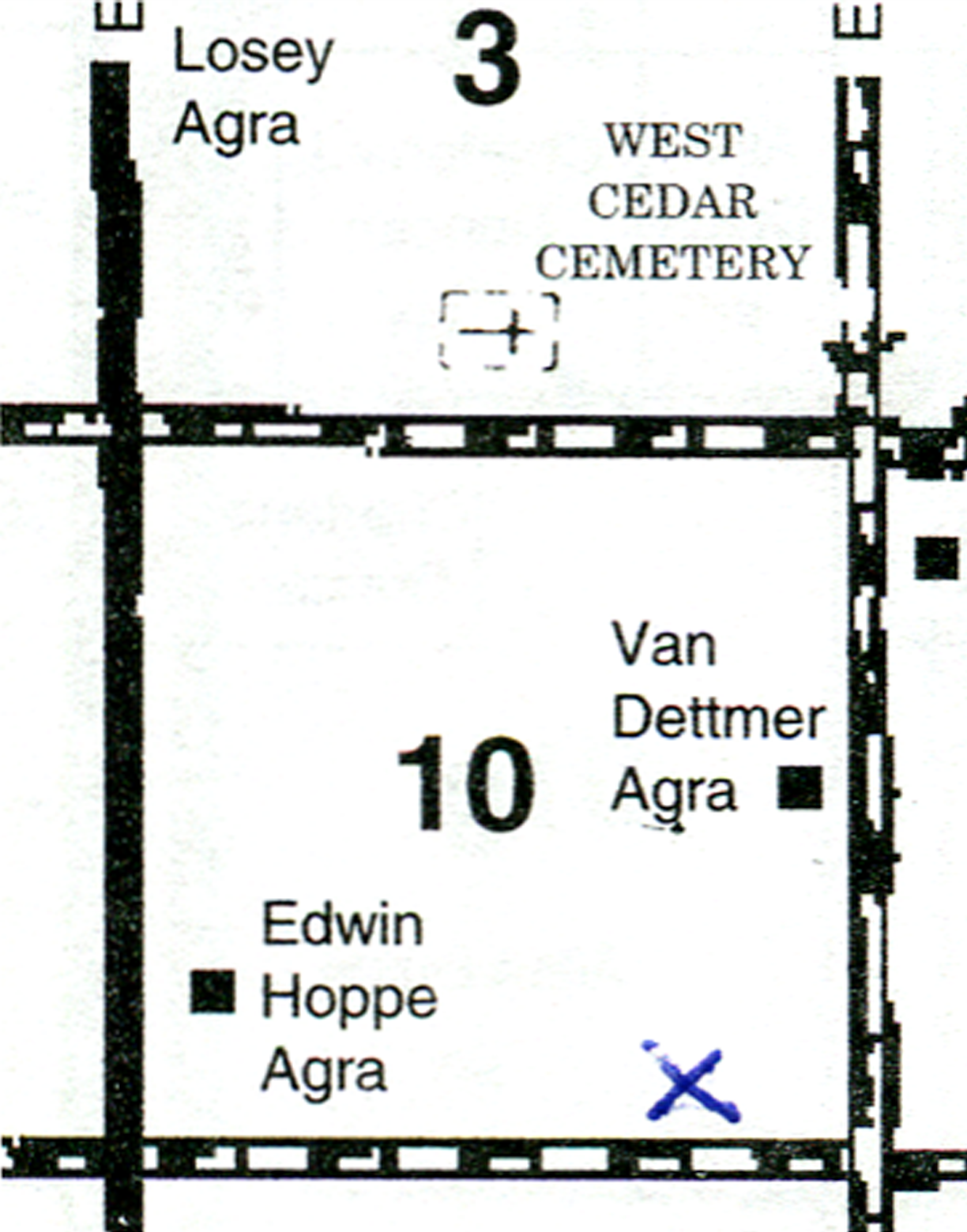
According to a new study utilizing 21st-century scientific methodology, Distinguished Professor of Geography of the State University of New York Peter Rogerson has determined the correct center point for the continental United States to be three miles north and three quarters of a mile east of Agra (pinpointed by the red marker on the map above). The old site near Lebanon, Kansas, was a major tourist destination in the mid-20th century and has been deeply interwoven into the identity of Smith County. The Smith County site was determined in 1918 — exactly one century ago — by a decidedly unscientific technique that involved cutting out a profile of the shape of the United States in cardboard, and then balancing it on a point. That “center of gravity” spot was then determined to be the center of the nation (slightly more accurate than throwing darts). The technique was said at the time to be accurate within around 20 miles +/- ; a margin of error that, even then, brought the rudimentary cardboard reckoning site within range of the modern-day scientifically-determined Phillips County site.
By PETER ROGERSON Distinguished Professor of Geography at the State University of New York
People have long been intrigued by figuring out the center of the places where we live.
You’re probably familiar with the concept of center of population.
Imagine placing an equal weight at the residential location of each individual; the center of population would be the single point on a map that balances all those weighted spots.
The U.S. Census Bureau, for example, produces a map each decade showing the location of the country’s center, summarizing the geographic distribution of the national population.
The U.S. center has moved steadily west – it first crossed the Mississippi River in 1980 – and in recent decades has taken a turn to the south.
What about if you sweep all the people off the landscape? Where is the geographic center of a region?
This simple question has both a clear answer and an interesting history.
The geographic center is also a balance point – it’s analogous to a center of mass or a center of gravity.
For a two-dimensional region, it is the point at which you could balance, say, a cardboard cutout of the region on the head of a pin.
And that, surprisingly, is exactly how the geographic center of the United States and its states were found by the U.S. Geological Survey in the 1920s.
Spots in Piscataquis County, Maine, Twiggs County, Georgia, and McCulloch County, Texas, for instance, all got their claims to fame almost a century ago based on the head-of-a-pin method.
The USGS findings at that time have since been perpetuated and sustained as lists you’d find in almanacs, statistical abstracts, various online sites and beyond.
Surely we can improve upon this cardboard cutout approach.
I’ve come up with a new technique that can, in fact, find more accurate geographic centers.
The hand-drawn X on a Plum Township, Phillips County, Kansas, plat map marks the site of Professor Rogerson’s coordinates.
What’s At Stake
Who really cares about finding a geographic center, though?
After all, it has no real-world correlation with how a landscape functions or the way an ecosystem works.
One motivating reason is that a geographic center is a location that provides maximum accessibility to all parts of the region.
Historically, they were often used as the location for the seats of county government.
Such locations ensured government offices would be equally accessible to all.
A second raison d’etre for geographic centers is that the concept has given places a way to claim something unique – a perhaps odd, but nevertheless definite, source of civic pride that simultaneously allows individual identification with place.
It’s a way to tout the town and market it to tourists.
Just as some people want to visit all state capitals or every state’s highest point, geographic centers offer yet another inventory for those compiling creative bucket lists.
Other tourists simply find themselves close to the center and are drawn to it for a classic photo opp in front of a plaque or monument.
A third reason is more basic – as a fundamental summary measure for regions, we should make sure that we locate them accurately.
Just as the center (or average, or mean) of a set of data provides a convenient summary measure, a geographic center summarizes succinctly the location of a region.
A More Precise Calculation
So, how do we find this point accurately? Most states have somewhat irregular shapes which make it harder to answer this question than if their borders described simple rectangles, for instance.
Some people have found the geographic center of two-dimensional polygons by taking a mathematical approach that uses the coordinates of the polygon’s corners.
We know that the average of a set of numbers is the number which minimizes the sum of squared distances from all numbers in the set to itself.
This is a characteristic of simple averages as well as centers of gravity.
We can apply it to our region.
We’re looking for the one spot in the region’s interior that has the smallest sum of squared distances from each point in the region.
While this two-dimensional solution might be adequate for finding the center of small geographical regions, for large regions we need to consider that they lie on the surface of what is close to a three-dimensional sphere – Earth.
Now the goal becomes one of finding the balance point as the location that minimizes the sum of squared great-circle distances from all points in the region to it (the great-circle distance is the shortest distance between two points located on the surface of a sphere).
To do this, the trick is to find an appropriate map projection.
All map projections result in distortion of the Earth’s surface – the familiar Mercator projection, for example, is well known for its distortions of areas at high latitudes.
It turns out that another projection – the azimuthal equidistant projection – provides exactly what we want: It measures distance accurately from the center of the map.
This is the version of our planet that you find on the United Nations’ emblem, where the map has been centered on the North Pole.
So, we can find the geographic center of a large region as follows, using a process of repeated refinement:
1. Map the region’s boundary using the azimuthal equidistant projection, initially guessing where the geographic center might be, and centering the map there.
2. Use the existing mathematical method for finding the center of a two-dimensional polygon to find the geographic center on this initial map.
3. Use the result from step 2 to create a new azimuthal equidistant map, this time centered on the new estimate of the center.
4. Repeat steps 2 and 3 until the location of the center does not change from one step to the next.
How much of an improvement is this over the old cardboard method?
Road-trippers and tourist bureaus don’t need to panic, but there are 10 states where the geographic center, as determined by this method, moved by more than five miles from the old USGS centers. In addition, the center of the U.S. moves from eastern Smith County, Kansas, to eastern Phillips County, Kansas.
Discrepancies tend to be largest for the largest states and states with more complex shapes (including Alaska, Florida, Texas and New York).
The geographic center for the entire contiguous U.S. lies near Agra, Kansas, 27.9 miles from the USGS’ long-designated center in Lebanon, Kansas.
No word on whether a rivalry has emerged in the Sunflower State.
The author of this article Peter Rogerson, PhD, Distinguished Professor of Geography, University at Buffalo, The State University of New York, has studied the mobility of the U.S. population and the impact of geography and other factors on the incidence of diseases. His recent focus includes developing new methods for the quick detection of emerging clusters in geographical data that has application to studies of crime and disease.
In other geography-related work, Professor Rogerson has created a new technique for identifying the geographic center of an irregularly shaped region, such as a continent, country or state.
This article originally ran on The Conversation (theconversation.com), an independent, not-for-profit media outlet that publishes content sourced from the academic and research community.
1918 vs. 2018 In 1918, the year rural-Lebanon, Kansas, was determined to be the center of the United States, the technology consisted of taking a cardboard cutout of a U.S. map and balancing it — the pivot point was then declared to be the center of the nation! Going beyond the problem of finding, in 1918, a perfectly-cut perfectly-weighted sheet of cardboard, even then the methodology was acknowledged to be imprecise by a margin of 20 miles or more (a margin of error that brought the possible center of gravity into the neighborhood of Agra and eastern Phillips County). With the advent of 21st-century technology, 2018 science and mathematics now places the geographic center near Agra, with a margin of error of just one mile.
Scott Jordan and his mother Sue own the Pheasant Run restaurant, 3201 Vine. They’re concerned about losing traffic access if roundabouts are installed.
By BECKY KISER Hays Post
“This is the one proposal that solves the most problems for the most people on both sides of the interstate.”
That’s the conclusion of Hays Mayor James Meier who supports the hiring of WSP engineers, Lenexa, to design a series of three roundabouts on north Vine Street to improve traffic flow.
Scott Jordan, whose family owns the Pheasant Run restaurant at 3201 Vine St., is not among “most people.”
He and his mother, Sue Jordan, told the commission Thursday night they’re concerned about access to their 36-year-old restaurant if the roundabouts are built.
“With this, instead of having two access points to our business, we will only have one,” Scott Jordan said. “That’s basically hamstringing us.”
City commissioners voted 4-1 in favor of the $398,895.26 low bid. Vice-Mayor Henry Schwaller remained opposed as he had announced during last week’s work session, citing the need for public input.
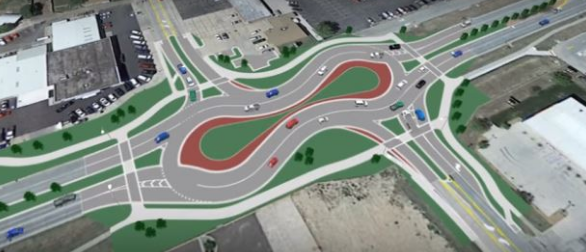
The proposal, in collaboration with the Kansas Dept. of Transportation (KDOT), calls for a double roundabout at 32nd/33rd, another roundabout at 37th, and a third north of Interstate 70 at 41st Street.
Jordan was curious why the city had not purchased the former Montana Mike’s lot from the mall owners when the restaurant was closed in November 2013 and then razed. “It could have made the 32nd Street intersection go straight through (across Vine) and then we wouldn’t have to be messing with any of this junk,” Jordan said.
Schwaller is the only person on the current city commission who was also serving five years ago.
“We just didn’t have the money,” Schwaller told Jordan, “but now we do. The city was going to work with the owner of the mall and we estimated the project cost to be a certain amount. When it go to the point of actually making it happen, it exceeded that dollar amount. I don’t like this answer because it could have been done. We could have issued a bond, anything, but we just decided we couldn’t afford it.”
The space at the northwest corner of Big Creek Crossing’s property is now occupied by HaysMed Walk-in Clinic and Starbucks.
According to Hays Project Manager John Braun there are approximately 31 crashes per year in the roundabout study area between 32nd and 41st Streets, with most occurring at the intersection of 32nd and the west frontage road.
Jordan already knows that. It’s exactly where the Pheasant Run is located.
“The accident rate there is 2.5 times higher than the statewide average for urban intersections,” Braun noted, “and crashes will become more frequent as traffic increases if no action is taken.
Braun, who was asked to present a list of FAQs, Frequently Asked Questions, also said the “roundabouts present a safer road environment by disconnecting the frontage (access) roads and eliminating conflict points like left turns across traffic.”
According to Jordan, many of his customers use the access road to get to the restaurant.
Braun stressed several times the current design is still a concept. He told the commission WSP intends to bring in a third-party firm from Oklahoma to review and tweak the concept. “There’ll be another opportunity to review that concept plan before we go into full design.”
Another audience member, Ron Adams, who told the commission he previously worked for Bucher, Willis & Ratliff engineering in Hays, asked if 37th Street could be made into an on-ramp for I-70, and other entrance and exit ramps be eliminated.
“K-DOT won’t allow it,” commissioners responded.
Vine Street is also a federal highway, U.S. 183. “We asked about doing that at 41st and kind of sandwiching it with the off-ramp,” Meier said, “and K-DOT won’t allow anything like that.”
Meier also pointed out an earlier study which recommended reverse access roads “was a perfectly acceptable solution. It was expensive and involved the taking of private property, including houses on the west side of 33rd Street.”
“In the late ’90s, the commission had the opportunity to align 32nd and 33rd but because there were houses along there, they didn’t want to take property,” said Meier.
Commissioner Shaun Musil assured Jordan and his mother, who apologized for “being emotional,” that he was confident Braun, City Manager Toby Dougherty, and the city commission would stay in contact with the family as the engineering begins. “I don’t want to hurt your business. You guys have been known in Hays ever since I’ve been here, for years,” Musil said, “and I want you to stay around Hays.”
Jordan has previously had problems with customer access to his restaurant.
“Years ago when all the beautification was done (in the Vine Street medians), I know it was all Mom could do to keep the doors open because it just shut off the flow of traffic,” Jordan told commissioner. “And that’s what the roundabouts are, seemingly, kind of wanting to do to us, let alone with the construction.”
Engineering is expected to take about 18 months with construction to begin in 2020.
“I just want to make sure I get a chance to sit down and see if we can’t improve on this before I’m stuck,” Jordan said. “I want to keep the families that I employ employed and make sure this community grows.”
Westar Energy and Great Plains Energy, the parent company of Kansas City Power & Light Co., won approval from state regulators Thursday to merge as equals.
That clears the way for a combined company worth $14 billion serving more than 1.6 million customers in Kansas and Missouri.
A merger proposal approved by Kansas regulators on Thursday requires Westar to keep 500 employees at its Topeka headquarters for the next half-decade. SCOTT CANON / KANSAS NEWS SERVICE
“We feel (it’s) good for our shareholders, good for our communities, good for our customers, and good for our employees,” Westar spokeswoman Gina Penzig said.
The Missouri Public Service Commission and the Kansas Corporation Commission both approved the long-pending merger proposal on Thursday. The companies had tried to combine last year, but saw their proposal rejected by Kansas regulators.
The merger is projected to save Kansas customers $183.5 million in its first five years.
Savings from the merger will allow Westar to cut the amount it is asking for in a rate case pending before the KCC. With the decrease, the average residential customer would see a hike in monthly bills of $2.80 per month, rather than the more than $5 previously asked for by Westar.
The new company will be called Evergy, a combination of ever and energy, and will be headquartered in Kansas City, Missouri. The merger terms approved by regulators also require the company to keep at least 500 employees at a Kansas headquarters in Topeka for at least 5 years.
“For the most part we’ve really been trying to emphasize letting employees stay where their families are and where they are today,” Penzig said.
In rejecting a merger last year, the KCC argued the proposal would have put too much financial stress on the new company and would not benefit customers.
This time around, executives at the two companies tailored their proposals to calm the regulators’ worries.
The result is a larger regional electric utility company that members of the commission said will ultimately benefit Kansas consumers.
Jim Zakoura, who represented several large industrial customers during the proceedings, said he’s disappointed with the decision. While he wasn’t against the merger, he wanted a bigger commitment from the new company to reduce electric prices.
“The commission needs to address it and bring the utilities in and help get a plan to bring us back to competitive levels,” he said.
For now, customers will continue to get their service, and bills, from their current provider, KCP&L or Westar. Rebranding won’t occur until 2019.
TOPEKA, Kan. (AP) — A Kansas water park where a boy was killed on a giant waterslide in 2016 planned to open for its annual season as scheduled Friday with 11 of its rides closed following a state audit that park attorneys called a “malicious effort” to “stir up unfounded fear” about safety.
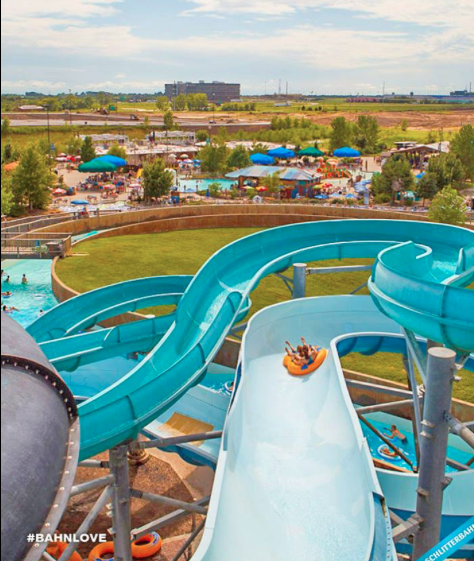
The Schlitterbahn park in Kansas City, Kansas, announced on its website Thursday night that six attractions would be operating. None of them were specifically mentioned in a Kansas Department of Labor audit released earlier this week after an inspection last week. The department issued a notice alleging 11 violations of state amusement park regulations, mostly pertaining to record-keeping and safety signs.
The rides the park planned to keep closed initially were all mentioned in the audit and included various slides, a surfing ride and the Soaring Eagle ZipLine, a “dry” ride that pulls riders in a two-seat chair across the park 100 feet above the ground. The park said in its Facebook posting that it has addressed the bulk of the audit issues but wants to let state and local officials, inspectors, park staff, consultants and attorneys finish “their process.”
“Until that process is complete, we will not open the other rides,” the statement said.
But, the park also said, “We are glad to say that we have addressed the bulk of the issues in the report and we are fully confident that our rides and park are safe and ready.”
Attorneys for the park’s management company argued in a letter Wednesday to the department that it exceeded its legal authority in conducting the audit and was required to give the park “reasonable” time to rectify any issues. The attorneys also rejected audit findings that equipment for the ZipLine had not been replaced as recommended by its manufacturer.
Despite their “strong disagreement” with the audit report, the attorneys wrote, the park would not open rides until audit questions were “fully addressed.”
“This appears to be nothing more than a malicious effort on the part of the State to stir up unfounded fear and cast doubts on this company in the wake of the tragic accident in 2016,” attorneys Erik Beard and Melanie Morgan wrote. “The State’s action is unconscionable and we demand the State take remedial action to end this abuse.”
The letter demanded a response by Thursday, but there was no indication whether the department sent one.
Department spokeswoman Barbara Hersh did not respond directly to the attorney’s criticism but said the department was “encouraged” that the park said it would not open rides until the attractions complied with regulations.
“It is important to be proactive when conducting audits for the safety of the public,” she said in an email.
Department officials promised in March to audit the Schlitterbahn park’s records after a local grand jury issued multiple criminal indictments over the August 2016 death of 10-year-old Caleb Schwab. He was decapitated while riding a 17-story Verruckt waterslide, which was billed as the world’s tallest and was shut down after his death.
The co-owner of the Texas-based Schlitterbahn Waterparks and Resorts, one of the Verruckt slide’s designers, the Kansas City park’s former operations director and the company that built Verruckt all face numerous felony charges. They have pleaded not guilty to all charges.
The recent audit made dozens of findings and said safety signs in some park areas were inadequate, records were not available for review, and some operating and training manuals were incomplete. Schlitterbahn’s attorneys noted that no rides were in operation at the time and that most of the issues raised “do not generally impact guest safety.”
The notice said the 11 violations listed in its notice, each covering multiple findings, represented a first offense and the department was issuing the park a warning.
One count in the department’s notice said inspection checklists, trainer qualification and other records for the ZipLine weren’t available for review and added that it has not replaced parts as recommended by the manufacturer.
But Schlitterbahn attorneys said the manufacturer did inspections each of the past two years and was issuing a “bulletin” saying the existing parts are safe.
———-
TOPEKA, Kan. (AP) — A Kansas water park where a boy was killed on a waterslide says it won’t open this season until it resolves issues raised by a state audit but that it thinks the audit was “malicious.”
Attorneys for the company that operates the Schlitterbahn park in Kansas City, Kansas, say in a Wednesday letter to the Kansas Department of Labor that although the park won’t open until the audit’s points are addressed, they think the audit should be withdrawn.
A recent inspection turned up 11 violations, mostly involving record-keeping and safety signs.
The park is scheduled to open for the season on Friday.
The department said Thursday that it was preparing a response.
WICHITA, KAN. – Two Kansas men were charged Thursday with a robbery at a Wichita liquor store during which one of them was shot, according to U.S. Attorney Stephen McAllister.
Police on the scene of Tuesday’s robbery and shooting-photo courtesy KWCH
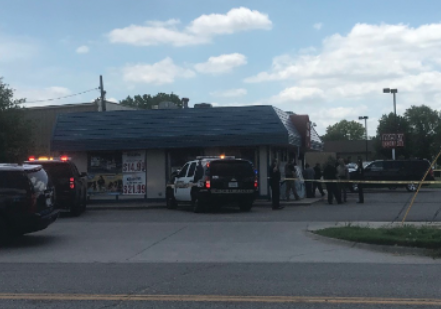
Raquan Hill, 18, Wichita, Kan., and Jamaryus Moore, 19, Wichita, Kan., were charged with one count of robbery. A criminal complaint filed in U.S. District Court alleges that on May 22 Hill and Moore robbed the F & K Liquor store at 902 S. Woodlawn. A store employee gave the robbers money in a plastic bag and they left the store.
The store employee saw the two men standing outside the store after the robbery and feared they would return to shoot him. When one of the robbers turned back towards him, the store employee fired two rounds from his own gun, striking Hill in the leg. While Moore fled, the store employee held Hill at gunpoint until police arrived. Moore was arrested later after police identified the car he was driving.
If convicted, they face a penalty up to 20 years in federal prison and a fine up to $250,000. The FBI Safe Streets Task Force and the Wichita Police Department investigated. Assistant U.S. Attorney Aaron Smith is prosecuting.
It is the little things that make the difference at the state tournament. Oskaloosa took advantage of a Monarch error in the fourth and then came through with a big hit in each the fifth and sixth inning for a 4-1 decision over TMP.
The Monarchs took their only lead of the game when Emilee Augustine scored on a throwing error by the Bears following a ground out in the second inning.
Highlights
TMP then loaded the Monarchs in the third inning with two outs but could not take advantage. Overall the Monarchs stranded seven runners on the bases. Three of the runners were left at third and another two at second.
Oskaloosa scored tied the game following TMP’s only error, took the lead on a two out triple in the fifth and scored two more on a double in the sixth.
Coach Melissa Schoepf
TMP ends the season at 18-6 after making the state tournament for a third consecutive year.
Andrew Tribble was sentenced Thursday for two counts of rape and one count of aggravated criminal sodomy. He was originally charged with a dozen felonies.
The Lawrence Journal-World reports the victim, who is now 17, read a statement before sentencing saying Tribble stole her childhood from her.
She said by the time she was 9, she wanted to die but she eventually decided she had to speak up.
Tribble’s attorney read a statement from him apologizing for his actions.
Before his arrest, Tribble was a maintenance worker for the city and had coached youth sports in Lawrence.
MANHATTAN – Chase Werth hit a game-winning three-run home run in the bottom of the seventh inning Thursday lifting the TMP-Marian Monarchs to a 5-2 win over Wellsville in the first round of the 3A State Baseball Tournament in Manhattan.
Dusty Washburn post-game interview
The Monarchs took an early 1-0 lead in the bottom of the first inning when Luke Ruder drew a bases loaded walk.
After the Monarchs took the early lead both starting pitchers really settled making runs hard to come by.
Monarch starter Cole Zimmerman was able to work out of a couple of early jams until the fourth inning when Wellsville’s Jackson Showalter delivered a two-run triple in the top of the fourth giving the Eagles a 2-1 lead.
TMP got the run back in the bottom of the sixth inning on an infield single by Adam Gottschalk.
It appeared that the Monarchs took the lead back when the next batter, pitch-hitter Eston Brown lined a pitch all the way to the wall in left-center that scored a pitch runner from first. But Wellsville appealed to first, claiming that Brown failed to touch first. He was called out and the run was disallowed.
With the game still tied at two in the bottom of the seventh the Monarchs got a leadoff single from Creighton Renz, who was 3-for-3 in the game. Then after a sacrifice bunt and Gavin Schumacher was hit by a pitch and Wellsville was forced to bring in a reliever to face Werth.
The Senior delivered with a three-run homerun sending the Monarchs to the 5-2 win a Friday’s state semifinals.
Fellow Senior Cole Zimmerman allowed just two runs on five hits over seven innings. He struck out seven and walked two as he improved to 8-1 on the season.
Game highlights
The Monarchs will play the winner of No. 4 Riley County and No. 5 Humboldt at 1:15 p.m. Friday.










 The Schlitterbahn park in Kansas City, Kansas, announced on its website Thursday night that six attractions would be operating. None of them were specifically mentioned in