WICHITA, Kan. (AP) — Some researchers worry about the increasing Hispanic infant mortality rate in Kansas as the trend moves in the opposite direction for babies overall in the state.
Photo courtesy KU School of Medicine -Wichita
The Hispanic community has historically had low infant mortality rates despite lack of access to prenatal care.
But the director of the Center for Research for Infant Birth and Survival, Cari Schmidt, said she fears that Hispanic babies are becoming more likely to die in their first year.
“There’s something going on in that community that we need to figure out and help address,” she said.
The Kansas Department of Health and Environment documented five-year averages for infant mortality rates for 1997-2016. The department says infant mortality rates have declined for babies born to white or black mothers during that time, but increased for babies Hispanic mothers.
One reason for the increase could be due to toxic stress. Researchers have investigated eating habits, obesity, prenatal care and more to explain the disparity in infant mortality between black and white infants. They’ve recently determined that it’s more likely that racial disparities come from social mechanisms and class disparities.
Researchers have also considered the impact of immigration raids on the health of babies born in Latino communities.
SEWARD COUNTY — Two people died in an accident just before 1:30a.m. Sunday in Seward County.
The Kansas Highway Patrol reported a 1999 Dodge Durango driven by Rojelio V. Campa, 18, Liberal, was westbound on Bluebell Road. The driver failed to stop at the dead end. The SUV traveled over a concrete curb and entered a divider designed to prevent traffic from entering onto U.S. Highway 54.
As the SUV traveled across the divider, it impacted a large boulder and exited the divider onto U.S. 54. The front end of the SUV impacted the passenger side of a northeast bound 1995 BMW driven by Caleb C. Olson, Tyrone, Oklahoma.
Campa, Olson and passengers in the BMW Austin K. Olson, 18, Collinville, OK; Tyler M. Olson, 20, Tyrone, OK and Conner L. Smith, 20, Tyrone, OK, were transported to the hospital in Liberal.
Austin Olson and Conner Smith died.
The KHP did not have information on whether Caleb Olson was wearing a seat belt. All others were properly restrained at the time of the accident.
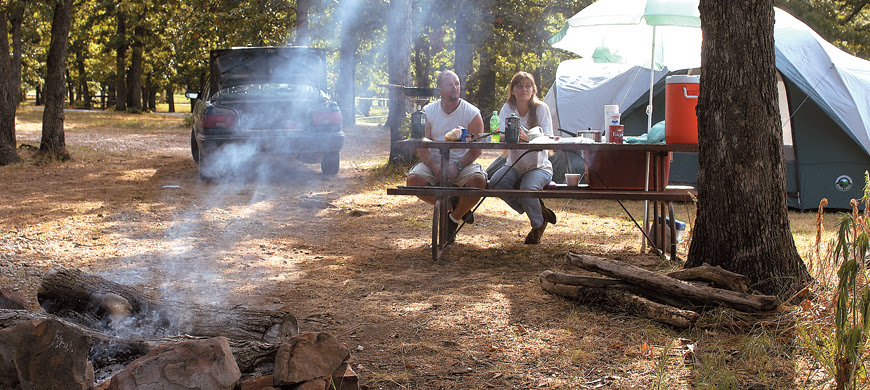
PRATT – Whatever your outdoor interests, you’ll find something you enjoy at a Kansas state park this summer. Kansas Department of Wildlife, Parks and Tourism staff have our state parks groomed and ready for visitors, and many special events are scheduled. Your outdoor experience can be exactly what you want it to be: quiet and relaxing, exhilarating, educational or entertaining.
Nearly every Kansas state park offers a combination of full-service RV camping and primitive camping sites, and most also provide cabins for rent. In addition, there are hiking, biking and horse trails, many with interpretive signage and local wildlife to observe. Park staff will also conduct nature programs, and host a variety of events. There will be concerts, races, star parties, and competitive trail rides to name a few.
Not what you’re looking for? Most parks offer convenient access to water with numerous boat ramps and courtesy docks. For anglers, Kansas reservoirs are home to crappie, walleye, white bass, wipers, black bass, and trophy-class channel, blue and flathead catfish. And Kansas is famous for its wind, so our lakes are popular with sail boaters and wind surfers. But there’s room for everyone, and riding behind a motorboat on a tube or water skis is a great way to cool off on a warm summer day. Many park areas also provide easy access to sandy beaches if you’re into swimming or just catching some rays.
If you prefer to “get away from it all” and simply enjoy some of Kansas’ amazing natural offerings, our parks have that, too. Find that out-of-way primitive campsite, pitch a tent, then hit one of the trails. There are more than 500 miles of trails and many will take you through spectacular natural areas away from the commotion of campers and boaters.
Start planning a trip to one of our state parks now. You can find out everything you need to know at www.ksoutdoors.com. View or download state park maps, get contact information for individual park offices, see fees and regulations, and you can even make a reservation. It’s all there and it’s all waiting for you.
Teachers touch the lives of all of us, and at the vulnerable ages of school children, teachers have such power to change lives.
It is remarkable to remember that many of the teachers in the one-room country schools were teenagers.
Isaac Werner describes in his journal a snowstorm that raced across the prairie, dropping temperatures dangerously, even indoors.
Sometimes teachers stayed in the schools overnight to avoid making daily trips to and from distant homes, and apparently young Miss Goodwin was doing that the night the blizzard arrived. Isaac recorded that she suffered severe frost bite to her hands at the school house during the storm.
Douglas Township, Stafford Co., KS 1917
Not all the teachers were young single women, however.
My great grandmother, Susan Beck, taught in the one-room schools in her community. Her daughter, Anna Marie Beck, followed in her mother’s footsteps to begin teaching when she was still in her teens and devoted her life to education, as a teacher, a superintendent, the Stafford County Superintendent, and working in the education department in the state capital in Topeka.
The recent series sharing the 1895 8th Grade examinations showed the challenging curriculum these teachers, many of whom were quite young themselves, were expected to teach. The influence of teachers, then and now, may be the most important profession in our nation.
When I was a college student at Fort Hays State University majoring in elementary education, part of my required training was Practice Teaching.
I was assigned to a Master Teacher at Lincoln School in Hays, Kansas. She was incredible, and more than all my classes, although they were important in training me, my master teacher taught me how to teach. Her life lessons have stayed with me long past my years as a teacher. Unfortunately, I had forgotten her name. I looked for it in my old college year books, but she was not a regular faculty member, so her name was not listed. I had given up on finding her name in order to thank her.
Recently, I was attending a luncheon at my alma mater and found myself seated next to a woman who had been an education major at the same time I was. I happened to mention my respect for the Practice Teacher I had and my disappointment in having failed to locate her name in order to thank her. Based on my description, the woman said, “I believe you are describing Emma Kolb.”
Emma Kolb, Hays and Kansas Master Teacher
It is amazing how often serendipity leads us the things that had eluded us. Sadly, Emma Kolb died in 2016, making it impossible for me to thank her for the positive influence she had on my life. This blog is my way to say thank you, to her and all the teachers who influence the lives of students in Lyn ways that positively change their futures.
Emma Kolb was born May 21, 1918 and died November 20, 2016. She began teaching in 1937 at Zion, Rush County, Kansas, and later, taught at Lincoln Elementary School in Hays, Kansas for 33 years. Following retirement, she volunteered there for an additional 22 years. She was named a Kansas Master Teacher and was inducted into the Kansas Teacher Hall of Fame. She was often heard to say, “Remember, children are not your job; they are your privilege.”
One of the things she taught me was never to avoid admitting I did not know the answer to a question a child asked. Rather, to tell them, ‘I don’t know the answer to your question, but it is a good question and I will look that up and share the answer with you later.”
For the many things you taught me that have influenced me beyond the classroom, thank you Miss Kolb. I wish I could have told you that, but perhaps I was mature enough to tell you that when my time under your tutelage ended. If not, perhaps teachers reading this blog will be reminded of how much what they do is appreciated, even when students forget to tell them.
Lyn Fenwick, Macksville, is a graduate of Fort Hays State University. She has a weekly blog and is working on a manuscript about a Kansas homesteader and the Populist Movement.
TOPEKA – The U.S. Department of Treasury has officially certified Governor Jeff Colyer’s nomination of 74 census tracts to be designated as Qualified Opportunity Zones and has designated those tracts as such. The approved Opportunity Zones, a new economic development tool enacted by the Federal Tax Cuts and Jobs Act of 2017, will offer local citizens the opportunity to invest back into their communities and proactively be a part of the solution to problems such as population decline, lack of jobs, and crumbling infrastructure.
For the investor, the Opportunity Zone program offers tax incentives to citizens who re-invest their unrealized capital gains into Opportunity Funds dedicated to investing in designated census tracts. The program provides deferral and reduction of capital gains taxes when the gain is invested in a Qualified Opportunity Fund and maintained for at least five years. Additional tax incentives are available for investments held for periods of seven and 10 years. The Internal Revenue Service is expected to issue guidance on Opportunity Funds this summer.
The specific census tracts and their counties designated by the U.S. Treasury as Opportunity Zones are:
20001952900 Allen
20003953600 Anderson
20005081900 Atchison
20009971400 Barton
20009971700 Barton
20015020400 Butler
20029977200 Cloud
20035493700 Cowley
20035493800 Cowley
20037956600 Crawford
20037956900 Crawford
20037957500 Crawford
20037957600 Crawford
20045000200 Douglas
20045000400 Douglas
20055960501 Finney
20055960600 Finney
20057961800 Ford
20057962101 Ford
20059954200 Franklin
20059954400 Franklin
20063955100 Gove
20063955200 Gove
20065952100 Graham
20071958100 Greeley
20089576100 Jewell
20089576200 Jewell
20091052102 Johnson
20091052417 Johnson
20091053555 Johnson
20091053557 Johnson
20091053601 Johnson
20099950400 Labette
20101956600 Lane
20103070100 Leavenworth
20111000500 Lyon
20121100700 Miami
20125950200 Montgomery
20125951200 Montgomery
20125951300 Montgomery
20137951700 Norton
20139010400 Osage
20155000600 Reno
20155000700 Reno
20155001000 Reno
20155001300 Reno
20157978300 Republic
20161000500 Riley
20161000801 Riley
20161001100 Riley
20163974600 Rooks
20163974700 Rooks
20169000100 Saline
20169000600 Saline
20173000400 Sedgwick
20173000900 Sedgwick
20173001100 Sedgwick
20173002600 Sedgwick
20173003200 Sedgwick
20173003700 Sedgwick
20173003800 Sedgwick
20173004300 Sedgwick
20173006300 Sedgwick
20177000700 Shawnee
20177000800 Shawnee
20177004000 Shawnee
20181453700 Sherman
20185470600 Stafford
20209041800 Wyandotte
20209042200 Wyandotte
20209043905 Wyandotte
20209044101 Wyandotte
20209045100 Wyandotte
20209045200 Wyandotte
In February, the Kansas Department of Commerce announced it would begin accepting Letters of Interest from communities to have their eligible low-income census tracts designated as Opportunity Zones. Following the review of submissions, Governor Colyer determined that each community who submitted an eligible census tract would be nominated for at least one Opportunity Zone designation. After a thorough review process involving multiple state government agencies, Governor Colyer submitted the 74 census tracts to the U.S. Department of Treasury for consideration on April 18.
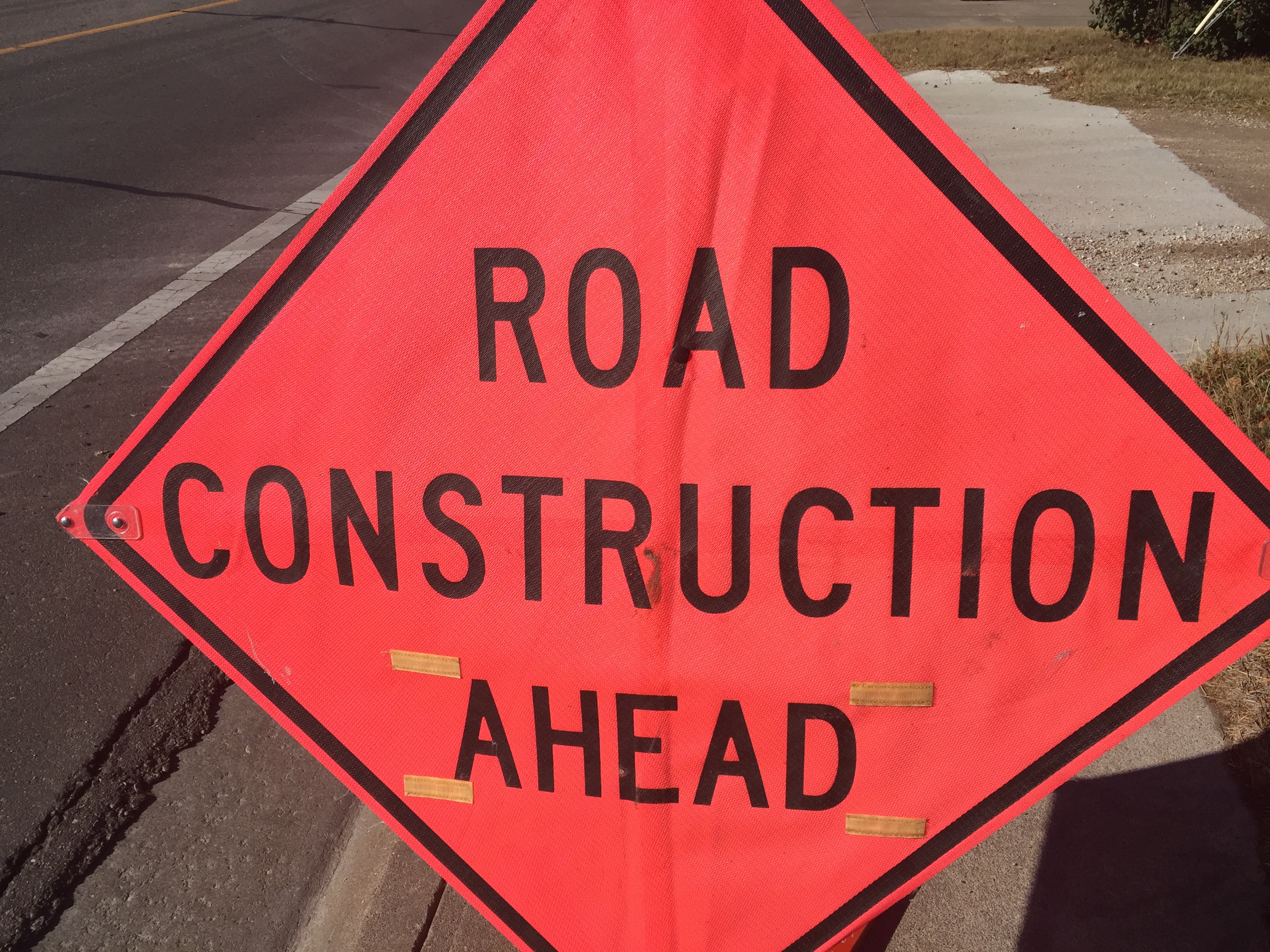
The Kansas Department of Transportation expects to begin work on a mill and overlay project along U.S. 24 in Sheridan County the week of May 21.
The project area covers a 16-mile portion of U.S. 24 from the west city limits of Hoxie to the Graham County line. In addition to the resurfacing, crews will also install rock edge wedges and permanent pavement markings. Traffic will be reduced to one lane and controlled by flaggers and a pilot car during daylight hours. Minor delays, not exceeding 15 minutes, should be expected.
Work is expected to be complete by mid-July, weather permitting.
Venture Corporation is the primary contractor for the project with a total contract cost of $4 million.
Alicia BoorAre weeds showing up in your new alfalfa? If they get thick, your alfalfa will suffer. Check your fields today after listening to some options to control those weeds.
Alfalfa seedlings compete poorly with weeds. Control decisions can be difficult. Vigorous weed growth this spring might be making it extra tough for your seedlings to compete with these weeds.
When weeds, especially broadleaf weeds, threaten seedling alfalfa, one common method to control them is mowing. If used, adjust mowing height so several leaves remain on alfalfa seedlings after clipping to help your alfalfa seedlings regrow rapidly. Also, do not smother small seedlings with clippings. So mow weeds before they get so tall that they produce a large quantity of clippings.
If you would rather spray broadleaf weeds than mow them, use either Buctril, Butyrac, Pursuit, or Raptor. Buctril controls most small broadleaf weeds fairly inexpensively, but alfalfa injury can occur when temperatures exceed 80 degrees. If you expect those high temperatures when you spray, it might be better to use Butyrac, Pursuit, or Raptor. These herbicides control most small broadleaf weeds, but weeds must be less than three inches tall or results will be inconsistent. Pursuit and Raptor are more expensive but their soil activity will continue to control weeds throughout much of the season.
Mowing is not very effective with grassy weeds. To kill grassy weeds use Poast or Select. Use the appropriate adjuvant and make sure you spray before grasses get 4 inches tall or control will be spotty.
Weeds reduce growth of new alfalfa by shading and competing for moisture. You can prevent these problems by acting quickly. Exam your fields soon and control weeds as needed.
BE READY FOR FIRST CUTTING
Got all your corn planted? Working on the beans? Don’t look now, but alfalfa harvest is approaching fast.
You’ve been busy planting crops and getting work done with the late start this spring. But don’t relax just yet because your alfalfa soon may be ready to cut.
Being aggressive on the first cutting is critical if high forage quality is needed. Alfalfa’s forage quality changes faster during the first spring growth than at any other time of the year. Plants are maturing and temperatures are increasing; both cause quality to decline. So don’t delay if high quality is needed.
But what about alfalfa for beef cows? That might be a little different story, especially if you need to rebuild hay supplies. Normally we get our highest total yield by waiting until alfalfa is near full bloom. Not only is yield highest, this also uses available soil moisture most efficiently for alfalfa growth. Some dryland fields may need quite a bit more rain for good summer and fall harvests since many deep subsoils remain dry. But with a good first cut you at least will have some hay of good enough quality to feed your beef cows next winter.
Timing of hay harvest is important whether your needs are for high quality or for high yield. With alfalfa becoming ready to cut soon this spring, don’t miss your best time.
Alicia Boor is an Agriculture and Natural Resources agent in the Cottonwood District (which includes Barton and Ellis counties) for K-State Research and Extension. You can contact her by e-mail at [email protected] or calling 620-793-1910.
Rightly or wrongly, certain First Amendment issues tend to dominate the national conversation more than others. Bring up President Trump’s tweets criticizing the news media, college campus protests of controversial speakers, or the possibility of the government regulating Facebook and you’re bound to inspire a rousing and possibly heated discussion. Mention that state laws protecting critical infrastructure might actually erode the right to assemble and you’re more likely get blank stares and a hasty topic change. After all, it’s an issue that combines the freedom of assembly, which barely anyone knows about, with state and local law, which barely anyone cares about. Throw in the word “infrastructure” and it’s practically anti-clickbait.
Nevertheless, it’s an issue worth paying attention to. At the end of March, legislators in Louisiana and Minnesota proposed bills that would criminalize the activities of groups protesting the construction of oil pipelines (that would be the infrastructure we’re talking about). At least five other states have passed or are attempting to pass similar laws, seemingly inspired by the protests at Standing Rock, which delayed construction of the Dakota Access Pipeline. The American Legislative Exchange Council, an organization of state legislators with libertarian principles, even wrote a model policy for states to use as a template. ALEC’s rationale? “Whether it’s vandalism or protesters turned violent, a few people can cause tremendous harm to their fellow citizens by damaging critical infrastructure sites. Stopping the flow of a pipeline can cause pressure to build and puts thousands at risk of harm from an explosion. While peaceful protests are an important part of Americans’ right to free speech, causing damage and putting others at risk of harm is not.”
You may be thinking that this sounds reasonable enough. But the proposed Louisiana and Minnesota laws go beyond preventing protesters from causing damage to infrastructure. In Louisiana, it’s already a crime to trespass into a critical infrastructure facility. If the new law passes, it would be a crime to conspire to trespass into a critical infrastructure facility, one punishable by up to five years of prison. (The sentence increases to six to 20 years in prison if it’s determined that the conspiracy to trespass could lead to disruption of the infrastructure.) To be clear, the term “conspiracy” merely requires two or more people to agree to do something and at least one of them to take some action to further that objective. The proposed law also expands the definition of “critical infrastructure” to include pipeline construction sites. To review: If this law passes, a protester could go to prison for participating in a peaceful protest at a pipeline construction site…or for taking part in a discussion about that possibility.
In Minnesota, the proposed law would allow anyone who “recruits, trains, aids, advises, hires, counsels, or conspires” with someone who trespasses into a critical infrastructure facility to be charged with a misdemeanor, punishable by one year in jail — or a felony, punishable by 10 years in jail, if the trespasser intended to “substantially disrupt” the facility. Again, this could mean jail time for people who simply take part in a discussion about a peaceful protest, or even people who provide protesters with water or medical attention. And as the International Center for Not-for-Profit Law puts it in their U.S. Protest Law Tracker, “the phrase ‘significantly disrupt’ could be construed to encompass peaceful protests that block access to infrastructure, for instance, which under Minnesota law is broadly defined to include bus stations and bridges.”
As Americans, one of our core freedoms is the right to assemble peacefully in a public space. Like all of our rights, it’s not without limits — the government can place restrictions on when and how we exercise it, and it can decide that certain facilities do not qualify as public spaces. But these proposed laws seem specifically designed to intimidate and dissuade people from protesting at all. If you show up for a protest that takes place in a public space near a pipeline construction site, will you face criminal charges if some of your fellow protesters start talking about trespassing onto the site? Will you face charges if you show up at a meeting to discuss ways to oppose the pipeline and the possibility of trespassing comes up? It’s hard to be certain, and that seems to be the point.
Both of these bills are currently pending (the Louisiana bill is slightly further along, having been approved by the state’s House of Representatives in April). Whether you’re a staunch environmentalist or a lover of pipelines, and however far you might live from Louisiana or Minnesota, this should concern you.
Lata Nott is executive director of the First Amendment Center of the Freedom Forum Institute. Contact her via email at [email protected], or follow her on Twitter at @LataNott.
Some farmers can now look at the possiblity of growing hemp — good for industrial use, no good for getting high — after changes made in Kansas law. FILE PHOTO / HARVEST PUBLIC MEDIA
But the 2018 legislative session that ended earlier this month shook the state’s legal landscape. So what has changed and what hasn’t?
CBD is now legal
Quick recap: Cannabidiol, or CBD, is one of the compounds in the cannabis plant that doesn’t get people high, and that advocates say has medical benefits. Some studies have found it helps people suffering from seizures.
So this year — after years of pleas from the family members of people suffering seizures — lawmakers tweaked the law.
CBD is now legal after Gov. Jeff Colyer signed legislation Monday. And unlike some states — Missouri, for instance, legalized it with tight limits on either who can sell it or who can buy it — Kansas opted for broad access.
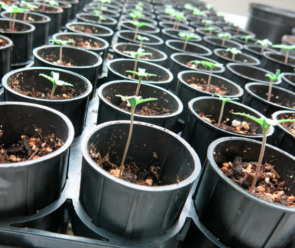
Hemp comes from the same plant species as marijuana, just a different variety with taller stalks (to maximize fiber yield) than the one people use to get high.
Kansas is taking the federal government up on its offer to allow regulated pilot programs for growing, researching and selling hemp. The state agriculture department is working on finding farmers and setting up that program.


















 Today
Today