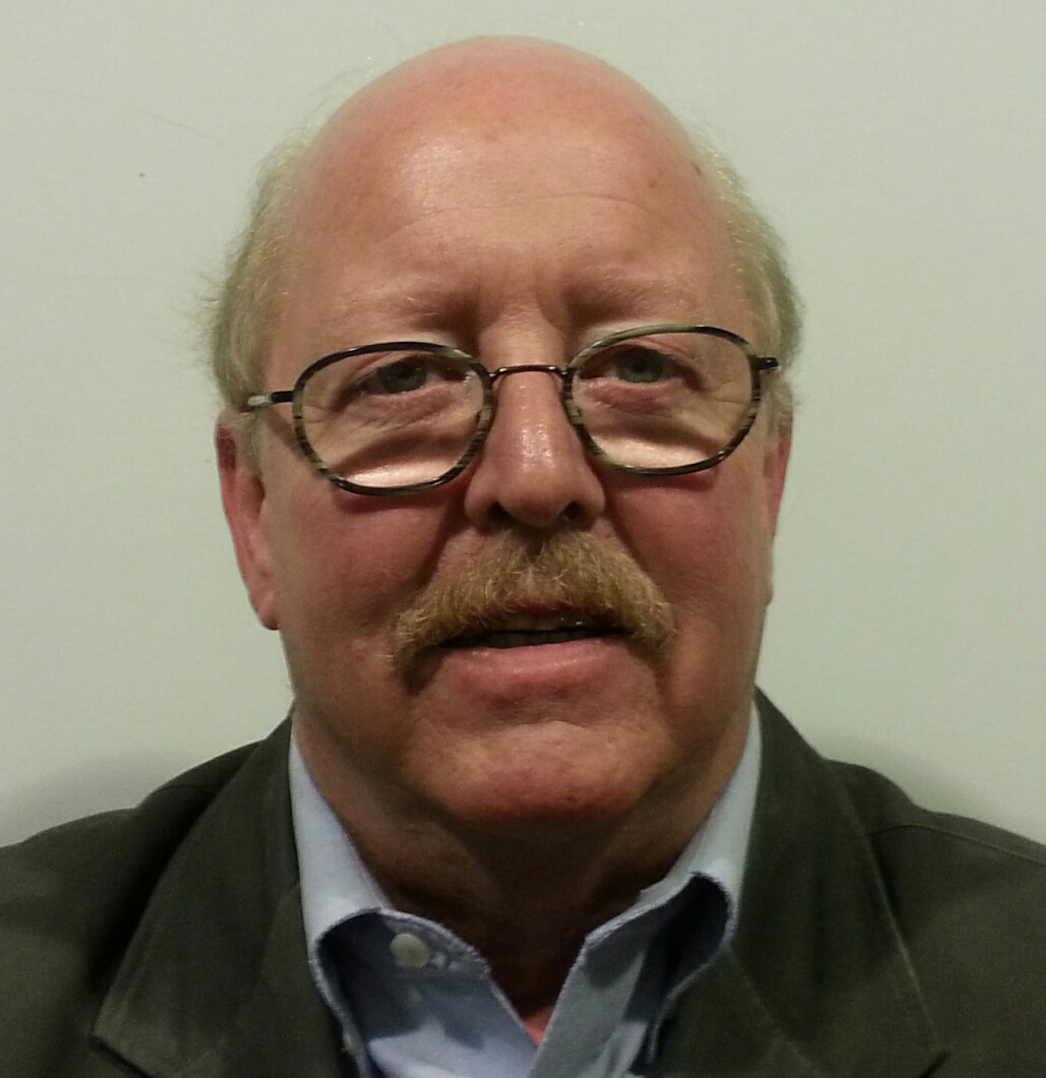
Edwin J. “Eddie” Brungardt of Walker, age 85, Kansas died Monday, May 14, 2018, at Hays Medical Center, Hays, Kansas.
Services will be at 11:00 A.M. Saturday, May 19, 2018, at St. Ann’s Catholic Church, Walker, Kansas.
A vigil service will be at 7:00 P.M. Friday, followed by a Knights of Columbus and V.F.W. rosary at 7:30 P.M. Friday, all at Cline’s-Keithley Mortuary, 412 Main Street, Victoria, Kansas.
Visitation will be from 6:00 to 9:00 P.M. Friday at Cline’s-Keithley Mortuary, Victoria, Kansas and from 10:00 to 11:00 A.M. Saturday at St. Ann’s Catholic Church, Walker, Kansas.
Condolences can be left by guestbook at www.keithleyfuneralchapels.com or can be sent via e-mail to [email protected]
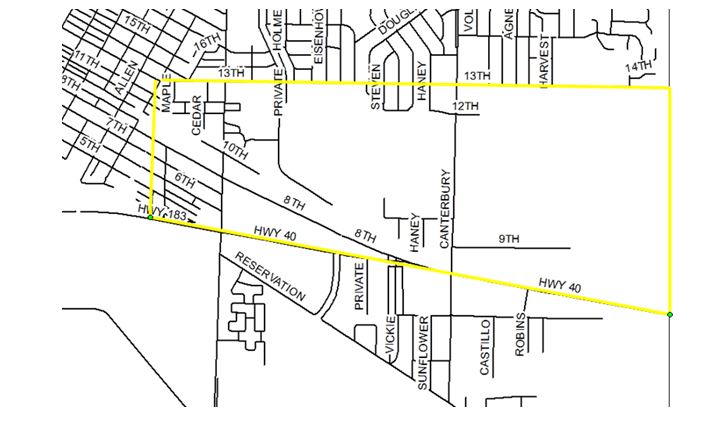
The city of Hays Fire Department will be inspecting and flow testing fire hydrants on Tue., May 15, 2018, in the area of Milner to Commerce Parkway between Highway 183 to 13th St. This is part of a coordinated effort by the city of Hays to inspect all fire hydrants and flush all water mains annually.
The incredibly complicated task of adequately and equitably financing public schools in Kansas will heat up this week and next. Probably a couple weeks after that, we’ll find out whether the Legislature has met the Kansas Supreme Court order to provide adequate and equitable financing of schools.
Last week, remember, it was the 50-page assertions by the state and by the four school districts suing the state for more funding for schools. Long read, and only the school districts had charts in their filing with the high court.
This week, we get the real red meat of the case. It is both the state and the plaintiffs swinging specifically at just what the other side believes make them a winner and why.
Is $525 million in new money over the next five years enough? That’s what the state has appropriated, and somewhat embarrassingly, it’s less than a $200,000-plus consultant hired by lawmakers proposed, which might lead to the closure of pubic K-12 schools next fall.
The state says that it is increasing funding and that it is doing it at a measured pace so that it is used to make kids smarter. Dump that money into schools all at once, and districts won’t have planned how to use it best, so that its results show up on test scores and increases in learning skills, not just fancy football fields and new cheerleader uniforms.
The plaintiffs? Well, they’re basically saying that school districts know what they need to do for students, that they can use a flood of money that they want productively. Schoolteachers need raises and new programs that will make sure all students learn to their maximum abilities. School districts know how to use new money, they just don’t have it.
But the next two weeks are going to be the keys for all the legislative scraps over school funding vs. tax cuts vs. everything else that the state does in keeping Kansas cared for.
This week, each side of the case says why the other side’s defense is flawed. Each is limited to 25 pages of arguments, and those will be the close-up statements that will likely define the scrap that will be presented to the court on May 22.
Those oral arguments—which usually bring some legislators to the Supreme Court chambers to watch—are where the justices get their first chance to question the lawyers for both sides. It’s also the first chance that the public gets to weigh the questions, the issues that the justices have with the new school finance law.
It’s where most of the observers will get an idea of whether the Legislature has fixed school finance to the court’s satisfaction, or whether lawmakers have missed the key elements that the court is looking for in a constitutional K-12 finance law.
We might learn at those oral argument just which way the court eventually will go with its decision. It’ll be watching for smiles, grimaces, the phrasing of questions for the lawyers and the occasional nods that justices try to suppress but which now and again may give an indication of which way they tilt.
The decision, probably in early June? It’s going to determine whether the Legislature needs a special session to fix the formula and make sure schools open this fall or whether the court continues to monitor the case into the future, making lawmakers work toward that constitutionality test every year.
And, there are steps short of “complicity” that the court can take to boost school finance. Those are probably what lawmakers are most interested in. Just what, short of closing schools, might the court order…
Syndicated by Hawver News Company LLC of Topeka; Martin Hawver is publisher of Hawver’s Capitol Report—to learn more about this nonpartisan statewide political news service, visit the website at www.hawvernews.com
Seems Kansas farmers and ranchers are always doing something in their fields, grassland and on our public roads. No matter where you travel in our state you’ll probably wind up approaching farm tractors, trucks and other large ag equipment on the roads.
Tractors, combines and other equipment traveling on our public roadways are required to display slow-moving vehicle (SMV) reflective triangles, and most must also display hazard lights. The SMV markers signify the equipment is moving at less than 25 miles per hour.
Farmers should check to make sure their SMV markers are clean, bright and still reflective. Always check to make sure reflectors and hazard lights are not blocked by equipment that is being towed. After dark, motorized equipment must have properly working headlights.
Motorists must also ensure our highways and country roads are safe. The road runs both ways.
The National Safety Council reports that even if you’re following a tractor from a distance, you’re closing the safety gap between the two of you at an average rate of about 59 feet per second. That’s the length of a football field in just five seconds.
Remember these two words while traveling on rural roads and highways – slow down. Plenty of people travel these roads today – bikers, joggers horseback riders – you name it, they’re out there.
With more and more people from urban areas moving to rural areas, there’s more traffic on our roads and many of them don’t have shoulders to pull over on. That’s one more reason to slow down and proceed with caution.
Motorists remember, relax while driving no matter which roads you travel – busy Interstate highways or a nearly deserted country road. Enjoy the beautiful countryside – but be alert. Impatience is often partly responsible for accidents involving farm vehicles.
While it is understandable motorists become annoyed when caught behind slow-moving equipment, they need to understand such delays are unavoidable, particularly during busy farm seasons like planting and harvest.
Today’s farmers continue to farm more acres. Often their fields are scattered throughout the county. There is no way most farmers can do their job without driving public roads. Just like so many motorists, farmers/ranchers must travel to their place of business.
Practice courtesy. Give them a break. Give yourself a break. And in doing so, they’ll give you a break as well.
John Schlageck, a Hoxie native, is a leading commentator on agriculture and rural Kansas.
OTTAWA — On Saturday, students from the Overland Park campus of Ottawa University were presented with their degrees from Ottawa University during the 153rd Commencement ceremony, held in Fredrikson Chapel on the OU campus. In addition, students from across the country who completed their degrees online were also presented with their degrees.
Fifty-three students earned graduate degrees while 264 students earned their undergraduate degrees.
At OU, students achieve a 3.5 to 3.799 grade point average (on a 4.0 scale) to graduate cum laude. Magna cum laude honors require a 3.8 to 3.899 grade point average. For the highest honors, summa cum laude, students must achieve a 3.9 or higher grade point average. To qualify for honors, students must complete 40 semester credit hours in residence at Ottawa University.
The following students from northwest Kansas earned their degrees:
Almena
Judy L. Wenzl, Bachelor of Science in Nursing
Norton
Megan Ann Mapes, Bachelor of Science in Nursing
Osborne
Lori S. Rothenberger, Bachelor of Science in Nursing
Russell
Sara Nicole Housman, Master of Arts in Education
LAWRENCE — It was Henry Ford, not Kaiser Bill, who was responsible for the decline of the distinctive German dialects spoken by immigrants and their descendants in five Kansas and Missouri settlements during the 20th century.
That has been University of Kansas researcher William Keel’s thesis for the decades he has studied and documented these nonstandard-German speakers. You couldn’t keep their youngsters down on the farm after Ford’s automobile came to the isolated agricultural settlements that had been established in the mid-19th century.
It was that, far more than any anti-German sentiment in the aftermath of World War I, that led to the decline of these linguistically distinctive communities, Keel says, and so he argues in a chapter of a book published last year, “Contemporary Language Contacts in the Context of Migration” (Winter publishing, Heidelberg, Germany).
The exception to the rule is the increasing population of speakers of Pennsylvania German in Kansas: Old Order Amish. They shun the automobile and remain in rural isolation.
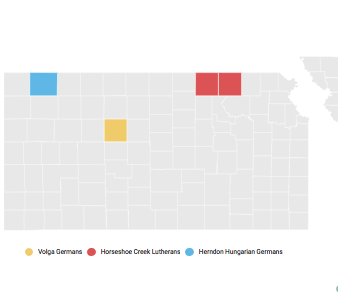
Keel, professor of Germanic languages & literatures, has been studying – interviewing, recording and writing about – these communities since the 1980s. He and his students have published online the Linguistic Atlas of Kansas German Dialects, where the settlements are mapped out and sound samples of native speakers are preserved.
In his article, Keel profiles the following groups, sketching their migratory history, landmarks and distinctive communal features, often involving religion:
Saxon Lutherans in Eastern Perry County, Missouri
North German Lutherans in Concordia, Lafayette County, Missouri
Horseshoe Creek Lutherans in Marshall and Washington counties, Kansas
Volga-German Catholics in Schoenchen, Ellis County, Kansas
Herndon Hungarian-Germans in Rawlins County, Kansas
In each case, the decline in language usage followed a similar, generational pattern, until today there are only a few hundred fluent speakers of these dialects in the two states.
“There were maybe 5,000 Volga German speakers in Ellis County, Kansas, in the 1980s,” Keel said. “Today, there are a few hundred.”
Interestingly, Keel said, the 21st century has seen the growth of one other pocket of German-speaking immigrants – by way of Poland, Ukraine, Canada and Mexico, believe it or not – in southwest Kansas, who have been attracted by jobs in feedlots and meatpacking.
“They speak a variety of Low German called ‘Plautdietsch,’” Keel said. “There are maybe 3,000 to 5,000 German-speaking Mennonites in southwest Kansas. It impacts the school system, with requirements for English as a Second Language courses. It also affects the Kansas statewide health program for farm workers.”
Keel gave his “Henry Ford vs. Kaiser Bill” talk April 20 in Indianapolis as the keynote address at the 42nd Annual Symposium of the Society for German-American Studies. He is also publishing a forthcoming article about the German-speaking community of Victoria, Kansas, in an anthology on “Varieties of German Worldwide.”
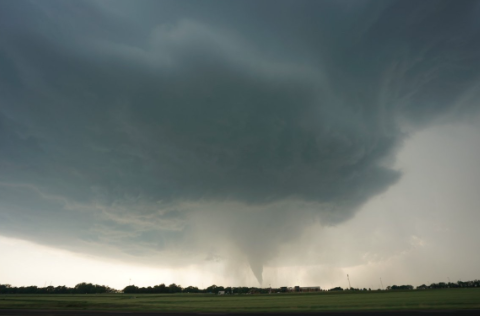
COWLEY COUNTY—Kansas had another round of severe spring weather Monday night. The National Weather Service issued numerous severe weather watches and tornado warnings.
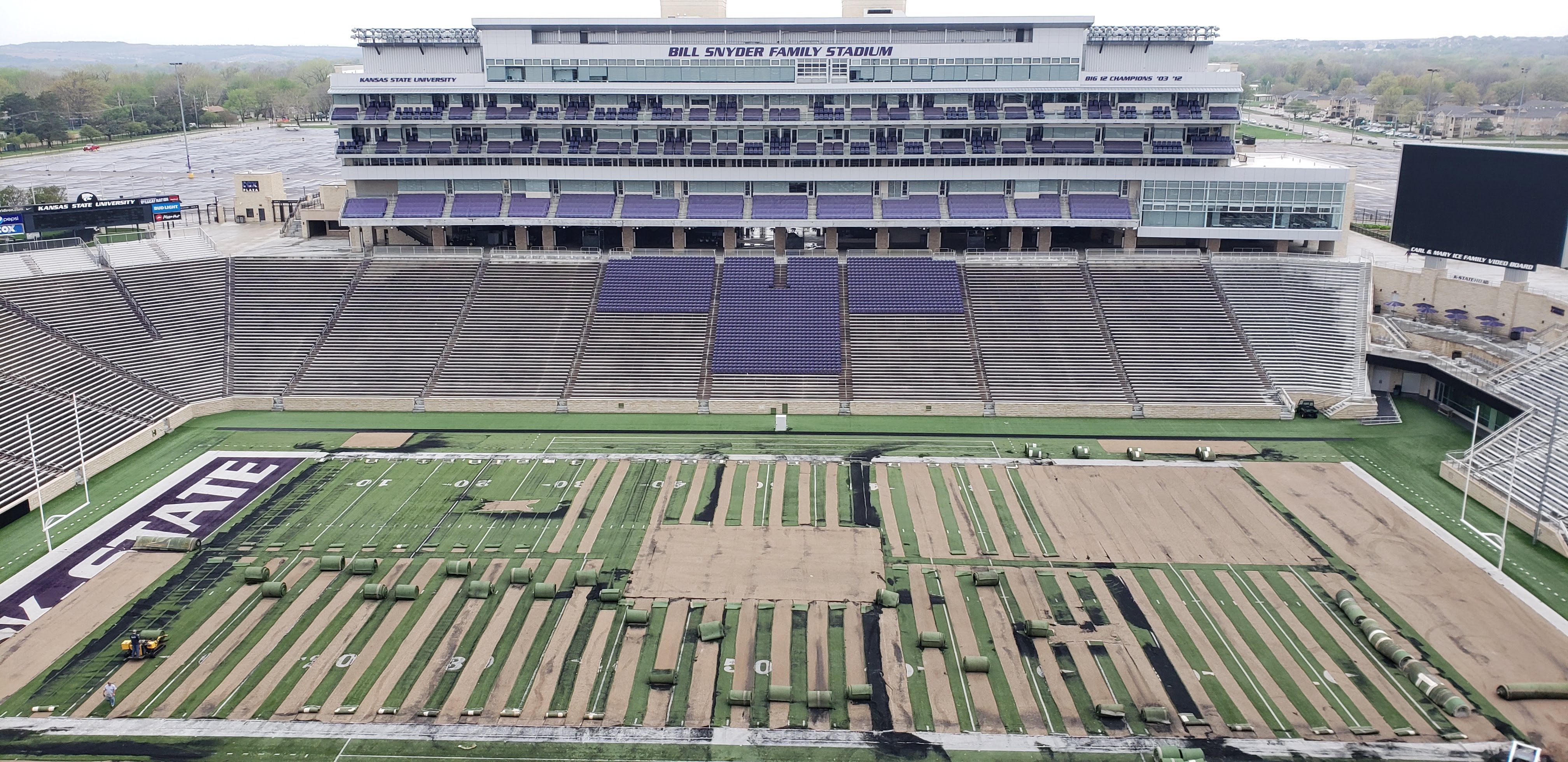
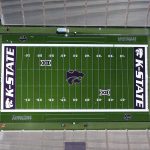
MANHATTAN — For brothers Jake and Bryce Farrant, owners of Kansas Turf, a turf replacement and installation company based in Meriden, Kan., it was a dream come true – the replacement of the turf at Bill Snyder Family Stadium, a place they had visited many times as kids and college students.
“We were thrilled to be chosen as the turf replacement contractor for Bill Snyder Family Stadium,” Kansas Turf CEO Jake Farrant said. “We have a lifelong connection to that place, and as a locally owned, Kansas based company, we couldn’t be more proud to finish this worthwhile project.”
The Kansas Turf Facebook page has tracked the company’s progress on “The Bill,” as its affectionately referred to by fans of Kansas State football, from turf removal, to turf installation, to the “cutting in” of hashmarks, media lines, numbers and finally, the iconic Powercats.
Kansas Turf was proud to partner with AstroTurf on the BSFS project. The inventor of synthetic turf, AstroTurf is one of the most recognized brands in American sports.
Since 1965, the AstroTurf brand has been driven by forward thinking ingenuity. Today AstroTurf continuously improves its system design to deliver playing surfaces with the most realistic, sport-specific performance, longest lasting durability, and sound player protection.
Kansas State is the first FBS program in the country to install the latest artificial turf innovation from AstroTurf – RootZone Trionic 3D.
“Kansas Turf has completed many jobs for AstroTurf in the past and are eager to continue building the relationship,” Farrant said.
Kansas State University Senior Associate Athletic Director Jeremy Neiderwerder said he enjoyed working with Kansas Turf on the installation.
“Kansas Turf has been a great partner through the entire process of replacing the surface at Bill Snyder Family Stadium,” Niederwerder said. “They remained ahead of schedule throughout the entire installation process and have provided us with a surface that will greatly enhance our student-athlete performance on the field as well as the viewing experience for our fans and television viewers across the country.”
And the field at Bill Snyder Family Stadium is just the latest project for the northeast Kansas company that also does traditional natural sod installation and cemetery turf renovation.
“We streamline all of our removal and install processes by having state of the art equipment and high character employees that have a passion for what they do and take great pride in their work,” Farrant said.
Other noteworthy projects include the Bettis Family Sports Complex north of Lake Shawnee in Topeka, Kan., Northern State University’s Swisher Field in Aberdeen, South Dakota, and the Jefferson West High School football field, where turf was removed from the Superdome in New Orleans and installed on the Jeff West field in Meriden.
“We are a big enough company to complete any job, but are small enough to take care of our customers the way they should be treated,” Farrant said. “The people you call for a bid will be the people on the job getting their hands dirty, and those same people will be available for years to come for maintenance calls and questions or new projects.”
Kansas Turf has completed over 20 fields in the last 18 months, and hopes to continue its expansion, Farrant says, noting that their prices are lower than most of their larger competitors.
To follow Kansas Turf’s progress at Bill Snyder Family Stadium, or any of their other turf installation projects, visit their Facebook page or find them on Twitter. For more information, visit their website at www.kansasturf.com.
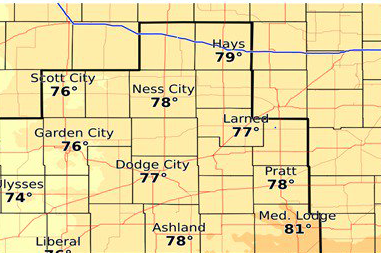
TodayA 20 percent chance of showers and thunderstorms before 10am. Partly sunny, with a high near 79. North northeast wind 7 to 10 mph.
Tonight Partly cloudy, with a low around 58. East wind 5 to 9 mph.
WednesdayA 20 percent chance of showers and thunderstorms. Partly sunny, with a high near 80. Northeast wind 5 to 8 mph becoming southeast in the afternoon.
Wednesday NightA 20 percent chance of showers and thunderstorms before 1am. Partly cloudy, with a low around 58. East southeast wind 6 to 9 mph.
ThursdaySunny, with a high near 85.
Thursday NightA 20 percent chance of showers and thunderstorms. Partly cloudy, with a low around 63.
DE SOTO, Kan. (AP) — Authorities have found the body of a man who was swept away in the Kansas River while trying to rescue a young child.
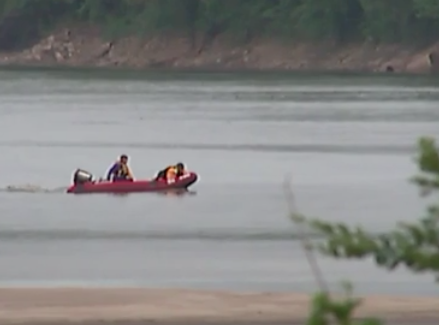
Crews search the lake on Sunday photo courtesy Fox4KansasCity
Johnson County Sheriff’s Office Lt. Paul Nonnast says 40-year-old Rogelio Paredes-Nino apparently drowned. His body was found around 9:45 a.m. Monday.
Nonnast says Paredes-Nino and another man tried to help after the child began to struggle around 5 p.m. Sunday at a boat ramp at Roverfest Park in De Soto. The city is about 25 miles (40.23 kilometers) west of Kansas City, Missouri.
Nonnast says one of the men was rescued a short time later and is hospitalized in stable condition. He says the child made it safely to shore. Crews searched for Paredes-Nino until darkness fell and resumed their efforts when it was light again.
———
DE SOTO, Kan. (AP) — Authorities have rescued one man from the Kansas River and are searching for another.
Just after 5p.m. Sunday, crews were called to a boat ramp at Roverfest Park in De Soto, which is about 25 miles west of Kansas City.
Police say two men were swimming with family along a sand bar. One of the men was found downstream and was able to be rescued. He is now in stable condition.
Todd Maxton, the interim chief of with Johnson County’s Northwest Consolidated Fire District, says the search for the other man was suspended as darkness fell. Several departments had helped with the search, including a Kansas Highway Patrol helicopter crew.
TOPEKA – The Democratic National Committee announced Tuesday the Kansas Democratic Party (KDP) is a recipient of a grant from the State Party Innovation Fund (SPIF), a first-of-its-kind, competitive grant program that incentivizes early organizing through state parties and supports efforts to engage local communities.
The Kansas Democratic Party will receive a $50,000 grant, which will be used to help train and engage the next generation of Kansas Democrats. The Kansas Democratic Party is focused on preparing young Kansans through leadership development, new campaign skills, and digital organizing tactics. The grant will also help the Kansas Democratic Party continue their work to help candidates implement new volunteer and voter outreach tactics in rural communities and small towns, run stronger campaigns, and compete in every ZIP code across the state.
“The Kansas Democratic Party is putting in the hard work to deliver the leadership their state deserves,” said DNC Chair Tom Perez. “We know that if we empower and organize young people, they will be the difference-makers in 2018 and into the future. The DNC is proud to partner with the Kansas Democratic Party to ensure that the state party has the tools, resources, and first-rate staff they need to expand their ranks, engage and mobilize voters in rural communities across the state and lift Democratic candidates running in offices up and down the ticket, across the country to victory in 2018, 2020, and beyond.”
“Kansas Democrats are committed to standing up for working Kansas families and fighting for a stronger future for our state,” said Kansas Democratic Chair John Gibson. “With this grant, we will be able to continue our work to build our base, recruit strong local candidates, invest in training programs, and expand upon our efforts to build stronger relations with young voters and in rural communities. We’re grateful that the DNC shares our commitment and is helping to execute our plan to recruit the next generation of leadership, elect Democrats up and down the ticket, and mobilize voters in every corner of Kansas.”
In addition to SPIF, through the DNC’s Every ZIP Code Counts program, state parties have consistently been receiving $10,000 a month since October 2017, which is a 33% increase over the base funding levels from 2016 and a 100% increase over 2015, and is based on state-specific strategic plans.