We have a brand new updated website! Click here to check it out!

Tuesday front brings more than an inch of rain to Hays

The end of May continued to bring moisture to the region Tuesday night, as an early evening front rolled through Ellis County.

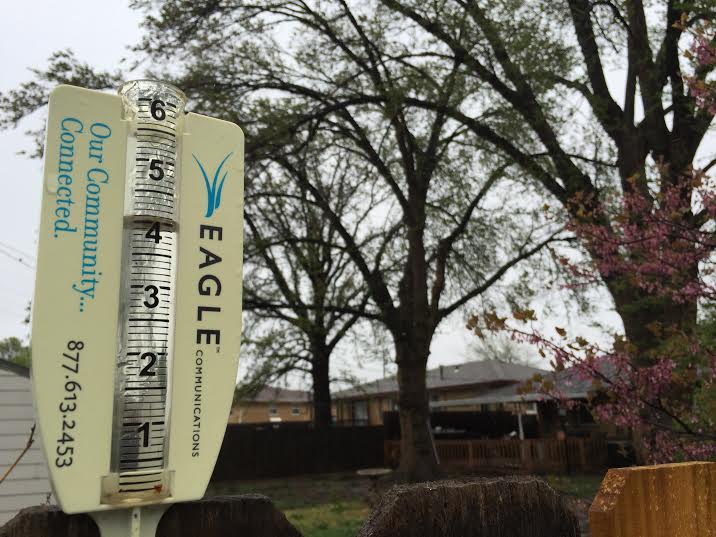
The storm dumped more than an inch of rain in Hays, with 1.38 inches reported Tuesday morning at the Eagle Media Center on Hall Street. North of Hays, there were reports of up to 1.73 inches of precipitation.

The Ellis area received just less than an inch, with reports ranging from 0.8 to 0.94 inches.

Most of Trego County received about a half-inch of rain, with reports ranging from 0.71 to 0.26 inches.

Osborne County also had reports of rainfall in excess of an inch, with reports between 0.7 and 1.02 inches.

Graham County, which was hit Monday by nearly 7 inches of rain that caused extensive flooding, was mostly spared from Tuesday’s downpour, with a report of just 0.06 inches in the southwest corner of the county.

There is a slight chance of additional storms overnight tonight. Click HERE for the complete extended forecast.

KU to slash 2019 budget by $20 million

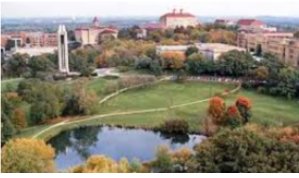
LAWRENCE — The University of Kansas will enact a budget adjustment on the Lawrence campus to address fiscal constraints and cut costs for fiscal year 2019.

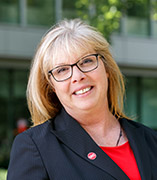
CARL LEJUEZ-photo courtesy University of Kansas

According to a media release from KU, the adjustment entails a 5.87 percent across-the-board budget reduction for all Lawrence campus departments and units, including central administration. The reduction will be implemented beginning July 1, the start of the next fiscal year.

“The map to move us forward readjusts our budget to meet our obligations and helps us put our students, staff and faculty first,” said Carl Lejuez, interim provost and executive vice chancellor. “This includes a commitment to keep tuition increases as low as possible and to enact a plan for getting back to annual merit raises, even if small at first.”

Lejuez has already met with deans and vice provosts to discuss how they can manage budget reductions to their respective units in a way that best preserves their mission and core functions.

The need to recalibrate the university’s budget is the result of many long-term commitments and investments that each year have exceeded revenue, combined with institutional budgeting practices inconsistent with the current challenges of higher education funding, as well as a decade-long trend of state funding declines.

“Staying the current course is not an option,” Lejuez said. “If we make no changes in the coming year, we will have overspent our budget with no remaining balances to support this overspending, and operations will be short a minimum of $50 million within five years. Additionally, spreading the cut over several years is not an option. This tactic costs us more financially; perpetuates a climate of uncertainty about job security, raises and tuition costs; and keeps us in a constant state of want and need rather than advancing us toward a position of stability that we all deserve.”

The Office of the Provost has already begun developing a longer-term plan that includes the development of a new budget model.

“We believe these measures, combined with existing positives — including partial budget restorations from the Kansas Legislature and stable enrollments at a time when many other universities have seen decreases — will lead to quick recovery and sustainability moving forward,” Lejuez said.

The across-the-board reduction will trim $20 million from the Lawrence campus budget.

“I have spent a great deal of time with Provost Lejuez and other KU leaders evaluating our budget and projecting our needs and goals for the coming years,” said Chancellor Douglas A. Girod. “This year’s budget reduction will be difficult, but combined with a new budget model, this is the right strategy to address our challenges and put us in a position to fully align our resources with our core mission. I applaud Provost Lejuez and his team for their vision and leadership, and I am confident KU will be a stronger university for having gone through this process.”

LETTER: Hawver’s assessment of Democratic race misses the mark

I’m writing today to dispute a single point in the opinion piece published in the Hays Post on May 29, 2018. It was penned by Martin Hawver, publisher of Hawver’s Capitol Report headlined: “Choices this year for Democrats in the governor’s race.”


I am not here to take issue with Hawver’s history of Democratic gubernatorial primaries in Kansas, or any of the other points he makes in this opinion piece, save this one statement:

“While there are two clear leaders—Sen. Laura Kelly, D-Topeka, and former state Rep. Josh Svaty, of Ellsworth and later Topeka — just how they come out is uncertain.”


This caught my eye due to fact that Hays Post is a product of Hays, Kansas, home of Fort Hays State University’s Docking Institute of Public Affairs. It also caught my eye in that this past April, the Docking Institute released “Kansas Governor’s Race Poll – Spring 2018.” In that poll, the recognition of candidates Kelly (24.3%) and Svaty (19.9) was far below the most recognized Democratic candidate in the race. That is former two-time Wichita Mayor Carl Brewer, the most recognized democrat with 38.4%. It bears mentioning that Wichita is, by a factor of two, the largest city in the State with a population of nearly of 400,000. Brewer also won re-election in 2011 with 69% of the vote.

I am a fan of Mr. Hawver’s reporting and punditry, wisdom and wit, but in this one instance, unbiased verifiable polling information exists from one of our Kansas Regent universities that shows Carl Brewer to be the frontrunner with a bullet.


Chris Morrow

Lieutenant Governor candidate


FHSU grad named VP for advancement at Indiana Biosciences Research Institute

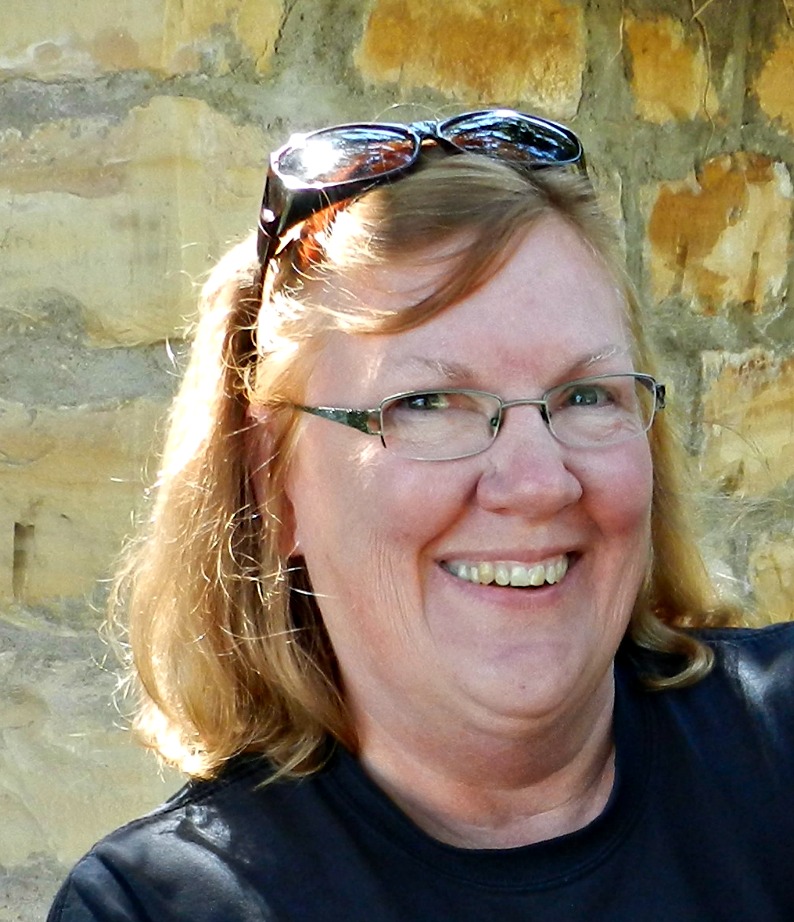
Grinage/UIC
INDIANAPOLIS — The Indiana Biosciences Research Institute today announced the appointment of Stephanie Grinage as vice president for Advancement. As IBRI’s top development officer, she will serve as the primary strategic partner in cultivating and maintaining new and existing relationships with major donors and oversee and manage all aspects of IBRI’s fundraising programs. She will assume this role with the IBRI June 4.

Grinage currently serves as associate vice chancellor for Medical Advancement and associate dean for the University of Illinois at Chicago (UIC) College of Medicine where she directs all advancement activities across the College of Medicine campuses to maximize private philanthropy. Prior to UIC, she served in fundraising positions as KU Endowment’s vice president for Medical Development supporting the University of Kansas Medical Center; associate vice president for the University of South Florida/USF Health, and in leadership development positions with Arizona State University and Wichita State University.

“I look forward to being a critical resource in helping IBRI support its strategy of enabling discovery science and innovation within and beyond the state’s borders,” Grinage said. “IBRI’s focus on collaborating with academic and industry researchers combined with its continued growth provide a solid foundation for improving the health of diverse populations.”

Grinage is a veteran of three significant endowment campaigns: the $1 billion Campaign Illinois initiative, the Campaign for Leadership at Arizona State University, and the $1.2 billion, “Far Above: The Campaign for Kansas”. During her tenure at KU Endowment, she was a member of the team that created the KU Institute for Advancing Medical Innovation, a model for philanthropy, industry and academia to collaborate in advancing university innovations in the life sciences. Most recently, she has been instrumental in launching the $750 million IGNITE campaign for UIC.

“We are delighted to welcome Stephanie to the institute’s senior leadership team. We are convinced that Stephanie will assist us in securing the financial resources needed to achieve IBRI’s mission in developing innovative solutions to combat and/or ultimately cure diabetes and selected cardiometabolic diseases,” said Rainer Fischer, Ph.D., chief executive officer and chief scientific and innovation officer for IBRI. “With nearly 30 years of experience in advancement, Stephanie knows how to develop highly collaborative, strategic and sustainable donor relationships, which will support our significant growth plans and assist in achieving our strategic goals.”

Grinage received her Bachelor of Arts degree in communications from Fort Hays State University. She also attended Arizona State University in Tempe, Ariz., and she is completing her Executive Masters in Health Administration from the University of Illinois at Chicago.

About the Indiana Biosciences Research Institute
The Indiana Biosciences Research Institute (IBRI) is an independent, nonprofit discovery science and applied research institute focused on innovation targeting cardiometabolic diseases, diabetes and poor nutrition. Inspired by the state and Indiana’s leading life sciences companies, research universities and philanthropic community, the IBRI is building a world-class organization of researchers, innovators and entrepreneurs that will catalyze scientific discovery and its application, resulting in improved health outcomes for patients and consumers. Initial funding was provided by the State of Indiana, Lilly Endowment, Eli Lilly and Company, Corteva Agrisciences, Agriculture Division of DowDuPont, Roche Diagnostics, Indiana University Health and the Indiana University School of Medicine. IBRI is looking to expand partnerships with life sciences and IT companies and philanthropic organizations to increase the potential for research, discovery and collaboration. For more information about IBRI, please visit www.indianabiosciences.org.

— GLOBE NEWSWIRE

Next Strategic Doing to focus on funding sources

HCF

Ellis County’s next “Strategic Doing” will be held at 6:30 p.m., Monday, June 18, at The Press Restaurant in the Hadley Center, 230 East 8th Street, Hays. The meeting will include information about writing strong grant proposals and how to secure funding from various available sources.

This event is open to current Strategic Doing teams, as well as others in the community who would like to learn more about the projects and the process. During previous Strategic Doing meetings, participants have identified and prioritized community needs into eight areas, which designated teams are now working to address. These areas include:

• Becoming a more open, welcoming and inclusive community.
• Distribution of social service information in a like environment.
• Filling youth activity gaps in the community.
• Business development, including recruitment, retention and economic development.
• Effective transportation in the region for people, roads, and medical access across cities/towns and counties.
• Education initiatives and communication.
• Helping senior citizens become self-sufficient.
• Retention of graduating students, both from high schools and secondary education, including university, technical schools and professional academies.

Hosted in partnership with the Dane G. Hansen Foundation, Strategic Doing aims to guide Ellis County residents through the process of prioritizing, planning and implementing sustainable county-wide community improvement projects identified by community members at-large. Projects and ideas that develop from these meetings will be eligible to apply for funding through the Dane G. Hansen Foundation Community Grant Fund at Heartland Community Foundation or directly to the Dane G. Hansen Foundation.

This event is free and open to the public. Refreshments will be provided. Please RSVP to Sandy Jacobs at 785-621-4090 or [email protected].

KZ Country Cheesy Joke of the Day 5/30/18

khaz cheesy joke logo 20110802Classic Glass Problem

One day in philosophy class they spent a great deal of time debating
whether the glass was half full or half empty. After the class, one
student was feeling pretty good about himself and what he was learning
at university, so when he went home he tried to continue the discussion
with his family.

With maximum drama, he took a 12 ounce glass from the cupboard and
poured in 6 ounces of water. Then took it into the dining room and
placed it in the middle of the table. He proudly asked his family, “can
anyone tell me whether this glass is half full or half empty?”

Without missing a beat, his grandmother replied, “depends if you’re
drinking or pouring.”


Join fans of 99 KZ Country on Facebook:  https://www.facebook.com/99KZCountry


Deadline to file for election is Friday

By JONATHAN ZWEYGARDT
Hays Post

While the August primary election is still a few months away, the deadline for those running for office to submit paperwork is this Friday, June 1.

In Ellis County, the First District County Commission position is up for election. The seat is currently held by Republican incumbent Marcy McClelland. As of Tuesday, two people — Butch Schlyer and Chris Rorabaugh — have filed to fill that seat.

According to County Election Officer and Clerk Donna Maskus, those interested in running for the county commission seat as either a Democrat or Republican must pay a $50 state filing fee and can either file by petition or pay 1-percent of a commissioner’s yearly salary.

If a candidate chooses to pay the filing fee, it is $197.76 plus the $50 for a total of $247.76.

A party candidate can also collect signatures from 3-percent of registered voters in that district. For a Republican, that is 79 signatures and 40 for a Democrat.

Independent candidates can only file by petition. They have to collected 67 signatures from registered voters in the district and pay the $50 state fee. The deadline to file as an Independent is Monday, August 6.

There are also three seats up for election on the Ellis City Council. Those candidates can pay the $20 filing fee or file by petition and collect signatures from 41 registered voters from within the city of Ellis.

The Ellis City Council election only appears on the Nov. 6 general election ballot.

Also up for election in Ellis County Precinct Committeemen and Committeewomen. There is no filing fee and these positions are elected in the August primary.

The position of Township Clerk is also up for election in November. The filing fee is $1 or a candidate must get signatures from 3-percent of registered voters in the township. There are 12 townships in Ellis County.

At the state level, there are a number of seats up for election. They include governor, secretary of state, attorney general and all 125 state representatives.

Anyone interested in filing for local office must do so at the Ellis County Administrative Center at 718 Main St. in Hays by noon on Friday, June 1.

To file for statewide office, candidates must submit the paperwork to the Kansas Secretary of State’s office.

Man hospitalized after Kansas officer-involved shooting

DOUGLAS COUNTY— Law enforcement authorities are investigating an officer-involved shooting.

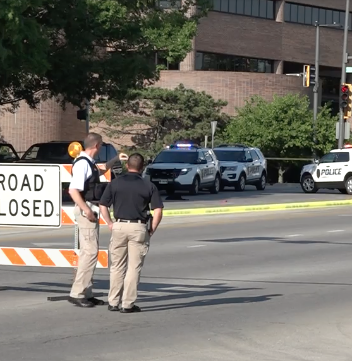
Police on the scene of the officer-involved shooting investigation-photo courtesy WIBW TV

Just after 5p.m. Tuesday, an officer with initiated a traffic stop on W. 6th Street just west of Massachusetts Street in Lawrence, according to officer Drew Fennelly.

Moments later, the officer called in distress for emergency assistance. As officers arrived to assist, some type of struggle was occurring and an officer fired a weapon, striking the subject.

The subject is in stable condition at an area hospital.

A knife was recovered at the scene, it is unknown at this time if it was involved.

The Johnson County Sheriff’s Office in in charge of investigating the incident.

Police released no additional details late Tuesday.

News From the Oil Patch, May 30

By JOHN P. TRETBAR

Operators in Kansas produced more than 2.2 million barrels of crude oil in February, just over 5.6 million barrels for the first two months of the year. The Kansas Geological Survey said the two-month total in Barton County was over 277,000 barrels, an increase of approximately 112-thousand barrels. Ellis County’s total was over 431-thousand barrels, adding 182,000 barrels in February. Production in Russell County increased by 111-thousand barrels to 256-thousand through February, and in Stafford County, operators produced 61 thousand barrels for a two-month total of 164-thousand barrels.

Even with recent drops in price, Kansas oil producers are bringing home more money for their crude than they have in three years. Over the last two years, the average price for a barrel of Kansas Common crude has increased more than $25. The most recent monthly average available from CHS in McPherson is for April, 2018, at $56.55 per barrel. That’s more than $15 dollars higher than the average in April of last year ($41.40), and another ten dollars higher than the average in April of 2016 ($31.275). The peak monthly average price for Kansas Common crude in McPherson dates back to June of 2008, when the former NCRA refinery paid out an average of more than $124 a barrel. Kansas Common starts this week at $58.25, amid dropping futures prices.

The announcement of a possible boost in output from OPEC and its allies sent shock waves through the crude marketplace. Domestic prices plunged more than four percent Friday and continued the plunge Tuesday. OPEC and Russia are considering relaxing their production cuts, increasing production to meet a shortfall in supply from sanction-targets Iran and Venezuela. Bloomberg said they’re considering an increase of from 300,000 and 800,000 barrels per day, while Reuters said the number could be as high as 1 million barrels.

London Brent now commands a nearly $9 premium over U.S. futures. Reuters reports that the biggest spread since March of 2015, suggesting U.S. exports are becoming more competitive.

Canada’s federal government said Tuesday it is buying a controversial pipeline from the Alberta oil sands to the Pacific Coast to ensure it gets built. The government plans to spend $3.4 billion in U.S. dollars to buy Kinder Morgan’s Trans Mountain pipeline, which would allow Canada to get higher prices by exporting to Asia. Houston-based Kinder Morgan earlier halted essential spending on the project and said it would cancel it altogether if the national and provincial governments could not guarantee it.

Baker Hughes report a big bump inn the national tally of active drilling rigs Friday, 1,059 active rigs, an increase of fifteen oil rigs. Texas added nine rigs and the Permian Basin total increased by eleven. Independent Oil & Gas Service reported 11 active rigs in eastern Kansas (down five) and 25 west of Wichita (unchanged). The number of rigs in transit in Kansas was up six, while operators move in completion tools to five well heads in Barton County and six in Ellis County. They’re drilling at one site in Ellis County and one in Stafford County. Drilling is about to commence on a pair of leases in Barton County.

Independent Oil & Gas Service reported 29 newly-completed wells for the last week (604 so far this year). That’s 15 completions in eastern Kansas and 14 west of Wichita, with two in Barton County and one in Ellis County.
Operators filed 37 new drilling permits last week, 624 year-to-date. There were 25 east of Wichita and 12 in Western Kansas, including two new permits in Ellis County.

A lawsuit moves forward in Oklahoma in which the plaintiffs plan to explore the scientific link, if any, between earthquakes and oil field saltwater disposal. A judge approved class-action status and set a September trial date for the lawsuit, in which Jennifer Lin Cooper blames Tulsa-based oil company New Dominion for injuries and damage caused by a string of earthquakes in 2011. One temblor in Prague, Oklahoma was the first in the state linked by scientists to the energy industry practice of pumping oil-field wastewater into class-2 disposal wells. Residents and businesses in nine counties can join the lawsuit, now scheduled September 10. The oil company has declined comment to numerous media outlets, but in court filings has denied causing the earthquakes. Cooper’s lawyer says he intends to prove the quakes were caused by New Dominion’s operations.

The patch in Texas recorded its first year of net positive job growth since 2014. The Texas Independent Producers and Royalty Owners Association said the oil and gas industry supported more than 325-thousand direct jobs in Texas in 2017. Federal stats show the trend continued through the first quarter of 2018. But, TIPRO President Ed Longaneker warned that employers in various segments of the industry are already beginning to encounter a shortage of available talent, with thousands of open positions in Texas in support activities for operations and drilling.
Workforce recruiting is once again at the forefront in western North Dakota’s oil industry. The Bismarck Tribune reports that demand for drivers and heavy equipment operators is contributing to nearly 9,400 job openings statewide by next year. Job Service North Dakota official Cindy Sanford says the agency participated in four job fairs last week, and recruiters hired more than half the people attending.

Anadarko Petroleum said Wednesday it has reached legal settlements with the families of two men killed in a northern Colorado home explosion linked to one of the company’s wells. The April 2017 explosion in the town of Firestone killed Mark Martinez and Joey Irwin. Texas-based Anadarko said it would not disclose the details of the agreements.

<
MADORIN: Fawn nursery

Native Kansan Karen Madorin is a local writer and retired teacher who loves sharing stories about places, people, critters, plants, food, and history of the High Plains.

Years ago our family tent-camped at Slough Creek Camp Ground, a primitive site at the north end of Yellowstone National Park where wildlife is abundant and close. That particular summer, the regions’ fawn population exploded. Does led babies to the stream bank directly across from our tent. While my husband fished, transfixed little girls and I watched delicate, speckled creatures scamper and nurse while their mommas browsed and occasionally cleaned a baby. This is my fondest memory of camping with small children.

Our daughters are grown now, but sometimes an event sparks old recollections that make it seem like only yesterday that we were three squealing females trying to stifle our glee at seeing a dozen spotted babes so close we could almost touch them. What triggered this reminiscence was an abundance of fawns in our rural backyard one summer.

I mentioned in another essay that we lost our long time guard dog who took his duty to scare deer away very seriously. After Tucker died, bucks, does, and fawns passed safely within feet of the house, browsing shrubs, trees, and flowers and drinking out of the creek running at the base of our yard. Awakening each morning, I anticipated viewing multiple examples of wild America that visited daily.

Keep in mind, these animals have delicate noses, as well as sharp ears and eyes. As a result, they don’t hang out when we garden or sit on the back porch. That’s too much human contact for their comfort—as it should be.

Interactions with them required camouflaged viewing from the dining room window that overlooked Big Creek and doubled as a photographer’s blind. Wild beasts are so cautious that any movement or noise from inside the house spurs a dash to safety. To prevent scaring the focus of my observations, I moved slowly, making sure my camera didn’t beep and frighten these tawny beauties.

That morning, I began the day spying on a little one nursing while his mom browsed the creek banks. She ate while baby fed, and then she licked him thoroughly before they meandered to a nearby alfalfa patch. Later, I walked by the window while I dusted and noted a young buck standing half hidden in tall grass. I got a good look, but he heard the beep of my camera so I missed my photo op.

Later, another momma brought her singleton to water where it frolicked while she drank. A fawnless doe accompanied her, and I photographed them as they nibbled greens for twenty minutes.

I was grateful to see so many deer that day, and then life got better. Looking out the bathroom window, I noticed a mom with more mature twins wading the creek. Her babies leapt and charged one another in the slow-moving stream. When they braved approaching the house, mom shooed them back into the water.

My own girls may be grown and the memory of that day at Slough Creek Campground distant, but those moments watching fawns out my own window compressed time, making it seem like it was not so long ago. A hiding place and a ready camera helped me capture memories to share when our daughters visited and we recalled a long distant magical day.

Native Kansan Karen Madorin is a local writer and retired teacher who loves sharing stories about places, people, critters, plants, food, and history of the High Plains.

Work underway on U.S. 36 in Smith County

KDOT

The Kansas Department of Transportation has started the construction of turning lanes for the Smith County Memorial Hospital on a portion of U.S. 36 in Smith County beginning at the east edge of Smith Center and extending approximately 1/4 mile east.

Project work includes earthwork, reinforced concrete box (RCB) extension, storm sewer pipe, curb and gutter, milling, HMA paving and pavement marking. Traffic will be reduced to two lanes with a 12-foot wide width restriction and, at times, reduced to one lane controlled by flaggers during daylight hours. Minor delays not exceeding 5 minutes should be expected.

APAC-Kansas Inc. Shears Division is the primary contractor for the project with a total contract cost of $471,000. Work is expected to be completed by the beginning of August, weather permitting.

Tuesday storm brought hail, heavy rain and a tornado

GRAY COUNTY —Another round of spring weather brought high winds, rain, hail and tornadoes to Kansas.

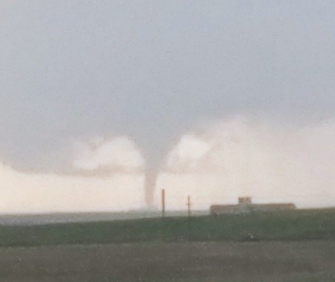
A large tornado briefly touched down in a rural area near Ensign in Gray County, according to the National Weather Service. There are no reports of damage or injury.

There were numerous reports of hail across Kansas from Tuesday’s storm.

The National Weather Service says there is a slight risk for severe thunderstorms across southwest and portions of south central Kansas late Wednesday afternoon and evening.

Copyright Eagle Radio | FCC Public Files | EEO Public File