We have a brand new updated website! Click here to check it out!

Calista Leigh Isbell

Calista Leigh Isbell, age 15, of Hays, Kansas passed away Wednesday, May 2, 2018, in Hays. She was born November 17, 2002, in Suixi, Guangdong China. Calista was adopted on May 24, 2004, by Jeanne Isbell, who became her loving and devoted mother.

Calista was a student at Hays High. She participated in softball, tennis, and karate. She enjoyed chess and started the Hays Middle School chess club. She was a vocalist and musician playing the clarinet, piano, and guitar. She was also an avid reader and enjoyed drawing.

She cherished her friends, especially Alexis White, who would spend the night filling the house with laughter long into the night. Singing and music were Calista’s passions. Her happiness could not be contained as she, along with a friend, won first place in the Hays High School talent show. She also earned a I rating for her clarinet solo at the State Music Festival and an excellence rating for her vocal solo. Listening to her play the piano at home was a joy for her mother.

She worked so hard at school, earning straight A+’s, and her teachers loved her attitude, helpfulness, and sense of humor. She aspired to be a pediatric oncologist and was considering colleges with Stanford being her first pick. Last summer she was invited to tour with the Kansas Ambassadors of Music to seven European countries singing the choir and playing in the band.

Calista loved her brothers and sisters. We will always remember her playful banter with Christopher whom she cherished. She considered being a family the most important part of life. She hoped as they grew up they would always stay connected.

She is survived by her mother, Jeanne Isbell of Hays; two sisters, Cori and Judith Isbell, and two brothers, Jesse and Christopher Isbell, all of Hays; uncles Scott Isbell (Carol) of San Juan Capistrano, CA, Rand Isbell (Vilma) of Canyon County, CA, and Dann Isbell (Jessica) of Taiwan; aunts Lynne Isbell of Davis, CA, and Leigh Isbell of Oberlin, KS, numerous cousins, and a very special family friend, Merlin Schroer of Hays. She was preceded in death by her grandmother, Judith Isbell Miller, and family friend John Leyda of Oberlin, KS.

Memorial services will be 3 p.m. Sunday, May 6, 2018 with a memorial visitation starting at 2:30 p.m. all at the North Oak Community Church, 3000 Oak Street, Hays, KS 67601.

Arrangements in care of Brock’s-Keithley Funeral Chapel and Crematory, 2509 Vine St., Hays, KS 67601.

Condolences may be left by guest book at www.keithleyfuneralchapels.com or by email at [email protected]

In lieu of flowers, memorial donations may be made to the Calista Isbell Memorial Fund for the American Foundation for Suicide Prevention at www.afspdonordrive.com/campaign/CalistaIsbellMemorialFund
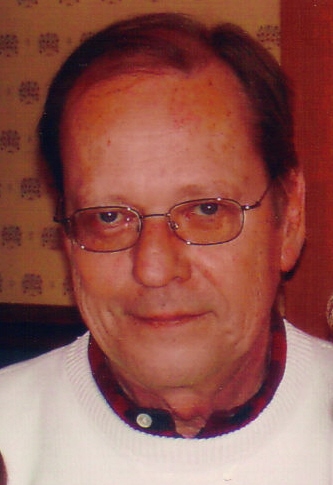
Robert ‘Bob’ Schibi

Robert “Bob” Schibi, age 71, of Hays, Kansas passed away Friday, May 4, 2018 in Hays. He was born September 12, 1946 in Denver, Colorado to Henry and Fern (Miller) Schibi. He graduated from Rockhurst High School in Kansas City and Regis University in Denver. On July 10, 1971 he married Susan Soderblom at St. Joseph’s Catholic Church in Hays. She preceded him in death October 31, 2002.

Bob was the owner of Field Abstract and Title Company in Hays where he was a title insurance agent and abstractor. He was a member of St. Joseph’s Catholic Church.

He is survived by his son, Eric Schibi and wife Kelly and their children Adam, Alison and Arin all of Hays and a brother, Frank Schibi of Phoenix, Arizona.

He was preceded in death by his parents, a son, Tom Schibi on Feb. 27, 2014 and a brother, John Schibi.

Funeral services will be 10 AM Monday, May 7, 2018 at St. Joseph’s Catholic Church in Hays. Burial will follow in the St. Joseph Cemetery.

Visitation will be Sunday 4 PM-7 PM and Monday 9 AM – 9:30 AM at Brock’s – Keithley Funeral Chapel and Crematory 2509 Vine Hays, KS 67601.

A parish vigil service will be Sunday at 6 PM followed by a rosary service at 6:30 PM all at the funeral chapel.

Memorial contributions are suggested to Hospice at Hays Medical Center, The Cancer Council of Ellis County or Masses.

Condolences may be left by guest book at www.keithleyfuneralchapels.com or by email [email protected]

SCHROCK: The fake information internet

John Richard Schrock is a professor at Emporia State University.

Twenty years ago, a study found that medical and health information available on the internet was unreliable and error-laden. Today, a new study by a University of Kansas professor shows that our current youth continue to face the same wasteland of internet quackery and remain just as vulnerable to misinformation as before.

In the June 1998 issue of Pediatrics, physicians McClung, Murray and Hietlinger investigated “The Internet as a Source for Current Patient Information.” They selected the topic of acute childhood diarrhea—a problem that can be fatal to young children—and searched the top 60 web sites.

Despite these web sites being run by medical professionals, university hospitals and health news services, 80 percent provided wrong or out-of-date information. Out of the top 300 search engine results, these 60 were selected from what appeared to be mainstream or medically credible sources. But only 12 of those 60 websites provided information that matched the medically-accurate diagnosis and prescription of the American Academy of Pediatrics for management of childhood diarrhea.

Subsequent research demonstrated that faulty websites pushing medical quackery cannot be distinguished by their .edu, .com, .org or .gov addresses either.

In a recent news release, research at K.U. shows that this situation has not improved. In “Just Google It: Observing Youth Searching for Health Information Online,” Susan Harvey, an Assistant Professor of Health, Sport & Exercise Sciences observed youths to determine how they search for and locate online health information.

Professor Harvey surveyed the students’ own perceptions of their ability to search for online information as well as their belief in their ability to judge the quality of the website. As you might expect, our new generation is quite confident about finding online information. Overconfident.

They also felt they could detect valid information and distinguish it from bogus sites. They couldn’t.
While her student subjects searched for information on the Internet, she used tracking software to record the sites they accessed. And they told Professor Harvey their thought processes while they searched.

In the news release, Harvey described how “Most of them didn’t scroll through the webpages at all, they just clicked on the first link.” She continued “And many of them found their information from sites that weren’t credible. When they did click on credible sites, like the National Institutes of Health, they clicked off of it very quickly.”

Harvey found that students averaged only about 20 seconds on the credible sites and attributed some of this to “…the unreliable sites were just more visually appealing for them.” However, she also blamed the accurate websites for writing the information at too high of a grade level for the students to understand, and recommends the quality sites lower their reading level.

Unfortunately, U.S. schools went through a five year “reform” of removing technical language from science books in the late 1990s. That disaster proved that technical language is necessary for comprehension of concepts. And reading levels, determined by letter and word counts, do not reflect students’ ability to read higher than their grade level when interested.

This new study repeats familiar recommendations for more teacher training in online literacy and in detection of unreliable sites. However, the infamous University of Connecticut “tree octopus” study long ago showed that there is no universal method for detecting bogus online information. And even worse, once students “learn” wrong information, they own it and will not change their minds.

Today, K-12 schools nationwide are throwing away carefully-reviewed, accurate textbooks and sending their students into the vast internet wasteland. Therefore it is not surprising that in the annual “Education Counts” just issued by Education Week, “79 percent of principals are ‘moderately’ or ‘extremely’ concerned about their students’ inability to gauge the reliability of online information.”

Simply, if there was a god-like method to separate good online information from bogus, we would all be using it.

John Richard Schrock is a professor at Emporia State University.

Kan. Sheriff’s Deputies Driving Hours To Get Kids A Place to Sleep

In the last year, the number of Cherokee County Kansas children in state custody shot up by roughly half.


FILE PHOTO / KANSAS NEWS SERVICE

The places available for those kids to stay, meanwhile, hasn’t changed.

So that’s meant shipping them two hours away — and regularly taking deputies from the 19-person sheriff’s department off patrol to drive the children to Andover, Kansas — the closest place available with any room.

Cherokee County Sheriff David Groves took his frustration to Twitter this week after he had to dispatch a deputy four counties away so a child flagged for possible entry into the state’s care could have a place to sleep.

Groves said that was the sixth time he’d had to pull one of his deputies for that drive in just over a week.

“Our kids deserve better & our community deserves to have cops that are able to serve them,” he said in the Tweet.

Children can land in police protective custody for a variety of reasons. Maybe they’re found wandering unsupervised, or both parents are in jail. Perhaps a car accident injured all their caretakers.

They can stay in police protective custody for 72 hours, excluding weekends and holidays. To go from there to the Department for Children and Families’ custody, they need to appear before a judge who decides whether to hand them off to the agency.

In the past, the Cherokee County sheriff’s office was able to lean on local resources to keep those kids closer to home. Local foster homes, local family members or other adults the kids trusted could offer them a home for a few days.

Cherokee County Undersheriff Terry Clugston said that started changing in January. In the past month, the department has been transporting children to Andover — or occasionally as far away as Topeka — at least once a week.

“It’s just continued to progress to where it’s like everyone that we pick up now is going out to central Kansas,” Clugston said. “Which has, in turn, caused us to have to call out officers to cover shifts and endure the extra overtime and manpower issues with transporting these kids so far away.”

The number of foster homes in Cherokee County hasn’t changed much. A DCF spokeswoman said there are 40 homes in the county as of Wednesday, one more than a year before.

That hasn’t kept pace with the number of kids in care.

Last fiscal year, 48 children in the county entered DCF custody. This year, it’s up to 62 in just the first nine months. That doesn’t include kids pulled into police protective custody who didn’t end up in DCF’s care.

At the same time, kids aren’t leaving DCF custody fast enough to keep up.

A spokeswoman for KVC, the contractor managing foster placements in the eastern half of the state, said their 40 foster homes in the county are nearly all at or over capacity.

Families can open their homes to kids in police protective custody without having to go through the full licensing process necessary for a foster home.

In roughly the past year, neighboring Crawford County has added 10 homes that will take in kids in police protective custody. The faith-based nonprofit Global Orphan Project helped recruit families there. It’s consulted with counties across the state to set up similar programs.

Tate Williams, the state director for Global Orphan, said Cherokee County can do the same — local law enforcement would just have to set rules for designating someone an “appropriate adult” to take a child in police protective custody.

Williams said in other counties where the Global Orphan Project has helped set up homes, that’s included a background check, a home walk-through, and a one-day training in handling traumatized kids and the basics of the child welfare legal system.

A spokeswoman for DCF said the agency is aware of the ongoing need for more foster families across the state.

“All areas of the state are in need of additional placement options, Cherokee County included,” she said in an email.

She added that DCF is actively seeking additional homes and facilities in that region.

Sam Zeff is KCUR’s Metro Reporter. You can follow Sam on Twitter @samzeff.

Madeline Fox is a reporter for the Kansas News Service. You can reach her on Twitter @maddycfox

Tunnel of Oppression educates on prejudice and privilege

By SHAELIN SWEET
FHSU University Relations and Marketing

Fort Hays State University’s Office of Inclusion and Diversity Excellence recently teamed up with diverse student organizations to educate the FHSU community on issues of prejudice and privilege through a “Tunnel of Oppression.”

The “tunnel” consisted of a series of stations located in the Memorial Union’s Fort Hays Ballroom which formed a pathway. The room was dimly lit with individual lighting focused on each station to metaphorically shine a light on issues of oppression.

“The purpose of this event is to create an impactful, educational experience that helps people understand oppression, discrimination and bias from a local, national and global perspective,” said Taylor Kriley, director of the Office of Inclusion and Diversity Excellence.

Five student groups, Us4U, African Ambassadors, Black Student Union, International Student Union and Gay Straight Alliance, each selected an area of oppression to highlight. Participants had the opportunity to speak with each group while walking through the tunnel and interacting with presentations, which covered issues of oppression at local, national and global levels.

“My organization, Us4U, wanted to show the oppression women in poorer countries face with water quality,” said Dalton Steinert, Otis senior. “We focused our project on water qualities locally, nationally and internationally.”

Us4U faculty advisor Dr. Cheryl Duffy, professor of English, stressed how raising awareness of oppression fits into the organization’s mission. “Our motto is ‘Come as you are–Serve as you can,’ and this year we’ve been focusing on a variety of social justice issues,” said Duffy. “The Tunnel of Oppression just seemed like a perfect venue to raise awareness.”

The African Ambassadors dedicated their presentation to raising awareness about the discrimination and prejudice that African students encounter while living in the United States. The Ambassadors specifically highlighted micro- and macro-aggressive stereotypes about Africa and the people who live there.

“The main [stereotypes] are that Africans live with animals, Africa is a country instead of a continent and that African students can only afford to study in the U.S. by earning athletic scholarships,” said Amele Hounakey-akakpo.

“The Africa associated with poverty that is usually shown in the media clashes with the reality of many African countries that are beautiful and have the same infrastructure as any developed nation,” she continued. “It’s important for us to raise awareness about false misconceptions about our continent.”

In addition to raising awareness about stereotypes and aggressive speech, the Tunnel of Oppression also provided students and faculty with the opportunity to learn how they can be allies in the fight for equality.

People looking to raise awareness of oppression can start by recognizing their own privilege and biases.

“I know how very privileged I am, and I don’t want to be blind to the harsh realities for those not born into privilege,” said Duffy. “Us4U is a faith-based organization, and I think that ‘living my faith’ means working consciously to raise awareness and end oppression.”

“It’s important for us to recognize that the way we view the world comes from the way we’ve lived in it,” said Kriley. “Whether intentional or unintentional – and often with a good heart – we can’t help but have preconceived barriers of bias.”

“Being educated helps us see the world differently,” she continued. “It helps us to shape our thoughts and perspectives so that we can be better leaders, advocates and supporters. We are more impactful leaders when we can help break down those barriers of bias.”

Another easy way to start working as an ally is to speak out against oppression that occurs in daily life.

Duffy shared this advice: “Don’t laugh at racist jokes. Don’t thoughtlessly spread ‘fake news’ that can ultimately be hurtful. Speak up gently when someone speaks out of ignorance and prejudice or when people make sweeping and unfounded generalizations about someone different from themselves.”

“Engaging with people different from us is essential to get a better understanding and appreciation of differences and points of view,” said Arthur Courbis, a member of the African Ambassadors. “When someone is being rude to someone else, if you can’t stop that person from being rude, which can be difficult to do, at least have compassion for the victim of aggression. Hopefully this could lead to beneficial action afterwards.”

For information about the Tunnel of Oppression or diversity and inclusion, contact the Office of Inclusion and Diversity Excellence at 785-628-4276.

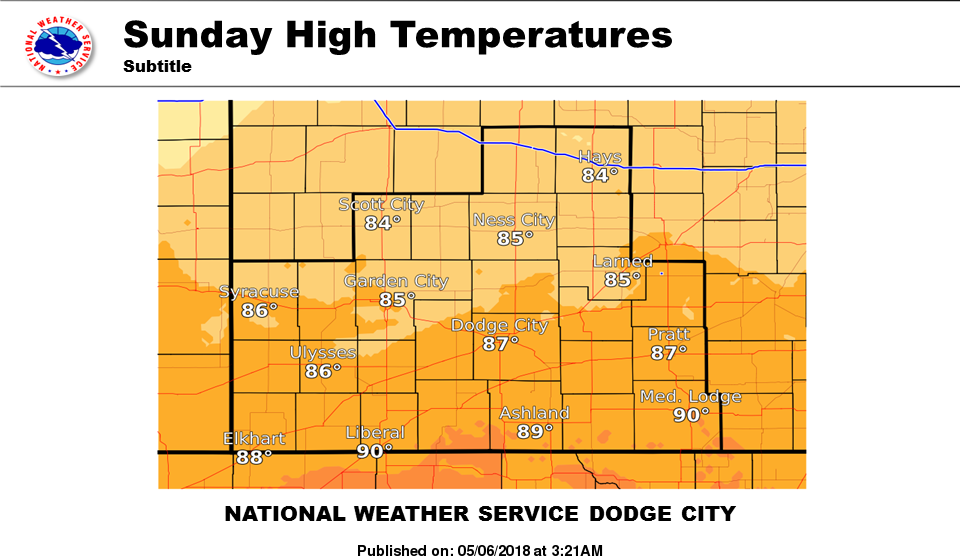
Warm, breezy Sunday


Today
Mostly sunny, with a high near 83. Northwest wind 7 to 11 mph becoming northeast in the afternoon.

Tonight
Mostly cloudy, with a low around 54. East wind 8 to 10 mph.

Monday
Mostly sunny, with a high near 82. Southeast wind 8 to 17 mph.

Monday Night
Increasing clouds, with a low around 58. Southeast wind 9 to 16 mph.

Tuesday
Partly sunny, with a high near 81. Southeast wind 7 to 10 mph becoming east northeast in the afternoon.

Tuesday Night
A 20 percent chance of showers and thunderstorms before 1am. Partly cloudy, with a low around 56.

Wednesday
Sunny, with a high near 85.

Wednesday Night
Partly cloudy, with a low around 58.

Thursday
Partly sunny, with a high near 85

NW Kansas man flown to Denver hospital after truck overturns

RAWLINS COUNTY — One person was injured in an accident just before 1a.m. Sunday in Rawlins County.

The Kansas Highway Patrol reported a 2008 Ford F350 driven by Caleb S. Kastens, 32, Atwood, was northbound on Kansas 25 just north of Rawlins County Road V.

The truck left the roadway to the east. The driver overcorrected and crossed the center line before again overcorrecting and leaving the roadway to the east for a second time.

The truck overturned and came to rest in the east ditch. The trailer came to rest on top of the hood and cab of the truck.

Kastens was transported to Rawlins County Health Center and later flown to a hospital in Denver for treatment. He was not wearing a seat belt, according to the KHP.

KDWPT offers tips for anglers

KDWPT

PRATT ­– In an age of information overload and ever-changing news, it can be frustrating to locate accurate information when you need it. This is especially true for anglers whose success can often hinge on getting the “right” information in a timely manner, because anyone who has ever wet a line knows: fish don’t wait for you.

For a quick (and accurate) rundown of what you’ll need before hustling out to the water this fishing season, follow the Kansas Department of Wildlife, Parks and Tourism (KDWPT)’s tips below.

GRAB YOUR LICENSE

There are a few things you should have before your first fishing trip, and number one, if you’re a resident age 16-74, or a nonresident age 16 and older, is a fishing license. There are several options for residents: a one-day license for $8.50, annual fishing license for $27.50, senior (age 65-74) annual fishing license for $15, or combination hunting/fishing license for $47.50.

Nonresident anglers can purchase a one-day license for $14.50, five-day license for $27.50, annual fishing license for $52.50, or combination hunting/fishing license for $137.50.

SIGN UP FOR AUTO-RENEW

Your fishing license will be valid for 365 days from the day you purchase it, rather than the calendar year licenses of the past. So, why not keep that year-round coverage ongoing with KDWPT’s new auto-renew feature? When making your purchase online at ksoutdoors.com, simply click the “auto-renew” box next to your fishing license before finalizing your purchase. This way you can ensure you have a valid fishing license every year without another thought. You can also buy your license at more than 600 license vendors around the state.

READ UP ON THE RULES

Once you have a license, grab a copy of the 2018 Kansas Fishing Regulations Summary. The 48-page pamphlet has all fishing regulations, of course, but you’ll also find color fish I.D. illustrations, as well as a listing of all reservoirs, state fishing lakes and community lakes with locations and special regulations. The regulation pamphlet should be in every angler’s tackle box.

FISH SMART: FOLLOW THE DATA

Another handy item no angler should be without is the 2018 Fishing Forecast, available at KDWPT offices and online at ksoutdoors.com. The forecast is assembled using survey data fisheries biologists gather while sampling fish populations in the lakes they manage each summer and fall. The forecast can help anglers find a lake that provides good fishing for the kind and size of fish they prefer. Every lake is different; one may provide high numbers of 12- to 15-inch bass while another has fewer bass, but many that are 18 inches long or longer.

Visit ksoutdoors.com or drop by your local sporting goods store and get your fishing necessities, so you’re ready when your buddy calls and says, “the fish are biting!”

Kansas man arrested for alleged phone harassment

JACKSON COUNTY — Law enforcement authorities are investigating a suspect on  multiple charges following an arrest.

Dugan -photo Jackson Co.

On Thursday evening, Jackson County Sheriff’s Office Deputies arrested Dave Lamoine Dugan, 54, of Hoyt. Dugan was arrested at his residence on an outstanding Jackson County District Court warrant for telephone harassment, according to Sheriff Tim Morse.

At the time of the arrest, deputies began to investigate possible drug activity at the residence located at 9410 T.4 Road.

Deputies seized drug related items from the property. Dugan was booked into the Jackson County Jail on the following charges: possession of methamphetamine, possession of marijuana, cultivation, possession of drug paraphernalia, distribution of marijuana, interference with law enforcement, and telephone harassment. Dugan was released on $10,000.00 bond.

Many state hospital, prison doctors in Kan. without medical licenses

TOPEKA, Kan. (AP) — Several doctors at Larned and Osawatomie state hospitals and Kansas state prisons are working with special “institutional licenses” despite not having a full medical license, in part because the state has a severe shortage of psychiatrists, state officials said.

Larned State Hospital
photo-Kansas News Service

Nine of the 13 physicians at Larned and 10 of the 22 physicians at Osawatomie are currently on “institutional licenses,” according to Kansas Department for Aging and Disability Services. And at the state’s prisons, one of nine medical doctors and four of nine doctors who specialize in psychiatric medicine have the limited licenses, according to Corizon Health, the state’s corrections health care contractor, The Kansas City Star reported .

The practice is not new and it is necessary because the state doesn’t have enough psychiatrists, said Tim Keck, secretary of the aging and disability services.

“The agency appreciates our institutionally licensed doctors,” Keck said in an emailed statement. “They are dedicated and they work hard every day to provide good care to our patients.”

But Rick Cagan, executive director of the National Alliance on Mental Illness’ Kansas branch, said allowing institutional licenses at state facilities means Kansans who need the most help often are cared for by doctors who, at least on paper, are less qualified.

“I am concerned that the most acutely ill individuals are receiving treatment from physicians who do not meet the highest standards for practice,” Cagan said. “It’s counter-intuitive that those most seriously ill have access to physicians who are denied the ability to establish a community-based practice.”

Although the practice has occurred in Kansas and elsewhere for decades, Republican state Sen. Barbara Bollier, a retired physician from Mission Hills, said it might be time to discuss whether the practice should change.

“Why are we still doing this?” Bollier said. “That’s the biggest question. I don’t have an answer. … If that is good enough for (state hospitals), why aren’t these same things in place for the entire population of the state? Why do we have different standards?”

None of the doctors practicing on institutional licenses has been sanctioned for violating standards of care, according to Kathleen Lippert, the executive director of the Kansas Board of Healing Arts.

Kansas and about 20 other states offer limited licenses to allow doctors who aren’t able to start a private practice to work in state mental institutions. After three years with institutional licenses, doctors also can practice at other public facilities like community mental health centers.

Kansas established the institutional medical license in 1969, when the nation began shifting away from long-term institutionalization for the mentally ill to community-based care. Larned and Osawatomie are the last state hospitals in Kansas and have about 300 beds between them.

Missouri, which employed a national-high 47 limited license physicians in its mental health program in 1990, has phased out the program.

Debra Walker, spokeswoman for the Missouri Department of Mental Health, said its seven state mental institutions recruit psychiatrists by working closely with medical school residency and fellowship programs. The department also allows flexible work schedules so its psychiatrists can work outside the state system for additional income.

Walker said the department currently employs 34 psychiatrists and has 6.5 openings, a vacancy rate of about 16 percent.

Sheriff asks for help to ID human remains

BARRY COUNTY — Law enforcement authorities are investigating after human skeletal remains were found in a rural area of southwest Missouri and they’re asking for the public’s help, according to the Barry County Sheriff’s Department.

The remains were found March 26 by a landowner near Jenkins, about 45 miles southwest of Springfield.

photos courtesy Barry Co. Sheriff

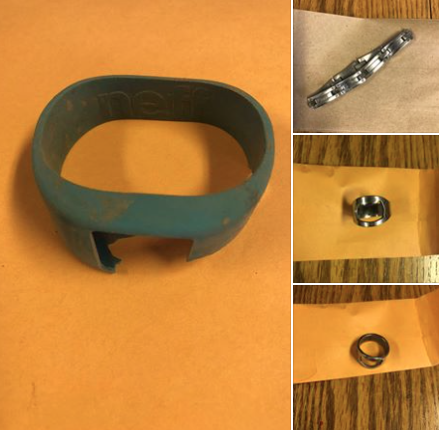
The Barry County Sheriff’s Office has posted photos on social media of jewelry found with the body in hopes that someone might recognize it.

The items include a bracelet, two rings and a rubber NEFF-brand watchband.

A forensic dentist says it appears the person was an adult, but investigators have not yet determined if the remains are that of a man or woman.

Detective Doug Henry says the circumstances of the person’s death are considered suspicious.

-The Associated Press contributed to this report.

Kan. man sentenced for immigrant killing, faces possible death penalty for hate crime

By ANDREA TUDHOPE

As Johnson County District Court Judge Charles Droege told 52-year-old Adam Purinton on Friday that he likely “won’t leave prison alive,” the convicted murderer briefly lowered his head.

Adam Purinton pleaded guilty in March to murder and attempted murder. Friday, he was sentenced to life in prison by the Johnson County District Court.
CREDIT ANDREA TUDHOPE

Purinton was sentenced to life in prison for the February 2017 murder of Srinivas Kuchibhotla at an Olathe, Kansas, bar. He received an additional 28-year sentence for the attempted murders of Alok Madasani and Ian Grillot.

He still faces federal hate crime charges that could mean the death penalty. A hearing in that case is set for later this month.

In court Friday, Purinton’s lawyer, Michael McCulloch, said his client had shown from the beginning that he is “remorseful and sorry for the actions he took.”

Purinton has 14 days to appeal the sentencing.

In March, Purinton, 52, pleaded guilty, agreeing to maximum sentencing on all counts.

The murder of Kuchibhotla, and attempted murder of Madasani — two Indian immigrants in the United States on work visas — earned Purinton federal hate crime charges. Before the shooting, Purinton approached the men on the patio of Austin’s Barn and Grill and asked, “Where are you from? How did you get into this country?”

Before Friday’s sentencing, Assistant District Attorney Aubrey Sample read a written statement addressed to Purinton, from Sunayana Dumala, Kuchibhotla’s wife. Dumala said she hoped Purinton would one day realize the “magnitude of your mistake.”

“I learned from the cops that the murder of of my husband was premeditative and racially motivated,” she wrote. “In the few minutes that you have seen Srinu you built so much hatred for him that you decided he did not deserve to live . . . I wish you had the ability to see beyond my husband’s skin color and the beautiful and kind-hearted person underneath it.”

Federal authorities allege that Purinton targeted the two men because of their race, ethnicity or national origin. The U.S. District Court in Kansas City, Kansas, will take up the case in a hearing on May 21.

With no possibility of parole for 50 years in the life sentence, Purinton will spend the rest of his life behind bars, unless the U.S. Attorney’s office decides to seek the death penalty against him.

Andrea Tudhope is a reporter for KCUR, a partner in the Kansas News Service. Follow her on Twitter @_tudhope.

Copyright Eagle Radio | FCC Public Files | EEO Public File