We have a brand new updated website! Click here to check it out!

Lincoln classes selected as video winners

USD 489

The Lincoln Elementary School third graders’ video on promoting good dental health was submitted to the Kansas Dental Association.

The video earned first place.

The students will earn a $500 gift card and a commemorative plaque for the school.

The third graders are taught by Julie Mohi and Larissa Whitney.

The students will be awarded with the gift certificate and a plaque during an all-school assembly on Friday.

KHI: Views From the Heartland: Prospects for Bipartisanship in Health Reform

(Click to enlarge)

KHI

TOPEKA – Last year’s “repeal and replace” fight in Congress underscored how deep−and deeply confusing−disagreements over health care policy can be.

In October and November of 2017 David Jones, Ph.D., an assistant professor at Boston University’s School of Public Health, traveled to Kansas and Colorado to learn what Republican and Democrat legislators and other state policy leaders are concerned about when it comes to health reform. KHI helped facilitate Jones’ visit to Topeka, where he met with 16 health policy stakeholders, including legislators, agency officials, health insurance representatives, health care providers, and advocates. His visit also included meeting with a bipartisan focus group of legislators at KHI.

Jones’ report, Views from the Heartland: Prospects for Bipartisanship in Health Reform, finds that leaders in both Topeka and Denver are frustrated with the volatility of national politics, have divergent views on what the problems are with health reform and health policy and their root causes, but share the desire to focus on health and health outcomes and improve access to care, especially in rural communities.

For more information about the results of the original survey of legislators across the U.S. that preceded Jones’ study, see Pagel C, et al. A way forward for bipartisan health reform: Democrat and Republican state legislator priorities for the goals of health policy.

FENNELL: Rearview cameras finally become standard on all new vehicles

Janette Fennell

After more than 15 years of extraordinary efforts by KidsAndCars.org and other advocacy groups, a long-overdue auto safety standard became fully effective May 1, 2018.

This standard helps to improve passenger vehicles’ rear visibility and prevent deaths from drivers backing into children and adults they cannot see. For over 100 years, vehicles were manufactured without any regulation on what the driver should be able to see behind them when backing.

This measure will save countless lives, especially of children. It is the first federal regulation for rear visibility in our nation’s history. It doesn’t matter where on earth a vehicle is manufactured, all new passenger vehicles sold or leased in the U.S. will now be equipped with a rearview camera as standard equipment.

In 2008 Congress enacted the Cameron Gulbransen Kids Transportation Safety Act. The law was named after Cameron Gulbransen who died in 2002 at age 2 after his father, a pediatrician, accidentally backed over him in the driveway because he was unable to see the toddler in the blindzone behind his vehicle.

Each year an average of 226 individuals are killed and over 12,000 injured in backover crashes, reports the National Highway Traffic Safety Administration (NHTSA). Drivers using all three mirrors still cannot see anything in a blindzone 10-50 feet long directly behind their vehicles. Over half of those killed in backover accidents are children under 5 or adults 70 or older, NHTSA’s analysis shows.

Bill Nelson, another parent who lost his son, said, “Our family is thrilled that the rule has finally been issued – not just for those of us who worked so hard in memory of our children, but also for families whose children’s lives will be saved by this safety standard.” The Nelson family lost their son Alec after he was backed over because his grandfather could not see him in the large blindzone behind his SUV.

Dr. Greg Gulbransen added, “It’s been a long fight, but we’re thrilled this day has finally come. It’s a bittersweet day, because this rule should have been in place many years ago. Though his own life was short, my son Cameron inspired a regulation that will save the lives of countless others.”

For more information on the dangers of vehicle blindzones please visit https://www.kidsandcars.org/how-kids-get-hurt/backovers/.

For more information on the rear visibility standard, please visit https://www.kidsandcars.org/resources/release-the-rear-visibility-standard/

Janette Fennell is founder and president of KidsAndCars.org based in Kansas City.

Early Childhood Connections staff earns honors

USD 489

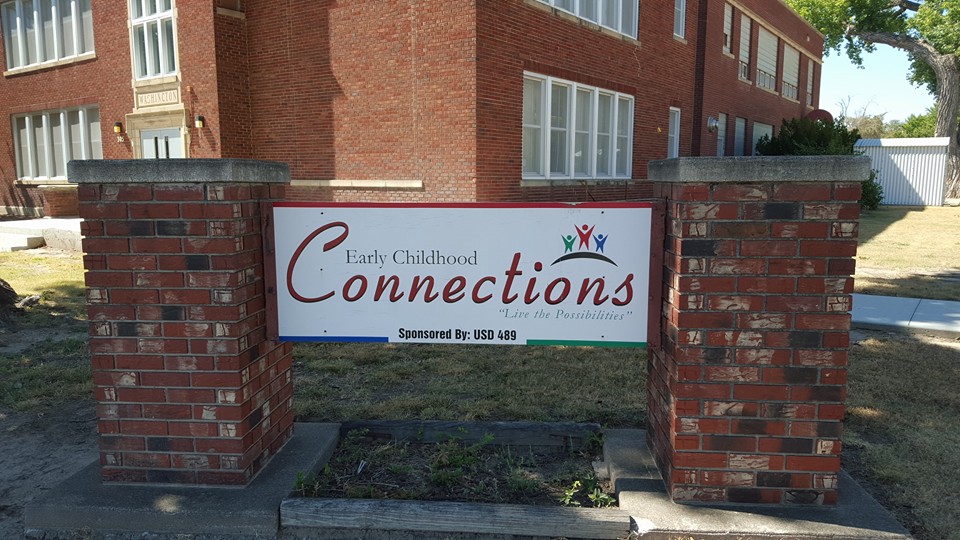
The Hays Early Childhood Connections staff were were recently honored as Region VII Head Start Association Scholarship winners.

Jean Hertel was named the Early Childhood Connections Teacher of the Year for the 2017-2018 school year.

Shelly Dickerson was also honored as the Beating the Odds Parent Award winner.

Taya Randle was selected as the Head Start Alumni scholarship winner.

Ashley Vopat was chosen as the Head Start Parent Post-Secondary Education scholarship winner.

Monique Holmes was awarded the Head Start Staff Higher Education scholarship winner.

These three women will receive a $750 scholarship each from the Kansas Head Start Association.

HHS ’13 grad Delphine Burns pursues careers in journalism, advocacy

Hays High grad Delphine Burns poses with journalism instructor Bill Gasper in front of the Golden Gate Bridge. (Photo by Kali Potter)

By LACEY GREGORY
HHS Guidon

During her high school years, 2013 graduate Delphine Burns was an editor of “The Guidon,” a Chamber Singer and president of the Gay-Straight Alliance. Burns often made an effort to engage herself in political and social activism as a teenager—a theme that has remained present throughout her life.

Burns often faced backlash and opposition for her strong stances on political and social causes throughout her time at Hays High but feels as though the adversity she overcame was well worth it.

“I’ve worked incredibly hard to get where I am now, and I deserve the life I’ve made for myself,” Burns said. “I wasn’t happy in high school, but I knew what I wanted, and I worked to arrive there.”

After her graduation, Burns moved to California where she earned her bachelor’s degree in Political Studies and Sociology at Pitzer College.

Following her graduation from Pitzer College, Burns worked for a short stint as an intern at a local newspaper in Santa Cruz, Calif. While discussing journalism-related job opportunities with fellow reporters, Burns decided to find a more long-term career in the field of public relations.

Burns’ current primary job is at a public relations firm in Santa Cruz called FortyThree PR—an occupation that presents itself with a unique set of challenges.

“Public relations is a fast-paced career,” Burns said. “Some days, your clients don’t ask much of you, but other days you’re working around the clock. You never know what sort of project you’ll be working on next, which is actually part of the fun for me.”

In addition to her main job, Burns also works part-time at a local non-profit that serves survivors of sexual assault, domestic violence and human trafficking. She works on a 24-hour crisis line and is a certified peer counselor in the state of California.

Among the most challenging aspects of her advocacy job, Burns said, is the emotional toll it takes to speak to individuals who are in crisis. Burns considers herself a passionate opponent of sexual and domestic violence and feels supporting survivors is her life’s work.

If she could go back in time to give her high school self any direction, Burns said she would advise her past self to practice more self-care.

“(During high school) I always felt like an outsider, and even though it usually didn’t bother me, sometimes it really hurt,” Burns said. “I would tell my high school self not to take high school drama and dynamics to heart, because now it seems like a different lifetime, almost.”

As for future plans, Burns said she may potentially take her LSAT and attend law school in her later 20’s. For the time being, she would like to continue to refine her writing and advocacy skills.

“Eventually, I’d like to be a civil rights lawyer, a journalist at a top-tier publication such as ‘The New York Times,’ or maybe a public servant like a senator or a judge,” Burns said. “I’m only 22 so I’ve got plenty of time and ambition.”

FHSU’s Student Affairs recognizes organizations, individuals for their dedication

FHSU University Relations

Student Affairs at Fort Hays State University recently recognized student organizations and individuals for their hard work and dedication throughout the academic year.

The 2018 winners were announced at the annual Student Organization Awards Reception in the Fort Hays Ballroom in the Memorial Union. The 2017 FHSU homecoming king and queen gave the keynote address.

Recognized student organizations can apply for 10 awards. Nomination packets are reviewed by a panel comprised of faculty and staff.

The award recipients are listed alphabetically by award.

Best New Program:
Student Government Association
Free Legal Counseling

Best Program:
Gay Straight Alliance
Annual Drag Show

Civic Engagement Award:
Student Government Association

Diversity Ally:
Paulyna Alcorn, senior majoring in biology, is a Wray, Colo., High School graduate.
Fort Hays Honor Society

Most Improved Organization:
Criminal Justice Club

Outstanding Advisor:
Dr. Tamara J. Lynn, assistant professor of criminal justice.
Criminal Justice Club

Outstanding Community Service Project:
Tiger Pals
Night to Shine

Outstanding Student Leader:
Carlie Snethen, senior majoring in organizational leadership, is a West Franklin High School graduate.
Delta Zeta

Outstanding Student Organization of the Year:
University Activities Board

Rising Star Member:
Samual Neff, sophomore majoring in accounting, is a Salina Central High School graduate.
Fort Hays Honor Society

Volunteer Organization of the Year:
Alpha Kappa Psi

In Case You Missed It: Eagle Morning Show 4/30-5/4

It was another busy week on the KAYS Eagle Morning Show. Here’s what you missed!

Monday

Bob Schwarz Financial: Cortney Dale

Cortney made her weekly visit on the show and talked about taking a holistic approach to financial planning

Getting a second opinion on your finances


Catholic Schools Report: TMP Director of Campus Ministry Bill Meagher

Bill joined C.D. & Mike for this week’s Catholic Schools Report to talk about what TMP is up to as the school year comes to a close:


Tuesday

USD 489 Superintendent John Thissen

Mr. Thissen and Hayspost.com’s Cristina Janney joined the Eagle Morning Show to recap yesterday’s Board of Education meeting:

Hays Area Chamber of Commerce: Membership Coordinator Kara Berry

Here’s this week’s schedule for the Hays Area Chamber of Commerce

  • May 2 HAYP Civic/Volunteer Committee
  • May 3 Ribbon Cutting – NCK Tech Carpentry House
    May 3 HAYP Social/Networking Committee
    May 3 Ribbon Cutting – Kuhn’s Jewelers
  • May 4 No Chamber Chat
    May 4 9th Annual Golf Tournament – Bricks on the Green Patio Party


Wednesday

Protect & Serve: Undersheriff Scott Braun

Finding shelter when you’re caught out in severe weather

Using caution when farm equipment is sharing the road


Thursday

Fort Hays State University President Dr. Tisa Mason

Dr. Mason joined the Eagle Morning show for her monthly visit. Here are some of the things she discussed on the show:


Friday

Keri Peterson – Learning Center


Samantha Gill – Hays Public Library


Susan Bowles – Executive Director Hays Area Children’s Center

For more information about the Hays Area Children’s Center, visit their website: www.hacc.info


Coming up next week on the Eagle Morning Show:

  • Roger Bixenman – Hays Recreation Commission
  • Josh Robben – Hays Letter Carriers
  • Bob Gillen – KSU Ag Research
  • Callie Kolacny – Smoky Hills Public TV

Now That’s Rural: Joel Russell, Codell, Cyclone Day, Part 1

Ron Wilson is director of the Huck Boyd National Institute for Rural Development at Kansas State University.
By RON WILSON
Huck Boyd National Institute for Rural Development

What are the odds? What are the chances that a tornado would hit the same Kansas town on the same exact day of the year – not once, not twice, but three years in a row? It sounds far-fetched, but it actually happened a century ago in rural Kansas.

Joel and Amanda Russell live at Codell, Kansas, the community that experienced this incredible fluke of weather. Joel’s great-grandmother is the late Celesta Glendening who lived through the tornado strikes on three successive years. Celesta and her husband George farmed and raised their family at Codell. She wrote about the tornadoes in a first-hand account which she shared with her descendants.

The first tornado hit Codell on May 20, 1916. “We called it a cyclone then,” Celesta wrote. Exactly one year later, on May 20, 1917, a tornado hit Codell again. Community residents started referring to May 20 as Cyclone Day.

“I remember someone saying that they were joking around, wondering if it would happen again,” Joel said. Unfortunately, it did, more seriously than before. The following is from Celesta’s written remembrances.

On May 20, 1918, her husband went to work in the cornfield. Celesta, who was pregnant, worked at home with their two young children, Max and Worden. When Celesta went out to bring in the cows for the evening, she noticed clouds gathering in the southwest. By suppertime, the clouds had darkened and billowed up higher. A storm was brewing.

It started to rain. The wind blew harder and harder. Celesta and George hurried to get the sleeping boys. Max was only 1-1/2 years old, and Celesta wrapped him in a quilt. The family had a storm shelter in a nearby cave, but it started hailing before they could get to the shelter so they returned to the kitchen.

Celesta wrote: “There was a terrible noise beside the rain, hail, lightning and thunder….The roar we heard was a cyclone….I must have prayed…Thunder roared, lightning flashed, rain and hail beat against the windows with such force I knew they would break….Then I saw lightning between the ceiling and the wall, and I knew the house was tearing to pieces. We smelled wet plaster, heard nails pulling out of the wood and heard wood breaking.”

The next thing that happened was even worse. Celesta wrote: “Max was still wrapped in the quilt and I was still holding him tight, when all of a sudden he was gone….He was just torn out of my arms…In a flash of lightning, we saw Max sitting up just a few feet off the floor.”

In an instant, George grabbed Max and handed him to Celesta who held him close again. They huddled together till the storm passed.

When it was all over, they assessed the damage. George had bad cuts on his feet, Worden had a broken arm, and Celesta’s leg was badly cut. She would nearly lose her leg, but it was ultimately saved. Each family member sustained injuries except for one: Max, who had briefly been suspended in the air.

Similar experiences were shared by other residents of Codell. Three persons died, including Celesta’s brother’s wife and their son. Celesta wrote: “Many buildings were destroyed and most never rebuilt. Many scars still remain, parts of foundations, grim reminders to those who still remember.”

In times of crisis, rural communities tend to rally together. Help came to Codell from the nearby communities of Plainville, population 1,858, and Natoma, population 311 people. Now, that’s rural. The Red Cross provided funds. Family and friends made a difference by sharing clothing, bedding, food, and housing.

Celesta wrote: “I know I’ve forgotten a lot of things, but not the love shown to us in our time of need.” On Sept. 18, 1918, Celesta gave birth to a healthy baby daughter. No tornado has struck the community of Codell since.

What are the odds that a tornado would strike the same community on the same day, three years in a row? More importantly, how does a community respond to such a tragedy? We’ll learn more about that next week.

Ghost of past Kansas tax-slashing kills push to resume cuts

TOPEKA, Kan. (AP) — Persistent budget problems that followed a now-abandoned tax-slashing experiment in Kansas helped kill new cuts this year that were meant to return an unexpected “windfall” to the state from changes in federal tax laws.

Top Republicans pushed Friday — the last day of the GOP-controlled Legislature’s annual session — for passage of a bill that would save taxpayers an estimated $78 million during the state’s next budget year, which begins July 1. It was a response to changes in federal tax laws that will force some individuals and corporations to pay more to the state because the state’s tax code is tied to the federal one.

The Senate passed the bill, 21-19 , early Friday morning, but it failed on a 59-59 vote Friday evening in the House after Republican leaders spent hours trying to cajole reluctant lawmakers to support it. A frustrated Senate adjourned for the year as the House held its vote open in hopes that missing members would return or some no voters would switch to yes.

Top Republicans had on their side business groups and the compelling political argument that the state shouldn’t collect extra dollars from its taxpayers that it hadn’t expected anyway. But legislators had earlier increased spending on public schools to satisfy a court mandate and added spending in other areas of the budget that they felt they had neglected for years.

Over the debate hung the shadow of the income tax cuts former Republican Gov. Sam Brownback engineered in 2012 and 2013, which were followed by budget woes that prompted lawmakers to reverse most of them last year to stabilize the state’s finances. Republicans split on this year’s tax-cutting bill, and critics repeatedly cited the experiment that made Kansas a national example of how not to do trickle-down economics.

“It’s Brownback all over again,” said state Rep. Tom Sawyer, of Wichita, the top Democrat on the House Taxation Committee. “We just got over that nightmare, and people did not want to relive it again.”

Republicans who supported the tax bill said it was unfair to characterize it as a return to the policies of Brownback, who stepped down as governor in January for an ambassador’s post. The proposed cuts were far smaller and, GOP lawmakers said, designed to keep people from paying taxes even higher than lawmakers intended when they approved a $600 million-a-year income tax increase last year.

One major change would have allowed Kansas filers to itemize on their state returns even if they do not on their federal returns, something they cannot do now. The federal changes limited some deductions and raised the federal standard deduction, so fewer Kansas would itemize.

“We have to do something, or this money is stolen from the taxpayers,” conservative GOP Rep. John Whitmer, of Wichita, told colleagues during a meeting of fellow House Republicans meant to build support for the bill. “It’s their money. Let’s give it back to them.”

Other Republicans argued that the real problem was a failure to control spending.

Lawmakers in April approved a new education funding law that will phase in a $534 million increase in spending on public schools over five years to comply with a Kansas Supreme Court ruling in October. The court said the state’s current funding of more than $4 billion a year isn’t sufficient under the state constitution, and it will review the new law in a May 22 hearing.

Legislators also added millions of new dollars elsewhere, restoring some past cuts in higher education, granting pay raises to state workers and attempting to catch up on past shortings of the state’s annual contributions to public pensions.

Some Republicans were quick to note that even without factoring any tax cuts, projections from the Legislature’s research staff suggested that the state could be facing budget shortfalls again within a few years.

“With or without this bill, the spending is in the red,” Senate tax committee Chairwoman Caryn Tyson, a conservative Parker Republican, told her colleagues during a debate on the tax legislation. “It has nothing to do with this bill.”

___

___–
TOPEKA, Kan. (AP) — The Latest on the Kansas Legislature’s debate on tax cuts and budget issues (all times local):

5:28 p.m.

Kansas legislators have narrowly rejected a bill cutting income taxes because some lawmakers worried that it would create future budget problems.

The vote Friday in the House was 59-59 on a bill that would save taxpayers an estimated $78 million during the state’s next budget year that begins in July.

The measure was a response to changes in federal tax laws last year that would force some individuals and corporations to pay more to the state. Many Republicans argued that the state should return the unanticipated “windfall.”

But GOP legislators were split. Critics argued that the bill could lead to budget shortfalls as early as next year.

Legislators earlier increased public school funding to meet a court mandate and added money to other parts of the budget.

___

3:48 p.m.

Top Republicans are struggling to push a bill cutting income taxes through the Kansas Legislature because some lawmakers worry that it would create future budget problems.

GOP leaders hoped the House would vote Friday on a bill that would save taxpayers an estimated $78 million during the fiscal year beginning in July.

The measure is a response to changes in federal tax laws last year that would force some individuals and corporations to pay more to the state.

The Senate approved the bill early Friday, 21-19.

Republicans are split and Democrats oppose the measure. Critics argue that it would create budget shortfalls as early as next year.

Legislators also have increased spending on public schools to meet a court mandate and added money to other parts of the budget.
More than 7,500 Kansas kids in foster care

DCF

TOPEKA – Currently, there are more than 7,500 Kansas children in foster care. Sadly, these children have been placed outside of their home by the court for safety reasons.

As the number of children in foster care continues to rise, following the national trend, the Kansas Department for Children and Families (DCF) is actively recruiting foster families in all parts of the state, to ensure children can remain in their home communities while the agency and its contractors work with birth families to address safety issues and promote reunification.

“It has become abundantly clear that we need more foster families, especially those who are willing to accept older youth, sibling groups and children with special needs,” said DCF Secretary Meier-Hummel. “We are actively working to strengthen the continuum of care.”

At this time, there are more than 2,600 foster homes in Kansas. Ensuring appropriate accommodations for children in care has been and remains a top priority for Secretary Meier-Hummel. However, some solutions to address the shortage of homes and facilities require additional funding. Governor Jeff Colyer, in January, proposed a DCF budget enhancement of $16.5 million to address this and other urgent issues to help Kansas families in crisis.

“I remain hopeful that the Kansas Legislature will respond to these needs by fully funding this request,” said Governor Colyer. “As a State, we have a duty to care for children deemed unsafe in their own homes. Without adequate resources, we jeopardize our ability to address the problems facing the child welfare system.”

With the current resources, Secretary Meier-Hummel continues to seek solutions to the placement-option shortage. In recent months, she has worked diligently with DCF staff and others to address the immediate issue of placing youth, to prevent overnight stays in contractor offices. She is also directing staff to quickly eliminate identified barriers in the placement process. Kinship care approvals are being expedited. Reviews and investigations of foster homes are being moved through. And provider agreements are being fast tracked to increase bed availability. These steps are being taken, all while ensuring child safety is not compromised.

While it’s important to focus on the immediate need for placement options, it’s also important to relay our appreciation for the foster and kinship families who are taking on the tremendous responsibility of caring for youth removed from their homes. Governor Colyer has signed a proclamation designating May as Foster Care Month.

For more information about foster care in Kansas, visit www.FosterKSKids.org or call 1-844-380-2009.

Copyright Eagle Radio | FCC Public Files | EEO Public File