KANSAS CITY — Law enforcement authorities are investigating the disappearance of a Kansas City woman.
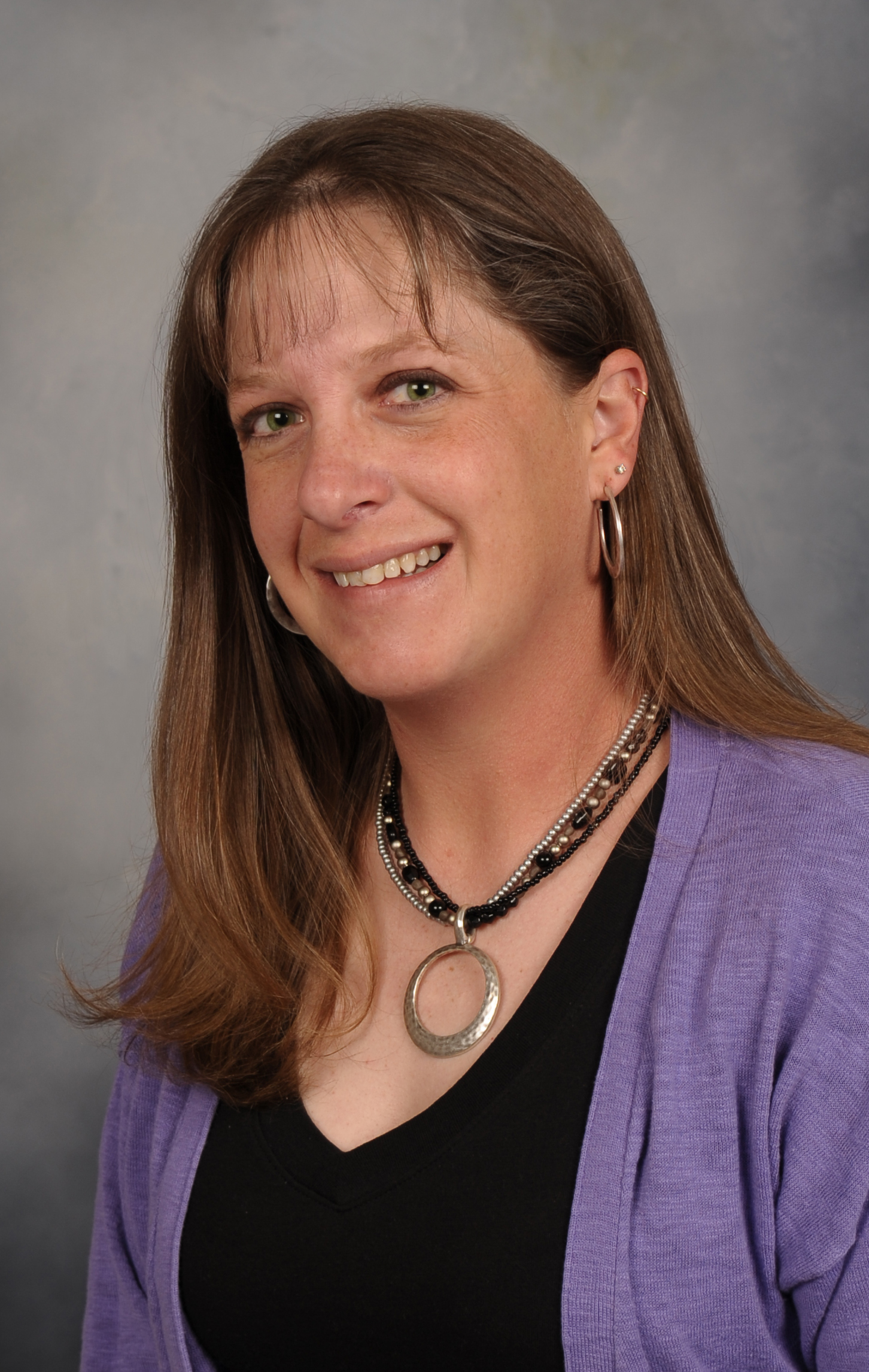
Brown-courtesy photo
On April 27, deputies were contacted by mushroom hunters who found possible human remains. Investigators responded to the area of South Mopac Road between East 235th and East 239th where they discovered a set of human remains in a wooded area, according to a media release.
The Jackson County Medical Examiner’s Office has positively identified the victim as Vernece A. Brown, 18, of Kansas City, Missouri.
Brown was last seen on February 14, 2018 in the 3600 block of Bales Avenue. Brown was reported as missing to the Kansas City Missouri Police Department and was an active missing person case.
Detectives with the Cass County Sheriff’s Office and Kansas City Missouri Police Department are working on the investigation at this time.
Anyone with information on the case is asked to call the Tips Hotline at 816-474-8477, or visit their website at https://kccrimestoppers.com
UPDATE AT 11 a.m.–The leak has been exposed and staff will be cutting and sectioning the line. No time estimate yet on when the leak will be repaired.
City of Hays crews are on the scene of a water leak at Vine Street and Downing Avenue. In order for crews to repair the water line on Vine Street, the northbound lane of traffic on Vine Street has been reduced to one lane from 22nd and Vine to Centennial and Vine.
Water service will be unavailable to a few businesses in the area until the leak is repaired. Those businesses have been notified.
Check Hays Post for details as information becomes available.
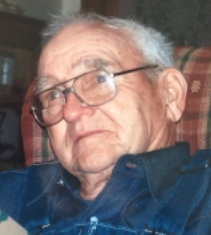
Bernard John Carsten, 93, went to be with his Lord April 30, 2018, at his daughter’s home in Raymore, MO.
He was born June 22, 1924, to Harvey and Mildred Carsten in Stockton, Kansas. Bernard graduated from Stockton High School, served in the Navy during WWII, and graduated from Ft. Hays State College.
He married Dorothy Davey August 10, 1947. Except for college and Navy years, he spent his life on the Carsten Family Century Farm. Until his son Terry’s death, he enjoyed farming together with him.
Bernard was a man of integrity and faith, living as an example to his family and community. He was involved with 4-H, Rooks County Fair Board, Gideons International, Lion’s Club, and other community organizations. From the late 60’s through the 70’s, he and Dorothy participated in leading Lay Witness Missions in the Midwest. He grew up as a member of Stockton United Methodist Church and in later years regularly attended Stockton Assembly of God Church.
Bernard enjoyed his grandchildren and great grandchildren. He provided his grandchildren with hours of enjoyment, playing in the clubhouse (chicken shed), swinging on the barn’s rope swing, sitting at his feet in the combine, and driving the lawn tractor around the yard. He loved flipping his dentures at them, tickling their necks and giving them kisses. So Be It!
Bernard is survived by his daughter Cheryl Menzies and husband Tom of Raymore, MO, son Rod and wife Janie of Elkhart, IA, daughter-in-law Deb Carsten of Stockton, sister-in-law Ilene Proctor and husband Robert of El Dorado, 9 grandchildren, 13 great-grandchildren, 1 niece, and 2 nephews.
Bernard was preceded in death by his parents, brother Alvin, wife Dorothy, an infant son and son Terry.
WICHITA, KAN. – An Kansas EMT is charged with stealing morphine from vials, according to U.S. Attorney Stephen McAllister.
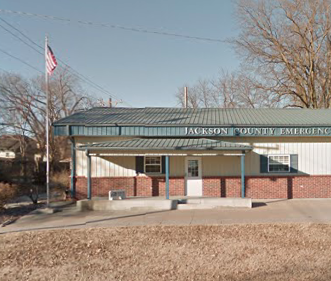
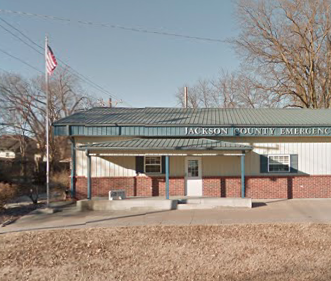
Jackson County EMS google image
Colby W. Vanwagoner, 32, Mayetta, Kan., is charged with two counts of tampering with consumer products and one count of making a false statement to federal investigators. A grand jury indictment returned April 26 and unsealed May 2 alleges the crimes took place while Vanwagoner was working for the Jackson County Emergency Medical Service in Holton, Kan.
The indictment alleges Vanwagoner tampered with vials of morphine sulfate. It is alleged he replaced morphine with saline solution and put the vials back into narcotic boxes on ambulances or in office stocks. Tests showed the concentration of morphine in vials that had been tampered with was low as 1 percent or less.
If convicted, he faces up to 10 years in federal prison and a fine up to $250,000 on the on the tampering charges and up to five years and a fine up to $250,000 on the charge of lying to investigators. The Food and Drug Administration – Office of Criminal Investigations investigated. Assistant U.S. Attorney Debra Barnett is prosecuting.
A piece of string walks into a bar. The bartender says “Hey, we don’t serve your kind here! Get out!” So the string goes outside, gets itself really tangled up and partially unraveled, then goes back inside. The bartender says “Aren’t you that piece of string I just threw out of here?” To which the string replies “Nope. I’m a frayed knot.”
PRATT COUNTY — Wednesday’s round of severe weather brought reports of five more tornadoes along with damaging wind and hail in many areas of Kansas.
Storm damage Wednesday in Pratt County-photo courtesy KWCH
Wind gusts of sixty to ninety mile per hour were reported in Pratt County, according to the National Weather Service. Gusts over seventy miles per hour were reported in Greenwood County.
Residents in Reno and McPherson County also reported tennis ball size hail. There are no injuries reported.
The fraternity and sorority community at Fort Hays State University collected over 8,000 non-perishable food items and raised nearly $2,000 during their annual Greek Week.
This year’s competitions were a food drive and a penny war, both won by sororities.
Delta Zeta won the penny war, which raised a total of $1,924.90. Half went to Jana’s Campaign, Options and Circle of Sisterhood, a Panhellenic philanthropy that promotes equality and gives everyone the chance for a rewarding life.
Alpha Gamma Delta won the food drive with an average of 133 items per member, 4,153 items in total. The items were donated to three food pantries around Hays and the food pantry on FHSU campus.
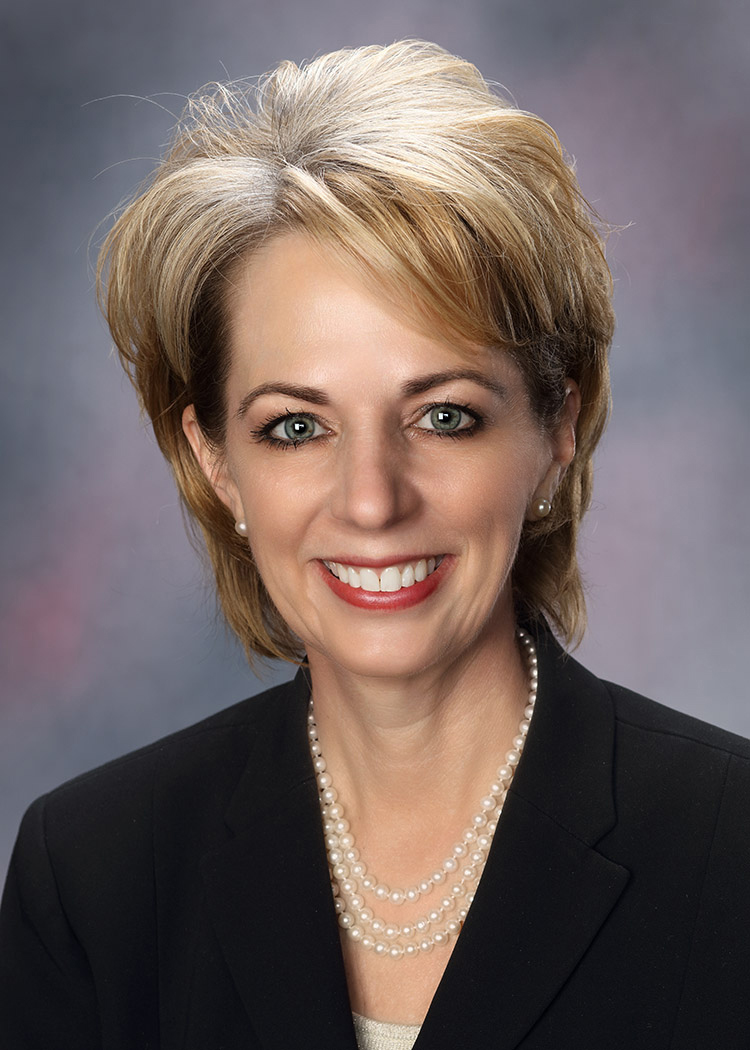
The public is invited to the annual spring convocation of Fort Hays State University on Friday, May 4, when President Tisa Mason will deliver her first State of the Campus address, and the winners of the spring 2018 Faculty Awards will be recognized.
Dr. Tisa Mason
The convocation, which begins at 3:30 p.m. in the Beach/Schmidt Performing Arts Center in Sheridan Hall, will also feature annual reports from the Faculty Senate and the Graduate School.
The spring faculty award winners are Dr. Mohammad Riazi-Kermani, professor of mathematics, for research; Angela Walters, associate professor of informatics, for teaching; and Ken Windholz, instructor of psychology, for service.
All three recipients received a $500 check for their accomplishments. Each faculty member was notified of the award in a surprise visit to a classroom by FHSU President Tisa Mason, Interim Provost Dr. Jeff Briggs and Deron O’Connor, community president of Commerce Bank, which contributes to the cash award.
Riazi-Kermani was recognized especially for his contributions to the Mathematics Stack Exchange, a question-and-answer site for academic mathematicians at any level and professionals in related mathematical fields. More than 500,000 people around the world participate.
“Indicative of his vast knowledge in all areas of mathematics,” said the recommendation letter for Riazi-Kermani, “Dr. Riazi-Kermani has solved problems in a variety of mathematical areas such as calculus, real analysis, algebra/precalculus, linear algebra and differential equations.”
Walters’ recommendation letter said she “is an outstanding teacher who exemplifies committed quality instruction.”
“Not only is she naturally a strong communicator who is a master of her subject area,” the letter continued, “she is a person who continually seeks to strengthen her teaching and constantly works to maintain currency in her rapidly changing professional field.”
The letter also noted that she initiated and is leading an overhaul of the curriculum for Web and application development in the W.R. and Yvonne Robbins College of Business and Entrepreneurship.
The recommendation for Windholz said that community service has been a hallmark of his life throughout his 40 years of experience in providing mental health services to individuals in the Hays community and as a faculty member at Fort Hays State.
His service include being an announcer for numerous FHSU sporting events – basketball, football and baseball. In the Department of Psychology, he is faculty sponsor for the Psychology Club, and in the community he works with the Hays National Alliance on Mental Illness and works hard, in the words of the recommendation letter, “to increase awareness of mental illness in the community through diverse service activities.”
They join three other faculty members, who were recognized for teaching, research and scholarly activity in the fall 2017 semester, as candidates for the Faculty Member of the Year Award. The winner of that award and the $1,000 prize that goes with it will be announced at the fall convocation in August.
Each of the five colleges of the university nominates outstanding faculty members to receive the awards. Recipients are selected by a committee appointed by the respective college deans.
Rip WinkelThe most common fungicide used in fruit tree sprays is Captan. Unfortunately, this product is subject to alkaline hydrolysis.
This is a process whereby certain pesticides will break down when mixed with high pH water (the pH of the water used to spray various pesticides affects the stability of the solution and how long the pesticide will remain effective while in solution).
So let’s say you mix up your spray mixture by adding Captan to 5 gallons of water. If that water has a pH of 7.0, the Captan will break down so that only half of it will still be present in 8 hours. However, if the water you use has a pH of 10.0, half the Captan will break down in 2 minutes. In short, the higher the pH, the faster it breaks down.
Malathion used to be the most common insecticide used for fruit pest control by gardeners but is becoming more difficult to find. It isn’t nearly as sensitive to alkaline hydrolysis as Captan but still will break down under high pH conditions. Fortunately, it is stable at a pH between 5.0 and 7.0. Lambda-cyhalothrin, which is found in Bonide Fruit Tree & Plant Guard, is somewhat of a new product for fruit pest control. It too is stable between a pH of 5.0 to 7.0.
So, how do you bring down the pH of your spray water if it is high? Commercial farmers use buffering agents, but that may be difficult for homeowners to find. Food grade citric acid can help. If you have a pH of 8.0, add 2 ounces of this citric acid per 100 gallons of water (1 and 1/4 teaspoons per 10 gallons) to bring the pH down to about 5.5.
On a similar note, a practice that will extend the effectiveness of fungicide as well as insecticide sprays when there is the threat of rain, is to add a spreader-sticker to your spray tank. Without a spreader-sticker, a rain would easily render any spay application useless, washing the materials right off. For this reason, spreader-sticker is used in commercial fruit tree sprays to improve the distribution and retention of fungicides and insecticides on fruit and leaves.
However, using a spreader-sticker is not a cure all as a rain can reduce the length of time the chemicals are effective. Less than one inch of rain since the last spray will not significantly affect residues. But, one to two inches of rain will reduce the residue by one half. You will need to reduce the number of days until the next spray by one half. More than two inches of rain since the last spray will remove most of the spray residue. Re-spray as soon as possible.
Rip Winkel is the Horticulture agent in the Cottonwood District (Barton and Ellis Counties) for K-State Research and Extension. You can contact him by e-mail at [email protected] or calling either 785-682-9430, or 620-793-1910.
Alicia BoorKansas State University researchers need your help to complete research on wheat management strategies. K-State Research and Extension (KSRE) has joined the Kansas Wheat Commission to learn from wheat producers around Kansas.
The survey is one of two initiatives aimed at identifying management practices leading to increased grain yields and improved quality in Kansas wheat production.
“We want to learn what is working and what is not in farmer controlled fields across different parts of the state,” said Romulo Lollato, KSRE wheat and forages specialist. “Results from this research will guide Kansas wheat producers in determining the best agronomic practices for their commercial fields.”
Researchers with the project include Lollato and Brent Jaenisch, graduate student in the winter wheat production program at K-State. They are currently collecting data from the past two growing seasons (2015-16 and 2016-17). This data will be used to develop information for Kansas wheat growers on yield increasing management practices, identify how these practices can be optimized for farm productivity and to discern best management practices for commercial fields for yield and quality.
Information to be collected includes field location, soil type/texture, wheat variety, seeding rate, tillage practice, previous crop rotation, crop yield, inputs applied, seed treatment, adoption of precision agriculture, pesticide application and other yield influencing factors. Lollato estimates that with this information readily available entering one field into the survey should take around 10-15 minutes.
The project also includes an initiative to gather data from small research plots on intensive wheat management. Researchers will gather data, testing different levels of management strategies in several modern wheat varieties. These field experiments will be in a minimum of three sites in the central and western corridor of the state. The experiment will collect data from six ranges of management intensities, from low input/common practice to improved fertility with intensive fungicide and micronutrient applications.
The survey phase of the experiment will be a collaborative effort between the principal investigators, area agronomists and county and district extension agents to collect on-farm data directly from wheat producers.
“We are aiming to use regionally-collected, producer generated data to improve our current management recommendations for wheat production,” said Lollato. “We need data from different regions, large and small scale producers and different management practices to provide the best recommendations that we can.”
This project is funded through the Kansas Wheat Commission as part of its mission to increase the productivity and profitability of the Kansas winter wheat farmer. The survey can be completed online, in person, or over the phone. Your identity will be confidential and no personally identifiable information will be associated with your responses. Data will only be presented as aggregated and never on a field by field basis.
For more information, or to submit your data, visit https://kswheat.com/researchsurvey, or call Brent Jaenisch at 320-226-7449 to submit data over the phone.
Alicia Boor is an Agriculture and Natural Resources agent in the Cottonwood District (which includes Barton and Ellis counties) for K-State Research and Extension. You can contact her by e-mail at [email protected] or calling 620-793-1910.
John E. Grabbe, Hays, is a new member of the American Angus Association®, reports Allen Moczygemba, CEO of the national breed organization headquartered in Saint Joseph, Mo.
The American Angus Association, with more than 25,000 active adult and junior members, is the largest beef breed association in the world. Its computerized records include detailed information on over 18 million registered Angus.
The Association records ancestral information and keeps production records and genomic data on individual animals to develop industry-leading selection tools for its members. The programs and services of the Association and its entities — Angus Genetics Inc., Angus Productions Inc., Certified Angus Beef LLC and the Angus Foundation — help members to advance the beef cattle business by selecting the best animals for their herds and marketing quality genetics for the beef cattle industry and quality beef for consumers.
Mary Elizabeth Vajnar, Hays, Kansas, is a new junior member of the American Angus Association®.
Junior members of the Association are eligible to register cattle in the American Angus Association, participate in programs conducted by the National Junior Angus Association and take part in Association-sponsored shows and other national and regional events.