We have a brand new updated website! Click here to check it out!

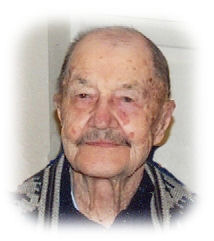
George E. Maier

George Maier

DOWNS – George E. Maier, 102, passed away Sunday, April 22, 2018. He was born August 27, 1915, the son of Nicholas and Vinnie (Merkey) Maier near Portis.

He was a retired farmer/stockman.

He is preceded in death by his wife, Maxine in 2011, his son, Ronald in 2002, son-in-law, George Weeks, sisters, Ethel Dolloff and Edna Watts.

He is survived by his daughters, Doretta Weeks of Downs, Bonnie (Dwight) Donley of Beloit, 12 grandchildren, 23 great-grandchildren, 11 great-great grandchildren and sister, Lucille Palmer of Portis.

Memorial service will be held Saturday, May 5, 2018 at 11:00 a.m. at the First Christian Church in Downs. There will be no visitation.

Memorials may be given to the Downs Senior Center and Post Rock Humane Society in care of Domoney Funeral Home, P.O. Box 127, Downs, KS 67437.

BILLINGER: State Senate Report May 1

Sen. Rick Billinger (R-Goodland)

The legislature reconvened on Thursday, April 26th for the start of Veto Session. The Senate voted on eight Conference Committee Reports and two bills. The Senate will continue to work until Sine Die on Friday, May 4th.

SB 427 would amend the Kansas Expanded Lottery Act and the Kansas Parimutuel Racing Act concerning racetrack gaming facilities and lottery gaming facilities. This bill sounds like it would permit horse and dog racing at the Kansas racing facilities. This is not the debate. Horse and dog racing is currently permitted under Kansas’s law. The racetracks also currently are or can be permitted to have slot machines. When the lottery act was passed years ago the racetrack agreed to pay the State and are required to pay back to the State 40% of their earnings on slot machines. SB427 would change the pay back rate to the State and would require race tracks with slot machines to pay back about 22% of their earnings to the State, the same as State owned casinos are paying. Here is where the real problem surfaces. The State has charged the operators of the State owned casinos a privilege fee to operate state casinos and they have contracts that would be violated if the State changes the payback rates for racetracks.

The Kansas Attorney General, Derek Schmidt, issued an opinion that indicated passage of an expanded gaming bill could lead to a financial liability for the State. If found in breach of contract, the State could be required to return $61 million in privilege fees to the casinos along with 10% interest from date of payment, which would approximate $130 million today. In addition there could be other possible economic damages related to breach of contract. Some proponents of SB427 do not believe the State will be sued or the damages will be over $100 million. They will also say, if they sue, the racetrack owner will payback the damages with their winnings and will put up a letter of credit. The problem with this scenario is they want to use 11% of the 22% payback to the state for their payback and the State would be paying the damages over $100 million. You may wonder why this vote was as close as it was with the Attorney Generals opinion that the State will lose the lawsuit. Many who supported SB427 live in the areas where the racetracks are located and or where many of the house and dog breeders operate.

Ever since my first day in 2011 this has been a hot issue and I believe it will be again in the future. Many of us who agree with the Attorney General’s opinion will try to work with both sides to hopefully work out a solution that will avoid breaching our contracts.

Several of the conference committee reports of particular interest to our area were SB307, the amusement ride bill. This bill was passed out of the Senate 37-1 and will go to the governor for his signature. Another bill was SB331, which would establish Little Jerusalem as a State park in southern Logan County. When we look at the vote of SB331 you might wonder why 12 voted against the legislation. Well it has nothing to do with Little Jerusalem. Part of this bill also designated the Flint Hills Trail State park located in Miami, Franklin, Osage, Lyon, Morris and Dickinson counties because there was a controversy on changes to the Flint Hills Trail State Park.

This will be the last week of this year’s session and will be a very busy week finishing up the budget and school funding, along with a number of conference committee reports to agree or disagree on.

The Treasurer’s office has announced that there is $350 Million in unclaimed property. Please check kansascash.com to see if you have any unclaimed property in the state of Kansas.

It is my honor and pleasure to represent the 40th Senate District. Please contact me at (785) 296-7399 or [email protected] with your suggestions or concerns.

Kan. man serving life in ex-wife’s killing wants DNA retested

HUTCHINSON, Kan. (AP) — A Kansas man serving a life sentence in the 2000 strangulation death of his ex-wife wants DNA evidence retested.

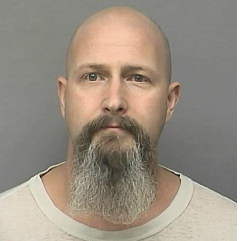
Corbett -photo KDOC

A Reno County judge will take up Trevor Corbett’s request Friday. A University of Kansas School of Law School clinic filed the motion on Corbett’s behalf.

Corbett, now 44, was convicted in 2003 of first-degree murder in the death of Crystal Casey. He’s maintained his innocence.

Experts testified at his trial that a DNA swab from Casey’s elbow matched Corbett’s. But although none of Corbett’s DNA was on the victim’s neck, an unknown male’s was. The prosecutor speculated that the neck swab DNA could’ve come from a paramedic, though none were tested and all wore gloves.

Another of Casey’s ex-husband was initially identified as a suspect.

Susan G. Komen race set for this weekend in Hays

By JONATHAN ZWEYGARDT
Hays Post

The annual Susan G. Komen Race for the Cure returns to Hays this weekend to celebrate and honor breast cancer survivors.

This Saturday’s fundraiser marks the sixth year for the event, and it will once again include a number of opportunities for people to participate. This year’s activities at Municipal Park include a 5k run, 1-mile Family Fun Walk, and a 50-yard Dash for Kids.

Stephanie Howie, member of the Hays race committee said breast cancer affects a lot of people in a lot of different ways.

“There are people next door that may be battling breast cancer and we don’t even know,” Howie said. “But I think every single one of us is affected by it somehow.”

Registration is open ahead of Saturday’s event online at komenkansas.org. There will also be a packet pickup in front of the Hays Aquatic Park from 1 p.m. to 6 p.m. on Friday, May 4. Registration on the day of the race opens at 7 a.m. The Hays Med 5K race starts at 8 a.m.

People can register as an individual or sign up as a team.

Breast Cancer Survivors can register as a survivor and take part in a continental breakfast at Municipal Park starting at 7 a.m. There will be a number of opportunities to honor survivors throughout the day.

At 9:15 a.m. there will be a survivor photo and that will be followed by the survivor parade and celebration.

Howie said, “The day is for them.”

“Those people have gone through a lot in their life — a lot of treatment and a lot of ups and downs — and it’s just a great way to put some smiles on some people’s faces and you know, probably some tears in their eyes.”

Survivors are invited to join in on the Midwest Energy Mile Family Fun Walk at 9:50 a.m. behind Larks Park.

Jeremy Mock, Susan G. Komen Kansas executive director, said up to 75 percent of the fundraising dollars stay in their 95-county service area. The other 25 percent goes to the Komen Research grants.

“We are almost too funding $1 billion of breast cancer research and no other organization can say they’ve done that, expect for the federal government,” Mack said.

Susan G. Komen’s largest grant program in Kansas is called the Early Detection Works Program. Mock said the federal program that provides screening for breast cancer, for women and men and cervical cancer for women who are underinsured or uninsured. If a tumor is found the program will also cover treatment.

Fundraising efforts extend 30 days past the race and new this year when people sign up for the event they can share their registration and create a fundraiser through Facebook.

“You don’t necessarily have to go door-to-door, make phone calls, send emails,” said Mock. “You can link it straight to your Facebook login information and your Facebook profile and it creates your fundraiser on Facebook.”

If you are unable to attend this year’s event, you can still donate online or you can register as a virtual race. Mock said this allows people to take part in the event on a different day.

“The real important part to us is that we find an end to breast cancer and the only way we can do that is by raising more money and being able to invest more in research and helping men and women that are battling it here in Kansas as well,” said Mock.

Kan. man forced to disrobe before being shot behind church

WICHITA, Kan. (AP) — Authorities say a man was abducted and ordered to take off his clothes before being shot in the leg and left behind a Wichita church.

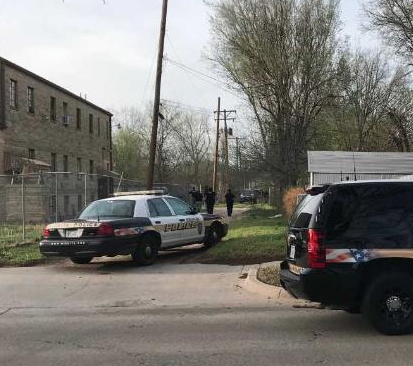
Police on the scene of Monday’s investigation photo courtesy KWCH

The man was rushed Monday night to a hospital with non-life threatening injuries. Lt. Wendell Nicholson says the victim was forced into a sport utility vehicle at gunpoint after meeting other people for a “transaction.”

Nicholson says the man then was made to strip as he was driven around. After the SUV’s driver pulled up in the alley behind Iglesia Christiana Jehova-Jireh, the man was shot in the leg. The naked man then ran to the church, where people inside called police.

Police are working to determine the nature of the transaction.

THIELEN: Beef farmers and ranchers contribute to societal, economic fabric of Kansas

Kevin Thielen is executive director of the Kansas Beef Council

Many products get publicity and special recognition during the year. But in Kansas, if any product deserves its own month, it’s beef. That’s why Kansas Governor Jeff Colyer has declared May as Beef Month in the state. This declaration makes this the 34th consecutive year beef has received this honor.

According to , the value of beef to the economy and social fabric of the state is remarkable. With more than 6.3 million cattle on ranches and in feedyards in the state, Kansas ranks third in the country. That’s more than twice the state’s human population. Kansas cattle producers are proud of the nutritious, delicious beef they help bring to tables in this state, across the country and around the world.

Kansas has about 46 million acres of farm ground. Not all of this land can be used to grow crops, however. Grazing cattle is an ideal technique for efficiently utilizing grasses and plants growing on over 15.5 million acres of Kansas pasture and rangeland. These acres would be wasted if not for ruminants like cattle that can turn these resources into essential protein and nutrients for humans.

Kansas also ranked second in fed cattle marketed, with 4.94 million in 2017. Beef cattle and calves represented 50.8% of the 2016 Kansas agricultural cash receipts.

The effect of the beef industry on employment is significant as well. According to the American Meat Institute, Kansas companies that produce, process, distribute and sell meat and poultry products employ as many as 19,798 people, while generating an additional 50,852 jobs in supplier and associated industries. These include jobs in companies supplying goods and services to manufacturers, distributors and retailers, as well as those depending on sales to workers in the meat industry.

The product they help bring to market is one that contributes substantially to the human diet. Beef provides 10 essential nutrients, including zinc, iron, protein and B vitamins. It does all this for only 150 calories per 3-ounce serving. In fact, a serving of beef provides the same amount of protein as three servings (1 ½ cups) of cooked black beans – which have 341 calories.

Kansas ranchers and feeders are committed to producing beef responsibly and sustainably, Thielen says. But beef production refined over many generations is only part of the story. Producers also keep consumer needs and wants top of mind.

While all aspects of beef raising and processing are important, producing beef that is delicious, safe, wholesome and nutritious is ‘job one’ for our industry. After all, producers of beef are also consumers of the beef they produce. They’re proud of their role in this terrific food that so many people enjoy.

Kevin Thielen is executive director of the Kansas Beef Council.

Crews continue to monitor large Kansas grass fire

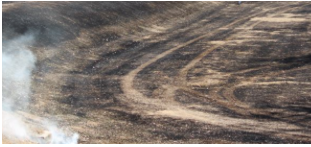
STAFFORD COUNTY — Fire crews continue to monitor a large grass fire in Stafford County.

Shortly after noon Monday, fire crews were dispatched to a brush/grass fire in the north part of Stafford county, according to Stafford County Fire and EMS.

When fire crews arrived on scene the fire had spread rapidly through grasses and quickly made it’s way into a large group of trees.

Crews from Seward, Hudson, St. John, and Great Bend worked the scene throughout the day. Crews from Hudson and Stafford relieved the day crews and remained on scene throughout the night to monitor hotspots and make sure the fire does not jump lines.

An acreage has not been determined at this time, however, the fire has burned close to a mile in length.

Crews from Great Bend Fire/EMS, and Kansas Highway Patrol assisted in fighting the fire.

HaysMed foundation elects new officers, board bembers

The HaysMed Foundation this week announced new officers and members of its Board of Directors.

The following members were elected as officers: Chris Wente, President; Alaina Cunningham, Vice President; Mark McCullick, Treasurer; and Tracy Frickey, Secretary. Those elected to a three-year term on the Foundation Board of Directors were Alan Moore, APAC-Kansas; David Van Doren, Hadley Center; Eric Wagner, Showcase Jewelers; and Van Witthuhn, Countryside. Directors re-elected to serve were Alaina Cunningham, Kay Patterson and Chris Wente.

Retiring from the Board was Jerry Haley who was recognized for his service to the Foundation. He was elected to serve as a Director Emeritus for the Foundation.

“Our organization is very fortunate to have an exceptional group of proven leaders serve on our board of directors,” said Ruth Heffel, Executive Director of the Hays Medical Center Foundation. “We know they will be a tremendous asset in supporting the mission of Hays Med.”

Other members-at-large on the Board are Michele Flax, T.J. Gottschalk, Eddie Herrman, Wayne Kieffer, Tom McDonald, M.D., Julie Rider, Patrick Scott and Brennan Uehling.

The HaysMed Foundation is a 501(c)3 charitable organization that reaches out to the region to secure resources in support of HaysMed. Community volunteers who donate their time on the Foundation Board help to develop fundraising programs that are in alignment with the strategic priorities of HaysMed, and assist with increasing awareness of HaysMed and its mission.

— Submitted

HAWVER: Kan. lawmakers scrapping over tax cuts

Martin Hawver
Well, it comes down to this week, and this week only, the Legislature’s effort/fight to figure out how to put a happy face on lowering taxes.

It takes a scrap to cut taxes? In a year when the House and state level officers fight for re-election? How can this be?

As lawmakers work to finish the budget with apparently ample money to take care of most of the needs of the state ranging from aid to K-12 schools, to leaving a dab more money in the Kansas Department of Transportation budget, to catch up with what have been reduced payments to social service providers to care for the poor…the Legislature is hesitant to cut Kansans’ income taxes.

There are some reasons for excessive scrapping over tax cuts.

The Consensus Revenue Estimate, which is the state’s official benchmark for just how much money the state will have to spend for the remainder of this fiscal year and next fiscal year, gave legislators a bonus. Hundreds of millions of dollars to spend.

That official estimate? Over the next several years a bonus of about $533 million. Sounds good, doesn’t it?

Most of that money is going to be spent on K-12, on social services, on catching up on budget cuts the past several years. Overall, not a bad effort by lawmakers so far.

But election-year tax cuts? Well, that got complicated quickly after the federal government cut income taxes for most Americans. We know that the federal government is going to be taking less money from Kansans in taxes, but nobody is very certain how much and when Kansans will start stuffing those bucks into their wallets.

And…the issue quickly narrows to the federal government, for most Kansans the expanding of the federal standard deduction leaves more money for Kansas to tax. The less you pay to the feds, the more money that shows up on your Kansas adjusted gross income that the state will levy taxes against. You pay it there or you pay it here is how that goes

So…the first thing Kansas conservatives say is that we figure out just how much the federal government cut your taxes, and we figure out a way to let you keep it.

They make the point that they didn’t vote to raise your taxes, but it’s going to look a lot like that if the state just looks the other way and watches an estimated $100 million a year roll into the State General Fund—by increasing the amount of your money Kansas will tax—without doing anything unpleasant as it did last session when lawmakers raised state income taxes in a series of votes that are likely to show up on thousands of campaign ads, TV and radio ads and those little palm cards, that show up wedged into that gap where your screen door hitches up to the door frame.

So far, moderate and liberal lawmakers have consistently said that the additional state revenue that the federal tax cuts sparked ought to be spent on more aid to schools, expanding services available to the state’s poor, highway repair…well, just about everything that sounds nice and like a responsibility of the state Legislature.

The conservatives generally say the state can raise taxes if it wants but shouldn’t just coast on the additional revenue that the federal tax cuts cause. “What? Where’d that new money come from? Must have found it on the sidewalk?” is the way those conservatives tend to characterize the new revenue.

What’ll happen? Will there be a Kansas income tax cut? We’ll find out this week.

Syndicated by Hawver News Company LLC of Topeka; Martin Hawver is publisher of Hawver’s Capitol Report—to learn more about this nonpartisan statewide political news service, visit the website at www.hawvernews.com

🎥 Public opposition prompts special session about restriping Canterbury Drive

Canterbury Drive between 13th and 22nd is scheduled May 7 to be restriped from 4 lanes to 3 lanes. Hays city commissioners have called a May 1 special session to reconsider that decision following some recent public opposition.

By BECKY KISER
Hays Post

Hays city commissioners will meet in a special session tonight at 6 p.m. to discuss the restriping of Canterbury Drive.

As part of the 2018 Street Maintenance plan approved by the commission last year, Canterbury between 13th and 22nd Streets has just undergone diamond grinding to make the pavement smoother. It is scheduled to be restriped Monday, May 7, from the current four lane configuration to three lanes, with the middle lane dedicated to left turns.

Other areas in Hays have been changed from four lanes to three lanes, including portions of 8th, 13th, 27th and Hall Streets. Numerous national and state traffic studies as well as those  by city staff and the Hays Police Department have determined there are fewer vehicle accidents on three-lane roads and traffic moves more quickly.

At last week’s meeting Mayor James Meier noted commissioners have recently received a number of complaints from some residents opposed to the three lane configuration and asked if the commission should “rethink it.”

Meier first laid out the steps in the commission Rules and Procedures which would have to be followed to change the contract.

Commissioner Shaun Musil has continued to favor four lanes. “I think the community would like us to keep it that way,” he said Thursday. He offered the motion to suspend a portion of the Rules and Procedures requiring a super majority vote to amend the contract.

After some discussion, the motion failed unanimously.

Vice-Mayor Henry Schwaller had vehemently opposed the notion. “I have to choose my words very carefully. You may be down a commissioner,” Schwaller said. “You’re repealing something that’s been in effect for many years for a reason.” He noted there was no city staff present to answer questions about the restriping. “I don’t think that’s a good precedent and I do not wish to serve with a commission that makes decisions hastily.”

“I don’t think we’re doing this in haste,” countered Commissioner Sandy Jacobs who seconded Musil’s motion. “We voted (Jan. 8) on section 8.1 in Rules and Procedures saying things can get suspended but I don’t like asking for the suspension.”

“I’ve had more calls on this than any other subject, which surprises me. We’ve talked about this in the past. I don’t care if the lanes are striped four lanes or three lanes.”

“I don’t think this issue is worth executing the Rules and Procedures suspension,” said Commissioner Chris Dinkel.

He also wondered if it made sense to go back on staff recommendation for the three lanes and “make a snap decision.”

“We hear from people because people hate change,” Dinkel said. “We’ve discussed much bigger issues in this commission which have gotten much less play just because they don’t affect people’s daily lives.”

Mayor Meier questioned City Manager Toby Dougherty if the striping contractor could be asked to hold off on the project until after the commission’s next regular meeting on May 10.

“Yeah,” Dougherty answered. “But a lot of this is based off timing, so it may cost the city money. The contractor may agree to wait and go do another job first, but he’ll have to remobilize and fit our project into another slot,” he explained..

Commissioners also talked about the possibility of calling a special meeting to further discuss the restriping rather than using a Rules suspension Thursday night.

Late Friday afternoon, the city sent a notice to news media that a special session will be held Tue., May 1 “to discuss the lane configuration on Canterbury Drive.”

SCHLAGECK: Moderation and variety

John Schlageck writes for the Kansas Farm Bureau.
The key to a healthy diet today is to eat a variety of foods including grains, milk, vegetables, meat and fruits – all in moderation. Each of us needs to make smart choices about when we eat and how much.

Another key ingredient in personal health is exercise. Something as simple as a 20 minute walk several times each week will go a long way toward personal health.

In spite of this widespread consensus to eat in moderation and variety, there are plenty of detractors who are trying to limit the amount of protein, especially red meat, from the everyday diet. Most of these opponents preach eating less or no beef.

Dietary guidelines about what we should eat for good nutrition are as plentiful as the food selection in our country today. Numerous organizations have been issuing their own guidelines about what they would have us eat based on their agendas. Oftentimes these guidelines are too narrow, containing specific recommendations for everyone while overlooking allowances for individual differences.

A recent example involves the attack by the Physicians Committee for Responsible Medicine (PCRM) on beef. This group has specifically discredited the beef industry claims that lean beef can be part of a healthy diet that helps manage cholesterol.

The PCRM filed a complaint with the state of Texas, charging deceptive trade practices. Before we jump to conclusions, consider the source here.

The Physicians Committee for Responsible Medicine may not always be responsible and less than 5 percent of its members are physicians. Some suggest PCRM is intent on removing eggs, milk, meat and seafood from the American diet.

This nation of ours is made up of individuals who need to adjust their diets to allow for their own states of health, age, development, risks of chronic disease and personal tastes. When it comes to choosing meats as a source of protein, the key is to choose lean cuts and trim the fat from the meat before or after cooking.

Beef, chicken, fish, lamb, pork and poultry can be roasted, baked, broiled, grilled or simmered. No matter how you cut it – scientific research indicates all lean meats are high in nutritional quality.

They’re good for the body as well as the mind. Beef, pork, chicken, fish and lamb have been recognized as healthy sources of top quality protein. They also contain thiamin, pantothenic acid, niacin and vitamins B-6 and B-12.

Red meats are also excellent sources of iron, copper, zinc and manganese – minerals not easily obtained in sufficient amounts in diets without meats. Well-trimmed, lean meats contain approximately 4 to 9 percent fat when uncooked.

When it comes to eating, the truth is, nothing compares to the smell, sound and taste of a steak sizzling over an open fire.

Cheeseburger, pork chop, grilled chicken or T-Bone anyone?

John Schlageck, a Hoxie native, is a leading commentator on agriculture and rural Kansas.

AAA: April ends with most expensive national gas price average since 2014

At $2.55/gallon, however, Kansas has the 6th cheapest average gas price in the nation

TOPEKA – Hitting $2.81, today’s national gas price average has reached the highest price per gallon since November 2014. That year, pump prices averaged $3.34, peaking at $3.70 in April and bottoming out at $2.25 in December. This year’s pump prices will not be reminiscent of 2014, but for motorists, filling-up is packing an unwanted punch to wallets.

“Motorists have been spoiled the past few years with inexpensive gas prices,” said Shawn Steward, AAA Kansas spokesman. “We expect prices to continue increasing, potentially another 10 cents, through Memorial Day and then will likely stabilize during the summer, with the understanding that if demand spikes, prices are likely to follow.”

On the week, national gasoline demand took a notable drop from its record high the previous week, falling by 774,000 b/d, according to the Energy Information Administration (EIA). At 9.083 million b/d, gasoline demand is now more in line with rates typically seen during the spring driving season.

Today’s national gas price average is 16 cents more expensive than last month and 43 cents more expensive that last year at this time. California and Hawaii share the highest average gas price at $3.61/gallon, while Oklahoma is enjoying the cheapest prices at the pump, $2.52/gallon.

“In Kansas, the average this week is $2.55, up about six cents in the past week,” AAA Kansas’ Steward said, “but we are pretty fortunate here in the Sunflower State to have the nation’s 6th cheapest average gas prices, 26 cents less than the national average. Strong gas demand and the transition to more expensive summer blend gasolines has kept prices on the rise.”

Of the 10 Kansas cities regularly highlighted by AAA Kansas (see chart), eight cities saw gas price increases in the past week. Topeka remained flat, while Salina actually fell 3 cents per gallon. Lawrence (+13 cents), Kansas City, Kan. (+12) and Hays (+11) saw the largest weekly increases. At Wichita registered the 12th lowest metro area gas prices in the nation, while Manhattan came in as 51st lowest metro.

According to AAA Kansas, this week’s Kansas gas price extremes are:
HIGH: Altoona (Wilson County) – $2.90
LOW: Columbus (Cherokee County) – $2.42

Great Lakes and Central States Report
Missouri (+9 cents) has the largest one-week jump at the pump in the nation and the region. Iowa (+8 cents), Wisconsin (+7 cents) and Kentucky (+7 cents) also land on the top 10 states list with the largest increase. At $2.92, Michigan carries the most expensive gas price average in the region followed by Illinois ($2.87), Indiana ($2.78), Ohio ($2.75) and Kentucky ($2.74).

Comparing pump prices to those this time last year, Indiana motorists are paying 53-cents more to fill-up. This is the most expensive year-over-year difference in gas prices of any state in the region.

In the coming days, some regional states may see prices spike a little higher than other surrounding states – including Wisconsin ($2.68), Michigan ($2.92) and Minnesota ($2.61) – following fires that broke out at Husky Energy’s refinery in Superior, Wisconsin, last Thursday. The impact on prices (short or long term) will be determined by the extent of damage to the refinery. According to the company’s website, the 50,000 b/d refinery processes light had heavy crude oil, in addition to asphalt, gasoline, diesel and heavy fuel oils.

With a 430,000 bbl draw, inventories in the region fall to 56.6 million bbl according to the latest EIA data.
Copyright Eagle Radio | FCC Public Files | EEO Public File