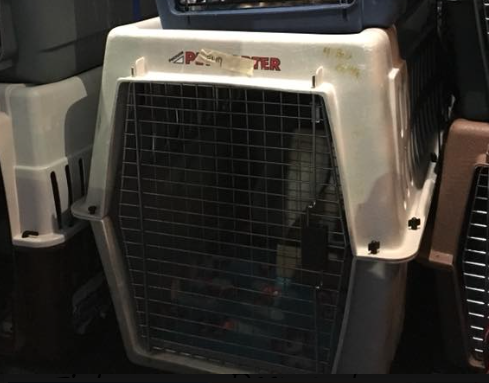
HUTCHINSON, Kan. (AP) — Police in Hutchinson, Kansas, say a dog died inside a sweltering animal control truck due to bad advice from a 911 dispatcher and lack of communication to animal control staff.
The incident happened in May but was disclosed this week. A resident on May 27 called 911 about a loose dog and was told to put it in an animal control truck compartment.
But the information was never relayed to anyone. The shelter was closed for the Memorial Day weekend, when temperatures neared 100 degrees.
The dog was found dead days later.
Police Capt. Troy Hoover says the dispatcher’s direction to put the dog in the truck was not based on protocol. He says steps have been taken to prevent anything similar happening again.
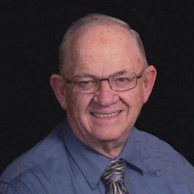
Donald “Donnie” Rohn, 74, died Wed., June 20, 2018, at his home in Colby, Kansas. Rohn was born Sept. 25, 1944, in Hays, Kansas. He was a retired route salesman for V&M Distributing and AA Coors Company in Colby.
Rohn is survived by his daughters Sherry Rohn, Lawrence, Kansas; Teresa Rohn-Penn, Albuquerque, New Mexico; Kelly Ohrman, Colby, Kansas; Rebecca Edwards, Kingman, Arizona; and Nikki Brown, Littleton, Colorado, as well as 13 grandchildren and 3 great-grandchildren.
Funeral services with officiant Fr. Richard Daise will be held Monday, June 25, 2018, 10 a.m., at Kersenbrock Funeral Chapel, 745 South Country Club Drive, Colby. Visitation will be Sunday, June 24, from 3 to 6 p.m. at Kersenbrock Funeral Chapel. Burial will be at Sacred Heart Cemetery, Colby.
Memorials may be made to the Catholic Church K of C Building Fund in care of Kersenbrock Funeral Chapel.
WASHINGTON (AP) — The Republican-led House has narrowly passed a sweeping farm bill that would toughen work requirements for food stamp recipients.
House Ag Committee Courtesy image
The bill passed 213-211.
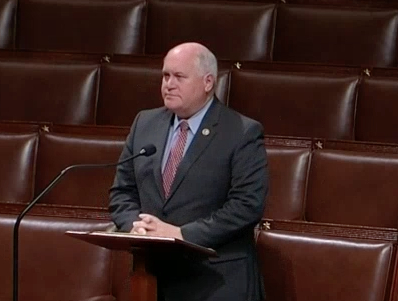
“This legislation has been years in the making; we’ve hosted hundreds of hearings and made stops across the country to listen to rural America’s needs,” Kansas First District Rep. Roger Marshall said.
“I am so proud to report; we did it! We passed a budget-neutral farm bill that takes care of our farmers and ranchers.”
Democrats opposed the measure, saying it would toss too many people off government food assistance.
The measure renews the safety net for farmers as President Donald Trump’s tough talk on tariffs threatens to close markets for many of their products.
The vote Thursday marked the House’s second attempt to pass a farm bill. GOP leaders suffered an embarrassing setback in May when 30 GOP members opposed passage in an effort to get a vote on immigration legislation.
The bill protects crop insurance, simplifies conservation programs, and rolls back heavy-handed federal regulations placed on farmers, ranchers.
This legislation strengthens farmers’ safety net, expands rural broadband access, restores funding for trade promotion programs, invests in animal health, and includes programs designed to help young and beginning farmers.
The House bill sets up a certain clash with the Senate, which looks to make mostly modest adjustments to existing programs and doesn’t pick a food stamps fight.
KANSAS CITY, Kan. (AP) — Uniformed officers from across the nation gathered Thursday to remember two Kansas sheriff’s deputies who were shot and killed by an inmate while transporting him between the courthouse and jail.
Thursday memorial service in Kansas City-courtesy image
Wyandotte County Sheriff Don Ash said Thursday during a joint service for Theresa King and Patrick Rohrer at a soccer stadium in Kansas City, Kansas, that they “literally put their lives between a cold-blooded killer and the citizens they swore an oath to protect.
Authorities said an inmate apparently overpowered the deputies last Friday in a gated area behind the courthouse and shot them, possibly with one of their own guns. Rohrer, who was 35 and was the father of two, died shortly after the shooting. King, who was 44 and a mother of three, died the next day. The suspect also was shot.
One of King’s children, Bailey, talked about her hard-working mother.
“Mom, this feels like a bad dream and I want to wake up,” Bailey said. “Everything you did, you did for us and I know being a single mom wasn’t easy. I know working 80 hours a week wasn’t ideal . . . but you did what needed to be done to make sure we were taken care of.”
King was supposed to be assigned to a school attended by another of her children as a resource officer in the fall.
Some mourners showed up in costume, including Star Wars characters, princesses and superheroes. Ron Coleman, who dressed as a Ghostbuster, said Rohrer participated in 17 of the last 19 Kansas City Comic Con conventions. He said Rohrer volunteered at Children’s Mercy Hospital dressed as Superman.
Maritza Gordillo, 27, who works as a protection order advocate at the Kansas City, Kansas, Police Department, described King as “assertive but also kind” and Rohrer as a kindhearted “jokester-geek.”
—————–
WYANDOTTE COUNTY —A joint funeral service for Wyandotte County Deputies Patrick Rhorer and Theresa King will be held at Children’s Mercy Park on Thursday at 8:30 am.
Deputies Patrick Rhorer and Theresa King
The ceremony will include a 21-gun salute, music played on pipes and drums and a flyover, according to the sheriff’s department.
Kansas Governor Jeff Colyer ordered flags to be flown at half-staff state-wide from sun-up until sun-down on Thursday, June 21, 2018 in honor of the deputies.
King and Rohrer were fatally shot Friday. Authorities say they were killed by an inmate as they were preparing to leave the courthouse to return to jail after a hearing. King was 44 and had three children. Rohrer was 35 and was the father of two.
WASHINGTON (AP) — The House killed a hard-right immigration bill Thursday, and Republican leaders delayed a planned vote on a compromise GOP package with the party’s lawmakers fiercely divided over an issue that has long confounded them.
Kansas Rep. Ron Estes spoke in support of the measure Thursday
The conservative measure was defeated 231-193, with 41 Republicans — mostly moderates — joining Democrats in voting against it. Those defections — nearly 1 in 5 GOP lawmakers — underscored the party’s chasm over immigration and the election-year pressures Republicans face to stay true to districts that range from staunchly conservative to pro-immigrant.
Thursday’s vote set the stage for debate on the second bill, this one crafted by Republican leaders in hopes of finding an accord between the party’s sparring moderate and conservative wings. That compromise was considered too lenient by some conservatives and seemed likely to fall, too, and aides said the final roll call would wait till Friday.
Rejection of both would represent an embarrassment for President Donald Trump, who had embraced them. As if the internal GOP turmoil was not enough, the party’s political exposure on the issue has been intensified by heartbreaking images of migrant children separated from families and complicated by opaque statements by Trump.
At the White House, Trump defended his administration’s “zero tolerance” policy of prosecuting all migrants caught illegally entering the country, a change that has caused thousands of families to be divided while the parents are detained. He said without it, “you would have a run on this country the likes of which nobody has ever seen.”
He said he was inviting Congress’ top two Democrats, House Minority Leader Nancy Pelosi and Senate Minority Leader Chuck Schumer, to the White House for immigration bargaining. He called them “extremist open-border Democrats.”
And in a tweet that seemed to undermine House leaders’ efforts to round up votes, he questioned the purpose of their legislation by suggesting it was doomed in the Senate anyway.
Trump issued an executive order Wednesday aimed at reversing his own policy of taking immigrant children from their detained parents, but emotions remained high.
“I was welcomed here,” a tearful Rep. Norma Torres, D-Calif., said during House debate, describing her journey to the U.S. as a child from Guatemala. “I was not put in a freezing cell.”
In an embarrassing detour, the House used an early procedural vote to correct what Republicans called a drafting error — language providing $100 billion more than they’d planned to help build Trump’s proposed border wall with Mexico. Instead of giving initial approval for $24.8 billion spread over the next five years, the legislation said it would open the door to $24.8 billion “for each” of the next five years.
The rejected conservative bill would have granted no pathway to citizenship for young “Dreamers” who arrived in the country illegally as children, curbed legal immigration and bolstered border security.
The second was a compromise between GOP moderates and the party’s conservatives that included an opportunity for citizenship for the young immigrants. It provides $25 billion for Trump’s wall, restrictions on legal immigration and language requiring the Homeland Security Department to keep migrant families together while they’re being processed for illegal entry to the U.S.
Democrats oppose both measures as harsh.
“It is not a compromise,” House Minority Leader Nancy Pelosi, D-Calif., told reporters. “It may be a compromise with the devil, but it is not a compromise with the Democrats.”
Even before votes began, Trump complicated GOP efforts to round up votes.
“What is the purpose of the House doing good immigration bills when you need 9 votes by Democrats in the Senate, and the Dems are only looking to Obstruct (which they feel is good for them in the Mid-Terms),” Trump wrote. “Republicans must get rid of the stupid Filibuster Rule-it is killing you!”
In the unlikely event that the House approved the GOP compromise, it seemed certain to go nowhere in the GOP-run Senate. Democrats there have enough votes to use procedural delays to kill it. Sixty votes are needed to end filibusters.
On Wednesday, Trump reversed himself and took executive action aimed at curbing the separation of families. His order seemed to stem some of the urgency for Congress to act.
But GOP leaders were eager to hold the votes anyway. The roll calls would let Republicans assert to voters that they tried addressing the immigration problem.
“Our members wanted to express themselves on an issue they care a great deal about,” Speaker Paul Ryan said.
Passage of the GOP compromise was always a long shot, but failure may now come at a steeper price. Republicans and Trump have raised expectations that, in control of Congress and the White House, they can fix the nation’s long-standing immigration problems.
When the crisis of family separations erupted at the border, GOP leaders revised the compromise bill to bolster a provision requiring parents and children to be held together in custody. It did so by eliminating the 20-day cap on holding minors and allowing indefinite detentions.
Even though Trump has acted unilaterally to stem the family separations, lawmakers still prefer a legislative fix. The administration is not ending its “zero tolerance” approach to border prosecutions. If the new policy is rejected by the courts, which the administration acknowledges is a possibility, the debate could move back to square one.
Senate Republicans, fearing Trump’s action will not withstand a legal challenge and eager to go on record opposing the administration’s policy, have unveiled their own legislation to keep detained immigrant families together.
In the House, moderate Republicans forced the immigration debate to the fore by threatening to use a rare procedure to demand a vote. Led by Curbelo and Rep. Jeff Denham, R-Calif., many are from states with large populations of young “Dreamer” immigrants who now face deportation threats under Trump’s decision to end the Obama-era Deferred Action for Childhood Arrivals program. A federal court challenge has kept the DACA program running for now.
Richard Dwain Schmalzried, age 80, of Quinter, went to be with his Lord on June 18, 2018 with family by his side.
He was born March 29, 1938, in Dighton, KS to parents Dayton and Selma (Uppendahl) Schmalzried. On July 21, 1962, he married his high school sweetheart, Rozan Heath. After getting married, they lived in Dighton, KS and moved to Quinter in 1971. To this union, 5 children were born and he felt his family was the best crop he ever raised.
Richard graduated Dighton High School in 1956 and attended Fort Hays State University for several years. He graduated from the Colorado School of Banking in 1972.
Richard wore many hats throughout his life, working as a loan officer for First National Bank in Dighton and Quinter, manager of Flex-King Manufacturing, farmer, entrepreneur with the Town and Country Shop and later the Pizza Station in Quinter, real estate salesman, and postman. But he spent most of his life as a school bus driver and he loved interacting with the school children.
Richard was a strong believer in Christ. He served as the youngest elder at First Christian Church while in Dighton and joined the Quinter Church of the Brethren in Quinter and served as a deacon, church moderator, choir member, Sunday School teacher, and member of the district board. He also was a member of Gideons International.
Within the community, Richard volunteered with the Quinter Ambulance Service for many years and served as President of the Chamber of Commerce in both Quinter and Dighton. He also acted as Interim County Commissioner and was involved with Prairie Community Theater. Richard often opened up his house or offered jobs to people who were struggling. He loved old cars and could identify almost every make and model, even from a distance.
Richard is survived by his wife of 55 years and 11 months, Rozan Schmalzried; 3 sons, Rick (Liz) Schmalzried of Lafayette, IN; Rory (Dawn) Schmalzried of Castle Rock, CO; Rhett (Patty) Schmalzried-Lugo of Olathe, KS; 2 daughters Rache (Marlan) Wente of Quinter and RaLynn (Joe) Schmalzried Schmidt of Topeka, KS; Grandchildren Heath (Amanda) Schmalzried, Tyler (Amber) Schmalzried, Jennifer (Larry) Bolan, Jack Schmalzried, Samuel Schmalzried, Shayla (David) Stuenkel, Nicholas Wente, Hope (Norris) Payne, Thomas Schmalzried, Alana Schmalzried-Lugo, Derek Schmalzried-Lugo, Lillie Wente, Carina Schmalzried-Lugo, Brody Schmalzried-Lugo, Timothy Wente, and Eliza Schmidt and 4 great-grandchildren, a twin brother Ronald (Virginia) Schmalzried of Topeka, KS and a sister, Mary Wagner of Lincoln, NE. He was preceded in death by his parents and two brothers, Francis and Edward Schmalzried.
Service will be 10:30 a.m. Saturday, June 23, 2018 at the Quinter Church of the Brethren and a 3:00 graveside service and burial in the Dighton Memorial Cemetery. The family has opted to host visitation from 2-8:30 p.m. Friday at the family home at 2590 County Road 74, Quinter, because one of the last things Richard told them is that “When the nurses come, I want to catch a ride home.”
Memorials are suggested to Gove County Medical Center Vein Finder Fund and may be sent to Schmitt Funeral Home, 901 South Main, in Quinter.
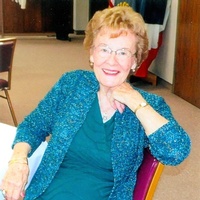
Dolores Nadine (Wills) Fischli was born September 30, 1927 on the Wills farm one mile north of Logan, Kansas.
As an only child, she loved animals and made many of them her pets. When she started school, she cried because she wanted to stay home with her pets. Riding horses was her favorite pastime. In high school, writing and public speaking were her favorite subjects. Dolores became a member of Eastern Star of Logan, at an early age and remained a member the rest of her life.
She attended college in Denver, Colorado then transferred to Washburn College in Topeka, Kansas. Later, she transferred to the University of Kansas in Lawrence, Kansas.
Dolores and Richard were married December 28, 1951 in Arkansas while Richard was in the Army. Upon his discharge, they farmed for one year. Since both were close to obtaining a college degree, they went to Fort Hays State University. After graduation, they went on to obtain their Masters’ Degrees.
Dolores chose theatre as she had taken specialty-theatre courses at K.U., such as Set Design and Stage Lighting and Directing. After obtaining their Masters’ Degrees, Dolores and Richard taught school in Burrton, Kansas for two years and Wichita, Kansas for three years, during which time Dolores attended a six week theatre workshop at Emporia State University where she, along with 29 other teachers put on five productions in a six-week time period.
In 1960, Dolores and Richard moved to California and in 1969, built their home in the Santa Monica Mountains. Dolores taught in two schools—Westchester High School and, her favorite, El Camino Real in Woodland Hills. Each school in the L.A. Unified School System had about 3,300 students. In addition to the theatre classes she taught each semester, she would direct one full length production and two full length Shakespearean productions. Her desire had been to direct a musical. Her wish came true as she and the music department developed a successful Theatre Arts Workshop.
Her last 10 years at El Camino Real were spent directing a full-length drama in the fall and spring in addition to a spring and summer musical. All musicals had at least 100 students and an accompanying orchestra of 30 to 40 students. Dolores enjoyed the accolades that came with theatre for a number of years. Her main memory was when Meredith Wilson came backstage. He will not only be remembered for his famous creation, The Music Man; also his great contribution to the musical theatre world. Dolores was humbled by his attention when he came to see her after the performance. Dolores taught 29 years and retired in 1984.
In April of 2010, Dolores and Richard built a new home and moved back to Logan, Kansas. They believed it was a good move and enjoyed their later years there together.
Having no family, Dolores and Richard started their Endowment program in 1997. Their Estate is pledged to Fort Hays State University of Hays, Kansas.
Dolores leaves to mourn her passing, her husband of 67 1/2 years, Richard J. Fischli, Jr.
Funeral services will be held at 10:30 a.m. Thursday, June 21, 2018, in the Logan United Methodist Church, Logan, with Pastors Ted Stapleton & Troy Buss officiating. Interment will follow in the Pleasant View Cemetery, Logan.
Mrs. Fischli will lie in state from 9 a.m. to 9 p.m. Wednesday, June 20, in the Logan Funeral Home, Logan.
Memorial contributions may be made to the Logan Manor Nursing Home.
Logan Funeral Home, 102 E. Church Street, Logan, KS is in charge of arrangements
James Sherwood Mortinger, 90, owner of JM Plumbing, Liberal, KS. Jim was born in St. Clair, Michigan on February 8, 1928. He died Saturday, June 16, 2018.
He served in the US Army during World War II as a surgical tech. During his service, he was awarded Championship level as a sharp shooter. He returned to Michigan after the service and in 1965 was transferred to Liberal, KS with Panhandle Eastern Pipeline.
After retiring from Panhandle, he turned his part-time plumbing job into JM Plumbing, which he operated full-time. He retired at the age of 84. He was especially known for his red and white work truck that was seen from sun up to sun down helping out with all sorts of plumbing needs.
Jim served as a Boy Scout Leader for many years where he mentored numerous scouts to achieve the Eagle merit badge. His favorite thing to do after work was to pitch horseshoes. Pitching at the state and national levels became something Jim enjoyed doing and this was a hobby he shared with more than one of his sons.
Preceded in death by his wife, Joyce Marie Mortinger.
Survived by his daughters, Yvonne (Tom) Ford of Galveston, TX, Vicky (Rick) Hiebsch of Andover, KS; sons, Randy (Kathy) Stark of Mulvane, KS, Jimmy (Laurie) Mortinger of Hays, KS, John (Betty) Mortinger of Port Huron, MI, Robin (Susan) Mortinger of Casco, MI, Joe (Karen) Mortinger of Rose Hill, KS; 11 grandchildren; 11 great-grandchildren.
There will be a private graveside service. Memorials to: Alzheimer’s Association, 1820 E. Douglas Ave., Wichita, KS 67214. Downing & Lahey Mortuary – East Chapel.
KANSAS CITY, Kan. (AP) — A Kansas priest has been revoked of his rank years after an investigation into multiple child sexual abuse allegations against him.
Archbishop Joseph Naumann issued a decree in December removing the Rev. John Wisner from the clergy. The decree was announced May 25.
The Archdiocese of Kansas City in Kansas says it suspended Wisner from active ministry in 2012 after receiving many allegations he sexually abused minors decades ago. The archdiocese says an internal investigation found the allegations credible.
Wisner has denied the allegations. The archdiocese says it notified law enforcement, but Wisner was never criminally charged in relation to the allegations.
The Survivors Network of those Abused by Priests criticized the archdiocese on Wednesday for taking so long to announce Wisner’s defrocking.
WASHINGTON (AP) — The Supreme Court says states can force online shoppers to pay sales tax.
The 5-4 ruling Thursday is a win for states, who said they were losing out on billions of dollars annually under two decades-old Supreme Court decisions that impacted online sales tax collection.
The high court ruled Thursday to overturn those decisions. They had resulted in some companies not collecting sales tax on every online purchase. The cases the court overturned said that if a business was shipping a product to a state where it didn’t have a physical presence such as a warehouse or office, it didn’t have to collect the state’s sales tax. Customers were generally supposed to pay the tax to the state themselves if they don’t get charged it, but the vast majority didn’t.
The Kansas Board of Regents (KBOR) approved tuition rates for each of the six state universities in Kansas for the 2018-2019 academic year.
According to a media release, tuition increases for resident and non-resident undergraduates ranged from 1.1 percent to 2.8 percent, apart from Kansas State University Polytechnic, which had no tuition increase. Tuition increases for resident and non-resident graduate students also ranged from 1.1 percent to 2.8 percent, excluding Kansas State University’s College of Veterinary Medicine, which had no tuition increase.
The Regents approve tuition and fees for the upcoming academic year as proposed in the June Board agenda, which is available here: https://t.co/7EZiwMdic7
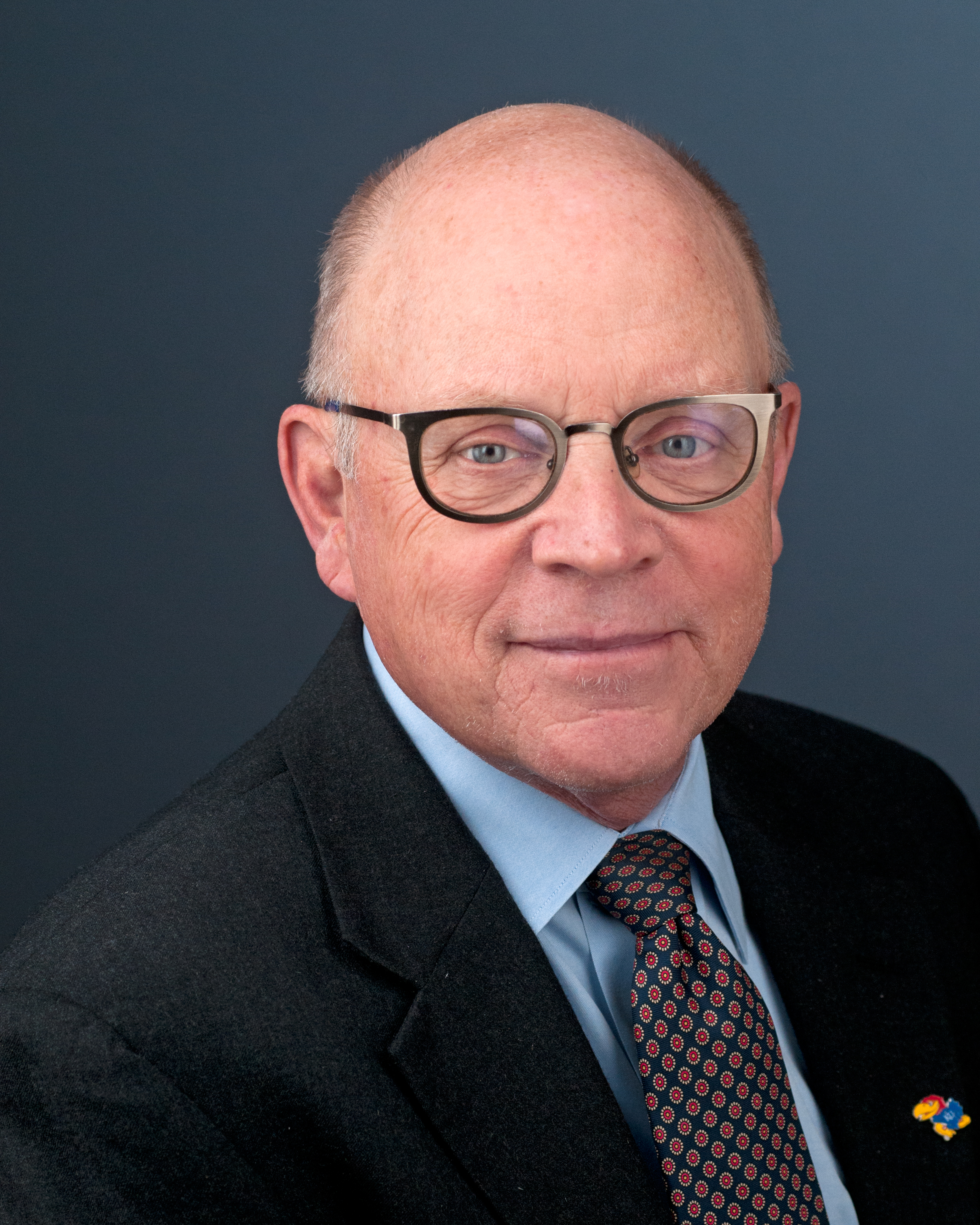
“Raising tuition is always a difficult decision that the Regents deliberate carefully,” said KBOR Chair David Murfin. “We will continue to work with the Governor and the Legislature, as well our institutions, to keep higher education as affordable as possible for Kansans.”
In 2018, state universities received a partial restoration of the $31 million reduction in state funding that occurred in 2016. This allowed universities to propose tuition increases that were among the lowest in recent years.
One of the primary responsibilities of the Board of Regents, as defined in state law, is to set tuition and fees at state universities. Based on the tuition rates approved today, it is projected that approximately $743 million will be raised from tuition revenues this upcoming year.
The tuition proposals that were approved by the Board Wednesday may be accessed through the June 2018 agenda here.
Despite the great success of female candidates across the country this year, 2018 may become, even more, the political year of youth. This rosy possibility confronts the hard historical reality of low interest, low voting turnout, and general cynicism toward politics among the young.
But there are signs, in Kansas and across the country, that this year may be different.
A few days ago, a BBC crew came to Kansas to do a major story on the teenagers running for governor. These individuals received a spate of publicity early on, but that soon dissipated. Still, Republicans Tyler Ruzich and Joe Tutera and Democrat Jack Bergeson will be on major party ballots in the August primary.
Burdett Loomis, Professor, Political Science, College of Liberal Arts and Science, University of Kansas
More importantly, if you haven’t heard these candidates debate the issues, you should. They are well spoken, coherent, passionate, and brave enough to risk criticism from various quarters.
Then there are the Parkland, Florida, students, who in the wake of their mass-murder school tragedy have bravely, aggressively, and effectively turned their grief and anger into a powerful campaign, both on social media and in large-scale events, to encourage far more youth voting and to force gun violence onto the nation’s political agenda. Indeed, many of them brought their message to Kansas this past weekend.
Bob Dylan wrote, more than 50 years ago in a different context, “Your sons and your daughters are beyond your command” and “your old road is rapidly agin’.” The voices of the Parkland students, amplified hundreds of times across the country, constitute a powerful political force in 2018.
Still, this isn’t the 1960s. What is remarkable about this year’s politics is how conventional it has become. To be sure, there is great passion, but it flows through our political institutions: record numbers of primary candidacies among Democrats; a great influx of youthful volunteers in campaigns; and powerful efforts to register new voters, often in the face of unreasonable barriers.
For thirty-five years, I have run internship programs in D.C. and Topeka; 1500 or so students have participated, almost always learning far more than they would in a classroom. This spring, the level of interest may have stood at an all-time high, with 25 interns in Washington and 25 in Topeka. These are students who want to work within the system, regardless of their diverse ideologies and interests. It is beyond heartening to see them grow over the course of four months of intensive work.
Equally significant this year is the level of interest in working on campaigns, perhaps the single best way to get your feet wet in American politics. Given the prevailing political winds and the number of candidates (six in the KS3 Democratic primary), somewhat larger numbers of students are working for Democrats, but many diligently provide their time and effort to Republicans. Nothing could be healthier for democracy than such on-the-ground endeavors.
As much as I’d like to believe that younger people will work hard and change the system, the political scientist in me is skeptical, while the small-d democrat remains hopeful.
Moreover, some data offer clues for the future. Most notably, in 2003 the Pew Charitable Trust found that 53 percent of Millennials identified/leaned Democratic, while 38 percent identified/leaned Republican. In 2017, with fourteen more years of political experience, Millennials broke 59 percent Democratic to 32 percent Republican.
A strong showing in 2018 might cement – or even increase – that margin, but that’s putting the proverbial cart way before the donkey.
Burdett Loomis is an emeritus professor of political science at the University of Kansas.
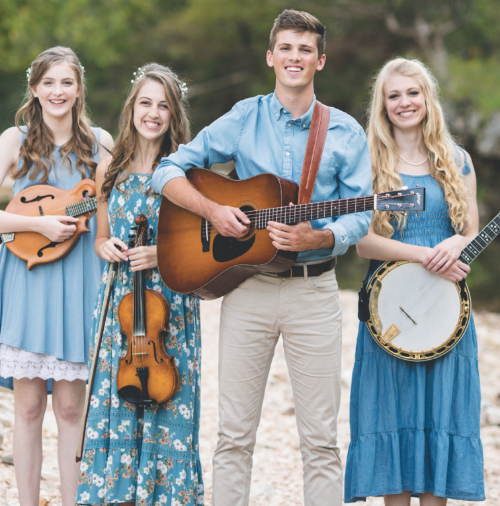
The Petersens are an award-winning bluegrass band in their eighth season of shows at the Little Opry Theatre in the Branson IMAX Entertainment Complex. In 2015, the band received international attention when banjo player, Ellen Petersen, competed in the singing reality TV show, “American Idol,” and placed in the top 48. The family has toured throughout the United States, Canada, and recently completed their second international tour to Ireland in July. Audiences will be entertained as the band performs bluegrass standards, gospel favorites, and are sure to laugh at the sibling humor on stage.
The Petersens are bringing their act to Hays on Friday, June 22, at Thomas More Prep-Marian. Doors open at 6 p.m. and the show begins at 7 p.m.
Click HERE for ticket details or call (785) 628-0467. This event is brought to you by Chapman-based BDS Productions and Eagle Communications.