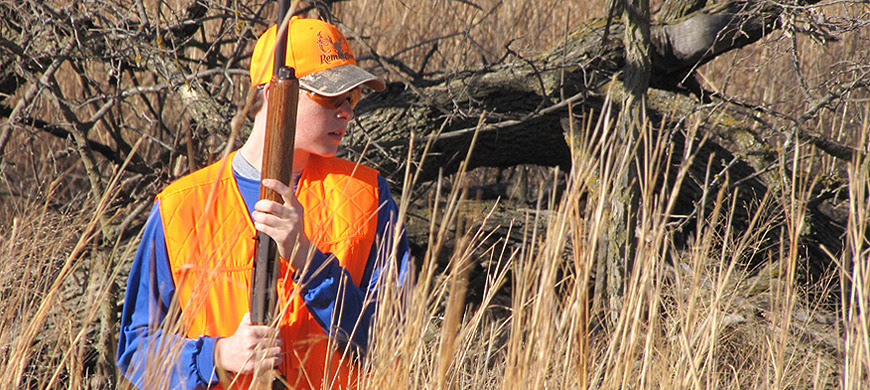
PRATT – Kansas Department of Wildlife, Parks and Tourism statewide Hunter Education Program coordinator Kent Barrett reports that 11 hunting-related incidents, and two treestand incidents, were reported in Kansas during the 2017 seasons, none of which were fatal.
Kansas Hunter Education staff attribute the consistently low numbers in recent years to the efforts of the state’s more than 1,400 volunteer hunter education instructors. Stationed throughout the state, hunter education volunteers work around the year to educate the public on the importance of firearms safety, ethics, wildlife and conservation.
“Our volunteer instructors certify about 9,000 students each year,” Barrett said. “And since the program began 45 years ago, more than 500,000 students have completed the course.”
While staff and volunteers would ideally like to see the number of incidents dropped to zero, current reports remain a stark contrast to statistics from 50 years ago when seven lives were lost in a year, two years in a row.
Of the 11 incidents reported in 2017, four occurred while hunters acted as “blockers” while hunting upland game; three were the result of hunters swinging on game; two were attributed to poor firearm handling; one was the result of the unsafe use of a decoy; and one was attributed to an equipment malfunction.
Neither of the hunters involved in the treestand incidents were wearing a full body harness or fall arrest system.
While 11 incidents is a low number considering the more than 5 million hunter-days spent afield each year, it doesn’t lessen the impact on the victims and their families who suffer as a result of these incidents. That’s why Kansas Hunter Education staff and instructors continue their work at-hand.
Hunting is one of the safest outdoor activities in Kansas, but everyone must do their part to keep it that way. As any Kansas Hunter Education instructor will tell you, the best piece of equipment a hunter can have afield is right between his or her ears.
Whizzer Motor Co. started in 1939 in Los Angeles as Breene-Taylor Engineering, a manufacturer of airplane parts. Whizzer then started to sell motor “kits” for bicycles as a way to make them motorized. After sales of engines proved to be an unsuccessful endeavor in 1942, Whizzer lobbied the United States government for the right to continue production, claiming that the the Whizzer motor was a way for defense workers to travel to and from work.
In 1946, Whizzer moved its main production facilities to Pontiac, Mich., allowing the company to take advantage of auto-production facilities to outsource the manufacturing of most of the Whizzer components. It was in 1947 when a young Harold Kraus visited Hays City Auto Tops in Hays and purchased a new Whizzer “H” motor kit from owner Swede Gilberg for $110.
“He liked to tinker. He was able to save up money working odd jobs for family members while still in high school,” said Paul Kraus, son of Harold. “He drove the family car to school and this gave him a new mode of transportation.”
Harold, just a junior in high school at the time, installed the engine initially on his heavy duty balloon-tired Gambles bicycle frame as a way to get around the family farm for chores but the white chalk rocky roads of rural Ellis County shook the bike apart and Harold had to purchase a new Schwinn frame made for motors. In January 1951, Harold left for Denver to enlist in the Navy and the bike stayed on the family farm where it was used around the farm by his brothers.
After his military service, Harold returned to western Kansas to start his own farming operation and stored the bike in his barn where it remained until 2007 when it was passed down to Paul and traveled to it’s new home in Erie, Colorado for restoration.
“For as long as I can remember, this thing sat in the back of our barn. When I got the bike in ’07, there was not a single dent in the tank. The fenders were a little rough and it was covered in grime. There were definitely some components missing but the bike was pretty much 90 percent there,” Paul said.
Before restoration
So the five year restoration project began for Paul Kraus. A father himself now, Paul spent most of his time focusing on family, but the bike stayed in the back of his mind.
“After a while, I kept getting squirrely and it kept staring at me so I decided ‘I have got to do something about this,’ ” Paul said.
Paul did extensive research to understand what exactly he had to do to start the restoration and find out if he could even still get parts for the bike. On his quest, Paul met different people from around the country who had advice on how to restore the bike and get parts..mostly from, surprisingly, the scooter community.
“The scooter community of all places has been very open and non-judgemental. They’re always willing to help and free advice still keeps flowing to this day,” Paul said. I met some neat people and made friends for life.”
Paul worked on the restoration off and on as the years went by and it took time trying to find a company that could make new brake pads and a person who could re-upholster the seat in correct detail. A dad of one of Paul’s friends offered to rebuild the engine in exchange for two Maytag washing machine hit and miss motors.
After restoration
Paul’s own father had a hand in the restoration. Despite being five hours apart, technology allowed Paul and Harold to collaborate on the restoration and it gave Paul comfort knowing that when he hit a roadblock, he could pull up his dad on his phone, show him the bike, and ask questions.
“We were only one state away, but I could Facetime him and say ‘OK, so I’m having trouble with this tell me what you think.’ I could turn the camera around and we would both be working on it together. That was actually really rewarding to be able to share that rebuild … to share when I fired it up for the first time and rode it down the street while my wife held the phone so he could see it go up and down the street,” Paul said.
When on of Paul’s friends sent him a web form about a new Discovery Channel show called “Sticker Shock” (a show about the stories and histories of unique rides, restored vehicles, and automobile memorabilia) and suggested he send the Whizzer restoration in as a possible idea for the show, Paul was skeptical at first but he filled out the form and sent in a couple pictures and a quick video.
Two weeks later, Paul got an email from a casting director and after a few different conversations and interviews, Discovery Channel had arranged for the bike and Paul to be sent to Los Angeles for a taping of the show.
Harold Kraus with the restored Whizzer
One of Paul’s favorite parts about this whole journey has been the relationships and friendships developed during the Los Angeles trip, and at different vintage motorcycle shows that Paul has brought the bike to.
“We have made a lot of friends around the country through this little experience,” Paul said. This little bike has started so many conversations and invoked so many smiles from nostalgia. I wish we had more objects in the world to help make people smile a little bit more naturally.”
The episode of Sticker Shock featuring Harold’s restored Whizzer is set to air on Discovery Channel (Eagle Channel 64 & 664) on Wednesday, June 27, at 9pm.
The Whizzer will be back home in Hays on Sept. 15 for the Thunder on the Plains Car, Truck and Cycle Show at Frontier Park — and Paul hopes Hays recognizes a piece of it’s history.
“It’s going to be fun to bring it back to Hays and let Dad show his old bike to his buddies. Hopefully Hays recognizes it in some fashion as a little piece of it’s history preserved,” Paul said. “There’s part of me that wants to ride it down Main Street just once.”
TOPEKA – The Kansas Department of Health and Environment (KDHE)’s Bureau of Health Promotion is encouraging Kansas residents who want to quit using tobacco products to take advantage of the opportunity to get free nicotine replacement therapy (NRT). The NRT will be shipped directly to their homes by calling the Kansas Tobacco Quitline at 1-800-QUIT-NOW (1-800-784-8669).
In conjunction with the Centers for Disease Control and Prevention (CDC)’s Tips from Former Smokers campaign that began in April, the Kansas Tobacco Quitline is offering a free two-week supply of NRT to all callers who register, while supplies last.
About one in six (17.2 percent) Kansas adults, age 18 years and older, are current cigarette smokers. And more than half of them have tried to quit smoking at least once in the past year.
“Quitting smoking not only benefits the health of the smoker, but also helps to protect their loved ones from the harmful effects of secondhand smoke exposure,” said Dr. Greg Lakin, KDHE Chief Medical Officer.
The Kansas Tobacco Quitline is a free, 24/7 resource available to Kansas residents to help them quit smoking. The Quitline provides help, such as counseling, a personalized Quit Plan and quitting support by phone and through online services. The Quitline can be reached by calling 1-800-QUIT-NOW (1-800-784-8669) or visiting www.KSQuit.org.
“We want people to know that although quitting tobacco is hard, they can do it,” said Matthew Schrock, KDHE Tobacco Cessation Program Coordinator. “Smokers often need to make several quit attempts before succeeding, but proven treatments and services are available that can improve your chances to quit for good.”
The Kansas Tobacco Quitline is supported by KDHE. For more information on the Kansas Tobacco Use Prevention Program, visit www.kdheks.gov/tobacco.
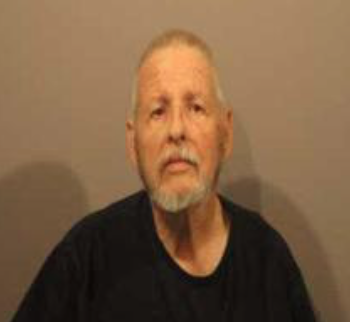
TONKAWA, Okla. (AP) — A 70-year-old man wanted by authorities in Kansas has been shot and wounded by a police officer following a traffic stop in Oklahoma.
Minix -photo from a previous arrest in Kansas
The Oklahoma State Bureau of Investigation said in a statement Saturday that Ronald Dean Minix was stopped by an officer in Tonkawa, along Interstate 35 in the northern portion of the state.
Authorities say Minix put a gun to his head during the stop late Friday and the officer fired his own weapon, striking Minix in the hand. He was taken to a hospital for treatment.
It wasn’t clear what prompted the officer to fire on the man. The officer has not been identified.
Minix was stopped after Kansas authorities notified police that he may be in Tonkawa. He’s wanted in Kansas on a warrant for stalking.
WICHITA, Kan. (AP) — A Sedgwick County commissioner accused of misspending more than $10,000 in campaign funds and trying to cover it up has asked a judge to dismiss his indictment.
Michael O’Donnell-photo Sedgwick Co.
A defense filing Friday in the case against Michael O’Donnell contends the U.S. government has needlessly interjected itself in matters traditionally reserved for state authorities.
O’Donnell has pleaded not guilty to a 12-count indictment alleging wire fraud and money laundering.
The motion says “over zealous prosecution” sometimes occur when prosecutors throw a wide net on criminal corruption. It contends O’Donnell came to law enforcement’s attention during an investigation of other higher profile people.
It argues investigators uncovered the alleged campaign finance violations, and charged him instead of referring the matter to state officials.
Prosecutors did not immediately respond to an email seeking comment.
More than 4,900 University of Nebraska-Lincoln students have been named to the Deans’ List/Explore Center List of Distinguished Students for the spring semester of the 2017-18 academic year.
The following is a list of area honorees:
Hays: Alexander Rhodes Crowley, senior, Dean’s List, Hixson-Lied College of Fine and Performing Arts, music education.
Hays: Samuel Thornton Crowley, sophomore, Dean’s List, College of Arts and Sciences, political science.
Qualification for the Deans’ List/List of Distinguished Students varies among the eight undergraduate colleges and the Explore Center. Listed below are the minimum requirements for each entity and the name of its respective dean or director. All qualifying grade-point averages are based on a four-point scale and a minimum of 12 graded semester hours. Students can be on the Deans’ List for more than one college.
College of Agricultural Sciences and Natural Resources, 3.75; Dean Steven S. Waller.
College of Architecture, top 10 percent of the students in the college; Dean Katherine S. Ankerson.
College of Arts and Sciences, 3.7; Dean Joseph Francisco.
College of Business, 3.6; Dean Kathy Farrell.
College of Education and Human Sciences, 3.75; Interim Dean Beth Doll.
College of Engineering, 3.5; Dean Lance C. Perez.
College of Journalism and Mass Communications, 3.7; Interim Dean Amy Struthers.
Hixson-Lied College of Fine and Performing Arts, 3.7; Dean Charles O’Connor.
Explore Center for undeclared, pre-engineering, pre-health and pre-law students, 3.6; Senior Associate Vice Chancellor and Dean of Undergraduate Education Amy Goodburn.
For the full Deans’ List/Explore Center List of Distinguished Students, visit https://go.unl.edu/pw9a.
GEARY COUNTY—Tanks, Bradley Fighting Vehicles and troops from the 1st Infantry Division safely crossed a man-made bridge of about 600 meters across a stretch of Milford Lake in the Madison Creek area Friday morning.
Training Friday on Milford Lake
Lieutenant Colonel Joey Sullinger said Fort Riley partnered on this exercise with the Fifth Engineers from Fort Leonard Wood, Missouri, including three active component bridging companies and one from the National Guard in the bridging operation over a 600-meter stretch of the reservoir.
“That allowed an entire battalion of tanks and Bradley’s to cross it this morning. So you had dozens of armored vehicles and hundreds of U.S. Soldiers from the Big Red One crossing that bridge this morning.”
Ethan Wharton worked with the Fifth Engineer Battalion from Fort Leonard, Missouri on this bridging operation. He explained at the start of the bridge building work they did survey. “Identified the slips of the boat ramps that we’d be using. We sent our survey and design and construction crews to reinforce those slips. ” When that work was complete boats were launched into the water. “Once the boats had hit the water we began launching bridge bays. Each bay hit the water, a boat tied off to it and started navigating the water. And then bridges started being put together by the boats with a bridging crew.” They latched each bridge section together with a ramp on each end for entry and exit across the gap.
Sullinger noted this was the first time the majority of the Big Red One Soldiers had crossed a river “so they know they can do it safely, efficiently and relatively quickly when needed.”
Kansans should watch for the red flags of suspected financial abuse of elder citizens, including potential abuse by guardians assigned to oversee the well-being of those citizens.
A trusted guardian can be a wonderful resource, but sometimes guardians may take advantage of the trust placed in them by vulnerable elders.
A guardian is a person or entity appointed by a court to exercise some or all authority over a person and/or estate. A guardian can have power to make decisions related to the health and safety of the incapacitated person. Financial abuse by guardians occurs when the guardian improperly uses the protected individual’s financial assets.
Suspected signs of guardian financial abuse include the following:
· Using guardianship authority to transfer property for the guardian’s benefit.
· Receiving personal payments from a protected individual without court permission.
· Authorizing frequent cash withdrawals from the protected individual’s account without explanation.
· Using or borrowing property for personal benefit without court authorization.
· Making unexplained decisions that are not in the protected individual’s best interest.
The North American Securities Administrators Association, of which the Office of the Kansas Securities Commissioner is a member, recently developed a resource to call attention to the red flags of suspected guardian financial abuse. The “Guarding the Guardians” publication is available on the association’s website at https://serveourseniors.org/about/investors/.
Anyone with suspicions of possible financial exploitation by guardians should contact the Office of the Kansas Securities Commissioner at 785-296-3307 or 800-232-9580.
The office’s website also has more financial considerations at www.ksc.ks.gov.
John Wine is the Kansas Securities Commissioner.The mission of the Office of the Kansas Securities Commissioner (KSC) is to protect and inform Kansas investors; to promote integrity, fairness, and full disclosure in financial services; and to foster capital formation.
KANSAS CITY, Kan. (AP) — The Latest on the fatal shootings of two Kansas sheriff’s deputies by an inmate they were transporting (all times local):
11:55 a.m.
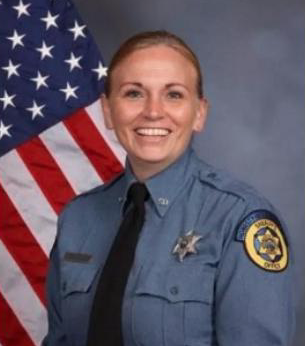
Wyandotte County Deputy Theresa King-courtesy photo
Authorities say two Kansas deputies who were fatally shot while transporting an inmate between jail and a court hearing both leave behind children.
Wyandotte County sheriff’s Maj. Kelli Bailiff said at a news conference Saturday that 44-year-old sheriff’s Deputy Theresa King had three children and 35-year-old Deputy Patrick Rohrer had two.
Terry Zeigler, the police chief of Kansas City, Kansas, said he couldn’t release the name of the inmate suspected of shooting them Friday because he hasn’t been charged. The inmate was also shot, and Zeigler said the last he heard, he was in stable condition.
Wyandotte County Sheriff’s Deputy Patrick Rohrer, 35, was killed Friday morning outside the county courthouse annex. CREDIT WYANDOTTE COUNTY SHERIFF’S DEPARTMENT
Authorities say the inmate apparently overpowered the deputies in a gated area behind the Kansas City, Kansas, courthouse and shot the deputies — possibly with one of their own guns.
Zeigler says the deputies were taking the inmate from the courthouse back to jail, not the other way around, as police initially reported.
A candlelight vigil will be held at 8 p.m. Sunday in front of City Hall.
5a.m.
— A second sheriff’s deputy has died after being shot while an inmate was being transported to a Kansas City courthouse.
Kansas City, Kansas, police confirmed that 44-year-old Deputy Theresa King died early Saturday from injuries suffered when an inmate overpowered the two deputies.
The shooting happened Friday as an unidentified inmate was being moved. Police say it is possible that King and the other slain deputy, 35-year-old Patrick Rohrer, were shot with their own firearm, but police gave no other details.
Both officers were with the Wyandotte County Sheriff’s Department. King had 13 years of service and Rohrer had been with the department for seven years.
——
4 p.m.
Authorities on the scene of the investigation at the Kansas City courthouse
Authorities have identified the Wyandotte County sheriff’s deputy who died Friday after he and another deputy were shot while transporting an inmate.
Kansas City, Kansas, police say 35-year-old Patrick Rohrer died at the Kansas Medical Center from his injuries. He had worked for the department for seven years.
The injured female deputy underwent surgery. Her condition was not available.
The suspect also was shot and was operated on at the hospital. His condition also was not released.
Authorities say the two deputies were transporting the inmate to a hearing in downtown Kansas City when the suspect somehow got ahold of a weapon. The investigation into the shooting is continuing.
_____
3p.m.
A sheriff’s deputy was killed and another was critically wounded Friday when an inmate being transported to a court hearing in Kansas somehow got ahold of a weapon and shot them, authorities said.
The suspect was also injured during the confrontation in a gated area behind a court services building across the street from the Wyandotte County Courthouse in Kansas City, Kansas. The wounded officer and the suspect were undergoing surgeries Friday afternoon.
The inmate was being transported across the street from the jail to the services building for a court hearing, according to sheriff’s spokeswoman Maj. Kelli Bailiff. The inmate was taken in a van to a gated area behind the building, and when the inmate got out of van, he somehow overtook and shot the deputies, possibly with their own guns, Bailiff said.
Authorities haven’t released the deputies’ names or length of service with the department. They also said it was too early in the investigation to give specific details of how the shootings could have happened. Video from the scene shows the courthouse surrounded by yellow police tape, several police vehicles parked in the street and numerous uniformed law enforcement officers walking the grounds.
Bailiff said investigators do not believe the public is in any danger.
The investigation is being handled by the Kansas City Police Department. Police spokesman Zac Blair said authorities will be reviewing surveillance video.
2 p.m.
Authorities say one sheriff’s deputy is dead and another is critically wounded after they were overcome by an inmate while driving a transport vehicle near the Wyandotte County courthouse in Kansas City, Kansas.
Wyandotte County sheriff’s spokeswoman Maj. Kelli Bailiff says the suspect also was wounded in the shooting late Friday morning. He’s undergoing surgery.
No other details were released about the suspect, including his condition.
Bailiff says it’s possible the deputies were overcome with their own weapons.
Bailiff says the investigation is now being handled by the police department in Kansas City, Kansas. Police Officer Zac Blair says authorities are reviewing surveillance video.
___
KANSAS CITY, Kan. (AP) — Police say two Wyandotte County sheriff’s deputies have been shot and wounded near the county courthouse in Kansas City, Kansas, and a suspect also was hurt.
Police Officer Zac Blair says the shooting happened Friday.
Blair says the wounded have been taken to the University of Kansas Hospital.
He referred questions about their conditions to the sheriff’s department, which hasn’t returned a phone message.
He says no other suspects are being sought in the shooting.
Details of what led to the shootings have not been released.
———-
KANSAS CITY, Kan. (AP) — Police say two Wyandotte County sheriff’s deputies have been shot near the county courthouse in Kansas City, Kansas.
Local news outlets are reporting that the shooting occurred about 11:30 a.m. Friday.
The conditions of the deputies’ are unknown. Details of what led to the shootings are not yet available.
Working major incident in the 800 block of North 7th, details unclear at this time.
WICHITA, Kan. (AP) — Prosecutors say former Dallas Cowboys running back Joseph Randle has been found competent for court proceedings.
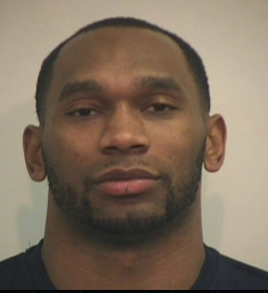
Randle
The Sedgwick County district attorney’s office said in a news release that Judge Kevin O’Connor found Randle competent on Friday and he will be sentenced on June 22.
Randle was found guilty in April 2017 of aggravated battery, aggravated burglary, criminal threat, aggravated burglary and marijuana possession after striking three people with his car as he left a house party in Kansas. He is accused of kicking in the door at a home in Wichita in 2016, then hitting three people with his car as he fled what he called a hostile situation.
Prosecutors say he has four other pending cases and a trial date for those has been set for July 2.
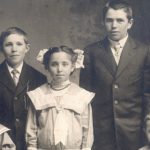
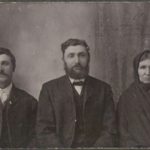
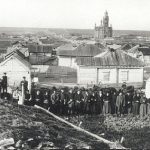
The American Historical Society of Germans from Russia will hold their 49th Annual International Convention in Hays, Kansas Monday, July 30 – Thursday, August 2, 2018. Scheduled speakers will travel to the event from multiple U.S. states – some from as far as Germany and Russia.
This convention, titled “The Storm,” centers on the effects of the 1917 Russian Revolution on the Germans from Russia. It will also celebrate the traditions, history, genealogy, music, and food of Germans from Russia.
Attendees will have access to a research area for genealogy, AHSGR bookstore, silent auction room, and more. The convention begins with registration Monday, July 30, and will conclude on Thursday, August 2 with a banquet and polka dance.
All convention activities will be held at the Memorial Union on the Fort Hays State University Campus, except for Kindertag, a youth day for children to learn more about their German from Russia heritage. Kintertag will be held from 8:30 a.m. – 3:25 p.m. on Wednesday, August 1 at the Ellis County Historical Society Museum, 100 W. 7th Street. The day will be filled with educational activities to show how the Germans from Russia lived, including sauerkraut and butter making, dancing, traditional games, German language, cooking, and life on the farm.
Registration is required and walk-ins are welcome. Registration for the entire convention is $125 for AHSGR members and $145 for non-members.
Ticket options are also available for individual meals, events, and tours, such as the Foundation/Society Recognition luncheon, Village Tour, Museum Tour, and Artisan Tour. Three German Cooking classes will be offered by Sam Brungardt and Charlie Dorzweiler for $10 per session.
Those interested can find details, register for the conference, and purchase individual tickets at www.ahsgr.org.
Talks for the event include:
Finding Your Ancestors
The German Russian Communities in the Age of Stalin’s Great Terror
Germans in Russia: History Milestone (Celebrating the 100th Anniversary of the Volga German Autonomy)
Masterpieces of German Religious Architecture on the Volga
Remembering a Ravaged Century: The German Colonies Caught in ‘The Storm’ of the Russian Revolution
Letters to Pauline (Schlegel) Lehi: Volga German Family Correspondence from Russia to Oklahoma, 1913-1937
DNA 1: The Basics of Life / DNA 2: Analyzing Your DNA Results
Ethnic Clothing for Mennonites and Other Germans from Russia
Mennonites in Russia after the Revolution
The Immigrant Woman
Dutch Hop: Music of the Volga Germans
History of the HFDR (Historical Research Association of Germans from Russia)
Lives of Ethnic Germans in Soviet Exile during and after WWII
FHSU Ethnic Studies Center: A Roomful of History – The Volga Germans of Ellis and Rush Counties in Kansas
Speakers include:
Olga Litzenberger (Russia)
Michael Wanner (Germany)
Eric Schmaltz (University of Oklahoma, Norman, OK)
Maggie Hein (Chicago, IL)
Ulrich Merten (Florida)
Peggy Goertzen (Wichita, KS)
Norma Pipkin (Hays, KS)
Terry Batt (Denver,CO / Russell, KS)
Alex & Nancy Herzog (Boulder, CO)
Sisters Alice Ann Pfeifer, Mary Ann Schippers, and Mary Elise Leiker (Wisconsin/Hays, KS)
Brent Mai (Connecticut)
Patty Nicholas (Fort Hays State University, Hays, KS)
The American Historical Society of Germans from Russia is located in Lincoln, Nebraska, and houses one of the largest repositories for German Russian studies in the U.S. It includes, books, records, maps, photos and many more items.
The Sunflower Chapter of AHSGR, Hays, is a local Chapter of AHSGR striving to promote the heritage of the German Russian on a local level.
For more information on attending the AHSGR Hays Convention can be found at by contacting the national AHSGR office at 402-474-3363 or [email protected] or Kevin Rupp at 785-656-0329 or krupp@ruraltel,net.
Ron Wilson is director of the Huck Boyd National Institute for Rural Development at Kansas State University.By RON WILSON Huck Boyd National Institute for Rural Development
The football players run onto the field for summer practice at Jefferson West High School. But something is different: This field is covered by artificial turf which was last used by the New Orleans Saints of the National Football League. How did NFL turf come to be on a high school football field? It’s due to a hometown Kansas company which specializes in turf installation across the country.
Jake Farrant is founder and president of this remarkable company named Kansas Turf. Jake grew up at Meriden. As a kid, he mowed lawns and helped with his uncle’s golf course and sod farm business in Topeka. He also loved football, starting at quarterback at Jefferson West High School and then at Ottawa University.
After graduation, he returned to Meriden and continued to help his uncle. He also became an assistant football coach at his alma mater, Jeff West. When the family was approached about building a multi-sport complex, which didn’t fit the work of his uncle’s company, Jake saw the opportunity to go into business for himself. In 2008, Kansas Turf was born.
Meanwhile, Jake had met and married his wife Kysa, a K-State graduate. “I sat down with her and drew out a sketch of what my dream business facility would look like,” Jake said. “As I look at our facilities now, it looks eerily like that today.”
Today, Kansas Turf has become a leading sports construction company, with capabilities to design and build sports complexes, do site work, implement golf course and cemetery renovations, and install natural grass and synthetic turf.
The company began doing high school baseball parks and projects for the Veterans Administration, but Jake’s ultimate dream was to do more with sports. When Jake’s former head coach at Ottawa, Patrick Ross, joined the company, the dream started to become reality.
“He was part of that elite coaching fraternity and it opened doors for us,” Jake said. Within 30 days of Coach Ross joining the company, Kansas Turf had its first college football job. It went so well that business grew from there.
Today, Kansas Turf – which started with three employees – employs some 100 people. The company has done projects in more than 30 states, from New York to San Francisco. “Right now we have projects going in Anchorage, Alaska, San Antonio, and Biloxi, Mississippi,” Jake said. That’s an impressive record for a company based in the rural community of Meriden, Kansas, population 813 people. Now, that’s rural.
They’ve even replaced turf for NFL teams such as the New York Jets, New York Giants, and New Orleans Saints. Jake’s company installed the New Orleans Saints turf on the field back home at his old high school, Jefferson West.
In 2018, Kansas Turf was the contractor for turf replacement at K-State’s Bill Snyder Family Stadium where a brand new, state-of-the-art product was installed. “Kansas Turf is proud to partner with AstroTurf on this project,” Jake said. “K-State is the first FBS school in the nation to install this innovative turf, called RootZone Trionic 3D.”
He foresees that more high schools will be installing artificial turf, as parents and administrators learn that such turf is seven times safer and creates less chance of concussions or ligament damage. “It’s all about the kids,” Jake said.
“We’re a family business, most of us from Meriden,” Jake said. Brother Bryce is the company’s chief information officer. Their dad even works on the installation crews sometimes. Under the leadership of Jake’s wife Kysa, the family opened a large day care and preschool facility which serves lots of families. “We believe in faith, family, and the future,” Jake said.
It’s time to leave this rural Kansas football field now covered by turf from the NFL. We thank Jake Farrant and the people of Kansas Turf who are making a difference with entrepreneurship in sports construction. I’m glad this company is based on our state’s home turf.
And there’s more. Turf is not the only benefit which this company has brought to the community. We’ll learn about that next week.
Ron Wilson is director of the Huck Boyd National Institute for Rural Development at Kansas State University.
 KDWPT
KDWPT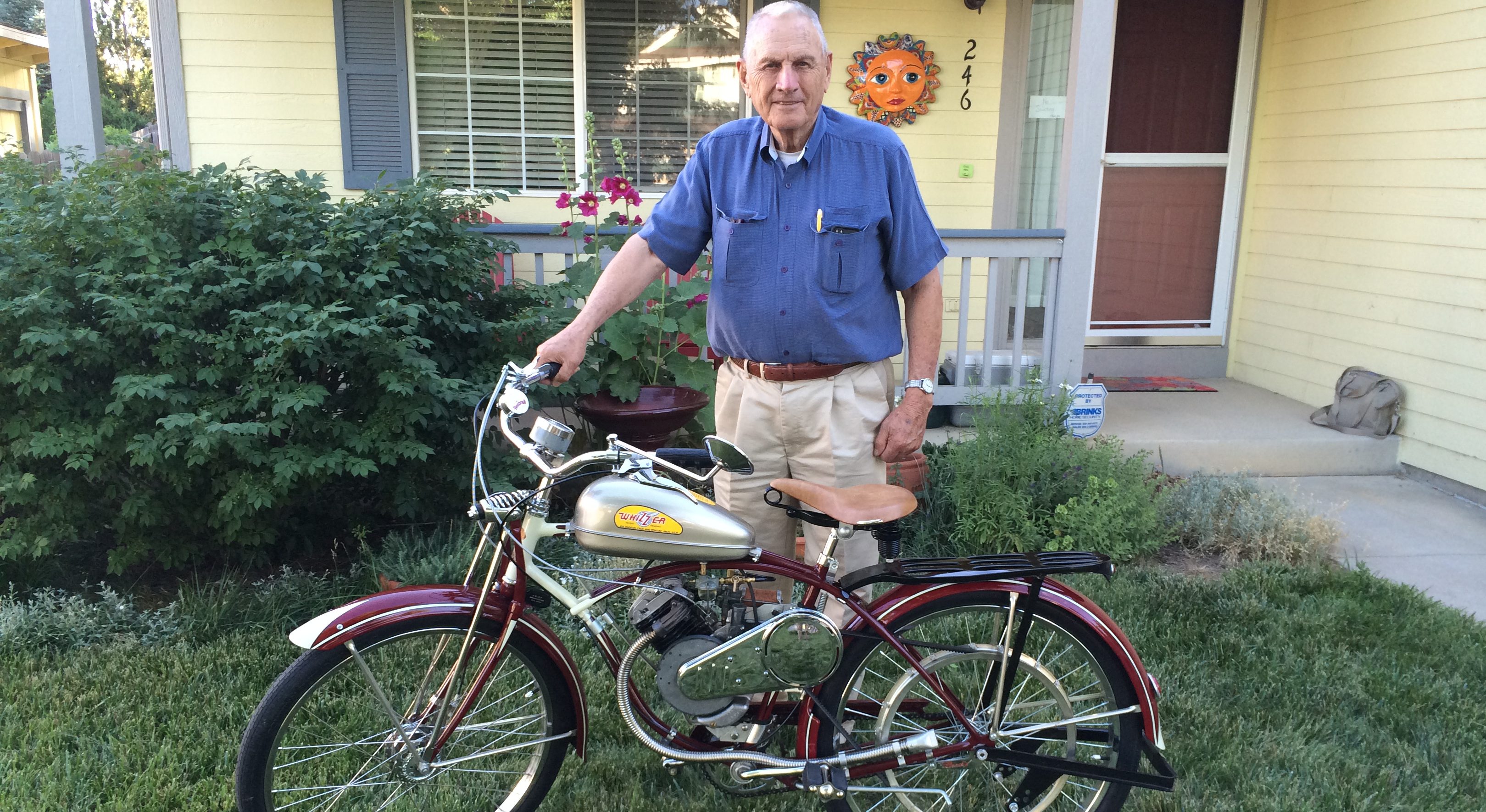
















 Listen to Mike Cooper interviewing Dr. Srinivas Samavedei, Urologist at HaysMed; by clicking the link above and then clicking the play button
