We have a brand new updated website! Click here to check it out!

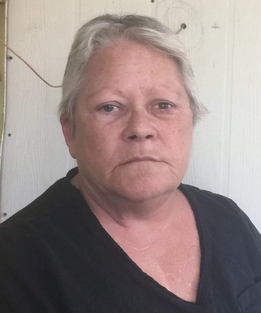
Frances Elizabeth Sterling

Frances Elizabeth Sterling, 75, Hays, went home to be with our Lord on Thursday, June 28, 2018.

She was born August 30, 1942 in Decatur, Georgia the daughter of Francis and Lillian (Marbut) Shoup. On August 26, 1962 she was united in marriage to Larry Sterling in Virginia Beach, Virginia, a union that would span over 55 years. She was a cashier at Food Bonanza/U-Save grocery store and at Westlake Ace Hardware store, in addition to doing in home daycare for many years. She was a member of CrossPoint Church in Hays and was very active with church youth groups, mission trips, vacation bible school, and teaching Sunday school. She dearly loved her grandchildren and enjoyed all of their activities and sporting events.

Survivors include her husband, Larry Sterling of the home in Hays, a daughter; Tiffany Buettgenbach and husband Brian of Independence, MO, five sons; Larry Sterling, Jr. and wife Heidi of Overland Park, KS, Jeff Sterling of Kansas City, MO, Shawn Sterling and wife Jamie of Victoria, Kevin Sterling and wife Robin of Overland Park, KS, and Jeremy Sterling and wife Amy of Victoria, a sister; Joyce Witcher of Pittsville, VA, eighteen grandchildren; Noah, Seth, and Shea Sterling, Alyssa Connor, Cara Hill, Ryan, Micheal, Emily, Gracie, Jordan, Barrett, Taylor, and Abby Sterling, Brandell Hecker, Brett and Anjel Leiker, Tanner Buettgenbach, and Jeff Brull, and nine great grandchildren.

She was preceded in death by her parents; Francis, Lillian, and step-father John Fitzgerald, a son; Jason Sterling in 1998, and a brother; John Fitzgerald, Jr.

Funeral services will be at 10:00 am on Tuesday, July 3, 2018 at CrossPoint Church, 1300 Harvest Road, Hays. Burial will be in the Mount Allen Cemetery. Visitation will be from 4:00 pm until 7:00 on Monday at the Hays Memorial Chapel Funeral Home, 1906 Pine Street, and from 9:00 am until service time on Tuesday at the church. Memorials are suggested to what Fran enjoyed most in life, her children, so please donate to St. Jude Children’s Research Hospital at www.stjude.org. Condolences and memories of Fran may be shared with the family at www.haysmemorial.com.

Audrey Ann (Knutson) McGinness

Audrey Ann (Knutson) McGinness, 86, of Wichita (formerly of WaKeeney) passed away Wednesday, June 27, 2018 in Wichita.

She was born January 1, 1932, in WaKeeney, Kansas, to Clarence and Othelia (Meisner) Knutson and died on June 27, 2018. She attended Valley Rural School and was Trego County Rural School valedictorian. She graduated from Trego Community High School in 1949. She attended Brown Mackie School of Business in Salina, Kansas, where Harlen McGinness was her accounting teacher. Harlen and Audrey were married June 10, 1951, at the Presbyterian Church in WaKeeney by the Rev. John Kellison.

Audrey Ann was a life-time member of the Presbyterian Church in WaKeeney where she served as Sunday school teacher, helped with Bible School, and served as deacon and elder. She was a 64-year member of the Order of the Eastern Star, having served as Worthy Matron and District Aide. She was Kansas State Chapter Grand Electa in 1978 and Bethel Guardian of Job’s Daughters. She was involved in Girl Scouts for 25 years: as leader of Brownies, Juniors, Cadettes, and Seniors; served on Sunflower Girl Scout Council, and received a “Scouter of the Year” award. She was a member of the General Federation of Women’s Clubs for 40 years, a past president of Locust Club and a District Chairman. She received the first “Woman of the Year” award for GFWC in 1981. She was a member of P.E.O. Chapter CT for 44 years. After Harlen became manager of the Western Coop Electric, she was involved in the National Rural Electric Women’s Assoc. (NREWA). She was Regional Chairman (Kansas, Nebraska, Wyoming & Colorado) in 1978-1979. She was asked to give the Invocation at the Women’s breakfast at the National RECA meeting in Houston, TX in 1979.

Audrey Ann enjoyed cooking, trying new recipes (even compiled her own cookbook for family members), quilting, flower and vegetable gardening, bridge & pinochle, crafts, and camping & travelling with family and friends. Harlen and Audrey always enjoyed entertaining, including hosting four family reunions, two school-class reunions, and a luau for their 35th wedding anniversary.

Neighborhood children enjoyed coming to their back yard to play games, frying pancake bunnies, bobbing for apples, sack racing, and snow sledding.

Harlen and Audrey were blessed with 64 years of marriage. She was a devoted wife, mother, and grandmother. She was preceded in death by her parents, Clarence and Othelia Knutson, and her husband, Harlen. She is survived by their three daughters, Terri Ann (Tom) Smiley of Kansas City, Kathi Sue (Steve) Clavin of Wichita, and Conni Lea (Terry) Steininger of Salina; grandchildren, Tara (Bryan) Yancey, Chris (Jill) Clavin, Traci (Heather) Smiley, and Cody (Charla) Steininger; one great grandson Boston Steininger; and brother John Knutson of Bayfield, CO; and her two nieces Audra and Amber.

Funeral service will be held at 1:00 pm on Monday, July 2, at Schmitt Funeral Home, WaKeeney. After the burial at the WaKeeney City Cemetery, a reception will be held in the chapel at the WaKeeney Presbyterian Church.

In lieu of flowers, memorial contributions are suggested to the Presbyterian Church of WaKeeney. Contributions made to the church may be sent to Schmitt Funeral Home, 336 North 12th Street, WaKeeney, KS 67672.

Condolences may be sent to www.schmittfuneral.com.

🎥 Moran: Senate Farm Bill strengthens ag programs, benefits Kansas farmers and ranchers

WASHINGTON– U.S. Senator Jerry Moran (R-Kan.) voted Thursday in support of the Senate Farm Bill, which includes a number of Moran provisions to benefit Kansas agricultural producers and rural communities.

The Farm Bill provides a stable safety net for American farmers and ranchers, protects key risk management tools, such as crop insurance, and ensures continued access to credit for producers.

“With the ongoing low commodity prices and uncertainty in export markets that our farmers and ranchers experience today, passing a strong Farm Bill is more important than ever,” said Sen. Moran.

“One of the primary ways I judge a Farm Bill is if the policies it contains will encourage more young people to live in rural America, to go back to the communities in which they grew up and to take over family farming and ranching operations. This legislation will provide stability for producers by protecting crop insurance, strengthening the farm safety net and encouraging responsible land stewardship through conservation programs. This Farm Bill supports key rural development initiatives, including a pilot program within USDA to bolster broadband deployment. I was also pleased my amendments were included to allow Emergency Conservation Program payments for fences to be made in advance in times of disaster and to increase the accuracy of the ARC commodity program for mixed irrigated/dryland counties. Thanks to Senator Roberts for leading the Ag Committee and the Senate through this process – I look forward to continuing to work on this important bill as it heads to conference and eventually to the president’s desk.”

The Farm Bill passed June 28 includes an amendment led by Sen. Moran to allow advance payments through the Emergency Conservation Program (ECP) for farmers and ranchers to replace fences following natural disasters. This bill also contains Sen. Moran’s proposal to more than double the amount of ECP assistance a landowner is able to receive when rebuilding from a disaster. These provisions reflect legislation Sen. Moran introduced in 2017 and were drafted based on input from Kansas ranchers following devastating fires in March 2017. Sen. Moran’s amendment carries no cost.

YOU FOUND IT! Click the picture for a chance to win Wild West Festival VIP tickets!

The second amendment Sen. Moran included in the legislation would increase the accuracy of Agriculture Risk Coverage (ARC) commodity program for mixed irrigated/dryland counties. The amendment would set up a process by which a county with a blended irrigated/dryland yield is able to request that USDA separate the yields by irrigation practice.

Sen. Moran also cosponsored an amendment offered by Sen. John Thune (R-S.D.) to add an additional 150-air-mile radius exemption for agriculture to the end of a drive for livestock haulers. Sen. Moran has repeatedly advocated for a lasting solution to make certain livestock haulers in Kansas and across the country can transport cattle and other animals safely and humanely. Sen. Moran will continue to work toward finding a permanent solution to the hours of service challenges faced by our producers.

The Farm Bill addresses a number of Sen. Moran’s priorities in expanding rural broadband access for Kansans. This legislation prevents the federally-subsidized overbuilding of broadband infrastructure in an effort to more strategically use taxpayer dollars to close the digital divide.

Deborah Carol Harp

Deborah Carol Harp, age 58, passed away on Wednesday, June 27, 2018 at her home in Leoti, Kansas. She was born on November 23, 1959 in Marceline, Missouri, the daughter of Lester James & Mildred Carolyn Hale Richardson. A resident of Leoti, Kansas since 1985 moving from Elkhart, Kansas, she was a CNA for both hospitals and nursing homes.

She was a member of the Christ Covenant Church in Leoti, Kansas and had many friends in the community and enjoyed many things.

On February 1, 1975 she married Richard Wayne Harp in Elkhart, Kansas. He survives.

Survivors include Husband – Richard W. Harp of Leoti, Kansas, One Son – Richard W. & Martalie Harp II of Eads, Colorado, One Daughter – Shonda R. Taylor of Waco, Texas, Three Brothers – Kenneth E. Richardson of Denver, Colorado, Robert M. Richardson of Longview, Washington, James L. Richardson of Phoenix, Arizona, One Sister – Karen L. & Shirlen Wilson of Oregon, Nine Grandchildren – Corwin Jared Keltner, Joshua Harp, Jayce O’Bray, Alexandria Rall, Ashley Harp, Ariana Harp, Alyssa Harp, James Wyatt Taylor, Undeeyn Elizabeth Harp.

She was preceded in death by her Parents.

Memorial Services will be held at the Christ Covenant Church in Leoti, Kansas at 2:00 p.m. Monday, July 2, 2018 with Pastor Steven Morefield & Corey Hale.

Memorials can be made to the Deborah Harp Memorial Fund in care or Price & Sons Funeral Home in Leoti, Kansas.

There will be no calling times.

Irene M. Hrabik

Irene M. Hrabik, 90, Hays, died Thursday, June 28, 2018 at HaysMed.

Funeral arrangements are pending and will be announced by Hays Memorial Chapel Funeral Home.

Josephine Hale

Josephine Hale, age 86, of Hays, KS, passed away on Thursday, June 28, 2018 at the Good Samaritan Society-Hays.

Funeral services are pending and will be announced by Brock’s-Keithley Funeral Chapel & Crematory, 2509 Vine St., Hays, KS 67601.

Charles “Mike” Bloom

Charles “Mike” Bloom, July 6, 1959-June 28, 2018, died Thursday in Hays.

Funeral arrangements are pending with Baalmann Mortuary, Oakley.

KZ Country Cheesy Joke of the Day 6/29/18

khaz cheesy joke logo 20110802The Tree Challenge

A young man was about to play golf when an old gentleman shuffled onto
the tee and asked if he could accompany him.

Eventually on the 9th fairway the young man found himself with a tough
shot. There was a large pine tree directly between his ball and the
green.

The old man said, “You know, when I was your age I’d hit the ball right
over that tree.”

With that challenge placed before him, the youngster swung hard and
hit the ball, which smacked solidly into the tree and dropped to the
ground about one foot from where it had started.

The old man remarked, “Of course, when I was your age that tree was only
3 feet tall.”


Join fans of 99 KZ Country on Facebook:  https://www.facebook.com/99KZCountry


FHSU alumna shares music as orchestra director by day, Americana musician by night

Shelly New

By SHAELIN SWEET
FHSU University Relations and Marketing

Shelly New has always moved to the beat of her own music, and fortunately for her Texas community, she’s sharing that music with the world.

“Music is absolutely everything to me, and it always has been,” said New. “As early as I can remember, I knew that I would grow up to be a musician.”

Now, New leads other budding musicians to success as associate director of McKinney Boyd High School’s orchestra program in McKinney, Texas.

“I found my passion for teaching while I was attending Fort Hays State University. I was extremely fortunate to work with the phenomenal educators in the Music Department.”

New’s passion for teaching shows in the success of her more than 200 students. Under her leadership, the six orchestras that make up McKinney Boyd’s program have earned numerous honors, including placing in the finals of the State Honor Orchestra competition, becoming a national winner in the 2017 Mark of Excellence competition and performing at the Midwest International Band and Orchestra Clinic in Chicago.

“It has been an amazing experience for me as an orchestra director,” she said. “It’s truly my dream job.”

Before starting at McKinney Boyd, New taught for two years at Faubion Middle School. She previously taught in Hutchinson, where she earned the 2009 Young Teacher of the Year award from the Kansas American String Teachers Association.

“The beautiful thing about where I am now is that I get to work with wonderful kids at my day job, showing them the fulfillment that playing music can have in their lives. Then I get to use music as an outlet to create and have fun on the weekends.”

When she isn’t teaching, New plays fiddle and provides vocals for The Bodarks, an Americana string band.

“I started playing around town and absolutely fell in love with the genre of Americana music,” said New. “One day I happened upon a Craigslist ad wanting a female voice and auxiliary instrument for their Americana band. It seemed to be written just for me!”

Six years later, The Bodarks have released two albums and continue to play shows around Texas.

“We play everything from classic country to ‘90s grunge rock, all in our hootenanny style. I am extremely proud of what we have accomplished as a band, and I absolutely love getting to be a part of this in my free time.”

The Bodarks self-titled album and their second album, “Uprooted,” are available on iTunes, Amazon, Apple Music, Spotify and YouTube.

For all her success, New thanks her family and her alma mater.

“My time at FHSU truly took me to where I am today. Being in a small music department was so key to my development as a musician, and I feel that I grew and developed more because of it,” she said. “All of the department faculty knew all of the students, and we knew all of them. The Music Department is truly a family, and I cherished my time there so much.”

“At FHSU, we were all encouraged to be a part of everything as much as we could, and that helped us all grow together as a music family. I try to tell my high school students about this experience every day, because I think it is so important to consider an environment like FHSU as a college choice.”

New shares her love for music with her husband, Greg, who plays an upright bass in two local bands. They also have two sons who New says are “absolutely the joys of my life.”

“Not many musicians are fortunate enough to be able to do this for a living,” said New. “I am extremely grateful for where music has taken me.”

Kansas Leadership Center Hays tour focuses on creating change

By CRISTINA JANNEY
Hays Post

Kansas Leadership Center representative made a stop in Hays Wednesday on a 25-city tour to talk to local leaders about cultural change.

Thomas Stanley of the KLC talked about the four ingredients to change a culture of leadership.

Those ingredient are:

• Complete focus on a small set of ideas
• Communicate in a way or develop teaching strategies that make ideas stick with people
• Work on a small scale
• Assemble a small group of people who can help keep the change alive

Stanley expounded on these ingredients and led a discussion of a group of people who filled the basement of Breathe Coffee House.

“You can think about these ingredients in any type of culture, whether that is a culture of entrepreneurship or a culture of service. Whatever that culture is for you, we think these four ingredients are essential. We hope you can learn a little bit from our mistakes and our lessons as we try to engage and partner with communities, organizations, churches and businesses around Kansas,” Stanley said.

A small set of ideas that everyone in an organization can learn and relate to is sometimes called a common language.

“Those ideas can be different depending on the context and the issue,” he said.

Many of the attendees at the meeting said their organizations had mission statements displayed on their walls. However, Stanley said that is not enough.

“If you went to the employees and asked them what are your values and what does that look like in your organization, you would probably get a different answer or you would get a very vague answer,” Stanley said. “What you really need if you have that common language and that core set of ideas, you need ways to communicate and teach those ideas in ways that they stick. This is essential. They have to be embedded into behaviors, into the minds and into the hearts of people of actual agencies.”

Stanley asked the group to describe times when other people showed leadership and communicated ideas that stuck with them.

Rhonda Meyerhoff of Eagle Communications said her mother’s dedication to teaching catechism helped those ideas stick with her.

“She believed in it, and she loved doing it and she loved children,” Meyerhoff said of her mother.

Another participant said as he went through school he learned much more from the teachers who cared regardless of how much they knew.

“That always stuck with me,” he said. “If you are willing to put in the time and show you care about people, you can motivate, move and engage. … They took time they didn’t need to take to talk to you about something or patience when I was failing. When you are aware they are making a sacrifice for you that they didn’t have to do, you know they cared.”

Hays City Commissioner Shaun Musil talked of coaches who taught him to be respectful, a good sportsman and to go beyond what he thought he could achieve.

Stanley said the KLC is often accused of pushing people, but he said that can be good.

“(The KLC) holds you to a higher standard or pushes you further than you think you can do. It sounds like what a good coach would do,” he said. “I think (it is) that type of behavior — being with the people, making sure and walking alongside them to help them learn something and consistency over time, about pushing them further than they think they can go. I think those are the types of behaviors you would need to learn ideas. I think those types of things exist in organizations.”

Once you have the first two steps, you have to scale up.

“You have to have enough people learning these ideas in ways that stick that reach a tipping point or a shift in how things get done,” Stanley said.

The KLC has trained about 9,000 people during its 11 years, but Kansas has a population of 2.9 million people. He said the KLC has a ways to go.

“You have to have enough people around the new core set of ideas that the new way becomes the way—becomes the default,” Stanley said.

Generally, the KLC trains one person from an organization and then they go back and try to spread ideas. The analogy he used to describe this was taking a goldfish out of a dirty fish tank, cleaning the fish and then putting it back in the dirty fish tank.

“You have to engage enough people in the system or the church or the business so that the fish tank can get clean,” he said.

Finally, your organization needs a small group or backbone to keep the container of learning together, Stanley said.

He asked what might a changed organization look like.

Olga Detrixhe of Leadership Hays said ultimately in a changed organization you would see people willing to ask questions and people having honest conversations and people being comfortable raising the heat when it needs to be.

Doug Williams, Grow Hays interim director, said he has had the opportunity to work with multiple companies that were going through change. He said alleviating fear is a big component to leading change.

“Leadership needs to allow them to be afraid and allow them to bridge that gap to where you are as a leader,” he said. “It is trust, and I would tell you too, it is love. Leadership is love whether it is caring or whether it is just love. When you inspire people, it is not about the numbers. It is not about the results. It is truly about people and organizations and what your legacy is going to be. If you really establish that, you are going to get a lot of people to follow you.”

Sarah Wasinger of USD 489 said the community could do more if more voices were heard and not drowned out by naysayers. She said the community also needs to develop a common language and better communication so groups are not duplicating efforts.

Stanley said he works with many non-profits who put a lot of effort into creating programs and campaigns to achieve goals that are already being met by other groups.

Stanley said KLC offers a variety of ways to learn more about leadership.

You can register for Leadership Hays, which offers a series of leadership training classes from January through May.

KLC has a grant program that allows organizations to take advantage of up to $25,000 in leadership training. Click here for more information.

Finally, the KLC works directly with businesses to develop leadership strategies.
SPONSORED: FHSU Energy Division seeks technician

Fort Hays State University-Energy Division Seeking Position – Skilled Trades Technician, Plant Operations

The FHSU Energy Division/Power Plant is looking for a dependable individual to hire in the Power Plant Department.  This is a full time position with benefits. 

TASKS

Operation, maintenance and repair of industrial equipment such as boilers, generators, pumps and valves.  Work involves all aspects of boiler operation to include general maintenance and repair of related Energy Division/Power Plant equipment.  Follow written and oral procedures, reading and recording gauges and water testing.  Able to lift 30-50 lbs.

Working hours during the heating season require 24/7 operation during the months of October to April, requiring shift work for continuous operation.  Working hours from May through September are usually Monday – Friday 7:00 AM to 3:30 PM.  This position may be required to work a flexible work schedule as needed.

*More than one position may be available*

REQUIREMENTS

High school diploma or GED, valid driver’s license.  Three years’ experience in some skilled trades area.  Prefer experience in electrical or mechanical trades, but this is not required.  Must be able to lift 30-50 lbs. 

COMPENSATION

Starting Pay: $14.50 / hr., with shift differential, when applicable.  Full benefits package.  Visit https://www.fhsu.edu/humanresourceoffice/Prospective-Employee/ for more about the benefits.

HOW TO APPLY

Application Process:  To apply for this position, please visit https://fhsu.wd1.myworkdayjobs.com/CAREERS.  Only electronic applications submitted through the webpage will be accepted.

Required Application Documents:  Applicants should submit a resume and names and contact information for three professional references.  Applicant documents should be submitted in one PDF.

Notice of Non-discrimination – Fort Hays State University is an Equal Opportunity Employer and does not discriminate on the basis of gender, race, religion, national origin, color, age, marital status, sexual orientation, genetic information, disability or veteran status.

Background Check: Final candidate will have consented to and successfully completed a criminal background check.

Notice to KPERS retirees applying for a position: Recent legislation changes working-after-retirement rules for both you and your employer if you go back to work for a KPERS employer. Please contact your KPERS representative or www.kpers.org for further information on how this might affect you.

Operation Dry Water to look for boaters under the influence

Heightened awareness and enforcement slated for June 29 to July 1

TOPEKA – Kansas Wildlife, Parks, and Tourism game wardens will be on the lookout for boaters under the influence during Operation Dry Water, June 29 – July 1. ODW is part of a national effort to reduce accidents and fatalities related to boating under the influence (BUI) of drugs and alcohol and educate recreational boaters about the dangers of BUI. While ODW is a year-round national campaign, a heightened awareness and enforcement effort takes place around July 4th, a holiday known for the potentially deadly combination of drinking and boating.

KDWPT game wardens are responsible for patrolling the waters of Kansas and conducting boat accident investigations, boat safety inspections, BUI checks, safety programs, education classes and other boating-related activities. During ODW, officers will be looking for boaters whose blood alcohol content exceeds the state limit of 0.08. The weekend will include increased patrols, breathalyzer tests, life jacket checks and boater education. Impaired boaters can expect to be arrested or face other serious penalties. In Kansas, the consequences for BUI include fines, jail and loss of boating privileges. During the 2017 ODW in Kansas, game wardens issued 26 boating citations, 35 boating-related warnings and recorded two BUI offenses.

YOU FOUND IT! Click the picture for a chance to win Wild West Festival VIP tickets!

“We are dedicated to keeping boaters safe on our waters” said Kansas boating law administrator Maj. Dan Hesket. “Boating is a safe and enjoyable pastime when people stay alert and follow the rules. Many factors contribute to the way alcohol affects a person on the water. The combination of sun, wind, glare, dehydration and wave motion causes a person to become intoxicated three times faster than on shore.”

BUI is a major problem across the nation. According to the U.S. Coast Guard’s Recreational Boating Statistics 2017, alcohol is a primary contributing factor in recreational boating fatalities. Intoxicated boaters run a significantly increased risk of being involved in a fatal boating accident. In 2017, 29 boat accidents were reported on Kansas waters, two of which resulted in a fatality, 14 resulted in injuries, and 13 involved only property damage. Of the 29 reported boat accidents, 19 people in total were injured and there was an estimated $111,819 in property damages.

OWD 2018 is a joint program of KDWPT, the National Association of State Boating Law Administrators, and the U.S. Coast Guard. For more information, visit www.operationdrywater.org. Information about Kansas boating regulations, registration, education, and requirements is available at www.ksoutdoors.com – click on Boating.

WINKEL: Blossom-end rot on tomatoes

Rip Winkel

Are some of your tomatoes showing a sunken, brown leathery patch on the bottom of the fruit? If so, you probably have what is called blossom-end rot. Appearing most frequently on tomatoes, blossom-end rot can also affect peppers, squash and even watermelons.

Though not a disease, this condition is caused by a deficiency of calcium during the formation of the fruit. And, as a calcium deficiency, it is often assumed that this is due to a corresponding lack of that element in the soil. This is not necessarily the case, especially in this part of Kansas. That is because our Kansas soils are mostly derived from limestone, which is partially made up of calcium. So, what causes blossom-end rot?

Actually, there are a number of possible causes, especially on tomatoes. Some of these causes are listed here below:

1) Tomato tops often outgrow the root system during cooler spring weather. As long as it is cool, the root system can keep up with this growth. But when the weather gets hot and dry, the plant becomes stressed, sending water — which contains calcium—to the leaves, bypassing the fruit. The plant eventually responds with new root growth and the condition corrects itself after a couple of weeks.

2) Heavy fertilization, especially with ammonium forms of nitrogen, can encourage this condition.  Heavy fertilization encourages more top than root growth and the ammonium form of nitrogen competes with calcium for uptake.  If blossom-end rot has been a perpetual problem with your tomatoes, try using calcium nitrate (15-0-0) when fertilizing.

3) Anything that disturbs roots such as hoeing too deep can encourage blossom-end rot. Mulching helps because it keeps the soil surface cooler and therefore a better environmental condition for root growth.

4) Inconsistent watering can be a factor also. Keep the soil moist, but not water logged. 
   Mulching can help by moderating moisture levels over time. You should also avoid doing any damage to the roots as well as watch the type and amount of fertilization you apply.

Soils with adequate calcium will not benefit from adding additional calcium. However, if your soil is deficient in this nutrient, add 1 pound of gypsum per 100 square feet. Gypsum is calcium sulfate and will not affect pH, (though calcium tends to raise pH, sulfate lowers it and the two cancel each other out). Even if calcium is not needed, the gypsum will not hurt anything.

It has also been observed that spraying plants with calcium has no effect in preventing blossom-end rot. The fruit’s waxy surface doesn’t allow absorption of the material, nor does calcium move from the leaves to the fruit.

Rip Winkel is the Horticulture agent in the Cottonwood District (Barton and Ellis Counties) for K-State Research and Extension. You can contact him by e-mail at [email protected] or calling either 785-682-9430, or 620-793-1910.

Copyright Eagle Radio | FCC Public Files | EEO Public File