We have a brand new updated website! Click here to check it out!

Monarchs go 0-1-1 in Dodge City

DODGE CITY, Kan. – The Hays Monarchs 18U went 0-1-1 in Dodge City over the weekend. They Monarchs lost their opener 3-1 to Liberal Saturday then tied Russell 10-10 before losing to Dodge City 4-3 Sunday morning.

Dodge City scored two runs in the bottom of the seventh inning after the Monarchs had rallied with a run in the fifth and two in the sixth to take a 3-2 lead.

Trent Mayo struck out 13 and walked only one over 6 1/3 innings but suffered the loss.

The Monarchs out hit Dodge City 12-6 but committed four errors which led to two unearned runs.

Woman sues NASA in Kansas over moon dust possession

KANSAS CITY, Kan. (AP) — A Tennessee woman is suing NASA in Kansas to affirm her ownership of lunar dust she says astronaut Neil Armstrong gifted to her.

Image courtesy U.S. District Court-Cicco v. National Aeronautics and Space Administration

Laura Murray Cicco filed the federal lawsuit Wednesday seeking to establish her moon dust ownership under the Declaratory Judgment Act of the United States Code.

Cicco was 10 when her mother gave her a vial of dust with a note appearing to be from Armstrong, the first man to set foot on the moon and a friend Cicco’s father.

“To Laura Ann Murray — Best of luck — Neil Armstrong Apollo 11,” the note read.

NASA has not tried to claim ownership of the dust, but Cicco filed the lawsuit proactively because the agency’s position is that all lunar material belongs to the nation.

“Laura was rightfully given this stuff by Neil Armstrong, so it’s hers and we just want to establish that legally,” said Chris McHugh, her attorney.

Cicco lives in Tennessee but filed her lawsuit in Kansas because of a 2016 case in Wichita where a federal judge ruled in favor of a collector who bought a space bag with moon dust that was mistakenly placed in an online government auction. The bag sold at auction last year for $1.8 million. McHugh also represented the collector.

Cicco’s family moved to Cincinnati in 1969 or 1970, where her father Tom Murray became close enough friends with Armstrong that the former astronaut signed his note to Cicco on the back of one of Murray’s business cards. The signature has been authenticated by an expert as Armstrong’s, according to the lawsuit.

STRONG TOWNS: How bike lanes benefit businesses

Protected bike lanes create an environment where pedestrians feel safer walking and cars still have easy access to shops along the street. (Source: Green Lane Project)

By RACHEL QUEDNAU
Strong Towns

Kenmore Boulevard in Akron, Ohio is in the process of a street redesign which may involve the loss of some on-street parking spots in order to create protected bike lanes. This sort of transition is happening all over the country as more and more cities recognize the transformative impact that bike lanes can have on their city, as well as the prosperity that impact can create.

But still, there’s no doubt that installing bike lanes can feel like a big change. When you’ve owned a business on the same street for years and suddenly the view outside your window looks different, it makes sense that you might wonder whether the outcome will be positive or negative for your customers and your bottom line.

Today I want to share several reasons why business owners can rest easy about the addition of bike lanes—and, even better, celebrate their new infrastructure. In city after city, business owners are seeing more customers come through their doors and more revenue flowing into cash registers when streets are redesigned to be more walk- and bike-friendly.

CUSTOMERS WILL CONTINUE TO HAVE PLENTY OF PARKING OPTIONS

Concerns about parking are absolutely valid. Business owners who are used to having lots of open parking spaces right outside their door may be concerned when their street is redesigned. It’s natural to feel worried about the impact of that sort of change. But let’s zoom out just a tiny bit to get a fuller picture.

Akron’s Kenmore Blvd, with available street parking marked in orange and off-street parking marked in pink. (Created by Rachel Quednau with Google Maps image)

In the above aerial image of Akron’s Kenmore Blvd (the main street running east/west in the illustration) from approximately 16th to 13th Street, I’ve highlighted all available street parking in orange that will not be removed as a result of the street redesign. As you can see, there are a ton of parking spaces no more than 1-2 blocks (about 150-300 feet) away from each Kenmore Blvd business that will be easily accessible for customers after the redesign.

Compare this to a mall or grocery store parking lot, which is typically much larger and which often requires a customer to walk farther than 150 or 300 feet. These are very standard distances that people have no problem traveling on foot on a daily basis.

Yes, customers may need to slightly adjust their habit of parking directly outside a business’s front door. But we’re talking about a difference of a 30- or 60-second walk when we compare a front door parking spot with parking spot just down the street. What’s more, during that walk customers will pass by other businesses on Kenmore and see them up close instead of viewing them through a fast-moving car window. This benefits everyone.

Just to add some additional perspective, in the above image I’ve also highlighted all of the surface parking lots in the vicinity of this segment of Kenmore Blvd in pink. While most of these are private, they show that most customers of the adjacent businesses will be parking in those lots, leaving even morespace on the street for customers of the businesses that don’t own private lots.

As I examined these streets on Google Maps, I saw hardly any cars parked on them — perhaps one or two at most. Combining this assessment with data from the City of Akron, it’s safe to say there will be dozens, if not hundreds, of vacant spots ready to be occupied by customers of Kenmore Blvd businesses at all times, even after the bike lanes are installed.

A TRANSITION THAT BENEFITS EVERYONE

Business owners can take some very simple steps that will make the transition to a new street design go smoothly, and they can also take heart that this transition is a positive change for Kenmore Blvd and other places like it.

One way to make extra sure that customers aren’t deterred by a slight change in parking is to create signage outside that directs people to nearby side streets and tells customers that these shops are still open for business, even if the street looks slightly different than they’re used to. Posting on a business’s website and/or Facebook page to let people know where they can park can be helpful as well.

The overarching goal of this street redesign is to make Kenmore Blvd a more attractive, welcoming and safe place for everyone, creating a better atmosphere for business to flourish.

Picture the busiest, most successful shopping districts in America. Think Michigan Avenue in downtown Chicago or Pike Place Market in Seattle. Are these areas filled with parking lots and parking spaces? No. They’re filled with people walking around from store to store.

Akron, Ohio is, of course, a very different place from Chicago or Seattle, but that doesn’t mean the same basic concepts won’t apply. When you make an area appealing for people on foot or on a bike — when you slow down the pace of life in that neighborhood just a little — suddenly visitors are lingering longer and stopping in more stores. Suddenly residents are walking or biking over on a regular basis to see what’s new.

This street redesign aims to create more access to Kenmore, not less. As I’ve shown in the illustration above, the decreases in automobile parking will be minimal — but the increases in bike access and walk-friendliness will be huge, and those will bring lots of new customers to the area. In other cities around the country, some business owners have chosen to offer small discounts or incentives for people who bike to their shop, which capitalizes on the change in street design to invite new customers to patronize a store. Other business owners may choose to install a bike rack outside to further encourage people to stop and stay a while.

Extra steps like these are by no means necessary to reap the benefits of a bicycle-friendly street redesign, but they’re small things a business can undertake to enhance the experience even further and supercharge profit potential in the process.

BUSINESSES THRIVE IN OTHER CITIES WITH PROTECTED BIKE LANES

But if this still isn’t enough to convince you, I’ve compiled research from a variety of cities on the impacts of removing parking for the sake of road diets and bike lanes. These perspectives from real business owners across the country prove that bike lanes often have a positive effect on sales and customer traffic.

In San Francisco, after a bike lane was added on Valencia Street “two-thirds of the merchants said bike lanes had been good for business.”

In Seattle, the creation of a new bike lane, which eliminated 12 on-street parking spaces resulted in a serious increase in retail sales along the street.

When a new protected bike lane was installed on Broadway in Salt Lake City, sales on the street rose 8.8%, in spite of the fact that the bike lanes decreased on-street parking by 30%. Surveys of business owners along the street showed that a majority of them felt that the change was positive, and most of the remaining business owners felt neutral about it (see charts on the side, courtesy of People for Bikes).

In 2013, the city of Vancouver installed protected bike lanes on a key street, which involved removing 20 parking spaces. For business owners along this corridor, their initial fears about losing sales did indeed come true. But that was only a short-term result. Soon after the bike lanes were installed, one local restaurant owner happily reported that business was better than ever and stated, “We definitely have benefited from the increased usage of the bike lane.” With a slew of bike riders now streaming by, he was able to reach a range of new customers.

I’ll note that many of the examples I’m sharing here are from large cities, but that’s not because the results won’t apply in smaller communities. It’s just because those are the places where data has been collected, and where bike lanes have grown more prevalent. I hope we can add more examples from smaller cities like Akron to the list very soon.

As an article on the transportation website, Streetsblog, explains, “Streets that accommodate all users — including cyclists, pedestrians, and transit riders — mean less traffic congestion and better quality of life. Not surprisingly, then, they are also linked to higher commercial property values and lower vacancy rates.”

When faced with the prospect of losing some on-street parking outside a local business, it completely makes sense for business owners to be concerned about the impact on their customer base. But the on-the-ground evidence as well as nationwide data paints a very different picture.

Rest assured that, if bike lanes are coming to your street and some parking spaces are disappearing in the process, local businesses shouldn’t see losses in profit. In fact, they’re likely to see gains.

This essay is part of an ongoing engagement with Akron, Ohio, supported by the Knight Foundation. Learn more about it here.


Gubernatorial candidates Barnett, Hansen seek reinvestment in Kansas’ future

By CRISTINA JANNEY
Hays Post

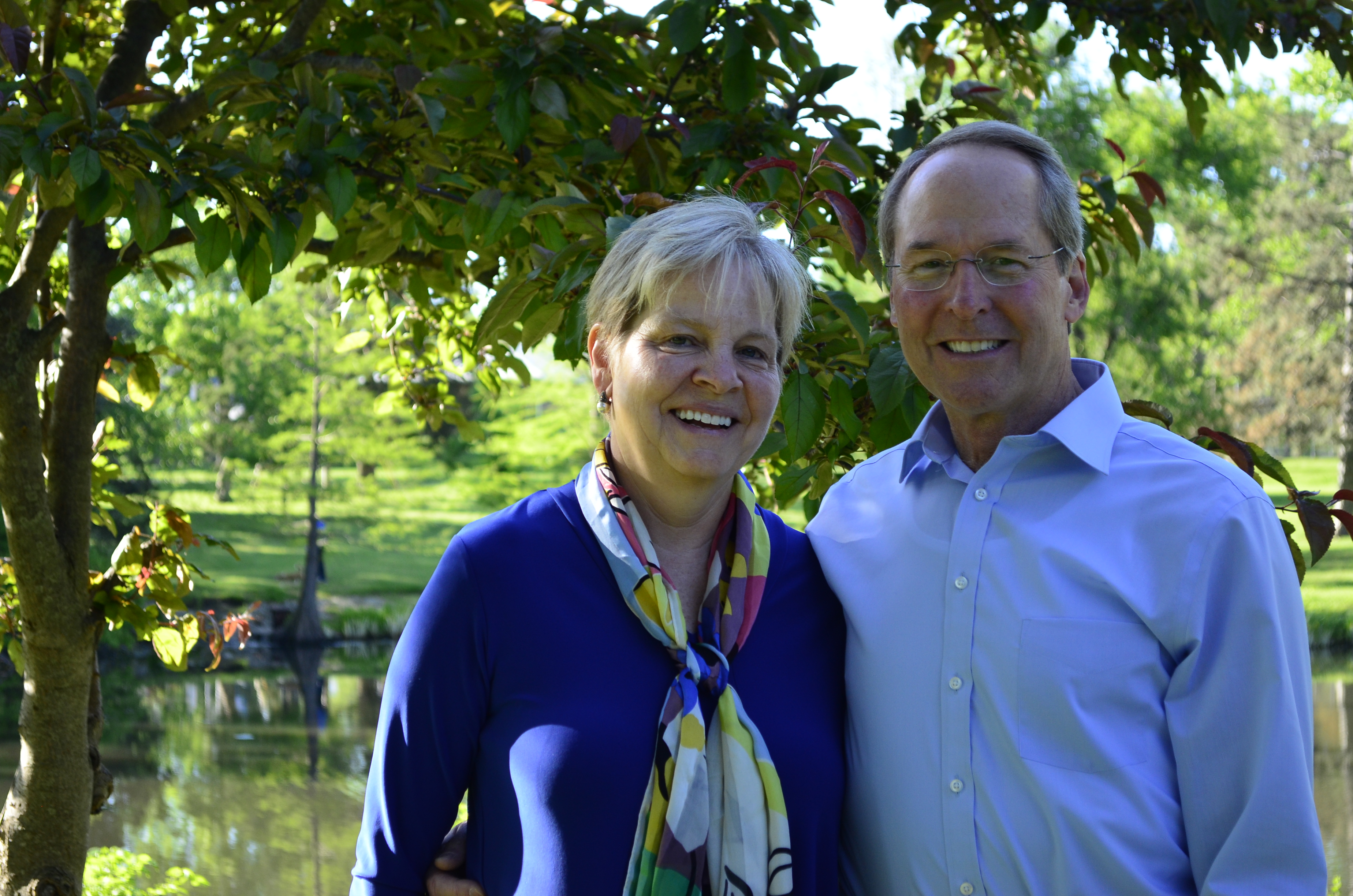
Republican candidate for governor Dr. Jim Barnett is crisscrossing the state to introduce his running mate — his wife, Rosie Hansen.

He made a stop in Hays on Thursday.

If elected, the duo would be the first couple to serve together as governor and lieutenant governor. Barnett said he wanted someone who was correct on the issues and could step in at a minute’s notice to fulfill the role as governor. Hansen said she works well with her husband and sees the partnership as an advantage.

Hansen grew up on a small farm near Americus, Kansas. She earned a bachelor’s degree from the University of Kansas, a law degree from the University of Minnesota, master’s in public administration from Harvard University and was a National Security Affairs Fellow at Stanford University.

She spent the majority of her career working for the U.S. State Department in the Foreign Service Office. She traveled to Kuwait just after Gulf War ended to help set up U.S. Embassy, worked in Sarajevo, Bosnia, as the war coming to an end and in Kabul, Afghanistan, among other posts. Bombs were still flying and snipers still present when she started work in Bosnia.

Hansen worked closely with many government agencies and foreign governments on the management of the embassy operations so others within the embassy could get their jobs done.

“In places like that, a new problem comes up everyday, and if you are not good at problem-solving and managing those types of situations, you are not going to be very effective at your job. That is what I enjoyed, building things and solving problems, and that is what I realized I could bring to state government.”

Hansen said Kansas has suffered in the last seven years from not having a functioning state government. An opportunity to rebuild Kansas’ government was why she said she agreed to step up and run with her husband, which she was initially reluctant to do.

Under Barnett’s and Hansen’s One Kansas platform, they would like to see money go back into Kansas Department of Transportation for infrastructure improvements, the medical and mental health systems, and education. Barnett and Hansen support Medicaid expansion in Kansas for humanitarian and economic reasons.

“What has happened with Gov. Brownback and now Gov. Colyer is that they have raided KDOT and every other fund they could, taken the money out of every cookie jar they could find and now we are harmed as a state,” Barnett said. “We don’t have money in the state for roads. Our mental health system has been systematically dismantled, and we have a privatized Medicaid system called KanCare that sends money out of state to for-profit institutions.”

Colyer championed KanCare. Barnett noted United Health Care’s CEO’s last salary was $66 million. United Health Care is a contractor under KanCare.

“They take 8 percent off the top plus administration costs while our hospitals are struggling to stay open,” Barnett said. “One has closed, and 30 are on the critical list. Our hospitals are not being paid, and Kansans do not have access to health care when we are sending that kind of money out of state.”

There is no accountability for the money, according to the Post Legislative Audit, Barnett said. No data is available to see what value Kansans are getting from these companies, he added.

Rebuilding a functional Department of Commerce is also key, Barnett said.

“We need a Department of Commerce that has a governor leading it and a secretary leading it who understands that our state is different regionally,” he said. “This part of the state is different than the southeast, which is different than Johnson County for instance. The last time we approached economic development on a regional basis was when Bill Graves was governor, and that is very short-sighted.”

Hansen’s extensive global background should prove helpful as the Kansas tries to market ag and other products internationally. Barnett expressed concern about what is happening in Washington with trade and tariffs and how this will affect ag trade.

Barnett and Hansen’s vision for Kansas schools follows some of the goals already set by the Kansas Department of Education. These include kindergarten readiness, social and emotional support and growth for children, and career readiness.

Barnett supports technical programs to train Kansans for the tens of thousands of jobs in Kansas that require advanced training but do not require a college education. He said this will help to attract and retain young people in the state.

Barnett wants to get Kansas out of court. The Kansas Supreme Court is set to rule later this month if the Kansas Legislature’s plan to add about half a million dollars in funding to Kansas K-12 education over the next five years is adequate. The state of Kansas has been in and out of court for years on the funding issue.

Barnett suggested in his One Kansas plan, $600 million in education funding be added to the budget over three years. However, a study commissioned by the Legislature this spring suggested the state needed to increase funding by $2.1 billion.

“It would be my prediction that the court will not accept this,” he said of the Legislature’s plan, “and it is going to take a governor who is going to lead through appropriate investment in education and long-term appropriate investment in economic development for the state to we have enough money to do this.”

The state may see a budget surplus next year as a result of changes in the federal tax code. The Legislature made a failed attempt to float a tax cut in the spring as a result. Other candidates in the race are supporting a tax cut. However, Barnett said Kansas needs to pay its bills.

“We need to shore up KPERS, refund KDOT and invest in education and invest in a functional mental health care system across the state. That is where Kansas has a chance to put money back in the bank and invest,” he said.

Barnett said he recognizes economic development is the most important factor in Kansas if the state wants to raise money for schools, roads and health care. Barnett would like to grow tourism as an economic driver.

“Tourism is the economic engine still parked in the garage in Kansas,” he said, “but it is also for our state’s image. We are looked at as a fly-over state with black eyes. We have black eyes around the nation as a state that can’t stay out of court for schools or put money back for roads. We need to market Kansas in a way that changes our image.”

The last major issue in their campaign platform is young professionals.

“We educate and raise all these great young people, and then they leave. What can we do?” he said. “Jobs are part of that.”

He said Kansas needs to have job opportunities that can support families.

“What do young people look for? They look for communities that bring a sense of community and a sense of something bigger in life that they are working on. Communities [need to] have good schools and access to health care and have quality of life issues,” Barnett said.

Barnett commented briefly on a controversy surrounding his Republican opponent Kris Kobach. Some people objected to Kobach riding in a vehicle with a replica machine gun during a recent parade.

Barnett said although he supports Second Amendment rights, he said “the stunt was insensitive and inappropriate.”

SPONSORED: Jackie Creamer’s The Dance Studio summer camps, classes

Jackie Creamer’s The Dance Studio has scheduled the following summer camps and classes for the coming weeks.

• Princess Dance Camp
June 18 to 22
9 to 10 a.m.
Performance Friday at noon
$50 per dancer, includes T-shirt

Cheer Pom Dance Camp with a KU Rock Chalk Dancer
June 18 to 22
10 to 11 a.m.
Performance Friday at noon
$50 per dancer, includes T-shirt

Couples Social Dancing
July 18 and 19
6 to 8 p.m.
$50 per couple

Vision Dance Company Camp and Auditions also are scheduled for Aug. 7 to 9.

For more information, call (785) 623-1939 or email [email protected].

Miss South Central crowned 2018 Miss Kansas

PRATT — Hannah Klaassen was crowned the new Miss Kansas

Saturday night during pageant festivities at Pratt Community College.

Courtesy Miss Kansas Pageant

Klaassen is a Tabor college student from Arkansas City. Her platform, “The Mind Matters.”

She will represent Kansas in the Miss America pageant in September.

Kansas Medicaid woes prolong wait for autistic kids needing therapy

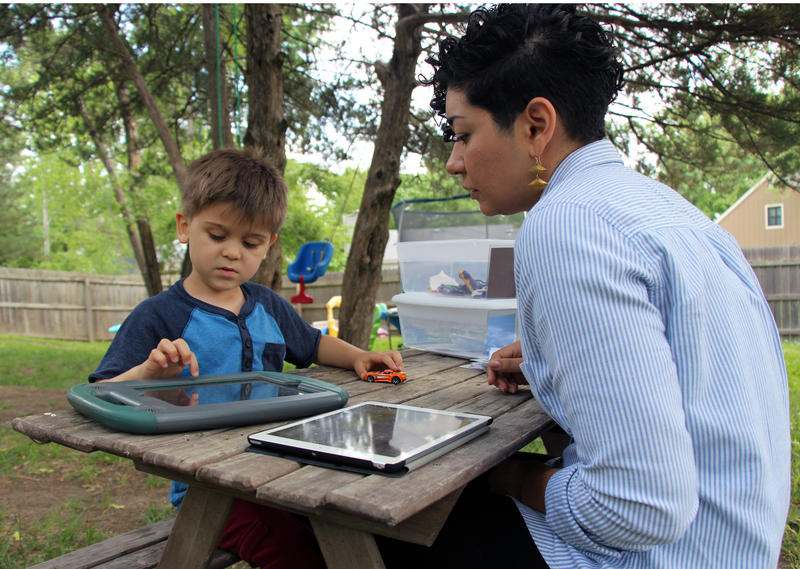
Five-year-old Ridley Fitzmorris works with therapist Ashley Estrada in his backyard. In Kansas, some children with autism end up on long waitlists for therapy. (Photos by Celia Llopis-Jepsen/Kansas News Service)

Five-year-old Ridley Fitzmorris sits at a picnic table in his backyard in Lawrence, one leg dangling and the other tucked beneath him. His eyes are focused on a row of Hot Wheels that his therapist asked him to count.

“One, two, three,” he says in a whisper, his finger hovering over each toy car until he reaches the last one. Turning to an iPad that he uses to communicate, he clicks an icon. “Eight,” the computerized voice announces.

“Good job!” cooes therapist Ashley Estrada, a specialist in treatment for children with autism. “You did it by yourself.”

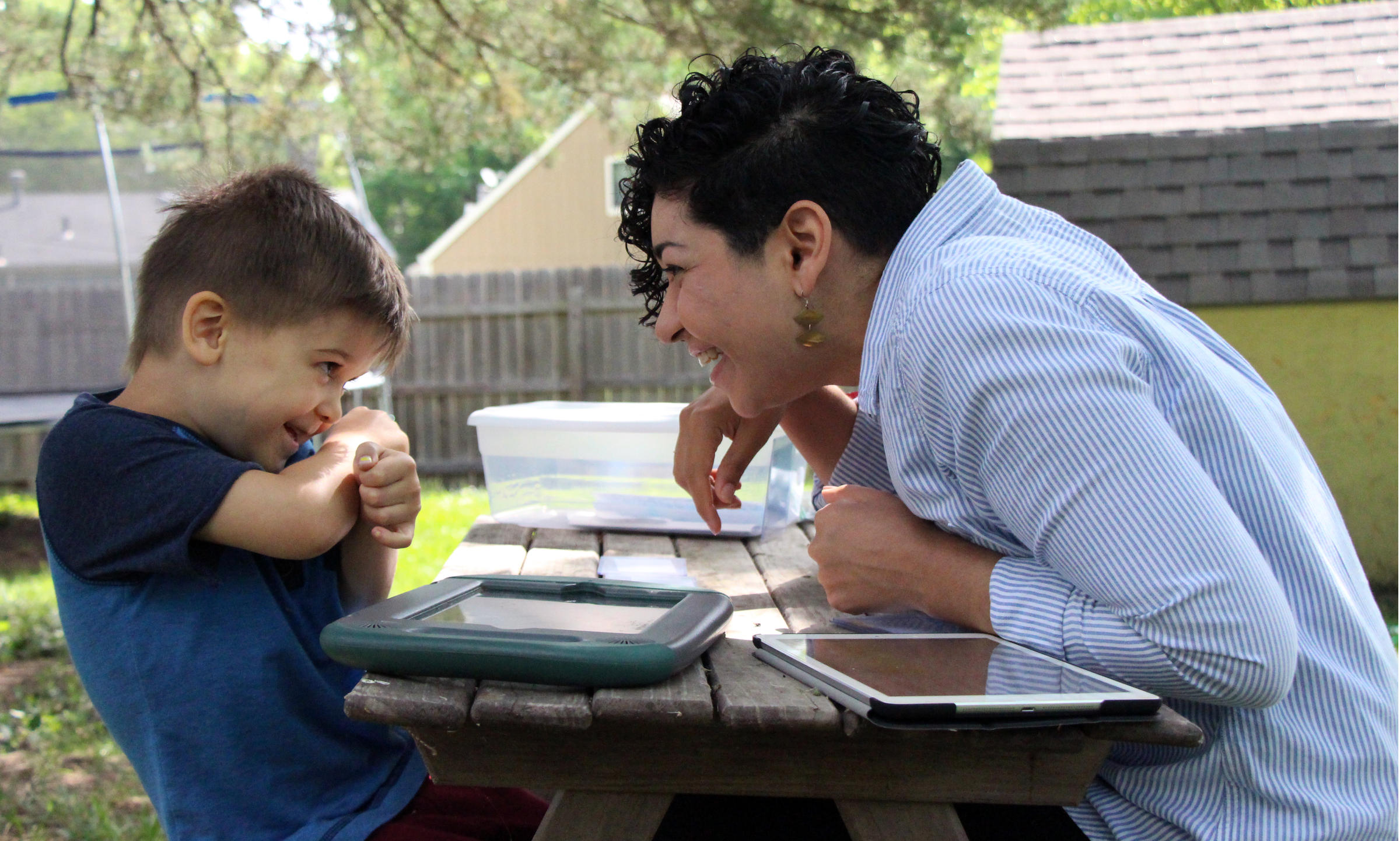
Then Ridley’s favorite part — the part his therapist recently realized sends him into reliable fits of giggles. With a few clicks on his iPad, he lets her know which car he wants: the green one.

Vvvvvvvvvvvvvvvvvv. It’s coming, it’s getting you,” Estrada teases.

The boy squirms delightedly as she rolls the toy car across the table. Up his right arm. Over his head — prompting more giggles — and plop, she slides it into the left pocket of his blue cotton baseball tee.

The pair then practice saying the word “pocket” a few times.

Therapist Ashley Estrada mixes plenty of play and light moments into her work with five-year-old Ridley Fitzmorris.
 Autism looks very different in different people. But for those who struggle to communicate or interact with others, psychologists often point families to the kind of one-on-one treatment that Ridley receives — applied behavior analysis, or ABA.

In Kansas, though, parents face long waitlists and shortages of providers. So a decade into statewide insurance reforms, more Kansans have coverage for this therapy, but that doesn’t mean kids get it.

The situation is worst for children with Medicaid as their primary or secondary insurance, and those in rural areas.

The lack of therapy could be holding kids back, with consequences for their education and career prospects, personal relationships and adult independence.

“I’m just very thankful Ridley was able to get it,” said Jillian Fitzmorris, his mother.

The Fitzmorris family got access to ABA when they had private insurance.

Jillian runs an autism support group and encounters plenty of families navigating the insurance maze and waitlists that can make seeking care complex and time consuming. “I try to share everything we know.”

Where to turn?

Based on statistics from the Centers for Disease Control and Prevention, somewhere around 650 children born in Kansas this year will likely develop autism. Signs can appear within the first two years.

Often intensive therapy is recommended. Many psychologists and other experts favor applied behavior analysis — though the topic is not without debate — as the most researched and evidence-based method to help autistic children develop life skills that may not come easy. The treatment is often recommended for the early years of childhood and brain development.

Ridley has severe autism and gets upward of 25 hours a week of behavior analysis with specialists like Estrada, who uses an iPad to meticulously note his progress on a wide range of skills.

His mother believes the sheer number of hours has made a difference, so her son can tell her things like what he wants to eat or do. He loves playing puzzles and is learning to type.

“ABA therapy,” Fitzmorris said, “has been huge in helping unlock that.”

But behavior analysts in Kansas can’t keep up with demand. A big reason, they say, is the state’s privatized Medicaid program, KanCare. Reimbursements are too slow — and too low.

One well-established mental health center recently decided to add ABA therapy to its services, but for now, at least, won’t be accepting Medicaid for that program.

“The state of Kansas’ hourly reimbursement rate doesn’t even cover the time and costs,” said a spokeswoman for the Family Service and Guidance Center in Topeka. “The KanCare rate pays about 50 percent.”

Katrina Ostmeyer is the associate executive director of IBT Inc., a provider of therapy for children with autism.

Even the process of getting credentials from KanCare’s three contractors can take months for each therapist. In the meantime, applicants for those jobs sometimes disappear.

“We have about 75 employees in our agency at any one time,” said Katrina Ostmeyer, associate executive director at Integrated Behavioral Technologies. “Ideally, if we’re fully staffed, we should have about 120.”

IBT, which serves large parts of Kansas, currently serves about 60 children. It has about 150 on its waitlist for behavior analysis. Most are enrolled in KanCare, which insures children based on family income and level of need.

It can take a long time for slots to open up because therapy for a single child can take multiple years.

A sense of urgency

Special education professor Tamara Marder at Johns Hopkins University says behavior analysis helps especially with communication and social skills — things like playing alongside other children at preschool.

“Other children will approach them to play,” Marder said. “But if they don’t have the skills to reciprocate, then they won’t approach them eventually. Then the issue becomes, that child becomes more isolated in that school setting.”

Children learn not just from adults but from interacting with one another — just one reason that preventing isolation matters.

Jon Hamdorf, a former researcher at the University of Kansas School of Medicine, became Kansas’ Medicaid director in January amid the gradual transition from the Brownback administration to the Colyer administration.

Hamdorf acknowledges some of the problems raised by IBT and others — including that reimbursement rates are too low and credentialing is, in his words, “onerous.”

“I’ve probably had at least a dozen conversations with IBT directly,” he said.

The three contractors that run KanCare didn’t comment, but Hamdorf said the companies are now engaged in weekly conversations with IBT over unpaid claims.

Some delays can have an explanation, he said, because so many of the children receiving services have a combination of private health insurance and KanCare coverage. That requires sending the bills to both — private plan first. But, he said, that’s not a blanket excuse.

“They’re responsible,” he said of Amerigroup, Sunflower and UnitedHealthcare, “to make sure services are delivered to the individuals and that they’re paying claims in a timely manner. And I will hold them to that.”

Hamdorf is also talking to state lawmakers about the Medicaid reimbursement rates.

The state is trying to streamline credentialing, too, and help providers recoup some costs in the meantime.

“There’s a short-term solution where we’re trying to work with the providers to make sure they’re getting reimbursed something,” Hamdorf said. “But we need to fix the process itself.”

IBT confirmed it’s in regular contact now with the KanCare contractors. Ostmeyer estimates she spends around four hours a week on the phone with them, trying to resolve claims.

Her frustration is that the delays — some payments, she says, can take months — contribute to a vicious cycle. IBT frequently takes loans to make payroll while significant chunks of its revenue lay tangled in paperwork.

At one crisis point last summer, Ostmeyer says the disputed backlog totaled a few hundred thousand dollars. Though things have improved, enough problems remain that the agency hasn’t taken new Medicaid clients for nearly a year and may not be able to start again for fear of going under.

“It’s absolutely devastating,” she said. “Because it’s so hard to tell a family. I know this is a time-limited service.”

Even families with private health insurance face obstacles to behavior analysis, despite statutory reforms to increase access.

Among them, provider shortages outside the state’s two largest metros. Advocates argue higher Medicaid reimbursement rates might help attract more ABA providers to more rural areas, too.

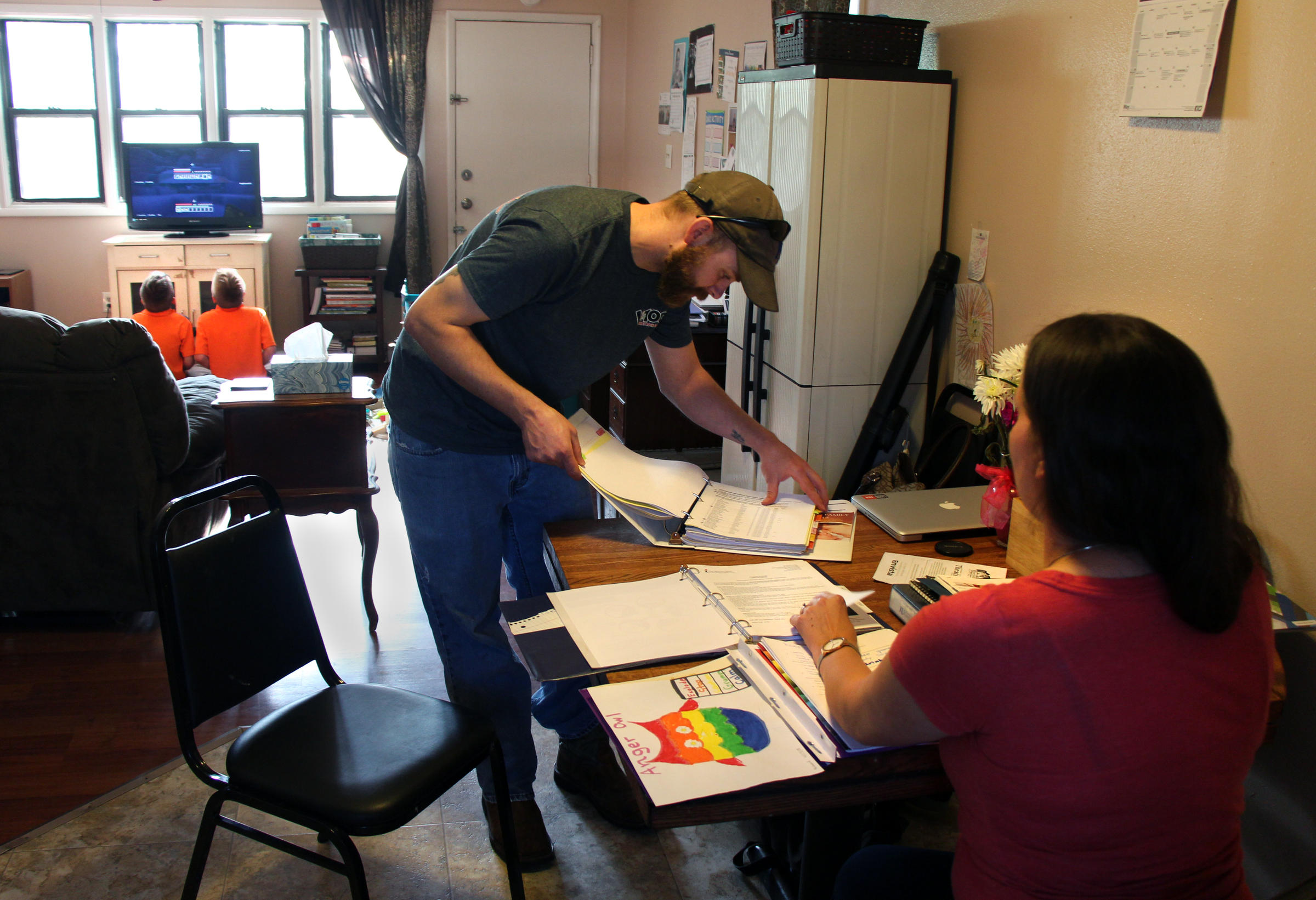
Samantha and Andrew Morrison show some of the binders full of materials that they have amassed over the years while learning about autism. Their sons Richard and James play a video game in the background.

Daily challengesSamantha and Andrew Morrison have loads of reading materials about autism in their Topeka home. Books and pamphlets from psychologists and pediatricians, personal stories written by people with autism and by parents.

They’ve become skilled at scouring for tips to help their nine-year-old son, Richard, because they haven’t had access to ABA therapy for most of his life.

“You’re just trying to make it so that they have an easier way to do things in life without feeling so stressed,” Andrew Morrison said. “Because little things can stress out kids on the spectrum really quickly.”

The Morrisons moved home to Kansas last year from Colorado, where they say behavior analysts helped Richard with his sensitivity to everyday variations in life that could trigger explosive outbursts.

Switching between two activities at home or in school could be difficult for him. Taking a different route to the grocery store or receiving a plate of spaghetti on a different dish than usual — things that any parents might do without much thought — could inadvertently cause intense distress and flailing, and leave the Morrisons struggling with guilt.

One time, they say, he plunged his feet through a van window from his spot in the backseat, shattering the glass.

“He hadn’t cut himself, but it scared him pretty good,” Samantha Morrison recalled. “He had no idea he had even done it. He was just so pent up and angry and upset.”

After the Morrisons arrived in Topeka they sought more behavior analysis. But when they called around, they say, providers told them they would have to wait.

It’s a situation those providers aren’t happy with either. Sandy Crawford, vice president of pediatric services at Easterseals Capper Foundation in the state capital says her team encourages families to get on as many waitlists as they can. The foundation has 90 kids on its own list.

“Some of these kids have been on the waitlist, two, three, four years,” Crawford said. “A four-year-old plus four years on the waitlist — that’s an eight-year-old. You’re losing time.”

Celia Llopis-Jepsen is a reporter for the Kansas News Service, a collaboration of KCUR, Kansas Public Radio, KMUW and High Plains Public Radio covering health, education and politics. You can reach her on Twitter @Celia_LJ.


YOUNKER: Soil Aggregate Stability. What Is It? Why Is It Important?

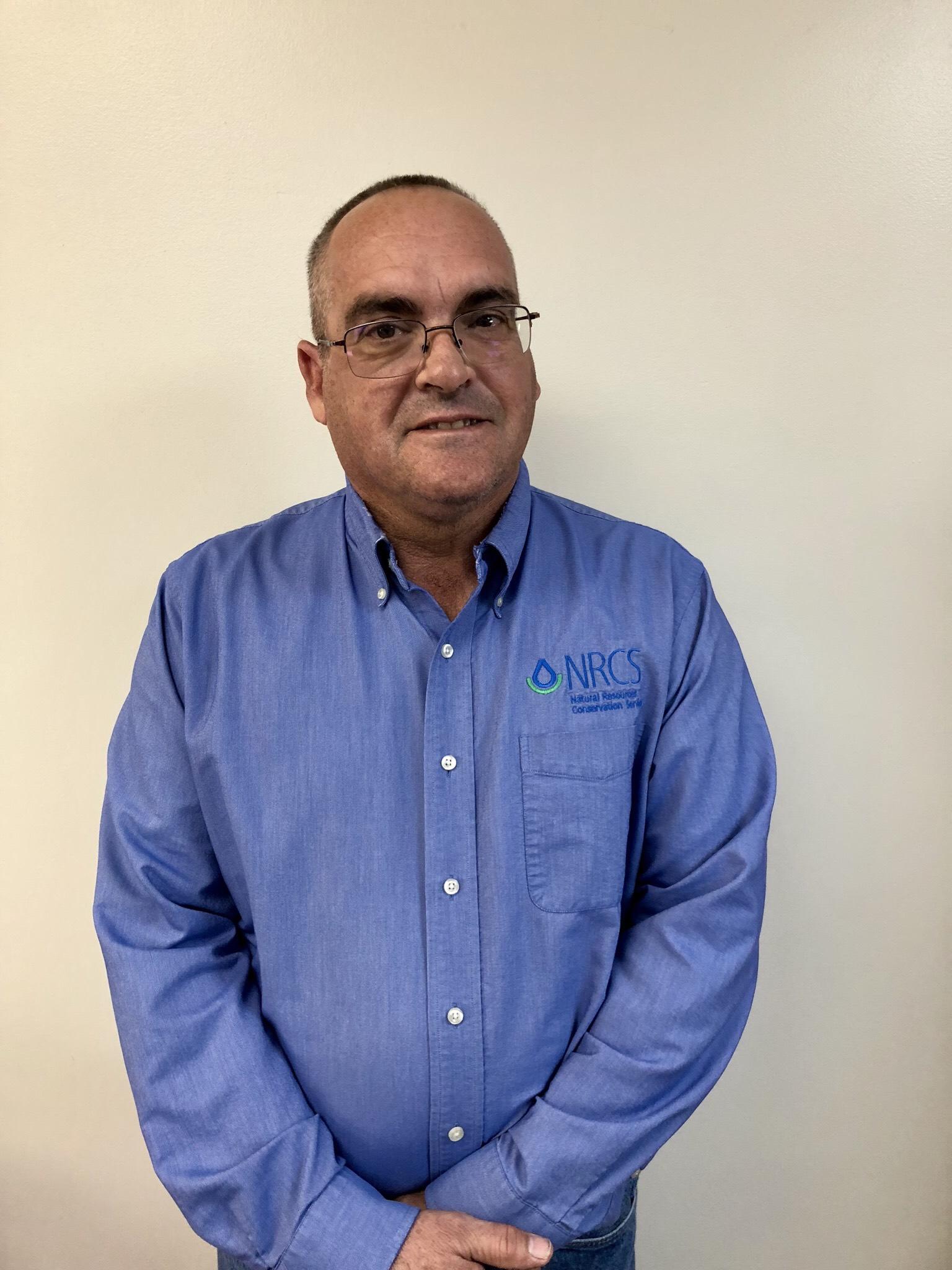
Dale Younker is a Soil Health Specialist with the USDA Natural Resources Conservation Service in Jetmore.

Today I would like to talk about soil aggregate stability. A soil aggregate is a whole bunch of individual soil particles that are bound, or glued, together. How well those aggregates hold up to disruptive forces like tillage and erosion tells us how stable that soil aggregate is. When these disruptive events occur if soil particles stay bound together the more stable the soil aggregate is.

Aggregate stability is critical for water infiltration and in dryland cropping systems it’s all about water. The more we can capture and store in the soil profile the better chance we have a growing a good, productive crop. Stable soil aggregates, that don’t break apart when water enters them provide more pore space for water to enter into. This increases the soil’s water holding capacity. Good aggregate stability also helps in root development, which helps the plant take up more water and nutrients. The soil is also more resistant to erosion.

In low aggregate stability soils soil particles break away from each other when water enters into an aggregate. The individual soil particles fill surface pore spaces and can form a hard crust on the soil surface when the soil dries. Water has difficulty penetrating this crust and it typically runs off, which causes erosion. The crust can also restrict seedling emergence.

Good aggregate stability is highly dependent on soil organic matter and biological activity in the soil. Certain fungal groups help plant roots gather water and nutrients and help bind soil particles together. Other organisms, like earthworms, secrete glue like substances the help hold the particles together. Decomposing soil organic matter also provide organic glues.

Certain soil labs can complete tests to tell you how stable your soil aggregates are. But a simple quick way is to dip an air dried soil clod in a cylinder of water. If that clod breaks up quickly you have low stability because there are no glues holding those aggregates together. If the clod stays together 30 minutes or longer you have high stability.

So how do we improve our soil aggregate stability? The simple answer is to reduce tillage. Excessive tillage physically breaks down soil aggregates and disturbs the fungal groups that secrete glues that hold soil particles together. Over time it also depletes soil organic matter which is also important to aggregate stability.

For more information about this or other soil health practices you can contact me at [email protected] or any local NRCS office.

Dale Younker is a Soil Health Specialist with the Natural Resources Conservation Service in Jetmore.

Hot, breezy Sunday

Today
Sunny and hot, with a high near 101. Breezy, with a south wind 10 to 15 mph increasing to 19 to 24 mph in the afternoon. Winds could gust as high as 37 mph.

Tonight
Partly cloudy, with a low around 72. Breezy, with a south wind 15 to 21 mph, with gusts as high as 31 mph.

Monday
Sunny, with a high near 89. Breezy, with a south southwest wind 15 to 20 mph becoming north in the afternoon.

Monday Night
Mostly clear, with a low around 61. Northeast wind 8 to 14 mph.

Tuesday
A 20 percent chance of showers and thunderstorms. Mostly sunny, with a high near 88. East northeast wind 7 to 9 mph.

Tuesday Night
A 40 percent chance of showers and thunderstorms, mainly after 1am. Partly cloudy, with a low around 64.

Wednesday
A 20 percent chance of showers and thunderstorms before 1pm. Partly sunny, with a high near 90.

Wednesday Night
Partly cloudy, with a low around 69.

Thursday
Mostly sunny, with a high near 96.

🎥 Adult Abuse Awareness Month calls attention to vulnerable population

DCF

TOPEKA – Abuse of adults may take on numerous forms, including physical, emotional or sexual abuse, self-neglect or neglect by a caregiver and financial exploitation.

In FY 2018, the Kansas Department for Children and Families (DCF) has received approximately 16,468 calls regarding abuse and neglect of this vulnerable population, and more than 7,300 investigations have been assigned.

Adult abuse affects individuals 18 and older who are unable to protect themselves. This includes older adults and persons with disabilities.

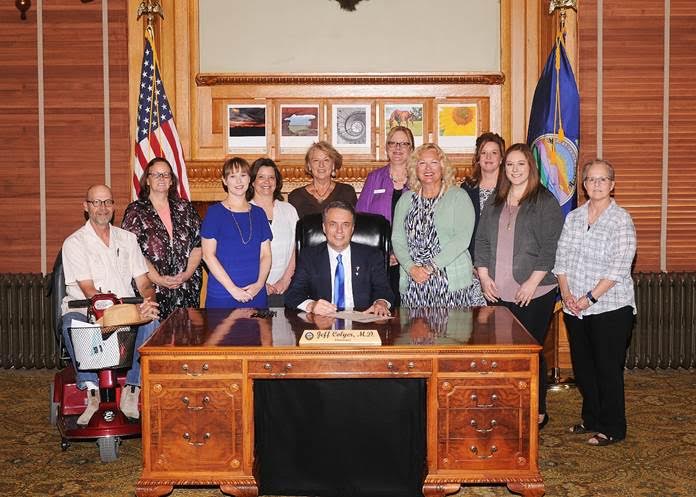
To call attention to this issue, Governor Jeff Colyer signed a proclamation last week declaring June Adult Abuse Awareness Month.

“When someone thinks of DCF, child welfare is often at the forefront of their minds, but these adults are just as vulnerable, and in need of our assistance,” Secretary Gina Meier-Hummel said. “As the population ages, there are more individuals in need of adult protective services, and we have to be ready to offer them a helping hand.”

DCF Adult Protective Services (APS) helps protect older adults from being taken advantage of, as well as to ensure they are taking care of themselves. To promote adult abuse awareness, the public is invited to wear purple on Friday, June 15.

The State of Kansas takes seriously this issue. Since FY 2011, DCF has added Adult Protective Specialist positions to the Adult Protective Services program. It has increased training and outreach efforts and is now better equipped to serve vulnerable adults.

Since 2011, DCF and other State agencies, community providers and advocates have played an active role in positive change by serving on the APS Advisory Committee. They provided direction on a strategic plan to combat adult abuse. The plan includes six goals, including improving services, increasing staff knowledge, improving tracking and monitoring through data sharing and more.

“Every Kansan has the responsibility to report suspected abuse. This vulnerable population deserves our support and protection,” Governor  Colyer said. “If you see something, say something.”

Kansans can report abuse by calling the DCF Kansas Protection Report Center, which is available 24 hours per day, seven days a week, at 800-922-5330. Another option would to submit a report online at www.dcf.ks.gov/services/pps/Pages/KIPS/KIPSWebintake.aspx.

State awarded grant to improve traumatic brain injury services

KDADS

TOPEKA – The federal Department of Health and Human Services’ Administration for Community Living has awarded the Kansas Department for Aging and Disability Services (KDADS) a three-year grant to expand and improve the services the state provides to individuals with traumatic brain injury (TBI).

KDADS will use the $150,000-a-year grant to create and strengthen a system of services and supports that maximizes the independence, well-being and health of Kansans with TBI in collaboration with the Brain Injury Association of Kansas and Greater Kansas City, the National Association of State Head Injury Administrators and other key stakeholders.

The objectives of this project are to increase representation of people affected by TBI on Kansas’ TBI Advisory board, develop an annual State TBI Action Plan, develop a TBI Registry, increase enrollment of at least 30 people onto TBI Medicaid waiver, conduct annual seminars and educational events that increase knowledge and build capacity for advocacy, and create a sustainability plan to maintain and expand services in the future.

“We expect this project to result in an increased number of individuals with TBI receiving services under the state’s 1915(c) Medicaid waiver for TBI, which currently serves about 425 individuals,” KDADS Secretary Tim Keck said. “Another aim of this project is to educate people experiencing TBI, and the public, about brain injuries and to make them aware of the community resources available to support them.”

Kansas’ TBI Medicaid waiver provides a range of services and supports to individuals with TBI and their families with the aim of ensuring that individuals can remain in their homes and be as independent as possible in a safe, healthy environment. The HCBS/TBI program serves individuals who would otherwise require institutionalization in a TBI rehabilitation facility. The TBI waiver is designed to be a rehabilitative program for consumers to receive therapies and services that enable them to rely less on supports as their independence increases.

In 2018, the Kansas Legislature enacted a law requiring that the TBI Medicaid waiver cover children and people with acquired brain injuries as well as those with traumatic brain injury. Kansas is in the process of renewing federal approval for its TBI waiver and the proposed new waiver will include children and individuals with acquired brain injuries as required. The waiver is due for renewal in July of 2019. If approved by the Centers for Medicare and Medicaid Services (CMS) Kansas will become the first state in the nation to establish a rehabilitation program for children who have a brain injury.

Police: 911 call leads to Kansas murder suspect arrest

SEDGWICK COUNTY — Law enforcement authorities are investigating a fatal stabbing and have made an arrest.

Just after 10:30 p.m., Friday, police responded to a cutting call in the 1600 block of south Erie in Wichita, according to officer Charley Davidson.  Police located a 68-year-old man in the street who was pronounced dead.

Through the investigation it was learned the victim was driving his 2003 black Chevy Z71 Silverado extended cab pick-up truck north on Erie Street.

The truck stopped and a disturbance ensued in the street between the victim and a suspect.  The victim was stabbed multiple times by the suspect who then fled in the victim’s black truck.

At approximately 10:30 a.m., Saturday, at 27th Street south and Magnolia, Wichita Police Department Officers arrested a 53-year-old   man. He has been booked into jail for first degree murder, according to Davidson.

Officers recovered the victim’s 2003 black Chevy Z71 Silverado.

Officers recovered the vehicle and made the arrest after a citizen called 911 alerted authorities of the whereabouts of the pickup truck.

Police did not release the name of the victim or the suspect.

——–

SEDGWICK COUNTY — Law enforcement authorities are investigating a fatal stabbing and asking the public for help to locate a suspect.

Just after 10:30 p.m., Friday, police responded to a cutting call in the 1600 block of south Erie in Wichita, according to officer Charley Davidson.  Police located a 68-year-old man in the street who was pronounced dead.

Through the investigation it was learned the victim was driving his 2003 black Chevy Z71 Silverado extended cab pick-up truck north on Erie Street.

The truck stopped and a disturbance ensued in the street between the victim and a suspect.  The victim was stabbed multiple times by the suspect who then fled in the victim’s black truck.  The suspect is described as an unknown black male, 5-foot-8-11, 250 pounds and wearing a light colored hat.

The truck has chrome rims, a chrome handle on the tailgate and the passenger window has been taped up.  The truck also had a 60-day tag.

Anyone with information is asked to contact police.

Copyright Eagle Radio | FCC Public Files | EEO Public File