CLAY CENTER, Kan. (AP) — A group of Kansas pranksters are finally coming clean right before the 50-year anniversary of a high school finding a mysterious hole through its roof.
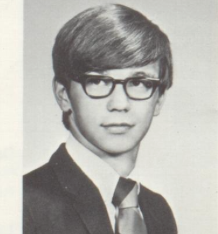
Richard Klocke and his friends fired a small cannon full of gunpowder near Clay Center Community High School for the Fourth of July in 1968.
“This thing just exploded like crazy,” Klocke said. “The metal was flying. I could hear it flying in all these directions, but I could specifically hear it flying from this direction off toward the school. It was a deafening explosion.”
Authorities reported that mysterious metal scraps had gouged the school roof and caused a water leak, but they never figured out where the scraps came from. A local newspaper reported that the “mysterious piece of metal” was sent to Forbes Air Force Base in Topeka for identification, but the scraps still couldn’t be explained.
“I think when the thing showed up in the newspaper that they found something on the roof, we all went, ‘Are you going to tell them about this?'” said Mike Browne, Klocke’s friend and one of the teens who fired the cannon. “No, no, keep quiet. Nobody wanted to get in trouble.”
Klocke said he now wants to take responsibility because “it’s never officially been told as to what happened at that event.”
“I’ll have to suffer any consequences now as an old man for my youthful indiscretions,” said Klocke, now 65.
Klocke now works as an artist and exhibition designer in Lawrence, and Browne is a business owner in Lincoln, Nebraska. The two plan to connect on Wednesday, as they do every Independence Day.
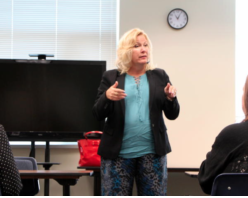
KANSAS CITY – A former legal director for a commercial development firm in Kansas City alleges in a lawsuit that she discovered a camera installed underneath her desk and was fired after calling police.
The Kansas City Star reports that Mary Caffrey, of Leawood, Kansas, is suing Legacy Development, managing partner Dan Lowe and the firm’s chief financial officer, Sue Gallatin, in Jackson County Circuit Court.
Caffrey alleges that she called police last summer after finding the secretive recording device underneath her office desk and pointed in her direction. She was terminated five days later. The lawsuit says Lowe and Gallatin knew Caffrey used her office to undress and change into workout clothes.
Lowe and Gallatin didn’t respond to multiple requests for comment from The Star. Caffrey is seeking unspecified damages.
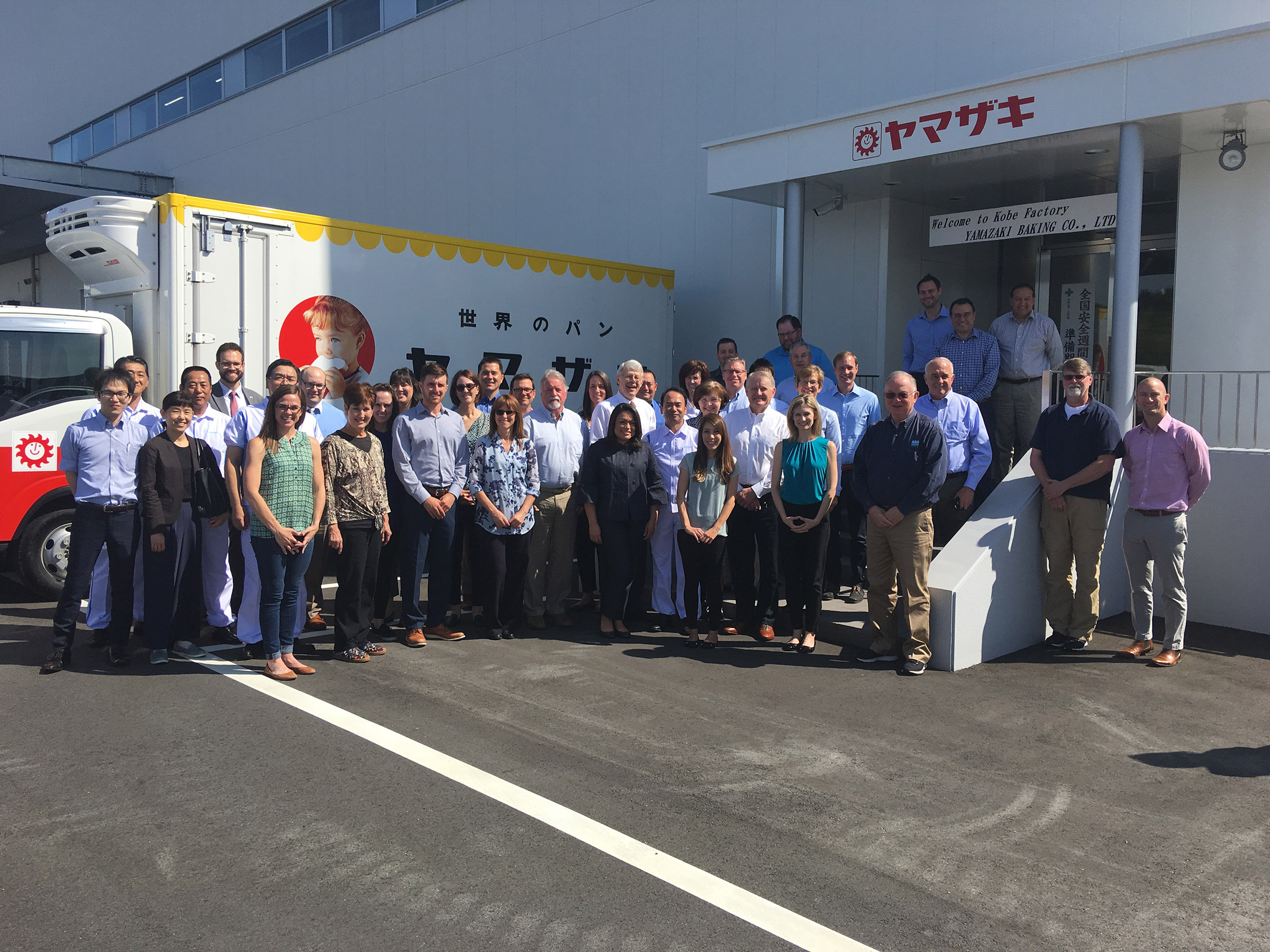
Representatives from state departments of agriculture and the U.S. Department of Agriculture participated in a trade mission to Japan in June, including a visit to the Yamazaki Baking Company in Kobe.
KDA
MANHATTAN — In June, two representatives from the Kansas Department of Agriculture traveled to Japan on an agribusiness trade mission led by the USDA Under Secretary for Trade and Foreign Agricultural Affairs, Ted McKinney. The trade mission, which was the largest ever USDA-led trade mission, included representatives from state departments of agriculture as well as private agribusinesses.
“Japan is already a top market for U.S. farm and food products, but there are many new opportunities still waiting to be tapped there,” McKinney said. “Japan is an import-dependent economy and its 130 million consumers have a real affinity for U.S. food products because of their quality, affordability and safety. I’m eager to return to Japan and continue exploring all the ways we can grow U.S. agricultural exports there.”
Kansas was represented by Mary Soukup, KDA assistant secretary, and Chad Bontrager, director of the KDA agribusiness development division. The purpose of this mission was to strengthen the relationship between Kansas agriculture and Japan and explore potential new markets. Japan is among the top export markets for Kansas agriculture. In 2017, Kansas exported nearly $723 million in agricultural products to Japan.
The trade mission delegation had the opportunity to meet with the Ministry of Agriculture, Forestry and Fisheries Minister Ken Saito and other MAFF leaders. In addition, they visited food and agriculture retail and processing operations to gain a better understanding of how U.S. agricultural products are used in Japan. They visited Glicopia Chiba Factory, Kikkoman Noda, Yamazaki Kobe and Kirin Beer Kobe.
“Japan is an important partner for Kansas and the entire United States. This trip provided us an important opportunity to meet firsthand with leaders in government and with companies that rely on agricultural products in their businesses,” Soukup said. “It was exciting to see Kansas products being used and to explore opportunities to strengthen our relationship with Japan.”
KDA strives to encourage and enhance economic growth of the agriculture industry and the Kansas economy by exploring and expanding both domestic and international marketing opportunities. For information on this or other international trade missions, please contact Suzanne Ryan-Numrich at [email protected] or 785-564-6704.
Fort Hays State University’s Department of Psychology recently entered an articulation agreement with Kansas City University of Medicine and Biosciences, Kansas City, Mo., that will guarantee reserve acceptances into the university’s clinical psychology program.
The program is for students seeking the degree of Doctor of Psychology in clinical psychology.
To qualify, students must have a bachelor’s degree from FHSU with a minimum 3.25 cumulative undergraduate GPA as well as appropriate research and apprenticeship experiences.
“Clinical Psychology graduate programs are extremely competitive for admission,” said Brooke Mann, director of FHSU’s Master of Science in clinical psychology program. “We’re excited to have the opportunity to create partnerships with schools like Kansas City University that recognize the excellent training and preparation FHSU gives our students.”
The program begins with spring 2018 graduates of FHSU’s psychology program. For information on the program, contact Mann at [email protected], or contact Tyler Seabaugh, admissions coordinator at Kansas City University of Medicine and Biosciences at [email protected].
SHAWNEE COUNTY — Law enforcement authorities are investigating a suspect arrested after a chase and crash Tuesday afternoon in Shawnee County.
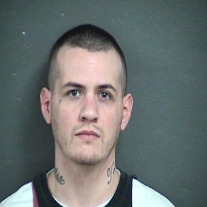
Servantez- photo Wyandotte Co.
The Kansas Highway Patrol reported a Toyota Camry driven by Robert William Moran, 79, Jamestown ND, was southbound on U.S. 75 just north of 35th Street.
A State Trooper was in pursuit of a vehicle driven by Robert Servantez, a 29-year-old convicted felon and absconder. Servantez’s vehicle was northbound in the southbound lanes, spun out and struck the Camry after the KHP patrol unit engage in a tactical vehicle intervention due imminent danger to the public.
The Camry attempted an evasive maneuver to avoid the oncoming vehicle and traveled into the west ditch.
Moran was transported to the hospital in Topeka. A passenger in the Camry was not injured.
Servantez is being held in the Shawnee County Jail. He has previous convictions for aggravated battery, theft and was an absconder, according to the Kansas Department of Corrections. He has done jail time in Nemeha, Saline and Wyandotte County, according to the KDOC.
PHILADELPHIA – Already this year there have been 21 confirmed child vehicular heatstroke deaths in the United States. Every year on average, 37 children die in hot cars in our country. Last year 43 young children died.
These tragedies are predictable and preventable. KidsAndCars.org is urging parents and caregivers to be extra vigilant during the holiday week and when changes in the daily routine occur.
KidsAndCars.org president and founder Janette Fennell said, “We always see an increase in child injuries and deaths around holidays. It is devastating to know that there are families all across America right now holding their precious babies, unaware that they will lose them in a hot car this summer. But, these children don’t have to die. Parents and caregivers have the power to make sure that this doesn’t happen to them.”
Parents should implement the “Look Before You Lock” safety checklist that provides simple tips to protect their child.
Look Before You Lock Safety Checklist
Make sure your child is never left behind in the back seat of a car
Make it a routine to open the back door of your car every time you park to check that no one has been left behind.
Put something you need in the back seat to remind you to open the back door every time you park – cell phone, employee badge, handbag, work computer, etc. (The idea is if you leave the vehicle without this item, you would have to go back to get it.)
Ask your babysitter or child care provider to call you if your child hasn’t arrived as scheduled.
Keep a stuffed animal in baby’s car seat. Place it on the front passenger seat as a reminder when baby is in the back seat.
Make sure children cannot get into a parked car:
Keep vehicles locked at all times, even in the garage or driveway and even if you do not have children.
Keys and remote openers should never be left within reach of children.
If a child is missing, immediately check the passenger compartment and trunk of all vehicles in the area very carefully.
About KidsAndCars.org: Founded in 1996, KidsAndCars.org is the only national nonprofit child safety organization dedicated solely to preventing injuries and deaths of children in and around vehicles. KidsAndCars.org promotes awareness among parents, caregivers and the general public about the dangers to children, including backover and frontover incidents, underage driving and vehicular heatstroke. The organization works to prevent tragedies through data collection, education and public awareness, policy change and survivor advocacy.
TOPEKA, Kan. (AP) — Kansas’ Department for Children and Families is facing criticism from some in the child welfare community over its decision to loosen requirements for some staff positions.
DCF Secretary Gina Meier-Hummel addresses staff and community members at the agency’s regional office in Leavenworth -photo KANSAS NEWS SERVICE
Under new rules, the state will hire people with bachelor’s degrees to investigate claims of abuse and neglect. Formerly only licensed social workers were hired for the jobs.
Critics say loosening the restrictions amounts to lowering standards for important jobs that require a high level of knowledge and ethics. State officials note a growing number of children in foster care and high turnover in the investigator jobs, which can be emotionally taxing.
Department for Children and Families Secretary Gina Meier-Hummel did child protection investigations earlier in her career. She says unlicensed employees are capable of doing the work.
MANHATTAN — Kansas farmers and ranchers know there is great beauty in agriculture, and photographers are encouraged to capture that beauty and share it with others through the Kansas Department of Agriculture’s annual photo contest. KDA will continue accepting entries until the end of August.
This year’s KDA Photo Contest categories were selected to promote different aspects of Kansas agriculture.
Agriculture in the Fields, Animals of Agriculture, Agriculture in Town, Water in Agriculture, and County Fair categories will showcase the many places and ways we experience agriculture across the state of Kansas — from the crops in the fields to the animals on the ranches, and from the farmers’ markets and agribusinesses in communities across the state to the critical role water plays in Kansas agriculture.
And for the first time we have a category to capture the magic of the county fair. In addition, there will be a separate Youth division, for young photographers age 19 and under.
Prizes will be awarded to the top two winners in each of the six categories.
KDA serves to advocate for agriculture, the state’s largest industry and economic driver. Photos which best capture the categories will be used throughout the year as we tell the story of Kansas agriculture. After submission, KDA is granted permission to use any photograph for publications, social media, websites, displays, etc. without payment or other consideration from the photographer.
Photo entries should be sent in .jpg format to [email protected]. Entries must include a title and brief description, where and when the photo was taken, the photographer’s full name and age, entry category hometown and email address.
Guidelines for the KDA Photo Contest, including deadlines, divisions and prizes, can be found at agriculture.ks.gov/photocontest. Voting to select finalists will begin on KDA’s social media sites in September.
For more information, contact Heather Lansdowne, KDA director of communications, at [email protected] or 785-564-6706.
It is the link between “town and gown” that made Hays my hometown. Mom and Dad attended FHSU, so why not move from the suburbs of Denver, to where I had spent with spring and summer vacations working on my uncle’s farm.
It was on a campus visit my junior year of high school, I saw it—and got it.
Picken Hall, the old main of the FHSU campus in the setting sun. Even looking east, from the Quad, this limestone lovely is always a draw.
Somehow, I just knew. This was home.
Hays is a great home town. As we celebrate Independence Day, the Wild West Festival is always in full swing, with fireworks, a huge carnival and great concerts.
As a FHSU alumnus, Oktoberfest-Homecoming weekend is my favorite time of year. Not only do we think our football team will win, but there’s great food and drink celebrating the heritage of Unsere Leute, or Our People. This year, Oktoberfest is the weekend of Sept. 28. It’s a wonderful time for a reunion, whether by ancestry or by school loyalty.
If it weren’t for FHSU, the growth of the city would likely have never taken place. When my folks were students in the late 1930s and early 1940s, Hays had a population of about 6,300. Now, over 20,000 residents enjoy the lifestyle of a place big enough to accommodate but small enough to appreciate.
The university has boomed through new technology, but still remains, as emeritus President Edward Hammond once said, a high-tech, high-touch environment.
The human touch is felt through the arts in Hays, the first city in Kansas with an arts council. Between the schools and the council, the visual arts, drama, and music programs abound. Even civic beautification is given recognition. Hays is without apology an artsy town.
Hays is a town of science. HaysMed brings advanced medical help, including stroke care and heart surgery, close to home. It’s also home to the Kansas State University Agricultural Research Center-Hays, the largest dryland agricultural experiment station in the world.
Hays has pluck. In 1983, a report surfaced that the city’s domestic water supply was running out.
“We knew we had to find ways to get people to conserve water, plain and simple,” former City Commissioner Errol Wuertz said. “The problem wasn’t from lawn watering. It was from taking a shower, using the toilet, washing clothes. The habits of daily life.”
City officials came up with a plan to have residents turn in their current showerheads for low-flow products. Cash rebates were given for purchases of high efficiency toilets and washing machines. These programs remain in place today.
A few years later, faced with a landfill about to overfill, commissioners came up with a curbside recycling program.
“It was these proactive ways to conserve and save that earned us an All America City designation from the National Civic League,” said State Rep. Eber Phelps, D-Hays, a former city commissioner. “We have problems and we work to solve them. That’s what great communities are made of. We have incredible volunteers, from civic groups like Rotary and Kiwanis, to church groups, and the university students. It makes you proud to live here.”
Larry Dreiling can be reached at 785-628-1117 or [email protected]. Republished with permission.
Is it best to spend time utilizing your strengths or is it more productive to work on your weaknesses?
Gallup’s Strengths theory argues people should spend the majority of their time doing what they do best and use their already existing natural talents to become more productive and profitable in the workplace and at home.
Join the Management Development Center at Fort Hays State University for “StrengthsFinder Essentials,” where participants will discover their top five talent themes, learn how to leverage those talents by turning them into strengths, and determine how to utilize others’ strengths to maximize productivity and team effectiveness.
The workshop will be from 9 a.m. to 3 p.m. on Tuesday, July 31, in Hansen Entrepreneurship Hall on the FHSU campus. A complimentary lunch will be provided.
Sabrina William, MDC director, and senior MDC staff member Hannah Hilker will facilitate.
Each person who completes the workshop will receive 0.5 continuing education units and a certificate of completion. The cost is $199. Hays Area Chamber of Commerce members can call to receive a discount code for 15 percent off registration.
Registration is available online through the sidebar registration link at www.fhsu.edu/mdc. To learn more about this workshop or additional upcoming trainings, contact Hannah Hilker by phone at 785-628-4121 or by email to [email protected].
Every year, in the state of Kansas, more than 5,000 offenders are admitted and released from incarceration from correctional facilities. To reduce recidivism (returns to prison) and facilitate reentry and transition to the community at release, the Kansas Department of Corrections offers a variety of programs, and works to prepare inmates for, and provide access to, work release and prison-and-non-prison-based private industry employment when it is safe for the community and the inmate has a need for such a program. Presently, across the state of Kansas, there are several non-prison-based workforce programs which are serving to reduce the likeliness of recidivism by allowing offenders the opportunity to develop and improve upon their job and life skills, and become tax-paying, law-abiding citizens.
Since its inception last fall, an Inmate Workforce Program agreement, entered into by the Norton Correctional Facility (NCF), a correctional facility of the Kansas Department of Corrections, and Husky Hogs, LLC, a private sector business located in Long Island, Kan. (Phillips County), has been met with a mixed array of opinions from members of the surrounding communities. The program has generated a plethora of interest – and, likewise, has sparked concern – as those unfamiliar with inmate employment have searched for answers to their most sought-after questions. The following is an investigative journalism piece which provides an in-depth look at the creation of this program in northwest Kansas and the ways in which offenders are prepared for and selected for participation, details on the procedures and policies in place to ensure safety and security, details on work duty performance based on eyewitness account, and feedback concerning the impact the program is having on those civilian employees working alongside offenders.
Workforce Program History
Since 1979, various non-prison-based workforce programs have employed inmates across the state of Kansas. Zephyr Products, Inc., a metal manufacturing company located in Leavenworth, Kan., presently employs 71 Lansing Correctional Facility (LCF) inmates, while Henke Manufacturing, a Leavenworth-based commercial duty snow management equipment and allied products manufacturer, has also partnered, since 1993, with Lansing Correctional Facility to employ, as of present time, 22 inmates. Other current partnerships in the state of Kansas, include: Wifco Steel Products, Inc., partnership with Hutchinson Correctional Facility since 2008, 24 inmates employed; Cal-Maine Foods, partnership with Hutchinson Correctional Facility since 2008 (started with Ellsworth Correctional Facility in 2005), 31 inmates employed; and MFL, Inc., partnership with Topeka Correctional Facility since 2007, 22 inmates currently employed. In addition, 39 inmates are presently employed, through a partnership with Larned Correctional Mental Health Facility, at Redbarn Pet Products, Inc., Kirby Custom Cattle Processing, LLC, and LaCrosse Furniture Co.
The first Kansas Department of Corrections non-prison-based private workforce program in northwest Kansas began in 2006 with inmates from the Norton Correctional Facility’s Stockton Unit being employed at Shultz Manufacturing, located in Plainville, Kan. The program continued until the company closed about a year later. A1 Plank and Scaffold Manufacturing was added in 2007, which was successful until the business was closed and relocated elsewhere in the United States. Wilkens Manufacturing was also added in 2007 for employment of Stockton offenders at their plant. The agreement was re-established in 2012, after the closing and reopening of Stockton in 2010, and has remained successful since. The Hess Industries (Hays, Kan.) program was established in 2011, and also employs Stockton offenders.
In an agreement entered into by the Norton Correctional Facility and Husky Hogs, LLC, an Inmate Workforce Program was created to employ, in a manner consistent with their proper training and rehabilitation, a maximum of 25 inmates, while ensuring no civilian employees of the private company would be displaced. After entering into the agreement, the Norton Correctional Facility’s unit team staff began reviewing cases, addressing readiness, determining eligibility based on a stringent set of selection criteria, and preparing offenders for placement.
Preparing and Screening Inmates
To prepare inmates for work release, unit team staff, as part of ongoing case management, reviewed cases that were 12-96 months from release to determine whether an inmate was a likely candidate for future referral for work release. Additionally, the unit team began working with each candidate to help him prepare for work release or private industry employment, addressing, among many topics, barriers to minimum custody (such as detainers, disciplinary reports, other behavior issues, etc.), job readiness, and anti-social thinking.
In determining eligibility, every offender is screened to determine if he is a good candidate for work release placement. An inmate is eligible for work release, in accordance with the selection criteria of the Kansas Department of Corrections, provided: (1) he does not have a diagnosis of pedophilia, or an Axis I diagnosis of not otherwise specified exhibitionism, fetishism, frotteurism, sexual masochism, sexual sadism, transvestic festishism, or voyeurism; (2) the inmate is managed as a sex offender who is not precluded by #1, and he has successfully completed sex offender treatment or obtained an override from treatment; (3) the inmate is physically capable of seeking and maintaining employment, with reasonable and available assistance for any physical limitation; (4) any medical or mental health treatment needs can be adequately addressed in the work release setting, including the ability to access necessary medication; (5) the inmate has no history of escapes from a secure facility in the last 10 years; (6) the inmate is not currently, and has not within the past year been, involved in organized criminal activities, including gang or security threat group activities; (7) the inmate has not been convicted of a Rule 1 disciplinary infraction or a Rule 2 infraction for arson, or dangerous contraband not involving a weapon or statutory violation (felony crime) within the last six months; (8) the inmate does not have a pending felony detainer or a misdemeanor detainer that it is known will require him to serve more than 60 days in a local jail after release from the Kansas Department of Corrections; (9) the inmate’s history does not reflect current, ongoing violent, assaultive, or dangerous behavior; and (10) there are no other indicators the inmate is too great a risk to the community if placed in a work release setting, including recent behavior, discharge summaries from treatment or a Clinical Services Report reflecting high risk for violent behavior, or otherwise. Following screening, the unit team concludes whether or not a referral to work release is appropriate. Once a referral has been completed, procedures are in place to make a final determination as to whether the inmate will be granted placement.
“Security is always the top concern for Department of Corrections staff,” says Kansas Department of Corrections Director of Public Affairs and Chief of Staff, Samir Arif. “The appropriateness of job settings and security risks of inmates are constantly checked and rechecked. This is no different for offenders who work outside of a prison setting. Inmates are chosen to participate in this program because they have proven themselves to not be a risk to the community.”
Once final determination is made, Husky Hogs, LLC receives employment applications completed by inmates, and Human Resources begins to conduct background checks, and determines whether or not each inmate would be a good fit based on the qualifications and job experience on his employment application. The Husky Hogs leadership team, which consists of Human Resources, either one or both Husky Hogs, LLC General Managers, and the direct supervisor(s) of the open position(s), then conducts in-person interviews with each inmate at the correctional facility. Inmates chosen for hire are then placed in the appropriate position based on their skills.
Preparing Civilian Staff
Husky Hogs, LLC first presented the notice of inmates joining the workforce to their leadership staff during leadership training. According to Husky Hogs Director of Inmate Workforce Program, Taryn Graham, the leadership staff collaborated with the group to determine the best way to present the information to the staff, and then put together an educational PowerPoint presentation about Inmate Workforce Programs across the state of Kansas. “We first delivered the PowerPoint to our second-level leadership teams (which we refer to as our Bravo and Delta groups),” Graham said. “Once all our leaders were informed and had all their questions answered, we delivered the same PowerPoint to all of the Husky Hogs, LLC staff.” As part of the onboarding process for any new Husky Hogs employee, an orientation is delivered by Human Resources prior to working with any inmate. Additionally, leadership staff, along with several team leaders, were given an eight-hour training on Offender Supervision, which was provided by the Norton Correctional Facility’s Training Officer.
Hiring Process
The new hire process at Husky Hogs is the same as any new hire, with the exception that the paperwork for inmates is completed at the correctional facility instead of at Husky Hogs’ main office. Offenders complete the same set of documents all employees do, such as: health/allergy information, tax withholdings, an I-9 verification, etc. Inmate employees are also provided with their own copy of the Husky Hogs, LLC Policy and Procedure Manual, which the correctional facility allows them to keep.
Placement and Transportation of Inmates
On December 4, 2017, the Inmate Workforce Program was officially launched when minimum custody inmates were transported from the Norton Correctional Facility to report to Husky Hogs, LLC for their first shift. Inmates are transported from the facility in busses, which are owned by Husky Hogs, LLC and painted to differentiate them, and designated bus drivers have been trained to do the transporting. To account for an inmate’s arrival to, and departure from, the work site, Crew Pack identification cards are put together at the correctional facility which allow the inmates to leave the premises. Prior to departure from the correctional facility or the work site, the transportation driver conducts a role call, verifies each offender with their identification card from the Crew Pack, and marks off their name as they load the bus – this ensures the driver has the correct inmates on board on the correct day.
The transportation bus driver is provided with additional documentation that shows which inmates are scheduled to work on which days, and documentation also accounts for any schedule changes there might be due to an inmate missing work for a medical appointment or a family visitation. When a schedule change is necessary, Husky Hogs works with the correctional facility to accommodate and ensure the inmate doesn’t lose a day of work.
Also on board the transportation bus are Chain of Custody forms, which come off the bus with the inmates to be given to the site manager each morning. Once inmates have stepped off the bus, site managers account for each inmate as they enter the site. The form then leaves the site with inmates at the end of each shift, where the transportation driver conducts another roll call, and confirms each inmate is accounted for on the bus. Once inmates return to the correctional facility, their Crew Packs are provided to the Correctional Officer receiving the inmates, and the correctional facility’s check-in process, which consists of a contraband search of each inmate, is then completed.
At the Work Site
On their first day of work, at the start of their shift, offenders submit to new hire drug testing, which includes a 12-panel cup, as well as a breathalyzer that tests for alcohol. If an inmate should fail either test, though this has never occurred according to Graham, he would be immediately transported back to the correctional facility. Inmates are also part of the quarterly drug testing program for all employees, and tests are conducted at a random time every quarter.
Presently, inmates are employed at three different sites, and the Norton Correctional Facility is notified which inmates are assigned to which sites. Additionally, the correctional facility is provided with further details which include area maps and physical addresses of each site’s barns.
There are multiple job assignments for the inmate staff, including: breeding, farrowing, gestational, weaning, nursery, and finishing. One inmate is assigned to complete maintenance projects within his facility, but helps in other areas as needed. There are no uniformed correctional officers that report to work with the inmates, as the inmates are supervised by Husky Hogs, LLC civilian staff. “After lengthy discussion with the Kansas Department of Corrections on the criteria for individuals to be considered eligible for our work program, it was evident that it was not recommended by the Kansas Department of Corrections, nor did we feel there was a need for correctional officers on site,” Graham said.
Each inmate is assigned to a specific team, and each team has at least one team-leader that is responsible for their team members throughout the day. The teams remain in communication with each other using radios, and all employees are assigned a radio required to be carried on them at all times. Inmates are not allowed to work at any site that does not have a leadership-level supervisor on staff. Additionally, no female is allowed to work alone with an inmate at any given time; any female working with an inmate is always accompanied by at least one male civilian employee.
Vaccinations and medications for the animals are part of the job requirements. While these are tracked and accounted for by management, inmates have been trained to treat the animals by providing vaccinations and medications as necessary for their health and well-being.
Compensation and Benefits
Inmates are employed seven days per week at Husky Hogs, LLC, however each inmate is restricted to working five day shifts (40 hours per week and between the hours of 7 a.m. and 3 p.m.), with two consecutive days off during the week, Sunday through Saturday. Husky Hogs, LLC pays wages to inmate employees at a rate above the state minimum wage, and deducts Federal, State, and FICA/Medicare taxes from inmate payroll checks. Additionally, Husky Hogs, LLC provides Workers’ Compensation coverage for inmate employees, as provided in the Workers’ Compensation laws of the State of Kansas. Inmates are reported as new hires of Husky Hogs, LLC in the state of Kansas, and dependent support withholding orders are sent to Husky Hogs accordingly, which are then withheld from inmate paychecks.
For any inmate placed in a work release program or private industry job, a per diem rate of 25 percent of his income is withheld and payable to the Kansas Correctional Industries Fund for food and lodging. Five percent of each inmate’s paycheck is also withheld to be paid towards court-ordered restitution or to the Crime Victims Reparations Board. After all of the above deductions, 10 percent of each inmate’s remaining wages are deposited into a mandatory savings account for disbursement upon release. Any remaining amount is then put into the inmate’s institutional account. Although private industries can charge inmates mileage to and from their work sites, Husky Hogs has waived this fee.
Because the inmates do not work full-time – employees are required to work an average of 50 hours per week to be considered full-time – they do not qualify for certain benefits such as health insurance and production bonuses. They do, however, qualify for a safety bonus, as they are an integral part of the operation’s safety culture and team.
Performance Reviews and Audits
Within his first 30 days of employment, an inmate completes new employee onboarding, which pertains to Company Culture and safety procedures, with his supervisor. Inmates immediately become a part of the safety program, and attend bi-weekly safety meetings with the team they work with, which includes their civilian co-workers, supervisors, General Manager, and Human Resources. Every employee is required to participate, and bring meaningful near-misses regarding safety to each meeting.
Performance reviews are completed at 30, 60, and 90 days of employment for all inmate and civilian employees. Additionally, inmate employees have a six-month review, and then annually. Reviews include the inmate, their direct supervisor, and Human Resources. Discussions of what is going well, what they need to improve on, and their future goals are a part of the review process. Wages are reviewed at 90-days, six months, and annually, and assessed based on performance.
Periodically, Kansas Correctional Industries conducts random security and labor audits at work release program or private industry job work sites. On February 14, 2018, an audit of the Husky Hogs, LLC work sites was conducted, with no security or safety concerns noted.
An Eye-Opening Experience
Earlier this month, the Telegram’s writer was afforded the opportunity to spend the day observing 19 Norton Correctional Facility inmates as they performed various job assignments at a Husky Hogs work site. While on-site, many of the inmates also provided insight into the experiences they’ve had while participating in the Workforce Program, and civilian staff also offered their thoughts on how inmates have inspired others with their daily desire to demonstrate a strong work ethic.
After starting the morning off with an opportunity to speak to civilian and inmate employees, the Telegram’s writer began the observation process by visiting each of the site’s barns to oversee inmate and civilian employees in their work environment. As members of the team worked to complete the day’s breeding and weaning process of moving piglets out of the farrowing barn, inmates were observed to be extremely diligent in their duties, displaying compassionate assertiveness in carrying out the processes.
As observations of each barn continued throughout the morning, it was quite easy to take notice of the fact that inmate employees truly take pride in their work, find it meaningful and worthwhile, and feel incredibly blessed to be valued, and respected, as key elements and integral members of the team. When the topic of team effort was presented for discussion, not one inmate’s face failed to show true contentment. “When we’re here working to complete our jobs, we are viewed as and treated like men,” one inmate said. “No one looks down upon us, or judges us for mistakes of our pasts.” “It makes me happy to feel that I’m positively contributing to society,” another gentleman said. During observation, one inmate shared with the Telegram’s writer that his favorite part about the job was the compassion he gets to show for the piglets while he’s at work. This particular inmate’s true compassion for animals was evident through the sharing of a heart-warming story in which he rescued a piglet from being suffocated under its mother by performing mouth-to-mouth resuscitation to save its life.
Many of the men take great pride in the fact that they are now able to become financially responsible, support their families, and save earnings that will contribute towards their success upon release from prison. One thing is absolutely certain: the dedication the inmate employees have, and the appreciation they feel from being valued as team members, is undeniable. During observation of, and interaction with, these men, at no point was it possible to recognize anything other than the fact that they feel incredibly fortunate to have been considered for participation in the program.
Team Effort and Civilian Staff Opportunities
Bringing on the inmates has significantly increased the amount of leadership required of the civilians at Husky Hogs and, since the start of the program in December of 2017, eight civilian staff have advanced into team-lead positions. In addition, three civilian staff were hired to fill new managerial roles, with one for a nursery site and two for finishing. Presently, Husky Hogs is recruiting for a Gilt Development Unit Farm Manager to manage the Gilt Development Unit barn, and is also recruiting Swine Breeding personnel to join the team. In May and June of 2018 alone, 10 new civilian staff have joined the Husky Hogs team. As the inmates fulfill the entry-level positions, civilian staff are able to be better utilized in leadership roles.
In visiting with several of the civilian staff members to gather their thoughts on the inception of the program, the Telegram’s writer quickly noted that every civilian employee had nothing but absolutely positive things to say about the Inmate Workforce Program. “I don’t know what we’d do without them,” one civilian said. Civilian employees, both male and female, expressed a high level of satisfaction and gratefulness in the work ethic the inmates have displayed as well. As indicated by one civilian, “Inmate staff inspire and motivate the civilian staff to work harder, smarter, and better.”
“I have had the pleasure of assisting with the implementation of our Inmate Workforce Program, and now play a large role as the Director/Human Resource contact for the program and our inmate employees,” Graham says. “Our Husky Hogs team has built a wonderful relationship with the Norton Correctional Facility and the Kansas Department of Corrections. It is very evident that we, along with the State of Kansas, are true advocates of inmate workforce programs and the rehabilitation opportunities it provides to offenders. This program has exceeded my expectations; the knowledge and hard work the inmates bring to our team is more than we could have asked for. Hearing their testimonies about the impact this opportunity has provided them is the icing on the cake. I am blessed to serve in this role and provide a positive impact in these offenders’ lives.”
“This program has far-reaching benefits for both our staff and our livestock,” said Husky Hogs Public Relations and Risk Manager, Julia Nelson. “From an animal-health standpoint, we now have the ability to schedule our staff so we can provide the highest quality animal care possible. It has given our civilian staff opportunities to advance their careers, play an active role in leading and coaching, and provide the inmate work crew positive experiences and lessons they can use to better their lives upon release. I am very proud to be a part of this program and the positive impact it has had on our operation.”
By offering various impactful programs, such as the Inmate Workforce Program, Kansas correctional facilities have reduced rates of readmission to prison after release by 20 percent since 1999. Every effort is being made to ensure every offender released from prison will have the tools needed to succeed once he rejoins society. The Inmate Workforce Program is just one of the many programs serving to reduce the likeliness of recidivism by allowing offenders the opportunity to develop and improve upon their job and life skills, and become tax-paying, law-abiding citizens. Experiencing success on the job, coupled with the reward of feeling fully valued as an employee, will only serve to further promote the many efforts being made to ensure offenders steer away from continuing a life of crime.
— Republished with permission. Article originally appeared in the Norton Telegram.
As a state comprehensive university, FHSU has a responsibility to be a “steward of place,” a term coined by the American Association of State Colleges and Universities in 2002 to describe the role of our public comprehensive colleges and universities. From AASCU:
“We are ‘stewards of place.’ We engage faculty, staff and students with the communities and regions we serve – helping to advance public education, economic development and the quality of life for all with whom we live and who support our work. We affirm that America’s promise extends not only to those who come to the campus but to all our neighbors.”
Serving as a steward of place is a responsibility Fort Hays State University has always fully embraced and at which it has excelled. Serving the needs of our community, broadly defined, is ingrained in our DNA. In fact, as I started out writing this column, I quickly realized that we are so good at stewarding our community that I had enough information to fill an entire newspaper!
But, in the spirit of brevity, let me highlight some of our key efforts in civic service and leadership, starting with an institution dedicated to the idea of citizenship.
FHSU’s Center for Civic Leadership endorses the view that higher education has a responsibility to prepare students to be active and engaged citizens, and that colleges and universities have a responsibility to make a positive and direct impact in their communities.
The Center’s four programs – the American Democracy Project; the Global Leadership Project; Tigers in Service; and the Women’s Leadership Project – are all designed to develop civic leadership skills. Two I want to focus on here are Tigers in Service and the Women’s Leadership Project.
Tigers in Service is a student-operated program that acts as a clearinghouse for college students who want to volunteer and participate in community service activities. Over the last several years, student volunteers have impacted the Hays community in numerous ways: organizing food drives for local pantries; providing assistance to Boy Scouts and Girl Scouts of the area; tutoring at local elementary schools; and working directly with residents of local retirement homes.
The Women’s Leadership Project creates events and opportunities that are designed to empower, inspire and educate women to overcome barriers they face in today’s society.
Whether it’s standing against victim-blaming, raising awareness about the gender pay gap, talking about the importance of consent or encouraging women to register to vote, students and community members have the opportunity to expand their knowledge and stand up against the misconceptions and labels that are often seen before their voices are heard.
Through this, the Women’s Leadership Project helps build on the talents and skills that women naturally possess and empower them to seek leadership positions and opportunities, then go out into the world – fearless – and speak with the confidence they need to make a difference in this world.
Another agency, the Docking Institute of Public Affairs, began in the mid-1980s as the Institute of Public Affairs. In the beginning it was involved in the birth of the Ellis County Coalition for Economic Development (now Grow Hays). It was also involved, in its early stages, in the effort to find a replacement industry for Baxter-Travenol, a major manufacturer of medical supplies that closed its Hays production plant. That threw hundreds of people out of work in Hays and the surrounding area and left empty the large facility currently occupied by Enersys.
A $115,000 state legislative grant was key in enabling the Institute to fully develop its strategic planning expertise to assist cities, counties and banks in planning for the future. The Institute still provides those services to communities and non-profits in the region. Docking also provides social science research services to many communities in the state and region. Institute staff provides moderators for Smoky Hill Public Television’s “The Kansas Legislature” show each year.
A major public service provided by the Docking Institute is the Kansas Speaks survey conducted each year, which employs professional survey research methods to gather and assess the opinions of Kansans from across the state. No other entity in the state provides this service.
This is just a small sampling, in just one area, of the impact Fort Hays State has had on our students, community and state. I look forward to sharing additional information on our stewardship efforts around art and culture; business and entrepreneurship; community, health and social services, special programs in teacher preparation along with other wonderful examples in future columns.
I am so proud of FHSU and the multitude of ways in which we focus our energies to “advance public education, economic development, and the quality of life” for our neighbors. Our desire to care for others extends beyond the campus and Western Kansas – it is how we do our best to empower the world to greater success.
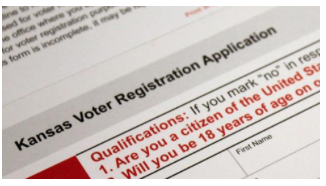
Registering to vote in the upcoming Kansas primaries? A federal court ruling issued last week means you won’t need your passport, birth certificate or other citizenship papers to do that.
But Kansas Secretary of State Kris Kobach plans to appeal. So what happens next? Here’s a summary based on interviews with legal experts.
File photo -Kansas News Service
The status check
The lawyers who sued Kobach (the American Civil Liberties Union and attorneys from private law firms volunteering their time) are busy checking whether he’s complying with the ruling.
Kobach has a whole laundry list of things to do, from making sure state websites are updated to telling previously blocked voters that they can now vote.
By early July, U.S. District Judge Julie Robinson wants to hear from both sides on whether he’s living up to that.
She’s monitoring it closely after finding the secretary in contempt for ignoring her orders — and after sanctioning him for “repeated and flagrant violations” of evidence rules for trial. (Robinson ordered him to go get some extra lessons in lawyering.)
The Court of Appeals
Kobach has to appeal by mid-July and says he’ll do so. It could take more than a year for a decision from the 10th Circuit Court of Appeals. Both sides would need to file new briefs and offer oral arguments.
Kobach can ask the judges to expedite his case because it affects elections and voter rights. If they agree, their decision may move faster.
Either way, said Rick Hasen, a law professor at the University of California-Irvine, the appeals court already partly weighed in on this case when it upheld an earlier court order against Kobach.
“A further appeal,” Hasen said, “would be unlikely to succeed.”
The 2018 elections
In the meantime, elections are on the horizon. The deadline for registering to vote in the Aug. 7 primary is July 17.
Before last week, Kansas was in a confusing spot because a preliminary court order had blocked part of its proof-of-citizenship law, but not all of it.
All you need to know now is this: You really, truly do not need citizenship papers to sign up for voting. If you see anything saying you need those documents to register at specific locations — such as your local driver’s license bureau — that information is out of date.
Footing the bill
Kansas taxpayers are on the hook for attorney fees unless an appeal upends the current ruling. So far the ACLU has filed for $52,000, but that’s just a sliver of what could be coming. Just how much?
“A substantial amount,” said Mark Johnson, a Kansas City lawyer who has yet to file his request for fees. “I’m sure that the defendant will not be surprised to hear that.”
He and others who worked on the lawsuit haven’t finished their calculations yet, and it’s possible fees wouldn’t be paid until appeals are done.
The new guy
In January, one of six men vying for Kobach’s job will take office and replace him as defendant.
Since the appeal likely won’t be done, that person will have the power to continue or kill it.
The lone Democrat in the race wants to kill it. The five Republicans are divided on the matter, but most want to press forward and turn the case in part, or wholly, over to the attorney general’s office.
Remember, Kobach acts as his own lawyer. Lumen Mulligan, a law professor at the University of Kansas, says handing off to the attorney general would be a return to the norm.
“That office is staffed up with lawyers,” he said. “They have an appellate division.”
The Supreme Court
Kobach could flat out lose his appeal. Or win. Or get a mixed result.
Last week’s ruling was actually two court cases wrapped in one. The first, based on federal law, overturned the proof-of-citizenship requirement as it applied to driver’s license offices. The second was a constitutional argument that proved more effective: It convinced Robinson not just to stop the law at driver’s license offices, but to block it everywhere else in Kansas, too.
So the appeals court could, for example, agree with how she handled one claim but not the other. Kansas could end up in a situation again where the citizenship requirement applies to some voter registration applications, but not others.
Kobach seems eager to press the case all the way to the U.S. Supreme Court, if necessary. Assuming the 10th Circuit appeal fails and his successor wants to go that route, would the country’s highest court take the case?
There’s no way to know. But the Supreme Court rejects the vast majority of requests for review.
Hasen says the justices are more likely to wade into “circuit splits” — when two appeals courts are at odds on the same question.
“There’s no such ‘circuit split,’” he said, “involved in this case.”
Celia Llopis-Jepsen is a reporter for the Kansas News Service. You can reach her on Twitter @Celia_LJ.