At approximately 1:20 a.m. Sunday, Russell County 911 received calls reporting a swimmer who was missing at Lake Wilson.
Callers reported the man attempted to swim out to a boat that had came loose and was floating away. At approximately 7:20 a.m. searchers recovered the body of a 35-year-old male, who was identified as the missing swimmer.
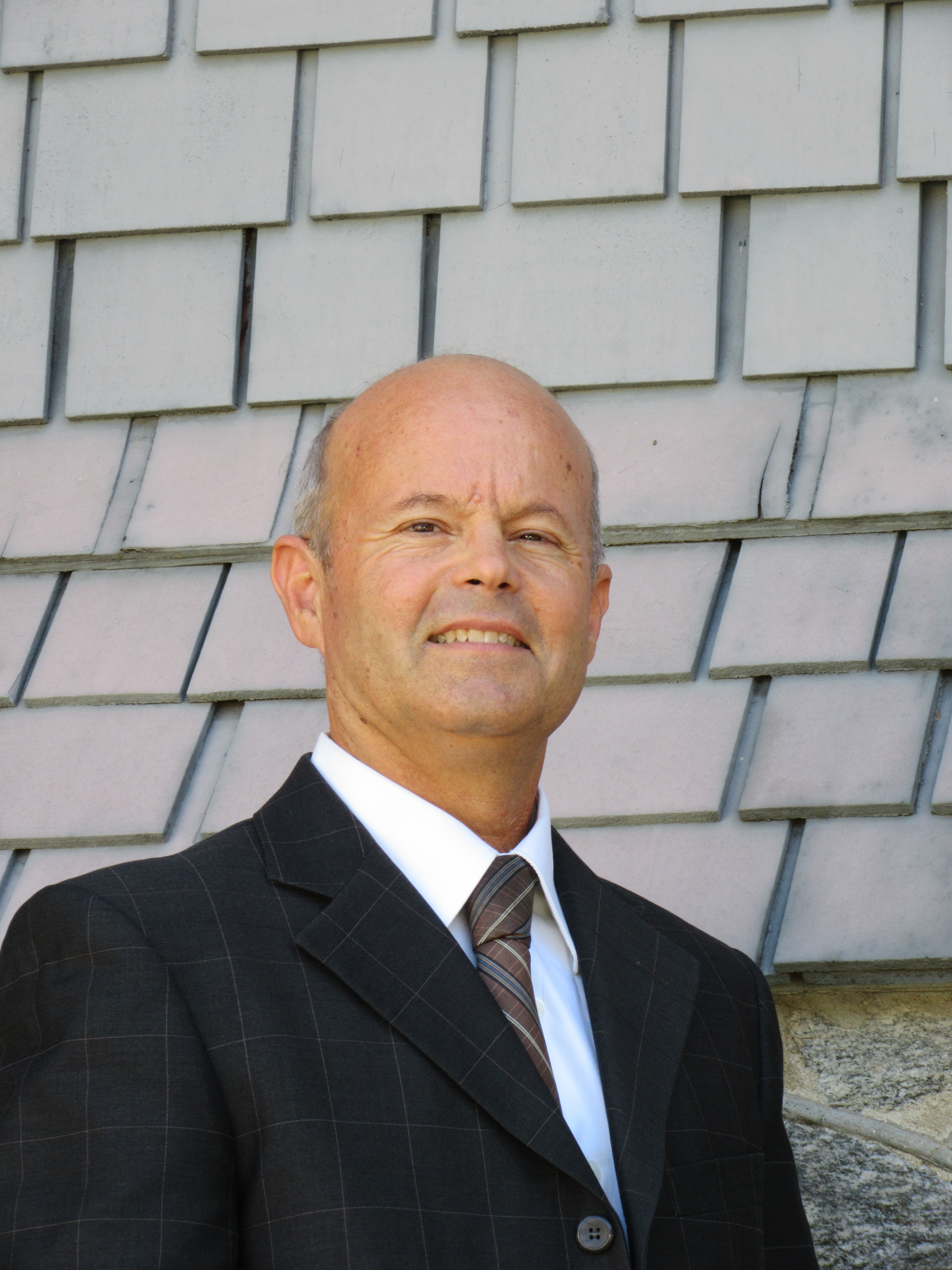
Terry BarberTerry Barber, the founder of Lighthouse Catholic Media – the well-known distributor of evangelical CDs – will be the featured speaker at Divine Mercy Radio’s eighth annual banquet, beginning at 6 p.m., Saturday, Sept. 8 in the Little Theater of Holy Family Elementary.
Barber will speak on the “Ten Commandments of Sharing Your Faith,” where he will tie personal, humorous stories into realistic ways all Catholics can be evangelists.
In addition to speaking at Divine Mercy Radio’s banquet, Barber will speak on “The Eucharist, the Summit of our Faith” on Friday, Sept. 7 at Hays’ Catholic schools, gearing the talk to the appropriate age groups. The presentation to Thomas More Prep-Marian Junior and Senior High Schools will be at 8 a.m. in the school’s theatre. In the afternoon, Barber will speak to kindergarten through second grades from 1:45 to 2:15 p.m. and to third through sixth grades from 2:30 to 3 p.m. at Immaculate Heart of Mary Church.
Barber is not only the founder of Lighthouse Catholic Media, but he also established St. Joseph Communications and The Catholic Resource Center. Barber is the co-host of the Terry and Jesse Radio Show, which airs on Divine Mercy Radio at 10 a.m. Wednesdays and 11 a.m. Saturdays. He is the author of “How to Share Your Faith with Anyone,” which has received endorsements from the Archbishop of Los Angeles, Most Rev. Jose H. Gomez, author and speaker Stephen Ray and Catholic Answers President Karl Keating. Currently, Barber is working on another book, which is due to be published this year.
Tickets for the banquet are $45 if purchased before Aug. 15. After Aug. 15, the ticket price goes up to $50. The banquet includes hors d’oeuvres with wine and beer as well as a full meal, including salad, choice of steak with wild mushroom demi glaze or Mediterranean chicken, chive mashed potatoes, autumn vegetable medley, dinner rolls and French silk pie or lemon berry mascarpone cake for dessert. Tickets are available online at dvmercy.com, by calling the studio at 785.621.4110 or coming to Divine Mercy Radio at 108 E. 12th St. in Hays during office hours, which are 8 a.m. to 4 p.m. Monday through Friday.
Divine Mercy Radio, KVDM, Hays and KRTT, Great Bend, can be heard on the radio dial at 88.1, on the internet at dvmercy.com, on the free smart-phone app by typing in “Divine Mercy Radio” in the app or play store, and is on Amazon echo by saying, “Alexa, enable the Divine Mercy Radio skill.”
— Submitted
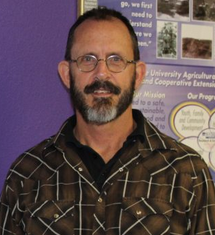
Rip WinkelWith vast geographic distribution and a plethora of vulnerable host plants, the irregular looking field dodder (Cuscuta campestris) is one of the most widespread and most harmful pests among the flowering parasitic plants. Field dodder can easily become a problem in flower gardens, vegetable gardens (e.g. tomato, sweet pepper, potatoes and cabbage), or possibly even show up in greenhouse crops. The most devastating damage, however, comes from field dodder outbreaks in newly-established perennial legume crops (alfalfa, clover, etc.), which are generally the preferred hosts of this plant species.
Field dodder may be known by common names such as strangleweed, witch’s hair, or devils’ hair. It is composed of golden yellow, leafless “threads” that twine all throughout and over its victim plant as well as those plants around it. These threads attach themselves with short, suction-cup-like suckers that originate from the base of the dodder stems. The suckers will then penetrate the stems of host plants where it will access all of its needed nourishment.
Because this plant is an annual it must replicate from seed, ergo flowering is crucial to its survival. The flowers of the field dodder are small, whitish, and 1/4 inch in diameter. They appear on the plant anywhere from April to October and will produce a seedpod that is two-celled and four-seeded.
Plants growing in the current season will be killed by the first frost of the fall. The seeds might sprout the following spring, or they may lie dormant for a number of years. Germination for this plant takes place in the soil, but interestingly the field dodder’s roots die as soon as the plant finds and penetrates an acceptable host. After attachment, the field dodder leeches its nourishment totally from the host plant. A single dodder plant can spread by branching and attacking additional host plants.
The field dodder cannot be destroyed by pulling it off the host plants. This is because remaining stem pieces will continue to grow, re-establishing itself once again. Destroying the host plants can control dodder. This method, however, usually is not too favorable a solution for many a gardener nor farmer. Chemical control can be had by using Trifluralin (Preen, Miracle-Gro Garden Weed Preventer, Treflan, Hi-Yield Herbicide Granules Weed and Grass Stopper). It is a pre-emergent herbicide that can be used for control if applied before the dodder seed germinates. This may be your best option. There is always glyphosate (Round-up, Kleen-up, Killzall, etc.), which is quite effective on dodder. However, glyphosate is a nonselective herbicide and will kill whatever it hits, including the host plants.
Rip Winkel is the Horticulture agent in the Cottonwood District (Barton and Ellis Counties) for K-State Research and Extension. You can contact him by e-mail at [email protected] or calling either 785-682-9430, or 620-793-1910.
The Hays Police Department will be conducting training on July 31 between the hours of 3 and 7 p.m. at 317 East Fifth.
Police officers will be training with special tactical equipment. This training is being done with great care and safety.
As a homeowner, you may see law enforcement officers move through your area. There is no need to be alarmed. The officers are merely conducting a realistic training exercise and there is no danger to the community.
If you have any questions or concerns, you may contact the on-site supervisor (Team Commander Tim Greenwood or Team Leader Aaron Larson), or Chief Scheibler at 785-625-1030.
Dale Douglas Marshall, 79, passed away on July 26, 2018 at the County Living Memory Care in Larned, Kansas.
He was born on April 13, 1939 in Ness City the son of Elmer and Helen (Bieber) Marshall. He was raised in Bazine and graduated in 1957 from the Bazine High School. He was a member of the United Methodist Church, Bazine.
He married Jeanette Keatley on July 13, 1958 and they were later divorced. They had two daughters, Marsha Kay and Melody Ann. He married Beth Willie in 1988 and they were later divorced.
He first worked at Nusser’s in Jetmore and then started Marshall Auto Sales and Salvage in 1960. He ran it for over 57 years! He loved going to auctions, red-fast cars were his passion especially Chevys. He would watch NASCAR racing and cheer on Dale Ernhardt Jr. His favorite show on TV was Lawrence Welk, he loved the singing and dancing especially Bobby and Sissy. He patronized and socialized at the Big Round Table at the Cactus Club where he ate his favorite food, fried chicken.
Dale is survived by his daughters, Marsha (Mike) Harrison of Ness City and Melody (Darrell) Hilligoss of Sand Springs, OK and three granddaughters, Angela Langer, Michelle Boyacioglu, and Chezney Kelley.
Friends may call at Fitzgerald Funeral Home, Ness City on Saturday, July 28, 2018 from 9:00 A.M. until 9:00 P.M. with the family present from 5-7 P.M.
Funeral Service will be on Sunday, July 29, 2018, 2:00 P.M. at Fitzgerald Funeral Home with burial following in the Bazine Cemetery.
Memorial Contributions may be given to the Christ Pilot Me Hill.
Memories and words of support may be shared with the family by writing in the guest book at www.fitzgeraldfuneral.com.
“Symphonic Expedition” is the theme of the Hays Symphony Orchestra’s 2018-19 season, and it looks like it will be its most glorious venture yet. Under the baton of Shah Sadikov and a host of symphony guild volunteers, the HSO has made steady gains in every direction – innovative repertoire that appeals to a wide range of interests, high quality concerts, and post-concert opportunities for artists and audiences to mingle while enjoying delicious refreshments.
And all this is provided by generous sponsors. Every concert is free and open to all who wish to attend.
For the first time ever, musicians from the FHSU Department of Music and the HSO will perform a pre-season pops concert, from 6:30 to 9:30 p.m. Friday, Aug. 24, at the Downtown Hays Pavilion, 10th and Main, as part of the Hays Arts Council’s Fall Gallery Walk.
The official season-opener will be at 7:30 p.m. Saturday, Sept. 8, in the Beach/Schmidt Performing Arts Center in Sheridan Hall on the FHSU campus. Guest pianist Behzod Abduraimov and the orchestra will perform the “Piano Concerto in A minor,” by Edvard Grieg.
Abduraimov, a native of Uzbekistan, is well-known throughout Europe and the United States. Grieg’s piano concerto is one of those rare compositions that keeps on thrilling audiences whether they have heard it once or a thousand times.
Among other concerts will be the annual Children’s Halloween Concert, with its costumed parade around Beach/Schmidt, featuring Igor Stravinsky’s ballet “The Firebird,” adapted by Catherine Trietschmann and directed by Erin Renard, with local actors.
A Winter Vespers concert in St. Joseph Church, Dec. 1, 7:30 p.m. will star the orchestra and FHSU choirs in Handel’s “Messiah.”
The New Year also holds great promise, with a Valentine’s concert, a Viennese Classics concert, the annual New Music Festival and the Cottonwood International Baroque Masters Festival. The HSO and FHSU Choirs will collaborate in the Grand Finale Concert, with a performance of Rutter’s “Gloria,” Tchaikovsky’s “Pathetique” (Symphony No. 6 in B minor) and the world premiere of a composition by FHSU’s own Dr. Tim Rolls.
Tickets for all concerts can be reserved on the Symphony’s recently launched website – www.hayssymphony.org.
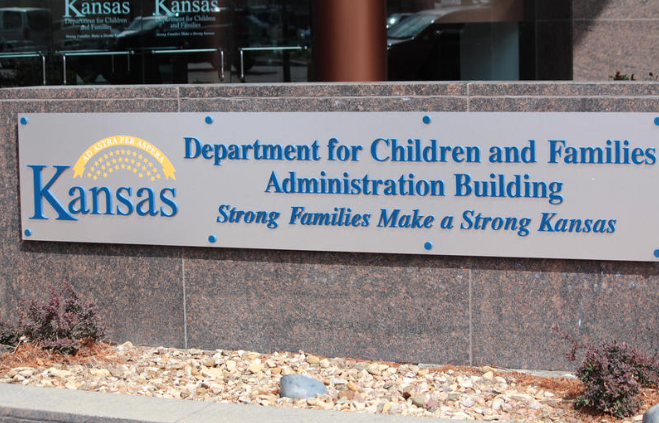
The number of children in foster care in Kansas went down in May and June, the first such two-month drop in more than a year.
The Department for Children and Families reported fewer kids in foster care in the past two months, its first consecutive drop in more than a year. MADELINE FOX / KANSAS NEWS SERVICE
The Department for Children and Families reported 7,588 children in its custody at the end of June. Though the number of kids in care has dipped several times in the last year, it usually bumps back up. This is the first time DCF has had a two-month drop since December 2016.
University of Kansas economist Donna Ginther said that foster care numbers are headed in the right direction, that but it’s too early to tell if that indicates real change in Kansas child welfare.
“The fact that they’re removing fewer kids two months in a row is a good thing,” she said. “I don’t think it’s a trend yet.”
Ginther, who’s been leading a study examining the effect of Kansas welfare policies on foster care numbers, said she’d look for six months or more of consistent drops to indicate a turnaround at the agency — though she said DCF’s recent leadership change and the increased scrutiny from lawmakers could be making a dent in the state’s skyrocketing child welfare caseload.
Agency officials take a more optimistic view.
“We have been working diligently to change the landscape of child welfare in Kansas,” DCF spokeswoman Taylor Forrest said in an email.
Forrest said DCF credits the drop to a renewed focus on getting kids to permanency — usually reintegration with their families, adoption by another family, or, if they’re older, a transition to independent living — and opening up some DCF positions to people who aren’t licensed as social workers.
Casting a wider net for people to fill open positions “has allowed staff to spend more time focusing on prevention, keeping youth in their homes when safely possible,” she said.
The number of kids in DCF custody hit 7,048 in March 2017, and hasn’t dropped below 7,000 since.
DCF’s two contractors, St. Francis Community Services and KVC Kansas, have also been working to push down other numbers that indicate the system is overloaded. In September 2017, lawmakers were horrified to learn children in custody were spending the night in the contractors’ offices because beds couldn’t be found.
After hitting a high of 85 children sleeping in offices in April, the two contractors have driven that number down to almost zero. KVC, which handles the eastern half of the state, hasn’t had any children stay overnight in offices since May. St. Francis, in the west, kept the number of overnight stays in the single digits in June and July.
Children end up in offices overnight when there aren’t enough homes for those who are hard to place — often kids who need psychiatric help, children with behavioral issues, or older children.
Both contractors have been actively recruiting foster parents and opening up new group homes for kids needing round-the-clock supervision as they cope with the psychological symptoms of trauma.
Additionally, 85 children in DCF custody are missing or have run away. That puts DCF right around the 2016 national average with 1 percent of the kids in its custody unaccounted for. Forrest said the number of runaways is often higher in the summer because of the warmer weather and time off school.
LOGAN – The Dane G. Hansen Foundation, Logan, announces two workshops open to the public to learn more about the Strategic Doing process.
Since April of 2017, the Hansen Foundation has contracted with Betty Johnson, a certified Strategic Doing facilitator, to work with northwest Kansas counties to assess their needs and develop solutions using Strategic Doing. Many positive changes are underway as a result of this work.
The process is one that can be used over and over again in a community. It is offered as a tool to help communities continue creative and innovative work.
The workshop will teach participants how to better utilize local networks, strengthen collaborations, guide conversations for better understanding, how to promote action and ultimately, engage in successful projects.
Strategic Doing teaches how sharing values and building trust can be used to create strategic opportunities, while doing away with hierarchies and turf battles that impair progress in our communities.
The workshops will be held from 9 a.m. to 4 p.m. on August 16th at the Student Union at NCK Tech in Beloit, and again on August 22nd at the Student Union at Colby Community College in Colby.
Facilitators will be Betty Johnson and Tara Vance, director of the Norton County Community Foundation.
There is no cost to attend, however reservations are required. RSVP to: [email protected]. Be sure to note which workshop you will attend.
For more information on the content of the workshops, contact Betty Johnson, Betty Johnson & Associates, at [email protected] or 785-313-3632.
The exterior of Ness City High School’s tiny house.
By CRISTINA JANNEY Hays Post
The instructor of the building trades class at Ness City High School will speak about the school’s tiny house project at the international People’s Tiny House Festival Aug. 3-5 in Colorado Springs, Colo.
The buildings trades class, which is comprised of about 20 students, built its second tiny house this spring.
Brent Kerr, instructor, said the school could not afford to build a full-size house and, even if they could, it likely would be hard to sell in their small community.
Kerr and the school board saw the tiny house as a means of teaching students valuable building and carpentry skills.
“Not every school gets the opportunity to build a house. I know there was no way to build a large house in Ness City,” Kerr said. “In the tiny house, the students did all electrical. We didn’t use an electrician, but we had everything checked. They did the HVAC, plumbing, siding, windows and doors. They got to do the whole deal.”
Kerr and his students were a featured attraction at annual Western Kansas Technology Education Fair at Fort Hays State University this spring. The school brought the house, which was in progress at the time, and opened it up for tours.
The house has since been completed and is for sale on a lot in Colorado.
Ness City High School’s tiny house kitchen.
Kerr said by speaking at the tiny house festival, he hoped to not only promote the teaching of building trades through the construction of tiny houses, but also find a buyer for the school’s tiny house.
If the house does not sell by the festival, Kerr hoped to transport the home to Colorado Springs and exhibit it there.
The school is asking $57,000 for the house. The funds raised from the house’s sale will go into the construction of a third tiny house and to upgrade NCHS shop equipment. Kerr said if the tiny house program continues to be successful, he would like to create a scholarship for NCHS students seeking post-secondary study in technical trades.
Much of the NCHS tiny house was custom built, including the concrete counter tops. The home is only 200 square feet, but includes a sleeping loft, bathroom and kitchen.
Gloria VonFeldt of Victoria is part of the tiny house movement and a promoter for the Colorado Springs festival.
She lives with her sister in a standard house now, but dreams of owning a tiny house and using it for travel.
VonFeldt and festival founder Marcus Alvarado said buying and living in a tiny house is more than economical living, it is about sustainable living. Tiny houses make a smaller environmental footprint. Some choose to have their tiny houses classified as RVs, so they can move with jobs or for travel.
Ness City High School’s tiny house loft.
Others use the tiny homes for bed and breakfasts for extra income, yet others are baby boomers who want to downsize and live more simply. Yet others see tiny houses as a way to address social issues, such as homelessness, especially in metro areas where space is at a premium and housing is expensive.
The Ness City tiny house is right in line with want a tiny house can run. It varies greatly depending on the materials used, the square footage and how much labor the owner wishes to put into the project. Most tiny homes run between $60,000 and $120,000.
Ness City High School’s tiny house bathroom.
The festival has assembled a variety of speakers and panels, who will discuss topics such as travel, construction, buying a tiny home and zoning, which differs from city to city and state to state.
The festival will also feature booths and vendors centered on sustainable living through other means. Alvarado said this year’s festival is expecting as many as 20,000 people from 31 states and six countries.
OVERLAND PARK, Kan. (AP) — A second Overland Park teenager has been charged with firing a flare gun into several occupied apartments earlier this year.
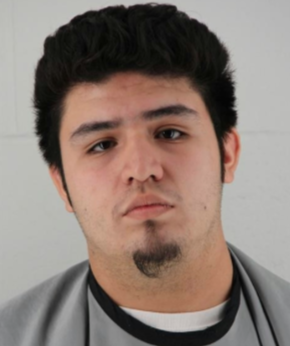
Samano -photo Johnson Co.
18-year-old Luis Fernando Samano was charged Friday with four counts of felony aggravated arson and one misdemeanor theft charge. His bond was set at $500,000.
Police say flares were fired into four apartments Overland Park in April.
All four apartments were occupied at the time, but no one was injured. One fire ignited but it was quickly put out by firefighters.
A 17-year-old was charged in June with four aggravated arson counts in the court’s juvenile division.
Samano’s first court appearance is scheduled for Monday.










 Today
Today