LOGAN—The Dane G. Hansen Museum’s Continuing Education Program is excited to have local artist, Staci Hartman teach a 2-day oil painting workshop at the Dane G. Hansen Museum Sept. 7 and 8.
At this workshop, Staci will introduce oil painting basics, demonstrate techniques, and guide students in color development.This workshop is ideal for beginners as well as more advanced painters.
Students will work on value changes in a landscape; learn to add drama to their work, and take their painting from a representation of a photo to a work of art.
Cost of the workshop is $120 with discounts available for patron and sustaining Hansen Museum members.Artists may call 785-689-4846 for more information.
Hartman is a signature member of Oil Painters of America. She has been privileged to study with nationally recognized artists Kaye Franklin, Howard Friedland and David Vollbracht.
Museum hours are 9 a.m. to noon and 1 to 4 p.m. Mondays through Fridays; 9 a.m. to noon and 1 to 5 p.m. Saturdays; and 1 to 5 p.m. Sundays and holidays.The museum is closed Thanksgiving, Christmas and New Years. The museum is handicapped accessible and admission is always free thanks to the generous support of the Dane G. Hansen Foundation. For more information about this and other exhibits, contact Shari Buss at 785-689-4846.
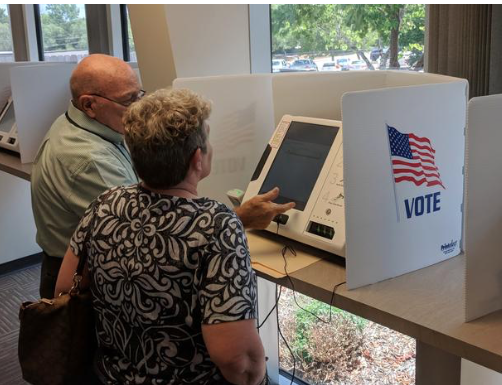
A ‘backend coding issue’ is to blame for the long delay in processing election results in the Johnson County primaries, according to the equipment company. SCOTT CANON / KANSAS NEWS SERVICE
Nebraska-based Election Systems & Software (ES&S) issued an apology Monday, taking responsibility for the delay. Gary Weber, vice president of software development for ES&S, said it came down to a “non-performing” piece of software, which caused slow processing of the 192 encrypted master thumb drives that held the votes.
“There were several different things that all kind of came together on election night that really exposed this section of code, and exacerbated the problem,” Weber said.
Part of the issue was a failure to test the system with the actual number of ballot positions that a Johnson County voter would see on August’s ballot. ES&S conducted many tests ahead of time, but Weber told KCUR that if they had increased the capacity in the tests, they would have likely run into and identified the coding issue ahead of the election.
Moving forward, he said, the company has expanded the numbers of contests and candidates for testing of the systems.
Weber emphasized that the flawed software in question is separate from the vote tallying software and the voting machines.
The delay in August called into question the seeming last-minute purchase of ES&S equipment this year, two years after the Johnson County Election Commission approved $13 million to replace 15-year-old voting machines. The commission didn’t select ES&S until earlier this year, and the selection wasn’t certified until July.
“We were coming under the wire on getting the version of the software certified and ready to go for this election, but the voting machine itself, and waiting ’til late in the game like it may appear that we did, had no bearing on that,” commissioner Ronnie Metsker told KCUR.
After conducting an investigation, ES&S has rewritten the software code, which the company said it will submit for federal certification later this week. Kathy Rogers, senior vice president of government relations, said it usually takes about a month for approval.
At that rate, Johnson County may not see the updates installed until early to mid-October. But Rogers told KCUR it will be enough time ahead of the general election Nov. 7.
“Plenty of time,” she said. “We’ll be doing testing here, Johnson County will be testing concurrently, we’ll continue testing, and also, testing will be ongoing at the lab.”
The Johnson County Election Office also plans to install an additional thousand voting machines and hire 1,000 more workers to ease issues voters reportedly experienced at the polls in August.
After 12 years as the executive director of The HaysMed Foundation, Ruth Heffel has announced her retirement set for August 31.
Heffel has guided The Foundation through major growth and established processes that will continue to offer structured expansion opportunities for generations to come.
“I have been so blessed with the opportunity to meet and work with exceptionally skilled and dedicated doctors, nurses, and staff at the medical center. Their concern for our patients is truly heartfelt. The Foundation has also been extremely fortunate to have passionate, influential board members whose mission is to help HaysMed thrive. Their work has assisted people of all ages, from newborns to seniors, who have had their health restored here. To them I offer my sincerest thanks,” Heffel said.
Stepping into the executive director’s office will be Jeff Brull, who joined the team last September as a development officer.
Brull
Brull has Bachelor of Arts and Master of Science degrees in Communications from Fort Hays State University and served most recently as Advancement Director at Thomas More Prep-Marian Junior-Senior High in Hays. He is married to Julie Brull, and together they have three children.
“I am excited by the challenges before us because of the opportunities they represent to serve the region through the work of the HaysMed Foundation. I am passionate about western Kansas and will continue to build on the legacy established under Ruth’s leadership through the HaysMed Foundation Board of Directors and the many generous donors and advocates who make life better for us all,” said Brull.
The Foundation provides vital philanthropic support to help fund life-saving equipment, special projects and programs for HaysMed that will positively impact the health of our region. Examples include spearheading capital construction projects and vital medical equipment purchases that expand or improve medical services, providing resources for associate improvement through certification and conference opportunities, and by underwriting programs like the annual community flu vaccination drive, community CPR training, scholarships, and more.
Dianne C. Matreci, age 69, of Hays, Kansas died Friday, August 24, 2018, at Via Christi Village Care Center, Hays, Kanas.
She was born January 24, 1949, in Chicago, IL to August and Lucille (Casey) Matreci.
She worked for LSI of Wichita as a purchasing specialist for a number of years and retired in 2008. She moved to Hays, Kansas in 2015. Dianne grew up in Wichita, Kansas and was a 1967 graduate of Kapaun Mount Carmel High School. She attended the Blessed Sacrament Catholic Church in Wichita, was active in the PTA in her children’s schools and she was one of the original, soccer moms.
Survivors include two sons, Daniel Keller, Ft. Worth, TX; Travis Keller and wife, Shelly, Hays, KS; one daughter, Jerri Keller, Tampa, FL; her former husband, Byron Keller, Wichita, KS; one brother, Bob Matreci, Santa Rosa, CA; four sisters, Mary Goodnight and husband, Tom, Lakeland, FL; Kay Green and husband, Walt, Golden, CO; Gayle McNurlen, Plano, TX; Denise Deming, Manitou Springs, CO; six grandchildren, Kalie, Jordan, Nikki, Maddie, Benjamin and D J; and a number of nieces and nephews.
She was preceded in death by her parents; one son, Steven Keller; step-mother, Eleanor Matreci; one sister, Jeanine Clark; one sister-in-law, Vicki Matreci; and one nephew, Eric Deming.
Funeral services are at 10:00 A.M. Friday, August 31, 2018, at Blessed Sacrament Catholic Church, 124 N. Roosevelt, Wichita, Kansas. Burial will be in the Kechi Township Cemetery, Kechi, Kansas.
The family suggest in lieu of flowers memorial to the Dementia Society of America, P.O. Box 66 Doylestown, PA 18901.
Condolences can be left by guestbook at www.keithleyfuneralchapels,com or can be sent via e-mail to [email protected]
William “Bill” or “Bo” Bobek passed away at his home in Plainville, Kansas on August 27, 2018. He was 96 years old.
Bill was born in Breezyhill, Kansas on January 30, 1922 to Louis and Paulene (Goveshek) Bobek.
After living through the Great Depression and working at a CCC camp in Utah, Bill served in the United States Navy from December 10, 1942 to December 30, 1945. He served during World War II and crossed the Equator three times during his tour of service. Bill and Tina Hamel met at Leta’s Café in Plainville where she worked as a waitress. He won her heart when he left a silver dollar under his plate each day she served him. They were married on September 10, 1960 in Plainville where they raised three children. Bill spent most of his working life as a tank setter in the oilfield. He and Tina purchased B&M Recreation in 1977. It later became known as Tina’s Recreation, a place fondly remembered by many. He enjoyed spending his later years with family, friends, and their three puppies, Sophie, Toby, and Lucy.
Bill was preceded in death by his parents; two brothers, Rudy and Louie (Bill’s twin); and three sisters, Madeline, Christina, and Helen.
He is survived by his wife of the home; daughter, Kayla (Rocky) Hamblet; sons, Kris (Stacey) Bobek, and Kevin (Shari) Bobek; seven grandchildren, Lindsey Hamblet, Lacey (Kenny) Sweeney, Landon Hamblet, Samantha Bobek, Colton Bobek, Dalton Bobek, and Simone Bobek; and two great-grandchildren, Tripp and Twynn Tetuan.
A Mass of Christian Burial will be held at 10:30am on Thursday, August 30, 2018 at Sacred Heart Catholic Cemetery in Plainville. Burial will follow in the Sacred Heart Cemetery. Visitation will be from 1:00-8:00pm on Wednesday at the funeral home with a Vigil Service and Rosary at 7:00pm. Family will receive friends from 6:00-8:00pm.
What would a sweltering summer day be like without an occasional stop at the local ice cream parlor for a couple scoops?
Can you imagine eating piping hot chocolate cookies without a frosty glass of milk?
Imagine sipping a buttery glass of chardonnay without a couple of pieces of aged cheddar.
John Schlageck is a leading commentator on agriculture and rural Kansas. Born and raised on a diversified farm in northwestern Kansas, his writing reflects a lifetime of experience, knowledge and passion.
Every day in this great country of ours we can partake of these wholesome, nutritious dairy products; but if there were no dairy farmers, dairy cows or dairy industry, there would be none of these tasty treats.
Dairy products remain a major source of nutrients in our daily diets. If they’re not, they should be.
To find another source for the 300 milligrams of calcium found in either an eight-ounce glass of milk, a cup of yogurt or 1 ½ ounces of natural cheese, the average person would have to graze on eight cups of spinach, six cups of pinto beans or two and one-half cups of broccoli, according to the Midwest Dairy Association.
The primary nutrients found in milk and other dairy products are calcium, vitamins A and D, carbohydrates, phosphorus, magnesium, potassium, riboflavin and high-quality proteins.
U.S. dairy farmers provide an estimated $140 billion annually to this nation’s economy. Dairy farmers help sustain rural America. Even considering this nation’s continuing economic challenges, dairy farmers and companies are a lifeline to 900,000 jobs in this country.
Dairy is local. Dairy farm families are business owners. Every glass of milk and each dairy product produced by these family businesses brings vitality to local and state economies.
Kansas farms generate approximately $537 million in milk sales annually. In Kansas, the average dairy cow produces about seven gallons of milk per day. That’s more than 2,585 gallons of milk over the course of a typical year.
Growth in the Kansas dairy industry means economic growth and access to safe dairy products for local communities and the state. The Kansas ag growth dairy strategy has identified the expansion of the influence, presence and professional standing of the Kansas dairy industry as a priority.
This development has been fueled by the arrival of large-scale dairy operations, primarily in western Kansas. Milk production has doubled since 1994 and grown more than 25 percent in the last five years. There are now about 290 dairies in the state, milking 154,000 cows. It takes about 48 hours for milk to travel from the farm to the dairy case.
As in nearly every sector of the agricultural industry, the United States has more milk production than any other country in the world. This country has six major breeds of dairy cattle: Holstein, Jersey, Brown Swiss, Guernsey, Ayrshire and Milking Shorthorn.
Dairy cows begin producing milk after they calve, when they are about two years old. Most cows are milked twice a day in modern milking facilities that incorporate gentle machines attached and removed by dairy farmers.
Today, all milk sold in grocery stores is pasteurized during processing. During pasteurization, milk is briefly heated to a temperature high enough to destroy bacteria without affecting its flavor or food value.
Yes, since the first cow arrived in the Jamestown Colony back in 1611, America’s dairy farmers have been helping provide a healthy, nutritious food product. So, fill your glass with milk every day. Dip a couple scoops of vanilla ice cream on that piece of apple pie. Cut another slice of cheese for a summer snack. And give thanks to Kansas and America’s dairy farmers.
John Schlageck is a leading commentator on agriculture and rural Kansas. Born and raised on a diversified farm in northwestern Kansas, his writing reflects a lifetime of experience, knowledge and passion.
CAMDEN, Mo. (AP) — Authorities are blaming excessive speed for a boat crash that killed three people from Kansas at Missouri’s Lake of the Ozarks.
Ashley Lamb and Hailey Marie Hochanadel- photo courtesy GoFundMe
The Missouri State Highway Patrol released its crash reconstruction report more than three months after a 1991 Regal Runabout slammed into a rock bluff in the early morning hours of May 19. The report also said the “nighttime conditions” played a role, and noted that the boat lacked navigation aids, such as a chart plotter or GPS unit.
First responders working the fatal accident -photo courtesy Missouri State Highway Patrol
The crash killed 23-year-old Joseph LeMark, 24-year-old Daniel Lewis, and 21-year-old Hailey Hochanadel. LeMark and Lewis were from Overland Park, Kansas; and Hochanadel was from Olathe, Kansas. Two others including Ashley Lamb, 22, a senior at Kansas State University were injured.
Toxicology and autopsy reports have not yet been released.
Kansas gasoline prices have dropped nearly three cents per gallon in the last week, prompting AAA to list the state #8 among the nation’s top 10 largest weekly price changes. At $2.618, we’re down more than a nickel from a month ago, but we’re still paying 40 cents more than last year at this time. We’re still seeing $2.63 per gallon in Great Bend, and $2.62 most retailers in Hays. Triple-A reported the national average on Monday was nearly $2.84/gal.
Reuters is reporting the king of Saudi Arabia stepped in to block the initial public stock offering at Saudi Aramco. King Salman reportedly met with family members, bankers, and senior oil executives, including a former Aramco CEO, and heard warnings about tough new disclosure requirements possibly undermining, rather than helping, the kingdom. By late June the king pulled the plug on the IPO, but Reuters reports preparations were already slowing down. By April, Aramco stopped paying retainer fees to some of the banks working on the deal.
The Financial Times reports Aramco’s concession agreement with the state has now been limited to 40 years, from a previous contract that gave it access in perpetuity. The move came as part of the kingdom’s preparations for the now delayed stock market flotation of the company.
Rig counts plummeted across the U.S., but are on the increase here in Kansas. Independent Oil & Gas Service reported a 13% increase in the number of active drilling rigs across Kansas, 17 east of Wichita, up three, and 33 in the western half of the state, which is also up three. Operators report drilling underway at one site and drilling ahead at two more in Barton County. They’re about to spud two wells in Stafford County. And, completion activity is underway at two wells in Barton County, five in Ellis county and one in Stafford County. Baker Hughes reported 1,044 active U.S. drilling rigs, a drop of nine oil rigs and four seeking natural gas. Louisiana was down seven rigs, which the count in North Dakota was down four. Texas added three rigs. The count in Canada was 229 active rigs, up 17 for the week.
Kansas operators have filed 1,134 new permits so far this year, including 31 last week. There are 12 new drilling permits east of Wichita and 19 in western Kansas, including two in Stafford County.
Independent Oil & Gas Service reported 46 new well completions for the week, 12 east of Wichita and 34 in western Kansas. That brings the total to 996 so far this year. Of the 34 newly-completed wells west of Wichita last week, 14 were dry holes. There was one completion reported in Barton County, two dry holes in Ellis County, a dry hole in Russell County and one in Stafford County.
The U.S. Energy Information Administration is for the third time reporting all-time high domestic crude oil production of eleven million barrels per day, up from 10.9 million a week ago.
The government said also said U.S. crude-oil inventories dropped 5.8 million barrels, and are now down to the five-year average for this time of year. Imports were down 1.5 million barrels. Gasoline inventories were up another 1.2 million barrels and are about six percent above the five-year average
The Oklahoma energy industry is fighting back in Kingfisher County, where commissioners in May banned the practice of moving produced and treated water for oil and gas operations through temporary pipes in ditches along county roads. The county still allows those pipes, but only to transport fresh water. The Oklahoma Oil and Gas Association filed suit, asserting that state law gives the Corporation Commission exclusive jurisdiction over oil and gas operations. The Daily Oklahoman reports the change could add millions of dollars in costs, significantly increase truck traffic and increase the use of fresh water when companies previously relied on recycled oil-field water.
The State of Texas is asking the federal government for at least $12 billion for a nearly 60-mile “spine” of concrete seawalls, earthen barriers, floating gates and steel levees…flood protection in anticipation of more and bigger storms along the Gulf Coast. The project would stretch from the Louisiana border to the industrial enclaves south of Houston, one of the world’s largest concentrations of petrochemical facilities, including nearly one-third of the nation’s refining capacity. Last month, the government fast-tracked an initial $3.9 billion for three separate, smaller storm barrier projects to protect oil facilities.
Operators are using ever-increasing amounts of water to fuel the fracking boom in the Permian Basin. A study out of Duke University found that the region’s water use in hydraulic fracturing went from nearly two Olympic-sized swimming pools (4,900 cubic meters) per well in 2011, to 42,500 cubic meters per well in 2016 — an increase of almost 800 percent.
A candidate for Governor of New Mexico is calling for that state’s first toll roads to serve the New Mexico side of the booming Permian Basin. One of the most productive oil and gas areas in the world also boasts some of the most dangerous roads. Steve Pearce told a group of business leaders his plan would be financed by private companies, without taxpayer dollars, and would ultimately be maintained by tolls. Pearce estimates the initial run of 130 miles of toll roads would cost about $260 million, and hopes it could be done in two years, according to reporting in the Hobbs (New Mexico) News-Sun.
ConocoPhillips says it has reached an agreement with Venezuela to recover nearly $2 billion awarded for assets seized by the government a decade ago. State-owned PDVSA has agreed to recognize the judgment and make the first $500 million payment within 90 days. The rest would be paid out over a period of four years. In exchange, Conoco agrees to suspend its legal efforts to seize a refinery and other assets in the Caribbean.
That’s basically what happened this weekend, with the annual summer Democratic convention getting the message that Sen. Laura Kelly, of Topeka, is going to be a candidate without the adrenalin of Republican Secretary of State Kris Kobach and without the attacks on incumbents of independent candidate Greg Orman.
That’s the general message that Democratic insiders—those who are willing to spend two days on internal party activities—got this weekend in Wichita.
It’s a rather low-key, businesslike campaign Kelly promised, with emphasis on telling Kansans the policy choices she thinks they are likely to want, such as continued adequate financing of public schools, expanding access to health care to the poor through Medicaid (KanCare) expansion, and less cumbersome access to ballots.
A lot didn’t happen at Demofest in Wichita. There was no public endorsement of Kelly by the two most prominent candidates who fought her for the gubernatorial nomination. Former Wichita (that’s hometown) Mayor Carl Brewer and former Rep./Kansas Secretary Agriculture Josh Svaty didn’t show up for that classic “we lost, and we support Kelly” photograph that would have sealed the party support for Kelly. Might have been that she won so dramatically, with Kelly’s 52% of the Democratic primary vote to Brewer’s 20 percent and Svaty’s 18 percent.
But the clear message that Kelly sent—in her effort to create that “Blue Tide” for Democrats to boost their number on the public payroll—is that she’s going to talk about running Kansas government. She’s talking basic duties of government, not flashy issues like immigration or driving around in Jeeps with machine guns on them, as does Kobach, or just tossing out experienced public workers and administrators, as is Orman.
That might make the fall interesting because Kansans tend to be—and like to remind others—that they are businesslike. Take care of the basic state government obligations to its citizens. That’s the job of the governor.
But, does that sell, err, get votes?
The gubernatorial campaign took an expected but so far relatively un-definable step last week when Orman was granted a slot on the November ballot. He’s talked about the “insiders” of the two major political parties running government, leaving the unaffiliated, or maybe just not very interested, at their will. It’s been mostly Republicans in recent years with that control, but he’s not assessed very publicly just what a governor without the backing of either of the largest groups of voters can accomplish.
And Kobach has continually talked about the Supreme Court—not elected legislators—determining just what is “adequate” in state aid for K-12 schools from border to border, high property valuation and low property valuation districts.
Kobach’s incessant campaign slamming what he calls loose immigration policy hasn’t really been defined for those who in urban areas need roofs reshingled, or in rural areas fences built, and in the livestock industry cattle reduced to pan-sized cuts of meat. Yes, those are industries in which immigration is economically necessary.
So, does Kelly turn the basic business of government into a key issue that will see Kansans look for a journeyman governor who knows from the inside—and the budget—just how state government works? It’s going to put a new, very basic, not-flashy platform before voters. And the real issue is, will it sell?
Now there are other Democrats on the ballot seeking statewide positions—insurance commissioner, treasurer, secretary of state—but those aren’t jobs that tend to galvanize voters. Anyone leave your car out in the heat to vote for state treasurer?
This may become a relatively dull, technical campaign. Or…not…
Syndicated by Hawver News Company LLC of Topeka; Martin Hawver is publisher of Hawver’s Capitol Report—to learn more about this nonpartisan statewide political news service, visit the website at www.hawvernews.com
Farrow also noted there have not been any change orders to date in the $28.4 million plan.
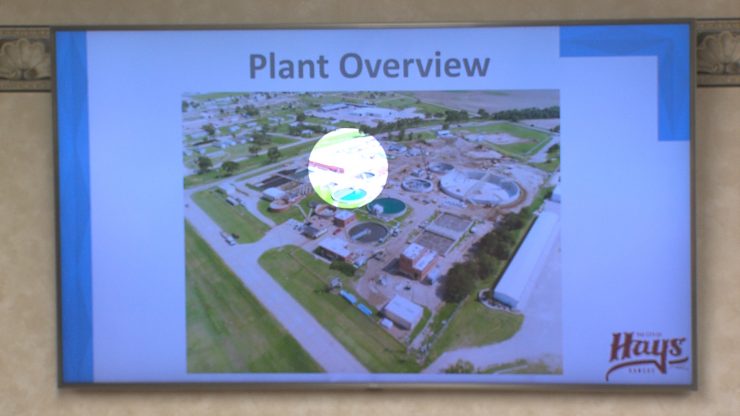
Within a couple of months, new wastewater will be flowing into the new structures on the plant site, 1498 E. U.S. Highway 40 Bypass, and begin the start up.
“We’re not quite to the point where we’re testing the equipment out yet. We’ve tested the tanks and the pipes and things to make sure those are within specification. The process equipment will be one of the next items [to be tested.]”
Farrow expects to have the liquid equipment train of the plant improvements tested and started up by his next report to the commission on October 25. “Beyond that is the solid train, and I’m sure we can share some of that with you then,” he said.
The rainy summer has not slowed the work at the plant site, according to Farrow, but it’s a different story at the Fort Hays Municipal Golf Course.
This pond at the municipal golf course will provide additional storage capacity for reuse water and ultimately, irrigation to the golf course.
The pond will provide additional storage capacity for the reuse water and ultimately, irrigation to the golf course.
“The golf course is in great shape but that also means the pond where we need to do some work is full of water,” Farrow said. “The city has made multiple attempts to pump down the water. With some dry weather, we hope to get out there. The contractor, M&D, just needs one to two weeks to get things in a position where we can start putting the final touches on the pond expansion.”
Farrow also talked about how the project is starting to work between the design/builder and the city.
“The infrastructure is my favorite thing to present an update on and it looks nice but we’re getting to the point where we have things like operational and maintenance manuals being developed. We have SCADA, which is the controls to the plant, getting developed.
“The city has been very forward in what its ‘asks’ are. I think the design/builder has delivered on that so far, just general operations and layout of the plant, so that staff is trained when we have that liquid start up going and then they are prepared when the first maintenance item comes up. I’m sure they’re excited about that,” Farrow joked.
“It’s coming together in that sense as well, both at the construction level and on the final operations side too,” he concluded.
The Burns and McDonnell/CAS Constructors team is design/builder for the project’s second phase for construction.
Hays initially had a Jan. 1, 2018, deadline to have the new wastewater treatment plant operating.
However, problems with CDM Smith, the Wichita firm hired for Phase 1 Design services and development of a GMP (Guaranteed Maximum Price) to rebuild the aging plant, caused a delay in the process. The city terminated that arrangement Aug. 18, 2016, after the Phase 1/Design portion of the contract was completed and awarded the Phase 2/Construction contract to Burns and McDonnell/CAS.
The Kansas Department of Health and Environment agreed to extend the completion deadline to Sept. 1, 2019.
The city was fined $18,000 in 2012 by the Environmental Protection Agency (EPA) for excessive levels of phosphorous and nitrate. The current wastewater treatment facility was built in 1953. The plant must be upgraded to meet stricter KDHE and EPA permit requirements.
Starting this week, the Kansas Department of Transportation will begin work on a mill and overlay project along K-27 in Wallace County.
Project work includes a 2 1/2-inch mill and inlay followed by a 1 1/2-inch overlay beginning at the Sherman County line and moving south to the Greeley County line. Traffic will be reduced to one lane and controlled by flaggers and a pilot car during daylight hours. Minor delays not exceeding 15 minutes should be anticipated. Work is expected to be complete by end of October.
Shilling Construction of Manhattan is the primary contractor for the project with a total contract cost of $4.5 million.
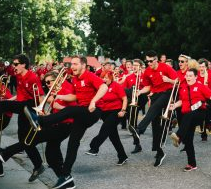
LINCOLN, Neb. — Alex Crowley of Hays is part of the University of Nebraska-Lincoln’s 300-member Cornhusker Marching Band, which will make its 2018 debut Sept. 1 at Memorial Stadium with pregame and halftime performances at Nebraska’s football season opener against Akron.
Crowley, a senior music education major, plays trombone.
This year’s band includes representatives from nearly every region of the country, though 80 percent of the students are from Nebraska. Twenty-five percent of the students are music or music education majors. The rest are studying in more than 70 other degree programs across campus. Each band member passed two auditions to gain admittance to the group.
Crowley
Anthony M. Falcone, associate director of bands in the Glenn Korff School of Music, is the director of the Cornhusker Marching Band. Douglas W. Bush is the assistant director of bands and assistant marching band director. Carolyn Barber, Ron and Carol Cope Professor of Music, is director of bands. Other band staff members are graduate teaching assistants Sarah Aymond, Christopher Brandt and Ruben Gomez. Leon Zajimovic is the percussion instructor, and Michaela Vestecka is the color guard instructor. Rose Johnson is the administrative technician, Jan Deaton is the office associate, and Nolan Schmit is the “voice” of the band.
The drum majors for the 2018 marching band are junior Jacob Coughlin of Omaha, senior Rachel Hoffman of Beatrice and junior Ethan Millington of Cortland. The twirlers are junior Hannah Kollmann of Oshkosh, Wisconsin, and freshman Kimberly Law of La Quinta, California.
The Cornhusker Marching Band, which resides in the Korff School, was founded in 1879 as an ROTC unit and is one of the oldest marching bands in the nation. The band has received many honors throughout its 139-year history, including a Distinguished Recognition Trophy presented by John Philip Sousa in 1927 and the John Philip Sousa Foundation’s Sudler Trophy in 1996. The Sudler Trophy is the highest honor given to collegiate bands.
The “Pride of All Nebraska” has been seen by millions of viewers on television. The band was the first collegiate ensemble to perform at all of the major football bowl games: Rose, Orange, Fiesta, Sugar and Cotton. The full marching band will travel to the Nebraska at Wisconsin game on Oct. 6.
For the full list of band members, visit https://go.unl.edu/xd07.