We have a brand new updated website! Click here to check it out!

Unveiling, sale of Wilson historic structure painting during Fall Extravaganza

WILSON – The Post Rock Opportunities Foundation has received a last minute offering from an area artist of his latest work featuring one of Wilson’s most historic structures.

Marge Lawson of Kansas Originals has announced a special unveiling and showing of the 60″ x 28″ fine art piece by Stan Shook during the Art & Fashion Extravaganza scheduled for Saturday October 20 at the Prairie Pallet Studio of George Eschbaugh, 3945 205th Rd., Wilson. The unveiling will take place at 5:45 p.m.

The piece will be for sale with partial proceeds going to the Post Rock Opportunities Foundation.

Stan Shook is the official photographer/artist for the National Drovers Hall of Fame, 217 N. Douglas Ave., Ellsworth.  He has been commissioned by NDHF to produce a series of fine art depicting historic structures throughout the area.  This one is the first in the series to be unveiled at a community event.

Tickets can be purchased online will also be available at the door.

– SUBMITTED –

Police ask for help to locate 4 suspects in Kansas fraud investigation

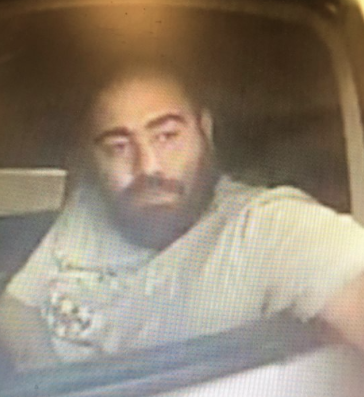
FINNEY COUNTY —Law enforcement authorities are investigating and asking the public for help to locate four suspects.

According to Garden City Police, two men and two women are wanted for questioning in connection with their fraud Investigation. The vehicles used in this incident are identified as newer model, silver, Toyota Tundra and light blue van.

Anyone who witnessed this incident, or has information related to this incident is asked to call the Garden City Police Department (620) 276-1300.

Photos courtesy Garden City Police

If you wish to remain anonymous you can call Crime Stoppers (620) 275-7807, or text your tip to Garden City PD, text GCTIP and your tip to Tip411 (847411).

Commission candidates talk budget, economic development, promoting county

By JONATHAN ZWEYGARDT

Hays Post

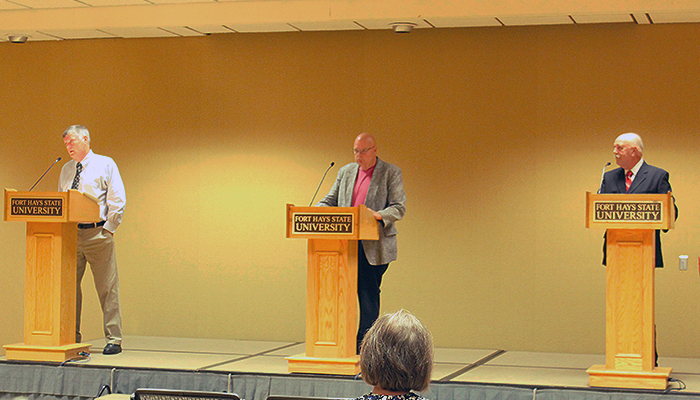
The three candidates running for the first district seat on the Ellis County Commission in the November general election took part in a debate Tuesday at Fort Hays State University.

Republican candidate Butch Schlyer, Democrat Chris Rorabaugh and Independent John Walz all took turns answering five questions, given to the candidates several days in advance, and questions from the audience at the event hosted by the FHSU Student Government Association and the university’s American Democracy Project.

The financial future of Ellis County, the number of commissioners and promoting economic development were among the topics discussed by the three candidates.

Republican Butch Schlyer and Independent John Walz called the budget current situation the most pressing issue facing Ellis County.

Schlyer, the former county health administrator, said information provided to him from County Administrator Phillip Smith-Hanes puts the projected deficit at almost $9 million in the next five years.

“A deficit that big is going to impact the people and citizens of Ellis County,” Schlyer said. “If we don’t decrease expenses, property taxes could go up by 17 mills or approximately 40 percent more than what you’re paying right now.”

He added cutting county expenses will affect services and the county has to operate differently in the future to help close the deficit.

“The old saying that you do more with less, that ship sailed five or six years ago in Ellis County,” Schlyer said. “If we cut expenses, we’re going to be cutting services.”

Walz, a long-time law enforcement officer and current Ellis County Sheriff’s Department employee, said he saw three options to balancing the budget — raise taxes, cut services or a county-wide sales tax.

He said none of the solutions are great but the budget deficit is a “major problem.”

“I think we are at the bottom of cutting, without losing services,” Walz said. “We’ll either lose services or they will slow down, and in this world, I’m not sure who will put up with that.”

Rorabaugh, a long-time educator and coach who currently works part-time as a property inspector for the City of Hays, called the budget the elephant in the room.

He called for a reduction in the salary of the three county commissioners by half to a total of $30,000 per year. Rorabaugh also said the county should no longer pay for KPERS benefits and health insurance for the three commissioners. He estimated it would save the county about $244,000 over four years.

“This won’t solve the $2 million deficit, but it would be a step forward for the commissioners to lead the way,” Rorabaugh said.

He also said the county may have to look at a reduction in the amount of money the county spends on health insurance.

Rorabaugh is also a proponent of expanded wind energy in Ellis County.

“Even though there’s some minor negativity regarding wind farms, I say let’s talk about it and see if we can use clean wind energy in Ellis County to help reduce this painful deficit,” he said.

Rorabaugh and Walz were also in favor of some of the money from the wind farm companies going to schools in Ellis County.

Invenergy, the owner of the Buckeye Wind Farm, makes payments to Ellis County in lieu of taxes.

Walz said one of the ways he believes leaders of Ellis County can support economic development is to promote all the county has to offer — something he doesn’t believe the current county leaders do enough of.

“Ellis County needs to work with all communities and Fort Hays State University, promoting what they have to offer,” Walz said. “We need to toot our own horn, and I’m afraid that isn’t done enough. We have so much offer in this community. We need to tell people about it.”

Rorabaugh called for the commission to give continued support to the economic development group Grow Hays.

When asked why each candidate wanted to serve on the county commission Schlyer said he has always been interested in the administrative role of the commission and believes his knowledge of the county government will help him if elected.

“I bring a wealth of county experience and knowledge to the position. I already know how many things are done. I don’t know everything, but I know many things,” Schlyer said. “I’ve already demonstrated that I made a difference at your health department, (and) I can make a difference as your county commissioner too.”

Walz said he believes his experience serving on a number of committees and boards, including the Ellis City Council, the Ellis School Board and the Ellis County Historical Society Board can help the county.

“I take great satisfaction in working through issues and budgets, working toward coming up with answers,” Walz said. “I feel my life experiences will help with looking at all the facts to come up with the best solutions.”

“I want to give back to Ellis County that has given men so many opportunities,” he said.

Rorabaugh said he has thought about running for office for several years after retiring from teaching.

“Now I do have the time and energy to do a great job,” Rorabaugh said. “I would like to make Ellis County a better place to live, work and get an education for future generations.”
Police confirm the body found in Riley Co. was missing Army veteran

OGDEN, KAN. – Law enforcement have been investigating human remains found in Riley County and have confirmed the identity of the body.

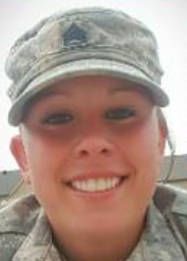
Ashley Elizabeth Meiss courtesy photo

Just after 3p.m. Saturday, the Riley County Police Department received a call from a citizen reporting the discovery of possible human remains in the 300 block of North Park Road in Ogden, according to a media release.

The initial investigation confirmed the remains to be human, and they have now been positively identified as those belonging to Ashley Elizabeth Meiss, who was reported as missing to the Riley County Police Department from her Ogden home on May 17 of this year. 

Autopsy results showed no indication of foul play, and next of kin have been notified. A copy of the investigation will be forwarded to the County Attorney for review, which is standard procedure in such cases.  

Meiss, 31, served in Iraq and came back to Ogden, Kansas, in 2010 after she was honorably discharged, according to her family.

No further information regarding this case is expected to be released to the public.

SBA small business lending momentum continues

SBA

WASHINGTON – The U.S. Small Business Administration announced FY18 lending numbers showing that it guaranteed over $30 billion to small businesses that otherwise would not have had access to capital.

“We are providing tools, resources and access to capital for America’s 30 million small businesses, and our FY18 numbers bear that out,” SBA Administrator Linda McMahon said. “SBA’s 7(a) and 504 loan programs have never been more dynamic, easy to use and accessible—helping small businesses succeed and thrive. Our loan programs in FY18 continue to show strong performance, and we believe the President’s tax cuts and deregulatory actions will help more small businesses grow and prosper in the coming year.”

In FY18 there were approximately 60,353 7(a) loans made, with a total dollar amount of $25.37 billion. The 7(a) program is SBA’s flagship program, which offers guarantees on loans to small businesses of up to $5 million on reasonable terms and conditions. 7(a) loans are commonly used for acquiring land, purchasing equipment, or working capital.

The SBA’s 504 loan program had another year of high performance for lending, with 5,874 loans made for a total dollar amount of over $4.75 billion. In FY18 SBA launched the 25-year Debenture, which offers an extra 60 months of financing at a fixed rate for small businesses. Since its introduction in April, over 1,000 debentures had been sold by the end of September.

“The 25-year Debenture is designed to help free up cash flow and offer fixed rates in a rising interest rate environment for 504 borrowers and we are pleased to see over $1 billion has been disbursed in less than six months,” Associate Administrator for SBA’s Office of Capital Access William Manger said.

In FY18 there was significant growth in the SBA’s smaller loans, including a record volume of dollars lent in the Microloan and Community Advantage Programs. Specifically, over 5,000 loans were approved for over $72 million in the Microloan program and over 1,000 loans for over $150 million in SBA’s Community Advantage program.

The SBA continued to innovate and improve processes by leveraging enhanced technologies. Lender Match is an SBA technology platform that gives entrepreneurs the ability to complete a quick online form, without registration or cost, and be connected with an approved SBA lender within 48 hours. To date, Lender Match has generated 3.6 million leads on behalf of small businesses to our lenders and over 160,000 unique borrowers have been contacted by lenders with financing options.

Another technological innovation was the development of the SBA’s Franchise Directory which was launched this year and has resulted in an over 50 percent increase in eligible franchise brands. There are currently 3,192 brands on the Franchise Directory. When the directory was first published in October 2017 there were only 2,034 brands. In FY18, SBA has seen a year over year increase of over 21 percent in 7(a) and 504 dollars going to franchises.

For more information about SBA’s loan programs, lending activity in the Wichita District which includes western Kansas, plus financial assistance and other services, visit www.sba.gov.


About the 7(a) and 504 loan programs

The 7(a) loan program is the SBA’s primary program for providing financial assistance to small businesses and offers guarantees on loans to small businesses of up to $5 million on reasonable terms and conditions. 7(a) loans are commonly used for acquiring land, purchasing equipment, or working capital. The CDC/504 loan program helps small businesses acquire fixed assets to promote economic development in the form of long-term fixed rate financing for fixed assets on reasonable terms. Under this program, the SBA authorizes CDCs (Certified Development Companies) to provide financing to small businesses with the help of third-party lenders (typically banks). The maximum loan amount is generally $5 million; however, certain eligible energy-efficient or manufacturing projects may qualify for more than one 504 loan up to $5.5 million each.

About the U.S. Small Business Administration

The U.S. Small Business Administration makes the American dream of business ownership a reality. As the only go-to resource and voice for small businesses backed by the strength of the federal government, the SBA empowers entrepreneurs and small business owners with the resources and support they need to start, grow or expand their businesses, or recover from a declared disaster. It delivers services through an extensive network of SBA field offices and partnerships with public and private organizations. To learn more, visit www.sba.gov.

Child critically wounded in Kan. road-rage shooting, suspects in custody

SEDGWICK COUNTY — Law enforcement authorities are investigating a road-rage shooting and have a suspect in custody.

First responders on the scene of Wednesday’s road-rage shooting investigation- photo courtesy KWCH

Just before 5p.m. Wednesday, two vehicles were traveling on Broadway at 13th Street in Wichita, according to Police Chief Gordon Ramsay.  There was some type of one vehicle cutting off the other that turned the situation into a road rage incident, according to Ramsay. 

The vehicles traveled to the 1200 Block of North Topeka and two shots were fired at the SUV with 6 children under age of ten in it, according to Ramsay.   A 4-year-old boy was wounded in the stomach. He was transported to the hospital in critical condition, according to Ramsay.

The suspect’s vehicle described as a Ford Mustang fled the scene. Police located it and interviewed the occupants. 

Tylin Deshone Atkinson-photo Sedgwick County
Smith -photo Sedgwick County

According to the Sedgwick County arrest report, Tylin Deshone Atkinson, 19, was booked just after 11:30p.m. Wednesday for aggravated battery with a deadly weapon, criminal discharge of a firearm; recklessly at an occupied vehicle and numerous vehicle and traffic violations.

Police also booked 21-year-old Ramonayka Smith for criminal discharge of a firearm, aggravated battery, and speeding, according to the Sedgwick County arrest report.

Police are expected to release additional details Thursday.

INSIGHT KANSAS: Charter Schools: Pro and Con

A national, yet controversial, charter school movement intended to promote school choice and school reform has made its way rather quietly to Kansas.  Currently, 11 charter schools operate within Kansas 286 public school districts.

Begun as a way to encourage innovation in public schools which teach 90 percent of the nation’s students, charters are present in 43 states.

Because charters are public but operate outside traditional education policies, they entice debate in other states, draw the attention of politicians and may well become a topic of discussion in Kansas’ next legislative session.

Will more opportunities for families to choose their student’s school help or hinder Kansas’ education system and state budget?  The impact of charters is unclear.

Some policy experts see charters as freeing schools from the constraints of ingrained education bureaucracies and union contracts, so that students will achieve at higher levels and education costs will be reduced.

Other experts believe charters promote privatization of schools, cost more and can lead to a breakdown in public education.

In 1991 Minnesota sponsored the first charter law which produced early success in high poverty, urban schools where 50 percent of charters still are found, but in Kansas all charter schools are located in rural or suburban areas.  Wichita, for example, has no charters; however, the district supports magnet schools such as Buckner Performing Arts.

Charters are organized by community members and generally focus on specific content like the arts or an educational philosophy such as a Montessori school or new teaching methods.  Charters may negotiate exceptions to public school rules, for example, requiring parents to participate in school activities.

In Kansas currently, charters are public schools approved by the school district in which they are located, follow the same accreditation policies as the school district, are not for profit and must be open to all students.  They are part of the district and managed by the local school board.

Each charter’s funding comes from resources allocated to the school district within which the charter is located.  In general, if a student in the host district moves to a charter, the state per-pupil funds move with the student, including any additional funds assigned to an English language learner or special education student.  Currently, no earmarked state funding is provided to charters.

Charter critics point to the funding mechanism that pulls money out of the established school district potentially leaving the district with inadequate funds to provide its customary services.

In other states a charter industry exists with management of multiple charters contracted to corporate entities that can stretch across state lines and generate profits not reinvested in the charters.  Critics also note that charters may negotiate fewer teacher licensure requirements and/or offer salaries lower than state averages.

An effective charter oversight system requires considerable investment in time and personnel.  Kansas charters are well run, but charters nationally have grappled with ethical issues, mismanagement and fraud.

Charter benefits notwithstanding, problems presented by experimenting with lots more charters could override any proposed tax saving to Kansans.

Kansans need to decide whether many more charters will enhance or fragment the education system.  Regarding charters, Kansans need to plan carefully.

Sharon Hartin Iorio is Professor and Dean Emerita of Wichita State University College of Education

City expecting lower rates for employees’ health insurance

By BECKY KISER
Hays Post

Some unusually good news for the city of Hays as it comes time for the annual renewal of the employees’ health insurance policy.

Assistant City Manager Jacob Wood said the 2019 Blue Cross Blue Shield premium is actually a decrease based on the city’s expected enrollments.

“We got really good bids this year. It’s actually a reduction of 2.46%, which in the current healthcare market is pretty good. So, we’re pretty excited about that,” Wood said.

City commissioners will review the bids during their work session this evening.

Officers in the Hays Police Department are looking to change their uniform style for the first time in 60 years. The 2018 budget contains $46,500 to purchase a new style of uniform for all officers.

The HPD employee committee researched, tested and evaluated several different brands of uniforms and recommended the Blauer uniform which comes with an outer-ballistic vest carrier system.

Since the late 1950s the Hays Police Department has worn the same style of uniforms with a dark navy shirt and pink-tan pants. According to information provided by Chief Don Scheibler, it’s become find to purchase the pink-tan pants in the same color and material, even when
purchased from the same vendor. designed to improve the health and well-being of our police officers.

Other agenda items include:

  • Request from local artist Dennis Schiel for city money as he raises private funds to paint a historical mural on the Sternberg Water Tower
  • Matching fund request from the Hays Recreation Commission for new playground equipment at Bickle-Schmidt Sports Complex
  • Airport Consultant Master Services Agreement
  • Airport Snow Removal Equipment – Work Authorization Agreement
  • Airport Apron Rehabilitation – Design Contract

The complete Oct. 18 agenda may be seen here.

The work session starts at 6:30 p.m. in Hays City Hall, 1507 Main.

KU chancellor at Kansas Honor Scholar Program today in Hays

KU

The KU Alumni Association will host a recognition ceremony Thu., Oct. 18 in Hays for area high school seniors who rank academically in the top 10 percent of their class. The speaker for the event will be Chancellor Douglas Girod.

The event will be held 7-9 p.m. at Thomas More Prep-Marian High School, 1701 Hall St.

See related story Ellis County, area high school seniors to be honored by KU.

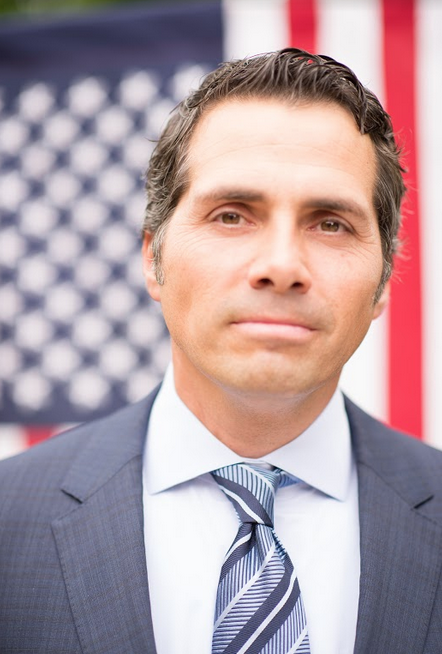
Race for Kan. governor: Independent Greg Orman

Orman

By ROY WENZL
For the Kansas Press Association

Greg Orman is running for Kansas governor as an independent and unconventional candidate this year because he thinks he has something profound to offer citizens.

So when people ask him how polls this year repeatedly show (so far) that only 9 percent of voters want him this time, a steep drop from when he won 42.5 percent of the vote when he ran for the U.S. Senate against Pat Roberts, he makes the following case for why his independent candidacy is noble:
“Median income for Americans hasn’t risen in 17 years,” he said. “Health care, public and higher education costs, child care have so far outstripped the rate of inflation that the average American family – well — it doesn’t feel like you’re treading water. It feels like you’re drowning.”

This is why 45 percent of the 2016 voters chose the unconventional candidate Donald Trump (and why 40 percent of Democratic primary voters voted for the unconventional candidate Bernie Sanders), he said.
Voters have told him they are scared, getting poorer and priced out of their homes by property taxes – they despise conventional politics. So while he wants to win, this election is not only about him, he said.

“The thing that has driven me for the last 10 years is my belief that if we don’t do something dramatically different, our standard of living, our status in the world and the very existence of the middle class are at risk,” Orman said. “It’s largely because our politics gets in the way of solving problems. We have the Hatfields and the McCoys running our government right now.”

Those polls also show Laura Kelly and Kris Kobach, his Democrat and Republican opponents, in nearly a dead heat, but with percentages only in the high 30s and with roughly 15 percent of other voters undecided. What his own polls show is that his favorability ratings are much higher than theirs. Why?
Kobach, he said, “Is taking a strategy that I would describe as starving the government. Sen. Kelly on the other hand has talked about a whole litany of new spending programs … (but) will have to raise taxes to fund her priorities.”

Voters don’t like either option, he said. But his background, as an entrepreneur who has created or bought and turned around companies makes him the ideal person to take over a government and fix what ails the state.

The Brownback cuts, which Kobach wants to bring back, damaged the state, he said, because Brownback “used across the board cuts — cut the good with the bad. Those cuts are lazy, inefficient, they don’t work –and yet it’s the only toolkit available to someone like Sam Brownback, or Laura Kelly, or Kris Kobach.”
“I am the only candidate who has any experience that even approaches the job of managing an enterprise with a $17 billion budget and 40,000 employees,” he said.

First, he’d stop spending tens of millions while recruiting Kansas City (Missouri) companies to move across the state line to Kansas. These incentives cost Kansans hundreds of millions with no true payoff.
Second, he’d de-criminalize small-time marijuana possession, which he says needlessly puts young people in prison and grossly inflates tax dollars spent on prisons. “It’s a stupid public policy for a largely victimless crime, which destroys the capacities of our kids. If you get caught with recreational drugs, you get a ticket instead.”

And third, he’d use his considerable business acumen “to look at how we negotiate drug prices through the Medicaid program.”

That’s a big one, he said. “We spend hundreds of millions of dollars on drugs through Medicaid, but we do a terrible job of negotiating prices. I know how to negotiate prices because I’ve had to do it in my businesses.”

Those three policy changes alone would save hundreds of millions of dollars, he said.

“And that’s just the start. We will go through every agency of government, making smart decisions: Can we redesign the process? Can we redesign how we deliver these services?

“I spent my life in the private sector doing that, in many cases with very efficient companies, making them more efficient.”

The Brownback tax cuts were disastrous for public schools and institutions, he said. “We’ve still got quite a hole to fill.” But cutting as he suggests would mean we could support schools and other programs adequately, and look at how to lower property, sales and other taxes in a way the state can afford. Cutting some taxes is vital, he said.

“In Kingman County a woman came up to me on the street and said ‘Greg, my husband and I saved to pay off our house and paid off our mortgage. But he passed away, and now I can’t afford my property taxes — I may have to leave my home.’ ”

Scenes like that tell him our two-party system no longer works.

“We have the highest sales tax on food in the nation. I’d love to be able to get to a point where we can address some of those things. But I also want to be fiscally responsible and make sure that in doing that, we’re not just passing our problems on to future generations.

Putting him at the head of state government would create an intriguing thing, he said. With the two-party system broken, he could be an arbiter. “The way things are now — whenever we pick a course of action, we tend to look for things that reinforce our point of view. We never look for evidence that we are wrong.
“But I want to hear from all sides. I think intellectual conflict is a good thing. It’s the only way we get to the best answer.”

Orman graduated with high honors from Princeton University and soon started companies that created jobs and millions in wealth. He lives in Fairway with his wife and two daughters.

His running mate is John Doll.

– Roy Wenzl is an award-winning journalist who formerly reported for the Wichita Eagle.

‘Oklahoma’ will be TMP-M’s 2018 fall musical

TMP-M

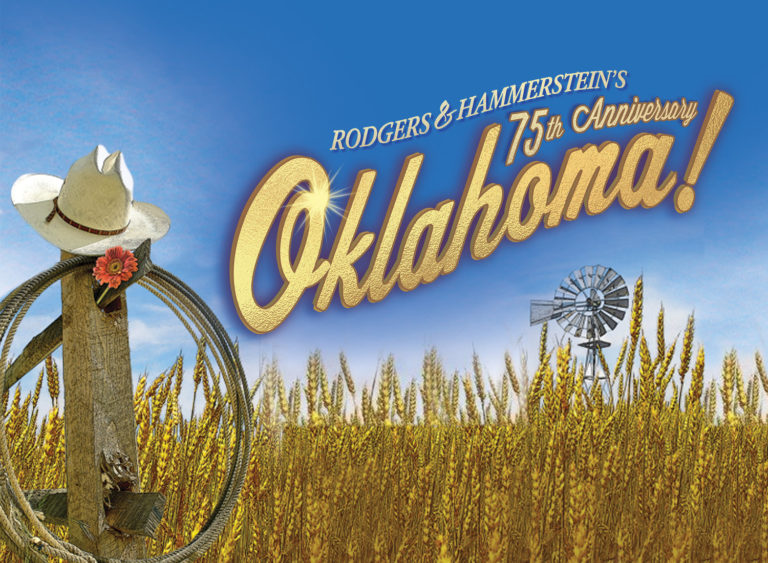
Thomas More Prep-Marian’s fall musical — “Oklahoma” — will be performed Nov. 2, 3 and 4, in the TMP-Marian Dreiling Theater.

Play Synopsis: The first collaboration of famed partners Richard Rodgers and Oscar Hammerstein II, Oklahoma! set the American musical theatre standard. Set in the Western Indian Territory just after the turn of the 20th Century, the spirited rivalry between the local farmers and cowboys provides the backdrop for the love story between Curly, a handsome cowboy, and Laurey, a beautiful farm girl. The road to true love is anything but smooth, but there is no doubt that these two romantics will succeed in making a life together. As the road to romance and the road to statehood converge, Curly and Laurey are poised to spend their new life together in a brand new state OKLAHOMA!

All performances are in the TMP-Marian Dreiling Theater, 1701 Hall Street, Hays, KS. Tickets are $8 each.

  • Book Seats Online for Friday, November 2, by Clicking HERE
  • Book Seats Online for Saturday, November 3, by Clicking HERE
  • Book Seats Online for Sunday, November 4, by Clicking HERE

Tickets can also be reserved by leaving a message at the Fine Arts Ticket Line: 785-621-5478.

BOOR: Time to test for prussic acid poisoning

Alicia Boor

After sorghum harvest, many producers want to move their cattle onto milo stalks to graze. With an early hard freeze, it is a good idea to be aware of prussic acid in sorghum, and if you are concerned, have your forage tested. A quick test now can give you peace of mind when you turn your livestock out to utilize the stalks and grain that are in the field.

Below are some key considerations: 

1.  Prussic acid (HCN) poisoning is more of a concern when grazing sorghum than when harvested for hay or silage because HCN will dissipate in harvested forages if properly ensiled/cured. For grazing it is best to wait approximately seven days after the hard freeze to graze.

2.  Sorghum silage – Most of the HCN will dissipate within 72 hours following warm weather after a hard freeze. However, if HCN levels are high at the time of harvest, wait at least four weeks before feeding the forage. The HCN will volatilize during the fermentation and feed mixing process.

3.  Hay – The curing process for hay will allow the HCN to dissipate as a gas, reducing the HCN content to safe levels.

Testing for Prussic Acid

1.  If high prussic acid concentrations are suspected prior to grazing or at harvest, forage should be tested before grazing or feeding. There are quantitative and qualitative tests available to learn more about the potential for prussic acid poisoning in a particular forage.

2.  If HCN levels exceed 200 ppm on an ‘as-is’ basis or 500 ppm on a dry basis, the forage should be considered potentially toxic and should not be fed as the only source of feed to animals.

3.  Contact the forage lab that will conduct the HCN analysis prior to sending in samples so that proper handling procedures can be followed. 

To monitor the freeze conditions in Kansas, go to the Kansas Mesonet Freeze Monitor tool:  https://mesonet.k-state.edu/weather/freeze/

For more information on how to use the Freeze Monitor, please read the recent eUpdate article, “Fall has arrived and the Mesonet freeze monitor returns”, in Issue 712.

If you have any questions, or would like more information, you can contact me by calling 620-793-1910, by email at [email protected] or just drop by the office located at 1800 12th street in Great Bend. This is Alicia Boor, one of the Agriculture and Natural Resources agents for the Cottonwood District which includes Barton and Ellis counties. Have a good week!

Copyright Eagle Radio | FCC Public Files | EEO Public File