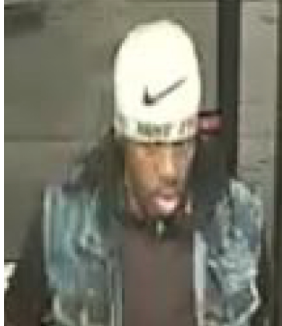
SALINE COUNTY — Law enforcement authorities are investigating a robbery and have released a security camera image of the suspect.
Image courtesy Salina Police
Just before 6:30 a.m. Friday while making a purchase, a man removed a deposit bag from a counter at Rod’s 6, 220 W. Magnolia in Salina. The deposit bag contained $1,891.00 in cash, according to a media release from police.
The suspect was captured on video. He was described as a black male, 6 feet tall, with shoulder-length “dreads.” He left in a small dark colored SUV-type vehicle.
Anyone with information concerning who committed this crime should call Crime Stoppers at 825TIPS, text SATIPS to CRIMES (274637), or visit www.pd.salina.org
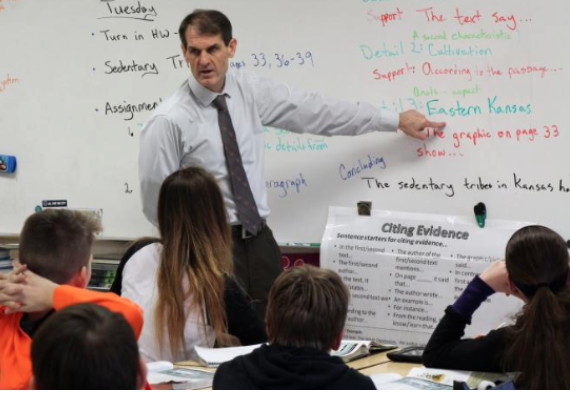
BATON ROUGE, LA — Prof. Jason Harper, of Hays, Kansas, has been elected as an officer for the Fort Hays State University chapter of The Honor Society of Phi Kappa Phi.
Harper, Senior Lecturer and International Coordinator in the Department of English at Fort Hays State University, was elected to serve the university’s chapter as grants and awards officer for the 2018-2019 term.
Founded in 1897, Phi Kappa Phi is the nation’s oldest and most selective collegiate honor society for all academic disciplines. The Society inducts 30,000 students, faculty, professional staff and alumni annually at more than 300 select colleges and universities in North America and the Philippines.
Membership into Phi Kappa Phi is by invitation only to the top 10 percent of seniors and graduate students and 7.5 percent of juniors. Faculty, professional staff and alumni who have achieved scholarly distinction also qualify. The Society’s mission is “To recognize and promote academic excellence in all fields of higher education and to engage the community of scholars in service to others.”
Residents may put unwanted items out for collection anytime before Oct. 22.
CITY OF HAYS
The 2018 Annual Alley Cleanup will consist of one and only one sweep through the city beginning October 22, 2018.
No set schedule has been established; however, residential curbside services will be first with residential regular alley services following. The city wide general schedule for alley services will start after curbside collections are completed. The number of employees committed to the task may vary from day to day; therefore, crews are unable to predict when they will be by a residence. City crews have a time limit per residence.
As in years past, the City WILL NOT pick up tires and hazardous waste. Tires should be disposed of at the Ellis County Landfill, and hazardous waste items should be disposed of at the Ellis County Hazardous Waste Facility. Please call 628-9460 or 628-9449 for detailed information.
The Annual Alley Cleanup Program, set to begin October 22, is an opportunity for residents to discard items that would not be picked up in normal trash collection.
Waste should be placed in four separate piles in preparation of the Alley Cleanup. The piles should be organized in the following manner:
1. Tree limbs and brush (no longer than 12 feet in length or 6 inches in diameter), all yard and garden waste MUST be bagged
2. Construction and Demolition Debris, i.e., lumber, drywall, bricks, sinks, wires, etc. (please pull or bend over nails and place small quantities of concrete, bricks, and plaster in containers)
3. White Goods/Metals, i.e., guttering, siding, washing machines, dryers, refrigerators, metal swing sets, etc.
4. Municipal Waste (all other items), i.e., furniture, carpet, TVs, computers, etc.
**TO AVOID WRONGFUL PICK UP, “TREASURED ITEMS” SHOULD BE TAGGED OR REMOVED FROM THE COLLECTION AREA**
Again, the Alley Cleanup Program will begin on October 22nd and will continue until one and only one complete sweep through the city has occurred. All items should be set out by this date, as crews cannot make any return trips. Residential customers can begin setting items out now. Remember, crews cannot predict when they will be by a residence, so HAVE ALL ITEMS OUT BY OCTOBER 22.
Help make the City of Hays alleys clean and safe for all!
NOTE: Alley cleanup is for City of Hays residential customers paying for refuse services.
TREE LIMB DISPOSAL REMINDER!!!
Free disposal of tree limbs is available for City of Hays residents at the Ellis County Transfer Station, 1515 W 55th, Monday to Saturday – 8 a.m. to 6 p.m.
For more information call Hays Public Works at 785-628-7350.
The Moms Club of Hays recently donated $200 to help purchase carbon monoxide detectors for families in need at Early Childhood Connections.
The detectors will go to families who currently reside in housing that lack a detector.
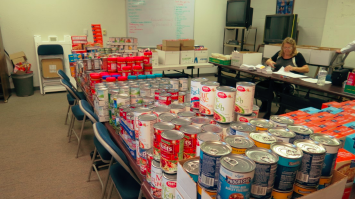
Adams, Brown, Beran, & Ball donated $300 to the Hope Pantry.
The money will be used to help families in need with food and hygiene boxes throughout the year, especially during Thanksgiving and Christmas breaks. To date, the Hope Pantry has given 576 boxes of food, hygiene supplies, and clothing since it began in 2015.
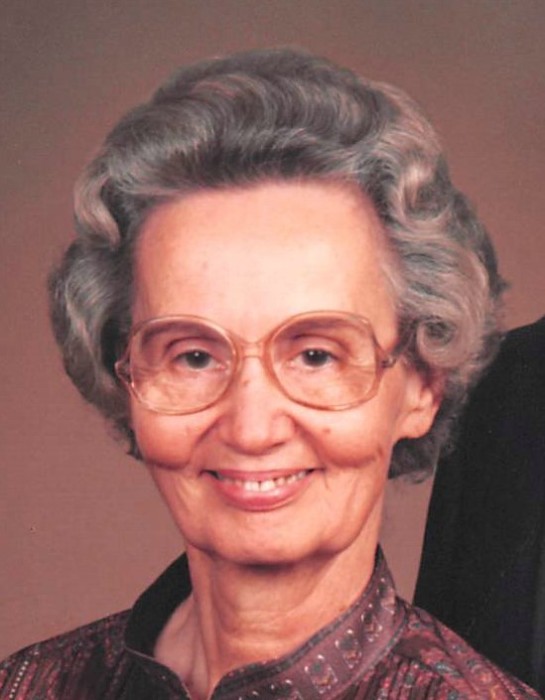
Betty Florine Kopsa, daughter of Charles W. Kopsa and Hattie Vaneta Peterson, was born on July 15, 1925 on a farm near Cuba, Kansas and passed away at Republic County Hospital on October 10th, 2018 at the age of 93 years, 2 months and 25 days. After graduating from Munden High School in 1942, she obtained her teaching certificate from Kansas State University. She taught country school and also 1st and 2nd grades in Republic Kansas where she was affectionately called “Miss Betty”. She married Elden Lorraine Evert on August 29, 1949 and together they raised four children.
She held a variety of jobs, throughout her life. She worked at the nursing home, the hospital, library, and later the Republic and Jamestown post offices before becoming the Postmaster at Webber, Kansas. Her most important job titles, however were “Mom”, “Grandma Betty”, and “Grandma Great”.
Betty had a strong faith and was very committed to her family and the farm. She loved working outdoors, checking the electric fences, and raising chickens and the occasional orphaned lambs and calves. She was a very humble and giving person but preferred to work behind the scenes, washing dishes after church dinners and typing the church newsletter. She prepared wonderful meals for her family but Sunday dinners were an extra special event with many family members often in attendance.
Her hobbies included playing bridge with her “8 to 12” club, reading, and working crossword puzzles. She was excellent seamstress making many of her and her daughter’s dresses and patching scores of blue jeans. She also enjoyed feeding her wild birds and the farm cats. She also cherished the time that she spent with her many grand and great-grandchildren.
Survivors include: Daughters: Vicki (Ron) Hallagin of Ellis, KS; Lorraine (Carl Hoskins) Evert of Parsons, KS; and Sons: Randy (Betsy) Evert and Ron Evert, both of Belleville, KS.
Grandchildren: Troy (Mary) Hallagin, Trent (Deanna) Hallagin, Trevor (Tammy) Hallagin, Chris (Kim) Springer, Neil Springer, Holle Evert, Heidi Nordstrom, Krystal (Dave) Lantz, Lynsey (Braden) Damman, Shelby Hergott, Andy (Shayna) Evert, Erin Williams, Ethan Evert, and Lacey (Thayne) Clark.
Great Grandchildren: Tyler Hallagin, Brianna (Tom) Hargis, Tanner Hallagin, Courtney Hallagin, Tayton Hallagin, Tristen Hallagin, Talon Hallagin, Kristi (Joe) Wood, Noah Springer, Jacob Springer, Kambree Judy, Brylee Judy, Sterling Judy, Taylor Manos, Paige Kniep, Kara Kniep, Bryn Kniep, Ava, Kniep, Nina Nordstrom, Henry Hatcher, MacKenzie Hergott, Tinley Lantz, Wesley Lantz, Brecklyn Damman, Wyatt Evert, Becca Evert, Kyra Evert, Waylan Evert, Isaiah Evert, Alexandria Williams, Ashton Williams, Kennedy Clark, Mason Clark, and Arlo Clark.
Brothers; Bob (Phyllis) Kopsa of Chester, NE and Don (Elaine) Kopsa of Craig, CO; sisters-in-law; Gail Kopsa of Agenda, KS, Darlene Kopsa of Courtland, KS, Jetty Evert of California.
She also had many nieces, nephews and a host of other family and friends.
She was preceded in death by her parents, her husband, Elden, a brother, Clair Kopsa and a grandson Clayton Hergott.
Visitation will be at Tibbetts-Fischer Funeral Home in Belleville on Sunday October 14th from 6 to 8 p.m. Memorial Service will be held at the Republic United Methodist Church at 10:30 a.m, with inurnment following at Prairie Rose Cemetery, rural Republic.
Memorials in Betty’s name can be made to United Methodist Church and the Rae Hobson Memorial Library and sent to the funeral home.
Tibbetts-Fischer Funeral Home assisted the Evert family with arrangements.
TOPEKA — The Kansas Insurance Department has released more 2019 health insurance open enrollment information, including a department overview of the health plans for Kansas consumers.
The open enrollment period for the 2019 plan year begins November 1 and ends December 15, 2018, according to Ken Selzer, CPA, Commissioner of Insurance. The time period applies to plans sold on and off the federal marketplace.
Insurance companies who are offering plans in 2019 are Blue Cross and Blue Shield of Kansas, Medica and Ambetter from Sunflower State Health Plan. The companies signed their final issuer agreements for participation in 2019. There are at least two companies selling plans in each Kansas county.
“Those choosing a new health plan for coverage beginning January 1, 2019, also have several other factors to consider,” Commissioner Selzer said. “Making sure your providers — doctors, hospitals and other health care providers — are within the plan’s network is important. Secondly, you should note that networks can vary within the same company, depending on where you live. Finally, you should understand that companies may change the type of policy they sell from one year to the next.”
For 2019, companies selling in Kansas will offer policies with the following types of network arrangements: Exclusive provider organizations (EPO) or health maintenance organization (HMO) plans. Definitions of each network are in the department’s issue brief, “2019: Overview of the Health Insurance Market in Kansas,” which can be accessed at https://www.ksinsurance.org/documents/healthlife/health/KID-Issue-Brief.pdf.
“If you purchase a health insurance policy through the federal marketplace, your cost may be reduced if you are eligible for an advance premium tax credit (APTC). Those credits are available only if you buy insurance on the marketplace. They are not available for off-marketplace individual purchase, or if you purchase insurance through your employer,” explained Selzer.
Kansans who have questions regarding association health plans (AHPS) or short-term limited-duration insurance should contact an insurance agent for more information.
“If you need more assistance, contact our Consumer Assistance Division at the insurance department (800-432-2484) for answers to general health insurance questions, or use our online chat feature at www.ksinsurance.org ,” Selzer said.
Kansans have two chances to vote on Kris Kobach next month — on Kobach himself in the gubernatorial race, and on his legacy in the Secretary of State race.
Kobach’s tenure as SOS has been marred with mismanagement: failures to update the SOS website, shortfalls in overseeing election technology and officials, tens of thousands of Kansans unable to navigate the bureaucratic red tape that Kobach created in the voter registration process, and failed and costly court battles. Kansans must choose how to move that office forward.
Patrick R. Miller is an Assistant Professor of Political Science at the University of Kansas.
Polling shows that the SOS race is competitive. The Democrat, Brian “BAM” McClendon, is running an actual campaign, something that Kansas Democrats do not always do. McClendon is a former Google and Uber executive who has returned to Kansas, but grew up here, graduated from KU, and co-founded the nonprofit KSVotes.org to promote online voter registration. This is his first run for office.
The Republican, Scott Schwab, should normally be favored in a down-ballot race like this simply by being a Republican in Kansas, but has had a muted campaign. A native Kansan who works in healthcare sales, Schwab has served in the state legislature from Johnson County for thirteen years and, most relevant, formerly chaired the House Elections Committee. His legislative voting record easily puts him in the Brownback-Kobach mold of Republicans.
What does a secretary of state do? Kobach has been unusually visible for the office, becoming a national media darling on immigration and taking side jobs writing political columns and consulting for other states on immigration. But the main duties of the job include election administration, voter registration, registering businesses, and publishing legal and informational documents. It is a technical and bureaucratic position.
Neither candidate possesses Kobach’s flamboyant personality, but there are real issues in this race beyond style. Their answers to July 14 questionnaires in the Topeka Capital-Journal show some differences.
Schwab frames his candidacy around continuing Kobach’s policies like the proof of citizenship regulation—since ruled unconstitutional—and voter ID. He also shares Kobach’s belief that voter fraud from internal and external threats is a serious concern in Kansas. And his response to increasing voter participation indicates that he does not see that as a main responsibility of the SOS, but rather something that campaigns and local election officials should emphasize.
McClendon shares the concern for cyber security and electoral integrity, but does not share Kobach’s dubious belief that undocumented immigrants are a massive voter fraud threat in Kansas. Nor does he share Kobach and Schwab’s support for proof of citizenship regulations. He endorses voter ID laws that ensure citizen access to proof of identification. McClendon also views encouraging voter participation as more central to the SOS role than Schwab.
Importantly, Kansans may not realize that under Kobach’s Crosscheck system, they are footing the bill to allegedly quality check voter rolls in dozens of other states. Yes, readers, you are paying to vet voter rolls in states like Mississippi and Alabama. Independent studies have found Crosscheck to have major accuracy issues, leading several states to abandon it recently. Schwab supports continuing Crosscheck as is, but McClendon is more skeptical of it.
Kansans should understand that they are voting on Kobach’s policy legacy in the SOS race. Down-ballot races matter for how tax dollars are spent and the quality of services Kansans receive. The next SOS may not share Kobach’s eccentric flair, but voters can choose to continue Kobach’s policies or vote for change. Learn more about the candidates and make informed choices.
Patrick. R. Miller is an Assistant Professor of Political Science at the University of Kansas.
Listen as the ‘Voice of the Chiefs’ Mitch Holthus recaps last week’s home win over Jacksonville and previews Sunday’s night’s prime time matchup in New England.
The Holthus Hotline airs Saturday mornings on your home for Chiefs football, KFIX (96.9-FM), at 8 a.m. during the Chiefs season.
MANHATTAN – Kansas Farm Bureau’s Voters Organized to Elect Farm Bureau Friends (VOTE FBF) Political Action Committee has released its general election candidate endorsements for state and federal races in Kansas. Since 1993, VOTE FBF has endorsed and supported candidates for public office who support family farming and ranching.
“We are proud to represent our members as the Voice of Agriculture and believe our grassroots-driven endorsement process does just that,” Rich Felts, Kansas Farm Bureau president, says. “County Farm Bureau boards across the state have been meeting for months, hosting forums and talking with candidates. Their voices are reflected in the endorsements VOTE FBF made for this election.”
Kansas Farm Bureau encourages Kansans to support these VOTE FBF-endorsed candidates and continue to research candidates in races where no endorsements have been made as we work to elect a vote for agriculture.
In Congressional races, VOTE FBF endorsed Rep. Roger Marshall (R-KS 1), Rep. Kevin Yoder (R-KS 3) and Rep. Ron Estes (R-KS 4).
VOTE FBF endorsed Derek Schmidt for Kansas Attorney General.
The Kansas Farm Bureau VOTE FBF state Senate and House endorsement list is as follows:
John Schlageck writes for the Kansas Farm Bureau.Mother Nature turned the tables this year in Kansas as eastern Kansas cattle producers dealt with diminished grass for their livestock while central and western regions of the Sunflower State flourished with pastures nourished by abundant rain.
In southeastern Kansas, Jim DeGeer, veteran cattleman from Neosho County, says a long, cool spring delayed native grasses (used for summer grazing) from taking off and growing like they normally do. And when it finally did warm up, conditions were so dry, these grasses never had the opportunity to grow.
“Our pastures were extremely short all summer,” DeGeer says. “I know the guys who cut prairie hay throughout our regions and they told me production amounted to only a third to one-half the normal output.”
Yep, forage availability has been tight in much of southeastern Kansas beginning in June and running into August.
“It’s been dry most of the summer,” the veteran cattleman says. “We were drier and had less grass this summer than during the bad drought years beginning in 2011 and running through 2013.”
Then in mid-August, it started to rain, and the grass began growing and greening up a bit, DeGeer says. By the end of September, the pastures looked like they should have.
Despite the dog days of summer, DeGeer says his cows managed to stay “looking pretty good.”
So, what will this dry spell mean to cattlemen like DeGeer in the long run?
“We’re starting to pregnancy check our herd and we’re seeing more open (not with calf) cows than we normally do,” the long-time cattleman says. “I’m sure weaning weights on the calves will be less this year as well.”
While this scenario is not one any cattleman wants to be faced with, DeGeer will live with the hand he’s been dealt, make changes and move ahead.
This will mean reducing the family cow herd this year. In turn, this will allow the pastures a chance to recover from the dry summer of 2018.
Buying additional feed for his livestock will also mean steeper prices for big round bales. Prices for this coveted commodity have jumped from $30-35 a bale to $75-100 each.
“We buy a lot of hay anyway,” the Neosho County cattleman says. “We’ll need to pay the piper to keep our cow herd well fed.”
DeGeer isn’t the Lone Ranger when it comes to cutting cow numbers. Neighbors and other livestock producers are faced with the same dilemma.
“I laugh to myself this year,” DeGeer says. “I grew up in south-central Kansas, in the Gypsum Hills around Medicine Lodge, and cattlemen have received more rain out there than we have in south-eastern Kansas during the summer.”
This year is one DeGeer is looking forward to closing the book on. He does not relish paying top dollar for feed at the close of the year especially when some will not even be the best quality.
“It’s kind of been one of those years,” the veteran cattleman says with a shrug of resignation in his shoulders. “Next year’s going to be better.”
John Schlageck is a leading commentator on agriculture and rural Kansas.
Two events that were supposed to take place this weekend have been cancelled due to impending inclement weather — the ART MADE / ART DISPLAYED event in Hays and the Trick or Treat So Others Can Eat in Ellis.
Out of respect for the artists who were offering to open their homes and personal studio spaces to guests, the HAC has decided to postpone the ART MADE / ART DISPLAYED event scheduled for this Sunday.
“The weather conditions forecast for this weekend (on top of all the rain already!) are pretty unpleasant (low temps, rain and SNOW!) and we didn’t want to compromise their wonderful spaces with what could be a pretty messy day,” the HAC posted on Facebook.
The HAC hopes to reschedule this event for the spring.
In addition, the HAC Annual Meeting will be at 6:30 p.m. Friday, Oct. 19 at the Hays Arts Center, immediately preceding the opening reception for its newest exhibition “Of the Earth” (Angela Muller and Barbara Jo Stevens) and book signing for “Pegasus Dan and the Little Owl” (author Nicole Thibodeau and illustrator Robert Joy).
The Trick or Treat So Others Can Eat in Ellis has been rescheduled for Sunday, Oct. 28.
Set your canned goods and non-perishables out on the porch by 4 p.m. Sunday, Oct. 28 for pickup by local youth. The food will go to the Ellis food pantry and food boxes program.
For more information contact, Leonard Schoenberg at 785-726-1278 or follow the food bank on Facebook.
Gene PolicinskiJournalist Jamal Khashoggi is missing — and the world does not know if he is alive or dead.
That there is no answer yet is, in itself, a tragedy. But depending on that answer, it may well become an atrocity.
Turkey’s government said on Oct. 8 that Khashoggi, a prominent journalist from Saudi Arabia now living in the United States and a regular contributor to The Washington Post’s Global Opinions page, apparently was killed in the Saudi Consulate in Istanbul last week.
Saudi Arabian officials strongly deny that declaration. But the government of Turkey — even though it’s rated as one of the most repressive nations in terms of press freedom — stands by its assertion.
What we do know is that Khashoggi entered the Saudi Arabian mission offices on Oct. 2 and has not been seen since that time. His fiancée, who waited outside for hours that day, said she has not seen him since he went into the mission. A surveillance camera outside the consulate shows Khashoggi entering, but no video has been produced showing him departing.
We also know that Khashoggi was a vocal critic of Saudi leaders — and of a government that has been cracking down on dissent and criticism.
Khashoggi had fled to the United States over his criticism of the Saudi royal family and its influence in that nation. He went to the embassy in Turkey to obtain copies of personal papers needed for a planned marriage to a Turkish citizen.
“If the reports of Jamal’s murder are true, it is a monstrous and unfathomable act,” Fred Hiatt, The Washington Post’s editorial page editor, said in a statement. “Jamal was — or, as we hope, is — a committed, courageous journalist. He writes out of a sense of love for his country and deep faith in human dignity and freedom. He is respected in his country, in the Middle East and throughout the world. We have been enormously proud to publish his writings.”
Khashoggi’s disappearance and possible murder comes at nearly the same time when, in Bulgaria, the body of Viktoria Marinova, a journalist with TVN, was discovered Oct. 6. Marinova, 30, had been raped, beaten and strangled, according to media reports and Bulgarian police. Reporters Without Borders, an international group that tracks assaults on journalists, now lists 57 journalists, 14 citizens working in journalism and four press aides as having been killed thus far in 2018.
In its latest report, the nonpartisan human rights organization Freedom House notes that just 13 percent of the world’s population lives in nations where the press is considered free.
You may well be asking, “Why should I get angry over the as-yet undetermined fate of a journalist whose work, outside of the Washington, D.C. area, it’s likely I have not seen?”
Well, each time a Khashoggi disappears under suspicious circumstances or a Marinova is savagely killed, it diminishes all of our freedoms; there’s a bit more tarnish on what our still-strong First Amendment protection for a free press has always meant to the world.
It’s as simple as that. We care because we value freedom — the freedom to differ with those in power or others in our society, the freedom to speak or write our views, without the fear that someday we may enter a government building on a simple task and vanish.
Yes, there’s great debate around what a free press means today in the United States. But even the most vitriolic attacks often have a call for journalism’s essential values of fairness and accuracy. It’s those values we defend in defending journalists, even those we don’t know.
As a nation, we must declare every time that an attack on journalists anywhere in the world — through violence, threat or faux rule of law — is an attack on a core principle of our democracy. And we do not surrender those principles to tyranny, injustice or criminal acts.
Where is Jamal Khashoggi? His family should know. His colleagues in the profession should know. Every person in every nation around the globe should know.
In the name of press freedom and what it means to us as citizens of the United States and part of humanity, we not only expect an answer, we demand it.
Gene Policinski is president and chief operating officer of the Freedom Forum Institute. He can be reached at [email protected], or follow him on Twitter at @genefac.
The leading candidates for governor offer various notions about how best to build strong schools in the state — how much to spend and where best to put those tax dollars.
Laura Kelly, the state senator and Democratic nominee, says there’s little getting around a need to spend more.
Kris Kobach, the Republican candidate and secretary of state, contends the state could spend money better if districts would just trim their administrative fat.
Greg Orman, a Kansas City-area businessman and independent candidate, thinks he can fix schools by revving up the state’s economy.
“They’re very different in how they talk about the issue,” University of Kansas political scientist Patrick Miller said in an interview. “There’s at least one very stark division, and that’s between Kobach and the alternatives.”
Cash is king
Kelly said during a debate in September that strong schools drew her family to Kansas. Yet she says schools suffered and didn’t see enough investment after the 2012 tax cuts pushed by then-Gov. Sam Brownback.
“I want to make sure that every child, no matter who they are or where they live, has the same opportunities to succeed that my daughters did,” Kelly said.
Laura Kelly, Kris Kobach and Greg Orman. CREDIT STEPHEN KORANDA / KANSAS NEWS SERVICE
Some estimates show Kansas might be facing tight finances again in the coming years, but Kelly said reversing the tax cuts means Kansas can afford to spend on schools and invest in early childhood programs.
Bruce Baker is a professor in the Department of Educational Theory, Policy and Administration at Rutgers University and has been involved in the Kansas lawsuits over school funding. He agrees with Kelly that tax cuts hurt.
“Because of those tax cuts,” he said, “Kansas school funding took a bigger hit than many, if not most, other states.”
Yet Kansas schools were performing relatively well compared to other states, so Baker said the state didn’t suffer as much as some other states might have in the same situation.
“But if they want to be better than that, if you want to shoot for even more,” he said, “on average, it’s going to cost more.”
Eric Hanushek analyzes education issues as a fellow at the Hoover Institution at Stanford University, and he has also been involved in Kansas school spending lawsuits. After studying the data, he reaches a different conclusion.
“How you spend money is more important than how much you spend in almost every instance,” Hanushek said in an interview, “because Kansas is already spending a lot of money.”
Baker suggests spending at struggling districts. Hanushek urges focusing more on teacher quality.
Spending money on early childhood programs can offer benefits if it’s targeted at kids who need it most, Hanushek said.
“Disadvantaged kids could be helped by having earlier childhood education,” he said.
Kobach focuses on how, not how much
Kobach wants to focus on how money is spent. He has criticized what he calls “Taj Mahal” buildings in school districts and bloated administration.
At the raucous Kansas State Fair debate, Kobach said state officials should stop looking at the bottom line — how much money is spent — and focus on where it’s going.
“We have got to stop spending so much money on administration and spend it instead in the classroom, on the teachers’ salaries, on the computers and on the books,” Kobach said. “That is where the money belongs.”
Kobach is not advocating for districts to consolidate, but he wants districts to merge administrative functions. That’s an idea some conservative lawmakers and a right-leaning Kansas think tank have also pushed.
“We need to share administrative costs, have efficiencies, so the money stays in the classroom,” Kobach said.
He pegs classroom spending at 50 percent, and he wants it to be 75 percent of all education spending.
Schools that perform well should be rewarded for that financially, Kobach said, with raises for all teachers and staff.
Tom DeLuca, a former teacher and school administrator now teaching educational leadership and policy studies at the University of Kansas, said it all comes down to what you count.
“You have to look outside the four walls of a classroom,” he said. “Learning takes place, or learning is supported, at multiple levels and multiple places by multiple resources.”
Not counting things such as counselors, library staff and school psychologists leads to some measures putting Kansas classroom spending at around 53 or 60 percent of spending.
“That sounds quite shocking until you look at what that actually means,” said Mark Tallman, associate executive director of the Kansas Association of School Boards.
Add in those other services that help students, plus the costs of transporting students and feeding them, and Tallman calculates the total reaches up to 70 percent of spending. That’s before counting the cost of building and maintaining the classroom.
Tallman puts administrative costs at the school building and district level at under 10 percent of spending.
It’s the economy to Orman
Orman would focus on ways to juice up the state economy with good-paying jobs.
“The best education policy is a growing economy,” Orman said during a debate in Overland Park.
Growing state revenues will allow the state to invest in schools without a tax increase, he said.
Orman’s also touting an indirect benefit from economic growth. Parents will have more time to be parents, instead of working second jobs, with a healthy state economy.
“Create the jobs and opportunities to allow their parents to have the time to invest in their kids’ educations,” he said at the Kansas State Fair.
Studies have reliably shown that parental involvement does make a difference in student outcomes, said Rick Ginsberg, the dean of the School of Education at KU.
But barriers to parental involvement are complex and can include cultural or language differences that schools must overcome.
“It’s a lot of work for schools to do that, and I think our schools do work really hard on that,” Ginsberg said. “But that’s a never-ending process for schools.”
It’s not easy to quantify Orman’s belief that growing the economy growing will lead people to switch from working multiple jobs to a single job.
Jeremy Hill, director of the Center for Economic Development and Business Research at Wichita State University, said some people may assume fewer workers will have multiple jobs when the economy is growing, but that’s not the case.
“Conventional wisdom about what goes on in the economy,” Hill said, “is different from what the actual data shows.”
While the number of people working full-time does increase when the economy is growing, numbers from the U.S. Bureau of Labor Statistics also show the number of people working multiple jobs increases.
There are more jobs to work during economic booms and employers may offer additional pay or other perks that entice people to pick up a second job, Hill said.
There’s also no button a governor can push to spur quick and lasting economic growth, said Ken Kriz, a professor of public administration at the University of Illinois at Springfield.
“If there was, then everybody would be doing it,” Kriz said in an interview. “Any type of magic bullet would immediately be recognized and mimicked by other states.”