
Month: October 2018
Turkey Bash Co-Ed Softball Tourney


Did Attorneys Listen? That’s The Question At Hearing On Kan. Prison Tapings
By DAN MARGOLIES
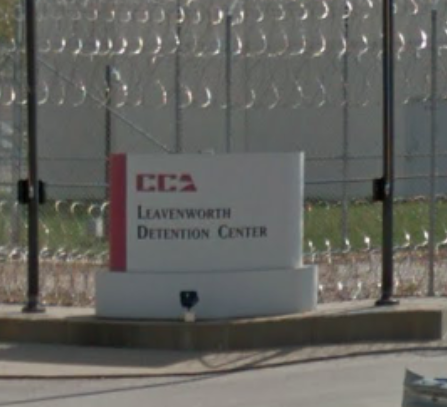
Leavenworth Detention Center sits about 35 miles northwest of Kansas City, Missouri, just off the town’s main drag – a nondescript stretch of fast-food shops, strip shopping malls and mom-and-pop businesses.
The prison is a sprawling complex of squat white buildings ringed by chain-link fencing topped by razor wire. People charged with federal crimes who can’t make bail are held here.
The prison can hold more than 1,100 detainees, male and female alike. Lawyers regularly meet with them there to review their cases.
Those conversations are supposed to be private. But ever since the disclosure two years ago that the owner and operator of the prison, CoreCivic, had video- and audio-taped attorney-client meetings, the prison has been the center of a raging controversy.
And this week, in what’s shaping up as a blockbuster court hearing, evidence may be produced about whether and to what extent federal prosecutors viewed or listened in on those recordings.
In a move with little precedent, the Federal Public Defender has subpoenaed more than a dozen prosecutors and employees of the U.S. Attorney’s Office to testify about whether they accessed any of the recordings. Melody Brannon, head of the Federal Public Defender Office in Kansas, says without the assurance of confidentiality, her office can’t do its job.
“It’s critical to the system that an attorney and client can speak in confidence so that we can best represent our clients, so that they can confide in us and let us know the essential facts and concerns that they have,” Brannon says. “That enables us to make the right decisions and how to proceed in the case. If we don’t have that confidentiality, it cripples the job of the defense attorney in representing our clients.”
So serious is the breach of confidentiality seen that scores of inmates who say their communications with their lawyers were taped are seeking to have their convictions overturned.
Brannon has been leading the charge to get to the bottom of what happened.
“We requested (CoreCivic) to not record calls to our (phone) numbers,” she says. “So anytime someone inside was calling, those were not supposed to be recorded. And yet we found for a two-year period that those calls were recorded.”
U.S. District Judge Julie Robinson appointed a special master to investigate not just the extent of the recordings but whether any of them had been turned over to federal prosecutors. The scope of the investigation by the special master, Cleveland attorney David R. Cohen, was limited to the case in which the recordings first came to light. But Cohen quickly discovered that hundreds of attorney-client meetings at Leavenworth had been videotaped.
“The idea that the United States Attorney’s office had access to attorney-defense counsel meeting with their clients was a big deal,” Cohen, the special master, says. “And so I was appointed by the judge to determine really what was going on and the extent to which that might have occurred.”
It’s not clear at this point to what extent the U.S. Attorney’s Office may have accessed the video recordings. One of the reasons that remains murky is that a hard drive in the U.S. Attorney’s Office containing the recordings was mysteriously wiped clean – even after the judge had ordered the office to preserve it as evidence.
Since Cohen’s appointment, separate class action lawsuits brought by lawyers and detainees claim to have uncovered evidence that more than 1,300 phone calls between public defenders and inmates at CCA were improperly recorded over a two-year period. Beyond that, they claim, nearly 19,000 inmate phone calls to 567 attorneys on a list compiled by Cohen had also been recorded over a period of several years.

The U.S. Attorney’s Office initially cooperated with Cohen’s investigation. But last fall, it abruptly stopped cooperating – which prompted Brannon to file a motion to hold it in contempt.
A hearing on the motion got underway in May, but it was recessed after the newly appointed U.S. Attorney, former Kansas Solicitor General Stephen McAllister, indicated he was willing to work out an agreement to reduce the sentences of inmates whose communications with their attorneys were recorded. Two months later, however, McAllister’s boss at the Justice Department, Deputy Attorney General Rod Rosenstein, nixed the proposal, saying that blanket reductions of inmates’ sentences were out of the question.
As a result, the hearing is set to resume this week. In a move with little precedent, the Federal Public Defender has subpoenaed more than a dozen prosecutors to testify about whether they accessed any of the recordings.

Pam Metzger, director of the Deason Criminal Justice Reform Center at Southern Methodist University and an expert on the Sixth Amendment, says the mere possibility that prosecutors obtained attorney-client recordings “would be jaw-droppingly, dumbfoundingly shocking.”
“It would demonstrate an absolute failure not simply of the adversary system, but of due process,” she says. “It would demonstrate the most profoundly unethical disregard not only for the rule of law but for the United States Constitution.”
CoreCivic says it does not comment on pending litigation. But in court filings, it says detainees knew their calls might be recorded – even though attorney-client phone calls were supposed to be off limits. And that still doesn’t explain how or why the recordings may have been turned over to prosecutors.
“The victims here are poor people charged with crimes who were confronted by the power of the state, who were locked in cells and who were dependent on other people – lawyers – to provide them with communication,” says Metzger, who has consulted on the case. “And if they are not entitled to trust that their lawyers are telling them the truth when their lawyers say ‘It’s okay, we can talk,’ then how in the world can they expect any kind of justice in this system?”
It’s not clear what would happen if Judge Robinson finds federal prosecutors in contempt. But Metzger thinks Rosenstein’s decision to blow up the proposed agreement may be even more problematic for prosecutors.
She points out that 95 percent of all federal criminal cases are resolved through guilty pleas. But if prosecutors don’t have the authority to reach such agreements, she says, then it calls into question much of the basis on which the criminal justice system rests.
“I don’t know how any federal district court can ever expect to do business in an honest, predictable and fair manner with the lawyers it sees every day – and that’s without regard to whether the lawyers in any particular case misbehaved,” she says. “If they in fact do not have the authority they believe they have to enter into these plea agreements, then the whole system is thrown into chaos.”
The recording scandal has already thrown the system into chaos. The Federal Public Defender has filed motions on behalf of 60 inmates whose calls with their attorneys were recorded, seeking to have their convictions overturned outright. And it’s planning to file at least 60 more motions in the weeks to come, says Brannon, of the Federal Public Defender’s Office.
“We’ve asked for an individual evidentiary hearing in each,” she says. “We have asked for the actual conviction to be overturned and the government barred from retrying the case. Alternatively, we’ve asked for reductions in their sentences.”
Cohen, who has been appointed a special master in nearly 30 cases over the last 15 years, says he’s never been involved in a case quite like this one.
At bottom, he says, the case is about trust between the defense bar and prosecutors, which – at least in Kansas – has taken a huge hit in the wake of the recordings scandal.
“It’s something we’re working very hard to reinstate,” he says.
This week’s hearing could well determine if that happens.
Dan Margolies is a senior reporter and editor in conjunction with the Kansas News Service. You can reach him on Twitter @DanMargolies
🎥 DSNWK launches $5 million capital campaign
By CRISTINA JANNEY
Hays Post
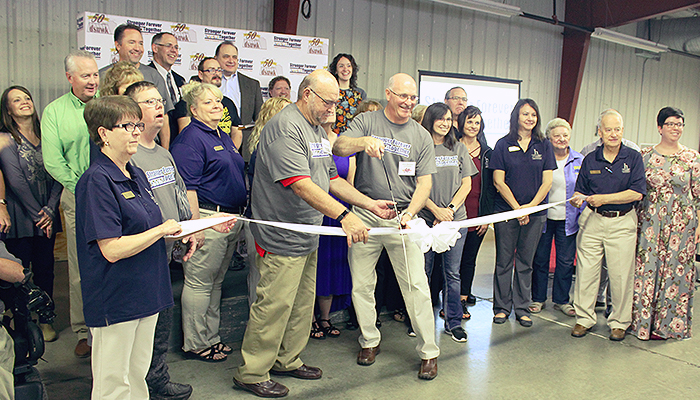
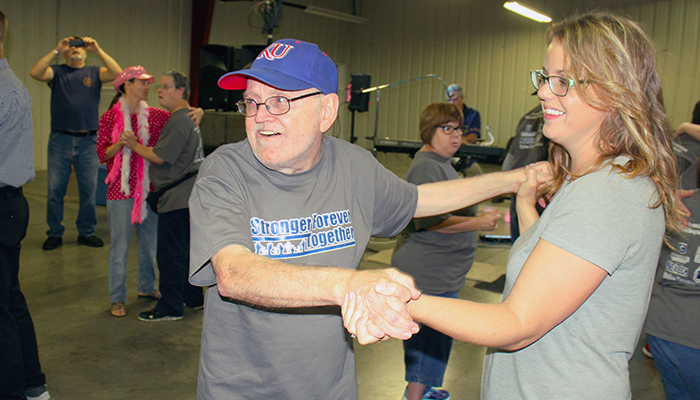
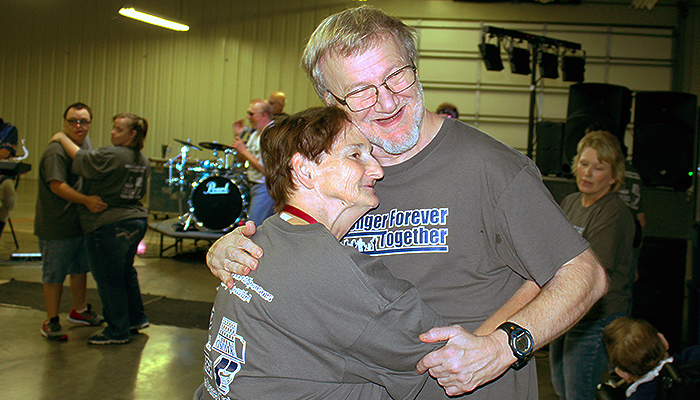
Developmental Services of Northwest Kansas launched a $5 million capital campaign during its annual Fall Fest on Tuesday.
This is the first capital campaign in the organization’s 50-year history.
Jerry L. Michaud, DSNWK president and CEO, said the money will be used to make much-needed repairs and upgrades to its facilities. The organization has locations in Hays, Norton, Atwood, Hill City, Hoxie, Russell and Stockton. It serves 18 counties in Kansas.
“With a capital campaign, generally it is usually to build a building or a one thing,” he said. “In our case, we are spread over the 18 counties and the focus is to bring back and focus on some of those things that have been long-delayed — repairing roofs, fixing things that are broken, the kinds of things that are most generally people just build into their budgets. Those have been pushed off because of long-standing lags in support for the services that we do.
“We are fixing the stuff we should have fixed years ago.”
Some of the funds will also be directed at technology to comply with legal and government mandates and streamline employee communications and document access. A portion of the money will be set aside for an endowment to serve as another source of revenue for DSNWK. Michaud said this additional money will be used to support the recruitment and retention of the employees.
“Our world is about people serving people, but you have to be able to earn a living wage,” he said.
About $1 million has already been raised toward DSNWK’s goal. Michaud thanked major contributors, including the Dane G. Hansen Foundation, the Robert and Pat Schmidt Foundation, the Beach family, Bart Betzen, and Rick and Gail Kuehl.
“To create a stronger future for DSNWK, your help is needed,” Michaud told the crowd. “To grow endowed funds that will provide a stable future funding source, your help is needed. To address current needs, such as repairing aging buildings, updating technology that is outdated and other needs.”
Steve Keil, director of development for DSNWK, said intellectual and developmental disabilities do not discriminate. Anyone you know is capable of having a child with a disability. About one in six children ages 3 to 17 have a developmental disability.
Not so long ago, he said, people with developmental disabilities were hidden away or institutionalized. People did not think people who had developmental disabilities could develop intelligence, work, own their own home or business, or be active community members, he said.
“Fifty-plus years ago, that all changed through a grassroots movement of compassionate parents and volunteers. A new future with hope and opportunity began and became a reality,” Keil said. “Today people with disabilities have jobs, passions, personal growth, experience greater acceptance and dignity than ever before. Parents are realized, families thrive, families are supported.”
Keil said the community’s support is needed. DSNWK supports more than 500 people in northwest Kansas, yet 3,700 people remain on the statewide waiting list for services for people with developmental disabilities. Nonprofits like DSNWK can change the game for families caring for loved ones with disabilities, he said.
Betzen, president of the DSNWK board, had a brother, Andy, who received services from DSNWK for 28 years.
He said modern adults are living longer and so are DSNWK’s clients. As a result, the need for resources is growing to care for DSNWK clients as they age.
“We believe it is necessary to evolve with the changes in the needs for the people we serve in western Kansas,” he said.
Amy Schmierbach’s 11-year-old son, Lucas, has been diagnosed with autism and recently started receiving services through DSNWK.
“This summer was the first time he qualified for a personal assistant, and it changed our lives,” Schmierbach said. “It was the first time in probably seven years, I felt like I was able to breathe that someone was working with my son that I trusted. He made such tremendous gains this summer, it was really quite amazing.”
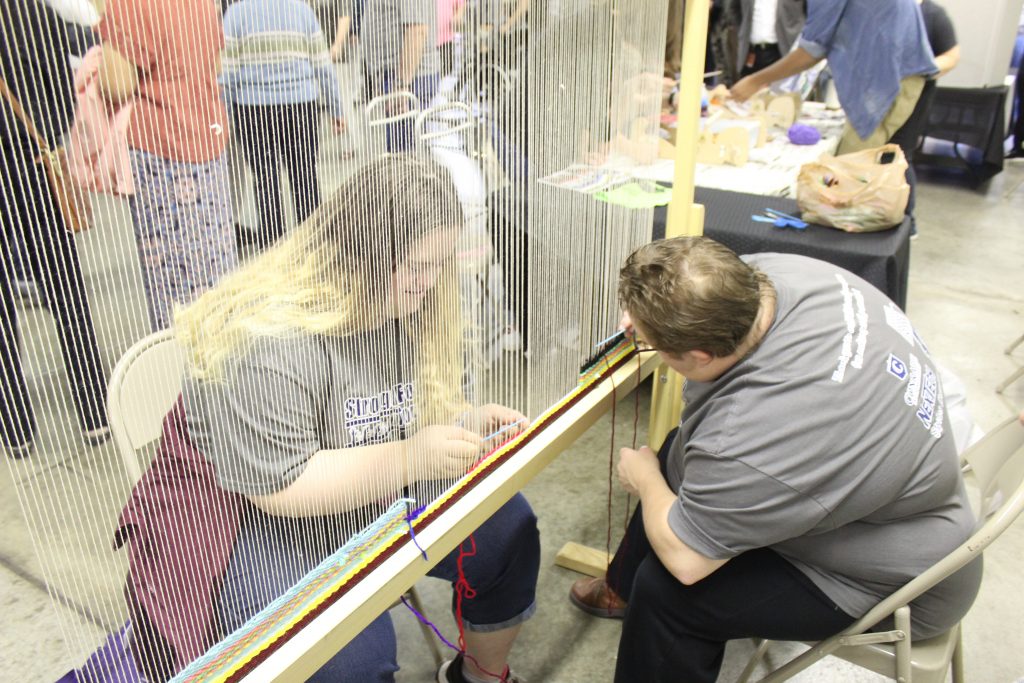
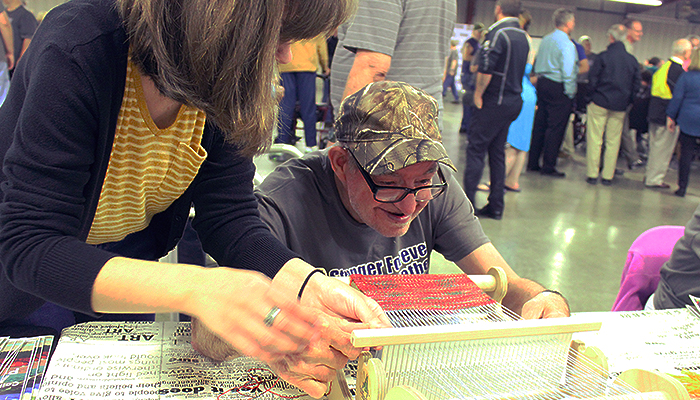
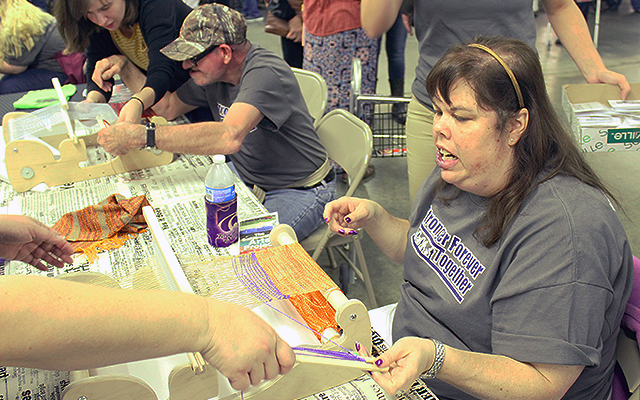
Schmierbach, a FHSU art professor, has received grant money for a Collaborative Art Project. DSNWK clients have been weaving. She had looms set up at the Fall Fest event Tuesday. A “Drawing to Music Workshop” will be 12:30 to 2:30 p.m. Saturday, Oct. 27, at DSNWK Employment Connections. Call 785-625-2018 and ask for Crystal to RSVP.
Upcoming workshops will also include collage and weaving.
Jim Blume, former president and CEO of DSNWK, also took to the podium and said seeing everyone in the crowd was like a family reunion.
Blume said the parents of DSNWK clients going back years sacrificed for their children. They loved them and worried about them moving away from home and coming home from state hospitals.
“The second way that you saw love was through the staff,” he said. “Each day the staff would take care of you, worry about you and helped in every way because they loved you.”
Blume acknowledged the DSNWK staff does not get paid what they deserve — some after as much as 30 years of service. He said it was a love for their clients that kept them with DSNWK.
“I am honored to be part of [the capital campaign], because I love each one of you,” he said to the crowd of clients, parents, guardians and staff. “I pray for you. I don’t get to see you very often, but you will always be close to me in my heart.”
Donations can be made online at www.dsnwk.org or make checks payable to DSNWK and mail them to Capital Campaign, PO Box 310, Hays, KS 67601.
Kansas Gas seeks 10 percent rate increase

TOPEKA, Kan. (AP) — State regulators will hear from gas customers this week about a proposed 10 percent rate hike.
 State officials say Kansas Gas Service’s rate proposal would add an estimated $5.60 a month to the average gas bill. The Kansas Corporation Commission will hear from the public Thursday in Topeka before deciding whether to grant the request.
KGS, a division of Oklahoma natural gas giant ONEOK, says that four main factors are driving its request. They included increased employee wages and more efficient appliances that are reducing consumption.
Kansas House Minority Leader Jim Ward says he’s suspicious of the need for an increase because it’s been less than two years since rates last went up. Ordinarily, rate cases are requested by companies every four to five years.
Hairball scheduled to rock Salina


SALINA —Hairball is back and ready to rock you at 7:30 p.m. on October 13 in Tony’s Pizza Events Center.
Hairball is a shamelessly fun tribute to all the great hair metal bands of the ’70s and ’80s. The unique show features multiple singers, costume changes, pyrotechnics, and tons of songs that the audience knows by heart. As you rock along with them you’ll witness dead-on recreations of KISS, Twisted Sister, Journey, Queen, Prince, Mötley Crüe, AC/DC, and many, many more!
Opening for Hairball is Salina’s own local rock band Paramount. Known for their high-energy sing-alongs of epic ’80s anthems, Paramount is guaranteed to get the crowd fired up.
A social ‘Appy Hour will be held prior to the show, from 5:30 to 7 p.m.
Tickets are available through the Tony’s Pizza Events Center Box Office, online, and by calling 888-826-SHOW (7469). Reserved seating is $17 and $27. The standing only Party Pit is just $37. Groups of 10 or more call 785-826-7200 for discounts. Tickets for the ‘Appy Hour are $20. Get more info at www.tonyspizzaeventscenter.com .
Ruth Marlene Chilcott
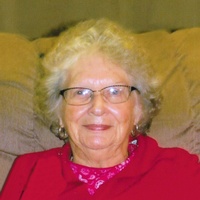
 Ruth Marlene (Swilley) Chilcott, 83, of Toronto, KS, peacefully ascended to her heavenly home on September 30, 2018, at the Greenwood County Hospital in Eureka, KS. She was surrounded by her three loving daughters.
Ruth was born November 4, 1934, in her parents’ home on Big Sandy in Woodson County, KS. She was the 3rd child of Warren Nolan and Ortha Venith (Daniel) Swilley. She attended grade school on Big Sandy and after moving to Toronto graduated from Toronto High School in 1952. She graduated from Iola Community Junior College with a Continuing Education Degree in 1954. In 1955 she taught school in Middletown, KS, near Big Sandy. She later graduated from Fort Hays State University with a Bachelor of Science in Education.
She was united in marriage to the love of her life, Bill Chilcott, on June 4, 1955, at the Evangelical United Brethren Church in Toronto. They were married 42 years until his death in 1997. To this union four children were born, Beth Ann in 1956, Brenda Sue in 1958, Patsy Ruth in 1960, and John Bradford (stillborn) in 1964. Ruth and Bill raised their children in Toronto, Yates Center, and Great Bend, KS.
Ruth was a gifted and loved elementary school teacher. She received many honors and accolades for her teaching skills. She was memorable to her students for many reasons, but one of the most popular reasons was her daily reading of the Laura Ingalls Wilder books. She was an avid reader. She loved flowers and making arrangements with them. Ruth was an accomplished pianist and vocalist. She sang for a variety of special occasions and in many church related events. She was a skilled seamstress sewing for her three daughters, herself, and her grandchildren. She was a member of numerous teaching organizations and was active in her profession and community. She was an officer and served on the board of the Toronto Methodist Church, the Toronto American Legion Auxiliary Post #325, the Big Sandy Homecoming Committee, the Toronto Senior Center, and Eastern Star to name a few. She also served and volunteered on the Woodson County Historical Society Committee. The log cabin at the Woodson County Historical site in Yates Center belonged to Ruth’s grandparents, John and Rebecca Daniel when they lived on Big Sandy. If you knew Ruth at all you knew she was an animal lover. Strays were no longer strays when Ruth found them.
The funeral service will be officiated by Jeff Owen, the Chaplain from Kindred Hospice, at 10:00 A.M. Friday, October 5, 2018, at the Toronto United Methodist Church. Visitation will be from 9:00 A.M. to 10:00 A.M. prior to the funeral service at the church. Burial will follow in the Toronto Cemetery.
Memorial contributions may be made to the Toronto Senior Center or the Toronto American Legion Auxiliary and may be sent in care of Campbell Funeral Home, PO Box 188, Yates Center, KS 66783.
Ruth was preceded in death by her parents; her husband, John William “Bill” Chilcott; her son, John Bradford Chilcott; her brother, Leon Swilley; a sister-in-law, Rosalie Swilley; a brother-in-law, Dale Thomas; and a nephew, Dalen Thomas.
She is survived by her three daughters, Beth Ann Chilcott of Toronto, Brenda Raven (Jason) of Hays, KS, and Patsy Arnold (Stan) of Grand Island, NE; her sister, Helen Thomas of Toronto; three grandchildren, Tyler Arnold, Michael Raven, and Elizabeth (Arnold) Supencheck; a great-granddaughter, Memphis Arnold; many nieces and nephews; other relatives, loving friends, and former students.
Special thanks to Kindred Hospice and the Greenwood County Hospital for the gentle love and care they gave her.
Donald J. Miller
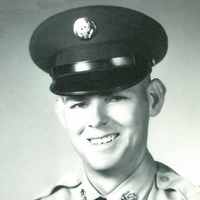
 Donald J. Miller, 73, retired truck driver, passed away Tuesday, October 2, 2018.
Rosary, 6 p.m., Thursday, October 4 at Downing & Lahey Mortuary West. Funeral Mass, 10 a.m., Friday, October 5, at St. Francis of Assisi Catholic Church.
Preceded in death by parents, Norbert and Mary Miller; brother, Roy Dean Miller.
Survivors: wife, Mary; sons, Blake (Debbie) Miller and Brian (Monica) Miller all of Wichita; daughter, Jackie (Zac) House of Chesterton, IN; brother, Pete (Martha) Miller; sister, Shirley (Howard) Droegemeier all of Hays; grandchildren, Carly, Jenny, Mike and Sam Miller, Bethany, Paige and Taylor House.
In lieu of flowers, memorial established with St. Francis of Assisi Catholic School, 861 N. Socora, Wichita, KS 67212.
Marie Fern Grover
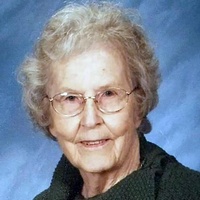
 Marie Fern Grover, 97, passed away on October 1, 2018 at Manor of the Plains, Dodge City, Kansas. She was born December 22, 1920 in rural Rooks County, the daughter of Earl R. and Alice (Hale) Bartholomew.
Marie attended the Mt. Lebanon one room school until the family moved to Stockton, Kansas, in 1931. She graduated from Stockton High School in 1938 and attended Fort Hays University, graduating in 1942 with a Bachelor of Arts Degree in Zoology. She married Loren Grover in 1942 in Stockton. He preceded her in death in 1950. During the years of their marriage, they moved around the country from base to base while he was in the Marine Corps. In 1950 Marie moved to Hays, Kansas, where she resided until 2016 when she moved to Dodge City.
She was active in the First United Methodist Church of Hays, being a charter member of the First United Methodist Women, Ruth Circle. She was also a charter member of the Hadley Hospital Auxiliary, active in Girl Scouts when her daughters were young, a member of P.E.O. Chapter EC, a member of Sorosis Club and vice president of the Fort Hays Alumni Society. Her lifelong hobby was the study and observation of birds of all kinds.
Marie was preceded in death by her parents; her husband, Loren; a brother Robert E. Bartholomew in 1924; two sisters, Elizabeth Alice (Bartholomew) Walter in 2011 and Ethel Roberta (Bartholomew) Mock in 2017. She is survived by three daughters, Peggy Abbey and husband Thayne, Patricia Kolb and husband Dan, all of Dodge City, Kansas, and Barbara Bootman and husband Steve of McKinney, Texas; eight grandchildren; ten great grand-children; and many nieces and nephews.
There will be no visitation as cremation has taken place. Her ashes will be scattered at the Bow Creek Cemetery in Phillips County, Kansas, on October 6 at 11:00 AM. Memorials are suggested to the First United Methodist Church of Hays or the Elam Bartholomew Herbarium in care of the Sternberg Museum in Hays. Thoughts and memories may be shared in the online guest book at www.swaimfuneralhome.com.
Edgar A. Sander
Edgar A. Sander died on Sept. 27, 2018 at Oak Hills Care Center in Jones, OK.
He was born May 22, 1934 in Ellis County, Kansas to Edgar and Marie (Meis) Sander. He was preceded in death by his parents and brother, Gerald Sander.
Edgar graduated from Kansas State University with a masters degree in geology. His home has been in Spencer, OK, working as a geologist in Oklahoma.
Graveside service will be held 2:00 pm, Saturday, October 6th in St. Ann Cemetery, Walker, KS.
Positively Pink for breast cancer survivors
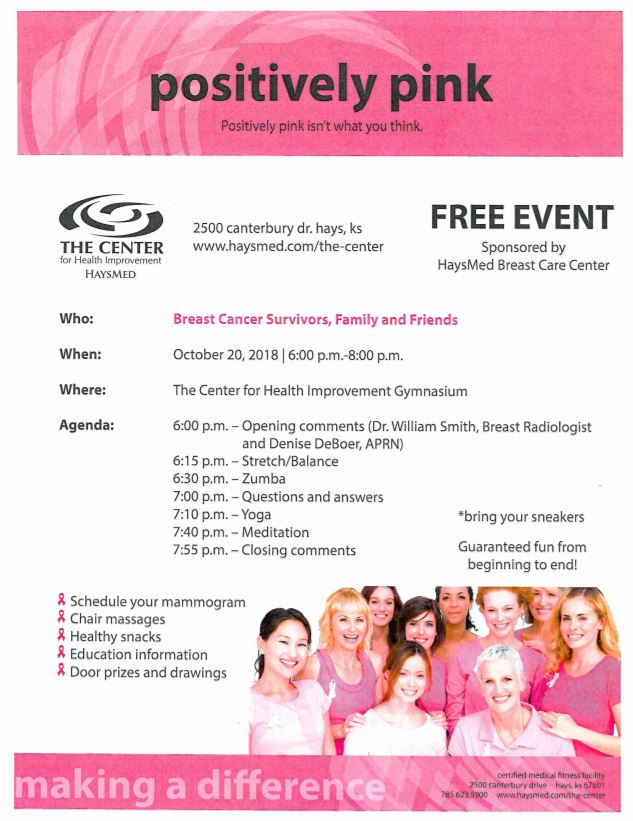

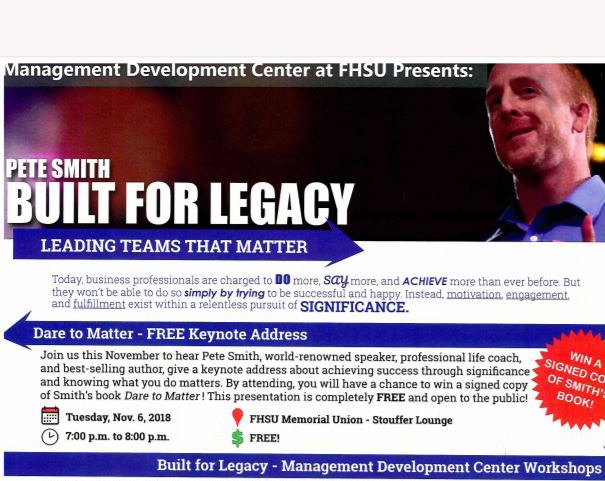
Professional life coach to offer free session on leading teams

Ellis Co., state rep. candidate debates Oct. 16