We have a brand new updated website! Click here to check it out!

Holiday Express Train begins journey to Kansas

KANSAS CITY (AP) — A festive holiday train has started its journey through Louisiana, Mississippi, Texas, Arkansas, Oklahoma, Kansas, Illinois and Missouri.

photo courtesy Kansas City Southern

The Kansas City Southern Holiday Express Train started its journey last week in Shreveport, Louisiana. After stops in more than 20 cities, the trip will end Dec. 14 at Union Station in Kansas City, where the six-car train will remain on display through Dec. 18.

It features a smiling tank car dubbed “Rudy,” a gingerbread boxcar, a flatcar carrying Santa’s sleigh, plus a reindeer stable and a miniature village. There’s also an elves’ workshop and even a little red caboose.

Guests get to visit Santa and tour the train.

🎥 Repair of older sewer lines approved by city commission

By BECKY KISER
Hays Post

Hays city commissioners Tuesday approved $198,380 in sewer repairs of 26 locations primarily in the older areas of Hays, south of 27th Street and west of Vine Street.

The low bid was from M&D Excavating, Hays, which will start the work in January and is to be completed by June 1, 2019.

Jeff Crispin, director of water resources, said the project requires digging up and replacing some sections of damaged sewer lines due to pipe collapses, holes, or offset joints.

“The sewage is still flowing through the lines. It is also important to mention there will not be any disruption of service,” emphasized Crispin.

“We’ve viewed all these locations. We’ve used video and stills. We still have flow in these locations but it is important to get things fixed now so they don’t continue to become a problem down the road.”

Most of the locations have 8-inch vitreous clay pipe pipes buried 5 to 10 feet underground. All of the replacement lines will be PVC pipe.

“We haven’t done a project like this in some time,” added Jacob Wood, assistant city manager.

“This also gives us an idea of what the cost is gonna be going forward. Our estimate was about $100,000 more [than the low bid]. So we will have some additional projects, point repairs and that sort of stuff, coming up right at the beginning of next year.”

Vice-Mayor Henry Schwaller said he’s pleased the city is being pro-active in the repair of sewer lines.

“I don’t think we’ve done this in 20 years,” said the longtime commissioner. “I don’t remember ever voting on this.”

Commissioner Sandy Jacobs was absent from the Nov. 20 meeting.

It was held Tuesday rather than the usual Thursday due to the Thanksgiving holiday.

2 hospitalized in Hays after van slides on I-70

ELLIS COUNTY —Two people were injured in an accident just after 6p.m. Sunday in Ellis County.

The Kansas Highway Patrol reported a 2006 Volvo Cargo van driven by Oleg C. Brown, 51, East Pointe, GA., was eastbound Interstate 70 four miles east of Ellis.

The driver lost control on the icy road when it slid and jackknifed into the median striking a 1995 Dodge truck driven by Frankie L. Mobley, 28, Tucumcari, NM., that was in the median from a previous crash and was waiting to be towed.

Mobley and a passenger Legacy L. Roach, 25, Tucumcari, NM., were transported to the hospital in Hays. Brown was not injured. All were properly restrained at the time of the accident, according to the KHP.

Buckeye Wind Farm makes donation to TMP-M science department

TMP-M
TMP-M

Thomas More Prep-Marian alumn Shawn Braun, representing the local Buckeye Wind Farm, recently delivered a $500 donation to the TMP-Marian science department.

Accepting the check were Principal Chad Meitner and science teacher Randy Brull. The wind farm is the site for an annual field trip for science students and regularly provides support for Project Graduation and the ACE fundraiser in the spring.

Speaker on suicide will be part of Divine Mercy’s fall Care-a-Thon

Divine Mercy Radio, will host its semi-annual Care-a-Thon Nov. 27 to 30, where this Catholic radio station will broadcast live from 7 a.m. to 6 p.m. Each hour there will be a different guest talking about various topics – many around the theme of “Watch and Pray.”

Suicide is a hot topic, and Richard Falcon, Dodge City, a trainer for Yellow Ribbon Suicide Prevention, will be speaking two hours on this topic from 4 to 6 p.m. Nov. 28. The first hour Falcon will address teenagers and the second hour he will be addressing parents. Father Don Bedore, Pastor of Prince of Peace in Great Bend will be breaking down the meaning of routine prayers at 1 p.m. Nov. 28, and Bishop John Brungardt will follow at 2 p.m. The entire four-day schedule is available at dvmercy.com.

Richard Falcon

During this Care-a-Thon prizes will be given away and there will be a different Catholic trivia question each 30 minutes. However, only children 12 and under are eligible to play Catholic trivia after 4 p.m. Right before the 6 p.m. hour, a name is drawn from all the trivia winners that day and that person wins a $50 gift certificate to Messenger Catholic Books, Gifts and Sacramentals.

Divine Mercy Radio has two stations, both on 88.1 FM, which reach a 30-mile radius in each of the Great Bend (KRTT) and Hays (KVDM) areas. But radio isn’t the only way to listen to this station. Divine Mercy Radio streams live from their website at dvmercy.com or people can listen by downloading the free phone app, simply type in Divine Mercy Radio in your app or play store. Anyone who has an Amazon Echo can listen also by enabling the Divine Mercy Radio skill. Finally, live footage is recorded during the four-day Care-a-Thon on YouTube. Simply search Divine Mercy Radio.

Pheasant hunt for youth, women at Waconda Lake set for Dec. 8

KDWPT

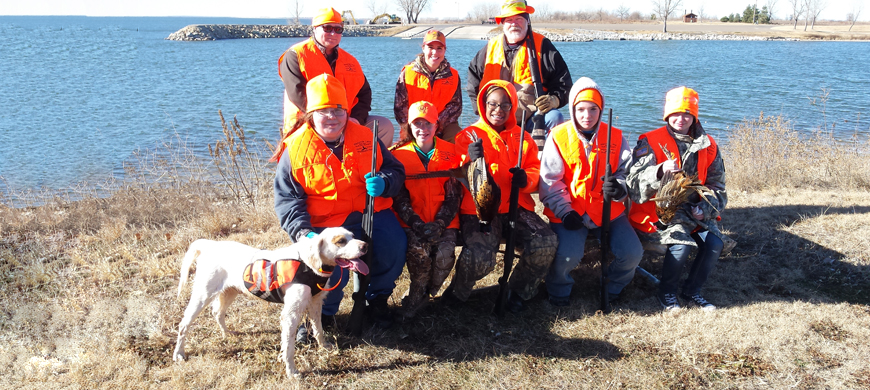
CAWKER CITY – The 2018 Youth and Women’s Pheasant Hunt at Waconda Lake in Mitchell County is set for Saturday, December 8. The annual hunt is sponsored by the Kansas Department of Wildlife, Parks and Tourism (KDWPT), as well as local businesses and community members. Women and youth 11-16 are eligible and must apply by contacting the Glen Elder Area Office, 785-545-3345, by Monday, Dec. 3, 2018. Up to 40 applicants will be selected to participate.

The event is designed to provide a comfortable and positive hunting environment for new and inexperienced hunters. Hunting experience is not required, and some shotguns and ammunition can be provided if needed. The day will begin at 9 a.m. at the Hopewell Church basement in Glen Elder State Park with a pre-hunt safety talk.

Participants will be divided into groups based on their hunting experience and skill levels. Those with the least amount of experience will be provided with safety exercises and wingshooting instruction. All hunters will be paired with guides and mentors before striking out to hunting areas around Waconda Lake. Lunch will be provided by the Waconda Lake Association.

One unique twist to this event is that it provides participants the opportunity to interact with and hunt alongside hero-celebrities who have been invited to serve as mentors. Hero-celebrities may include former professional athletes, television personalities and military personnel.

The day will wrap up with a post-hunt meeting to rehash the day’s activities. Hunters will be instructed on how to dress and package harvested birds, and all will receive a commemorative item, as well as the chance to win outdoor gear prizes provided by sponsors.

Volunteers and hunting mentors are always needed. Contact Chris Lecuyer at the Glen Elder Area Office, 785-545-3345 for more information.

Teen dies after Jeep slides, collides with semi on Kan. highway

SCOTT COUNTY — One person died in an accident just after 4p.m. Sunday in Scott County.

The Kansas Highway Patrol reported a 2004 Jeep Liberty driven by Kieran McGill, 18, Thornton, CO., was southbound on U.S. 83 just north of the Kansas 95 Junction.

The driver lost control of the vehicle and went into a side skid into northbound lane of U.S. 83, and collided with a 1995 5 Peterbilt semi driven by Gary Bowman, 62, Smithville, Missouri.

McGill was pronounced dead at the scene and transported to Price and Sons Mortuary in Scott City.

Bowman was transported to the Scott County Hospital. Both drivers were properly restrained at the time of the accident, according to the KHP.

Horse injured after trailer flips on Kansas highway

FRANKLIN COUNTY — A horse was injured in an accident just before 7a.m. Sunday in Franklin County.

photos courtesy Franklin Co. Sheriff

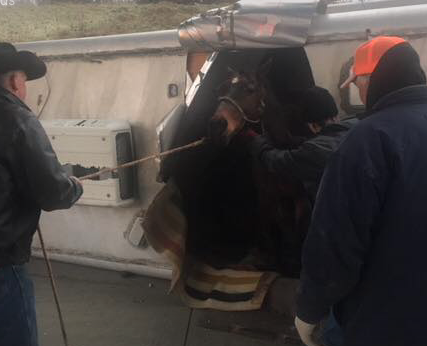
A truck pulling a horse trailer carrying two horses was northbound on Interstate 35 just south of Ottawa, according to the Franklin County Sheriff’s Department. The trailer became detached, flipped and blocked both lanes of traffic after the driver struck a guardrail.

One horse was able to escape and the second one was trapped. With the assistance of LOH Fire, Cottonwood Animal Hospital, a wrecker service and citizens, the horse was cut out of the trailer. The horse was injured, but is expected to make a full recovery, according to the sheriff’s department.

Sunny, cold Monday

Today Mostly sunny, with a high near 37. Northwest wind 6 to 8 mph.

Tonight Partly cloudy, with a low around 19. West northwest wind around 6 mph becoming calm.

Tuesday Mostly sunny, with a high near 36. Light and variable wind becoming south southeast around 6 mph in the afternoon.

Tuesday NightMostly cloudy, with a low around 25. South wind 6 to 8 mph.

WednesdayPartly sunny, with a high near 45. South wind around 7 mph.

Wednesday NightPartly cloudy, with a low around 27.

ThursdayA 20 percent chance of rain before noon. Partly sunny, with a high near 46.

Claim: First gene-edited babies born in China

HONG KONG (AP) — A Chinese researcher claims that he helped make the world’s first genetically edited babies — twin girls born this month whose DNA he said he altered with a powerful new tool capable of rewriting the very blueprint of life.

If true, it would be a profound leap of science and ethics.

A U.S. scientist said he took part in the work in China, but this kind of gene editing is banned in the United States because the DNA changes can pass to future generations and it risks harming other genes.

Many mainstream scientists think it’s too unsafe to try, and some denounced the Chinese report as human experimentation.

The researcher, He Jiankui of Shenzhen, said he altered embryos for seven couples during fertility treatments, with one pregnancy resulting thus far. He said his goal was not to cure or prevent an inherited disease, but to try to bestow a trait that few people naturally have — an ability to resist possible future infection with HIV, the AIDS virus.

He said the parents involved declined to be identified or interviewed, and he would not say where they live or where the work was done.

There is no independent confirmation of He’s claim, and it has not been published in a journal, where it would be vetted by other experts. He revealed it Monday in Hong Kong to one of the organizers of an international conference on gene editing that is set to begin Tuesday, and earlier in exclusive interviews with The Associated Press.

“I feel a strong responsibility that it’s not just to make a first, but also make it an example,” He told the AP. “Society will decide what to do next” in terms of allowing or forbidding such science.

Some scientists were astounded to hear of the claim and strongly condemned it.

It’s “unconscionable … an experiment on human beings that is not morally or ethically defensible,” said Dr. Kiran Musunuru, a University of Pennsylvania gene editing expert and editor of a genetics journal.

“This is far too premature,” said Dr. Eric Topol, who heads the Scripps Research Translational Institute in California. “We’re dealing with the operating instructions of a human being. It’s a big deal.”

However, one famed geneticist, Harvard University’s George Church, defended attempting gene editing for HIV, which he called “a major and growing public health threat.”

“I think this is justifiable,” Church said of that goal.

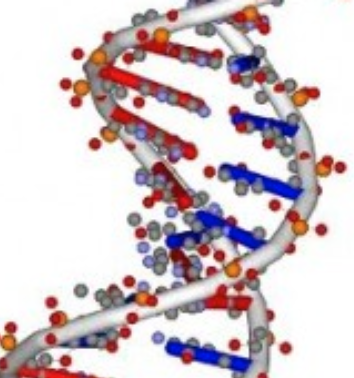
In recent years scientists have discovered a relatively easy way to edit genes, the strands of DNA that govern the body. The tool, called CRISPR-cas9, makes it possible to operate on DNA to supply a needed gene or disable one that’s causing problems.

It’s only recently been tried in adults to treat deadly diseases, and the changes are confined to that person. Editing sperm, eggs or embryos is different — the changes can be inherited. In the U.S., it’s not allowed except for lab research. China outlaws human cloning but not specifically gene editing.

He Jiankui (HEH JEE’-an-qway), who goes by “JK,” studied at Rice and Stanford universities in the U.S. before returning to his homeland to open a lab at Southern University of Science and Technology of China in Shenzhen, where he also has two genetics companies.

The U.S. scientist who worked with him on this project after He returned to China was physics and bioengineering professor Michael Deem, who was his adviser at Rice in Houston. Deem also holds what he called “a small stake” in — and is on the scientific advisory boards of — He’s two companies.

The Chinese researcher said he practiced editing mice, monkey and human embryos in the lab for several years and has applied for patents on his methods.

He said he chose embryo gene editing for HIV because these infections are a big problem in China. He sought to disable a gene called CCR5 that forms a protein doorway that allows HIV, the virus that causes AIDS, to enter a cell.

All of the men in the project had HIV and all of the women did not, but the gene editing was not aimed at preventing the small risk of transmission, He said. The fathers had their infections deeply suppressed by standard HIV medicines and there are simple ways to keep them from infecting offspring that do not involve altering genes.

Instead, the appeal was to offer couples affected by HIV a chance to have a child that might be protected from a similar fate.

He recruited couples through a Beijing-based AIDS advocacy group called Baihualin. Its leader, known by the pseudonym “Bai Hua,” told the AP that it’s not uncommon for people with HIV to lose jobs or have trouble getting medical care if their infections are revealed.

Here is how He described the work:

The gene editing occurred during IVF, or lab dish fertilization. First, sperm was “washed” to separate it from semen, the fluid where HIV can lurk. A single sperm was placed into a single egg to create an embryo. Then the gene editing tool was added.

When the embryos were 3 to 5 days old, a few cells were removed and checked for editing. Couples could choose whether to use edited or unedited embryos for pregnancy attempts. In all, 16 of 22 embryos were edited, and 11 embryos were used in six implant attempts before the twin pregnancy was achieved, He said.

Tests suggest that one twin had both copies of the intended gene altered and the other twin had just one altered, with no evidence of harm to other genes, He said. People with one copy of the gene can still get HIV, although some very limited research suggests their health might decline more slowly once they do.

Several scientists reviewed materials that He provided to the AP and said tests so far are insufficient to say the editing worked or to rule out harm.

They also noted evidence that the editing was incomplete and that at least one twin appears to be a patchwork of cells with various changes.

“It’s almost like not editing at all” if only some of certain cells were altered, because HIV infection can still occur, Church said.

Church and Musunuru questioned the decision to allow one of the embryos to be used in a pregnancy attempt, because the Chinese researchers said they knew in advance that both copies of the intended gene had not been altered.

“In that child, there really was almost nothing to be gained in terms of protection against HIV and yet you’re exposing that child to all the unknown safety risks,” Musunuru said.

The use of that embryo suggests that the researchers’ “main emphasis was on testing editing rather than avoiding this disease,” Church said.

Even if editing worked perfectly, people without normal CCR5 genes face higher risks of getting certain other viruses, such as West Nile, and of dying from the flu. Since there are many ways to prevent HIV infection and it’s very treatable if it occurs, those other medical risks are a concern, Musunuru said.

There also are questions about the way He said he proceeded. He gave official notice of his work long after he said he started it — on Nov. 8, on a Chinese registry of clinical trials.

It’s unclear whether participants fully understood the purpose and potential risks and benefits. For example, consent forms called the project an “AIDS vaccine development” program.

The Rice scientist, Deem, said he was present in China when potential participants gave their consent and that he “absolutely” thinks they were able to understand the risks.

Deem said he worked with He on vaccine research at Rice and considers the gene editing similar to a vaccine.

“That might be a layman’s way of describing it,” he said.

Both men are physics experts with no experience running human clinical trials.

The Chinese scientist, He, said he personally made the goals clear and told participants that embryo gene editing has never been tried before and carries risks. He said he also would provide insurance coverage for any children conceived through the project and plans medical follow-up until the children are 18 and longer if they agree once they’re adults.

Further pregnancy attempts are on hold until the safety of this one is analyzed and experts in the field weigh in, but participants were not told in advance that they might not have a chance to try what they signed up for once a “first” was achieved, He acknowledged. Free fertility treatment was part of the deal they were offered.

He sought and received approval for his project from Shenzhen Harmonicare Women’s and Children’s Hospital, which is not one of the four hospitals that He said provided embryos for his research or the pregnancy attempts.

Some staff at some of the other hospitals were kept in the dark about the nature of the research, which He and Deem said was done to keep some participants’ HIV infection from being disclosed.

“We think this is ethical,” said Lin Zhitong, a Harmonicare administrator who heads the ethics panel.

Any medical staff who handled samples that might contain HIV were aware, He said. An embryologist in He’s lab, Qin Jinzhou, confirmed to the AP that he did sperm washing and injected the gene editing tool in some of the pregnancy attempts.

The study participants are not ethicists, He said, but “are as much authorities on what is correct and what is wrong because it’s their life on the line.”

“I believe this is going to help the families and their children,” He said. If it causes unwanted side effects or harm, “I would feel the same pain as they do and it’s going to be my own responsibility.”

___

Kansas Agrees To Cover Potentially Life-Saving Drugs For Patients With Chronic Hepatitis C

Kansas has agreed to cover the cost of drugs to treat Medicaid patients with chronic hepatitis C without subjecting them to a lengthy list of requirements.

It’s believed that thousands of KanCare’s 360,000 enrollees have chronic hepatitis C, which can be fatal.
BIGSTOCK

A legal settlement, which awaits final court approval, resolves a class action lawsuit alleging the state made it too difficult for hepatitis C patients to receive the potentially life-saving treatments.

The parties first notified the court in July that they had resolved the case after mediation. On Tuesday, the court set deadlines for approval of a final settlement.

“Essentially, the agreement is that all hep C patients who use Medicaid to get their drugs will be entitled to Mavyret or Harvoni, the two curative drugs, regardless of their fibrosis score,” said Lauren Bonds, legal director of the ACLU of Kansas, which along with the Shook Hardy & Bacon law firm, sued Kansas officials over the state’s hep C treatment guidelines in February.

Fibrosis scores measure the health of the liver. Scores range from F0, referring to mild or no scarring of the liver, to F4, referring to significant liver damage or cirrhosis. Kansas’ privatized Medicaid program, known as KanCare, had limited coverage to patients with a fibrosis score of F3 or F4.

Theresa Freed, a spokeswoman for the Kansas Department of Health and Environment, confirmed that Kansas has stopped limiting coverage to patients with F3 or F4 scores.

The state had imposed other conditions for treatment as well, including denying direct-acting antiviral drugs, the current standard of care, to patients who tested positive for alcohol or illicit drug use. In addition, patients had to undergo six months of “abstinence” testing before KanCare would consider covering the drugs.

Bonds said the settlement resolves all the claims laid out in the lawsuit.

KanCare has about 360,000 enrollees. The U.S. Census Bureau in 2014 estimated that about 35,000 Kansans had hepatitis C, but it’s not known how many of them are enrolled in KanCare. The lawsuit estimates the number to be in the thousands.

“I think the law is very clear on this front,” Bonds said. “We’re one of probably 15 cases on this issue that have been filed and there’s been a very clear trend of how they’re being resolved — and that’s in favor of the plaintiffs.”

Many states balked at paying for the high-priced drugs and limited treatment for Medicaid patients and prison inmates. But recent court decisions have ruled that states cannot deny treatment because of the drugs’ costs.

Most recently, a federal judge in Indiana found that withholding hepatitis C treatment from prison inmates violated the Eighth Amendment’s “cruel and unusual punishments” clause. Similar rulings have been handed down or settlements reached in other states, including Florida, Massachusetts, Michigan, Washington and Colorado.

A lawsuit against Missouri was dropped in November 2017 after the state agreed to cover the cost of direct-acting antiviral drugs.  

Hepatitis C is a contagious infection that can cause severe damage to the liver and even death. The Centers for Disease Control and Prevention estimates that between 2.7 million and 3.9 million people in the United States have chronic hepatitis C. Most people become infected by sharing needles, syringes or other equipment to inject drugs.

Until recently, there was no effective treatment for chronic hepatitis C infections. But in 2013, the U.S. Food and Drug Administration approved a new class of highly effective direct-acting antiviral drugs that have few side effects and boast a cure rate of more than 90 percent.

The drugs are extremely expensive. Mavyret runs about $26,400 per treatment course, before discounts. And Harvoni runs about $94,500 per treatment course, also before discounts.

Bonds said her understanding is that the state has funding in place to cover the drugs.

“We were assured about that, but don’t know a ton of the specifics,” Bonds said. 

U.S. District Judge Daniel D. Crabtree must approve the settlement, final details of which are being hammered out.

Jennifer Montgomery, a spokeswoman for the Kansas Attorney General’s office, which defended the lawsuit, said work on the settlement was proceeding and the office was “optimistic about getting it resolved.”

Dan Margolies is a senior reporter and editor in conjunction with the Kansas News Service. You can reach him on Twitter @DanMargolies.

2 from Ellis Co. avoid injury after car slides under semi’s trailer

SALINE COUNTY — One person was injured in an accident just before 5p.m. Sunday in Saline County.

The Kansas Highway Patrol reported a 2000 Lincoln LS driven by Shanna Michelle Yocham, 40, McPherson was southbound on Interstate 135 just south of Schilling Road.

Due to icy, snow packed roads, the driver lost control and spun underneath the trailer of a southbound 2005 Freightliner semi driven by William D. Gawith, 60, Hays.

Yocham was transported to the hospital in Salina. Gawith and a passenger Thompson, Jay M. Thompson, 50, Victoria, were not injured.

All three were properly restrained at the time of the accident, according to the KHP.

Copyright Eagle Radio | FCC Public Files | EEO Public File