THOMAS COUNTY — A Colby man was injured in an accident at 6:25 p.m. Saturday in Thomas County.
The Kansas Highway Patrol reported a 1998 Peterbilt driven by Marty Anderson, 55, Colby, was northbound on Kansas 25 when the semi went off the roadway and rolled on its passenger side.
Anderson was transported to Colby Medical Center for treatment. He was wearing a seat belt, the KHP reported.
GOVE COUNTY — A 15-year-old from Quinter was injured in a Saturday rollover accident in Gove County.
The Kansas Highway Patrol reported the teen was westbound on Old U.S. 40, 2 miles east of Castle Rock Road, when the 2000 Buick Lesabre she was driving entered the north ditch and rolled. The car rolled one and a half times and came to rest on its top.
The driver was transported to Gove County Medical Center for treatment. The KHP did not report on the use of a seat belt.
The Kansas Department of Transportation has reopened Interstate 70 in both directions from WaKeeney to Chapman. The route continues to remain closed from Chapman to Junction City and from the K-177 junction at exit 313 to Topeka.
Motorists are reminded to use caution when driving in winter weather conditions. For up-to-date information on road closures and road conditions, call 511 in Kansas or 866-511-5368 outside Kansas, or check travel information online at www.kandrive.org.
TOPEKA (AP) — The incoming Kansas governor will face a large task dealing with a struggling child welfare system recently hit with a class-action lawsuit alleging conditions were so poor that children suffered mentally or ran away from foster homes.
The lawsuit filed in federal court this month alleges that children have been trafficked for sex, sexually abused inside adoptive homes or raped inside a child welfare office, The Wichita Eagle reported .
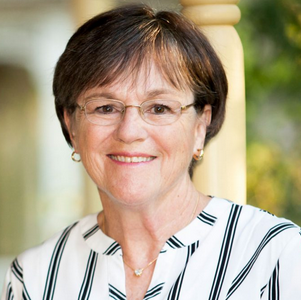
Lawmakers, experts and advocates say Democratic governor-elect Laura Kelly must significantly invest in the state’s Department for Children and Families to improve the system. Kelly will become governor on Jan. 14.
Kelly said the department will be “a high priority” for her administration. She said the agency has lacked resources for almost a decade.
“I will take the same approach to DCF, though, that we’re going to take to every agency, which is to during the transition time to dig deep and figure out where the issues are, what’s working, what’s not working, and then set a course for fixing whatever we find that needs to be fixed,” she said.
Many advocates said they believe Kelly’s experience as a member of a legislative task forced aimed at improving the child welfare system will help her make progress on the issues.
“She really works on that task force,” said Lori Burns-Bucklew, a Kansas City attorney and accredited child welfare law specialist. “She doesn’t just show up.”
The task force will deliver its recommendations in January and could possibly provide lawmakers with a road map on how to improve the system.
But Burns-Bucklew said Kelly faces a big challenge.
“She’s inheriting an under-resourced system,” she said. “This system has been stripped bare over the years. They haven’t just cut to the bone. They’ve cut into the bone.”
The task force has examined issues such as improving the agency’s outdated computer systems and its work force, which has seen high turnover and high caseloads.
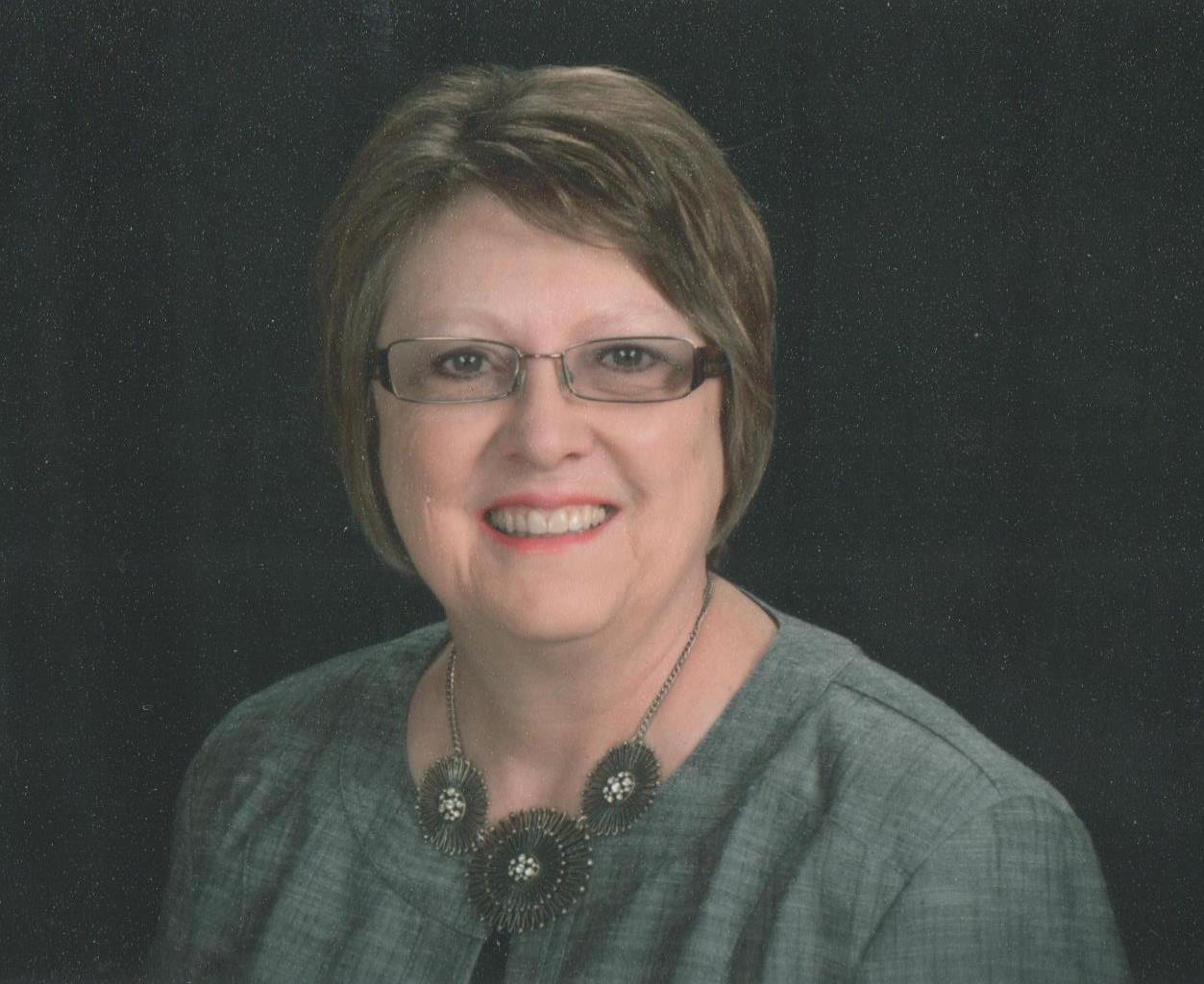
Goodland, Kansas, resident and former Smith Field, Nebraska, resident Janice N. Glendening passed away unexpectedly on Friday, November 23, 2018 at the Citizen’s Medical Center in Colby. At the age of 64 years, 9 months and 27 days.
Jan was born on January 27, 1954 in Ord, Nebraska to Otto and Lois Arlene (Boyer) Zapp. She was one of two children. She grew up in Ord, and graduated from Ord High School in 1972.
In September of 1972, Jan met Timothy Glendening, and the two of them were soon married on November 5, 1972. To this union, two children; Derek and Nicolle were born.
Throughout the years, Jan worked as a Dental Assistant, and Dispensing Optician. She also enjoyed traveling across the country with Tim. She was always very active in whatever church Tim was Pastoring, she enjoyed cross stitching and was an avid Nebraska Husker fan. She was thrilled to finally be able to see the Husker Volleyball Team play at the Devaney Sports Center.
She was preceded in death by her parents.
She is survived by her husband Tim of their home in Goodland, two children Derek Glendening of Holdrege, NE and Nicolle Glendening of Goodland. She is also survived by one brother Doug Zapp (Donna) of Kansas City, KS, and three grandchildren Keisha, Grace and Meredith Blake.
Memorial services for Janice will be held on Friday, November 30, 2018 at 3:00 PM MT at the Emmanuel Lutheran Church in Goodland with Pastor Tim Glendening officiating. Inurnment will follow at a later date in the Fort McPherson Cemetery in Maxwell, Nebraska.
Family will greet friends on Thursday, November 29, 2018 from 5:00 to 7:00 PM MT at the church.
Memorials may be designated to the Janice Glendening Memorial Fund and may be left at the services or mailed to Koons-Russell Funeral Home, 211 N. Main Ave., Goodland, KS 67735.
Online condolences may be left at www.koonsrussellfuneralhome.com.
Service arrangements have been entrusted to Koons-Russell Funeral Home in Goodland, KS.
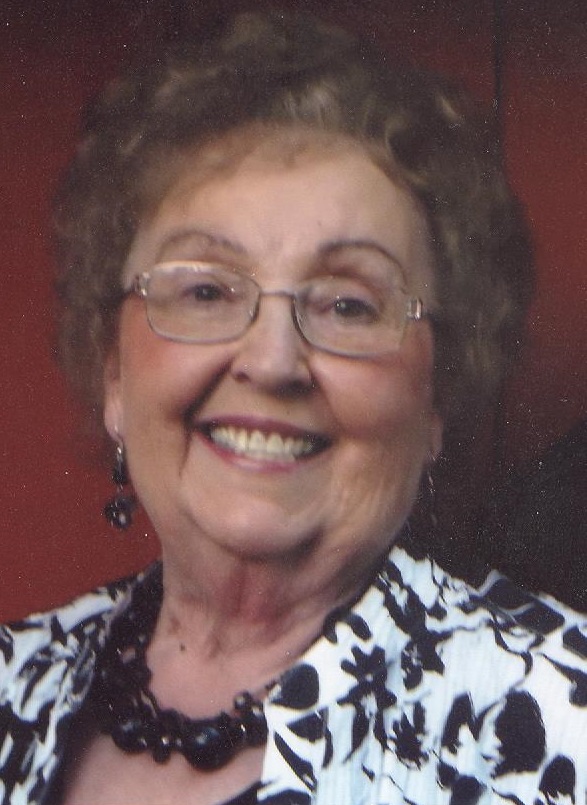
Shelby Lynn (Hunt) Miller, age 79, died November 23, 2018, at the Good Samaritan Society-Sherman County in Goodland, Kansas. Shelby was born on May 13, 1939, by a midwife on a farm in Bird City, Kansas, to Clarence Eugene Hunt and Margretta Ruth Blair Hunt.
Shelby grew up in the Kansas counties of Cheyenne and Sherman. She attended country grade school and graduated from Sherman County School in the Class of 1957. She also attended school at Kansas State University. After school, Shelby worked at Model Laundry in Goodland as a seamstress. She also taught 4-H sewing classes and was a 4-H leader. In 1980, Shelby was elected Sherman County Treasurer and retired in 2005 after 25 years in office. After retirement, Shelby loved volunteering at the Goodland Regional Medical Center Auxiliary, where she eventually became President and then ultimately was appointed District V Coordinator to serve on the auxiliary’s board of directors.
On June 22, 1962, Shelby married Bennett “Dee” Miller at Pilgrim Holiness Church in Goodland. They celebrated 55 wonderful years together, before Dee’s death on July 21, 2017.
Shelby lived life to the fullest and enjoyed bowling, cooking and sewing. Her favorite was sewing. She sewed many beautiful things from clothes to quilts to drapes. Shelby also loved traveling. A couple of favorites were a trip to the Cayman Islands with her Class of 1957, and an Alaskan cruise with friends, Keith and Janet Moffett, and her sister-in-law, Carolyn Hunt. She really enjoyed attending K-State football games in Manhattan and spending time with friends and family, and especially her best friend of 58 years, Barb Neitzel.
Shelby is survived by sister-in-laws, Carolyn Hunt, Glendale, Arizona and Judy (Bob) Hill, Cleo Springs, Oklahoma; many nieces, nephews, great nieces and nephews, great great nieces and nephews and a host of special friends.
She was preceded in death by her husband, Dee Miller (2017); son, Chad Miller (1984); brother, Ronnie Hunt (1997); and her parents, Clarence Hunt (1995) and Margretta Hunt (1985).
Funeral services for Shelby will be held on Friday, November 30, 2018 at 10:30 AM MT at the Church of Christ Church in Goodland with Pastor Brent Flanders officiating. Burial will follow in the Goodland Cemetery.
Visitation will be held on Thursday, November 29, 2018 from 5:00 to 8:00 PM MT at the Koons-Russell Funeral Home in Goodland.
Memorial contributions may be designated to WheatRidge Acres or to Goodland Regional Medical Center Auxiliary and may be left at the services or mailed to Koons-Russell Funeral Home, 211 N. Main Ave., Goodland, Kansas 67735.
Funeral arrangements have been entrusted to Koons-Russell Funeral Home in Goodland.
Ellis school, Grinnell parish among those in need of help
SALINA — More than 95 parishes, schools and organizations in the Catholic Diocese of Salina are participating in #GivingTuesday this year.
The diocese has partnered with #iGiveCatholic, which encourages people to support their Catholic church, school or other Catholic organization.
#iGiveCatholic is an online giving event for the faithful in arch/dioceses across the nation (and the world!) to come together and raise as many charitable dollars as possible for Catholic parishes, schools and nonprofit ministries on #GivingTuesday, Nov. 27. Last year, #iGiveCatholic raised more than $3.6 million for organizations in participating arch/dioceses. As the first-ever online giving day created to celebrate our unique Catholic heritage, #iGiveCatholic inspires faithful stewards to “Give Catholic” on #GivingTuesday, a global day of giving.
#GivingTuesday is a global day of giving fueled by the power of social media and collaboration. Celebrated on the Tuesday following Thanksgiving (in the U.S.) and the widely recognized shopping events Black Friday and Cyber Monday, #GivingTuesday kicks off the charitable season when many focus on their holiday and end-of-year giving.
The Salina Diocese is assisting more than 95 of its parishes, schools and organizations in northwest Kansas (from Manhattan all the way west to the Colorado border, and from I-70, all the way north to the Nebraska border). It is comprised of parishes and schools — big and small. Each has goals and needs.
A few examples:
• St. Mary Parish/School in Ellis is trying to make repairs after a storm damaged the school this summer. More info is HERE.
• Immaculate Conception of the Blessed Virgin Mary parish in Grinnell is seeking assistance with the basics – sanctuary supplies, worship materials, religious education costs for students. Their information is HERE.
• St. Peter in Aurora has been working for at least 2 years to raise money to repair its roof. You can read more HERE.
• Sacred Heart Parish in Atwood is working to raise money for a prayer Garden. Early donations have been strong. Their page is HERE.
Advanced giving for the campaign began Nov. 12, with more than $40,000 raised for parishes, schools and organizations within the diocese in the first day.
“The early donations help build momentum going into Giving Tuesday, and hopefully will rally more supporters to give to these causes which shape our souls,” said Beth Shearer, director of Stewardship and Development for the Salina Diocese.
Aminimum donation of $25 may be made online. Simply go to salina.igivecatholic.org and choose the organization to support. The donation must be made before midnight on Nov. 27.
By LISA MASCARO and MARY CLARE JALONICK Associated Press
WASHINGTON — Whatever happened to trying to impeach President Donald Trump?
As House Democrats begin laying out the vision for their new majority, that item is noticeably missing from the to-do list and firmly on the margins.
The agenda for now includes spending on public works projects, lowering health care costs and increasing oversight of the administration.
It’s the balance that Democratic Leader Nancy Pelosi is trying to strike in the new Congress between those on her party’s left flank who are eager to confront the president, and her instinct to prioritize the kitchen-table promises that Democrats made to voters who elected them to office.
“We shouldn’t impeach the president for political reasons and we shouldn’t not impeach the president for political reasons,” Pelosi recently told The Associated Press.
The California lawmaker, who hopes to lead Democrats as House speaker come January, calls impeachment a “divisive activity” that needs to be approached with bipartisanship.
“If the case is there, then that should be self-evident to Democrats and Republicans,” she said.
Those pressing for impeachment acknowledge they don’t expect action on Day One of the new majority, but they do want to see Democrats start laying the groundwork for proceedings.
“We’re for impeachment. We’re not for get-sworn-in-on-Jan.-1-and-start-taking-votes,” said Kevin Mack, the lead strategist for billionaire Tom Steyer’s Need to Impeach campaign. “Our argument is the Constitution outlines a process to remove a lawless president.”
Tom Steyer / Shutterstock.com
In a new ad, Steyer says Democrats “just need the will” to act. He says he’s calling on Americans to join the 6 million who have already signed on to his group to “give Congress the courage to act.”
“The American people are tired of being told to wait,” Mack said. “Our argument to Congress is you are a co-equal branch of government. It’s time to do what is morally correct.”
Twice over the past two years since Trump was elected, Democrats have tried to force votes on impeachment proceedings, winning a high-water mark of more than 60 supporters, far from the 218 needed.
Republicans are counting on, and possibly even hoping for, impeachment fervor to overtake Democrats, leading them astray from campaign promises or dealmaking with Trump.
“We know the Democrats have a plan: They want to disrupt, they want to try to impeach,” said GOP Rep. Kevin McCarthy of California after winning the GOP’s internal election to serve as minority leader in the new Congress. He warned that Democrats were laying the groundwork to impeach Trump.
Pelosi has made it clear the new majority will not engage in what she calls a “scattershot” approach to investigating the administration.
Instead, the incoming Democratic leaders of House committees will conduct oversight of the president’s business and White House dealings. Democrats are also trying to ensure special counsel Robert Mueller completes his investigation of Russian interference in the 2016 election. They may try to add legislation to protect that probe to the must-pass spending bill in December to help fund the government. They want Mueller’s findings made public.
Kevin McCarthy / Shutterstock.com
“You have to be very reluctant to do an impeachment,” Rep. Jerry Nadler, D-N.Y., the incoming chairman of the House Judiciary Committee, said recently on ABC. Nadler, who served on the committee during President Bill Clinton’s impeachment, cited “the trauma of an impeachment process.”
Democratic leaders also know that moving quickly on impeachment would not sit well with their newly elected members, who helped the party win a House majority in the recent midterms. Many come from swing districts where impeachment could prove unpopular.
“I didn’t work 18 months listening to people in my district to get involved in a political back and forth for the next 18 months,” said Rep.-elect Elissa Slotkin of Michigan. “People want to talk about health care. It’s not a coincidence that most of us who won in tough districts, we won because we talked about issues, not because we talked about internal Washington stuff.”
For now, outside liberal groups are largely standing by Pelosi’s approach, putting their emphasis on pushing Democrats to chart a bold agenda on the domestic pocketbook concerns that won over voters.
Pelosi has some experience with impeachment, serving as a newer lawmaker when Republicans led impeachment proceedings against Clinton. When she became House speaker in 2007 she resisted pressure from her liberal flank to launch impeachment proceedings against President George W. Bush over the Iraq War.
Pelosi believes that if Democrats had tried to impeach Bush when she was speaker, voters may never have elected Barack Obama as president in 2008.
Politically, Democrats may be right. In 1974, Americans only came to agree that President Richard Nixon should be removed from office on the eve of his resignation, according to Pew research. Voters responded to Clinton’s impeachment by electing more Democrats to the House.
“If we had gone down that path, I doubt we would have won the White House,” she said. “People have to see we’re working there for them.”
Alicia BoorOne of the issues that we have here in the area is that our soils are of a high pH. This can cause issues with nutrient uptake in plants, especially if their root systems have been compromised by drought. I have found an article from our Horticulture department that gives you some more information about what you can do if you have high pH soils to help your plants.
Though there are high pH soils in most parts of the state, alkaline soils tend to be more common in the central and western regions of Kansas. These high pH soils can cause problems for plants by reducing the availability of certain micronutrients. For example, most Kansas soils have more than adequate amounts of iron. However, a high pH can make iron unavailable resulting in a condition known as iron chlorosis as evidenced by light green leaves with darker green veins. Iron chlorosis reduces the health of plants by reducing photosynthesis. Lowering the pH of such soils will eliminate iron chlorosis.
Now would be a good time to have a soil test done to see if your pH is too high. If so, sulfur can be added either now or in the spring to lower the pH. Different textures of soil require different amounts. A sandy soil needs 1.0 to 1.5 pounds of sulfur per 100 square feet to reduce pH one point. A loam soil needs 1.5 – 2.0 pounds and clay needs 2.0 – 2.5 pounds to do the same. For example, if you wished to lower pH from 7.5 to 6.5 on a loam soil, you would need 1.5 – 2.0 pounds of sulfur per 100 square feet.
So, what pH do we shoot for? For most plants, a pH between 6.0 and 7.0 is preferred. Unfortunately, adding sulfur to lower pH is not as clear-cut a solution as we would like. Here are some other factors to keep in mind.
Free calcium carbonate: Some soils have free calcium carbonate, actual particles of limestone mixed in the soil. These “calcareous” soils normally have a pH of 7.3 to 8.5, with 8.2 to 8.3 being most common. In order for us to lower the pH with sulfur, all free calcium carbonate must be neutralized first. A recent soil test showed 6.7 percent free calcium carbonate. One pound of sulfur is needed to neutralize three pounds of calcium carbonate. Assuming 80 pounds for a cubic foot of soil, you would need about 1.75 pounds of sulfur per square foot just to neutralize the free lime. Additional sulfur would be needed to lower pH. Adding this much sulfur to a soil at one time is not recommended.
Not all high pH soils are calcareous. Perform this simple test to see if your soil contains appreciable amounts of free lime. Apply one drop of vinegar to dry soil. A vigorous fizz usually means the soil contains at least 3 percent calcium carbonate. A mild fizz suggests a calcium carbonate of between 1 and 2 percent and a fizz that can only be heard suggests the soil has a calcium carbonate content less than 1 percent.
How sulfur works: Elemental sulfur does not lower pH directly. It must first be oxidized to the sulfate form with the result being sulfuric acid. The sulfuric acid produces hydrogen, which acidifies the soil and lowers pH. The oxidation takes place primarily through microbial activity.
Oxidation takes time: Microbial oxidation of elemental sulfur takes time and depends on:
– number of sulfur oxidizing bacteria present
– temperature (75-104 degrees optimum)
– moisture content of soil (too wet or too dry will slow down process)
– size of sulfur particles (the smaller the better)
A single sulfur application normally takes at least 2 years for most the sulfur to react and form sulfuric acid.
Alicia Boor is an Agriculture and Natural Resources agent in the Cottonwood District (which includes Barton and Ellis counties) for K-State Research and Extension. You can contact her by e-mail at [email protected] or calling 620-793-1910
Ron Wilson is director of the Huck Boyd National Institute for Rural Development at Kansas State University.
By RON WILSON Huck Boyd National Institute for Rural Development
“Herd about Kansas?” I saw that phrase – with “heard” spelled “herd” as in a herd of cows – on a cap which displayed a picture of a cowherd. The cap was colored in black and white splotches like a Holstein milk cow. That cap is the type of eye-catching item which might have been used in the early 1990s to recruit dairies to western Kansas. This jointly-supported recruitment effort has not only sparked remarkable economic growth, it has been part of the spirit of regional cooperation.
In previous weeks, we’ve learned about leading dairymen in three different regions of the state. The dairy industry has grown significantly in this state, particularly in western Kansas.
In the early 1990s, community leaders in western Kansas recognized that there were opportunities to grow and attract the dairy industry. The Western Kansas Dairy Coalition was formed.
Joann Knight of Ford County Economic Development was involved at the beginning. “Dairies were getting squeezed out of California,” she said. The bountiful feed production and wide open spaces of western Kansas made this seem like a perfect location to relocate. Community leaders came together to jointly recruit to the region. By pooling their efforts, these communities could send one big, effective display to a trade show, for example, rather than having multiple communities send several small, ineffective ones.
Note that I just said that milk production was being `squeezed out’ of California and that the recruitment efforts should be `pooled.’ Isn’t that udderly funny? Okay, enough milk jokes.
Apart from the dairy industry, visionary leaders in western Kansas were concerned about the future of their communities and the region in general. Among those who saw the need to work together for mutual benefit were the late Steve Miller from Sunflower Electric Power Corporation; Carol Meyer, who was at the Chamber of Commerce in Garden City at the time; and Lyle Butler, then-president of the Dodge City Chamber of Commerce.
In May 1994, some 85 people attended a meeting to discuss the economic challenges of the region and to consider how a regional organization might help. They agreed to help plan a regional organization. This resulted in the western Kansas Rural Economic Development Alliance or wKREDA. wKREDA provided a unifying force for all of western Kansas.
Eventually, the dairy coalition came under the organizational umbrella of wKREDA, which helped organize the recruitment efforts.
For example, a wKREDA delegation went to the big dairy expo in Tulare, California and the New York farm show. This raised the visibility of western Kansas as a potential site for dairies to relocate.
Carol Meyer remembers being part of the dairy recruitment team. “Every week we went somewhere and met with dairy managers to learn about what they needed,” Carol said. Bankers and rural electric cooperatives agreed to put up funds to help the new dairies.
The effort worked. In 1994, the first dairies from California began to move to Kansas. At the New York farm show, wKREDA representatives met the McCarty family which would eventually relocate their dairy farm to Kansas also.
This was genuine rural economic development. The new dairies stimulated jobs, construction, growth in school enrollment, and other economic activity. The McCartys’ first Kansas dairy was located near the rural community of Rexford, population 232 people. Now, that’s rural.
Today wKREDA continues to work on dairy growth along with other issues benefitting western Kansas. For example, wKREDA provides economic and community development education for its members, builds relationships with various agencies and partners, and provides political representation to policymakers in Topeka and Washington. wKREDA represents 55 counties which have chosen to pool their resources for mutual benefit. Christy Hopkins, Greeley County economic development director, is the current president of wKREDA.
Have you Herd about Kansas? We commend Carol Meyer, Christy Hopkins, and all those previously and currently involved with wKREDA for making a difference with dairy recruitment and regional cooperation. Working together, they were able to make themselves heard.
And there’s more. Growth in dairy production has led to value-added opportunities in dairy and other industries. We’ll learn about that next week.
TOPEKA – The arrival of colder weather means more homes will be turning up the heat with fuel-burning appliances. These appliances include furnaces, ovens, space heaters, generators, indoor grills and fireplaces that can unknowingly cause dangerous levels of carbon monoxide (CO) to build up in the home.
According to the Centers for Disease Control and Prevention, from 2010 to 2015, an average of 374 people died each year from unintentional carbon monoxide poisoning in the United States. In Kansas, from 2011 to 2015, there were annually an average of 146 emergency department visits, 22 hospitalizations and 12 deaths due to unintentional carbon monoxide poisoning. On May 11, KDHE updated regulations for the reporting of notifiable disease conditions, adding CO poisoning to Kansas’ list of reportable diseases.
“KDHE will use the reported information to better understand the circumstances of CO poisonings that occur in public settings in Kansas,” said Dr. Farah Ahmed, KDHE Environmental Health Officer and State Epidemiologist. “This additional information will be used to determine if there are any potential interventions that partners can help devise to reduce the risk of another CO poisoning event in the public location.”
“CO is known as the invisible killer because it is colorless and odorless,” said Cherie Sage, Safe Kids Kansas. “The symptoms of CO poisoning are similar to those of common winter ailments, like the flu. Without a CO alarm in your home, your family can be poisoned without even realizing it’s happening.” CO poisoning can happen suddenly or cause poisoning over a longer amount of time.
CO alarms cost approximately $20 and can be purchased at most hardware and retail stores.
Tips to protect your family from CO poisoning:
Prevent CO buildup in the first place—make sure heating appliances are in good working order and used only in well-ventilated areas. Don’t run a car engine or any other gas-powered tool in the garage, even with the garage doors open. If you need to warm up your vehicle, move it outside first.
Install alarms in the hallway near the bedrooms in each separate sleeping area and on every level of the home. Keep alarms at least 15 inches from all fuel-burning appliances.
Follow manufacturer’s directions for installation, testing and using CO alarms. There are many options and styles to choose from, including hardwired, combination smoke and CO alarms, and battery operated. When you check your smoke alarm batteries each month, check the batteries on your CO alarms at the same time.
Never use an oven or gas range for heating.
Only use portable generators, gas camp stoves and charcoal grills outside with proper ventilation. They cannot be used indoors, inside of a garage or enclosed porch.
If more than one person in the home suddenly feels ill for no apparent reason, or if a CO alarm goes off, get everyone outside immediately and call 911 from a pre-arranged meeting place. Pay attention to pets, sometimes they will show signs of illness first. Don’t go back inside until the fire department or gas company says it is safe.
“Early detection can mean the difference between life and death when it comes to CO poisoning,” said State Fire Marshal Doug Jorgensen. “CO alarms, along with smoke alarms, are one of the best ways to provide protection in your home for your family.”
The Kansas Office of the State Fire Marshal, through its Get Alarmed, Kansas program, is working with fire departments across the state to deliver and install free smoke alarms, which include CO detection. For more information on Get Alarmed, Kansas, visit, www.GetAlarmedKS.org. For more information about CO poisoning, visit www.safekids.org, or call the Poison Control Hotline at 800-222-1222.
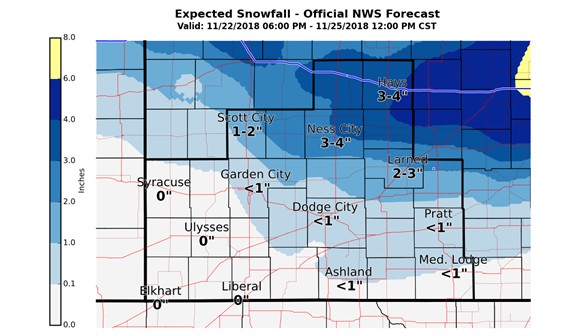
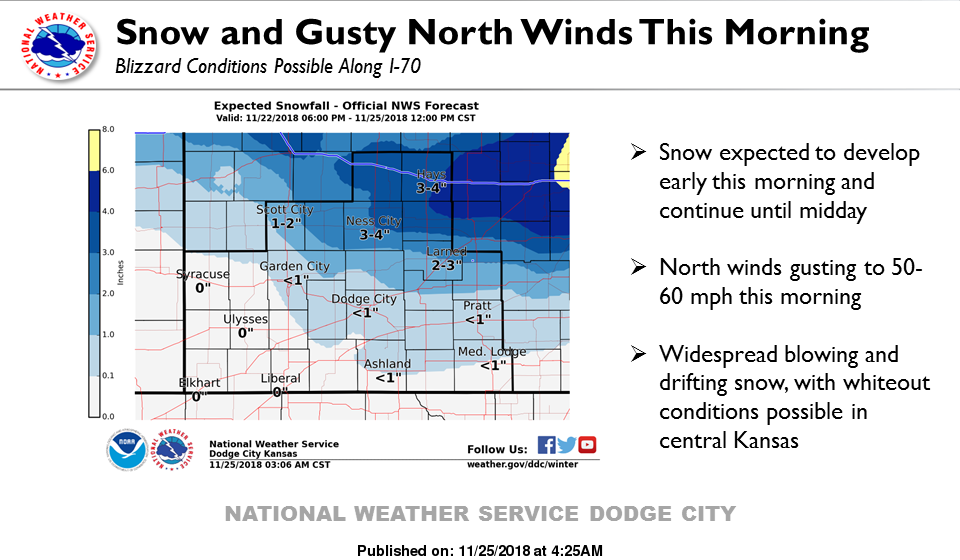
.The heavy snow has remained to the east of this area.
…BLIZZARD WARNING REMAINS IN EFFECT UNTIL NOON CST TODAY…
* WHAT…Blizzard conditions expected. Total snow accumulations of
up to four inches expected. Winds gusting as high as 60 mph.
Look for these conditions to continue for a few hours early this morning before beginning to taper off. Visibility near zero at times.
* WHERE…Ellis and Trego Counties.
* WHEN…Until noon CST Sunday.
* ADDITIONAL DETAILS…Blowing snow is significantly reducing visibility.
A Blizzard Warning means severe winter weather conditions are expected or occurring. Falling and blowing snow with strong winds and poor visibilities are likely. This will lead to whiteout conditions, making travel extremely dangerous. Do not travel. If you must travel, have a winter survival kit with you. If you get stranded, stay with your vehicle. The latest road conditions for the state you are calling from can be obtained by calling 5 1 1.
A Blizzard Warning remains in effect until 12:00 PM
Today
Snow, mainly before 8am. Widespread blowing snow, mainly before 8am. Temperature falling to around 26 by 9am. Very windy, with a north northwest wind 35 to 40 mph decreasing to 21 to 26 mph in the afternoon. Winds could gust as high as 55 mph. Total morning snow accumulation of 2 to 4 inches possible.
Tonight
Mostly clear, with a low around 19. West wind 6 to 11 mph.
Monday
Sunny, with a high near 41. West wind around 7 mph.
Monday Night
Mostly clear, with a low around 21. North northwest wind around 5 mph becoming calm in the evening.
Tuesday
Sunny, with a high near 41. Light and variable wind becoming southeast around 6 mph in the afternoon.
Tuesday Night
Partly cloudy, with a low around 24.













 A Blizzard Warning remains in effect until 12:00 PM