LEAVENWORTH COUNTY —Mark Loughry, Leavenworth County Administrator released a statement Friday in response after white county commissioner Louis Klemp told a black city planner that he belongs to “the master race” as he rejected her proposed development plan.
The statement was criticized and in addition to the governor, Klemp’s fellow commissioners thought he should resign.
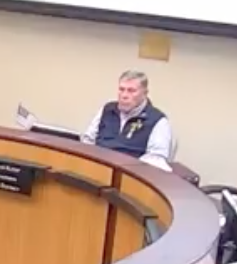
Leavenworth County Commissioner Louis Klemp during the Nov. 13 commission meeting -image courtesy Leavenworth County
“I don’t want you to think I’m picking on you because we’re part of the master race,” Klemp told Penelton . He then said he didn’t like any of the land use options that she had presented to the commission.
Loughry wrote “Commissioner Louis Klemp holds an elected position on the Board of County Commissioners and therefore I have no jurisdiction over his term in office. It is not within my power or the power of the other Commissioners to take any punitive action against one of the other elected Commissioners. That being said I would encourage all to watch the actual video of the exchange versus the parsed and paraphrased comments circulated by the media.
Watch the video available here and form your own opinion about the context of the conversation.
I will not attempt to defend Commissioner Klemp as he holds an elected position and is capable of defending any of his statements or fielding any calls for his ouster. I will say though that what is being reported in the media is not an accurate representation of what was said during our meeting. Commissioner Klemp has a gap in his front teeth and so did the person presenting to the Commission on Tuesday.
On several occasions over the past year Mr. Klemp has made reference that those with a gap in their front teeth are members of the master race. At Tuesday’s meeting he stated that he and the lady presenting to the Board were both members of the master race due to the gap in their teeth.
The use of the term “Master Race”, as ill-advised as it may be, was not a reference to Nazis or used in a racist manner in this instance. Leavenworth County has a zero tolerance for racism or discrimination in any form from any staff members. I am deeply sorry that one misconstrued comment by a member of our elected governing body has caused so much grief, sorrow and hatred. Leavenworth County is a wonderful place to live and visit and I am proud to call it my home.
With Democrat Elected Governor, Kansas A Whole Lot Closer To Medicaid Expansion
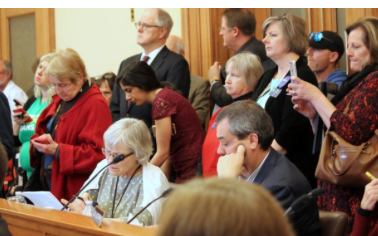
Advocates for Medicaid have packed legislative hearings in recent years and seen their cause fail. Their odds look far better this year. FILE PHOTO / KANSAS NEWS SERVICE
If elections have consequences, the top-of-the-ticket win for Democrats in Kansas likely carries no more obvious upshot than the probable expansion of Medicaid in the state.
After years of unyielding opposition from former Republican Gov. Sam Brownback and his successor — Gov. Jeff Colyer — Democratic Gov.-elect Laura Kelly looks positioned to broaden public health insurance coverage to tens of thousands more Kansans.
Kelly campaigned on expansion and listed it among her priorities in an election night victory speech.
“It’s long past time to expand Medicaid so that more Kansans have access to affordable health care,” Kelly said to cheers from supporters.
Kelly, a veteran state senator from Topeka, defeated Kansas Secretary of State Kris Kobach. A conservative Republican, he opposed expansion with at least as much vigor as Brownback and Colyer.
Kelly’s decisive five-point win has made longtime advocates of expansion optimistic that they can get it signed into law during the 2019 legislative session, which begins Jan. 14.
“We’re hopeful,” said Tom Bell, president and CEO of the Kansas Hospital Association. “But we’re also not taking anything for granted.”
Bell and other supporters fear that the defeat of some moderate Republicans by conservatives may have softened support for expansion in the Kansas House. However, with Kelly in the governor’s office, they would no longer need a veto-proof majority.
The Legislature approved expansion in 2017, but Brownback vetoed the bill.
Advocates can’t take it for granted that expansion is “automatically going to happen,” Bell said, “but bottom line, we’re much more encouraged than we have been the last few years.”
Some Republican legislative leaders who have spearheaded opposition to expansion appear ready to move on.
Rep. Dan Hawkins, the Wichita Republican who chairs the House Health and Human Services Committee, recently told the Wichita Eagle that expansion is a “foregone conclusion.”
Republican lawmakers shouldn’t waste energy opposing expansion, said Jim Joice, executive director of the Kansas Republican Party.
“I’m not sure if that (opposition) would be the best political strategy, if that’s the hill you want to die on this year,” Joice said.
The priority for Republicans should be holding Kelly to her pledge to balance the budget, fund schools, re-start the highway program and expand Medicaid without a tax increase, Joice said.
Currently, eligibility for KanCare, Kansas’ privatized Medicaid program is limited to children, pregnant women, people with disabilities and seniors in need of long-term care who have exhausted their financial resources. Parents are eligible only if they earn less than a third of the federal poverty level, less than $10,000 for a four-person family.
Single adults without children currently are not eligible no matter their income.
Expansion would extend eligibility to all Kansans who earn up to 138 percent of the poverty level, or about $17,000 annually for an individual and approximately $34,000 for a family of four.
In addition to extending coverage to an estimated 150,000 low-income Kansans who are now not eligible for KanCare, expansion would draw billions in additional federal funding. Advocates say that would help struggling hospitals across the state, many in rural areas.
“Medicaid expansion would certainly help them,” said Bell, noting that higher Medicaid reimbursements would help cover some of the losses caused by reductions in Medicare payments.
The Affordable Care Act requires the federal government cover 90 percent of the cost of expansion. The state’s costs would increase by an estimated $68 million a year, according to an estimate compiled by the Kansas Health Institute.
Expansion opponents insist the price tag will be much higher, but supporters contend it could be implemented at relatively little additional cost if federal dollars are used to cover services now funded with state dollars.
Jim McLean is managing director of the Kansas News Service. You can reach him on Twitter @jmcleanks.
Ask most people, and if they’re old enough to remember anything at all, it’s that famous photo of the doomed candidate with a smiling Donna Rice in his lap, on perhaps the most unfortunately named yacht in American political history: “Monkey Business.”
What most people don’t recall, or never even knew, is that the photo emerged two weeks after the 1987 scandal had ended in Hart’s withdrawal from the Democratic race, his hugely promising political career destroyed over suspicions — never confirmed — that he’d had an affair with Rice.
The fact that people assume the photo led to Hart’s humiliating downfall is just one of many ways in which the whole ordeal is mis-remembered, says Jason Reitman, director of “The Front Runner,” which stars Hugh Jackman in an appropriately tense, anguished turn as the Colorado senator who rose fast and fell faster.
“The story really plays with our sense of memory,” Reitman says. “First people recall ‘Monkey Business,’ so they’re remembering a joke, and then it’s, what was that blonde’s name?”
The fact that Rice was a human being (also a Phi Beta Kappa college grad) and not just a blonde on a boat is one point that “The Front Runner,” based on a 2014 book by journalist Matt Bai, seeks to drive home. But the larger point is that the Hart saga, far from a party joke, marked a watershed moment in American politics and culture, with reverberations that continue to this day.
Why? Because it was the moment when politicians became celebrities, and their private lives became our public business, even our property, Bai argues. It changed political journalism, too, he says, and created a different kind of candidate, perhaps forever.
Gary Hart
“It’s this moment in 1987 when the worlds of politics and entertainment collide,” says Bai, who co-wrote the screenplay with Reitman and former political operative Jay Carson. “And when you create a process for selecting leaders that treats them like celebrities, you inevitably attract celebrities to your process. So it’s supremely relevant.” The reference to a certain current American leader is implicit.
A quick historical primer: Hart was way ahead in the polls to take the 1988 Democratic nomination and face GOP nominee George H.W. Bush. But rumors of marital infidelity arose, and a tip led Miami Herald reporter Tom Fiedler to stake out an alley near Hart’s Washington townhouse, where the 29-year-old Rice, with whom Hart had connected on a Bahamas cruise, was believed to be staying. Fiedler and his team confronted Hart. He refused to answer questions about his private life. Soon after, amid unrelenting scrutiny on his family, he quit the race.
Hart wasn’t exactly the first American politician to be felled by a sex scandal — seen “Hamilton,” anyone? — but before him, routine sexual peccadilloes were usually considered off-limits. If they hadn’t been, many others, say John F. Kennedy and Lyndon B. Johnson, wouldn’t have survived. But Hart came along at just the wrong time, says Thomas Patterson, professor at Harvard’s Kennedy School of Government.
Patterson argues that Watergate, obviously the seminal political scandal of the ’70s, had spawned a more aggressive type of political journalism, tasking reporters with exposing the lies of politicians — big or small.
“If Hart had been luckier, journalists would have been a decade behind where they were at this point,” says Patterson. “But Hart becomes the poster child, the first casualty, of an attack journalism that was really a product of Watergate, and journalists’ sense that they couldn’t trust politicians.”
Each team member behind “The Front Runner,” which will be in wide release on Nov. 21, has their own takeaway from the Hart story. For Carson, who worked on numerous political campaigns including for Hillary Clinton, it’s how “this world where I wanted to effect positive change ended up being so soul-crushingly awful.”
Then there’s Jackman, who confesses he knew little-to-nothing about Hart beforehand: “I was a traveling backpacker on a gap year!” The Aussie actor traveled to Colorado to spend time with Hart, seeking to portray a multi-dimensional human being.
“Certainly my focus was on Gary and the man he was,” Jackman says. “But I’m left thinking about the question of principle and ethics.” For Hart, but also for other characters in the film like campaign workers and journalists, “there were lines not to be crossed,” Jackman says, “and it got simplified down to, ‘Did he have an affair or not?'”
“It wasn’t that simple,” Jackman adds. “For Gary, it was the principle of, if he starts answering those questions, he’s going to sully the process for other people, evermore. He felt like, ‘If I start talking about boxers or briefs, or the name of my dog, it’s over.'”
Of course, it was Bill Clinton who famously answered the boxers-or-briefs question. And for his own canny survival as a candidate, he may have Hart partly to thank, says Patterson at Harvard.
“Jump ahead four years, and Clinton had learned from Hart, from his failure and the damage it had done,” he says.
Now jump ahead to today. If we cared so much about Hart’s affair with Rice, some have asked, why did we elect a president who’d bragged on tape about groping women? (Trump later called it locker room talk.) Did we stop caring?
No, though maybe we’re more jaded, says Patterson. But we also live in a time of unprecedented political polarization: “People increasingly filter this stuff through their partisan lens.”
One thing everyone seems to agree on is that Hart would never survive a campaign in 2018 — mainly because he wouldn’t run under such conditions.
“Not to exalt Gary Hart, but we’re talking about a generation of potentially strong leaders who’ve had to find other ways to serve,” says Bai. “We’ve turned it into a performance process, where shamelessness and lying are rewarded.”
Adds director Reitman: “Hart very clearly said these personal questions were irrelevant, and he walked away. My question isn’t so much about him, but who ELSE isn’t running? What other candidates are we not getting a chance at?
High Plains Mental Health Center is reaching new clients and reducing stigma by serving patients through integrated care in medical clinics.
David Anderson, High Plains director of clinical services, said no stand-alone clinics should ever been built. Integrated care is where we should have been all along.
“The truth is, this agency has been around for 54 years,” he said. “If we could go back knowing what we know now, we won’t tell them to build a mental health center by itself. The separation of mental health and physical health is really artificial. We would say to them we should be in primary care settings and schools.
“That would reduce the stigma and have us providing and intervening where people are. We would be working hand-in-hand with the people we should be working with instead of where we are now, which is separate from them. It has taken us a half century to figure this out.”
Between 30 percent to 50 percent of primary care doctors’ patients also have mental health issues. Only about 49 percent of people who are referred to a mental health provider follow-up. The median time a person waits to access mental health care is 10 years.
However, about 80 percent of people see their primary care physician at least once a year.
Amy Bird
Anderson said some people, especially in small communities, may not want to be seen going into a stand-alone mental health center.
High Plain has started to offer a service known as side-by-side care, in which a therapist see clients in a medical clinic.
“The advantage is it reduces stigma because people can come, sit in a primary care clinic and get called in the back like everybody else. There is no differentiating why they are there,” he said.
If the a physician suggests a patient see a therapist for depression or anxiety, and that person is right down the hall, it can be easier to accept the help, said Amy Bird, integrated care/outpatient specialist.
Bird started seeing clients at the Hays Family Medicine in July. She sees clients there two days a week, and at the Phillips County Medical Clinic one day a week.
Bird said she has seen a decrease in stigma through her work in the side-by-side model.
“My clients really appreciate being in their primary care setting,” Bird said, “where a lot of times they have going for years so it is comfortable for them.”
Another significant advantage is Bird is able to coordinate care with the primary care providers.
“Through releases of information, we can talk about how the clients are doing,” Bird said. “Providers can let me know if they are concerned about some things. I can let them know if there are other concerns, so we are really treating the whole person instead of just looking at the mental health aspect or the physical aspect.”
Sessions may not be just for people who would be typically diagnosed with a major mental illness.
Almost any chronic medical condition is going to come with added stress, Bird said. A client may have issues with sleeping, anxiety or depression as a result. People often have to make big lifestyle changes to deal with chronic illnesses, and the therapist can help the client set goals and find coping strategies to handle the stress.
Bird’s sessions in the medical clinics are usually shorter, usually 30 minutes, rather than the full-hour therapy session at the mental health center. They are also more targeted and goal specific.
She helps her clients work on relaxation techniques to improve sleep or set goals to become more physically active.
At one time, a doctor might have prescribed medication for a patient who was having trouble sleeping, Anderson said.
“More and more if there is an opportunity for them to do behavioral work and talk to them about their sleep habits, they do that,” he said. “When do they go to bed? Do they go to bed at the same time? Are they avoiding any kind of alcohol or caffeine late at night? Are they using their electronics — all of the things that can disrupt a person’s sleep?”
Primary-care physicians have welcomed the change, Anderson said.
He said one doctor caught a therapist as the therapist was leaving a clinic and asked her what she had done to help his patient with her diabetes. He said it had never been under better control.
“The answer is that we haven’t done anything with her diabetes, but we got her depression under control,” Anderson said. “Once her depression was under control, she could do the things he wanted her to do to control her diabetes.”
Bird said integrated care is about care of the whole person.
“We know that mental health problem can affect physical problems, and physical problems can affect people’s mental health,” she said. “One of the things I want to emphasize is that we know a lot people are much more likely go to their doctor’s first even when it is a mental health problem rather than coming here.
“The other thing we know about treating mental health problems is that early intervention, just like physical problems, is key. When people go there and they have someone they can access in a place where they are comfortable, we know we are going to get better outcomes and ultimately they are not going to struggle so much down the road,” Bird added.
Colorado has been using integrated care models for some time. Anderson attended a panel discussion with primary care physicians on the model in Colorado, and one of the doctors compared it to a garage door opener.
“Before you had one, you didn’t really think you needed it and you just got by,” he said. “Then you find this and suddenly you go, ‘Why was I doing my work without having this?’ Like a garage door opener, once you have it, you don’t ever want to go back to not having one.”
High Plains has a 20-county catchment area. It covers 19,000 square miles and about 100,000 people. The agency has six full-time offices. In the other 14 counties, there are outreach offices in health clinics, hospitals or health departments. Therapists visit those outreach clinics for traditional mental health care one day a week, but therapists are not interacting with primary care physicians as they are in the side-by-side model. Many of these locations also have access to psychiatrists or therapists through telemedicine.
Anderson said in the future there will be an increase in use of the side-by-side model and mental health professionals working more closely with primary care physicians.
Bird trained at Cherokee Health Systems in Knoxville, Tenn., which is a fully integrated health care model. At the location, mental and physical health is handled by the same team. Everyone who is being screened for physical health is also screened for mental health — and vice versa. Electronic medical records are co-mingled. Mental health and physical health service providers all dress the same so they are indistinguishable.
Anderson said this fully integrated model is where High Plains would like to be.
In the current side-by-side model, the clients who see Bird for mental health care are High Plains clients, and the two entities do not share electronic medical records. However, Anderson said he hopes that someday will change.
For more information about High Plains and its services, call 1-800-432-0333. If you are having a mental health emergency, call 911.
THOMAS COUNTY — One person died in an accident just after 10p.m. Saturday in Thomas County.
The Kansas Highway Patrol reported a 2005 GMC K-1500 Crew Cab Pickup driven by Courtney S. Romej, 29, Elgin, NE., was westbound on Interstate 70 just west of U.S. 83.
The pickup exited the roadway, entered the median and rolled an unknown amount of times, landing on the passenger side in the east bound passing lane. The driver was ejected from the vehicle.
Romej was pronounced dead at the scene and transported to Baalmann Mortuary in Colby. She was not wearing a seat belt, according to the KHP.
HAYS, Kan. – It took five extra minutes, but the Fort Hays State men’s basketball team escaped with its first win of the season Saturday afternoon (Nov. 17), knocking off Colorado School of Mines 75-71. Both teams are now 1-2 through three games this season.
The teams were evenly matched all afternoon, with the lead changing hands 19 times and neither side leading by more than six. After Brady Werth tied the game with a put-back layup with 80 seconds left in regulation, the senior gave the Tigers the lead for good after nailing a pair of free throws early in the extra period.
Fort Hays State hit 10-of-11 from the charity stripe in overtime to hold on to the victory, including a perfect 4-for-4 effort from Werth and Kyler Kinnamon. Mines poured in a 3-pointer to close within one on two occasions, but the Tigers had an answer on the offensive end each time. Marcus Cooper made an acrobatic and-one after the first Oredigger triple and Kinnamon drilled a pair of free throws with 13 seconds left after the second. Mines had a shot to tie it with less than 10 seconds to go, but the long-range attempt came up well short.
Werth posted his third career double-double in the victory, totaling 27 points and 11 rebounds. The senior took over in the second half, scoring 17 points on 8-of-15 shooting. Fort Hays State trailed by as many as six midway through the second half, but a 7-0 run put the Tigers right back in it. Devin Davis hit a jumper in the paint to open the run before Werth went up strong with a layup. Trey O’Neil poured in a triple after Nyjee Wright found him with a perfect pass, putting the Tigers in front and prompting a CSM timeout.
The lead changed hands nine times in the final 11 minutes, with neither side leading by more than three. After Werth tied the game with 80 seconds to go, both sides made two turnovers with a chance to take the lead. The Orediggers had the ball last, with a game-winning three-pointer bouncing off the back iron.
The Tigers spent much of the first half playing from behind before clawing back in front late in the period, leading at the break 31-30. Both sides hit 11-of-26 shots in the opening frame, with the lone difference being an extra free throw for the Tigers.
Cooper opened the scoring for the Tigers with a thundering breakaway dunk after Kinnamon found him with an outlet pass. Davis led all scorers at the break, tallying 11 points in his first half as a Tiger inside Gross Memorial Coliseum.
Three Tigers joined Werth in double figures, including Davis (15 points), Kinnamon (12) and Cooper (11). Fort Hays State finished the game 27-of-60 from the field (45.0 percent) to go along with hitting 75 percent of its free throws (18-of-24).
Mark Johnson postgame interview
Brady Werth postgame interview
The teams were also evenly matched on the boards, with CSM grabbing one more rebound than the Tigers, 35-34. Fort Hays State held a 10-point advantage in the lane, 40-30, while turning 18 Oredigger turnovers into 20 points.
Fort Hays State will look to even its record at 2-2 Sunday (Nov. 18) when it hosts UC-Colorado Springs at 4 p.m. inside Gross Memorial Coliseum.
Game highlights
NOTABLE: This is the second year in a row the Tigers and Orediggers have needed overtime to find a winner, with Mines winning in double OT last season in Colorado.
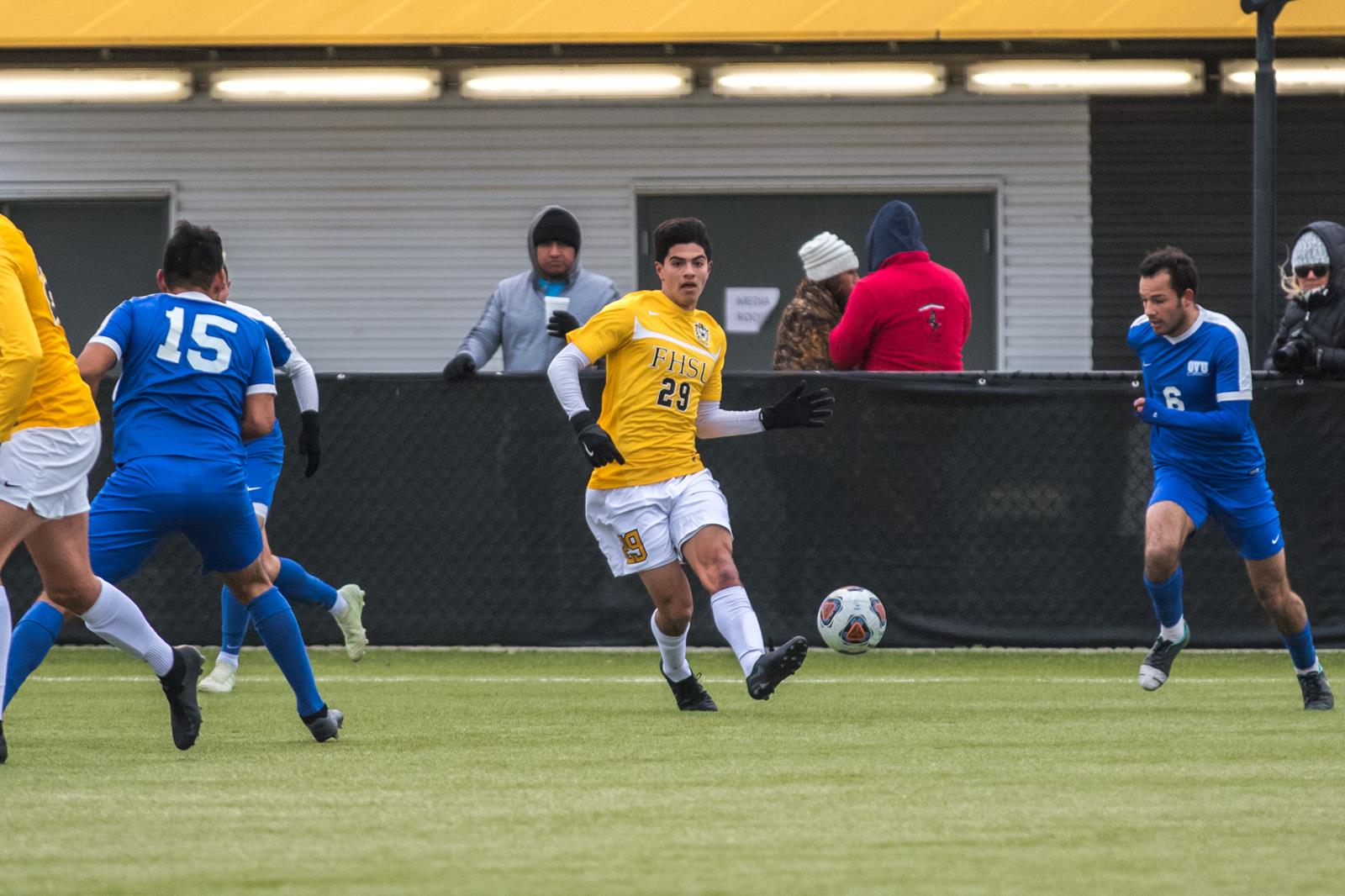
HAYS, Kan. – The No. 11 ranked Fort Hays State men’s soccer team prevailed in windy conditions inside FHSU Soccer Stadium, knocking off Ohio Valley University in the NCAA Division II National Quarterfinal match on Saturday, 2-0, to advance to their first National Semifinal match in program history. The Tigers improved to 17-2-1 on the season, while the Fighting Scots completed their 2018 campaign with an 18-6-1 record. Head Coach Brett Parker and the Tigers earned their 100th victory in program history with the win.
A defensive battle from the start, the Tigers and Fighting Scots accumulated only seven shots total in the first 45 minutes of play. FHSU and OVU ended the first period scoreless.
Out of the break, the atmosphere was bitter from the cold weather, inducing the competitive nature from both sides. After possessions were cut short due to fouls and offside calls, Rogelio Lopez found an opening in the Fighting Scots’ defense and flipped the ball ahead to Tobias Patino. Patino then fed the through ball to Moises Peralta, who took a shot around the diving OVU keeper and connected on his first score of the season in the 66th minute of the contest.
After a string of five aggressive attempts at trying to find an insurance goal, Mauricio Etcheverry picked up the pace and faced a one-on-one opportunity against the Fighting Scots’ keeper. Etcheverry triumphed and scored his first goal of the season in the 89th minute, giving the Tiger faithful a reason to celebrate. The score stood when the buzzer sounded and the Tigers qualified for their first National Semifinal match in program history.
Etcheverry led the Tiger offensive attack with five shots in the match, two of which were on frame. Peralta led the Tigers with three shots on goal, while Fernando Pina earned the victory in goal and improved his overall record to 12-0-1 on the season.
The Tigers have now won 14 consecutive matches and are on a 15-match unbeaten streak.
The final four teams will be reseeded and with the No. 1 seed and No. 4 playing at 2 p.m. inside Highmark Stadium, while the No. 2 seed and No. 3 seed will face off starting at 11 a.m. The National Semifinals is set for November 29th with the Championship Match set for December 1st. Stay tuned to fhsuathletics.com for more updates.
JOPLIN, Mo. – The Fort Hays State women’s cross country team claimed an eighth place finish at the 2018 installment of the NCAA Division II Central Regional Championships. Among MIAA programs, FHSU finished fourth. The event was hosted by Missouri Southern University in Joplin, Mo on Saturday (Nov. 17). FHSU finished the day with 292 total team points in the 237 runner 6K race.
Leading the charge for the Tigers was Yessenia Gonzales who navigated the course with a time of 21:56.1 to finish in 17th place. That time was strong enough for Gonzales to earn All-Regional Honors for the first time in her Tiger career.
Mirena Goncalves crossed the finish line in 42nd place while boasting a time of 22:48.4, followed closely by Abigail Stewart who swept across the line in 44th place with a time of 22:52.1.
Tessa Durnell earned 88th place on the day with her time of 23:34.6, while Grace Buessing clocked a 101st place finish at 23:48.3. Rounding out the day for the Tigers was Averi Wilson in 114th place at 24:02.4 and Rebeca Avelar with a 24:50.9 mark and 149th place finish.
For the second-straight year, the University of Mary took home the team title after finishing with 29 points three of the top five individual placers. Two MIAA programs locked in a top-five team finish as Pittsburg State took third place with 122 points and Southwest Baptist claimed fifth following a total of 176 team points.
JOPLIN, Mo. – The Fort Hays State men’s cross country team finished the NCAA Division II Central Region Championships on Saturday (Nov. 17). The Tigers finished third among MIAA teams and completed the event with 209 team points. There were 189 individuals who competed in the 10K race.
Israel Barco completed the race in 31:19.2 and finished 29th individually. Alex Barbosa crossed the finish line 39th in 31:37.1. Justin Moore finished the race 40th with a time of 31:38.6. Brett Meyer navigated the course in 32:00.3 and finished 50th. Reed Rome rounded out the scoring for the Tigers with a time of 32:02.8 while finished 51st.
Missouri Southern took the team title after three of their competitors finished inside the top 10. They finished the event with 55 team points. Augustana finished runner-up with 73 total points, while Sioux Falls (113 points) came in third.
WICHITA, Kan. (AP) — The boyfriend of a woman found dead in her home after being beaten with a shovel has pleaded guilty to killing her.
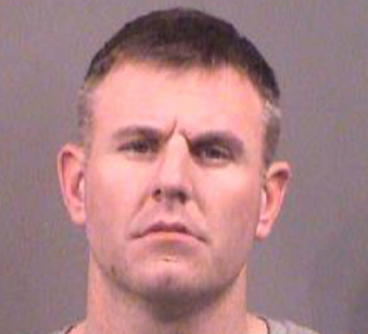
Becker-photo Sedgwick Co.
38-year-old Travis Becker Jr. entered the plea Friday afternoon in a Sedgwick County courtroom to reduced charges of first-degree felony murder and aggravated kidnapping in the November 2017 death of 42-year-old Perla Rodriguez. He had originally been charged with first-degree premeditated murder.
He’s expected to serve about 40 years after he’s sentenced on Jan. 2.
Rodriguez was outreach director for the Wichita Area Sexual Assault Center. Her severely battered body was found Nov. 14, 2017, in her home by Wichita officers. They also found a wooden handle shovel inside the bedroom, with the shovel blade covered in blood and hair.
KINGMAN COUNTY —One person died in an accident just after noon Saturday in Kingman County.
The Kansas Highway Patrol reported a 2016 Jeep Patriot driven by Reginald F H Smith, 34, Wichita, was westbound on Kansas 42 nine miles west of Norwich.
The Jeep traveled left of center, left the roadway entered the south ditch and struck a tree.
Smith was pronounced dead at the scene and transported to the Sedgwick County Forensic Center. He was properly restrained at the time of the accident, according to the KHP.