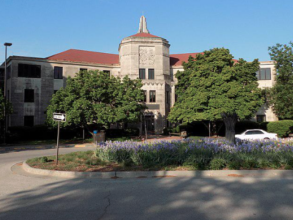
LAWRENCE, Kan. (AP) — A Lawrence teenager has been sentenced to six months of probation for bringing a loaded handgun to Free State High School last spring.
The student, who was 17 at the time, was charged as a juvenile. He was sentenced Friday after he pleaded no contest in September to criminal use of a weapon, a misdemeanor.
The teenager could shorten the probation process by completing two of four options — a fatherhood course, a mentoring course, attending therapy or writing an apology letter to Free State High School.
On April 9, a school resource officer and a Lawrence police officer found a pistol in the boy’s backpack after receiving a tip from another student.
As part of his probation, he must stay employed or return to school.
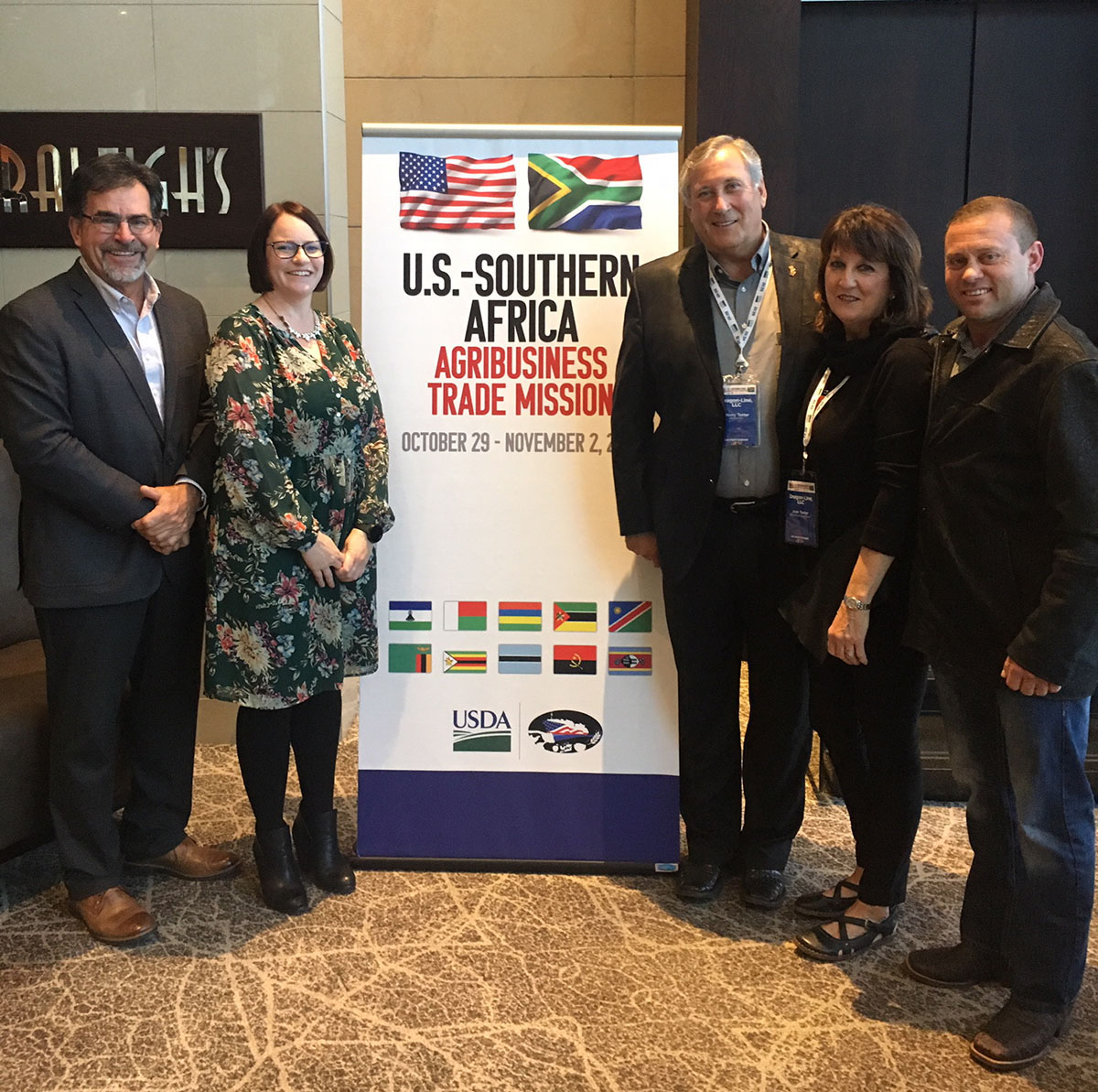
Kansans were part of a USDA-led trade mission to South Africa. Pictured (from left): Thad Geiger, Kansas Board of Agriculture and USLGE, Troy; Suzanne Ryan-Numrich, KDA, Manhattan; Monty and Jean Teeter, Dragon-Line, Ulysses; and Jacques Willemse, Dragon-Line, Musina, South Africa.
KDA
MANHATTAN — On October 29–November 2, the Kansas Department of Agriculture participated in a trade mission to South Africa led by U.S. Department of Agriculture Under Secretary for Trade and Foreign Agricultural Affairs Ted McKinney. The trade mission focused on expanding export opportunities for U.S. farmers, ranchers and agribusinesses by encouraging free, fair and reciprocal trade throughout the Southern Africa region.
The team representing Kansas on the trade mission included: Thad Geiger, Kansas Board of Agriculture vice chair and U.S. Livestock Genetics Export (USLGE) consultant; Monty and Jean Teeter and Jacques Willemse, Dragon-Line, Ulysses; and Suzanne Ryan-Numrich, KDA international trade director.
The team visited Cape Town, Johannesburg and Pretoria, South Africa, and had one-on-one meetings with potential customers from several Southern African countries: Angola, Botswana, Eswatini (formerly Swaziland), Lesotho, Madagascar, Mauritius, Mozambique, Namibia, South Africa, Zambia and Zimbabwe.
“There are many opportunities for U.S. livestock genetics as Southern Africa looks to grow and improve their livestock industry,” stated Geiger. “It has been said that 80 percent of trade occurs in established relationships. Great relationships lay the foundation for future trade opportunities. This was a beneficial mission in that regard.”
Historically, Southern Africa has been a reliable consumer of Kansas grains. In 2017, Kansas exported over $15 million in cereal grains to the region with the top export being wheat.
“In a time of trade uncertainty, we must look at other markets to diversify. Southern Africa is typically a net importer of agricultural goods and we are excited about the potential to grow our market share in the region,” said Ryan-Numrich. “The region has a strong economy and a rapidly growing middle class which appreciates price-competitive, high-quality U.S. agricultural products.”
While reflecting on the trade mission upon his return, Teeter said “’Water scarcity’ are words recognized by farmers around the world. We are so blessed to have the opportunity to provide a solution for desperate farmers who are trying to irrigate their crops with less and less available water and we are looking forward to being part of the water scarcity solution in Africa.”
This trade mission was organized by USDA’s Foreign Agricultural Service. KDA travel was fully funded by U.S. Livestock Genetics Export (USLGE), a not-for-profit, nationwide trade association representing livestock and horse breeding industries.
WICHITA, Kan. (AP) — Wichita police are searching for a hit-and-run driver after two patrol officers found a woman’s body on a city street.
Police say the officers were on routine patrol Friday evening on Harry Street in the south part of the city when they crossed the I-135 bridge and spotted the woman’s body lying in the westbound lanes. Officials say she had been hit by a vehicle.
First responders pronounced that woman dead at the scene. Her name had not been released by midday Saturday.
Police are asking anyone with any information on the hit-and-run to call Crime Stoppers.
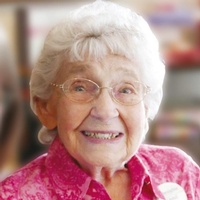
Bonnie Bell Patchen Steele, 90, peacefully passed away November 7, 2018 under the care of Pathways Hospice in Loveland, Colorado.
Bonnie was born on December 4, 1927 in Jetmore, Kansas, to Vernon W. Koontz and Carrie Etta Rumford Koontz. She graduated from Jetmore High School in 1945 and attended one year at Sterling College in Sterling, Kansas. In her early years, Bonnie enjoyed singing with her siblings and worked at the Koontz Mercantile, her father’s grocery/clothing store.
Bonnie married Charlie (Chuck) W. Patchen on May 5, 1947, in her family home and began fifty adventurous years as a farm wife on the Pawnee Creek in northwest Hodgeman County, Kansas. To this union, four children were born.
From 1947-1958, Chuck and Bonnie and family lived in a two-room cabin on the Sinclair ranch in the North Roscoe township. In 1958, they moved five miles away to Chuck’s parent’s native stone farmhouse located 20 miles northwest of Jetmore.
Bonnie cherished her time being part of the ‘North Roscoe mother team’ raising her children while enjoying the many neighboring kids. Bonnie was a gifted cook, gardener and seamstress and was actively involved in the operational aspects of wheat farming and cattle ranching. Along with her husband, she drove tractors and harvest trucks and tended to cattle, sheep and chickens. She was a leader with the Jolly Jayhawkers 4-H Club in which all of her children participated. With family and friends, Bonnie enjoyed playing cards, especially cribbage and the country life of fishing, coon hunting and searching out Indian artifacts prevalent in the area.
Bonnie’s dear husband, Chuck, passed in 1994. Two years later, she moved off the farm and back to her hometown of Jetmore.
Bonnie married Wilbur (Bill) Steele on September 10, 2001. Living in Branson, MO for ten years, they enjoyed hosting guests, seeing shows and Bonnie challenged herself with the use of computers and the smart phone. In 2014, Bill and Bonnie moved to Fort Collins, Colorado, to be closer to family. Bill passed in 2016.
Bonnie was proceeded in death by her mother in 1931, father in 1965, and step-mother, Lillian, in 1962; two brothers, Dale (infant) Koontz and Wayne Koontz; two sisters, Jean Barrows and Betty Burgert; two half-brothers, Ward and Denzil Koontz; half-sister, Ella Mae Mann and two grandsons.
Bonnie is survived by her half-sister, Eva Koontz, Kansas City, MO; daughters, Linda (Sonny) Diehl, Fort Collins, CO and Peggy (Bob) Rinne, Seattle, WA; and sons, Larry (Pat) Patchen, Pagosa Springs, CO and Terry Patchen, Las Vegas, NV; five grandchildren and six great-grandchildren.
Bonnie will be interred at the Fairmount Cemetery in Jetmore, KS. A memorial service will be held Memorial Day 2019.
Friends may send condolences to the family via www.BeckwithMortuary.com. In lieu of flowers and gifts, please consider donations to Pathways Hospice, Fort Collins, CO and/or Hodgeman County 4-H, % Beckwith Mortuary, Box 663, Jetmore, KS, 67854.
Bonnie’s kind actions and ready laugh will be missed by all who knew her.
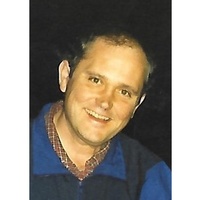
Warren Dale Lewallen was born March 21, 1953 in Oakley, Kansas. Warren passed away on Thursday, November 1, 2018 under the care of Pikes Peak Hospice in Colorado Springs at the age of 65.
Warren was the 2nd of 4 children born to Gene and Betty Lewallen of Oakley. He graduated from Oakley High School in 1971. As a student; Warren participated in sports through school including football, basketball, wrestling and track. With the influence of musical parents, he also sang in school choirs and in the choir at the United Methodist Church in Oakley.
While attending Fort Hays State University from 1973-1978, he obtained a Bachelor of Music Degree as a voice major with a K-12 certification. He also played clarinet and bass clarinet in concert and marching band through high school and college. His teaching career led him to Colorado, a state he grew up loving as he vacationed with family at his grandparents’ home in Idaho Springs. He taught K-12 Music in Grenada and Fleming, Colorado before returning to Kansas and retiring in Garden City.
After Warren’s retirement, he moved back to be close to his dad in his hometown of Oakley where he resided until his father died. He then moved to Colorado Springs in March, 2018 to be closer to his 2 sisters and nephews. He enjoyed his 10th floor apartment overlooking beautiful Cheyenne Mountain, Pikes Peak and Garden of the Gods.
Those who knew Warren saw his love for nature, humor, interest in people, and enjoyment in playing cards and board games. His special memories included snow and water skiing, running in the Boulder 10K run with his brother, Wayne, and fishing with Wayne and his dad. He also enjoyed traveling and camping. His passion grew from participating in sports when younger to watching sports and he particularly looked forward to Nascar, horseracing, football and basketball.
Preceding him in death were his mother and father; paternal grandparents, Bill and Bonnie Crownover; maternal grandparents, Ralph and Pearl Trego, Ray Nye, and beloved aunts, uncles and cousins. Warren is survived by older brother Wayne (Priscilla) Lewallen of Dallas, OR; younger sisters, Wilma Sue (Bob) Schuckert; Wendy (Rudi) Hofmann and grandsons Logan and Hans Hofmann, all of Canon City, CO.
A memorial service will be Saturday, January 5th, 2019, at 2:00 p.m. at Kennedy-Koster Funeral Home in Oakley. In lieu of flowers, memorial donations can be made to: Fort Hays State University, 600 Park Street, Music Dept. at Malloy Hall 137, Hays, KS 67601.
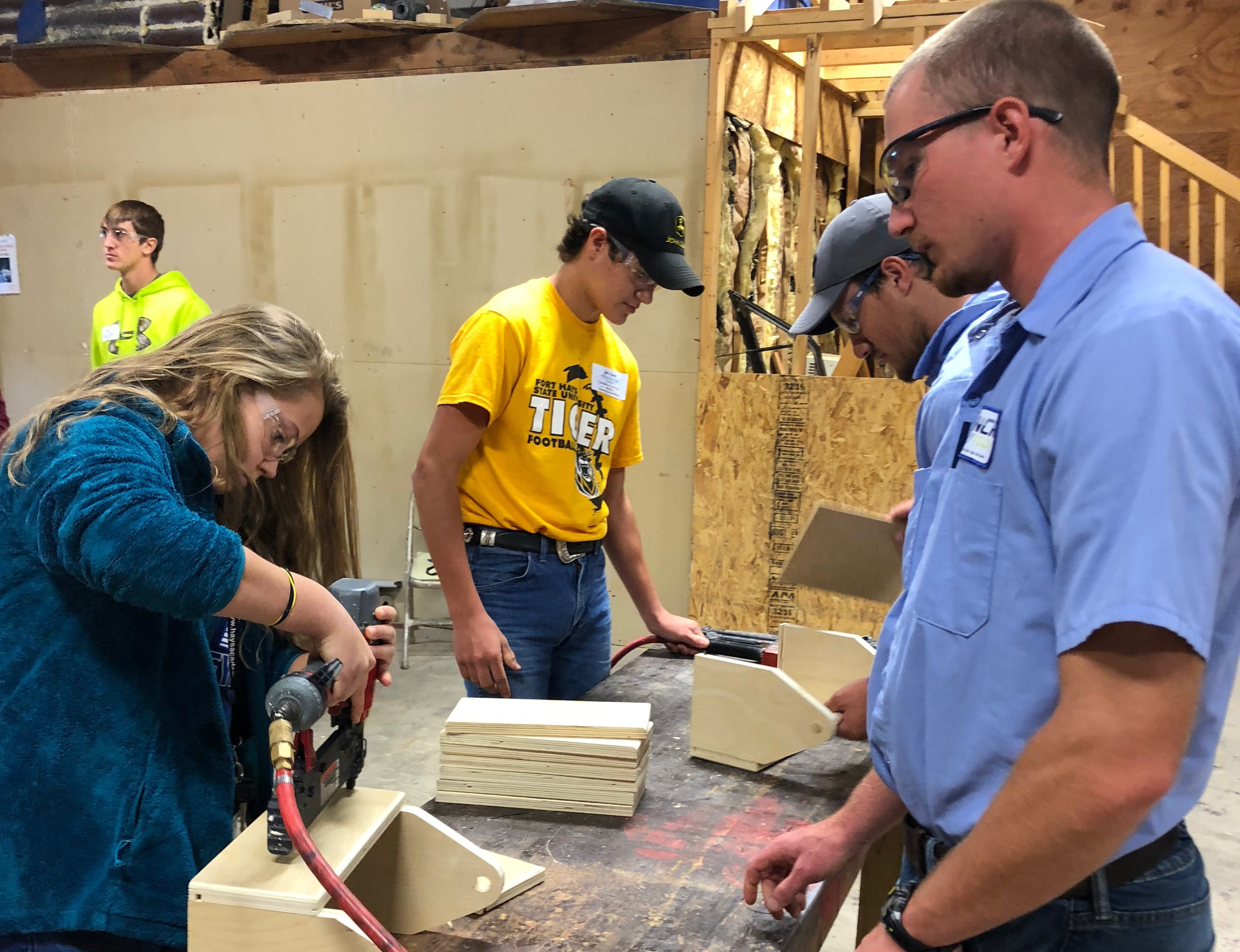
High school students from area schools attended NCK Tech Showcase Day held on Tuesday, October 30, on the Hays campus.
The purpose of Showcase Day is to allow prospective students to participate in hands-on activities that actually take place in the classroom and lab. Students chose three areas of interest that allowed them to participate in some of the skill-sets required for that field of study.
Tiffany Fox, NCK Tech Hays campus Student Services Coordinator said, “Showcase Day is a great opportunity for prospective students and already accepted students for the following academic year to learn more about their program of study and view hands-on experiences in three areas of interest. It also is a time where prospective students hear from other NCK Tech students who are currently completing the program of study.
“Furthermore, this experience provides prospective students familiarity of other programs to pair with their original program of study for a two-year experience at NCK Tech and earn an associate’s degree. I encourage any students considering NCK Tech to participate in Showcase Day prior to making your career decision,” Fox added.
The Hays Campus of NCK TECH offers ten programs of study including: Automotive Technology, Business Management, Business Technology, Carpentry/Cabinetmaking, Culinary Arts, Electrical Technology, Pharmacy Technician, Nursing, Plumbing/Heating/Air Conditioning, and Welding.
Applications for 2019-2020 academic year are now being accepted, and students are encouraged to apply early. For more information contact the Admissions Office at 785-625-2437 or visit our website at www.ncktc.edu.
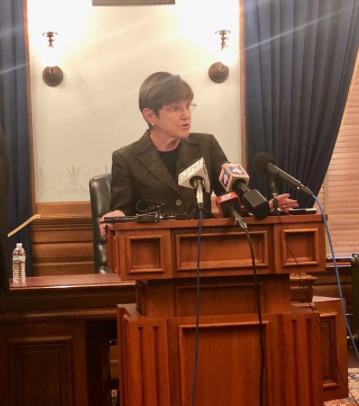
TOPEKA, Kan. (AP) — Democratic Gov.-elect Laura Kelly learned Friday that she stands a better chance of fulfilling a campaign promise to boost spending on Kansas’ public schools without raising taxes with a new, more optimistic fiscal forecast showing it’s possible in the short-term.
The state’s official revenue-estimating group increased by $291 million the projection for tax collections expected during the current fiscal year, which began in July. That’s 4.2 percent higher than the previous fiscal forecast made in April and brings the prediction for tax collections to $7.2 billion.
The forecasters also predicted tax collections will grow by 2.7 percent during the fiscal year that begins in July 2019, to $7.4 billion. The picture isn’t completely rosy: The forecast assumes economic growth flags in 2021 and tax collections grow then by 1.6 percent, to roughly $7.5 billion.
But the Legislature’s nonpartisan research staff released a budget profile showing Kansas can increase its annual spending on schools in each of the next two fiscal years after covering anticipated higher social services costs.
Kelly said during her campaign that she wanted to increase public school funding, and the Kansas Department of Education estimates another $90 million a year is necessary to comply with state Supreme Court mandates in an ongoing education funding lawsuit. Kelly also wants to expand the state’s Medicaid health coverage as encouraged by the 2010 federal Affordable Care Act.
“This is good news for our families and the state of Kansas,” Kelly said in a statement. “I will continue to work with leaders of both parties to keep our state on the road to recovery so we can invest in our schools, expand Medicaid and balance the budget without new taxes.”
Kansas experienced persistent budget shortfalls after an experiment in cutting state income taxes in 2012-13 engineered by then-GOP Gov. Sam Brownback. Kansas became a national example of how not to do trickle-down economics, and bipartisan legislative majorities reversed most of Brownback’s tax cuts in 2017. Tax collections have exceeded expectations ever since.
In the governor’s race, Republican nominee Kris Kobach promised to slash taxes and shrink government spending at the same time to keep the budget balanced.
Departing Republican Gov. Jeff Colyer — who narrowly lost to Kobach in the August primary — said of the new forecast: “This also puts us in a better position to give back to Kansans by lowering taxes, funding education, and making other critical investments in our state.”
Kelly said during a news conference Thursday that increasing school funding is her top priority, but during her campaign, she had a list of other neglected areas of the budget, including higher education, social services and mental health services.
Top GOP lawmakers, frustrated by what they see as unrealistic promises, said the Republican-controlled Legislature will hold her to her promise not to raise taxes.
But Kelly may have some leeway with voters to raise new revenues.
A majority of Kansas voters were at least somewhat supportive of increasing taxes to provide additional funds for public schools, according to AP VoteCast, a nationwide survey of about 139,000 voters and nonvoters. The survey, conducted for The Associated Press by NORC at the University of Chicago, included 3,963 voters and 780 nonvoters in Kansas.
Fifty-eight percent of voters said they strongly supported or somewhat supported raising taxes to boost education funding, and a majority of them backed Kelly. Forty-one percent strongly or somewhat opposed a tax increase, and roughly two-thirds of them backed Kobach.
“That surprises me, but I don’t think a tax increase to fund schools is going to be necessary,” said Senate Minority Leader Anthony Hensley, a Topeka Democrat, adding that with the new forecast, Kelly has “a lot of flexibility.”
State officials had expected a more optimistic forecast because the state’s tax collections have exceeded expectations for 17 consecutive months, the longest streak since at least February 1966, according to data compiled by The Associated Press. The forecasting group is made up of legislative researchers, Department of Revenue officials and state university economists.
SEDGWICK COUNTY —A man arrested in Northwest Kansas in May for shooting a Menards employee in Wichita was sentenced Friday to 34-months in prison. The term will be served consecutive to his other charges, according to the Sedgwick County District attorney’s office.
Security camera images of Williamson prior to the shooting at Menards -photo courtesy Wichita Police
Dominic Williamson, 19, was arrested in connection with shooting a store loss prevention officer at Menards in the 3600 Block of North Maize Road in Wichita.
The store loss prevention officer observed Williamson and a woman exit the business carrying a home surveillance system they had not paid for. The employee contacted the suspects outside the business and the man brandished a handgun and fired one shot striking the employee in the abdomen and fled the scene in a Black Mercedes Wagon with a Montana license plates.
The following day officers investigated a traffic complaint of an erratic driver of a gray Nissan car on Interstate 70 at the U.S. 183 Bypass.
Deputies attempted a traffic stop at which time the driver, who was later identified as 18-year-old Dominic Joseph Williamson, fled.
Officers deployed stop sticks, deflating three tires, but Williamson continued to flee westbound on Interstate 70.
The pursuit finally ended in Trego County just east of Collyer when Williamson lost control of the vehicle after a tactical vehicle intervention.
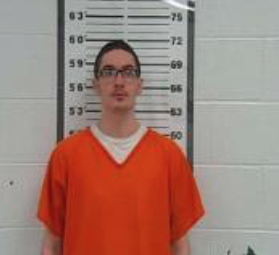
Williamson
The suspect’s vehicle entered the north ditch and rolled several times before coming to rest on its top.
Williamson was arrested without further incident.
He was evaluated by medical staff and later booked into the Ellis County Detention Facility.
Williamson was charged with possession of a stolen vehicle, fleeing and eluding, possession with intent to distribute methamphetamine, possession of marijuana and numerous traffic violations in addition to the charges in Sedgwick County.
The 17-year-old female suspect in the shooting was taken into custody in Derby after a high-speed police chase.
The conference was organized by Jennifer Sauer, coordinator of scholar services and electronic resources and discovery services librarian, and Elizabeth Downing, digital curation librarian.
“Over two days, the conference focused on sharing ideas, innovations and the best practices for institutional repositories,” said Downing.
Mark Eberle, Biological Sciences lab coordinator at Fort Hays State, was the keynote speaker and talked, from an author’s perspective, about the library as a publisher.
Other featured presenters at the conference were from Kansas State University, the University of Nebraska – Lincoln, the Missouri Science & Technology University, Rutgers University, the University of Denver, and Southwestern Oklahoma State University.
This conference was specifically for users of the Digital Commons platform hosted by bepress. Representatives from the company gave updates and answered questions.
“Digital Commons is a really powerful network,” said Sauer. “Content gets picked up and indexed across the Internet fast, so it will come up in a lot of search inquiries and drive even more traffic to the FHSU Scholars Repository.”
Since contracting Digital Commons in 2015, FHSU has seen over 103,000 downloads on faculty and student work that has been published.
“We do a lot of great scholarship here at Fort Hays State,” said Downing “Because these are now indexed in Google Scholar, they are really discoverable by everybody.”
The conference was made possible by contributions from the Forsyth Library dean’s office, the Office of the Provost and bepress.
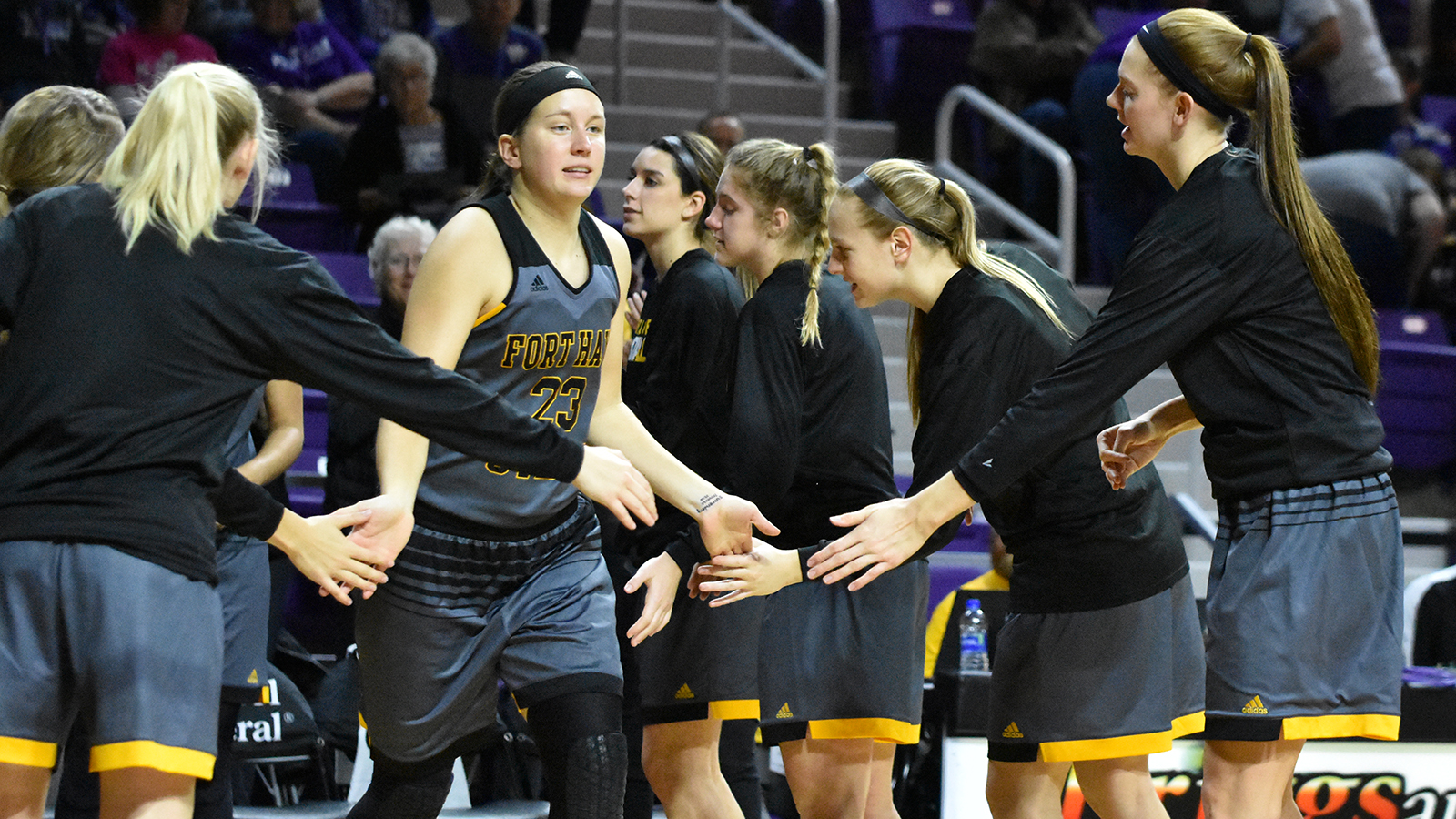
HAYS, Kan. – Kacey Kennett matched a career-high with 20 points and Tatyana Legette added a double-double with 15 points and 13 rebounds to lead the Fort Hays State women’s basketball team to a 91-56 win over Southwest Minnesota State in front of 1,750 Friday night at Gross Coliseum.
Tony Hobson Postgame Interview
Kacey Kennett Postgame Interview
Game Highlights
The Tigers (1-0) raced out to an 8-0 lead only to see the Mustangs (1-0) tie the game 17-17 late in the first quarter. A 16-4 run helped FHSU build a 47-32 lead at halftime.
The Tigers pushed the lead to 21 midway through the third but SMSU responded with a 14-4 run to pull within 11 with under two minutes to play in the third quarter. FHSU outscored the Mustangs 25-6 in the fourth, closing the game on a 21-2 run.
Belle Barbiera scored 12 points while Carly Heim and freshman Hailey Walker both added 11.
The Tigers shot 40-percent from the floor including 10-of-27 from beyond the arc and hit 25 of 33 free throws. They outrebounded the Mustangs by 18 and outscored them 23-7 on second chance points.
The Tigers are back in action Saturday night against Upper Iowa at 7:30 p.m. The Peacocks lost 67-58 to Missouri Western Friday.
A University of Kansas study linked tighter welfare rules to a growing foster care load.
The University of Kansas School of Social Work. Then-KU social work professor Michelle Johnson Motoyama and current KU economist Donna Ginther received a grant to research the effects of safety net policies on child welfare. CREATIVE COMMONS
The state agency overseeing those programs backed those same new rules. Now, it’s hired a research team to question the findings of the KU study.
A team headed by University of Maryland professor Douglas Besharov — who once worked for a conservative think tank and who head’s the school’s welfare reform program — has been reviewing KU’s research.
But he said his goal is to see if the KU researchers’ conclusions hold up to scrutiny, and that he’s in the mainstream of data-driven opinions on welfare.
“I share the consensus view that some form of work-related activity is very good for welfare programs and welfare recipients,” he said.
Besharov is working with Neil Gilbert, a professor at the University of California Berkeley, to review KU’s findings. The two have written on welfare’s impact on marriage together for R Street, a conservative and libertarian think tank. They’ve also written for the Weekly Standard, a conservative opinion magazine.
Department for Children and Families spokeswoman Taylor Forrest said Besharov was suggested to the agency as a leading expert in child welfare and welfare programs.
She said the department approached Besharov to review the KU researchers’ work and, by extension, DCF’s policies. Forrest said DCF isn’t required to post an open call to researchers for consulting purposes.
Under then-Gov. Sam Brownback, Kansas added a requirement that able-bodied cash welfare recipients work 20 hours per week or take job training. Cash assistance benefits were also capped at 24 months over a recipient’s lifetime.
Annie McKay, head of the child advocacy group Kansas Action for Children, said the hiring of academics to challenge an ongoing study looks like an effort to shop for research backing up its policies rather than testing them.
“(DCF) wants to go poking holes in something rather than buckling down and owning the crisis at hand,” she said. “We have an administration that wants to continue to protect an ideology that is costing Kansas kids.”
Since DCF hired Besharov and his team to review KU’s findings, he and the KU researchers have clashed over sharing data.
Besharov emailed KU economist Donna Ginther and Ohio State social work professor Michelle Johnson-Motoyama on Oct. 5 to let the two know he was asked to evaluate their work. He asked about some of their methods and asked the researchers to share their state-level data.
Johnson-Motoyama replied a week later saying that their research is still a draft, not yet ready to be submitted to a peer-reviewed journal.
“We view the peer review process as the most objective and independent approach to refereeing original research,” she said in the email. Johnson-Motoyama added that they’d be happy to share the study with Besharov once it’s published.
But Besharov pushed back. He emailed back on Oct. 18 saying he and Gilbert were “surprised” and hoped Ginther and Johnson-Motoyama would reconsider their decision to not share more information.
“The problem is that whether or not they have official findings, they’ve testified at official hearings,” Besharov told the Kansas News Service. “You can’t do it halfway. You can’t put it out there and say ‘it’s not done, so you can’t review it.’”
Johnson-Motoyama presented KU’s preliminary findings to members of the House Children and Seniors Committee and to a task force examining the state’s child welfare policies during the last legislative session.
The KU study is still ongoing, but researchers said preliminary results last year showed Kansas’ spike in foster kids — a 42 percent increase over the number of kids in 2012 — correlated with the new welfare policies.
Ginther said they’ve presented their preliminary findings to policymakers to alert them to potential harm to children.
“We’re talking about children’s lives,” Ginther said. “We have evidence that (Kansas’ welfare) policy is putting children at risk … so you inform the policymakers who are in a position to make a decision.”
Ginther and Johnson-Motoyama also presented their preliminary results linking Kansas’ changes in welfare policy to more kids in foster care at a conference in December. Ginther says they’ve continued to follow a standard protocol since then — talking with subject matter experts, adding data, and working on a draft to submit for peer review.
She said she was “stunned” by the request to see her data and programs.
“You don’t share your data and programs before your paper’s finished — it’s just not done,” she said.
Ginther said she also couldn’t share the data they used on child abuse and neglect because it’s restricted. She said she got that information from the National Data Archive on Child Abuse and Neglect, through the U.S. Department of Health and Human Services’ Administration for Children and Families.
The agency’s website says “Restricted use files of (child abuse and neglect) data are archived at the National Data Archive on Child Abuse and Neglect (NDACAN) at Cornell University and available to researchers who are interested in using these data for statistical analyses.” Officials from the Administration for Children and Families did not return calls for this story.
After Besharov’s second email, Ginther said she was contacted by KU’s department of public affairs passing on a request from Gov. Jeff Colyer’s office asking why KU couldn’t share the study data and programs.
Kara Zeyer, a spokeswoman for Colyer, confirmed that the governor’s office reached out to KU at Besharov’s request.
Zeyer said the governor’s office got involved because if the KU study showed Kansas’ welfare policy was harmful, “we would be happy to have that information so we could make improvements.” Zeyer said it’s a matter of transparency — if KU has the information, it should be able to share that data with Besharov and his team.
Besharov said he was initially given an Oct. 31 deadline to complete his review. He said he let DCF know he wouldn’t be able to make the deadline, and didn’t receive any pushback about his review not being complete before the November elections.
Ginther said she’s shocked by Besharov’s pushing to get her data and the governor’s response of reaching out to KU.
“I’m just flabbergasted by the steps they’ve taken,” she said.
Madeline Fox is a reporter for the Kansas News Service. You can reach her on Twitter @maddycfox.










 Listen as the ‘Voice of the Chiefs’ Mitch Holthus recaps last week’s win over Cleveland and previews Sunday’s game vs. Arizona.