LAWRENCE, Kan. – David Beaty will not be retained as Head Football Coach at the University of Kansas at the conclusion of the season, KU Athletics Director Jeff Long announced today.
“After a thorough evaluation of the program, I believe that new leadership is necessary for our football team to move forward and compete at the highest level of the Big 12 Conference,” Long said. “I know that Coach Beaty cares deeply about his players, and I respect that. The student-athletes on this team have continued to play hard – and I am confident they will do that for the rest of the season.”
Beaty has coached the Jayhawks for three-plus seasons, amassing a 6-39 record, 2-31 in Big 12 Conference play. He will continue to coach the team until the regular season concludes against Texas on Friday, November 23. He signed a five-year contract in December 2014, which was extended two years (through 2021) in December 2016.
Long informed Beaty of his decision Sunday and met with the football team directly afterwards. “The search for a new head coach will begin immediately,” he said.
Beaty’s contract calls for him to be paid $3 million (payable in six equal payments) in the event of termination without cause; Long said Kansas will fulfill the terms of that contract.
WICHITA, Kan. (AP) — The third Navy ship to bear the city of Wichita’s name will be sent into active duty early next year.
The littoral combat ship USS Wichita will be commissioned Jan. 12 at a Naval Station in Mayport, Florida. Littoral combat ships are the Navy’s fastest ships and are used for minesweeping, anti-submarine, drug trafficking or humanitarian operations.
The ship is 387 feet long, 57 feet wide and has a top speed of more than 45 knots — or nearly 52 mph.
The USS Wichita also is equipped with a launching pad for two, MH-60 Seahawk helicopters.
The first USS Wichita was a heavy cruiser that earned 13 battle stars during World War II. The second was a replenishment oiler that earned four battle stars in Vietnam.
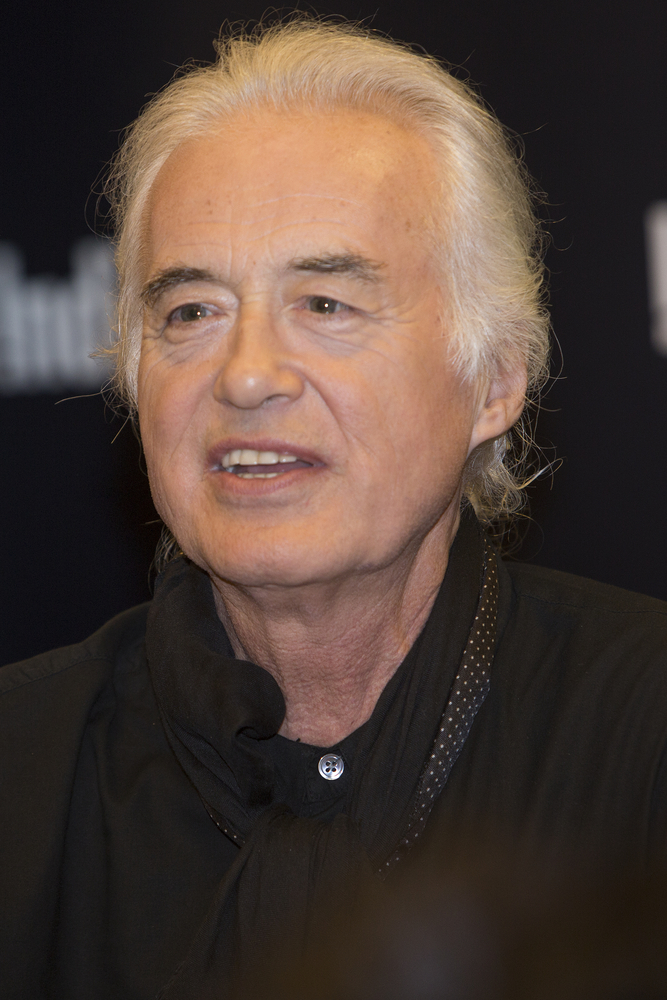
Jimmy Page / Shutterstock.comBy ANDREW DALTON AP Entertainment Writer
CORONA, Calif. — Jimmy Page once painted a dragon, and used it to slay.
The guitar guru was so bursting with creative inspiration 50 years ago that he felt compelled to pick up a brush and use his skills from art school to take poster paints to his favorite instrument, a 1959 Fender Telecaster, and decorate it with a psychedelic beast.
He calls the axe “the Excalibur” that he wielded through the wildly eventful year of 1968, when his old band, the Yardbirds, crashed, and his new band, Led Zeppelin, was born just two months later.
“My whole life is moving so fast at that point,” Page, now 74, said as he reflected on Led Zeppelin’s 50th anniversary in an interview with The Associated Press at the Fender guitar factory in California. “Absolutely just a roller-coaster ride.”
Page said he had Led Zeppelin’s sound, and first songs, fully formed in his mind before the Yardbirds were even done.
“I just knew what way to go,” Page said. “It was in my instinct.”
He found his first ally in singer Robert Plant, whom he invited to his house to thumb through records and talk music.
Page said he used an unlikely bit of folkie inspiration — Joan Baez — to show Plant the sound he wanted, playing her recording of the song “Babe I’m Gonna Leave You” and telling him to emulate the way she sang the top line of the song. Zeppelin would put the tune on its first album.
Page still marvels at how fast the whole thing took off after Plant brought on drummer John Bonham and Page pulled in his friend John Paul Jones to play bass.
“The whole journey of Led Zeppelin and the rise of Led Zeppelin, each tour was just extraordinary, and the growth and the respect and love of the band, and the people that were flooding to see us,” Page said.
The first record also included “Dazed and Confused,” with Page famously using a violin bow on the dragon guitar, which he played on every electric song on the record.
The guitar had been a cherished gift that guitarist Jeff Beck had given Page to thank him for recommending Beck for a job in the Yardbirds, which had brought a handsome payday.
“He’d bought a Corvette Stingray, and came roaring up my driveway with it,” Page remembered. “He said, ‘This is yours.’ I was absolutely thrilled to bits. It was given to me with so much affection.”
Page said he made immediate and intense use of the instrument, and wanted to “consecrate” it, so he went at it with paints that were used at the time for psychedelic posters, and summoned the dragon.
Page later left the guitar behind at his home in England on an early U.S. tour with Led Zeppelin in 1969. He’d come to regret it.
When he returned, exhausted and abuzz, he found that a ceramicist friend who had been serving as his house-sitter had painted over the dragon in his own mosaic style as a “gift” for Page.
“It was a disaster,” he said.
Page angrily stripped off all the paint and it sat in storage where it sat for decades.
Flash forward 50 years. Page was assembling a book for the band’s anniversary, and the dragon guitar kept popping up in pictures.
Page felt that maybe it was time to bring the old beast back to life. He worked with a graphic artist who helped illustrate the book, using photos to repaint the guitar, and recreate its old look.
He loved the result so much that he approached Fender, guitar maker happily signed on to make an anniversary rendition for the public.
“It’s absolutely identical,” Page said. “You wouldn’t see any difference. If anything, the colors were just slightly richer.”
Four different versions of the guitar will be released next year.
Along with the book, the instruments are a tribute to the band’s 50-year legacy.
Asked what kind of gift one might get for his bandmates for such a milestone, Page said, “I might give them a paintbrush, and the body of a guitar, and see if they can do something with it.”
Larry Max Archer of Abilene passed away Thursday, November 1, 2018 at Abilene Place. He was born January 26, 1939 in Almena, Kansas, the son of Tracy and Gladys (Ackinson) Archer.
On October 8, 1960 he was united in marriage to Rita M. Geist in Norton, Kansas. She preceded him in death March 19, 2012.
Max was a Sgt. in the Army during the Vietnam War.
He worked as a heavy equipment operator for Norton County, served as Sheriff of Norton County for 14 years and was a truck driver for 40 years with the last 20 years with Long Island Grain Company.
Family was very important to Max and he enjoyed going to watch them participate in school events.
Max is survived by his son, Mark (Amy) Archer of McPherson; daughters, Lori Fulks of Smithland, Kentucky; Kristi McDowell of Abilene, Kansas; and companion Leta Meats of Abilene.
He was preceded in death by his parents, loving wife Rita, 4 brothers, 1 sister and 1 son-in-law.
Funeral Services for Max will be 10:30 A.M., Monday, November 5, 2018 at Martin-Becker-Carlson Funeral Home with Father Don Zimmerman officiating. Burial will follow at the Abilene City Cemetery. Parish Rosary will be 5:00 P.M., Sunday, November 4, 2018 at Martin-Becker-Carlson Funeral Home with visitation to follow until 7:00 P.M. The family suggests memorials be given to the Hospice of Dickinson County.
Memorials may be dropped off or mailed to Martin-Becker-Carlson Funeral Home, 414 NW Third St., Abilene, Kansas 67410.
MANHATTAN — In April, the Kansas legislature passed Senate Bill 263 to enact the Alternative Crop Research Act and charged the Kansas Department of Agriculture with implementing the Industrial Hemp Research Program. This fall, KDA requests that individuals who are considering participation in the Industrial Hemp Research Program in Kansas in 2019, whether as a grower, distributor or processor, submit a Pre-Application and Pre-Application Research Proposal.
The Pre-Application is voluntary, and it is not an application for a license; anyone who plans to participate in the spring will still need to obtain a license through the official application process after the regulations become effective. Those who submit a Pre-Application with a Pre-Application Research Proposal will have an opportunity for the Industrial Hemp Research Advisory Committee to informally review the research proposal to determine the likelihood of its approval when the regulations are effective. In addition, those who submit the Pre-Application will get direct notification as soon as the full research license application process is available.
The Pre-Application is not the full research license application; there is no fee requirement or fingerprint-based state and national criminal history record check requirement to submit the Pre-Application, although both will be required with the research license application when it becomes available. In the Pre-Application Research Proposal, potential growers, distributors or processors will be asked to explain in detail the research they plan to conduct in their participation in the Industrial Hemp Research Program in Kansas.
The regulations that will guide the Industrial Hemp Research Program are still in the midst of the approval process as outlined on KDA’s industrial hemp webpage. A public hearing will be held soon, which will be one of the last steps prior to the adoption of the regulations.
The deadline for submission of the Pre-Application and Pre-Application Research Proposal is December 1, 2018. The Pre-Application forms and additional instruction — along with much more information about the new Industrial Hemp Research Program in Kansas — can be found at agriculture.ks.gov/industrialhemp.
A speaker will be in Hays next week to give presentations to both students and parents about the dangers of human trafficking and what role social media plays in drawing youth into the sex trade.
In his BeAlert program, Russ Tuttle notes human trafficking is not something that just happens in the third world.
At least 100,000 children in America are taken of advantage of in the sex industry each year. Three of four of those young victims are trafficked online.
Tuttle is bringing awareness to the crisis of human trafficking through The Stop Trafficking Project, which includes serving as the director for BeAlert and as a founding board member for Kansas City Street Hope, according to Tuttle’s website.
BeAlert is the awareness and prevention strategy of The Stop Trafficking Project. The primary method of implementation is through presentations designed to 1) educate and empower students and 2) guide adults from awareness to action.
A commitment to collaborate allows for presentations that provide insight into the problem of domestic minor sex trafficking and at the same time offer effective solutions, Tuttle said on his website.
Mary Ann Shorman, who retired last year from her job as a school nurse after 29 years with USD 489, saw Tuttle speak at a School Nurse Association meeting.
“It is unsettling information, but so very important for our community parents and our young people to hear,” Shorman said. “I am so happy USD 489 was able to get him to come to Hays, and I hope people will come to hear what he has to say.”
Tuttle is presenting “Caring Adults” from 5:30 to 7 p.m. Tuesday at the HHS Gym A.
He will speak to students during assemblies from 8:10 to 9 a.m. at Hays Middle School and from 10:58 to 11:58 a.m. at Hays High School Wednesday.
Tuttle, who has 29 years of experience in non-profits, grew up for much of his childhood and teenage years in India, and he said this created within him the drive to serve those who are unable to help themselves.
SHAWNEE COUNTY — Law enforcement authorities are investigating an attempted aggravated robbery and have a suspect in custody.
Toole -photo Shawnee Co.
Just before 11p.m. Friday, police responded to an aggravated robbery attempt to Lynn’s Liquor located at 3335 SW Gage in Topeka, according to Lt. John Trimble.
Employees of the store stated that after they had locked the doors for the night, 2 subjects wearing blue bandanas covering their faces and dark clothes attempted to enter the store. One of those subjects were armed with a handgun. Once the 2 subjects were unable to enter the store, they fled on foot in an unknown direction.
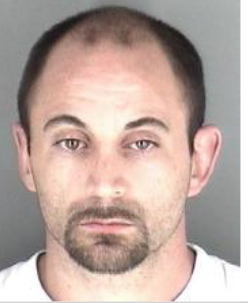
The investigation led police to a residence in the 3500 Block of NW Twilight in Topeka. Police arrested four people for questioning, according to Trimble. Two were identified as suspect in the attempted robbery including 35-year-old Joseph Toole. He was booked into the Shawnee County Department of Corrections. A juvenile was aldo booked into the Juvenile Detention Center for attempted aggravated robbery.
A painting by Michael Knutson. Photos courtesy KWU
SALINA — Conquering the Flight of Fancy, an exhibit by Michael K. Knutson and Brian K. McCallum of Great Bend will be featured in The Gallery at Kansas Wesleyan University beginning Nov. 9.
The artists are scheduled to discuss their work during a reception from 5 to 7 p.m. Nov. 9 in The Gallery. Refreshments will be provided.
Knutson and McCallum create magical and mysterious surreal oddities inviting the viewer to take a flight of fancy. Functional pottery and impressionistic landscape paintings also will be available for holiday purchasing.
Knutson works as a 2-D art instructor at Garden City Community College. After earning his bachelor’s degree from Black Hills State University, he completed his MFA at Fort Hays State University in 2010. As an accomplished visual artist and primarily a painter, he has exhibited nationally and creates public commissions for institutions such as the Sternberg Museum of Natural History. The basis of his work is a deep connection to the immediate environment, life experiences and the way the mind interprets this information.
A 3-D piece by Brian McCallum.
Also an educator at Garden City Community College, McCallum teaches all levels of 3-D art and art history. His sculptural work and methods are featured in Lark Publications’ 500 Figures in Clay and Pottery Making Illustrated. Receiving awards and showing extensively throughout the country, he was recently a featured artist at the Art of the New West exhibit at Process Art House in Amarillo, Texas.
The Gallery is located in Sams Hall of Fine Arts at KWU, 100 E. Claflin Avenue. Gallery hours are 9 a.m. to 7 p.m. Monday through Friday and weekends by appointment.
Rip WinkelIt’s that time of the year where we see a very noticeable needle drop on some evergreens such as arborvitae, pines and spruce.
In fact, just this last past week I have received a number of calls on this very issue. Not to worry, as this is normal, and to be expected. Evergreens do not keep their needles indefinitely but will drop them after one to several years. This is a process that happens with these types of conifers, where 2- to 4-year-old needles, usually in the interior of the canopy by this time, turn yellow, then brown, and eventually drop off.
For example, Ponderosa and Scotch pines usually keep their needles for three years. However, this pattern may vary from tree to tree and year to year. Also, this process may be a gradual one, or all the older needles may turn in a very short period of time.
If the needle dropping is sudden, and people are not familiar with this process, it is often that they become concerned about the health of these trees. Again, this natural phenomenon occurs every year, and does not by any means hurt the tree. Having said that, be sure to check that only the older needles towards the center of the shrub or tree, are the ones browning and dropping.
The needles on the ends and tips of the branches should look fine, having their normal green color. Check to see that there is no spotting or banding on the needles on the ones that are turning yellow. If spotting or banding is noted, take a sample to your local county extension office for diagnosis. What’s more, if the tips of the branches (candles) have turned brown, brittle, and are hollow inside, or if whole branches and sections of the plant have died back, again, be sure to contact your local Extension office. They have information for the proper remedial actions to take.
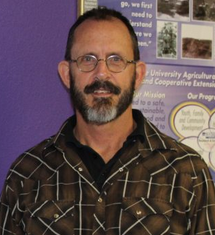
Rip Winkel has been the Horticulture agent in the Cottonwood District (Barton and Ellis Counties) for K-State Research and Extension. You can contact the office by e-mail at cottonwood.k-state.edu or calling either 785-682-9430, or 620-793-1910.
Ron Wilson is director of the Huck Boyd National Institute for Rural Development at Kansas State University.By RON WILSON Huck Boyd National Institute for Rural Development
March 6, 2017. Members of the Gardiner family were working cattle on their ranch in southwest Kansas when they started to smell smoke. Little did they know that almost their entire ranch was about to be consumed by the largest wildfire in the history of Kansas.
In the last two weeks, we’ve learned about Mark, Greg and Garth Gardiner who operate Gardiner Angus Ranch. They were at the epicenter of this disastrous fire in 2017.
In February 2017, an ice storm loosened overhead power lines in Oklahoma. When high winds arose in March, the lines banged together, arced and started to melt, causing sparks which set fire to the dry grass below.
“We were working cattle when we started to smell smoke. We could tell it was pretty intense,” Mark said. He went to alert the neighbors. When the wind speed rose to 80 miles an hour and changed direction, disaster was on its way.
“There was a wall of flames as far as I could see,” Mark said. He called all the people he could and told them to get out of the path. Mark and his wife Eva hurried to their house which was directly in the path of the flames. He called his brother Greg and told him to bring a trailer to rescue the horses there.
Mark and Eva found flames racing toward the house. They ran in to try to rescue the dogs. Mark was able to grab the kids’ baby pictures and some boxes of letters, but he lost Eva in the smoke.
Meanwhile, Greg had arrived with the horse trailer. Confronted with a 60-foot wall of flames, he drove the truck and trailer out to the wheat pasture in blinding smoke, with embers hitting the windshield.
“I felt so bad that I left,” Greg said, but it turned out to be a blessing. “It was a God thing,” Greg said in retrospect. “Mark’s house is built in a place where there’s only one way in and one way out. If I hadn’t moved the truck when I did, he would have been trapped inside.”
Greg met Eva in the wheat field, but they didn’t know if Mark had survived. He had doubled back to fight the fire. Twenty minutes later, firemen confirmed to them that Mark was alive.
Much of Clark County was consumed in the fire. One man perished when his semi-truck jack-knifed in the smoke and he tried to escape on foot. “You couldn’t outrun it,” Mark said.
Thanks to the hard work of firefighters and other volunteers, the towns in the county were spared. Those include the rural towns of Ashland, population 867; Protection, population 514; and Englewood, population 77 people. Now, that’s rural.
When it was all over, Mark and Eva Gardiner’s home was burned up along with 42,000 acres, 7,000 bales, 270 miles of fence, and hundreds of cattle. Hundreds more had to be euthanized. However, their key genetic beef seedstock survived, as did their horses.
The response to the disaster was heartwarming. “I didn’t leave the ranch for 48 hours, but as I did, a semi hauling hay bales was already coming into the drive,” Greg said.
“People came from all over to help,” Mark said. They were truly making a difference.
The Ashland Community Foundation, Kansas Livestock Association, and Working Ranch Cowboys Association helped provide major relief.
“Senator Jerry Moran and Congressman Roger Marshall were really helpful,” Mark said. He credits local banker Kendal Kay and veterinarian Randall Spare with providing the Gardiners key support which they needed.
“I did everything in the aftermath with a joyful heart, because my family had survived,” Greg said. “Within nine months, we had completely rebuilt and improved our infrastructure,” he said. What’s more, late spring rainfall enabled the recovery of the grassland.
The Gardiners keep it all in perspective. “People say to me, `I’m sorry for your loss,’” Mark said. “Hey, I didn’t lose anything,” he said. “All I lost was just stuff. It’s the people that matter.”
That is a powerful lesson for all of us from March 6, 2017.
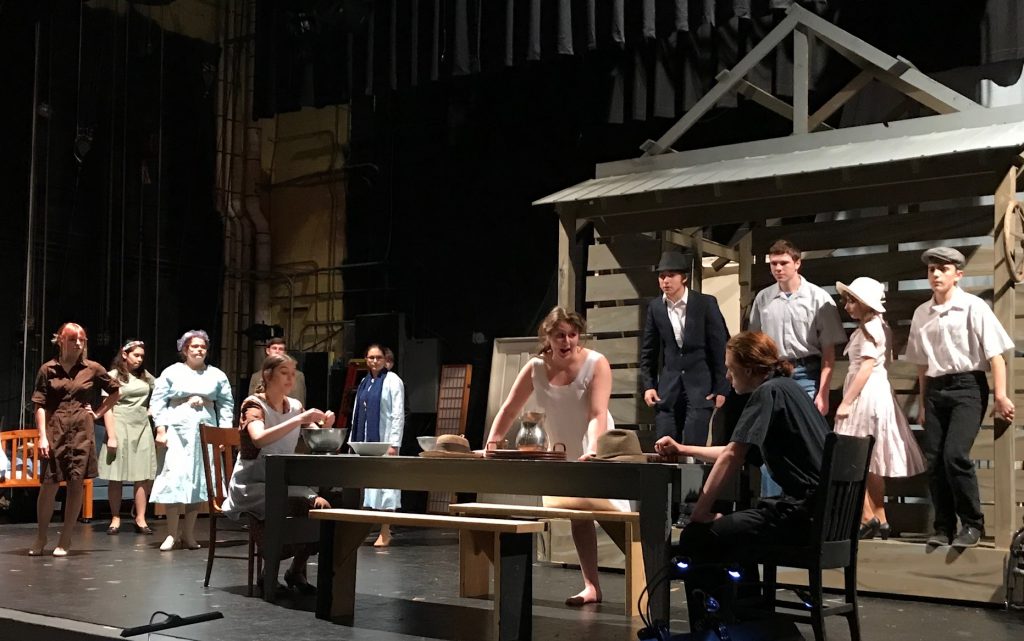
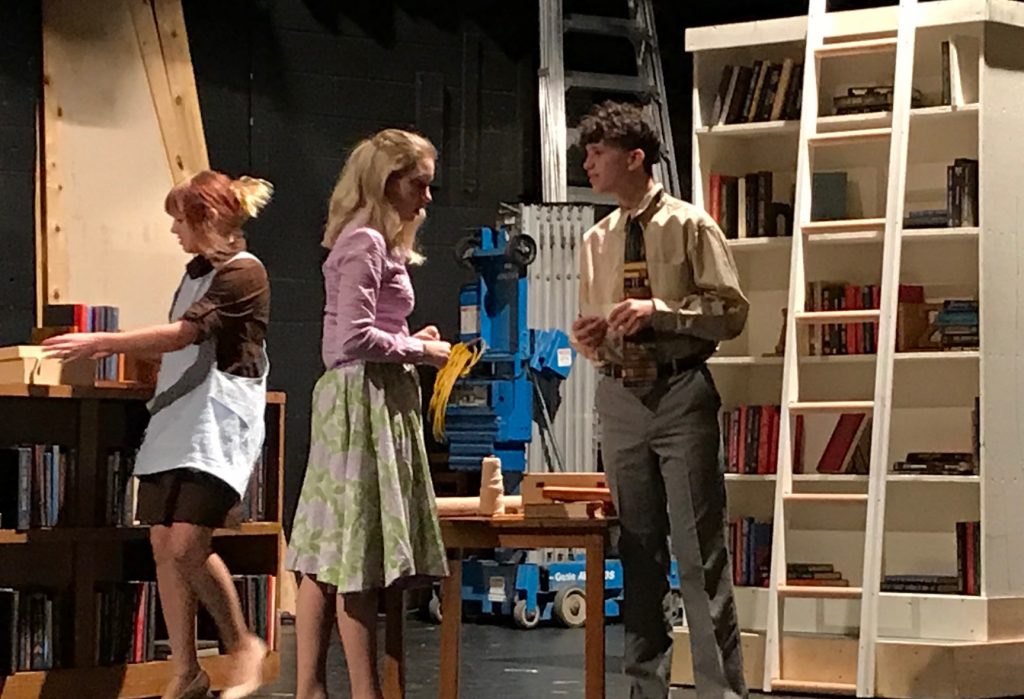
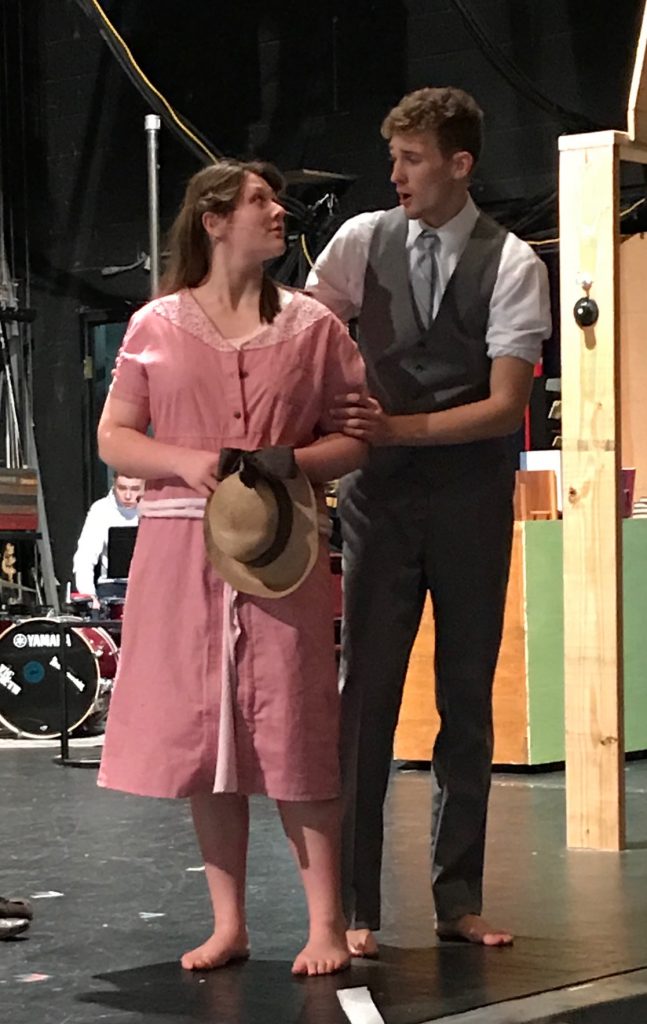
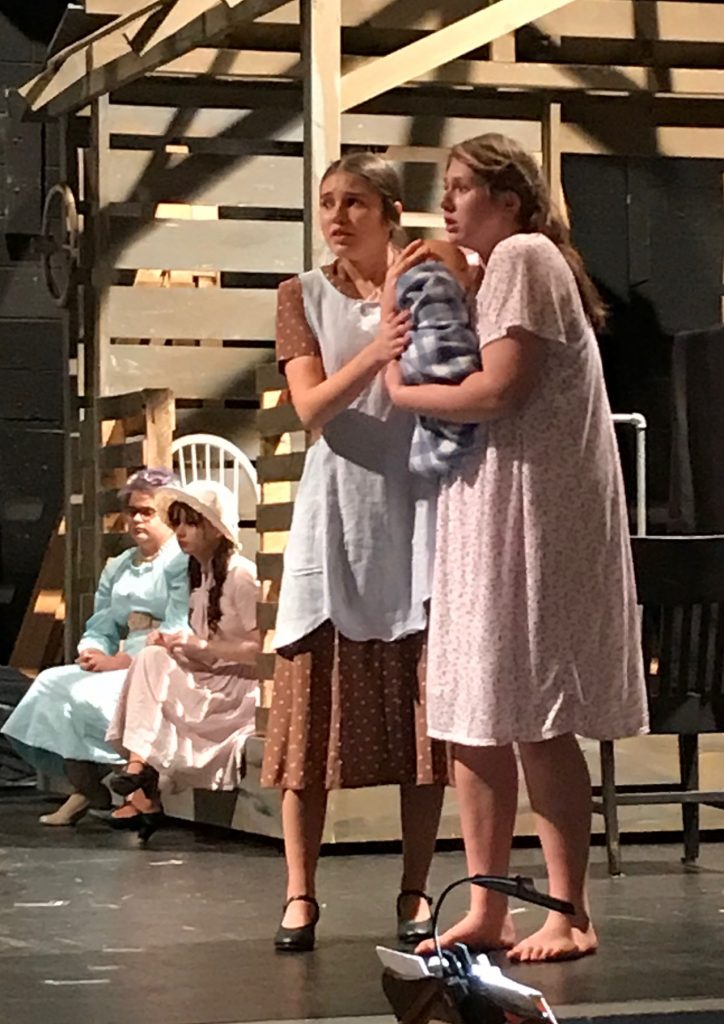
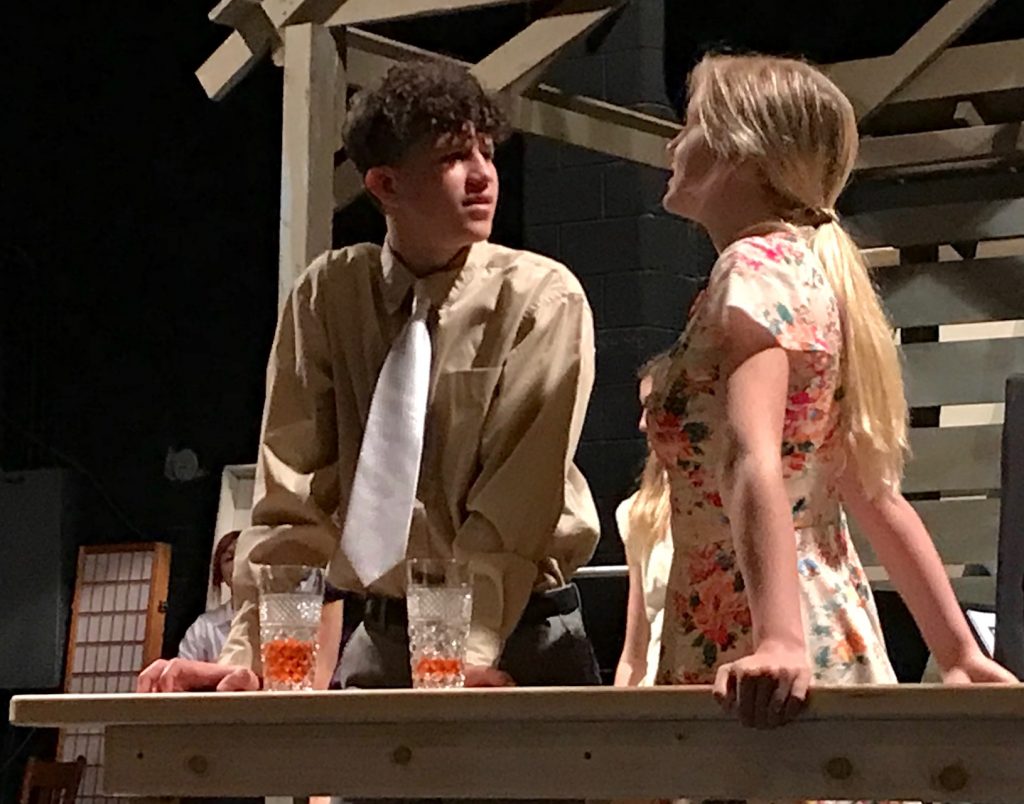
From Nov. 8 to 11, Hays High School will present the Broadway musical “Bright Star,” written by Steve Martin (the comedian and banjo player) and Edie Brickell in 2016.
Hays High is the fourth high school in the nation to perform this new show, and its opening night will serve as the Kansas premiere. Tickets are available at www.ticketsource.us/hays-high-school, or at the 12th Street Auditorium box office from 12:30 to 6:30 p.m. Fridays.
Inspired by a real event, the show tells a sweeping tale of love and redemption, in the rich setting of the Blue Ridge Mountains of North Carolina in the 1920s and ’40s. When literary editor Alice Murphy meets a young soldier just home from World War II, he awakens her longing for the child she once lost. Haunted by their unique connection, Alice sets out on a journey to understand her past – and what she finds has the power to transform both of their lives.
The leading role of Alice is played by sophomore Caitlin Leiker. Billy Cane is played by sophomore Gabe McGuire, and Jimmy Ray Dobbs is played by senior Cade Swayne. There are 40 students in the cast, three students in the band of 10, and another handful of students who help run the technical elements of the production.
Alex Underwood
“I chose this show for a variety of reasons,” said Alex Underwood, Hays High Schools vocal director. “I thought its compelling plot would suit the students while also fitting the musical culture of Hays.”
The show features a unique blend of Americana music — country, bluegrass and Broadway — with a live nine-person band performing on stage during the show.
“We spent a long time finding the right musicians, from banjo and fiddle to mandolin and stand-up bass, to create the perfect musical backdrop,” Underwood said. “I think audiences will enjoy hearing our delightful bluegrass band, and will be impressed with the talented students of Hays High. They’re in for a moving and charming evening experiencing live performing arts.”
Showtimes are 7:30 p.m. Nov. 8 to 10, and 2:30 p.m. Nov. 11 at the 12th Street Auditorium.










 By CRISTINA JANNEY