We have a brand new updated website! Click here to check it out!

Blood donations underway for Battle of the Badges

Trevor Willemsen, HPD (Courtesy HPD)
Brandon Hauptman, HPD (Courtesy HPD)

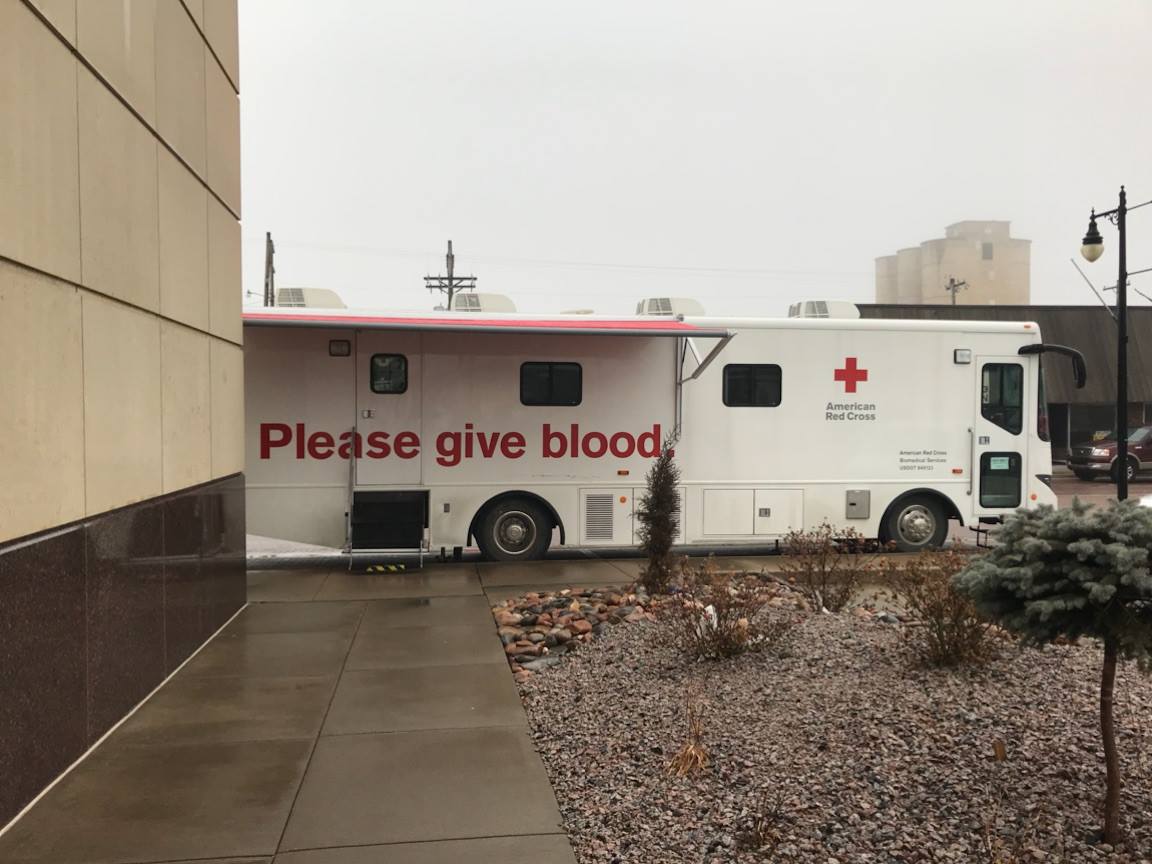
The Ellis County American Red Cross Battle of the Badges Blood Drive is underway. It’s sponsored by Hays High School JAG-K students.

Hays Police officers Sgt. Brandon Hauptman and Master Police Officer Trevor Willemsen gave blood Wednesday at the Ellis County Administrative Center in Hays.

The blood mobile will be at Midwest Energy, 1330 Canterbury, Thu., Dec. 27, 10 a.m.-4 p.m. and Big Creek Crossing, 2918 Vine, Sat., Dec. 29, 10 a.m.-4 p.m. The mobile unit will return to the shopping center Jan. 4 and 5 with hours from 11 a.m.-5 p.m.

Please donate blood today and don’t forget to vote for your favorite first responders.

Ellis Co. in Winter Weather Advisory; 2-5″ snow expected

NWS

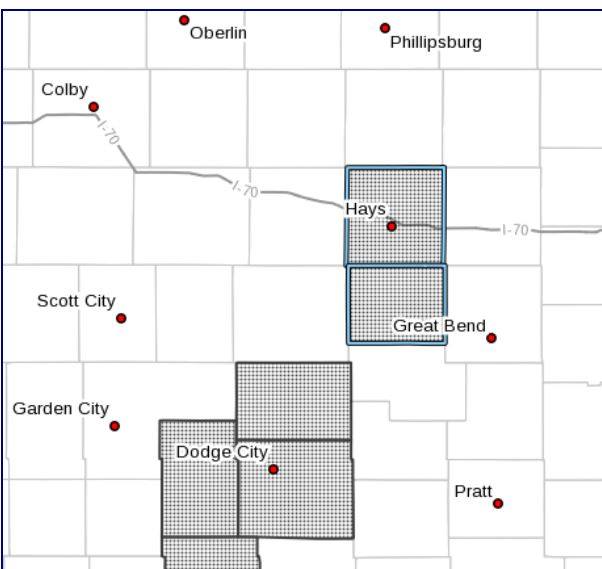
DODGE CITY – The National Weather Service in Dodge City has issued a Winter Weather Advisory from midnight Wed., Dec. 26 to noon Thu., Dec. 27., for Ellis, Rush, Hodgeman, Gray, Ford and Meade counties including the cities of PFeifer, Hays, La Crosse, Jetmore, Hanston, Cimarron, Montezuma, Dodge City, Meade, Plains City,
and Fowler.

Snow and blowing snow is expected to develop after midnight causing dangerous winter travel.

* WHAT…Snow expected. Total snow accumulations of 2 to 5 inches
expected. The heaviest snow is expected to fall in western
sections of the advisory area. Winds gusting as high as 45 mph.

* WHERE…Portions of central and southwest Kansas.

* WHEN…From midnight tonight to noon CST Thursday.

* ADDITIONAL DETAILS…Difficult winter travel is expected during
the Thursday morning commute. Expect snowpacked roadways and
reduced visibility in snow and blowing snow.

PRECAUTIONARY/PREPAREDNESS ACTIONS…

A Winter Weather Advisory for snow means periods of snow will
cause primarily travel difficulties. Expect snow covered roads
and limited visibilities, and use caution while driving.

The latest road conditions for the state you are calling from can
be obtained by calling 5 1 1.

Blizzard Warning in extreme NW Kansas

NWS

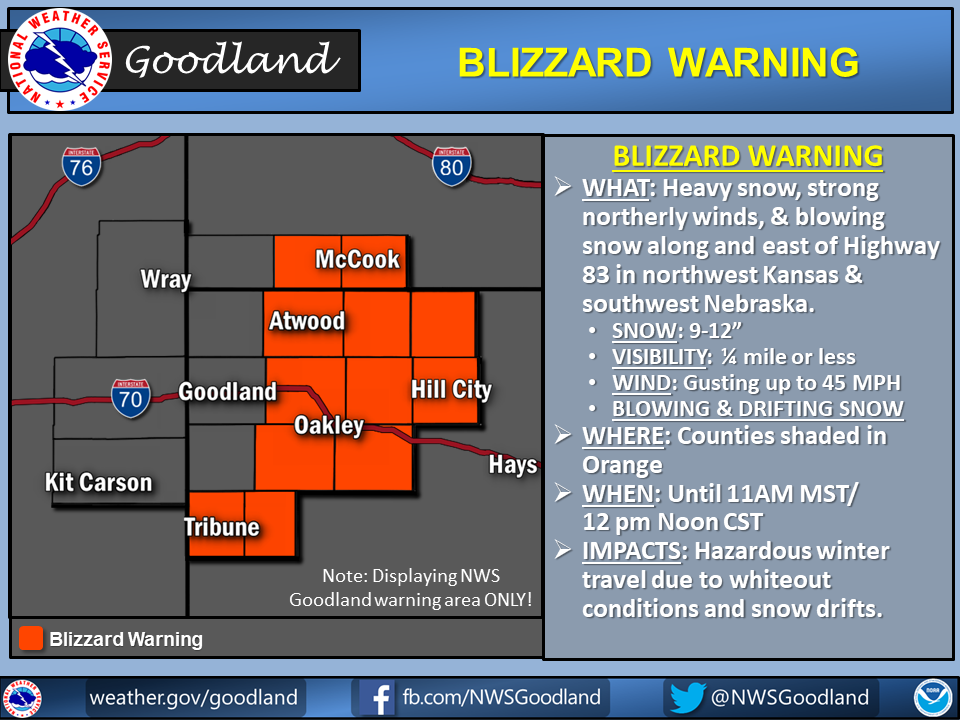
GOODLAND – A Blizzard Warning is in effect until 11 a.m. MST/12 p.m. CST for Rawlins, Decatur, Norton, Thomas, Sheridan, Graham, Logan, Gove, Greeley, and Wichita counties in NW Kansas.

* WHAT…Heavy snow, strong northerly winds, and blowing snow.
Snow accumulations will range from as little as 1-3 inches in
eastern Colorado to as much as 9-12 inches along and east of
Highway 83 in northwest Kansas and southwest Nebraska.

* ADDITIONAL DETAILS…Travel will become extremely dangerous or
impossible late tonight and Thursday. Blizzard conditions will
be possible Thursday morning, particularly along and east of
Highway 83 in northwest Kansas and southwest Nebraska.

* WINDS/VISIBILITY…Winds gusting 40 to 45 mph with visibility
down to one quarter mile or less creating whiteout conditions.

* SNOW ACCUMULATIONS…As much as 9 to 12 inches in northwest
Kansas and southwest Nebraska.

* MAIN IMPACT…Hazardous winter travel due to whiteout
conditions and snow drifts.

* OTHER IMPACTS…Heavy wet snow and strong winds will create
dangerous travel conditions. Expect snowpacked roadways,
reduced visibility, and blowing and/or drifting snow.

PRECAUTIONARY/PREPAREDNESS ACTIONS…

A Winter Storm Warning for snow means severe winter weather
conditions will make travel extremely hazardous or impossible. If
you must travel, keep an extra flashlight, food and water in your
vehicle in case of an emergency.

The latest road conditions for the state you are calling from can
be obtained by calling 5 1 1.

A Blizzard Warning means strong winds and falling or blowing snow
will produce whiteout conditions at times…with travel becoming
difficult or impossible. Monitor local forecasts before deciding
to venture outside. If you must travel and you become stranded…
stay with your vehicle until help arrives.

Colby named among the state’s safest communities

After analyzing data that included the rate of violent crime and property crimes, home security company Safewise has listed one northwest Kansas community among the state’s safest.

Colby — the only northwest Kansas city to make the list — ranked ninth in the study.

Mission Hills and Hesston were named the state’s two safest communities.

Click HERE for the complete listing.

Kansas WIC remains open during federal government shutdown

TOPEKA – The Kansas Department of Health and Environment is letting residents know during the federal government shut down, the Women, Infants, and Children (WIC) program would continue to operate. This would include providing nutritional food benefits, nutrition education, breastfeeding support and referral services.

WIC is the USDA funded nutrition program for low-income pregnant women, infants and children from birth to age 5.

“All eligible participants would continue to receive WIC benefits and new applicants would be certified and receive benefits,” said Rachel Sisson, MS, director of the KDHE Bureau of Family Health before the shutdown. “There are 350 stores in Kansas authorized to provide WIC foods to clients. During a shutdown, all stores would continue to process WIC transactions and would continue to be paid for food purchased by WIC participants.”

The WIC program is administered by KDHE through contracts with county health departments. There are 120 county WIC clinics in Kansas where eligible participants may apply for services.

 Information about the Kansas WIC program is on the web at www.kansaswic.org.

FHSU professor published in Journal of Applied Business and Economics

FHSU University Relations

Dr. David Snow, director of entrepreneurship at Fort Hays State University, wrote a manuscript which was published in the December issue of the Journal of Applied Business and Economics.

“Ecosystem Interrupted,” based on Snow’s research discusses the concept of the entrepreneurship ecosystem, which is concerned with the interaction of the organizations and individuals necessary to create an environment where entrepreneurship can thrive.

Snow analyzed the elements of the ecosystem in eastern Kentucky in order to explain the level of difficulty the region has experienced in developing local opportunity entrepreneurs and diversifying the economy.

“This research is important in that it identifies systemic problems the region must address to make any substantial, long-term impact,” said Snow. “Significant shifts in policy, culture, and education now can create an atmosphere to develop a thriving entrepreneurial ecosystem in the near future.”

He presented the research earlier this year at the United States Association for Small Business and Entrepreneurship® annual conference. The association is the largest independent, professional, academic organization in the world dedicated to advancing the discipline of entrepreneurship.

Plan released to reduce childhood lead exposure

EPA

LENEXA — U.S. Environmental Protection Agency (EPA) Acting Administrator Andrew Wheeler, U.S. Housing and Urban Development (HUD) Secretary Ben Carson, and U.S. Health and Human Services (HHS) Deputy Secretary Eric Hargan recently unveiled the Trump Administration’s Federal Lead Action Plan to Reduce Childhood Lead Exposures and Associated Health Impacts (Lead Action Plan).

“The Federal Lead Action Plan will enhance the Trump Administration’s efforts to identify and reduce lead contamination while ensuring children impacted by lead exposure are getting the support and care they need,” said EPA Acting Administrator Andrew Wheeler. “EPA will develop an implementation plan by March 2019 that will enable us to track our progress and update the public as we work to carry out the action plan and mitigate childhood lead exposure.”

“The Trump administration’s new Lead Action Plan reflects our strong commitment to preventing future generations from being affected by lead exposure,” said HHS Secretary Alex Azar. “We know that lead exposure at a young age can result in serious effects on IQ, attention span, and academic achievement. We need to continue taking action to prevent these harmful effects. Identifying lead-exposed children, connecting them with appropriate services, and preventing other children from being exposed to lead are important public health priorities for this administration.”

“HUD is delighted to join the other members of the Task Force in issuing this cohesive Federal Lead Action Plan,” said HUD Secretary Ben Carson. “Implementing this plan will help federal agencies, along with our state and local partners, advance efforts to remediate home health hazards and keep children safe from lead poisoning.”

Administrator Wheeler, Secretary Carson, and Deputy Secretary Hargan released the Lead Action Plan in front of a crowd of over 30 dedicated career employees from EPA, HHS, and HUD who helped develop the plan.

“Knowing that no blood lead level is safe for our children, EPA is committed to continuing a collaborative approach with our federal, state and local partners to address this threat in our communities and protect children’s health,” said EPA Region 7 Administrator Jim Gulliford. “The Federal Lead Action Plan establishes a clear path for federal agencies to work together to protect children’s health from the dangers of lead.”

“The Region 7 team and its federal and local partners are already hard at work in reducing childhood lead exposure in our four-state region through environmental remediation and public education,” he said.

In Region 7, which comprises Missouri, Kansas, Iowa and Nebraska, EPA is working to reduce childhood lead exposure through several initiatives including reducing lead air emissions; remediating yards near lead-contaminated sites due to historic lead smelting and mining operations; cleaning up leaded glass sites; and conducting a public education campaign about the hazards of lead paint dust in St. Joseph, Missouri.

Developed through cross-governmental collaboration of the President’s Task Force on Environmental Health Risks and Safety Risks to Children (Task Force), which includes 17 federal departments and offices, the Lead Action Plan is a blueprint for reducing lead exposure and associated harms by working with a range of stakeholders, including states, tribes and local communities, along with businesses, property owners and parents.

The four goals of the Lead Action Plan are:
• Goal 1: Reduce Children’s Exposure to Lead Sources
• Goal 2: Identify Lead-Exposed Children and Improve their Health Outcomes
• Goal 3: Communicate More Effectively with Stakeholders
• Goal 4: Support and Conduct Critical Research to Inform Efforts to Reduce Lead Exposures and Related Health Risks

EPA is committed to developing an implementation plan – by March 2019 – that includes performance metrics for monitoring progress and demonstrating accountability for EPA activities identified in the Lead Action Plan. The agency also commits to providing periodic updates on the progress of these actions.
The Lead Action Plan will help federal agencies work strategically and collaboratively to reduce exposure to lead and improve children’s health. EPA and members of the Task Force will continue to engage with and reach out to community stakeholders such as non-governmental organizations.

Click here to read the full report.

Background
The President’s Task Force on Environmental Health Risks and Safety Risks to Children, which was established in 1997 by Executive Order 13045, is the focal point for federal collaboration to promote and protect children’s environmental health. The Task Force is currently co-chaired by Acting EPA Administrator Andrew Wheeler and HHS Secretary Alex Azar.

Since the 1970s, the United States has made tremendous progress in lowering children’s blood lead levels. Lead exposure, particularly at higher doses, continues to pose a significant health and safety threat to children, preventing them from reaching the fullest potential of their health, their intellect, and their future. No safe blood lead level in children has been identified.

Tackling the problem at this stage requires a coordinated federal-wide effort that evaluates the predominant sources of lead and improves identification and treatment of children identified as lead exposed. It requires a more robust and coordinated communication with parents and others regarding the risks and methods to reduce exposure and a collaborative multi-agency research plan – as outlined by the Lead Action Plan.

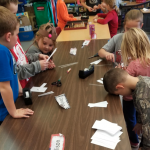
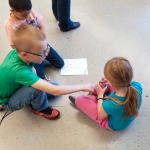
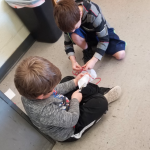
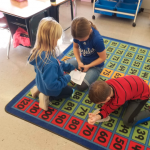
Natoma Elementary students experience STEM up close

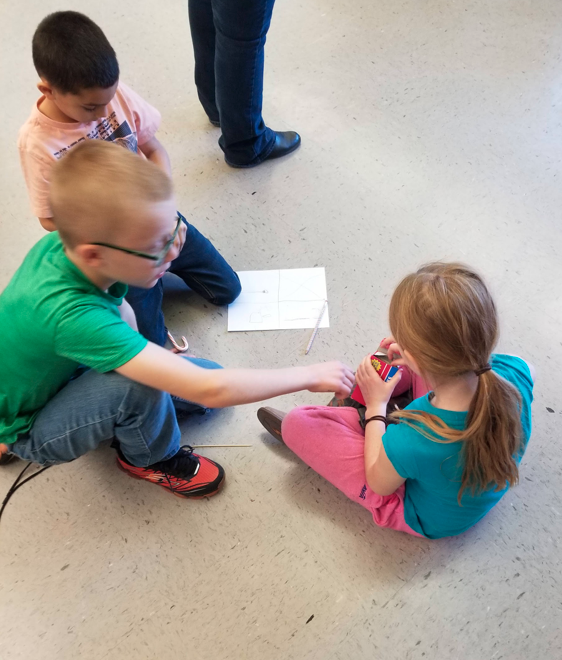
NATOMA — Kindergarten through fifth-grade students at Natoma Elementary School recently got hands-on experience with Science, Technology, Engineering and Mathematics — better known by the acronym STEM.

Educators in the district split up into pairs and created challenges for students to complete as they moved from room to room.

Students saw Christmas-themed challenges such as building Sleigh Gliders, Gingerbread Boat Floats, Santa’s Parachutes and Candy Cane Catchers.

Each group of students rotated throughout the afternoon to each set of teachers and spent time completing each challenge to the best of their abilities. Aside from abilities, each activity required collaboration between a student in a higher and lower grade.

Items for the challenges were made possible by a Walmart grant. Requisitions were made, and the supplies were picked up. Some of the items used during the challenges included toothpicks, coffee filters, Dixie cups, wooden skewers, straws, etc. The students enjoyed Christmas parties following the STEM centers.

— Submitted

Now That’s Rural: Crawford County fried chicken

Ron Wilson is director of the Huck Boyd National Institute for Rural Development at Kansas State University.

By RON WILSON
Huck Boyd National Institute for Rural Development

Some call it a major rivalry in Kansas. It was even mentioned by ESPNU announcers during a college football broadcast in fall 2018. But this wasn’t K-State versus KU. It was about fried chicken. These announcers were talking about the preferences of one football player who pointed out that there are lots of places to get good fried chicken in southeast Kansas, but people’s restaurant choices can get competitive. Some people like a restaurant called Chicken Annie’s. Other people prefer a restaurant called Chicken Mary’s. Whatever the preference, it all means that there’s great fried chicken in southeast Kansas.

The southeast region of Kansas, and particularly Crawford County, has long been known as a great place for fried chicken. Historic restaurants have helped establish this tradition.

According to the Kansas Guidebook 2 for explorers, written by Marci Penner and WenDee Rowe of the Kansas Sampler Foundation, the tradition goes back to 1933. In that year, a coal miner named Charley Pichler suffered a disabling accident in Yale Mine No. 13 near Pittsburg, Kansas. His wife Annie needed a way to support the family, so she started selling fried chicken dinners out of their home.  In addition to mouth-watering fried chicken, she offered German potato salad, German coleslaw, a strip of green pepper, and a slice of tomato.         

The response was so positive that it grew into a famous restaurant known as Chicken Annie’s. Annie’s descendants run the restaurant today.         

A similar situation led to the creation of another famous restaurant at Pittsburg. When Joe Zerngast was unable to work in the coal mines in the early 1940s, his wife Mary also started marketing meals to support the family. They began serving chicken dinners in their home, moved into an old mining camp pool hall in 1945, and have operated in their current location since 1966. This restaurant became famous as Chicken Mary’s and is also operated by family descendants.    

The restaurants are friendly competitors and neighbors, located near each other just north of Pittsburg. Just like a football team, each has loyal fans.  

One of those is K-State running back Alex Barnes. He grew up at Pittsburg, came to Kansas State and became the top running back in the Big 12. When ESPNU announcers visited with him before the Oklahoma State game, he let them know his preference of the fried chicken restaurants at his hometown. The announcers said on air, “(Alex) would like to let everyone know that, of all the great fried chicken places in southeast Kansas, Chicken Annie’s is the best.”  

This fried chicken rivalry took another turn, in a plot twist reminiscent of Romeo and Juliet. Chicken Mary Pichler’s granddaughter Donna married Chicken Annie’s grandson Anthony. Together, they opened Pichler’s Chicken Annie’s. Wow, make it a combo, please. 

The great fried chicken story doesn’t stop there. When the Kansas Sampler Foundation had a contest to select the 8 Wonders of Kansas, one of the entries in the cuisine category was a broad group called Crawford County Fried Chicken, which included both Chicken Mary’s and Chicken Annie’s plus more. The group won! Crawford County Fried Chicken was selected as one of the 8 Wonders of Kansas cuisine.

Not only does Crawford County include Chicken Mary’s and Chicken Annie’s, it also includes other restaurants such as Pichler’s Chicken Annie’s and others. In addition to the original restaurants in Pittsburg, one can get fried chicken in other restaurants in the county. These restaurants include Chicken Annie’s in Girard, Barto’s Idle Hour in Frontenac, and Gebhardt’s Chicken and Dinners in the rural community of Mulberry, population 519 people. Now, that’s rural.

For more information, see the Kansas Guidebook 2 for Explorers and the 8 Wonders of Kansas Guidebook.  Those are available in local bookstores or from www.kansassampler.org.

Some call it a major rivalry.  It even made it onto an ESPNU sports broadcast. But this rivalry is not about football, it’s about fried chicken. We commend all of the families and owners who are making a difference by continuing these traditions in Crawford County.  At dinnertime, regardless of the rivalry, we can now say, “Winner, winner, chicken dinner.”

 Planted wheat acres projected to hit 100-year low

By CHANCE HOENER 

The Hutchinson News

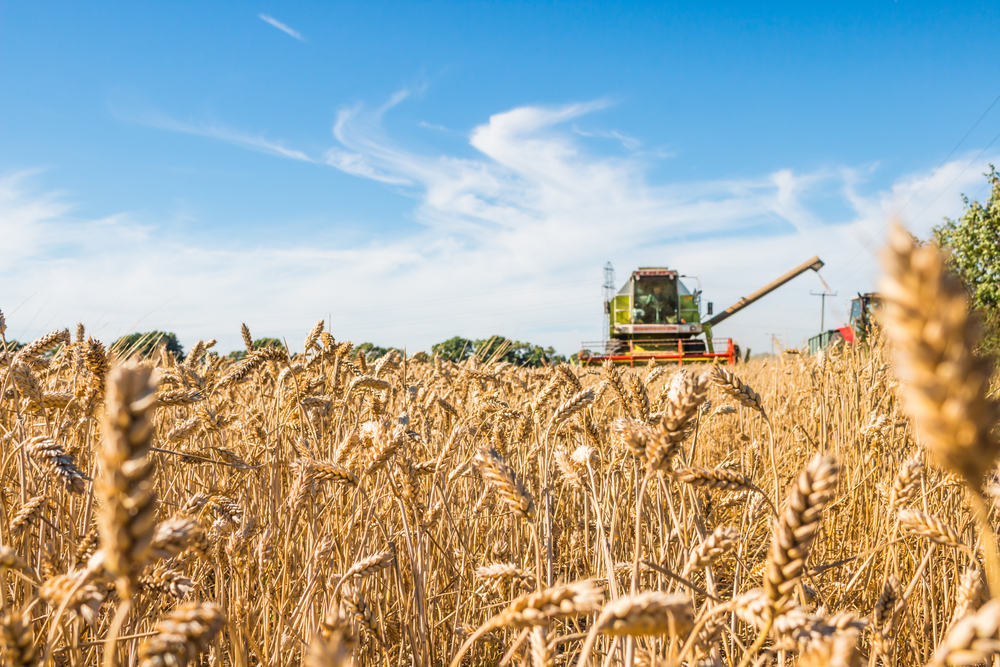
HUTCHINSON, Kan. (AP) – Over the past two years, the breadbasket of America has planted less and less wheat.

Acres planted to wheat in 2017 and 2018 neared 100-year lows, with last year’s 7.7 million wheat acres hitting the lowest point in 60 years. Low prices and a wheat surplus moved farmers away from the Kansas staple. This year, those problems combined with a delayed fall harvest and unfavorable weather to push wheat acres to what could be the lowest point in a century.

“Also this fall in addition to low prices, we had very wet weather, which delayed planting, and for many farmers, they simply could not plant wheat,” said Lane County wheat farmer Vance Ehmke.

Wet weather delayed planting in a couple of ways. It kept tractors and grain drills out of fields that were too soft, but also kept combines and grain carts out of the fields. Some farmers who planned to plant wheat following grain sorghum or soybeans didn’t have time to plant once harvest was over. Many were harvesting late into November.

Ehmke believes Kansas will see a 100-year low in planted wheat, because of delays from wet weather and the effects of the weather itself.

“My personal bet is that for the 2019 crop we will have the lowest acreage in over 100 years and will not harvest even 7 million acres,” Ehmke said. “We had fewer acres planted plus abandonment will be much higher than the normal 10 percent because many stands, especially in North Central, Central and South Central Kansas, are poor because of wet and cold weather.”

Unplanted acres that were meant for wheat won’t stay that way. Farmers will likely plant the fields to soybeans, grain sorghum or other fall harvested crops. Ehmke also expects to see a rise in triticale acres, a sort of wheat/rye combination. Ehmke said Kansas farmers planted 170,000 acres of triticale last year for hay, silage or grazing. He expects those numbers to increase in 2019.

“I guess everything I have said centers around the old saying that the cure for low prices is low prices,” Ehmke said. “If farmers don’t make any money doing something, they eventually quit doing it, and as is the case with wheat, when they cut back on production, surpluses disappear and prices go back up.”

While recent surpluses and low prices have driven Kansas farmers away from wheat, a report from a former Kansas State University Extension wheat marketing specialist outlined Western Kansas farmers have been losing money on wheat for some time.

Bill Tierney, who now works as a market analyst for Ag Resource in Chicago, authored the report using data from Agri Benchmark. Participants in the Agri Benchmark network use standard procedures to best replicate the “standard” farm in their country or region.

The data used by Tierney compares wheat growers in Western Kansas to those in Australia, Germany, Russia, Ukraine and more. The study looks at cost of production, yield and prices for the average farm in each country from 2013 to 2016.

The data shows that while Western Kansas enjoyed one of the highest prices for wheat — at around $5.41 per bushel — it also had one of the highest average costs of production over the four-year period at $5.69 per bushel.

Tierney said U.S. farmers may see better export prices due to cheaper freight costs.

“I think that overall, U.S. farmers enjoy relatively low total logistical costs (per mile to a Freight on Board terminal) compared to some other major exporters,” he said. “That means that the US farmer captures more of the FOB price paid for wheat.”

But with lower average yields and higher costs of production, the report notes from 2013 to 2016 the average Western Kansas wheat producer lost around 12 cents per acre — before low prices and unfavorable weather hit.

Ehmke doesn’t expect Kansas farmers to stop growing wheat. As there is less wheat, he expects prices to rise. Those prices could get very interesting in 2019, he said.

“A wise old man once told me that there is a reason why wheat goes to six dollars,” Ehmke said. “You ain’t got any!”
Sheriff: Body found in Kansas River

POTTAWATOMIE COUNTY — Law enforcement authorities are investigating a suspicious death.

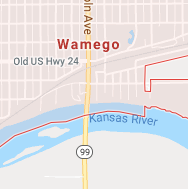
google map

Just after 10a.m. December 24, Pottawatomie County Dispatch received a report of a body in the Kansas River, approximately 1/2 mile West of Wamego, according to Sheriff Greg Riat.

Deputies, Wamego police and Wildlife and Parks units responded to the area as well as Wamego Fire and Pottawatomie County EMS.

Sheriff Water Rescue launched from the Wamego boat ramp heading west up the Kansas River, according to Riat.

Authorities located the body of a deceased man approximately one mile west of Wamego near the north bank of the Kansas River.

With the assistance of the Manhattan Fire Water Rescue, the victim was recovered from the water. The cause of death of the victim is pending completion of an autopsy.

The identity of the victim will be released pending positive identification.

The death at this time is being investigated as suspicious, according to Riat.

The Pottawatomie County Sheriff’s Office is asking for anyone with information on this incident contact to contact the Pottawatomie County Sheriff’s Office at 785-457-3353, or leave a crime tip at ptsheriff.com

Gloria C. Schultz

Gloria C. Schultz, 76, passed away Dec. 24, 2018. She was born July 10, 1942 in Cleveland, Ohio, to Andrew and Ruth (Koeliger) Sivi.

Gloria lived in Cleveland until she was 6 years old and then her family moved to Denver, where she attended school. In 1979, she received her GED from Colby Community College.

Gloria married John Schultz on Feb. 28, 1962 in Denver. They moved to Oberlin in 1970. She was the USD Office Janitor for 20 years, retiring in 2006. She was a member of the American Legion Auxiliary, VFW Auxiliary and United Church, where she was also a council member.

Gloria was preceded in death by her parents.

She is survived by her husband, John of Oberlin, Kansas; sons: Danny Schultz and wife Angela of Fretch, Texas, Wesley Schultz of Oberlin, and Mark Schultz of Denver; daughter, Paula Henderson of Syracuse, New York; brother Thomas Sivi of Denver; 16 grandchildren and eight great-grandchildren.

A funeral service will be at 1 p.m. Friday, Dec. 28, 2018 at Pauls Funeral Home, 121 N. Penn Ave., Oberlin, KS 67749, 785 475-3127.

Burial will follow at Oberlin Cemetery.

Visitation will be from 10 a.m. to 1 p.m. before the service at the funeral home.

Memorial contributions may be made to the Decatur County EMT.

Condolences may be left at www.paulsfh.com

Copyright Eagle Radio | FCC Public Files | EEO Public File