We have a brand new updated website! Click here to check it out!

Morrison Foundation gift adds exhibits, helps renovate Exhibit Hall at KWEC

FHSU University Relations

FHSU University Relations

GREAT BEND — New exhibits are now available at the Kansas Wetlands Education Center in Great Bend, made possible through a $220,000 gift from the Dorothy M. Morrison Foundation to renovate the Koch Wetlands Exhibit Hall.

The KWEC overlooks Cheyenne Bottoms, the largest inland marsh in the United States, northeast of Great Bend. The center, 592 NE Kansas Highway 156, is managed by Fort Hays State University.

The new, interactive exhibits will allow visitors to experience and discover more about the animals and plants that call the wetlands of Cheyenne Bottoms home.

“The Dorothy M. Morrison Foundation is pleased and excited to be a part of the Exhibit Hall expansion at the Kansas Wetlands Education Center,” said Katherine Opie, foundation director.

“In less than 10 years, the KWEC has become a popular and important destination, showcasing the wildlife and wetlands unique to this region and providing educational programming for all ages,” she said. “The Morrison Foundation is proud to support this valuable community asset.”

Completed by Bang! Creative out of Carlsbad, Calif., the exhibit features 12 new exhibit pieces, including an interactive floor projection system, an augmented reality sandbox to simulate a water drainage basin, a magnifying glass table to explore aquatic macroinvertebrates, and a children’s activity area.

Renovations also include a new donor recognition wall exhibit. Two exhibits remain – Cheyenne Bottoms Timeline and A Panorama of Birds for All Seasons. They were originally installed in 2009 through a gift from the Fred C. and Mary R. Koch Foundation.

“We are so thankful to the Dorothy M. Morrison Foundation for allowing us the opportunity to turn a great nature center visit into an unforgettable experience, and one that visitors will want to return to over and over again,” said Curtis Wolf, director of the KWEC.

KWEC’s ultimate goal with the new exhibits is to provide the experiences that can trigger more people to become invested stewards of natural resources and local wetlands.

“The exhibit hall renovation will give everyone a chance to rediscover all of the fun and exciting events that happen at KWEC,” said Dixie Divis, board president of Friends of Cheyenne Bottoms.

“There is always something new to see and learn with each visit, and the renovations highlight this,” she said.

For more information about the Kansas Wetlands Education Center, go to www.wetlandscenter.fhsu.edu.

To learn how you can support the KWEC, contact the Fort Hays State University Foundation by calling 785-628-5620 or emailing [email protected]. To make a gift to the KWEC, visit https://foundation.fhsu.edu/donate, select “Other” in the dropdown menu under “Designation,” and type “Kansas Wetlands Education Center” as the area of designation.

K-State uses big second-half run to beat Southern Miss

MANHATTAN, Kan. (AP) – Kamau Stokes scored 18 points, all but two of them in the second half, and Kansas State used a big run out of the locker room to edge Southern Miss 55-51 on Wednesday night.

Barry Brown added 15 points for the Wildcats (8-2), who trailed 31-19 at the break before their 20-2 charge midway through the second half allowed them to seize control.

Southern Miss (7-4) closed within 53-51 when Dominic Magee grabbed an offensive rebound, got fouled and made both foul shots with 10.4 seconds to go. The Golden Eagles quickly fouled Brown, and calmly knocked down two more free throws to restore the Wildcats’ four-point cushion.

Tyree Griffin’s off-balance 3 missed badly and time ran out on Southern Miss.

Cortez Griffin finished with 18 points to lead the Golden Eagles, who had not played a Big 12 foe since losing to Kansas State in the 2012 NCAA Tournament. Griffin added 11 points on 5-of-19 shooting.

The Wildcats narrowly avoided losing their first game without Dean Wade, their preseason Big 12 player of the year. The rangy forward is expected to miss up to eight weeks after hurting a tendon in his right foot in last Saturday’s win over Georgia State.

For a while it was as if Wade’s absence galvanized the Wildcats the same way it did during last year’s NCAA Tournament when a different foot injury sidelined him for their Elite Eight run.

Then came the next 15 minutes of the half.

After scoring the game’s first seven points, the Wildcats missed nine straight 3s and were 8 of 26 from the field. They had just as many turnovers as made field goals, created only six turnovers and were pounded on the glass despite having a rare size advantage across the board.

Their 19 first-half points were the fewest they’d scored in a half this season.

Kansas State fared no better out of the locker room, coming up empty six straight possessions with four turnovers, before Stokes finally jumpstarted its big rally.

The senior guard scored 10 straight points, including two 3s that snapped an 0-for-11 start for the team, and the rest of the Wildcats eventually got into the act. By the time Brown’s bucket closed a 24-2 run that covered nearly six minutes, the Wildcats had assumed a 43-37 advantage.

Stokes added another 3-pointer a few minutes later, extending the Wildcats’ lead to 49-44, and Xavier Sneed and Cartier Diarra eventually put the game away from the foul line.

BIG PICTURE

Southern Miss showed for a long stretch that it can hang with a Big 12 foe, dominating Kansas State on both ends of the court. But coach Doc Sadler couldn’t stop the Wildcats’ momentum even with his timeouts, and the Golden Eagles allowed the game to get away.

Kansas State survived another sluggish performance, just as they did against Georgia State last weekend. But the Wildcats will need to play more than 15 good minutes to beat Vanderbilt on Saturday night at the Sprint Center.

UP NEXT

Southern Miss continues a six-game trip Friday night at South Dakota.

Kansas State plays Vanderbilt on Saturday night in Kansas City, Missouri.

Mild, windy Thursday

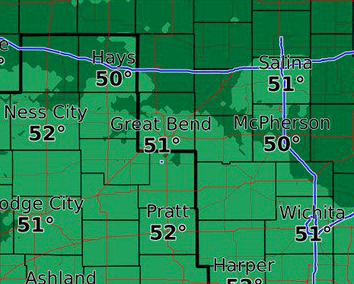
Today Sunny, with a high near 50. Very windy, with a north northwest wind 20 to 25 mph increasing to 26 to 31 mph in the afternoon. Winds could gust as high as 45 mph.

Tonight Clear, with a low around 24. Northwest wind 12 to 17 mph decreasing to 6 to 11 mph after midnight.

Friday Sunny, with a high near 56. West wind 5 to 15 mph becoming south in the afternoon.
Friday Night Mostly cloudy, then gradually becoming clear, with a low around 29. South wind 8 to 10 mph becoming north northwest after midnight.

SaturdayMostly sunny, with a high near 47. North northwest wind 8 to 13 mph.

Saturday NightA slight chance of rain and snow before 8pm, then a slight chance of snow between 8pm and midnight. Mostly cloudy, with a low around 25. Chance of precipitation is 20%.

SundayMostly sunny, with a high near 46.

Woman sentenced in Kansas man’s shooting death

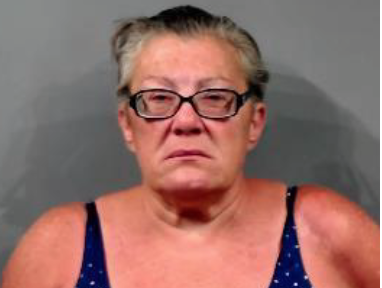
WICHITA, Kan. (AP) — A woman who killed a 67-year-old Wichita man who was discovered dead on his birthday has been sentenced to 20.5 years in prison.

Wedel -photo Sedgwick Co.

Friends who went to John Gaffney’s home on July 7 to take him to a birthday dinner found him dead.

Sherry Wedel of Wichita was arrested six weeks after Gaffney was killed. She pleaded guilty to second-degree murder in November.

She was sentenced earlier this week.

Court records say Wedel shot Gaffney with a handgun sometime between July 6 and July 7.

Dallas ‘Teena’ Augustine Riedel

Dallas “Teena” Augustine Riedel, 64, of Salina, Kansas, passed away Sunday, December 16th.

Dallas was born in Atwood, Kansas on July 12, 1954, a daughter of Wilma June (Wade) Wohler and the late Clarence Clifford Donaldson.

Survivors include her mother, Wilma Wohler of Salina; daughter, Deedra Davis (Robert), of Junction City; sons, Jerad Libhart, of San Antonio, Texas, and Jason Libhart (Shannon) of Pierce, Colorado; brothers, Leonard Donaldson (Gayla) of Assaria, and Clint Donaldson (Shelley) of Salina; and sister, Tami Jensen of Brookville.

She is also survived by 18 grandchildren and 6 great grandchildren.

She is preceded in death by her brother, Kyle Donaldson.

Memorial services will be announced at a later date.

Family request donations to Grace Baptist Church or Friends of the Salina Animal Shelter in care of Carlson-Geisendorf Funeral Home, 500 S. Ohio, Salina, Kansas 67401.

Ellis County projects it will end year under budget

By CRISTINA JANNEY
Hays Post

The Ellis County Commission is projecting it will end the year under budget and approved a series of transfers of the unused funds Monday.

The county intends to keep $2.925 million in unencumbered cash in its general fund account. This is about 15 percent of the county’s expenditures less transfers, Phillip Smith-Hanes, county administrator, said.

Smith explained the county’s general fund is like the county’s checking account, and the unencumbered cash is extra money to help with the county’s cash flow and to use in case of emergencies.

The two departments that had the largest surpluses in 2018 were the Road and Bridge, and Sheriff’s departments. Road and Bridge saved money because the cost of diesel was less than budgeted. The department also spent less than expected on road commodities.

The jail had days this summer when its prisoner population was low. This meant the Sheriff’s Department didn’t have to spend as much money on housing prisoners in other counties.

By Dec. 31, the county will transfer $1.729 million back to departments’ capital funds for the purchase of equipment or building repairs. Up to another $900,000 will be transferred to departments if it is available after the county audit.

Although the county expects to come in under budget this year, it faces some difficult choices ahead, Smith-Hanes said.

Oil and gas tax revenues continue to decline. The county’s assessed valuation is the same as it was seven years ago, but the county’s costs continue to increase.

“I think long term the county has some challenges we’ve talked to about in terms of the future,” Smith-Hanes said, “but we are doing well right now and making responsible decisions and trying to forestall those future problems.

“If you look at our five-year outlook, the commission is going to face some decisions in the future on whether they adjust taxes rates or reduce services, because we have reached the end of our limits of what we can do with our reserve.”

In other business, the county commission:

• Approved a $5,000 grant for the Heartland Community Foundation.
• Approved a salary resolution for elected officials. This is done on an annual basis, and none of the salaries changed
• Approved a policy on purchase cards.
• Allowed EMS to distribute requests for proposals for two new ambulances.

Child welfare groups want Kansas to spend $30M to keep kids out of foster care

Studies show even children raised by parents with money problems or substance abuse tend to fare better than those routed through a chronically troubled foster care system.

So the federal government wants states to invest more heavily in keeping troubled families safely together.

Washington has promised to match every dollar a state spends on certain family preservation programs. The Kansas Department for Children and Families is suggesting $3.9 million, less than 1 percent of its yearly budget.

Now a coalition of child welfare groups, including some companies whose businesses turn on state contracts, wants nearly a 10-fold increase in that investment.

A group of 25 child welfare and mental health organizations released a letter Monday asking Kansas to spend $30 million on foster care prevention programs.

Under the Families First Prevention Services Act, a federal law passed in February, states can get a dollar-for-dollar match of federal funds for certain evidence-based programs aimed at diverting kids from the foster care system.

Both child advocates and the state welfare agency have talked about the potential of the federal match to boost efforts to keep kids out of state custody. That comes as Kansas’ foster care population has skyrocketed by more than 40 percent since 2012.

The advocacy groups drafted a letter signed by 25 agencies, ranging from Kansas Head Start to three of the five agencies chosen to manage foster care and family preservation for the state next year.

The letter said Kansas spends 3 percent of its state and local child welfare dollars on prevention, compared to a national average of 17 percent. Those numbers came from the nonprofit research organization Child Trends, which was looking at 2014 spending.

In Kansas, 17 percent would be about $25 million. The letter says “‘average’ is nowhere near good enough.” 

“Evidence-based programming is wildly successful … but it’s not cheap,” said Christie Appelhanz, who heads the Children’s Alliance representing the non-governmental agencies managing foster care in Kansas. “The amount that the state is requesting just won’t go far enough to meet the needs we have in Kansas.”

DCF spokeswoman Taylor Forrest said in an email that the agency only anticipates needing $3 million for evidence-based prevention programming and $73,000 for substance abuse programs next year, the first year states can draw down the federal match money. Forrest said that amount is based on the programs already active in Kansas that meet the law’s guidelines.

The federal government pointed state agencies toward the California Evidence-Based Clearinghouse for Child Welfare for a list of programs that could use Families First match money. Forrest said Kansas is considering putting those dollars toward Healthy Families, a home-visit program that appears in the clearinghouse. 

Healthy Families already spends $6 million to support its current efforts, which serve about 370 children in 22 counties.

In the letter pushing for $30 million, the signees identified 11 programs already operating in the state where they suggest Kansas put more money, including Healthy Families and nine others listed in the California Clearinghouse. 

Dona Booe heads the Kansas Children’s Service League, which helps administer Healthy Families. She said DCF should cast a wider net in supporting foster-care prevention programs in the first year of Families First — and put more dollars behind them.

“The supports that are recommended in this letter really are the core group of services for issues that place children at the greatest risk,” she said.

Forrest said the Families First Act is not meant to fill every gap in the state’s social service programs, but it is intended to “support and intervene with a definitive population of families” — those deemed at-risk for entering the foster care system.

Although many advocates find Kansas’ budget request lackluster, the state is still ahead of the curve in taking advantage of the federal law. Forrest said Kansas is one of only three states actively pursuing Families First funding in the first year. That’s partly because Kansas keeps only a small percentage of its foster children — about 8 percent — in group homes, a requirement under the new law.

Forrest said DCF anticipates spending its first year with Families First funding getting programs off the ground. She said DCF could potentially ask for more state money in 2020 and 2021 if the agency feels it’s needed — or based on feedback from the federal government about how it’s implementing Families First programs in Kansas.

She said Kansas has other high-priority budget items in its budget request for the next several years, including $50 million to update the agency’s out-of-date information system that tracks children and families who have come to DCF’s attention.

“There are several other facets of the child welfare system, for example, the Child Welfare Information System, that will require substantial funding,” she said.

Anne Heiligenstein, a consultant with national child welfare nonprofit Casey Family Programs, said in an interview last month that DCF’s $3 million ask for 2019 could be prudent.

“No state in the first year is going to come right out of the box spending at full bore,” she said. “It takes time for services to gear up, to identify the populations you’re going to serve.”

Appelhanz said investing money now will pay dividends down the road.

“This is a once-in-a-generation opportunity,” she said. “If we’re willing to invest on the front end, we will save this money in the future by decreasing the number of kids who come into the foster care system.”

Madeline Fox is a reporter for the Kansas News Service. You can reach her on Twitter @maddycfox.

MASON: Reasons for the season — blessings, purpose and aspiration

Dr. Tisa Mason
I love the holiday season! This year is extra special with our return to Hays, providing the opportunity to revisit the familiar traditions and experience new traditions. I love the church services, the outdoor lights, and the Christmas trees – I have four in the president’s residence, one in my office, one in the outer office, and so many more throughout the building, campus and city. Bill and I drive around at night and look at all of the beautiful outdoor lights.

I especially love the holiday season because it creates so many special moments for us to gather with our friends and family and to think a bit about our blessings, purpose, and aspirations. I always think of the holiday season as inclusive of Thanksgiving, Christmas, and New Year’s. The three events seem to transition both thematically and rapidly – signaling, paradoxically, both a time of heightened activity as well as a meaningful time for personal reflection.

Thanksgiving is such a great time for communities and families to come together to give thanks for their many blessings. Returning to Hays America has reminded me about the strong relationships and good people who call this area home. Clearly, a hallmark of this university is a strong town and gown relationship. Fort Hays State is blessed by a long legacy of strong leaders, extremely talented faculty, staff who care deeply about our students, and a community that rallies its support around the university in a myriad of ways.

My Thanksgiving blessings list may have been longer than Santa’s list. The Reader’s Digest version of my list included our generous donors, our students who choose FHSU, legislators who believe in higher education, and the quality of the innovative education our faculty deliver. A few blessings witnessed this fall include an 18th consecutive year of record enrollment growth, partial restoration of higher education base funding, top passing rates on national exams, and a $100 million Journey Campaign – which was supposed to be a stretch goal – outpacing the timeline.

And then, Christmas!

Christmas – a time to enjoy more beautiful decorations, holiday music, and even the snow. A time to again express our gratitude for the people in our lives as we exchange cards, gifts, and encouraging words. I also appreciate the fact that both the Thanksgiving and Christmas holiday facilitate a little extra generosity as we often provide a little extra food, gifts, and other treasures to those in need. I am so happy to be part of a community who actively engages in philanthropy and service to others all year round.

I really appreciate the person responsible for coining the phrase: the reason for the season. For me, Christmas is such a great opportunity to think deeply about my purpose – do I live my life as I have been called to do? What changes do I need to make? As I ponder about the life I lead, I realize a new year is quickly approaching.

A new year always brings new hopes, dreams, and aspirations. I once read that at the most basic level, our dreams, hopes, and wishes determine how we live our lives. Our aspirations are rooted in a strong desire to achieve something noble. Authors Jim Kouzes and Barry Posner share that if we live each day as if we matter, we offer up our unique legacy. By offering up our own unique legacy, we make the world we inhabit a better place than we found it.

This is precisely why the holiday season is the perfect time to say “thank you” not only to our donors, who have changed the lives of generations of students, but also to everyone whose aspirations lead to a better world. In Hays America I experience a community brimming with people who live their lives generously and with kindness, who change lives, offer hope and live with integrity, and who inspire me every day to live more generously.

Kansas man charged with laser strike on KHP plane

WICHITA – A Kansas man was indicted Wednesday on charges of striking a Kansas Highway Patrol aircraft with a beam from a laser pointer, according to U.S. Attorney Stephen McAllister said.

Armando Rodriguez-Leyva, 29, Wichita, is charged with one count of aiming a laser pointer at an aircraft.

The FBI and the U.S. Attorney’s office are campaigning to educate the public about the dangers of pointing lasers at aircraft. When aimed at an aircraft from the ground, the powerful beam of light from a handheld laser can travel more than a mile and illuminate a cockpit, disorienting and temporarily blinding pilots. The effect is similar to a flashbulb going off in a dark car at night. Each year, thousands of laser strikes are reported, and the FBI estimates that thousands more go unreported.

“Engaging in such activity is not a prank; it is extremely dangerous and a federal felony offense,” McAllister said. “Federal authorities are dedicated to rapidly bringing offenders to justice. The charge in this case was brought, and the defendant was arrested, within 5 days of the alleged commission of the offense.”

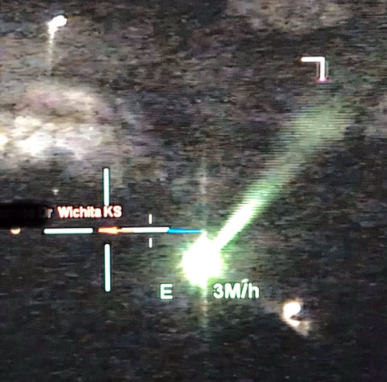
According to court documents, on December 15 a fixed wing aircraft owned and operated by the Kansas Highway Patrol for law enforcement purposes was flying over south Wichita to assist local law enforcement agents with a case. During the flight, a green-colored laser struck the aircraft several times and illuminated the cockpit of the aircraft, presenting a serious risk to the pilot.

The pilot tracked the laser light to a residence in the 1100 block of South Terrace in Wichita. The defendant was sitting in a car behind the residence when he was arrested.

If convicted, the defendant faces a sentence of up to five years in federal prison and a fine up to $250,000. The Kansas Highway Patrol, the Wichita Police Department and the FBI investigated. Assistant U.S. Attorney Ryan McCarty is prosecuting.

The Latest: 4th Kansas lawmaker switches to Democratic Party

TOPEKA, Kan. (AP) — The Latest on moderate Republicans in the Kansas legislators switching parties (all times local):

10 a.m.

A Kansas state senator has switched to the Democratic Party to become the fourth moderate suburban Kansas City lawmaker to leave the Republican Party in a week.

State Sen. Dinah Sykes of Lenexa said Wednesday that she could either fight to change the GOP or fight for her constituents. She won her seat in 2016.

Rep. Stephanie Clayton of Overland Park also switched parties Wednesday. Clayton was first elected to the House in 2010 and said she could best support public schools by becoming a Democrat.

The GOP’s majorities slip to 84-41 in the House and 28-11 in the Senate, with one independent there.

Last week, state Sen. Barbara Bollier of Mission Hills and departing Rep. Joy Koesten of Leawood also switched to the Democratic Party.

___

9:35 a.m.

A Kansas House member has switched to the Democratic Party to become the third moderate suburban Kansas City lawmaker to leave the Republican Party within a week.

Rep. Stephanie Clayton of Overland Park said Wednesday that she believes she can better support public education as a Democrat. Clayton has been an outspoken GOP moderate who was first elected to the House in 2010.

Clayton has been a strong advocate of government transparency measures and an organizer of a bipartisan Women’s Caucus.

The GOP’s House majority will slip to 84-41.

Sen. Barbara Bollier of Mission Hills and Rep. Joy Koesten of Leawood switched to the Democratic Party last week.

Clayton won re-election this year, but Koesten lost her GOP primary and leaves office in January. Bollier’s four-year term goes through 2020.

Copyright Eagle Radio | FCC Public Files | EEO Public File