We have a brand new updated website! Click here to check it out!

WAYMASTER: From the Dome to Home Jan. 26

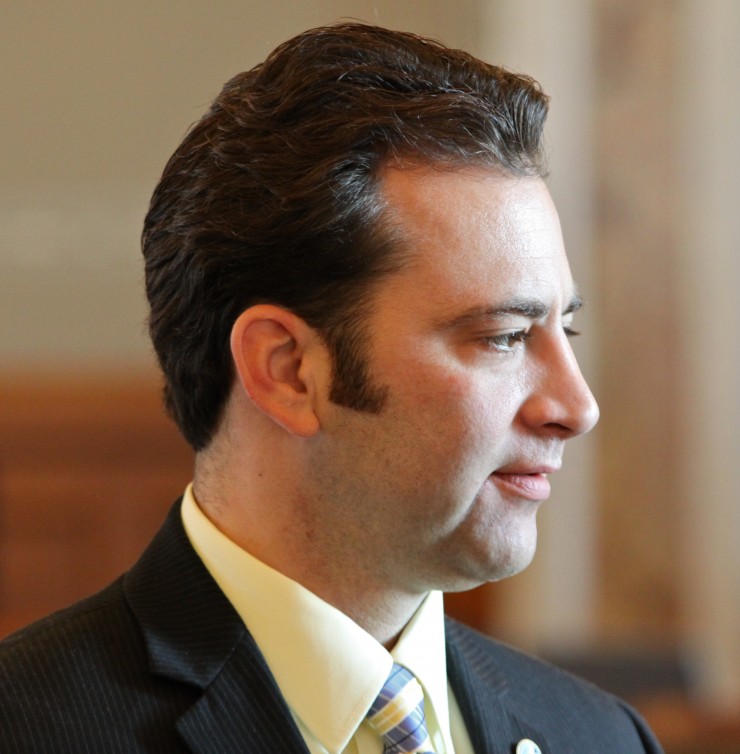
Rep. Troy Waymaster, R-Bunker Hill, 109th Dist.

Appropriations Committee
The Kansas Legislature had a condensed week this week while we observed Martin Luther King, Jr. Day on Monday, an ice and snow storm blanketed Topeka Tuesday night. Due to the ice and snow, the Kansas Legislature did not reconvene until late Wednesday morning. Due to the delay and the safety of our staff, the Appropriations Committee canceled the meeting for Wednesday morning.

On Thursday, the Appropriations Committee did have hearings from a varied list of agencies. Due to Governor Kelly’s budget proposal on reamortizing the unfunded liability for the Kansas Public Employee Retirement System (KPERS), we had the executive director, Alan Conroy, give a presentation on the status of the KPERS system.

We then had an update from the Kansas Department of Agriculture that presented the current details of the agriculture sector. Their main focus was regarding commodity prices, credit, trade, agriculture economics, and the recently passed farm bill by Congress.

The final information briefing was an overview of the Joint Legislative Transportation Task Force, of which I was a member. The Research Department detailed the subject matter of each meeting we had across the state of Kansas and the future transportation plan.

Kansas Watershed Annual Meeting
On Tuesday, January 22nd, Senator Dan Kerschen, chairman of the Senate Agriculture and Natural Resources committee, and I spoke at the Kansas Watershed Annual meeting. Senator Kerschen gave a detailed explanation about some of the bills that were passed last session regarding agriculture. I discussed the current budgetary status for the state of Kansas. I also gave an overview of Governor Kelly’s budget that was released last Thursday and the direction that I see the House Appropriations committee will take to address the state budget. Thank you to all of the individuals that were there from the Wet Walnut Creek Watershed in Rush County.

Bills Introduced
As with any legislative session, there are numerous bills that have already been introduced by either committee, individual legislators, or interest groups.

In the Appropriations Committee, the only bill introduced, at this time, is Governor Kelly’s bill to address the Kansas Supreme Court decision for K-12 education. It was introduced as a formality; other education bills, I presume, will also be introduced.
Some other legislation that has been introduced vary from eliminating day light savings time in Kansas, restrictions on legislators becoming lobbyists, to election crimes and penalties. As the session continues, I will focus on some of the noteworthy items of legislation that have been introduced.

Contact Information
As always, if you have any concerns, feel free to contact me (785) 296-7672, follow on twitter at #waymaster4house, visit www.troywaymaster.com or email me at [email protected]. Also, if you happen to visit the statehouse, please let my office know.

It is a distinct honor to serve as your representative for the 109th Kansas House District and the state of Kansas. Please do not hesitate to contact me with your thoughts, concerns, and questions. I always appreciate hearing from the residents of the 109th House District and others from the state of Kansas, as well.

Troy Waymaster (R-Bunker Hill) is the 109th Dist. state representative and chairman of the House Appropriations committee. The 109th District includes Osborne, Russell, and Smith counties and portions of  Barton, Jewell, Lincoln and Rush counties.

 

Kansas considers big changes to reading instruction

 CELIA LLOPIS-JEPSEN

Most Kansas students graduate high school nowadays. Yet many still struggle with the skills of reading and writing.

Now a task force of educators, parents and lawmakers hopes to help close that gap.

A student with dyslexia gets specialized tutoring at Pittsburg State University’s Center for READing.
FILE PHOTO / KANSAS NEWS SERVICE

Over the past half year, the Dyslexia Task Force put together recommendations and this month handed them off to the Kansas State Board of Education.

The group’s work is well worth paying attention to. It could change reading instruction for every public school student in the state.

The goal? Catching a wide range of struggling readers and spellers earlier on.

Signs of dyslexia according to research at Yale University
It extends far beyond dyslexia — though even that, some researchers say, is far more common than parents and teachers realized in the past.

Ugh, English is hard.

Though, bough, cough, tough.

You’ve probably reflected on the woes of English spelling before. Usually we just throw up our hands. Or shrug. Or jokingly congratulate ourselves on having the strangest writing system in the world, then move on.

That’s not acceptable to teachers who specialize in instruction for children with dyslexia.

Unbeknownst to many of us, much of the “weirdness” does follow patterns. (English professor Anne Curzan has this enjoyable column to that point.)

Angie Schreiber began learning these nitty-gritty guidelines after finding out her son had dyslexia. Now she runs an Emporia private school that teaches students like him.

“English is 80 to 85 percent regular,” she argues. “If we teach to the regularity and not use the irregularities as an excuse, we can teach our kids to read, write and spell.”

A couple examples:

Check out the “ie” words in the photo below. Shield, tie, brief, die, and so on.

This is a photo of a teacher’s laptop while her eighth-grade student with dyslexia practiced reading them aloud. It helped him to recall that “ie” often sounds like an “i” at the end of a word, but like an “e” if it’s in the middle.

And what about spelling “back”? What’s that “c” doing before the “k”? Schreiber explains that English usually uses “ck” at the end of a one-syllable word after a short vowel. Hence “back” and “truck” get a “ck” that “bank” and “think” don’t.

Solution to the big ole reading gap?

Teaching such guidelines are one part of “structured literacy,” an approach to reading instruction that may soon be required of every elementary school in Kansas.

Some people swear by it. Others roll their eyes.

The disagreement is part of “the reading wars” — a decades-long and nationwide rift in the sphere of literacy education.

How can there be so much to debate about teaching kids to read? Well, because so many people worry we still haven’t figured it out.

Even the optimism around No Child Left Behind waxed and waned. Nearly two decades later, Americans continue to enter adulthood without mastering this vital skill.

Though almost 90 percent of Kansas students graduate high school, a third of the state’s high-schoolers score below grade level on English tests. More than two-thirds test below the higher proficiency bar that Kansas uses for federal accountability.

Structured literacy teachers argue they know how to resolve a big chunk of that reading gap.

They’re not saying all those children have dyslexia — they’re saying research shows structured literacy improves reading and spelling across the board.

Did you miss the Kansas News Service’s feature on dyslexia?
Plenty of literacy specialists disagree (hence the “reading wars”). Sometimes, experts on either side even cite the same research as showing totally different things.

Rethinking classrooms and college

So, back to the dyslexia task force’s decision this month.

Pending approval from the Kansas State Board of Education, the group wants to make structured literacy part of the college coursework required to teach in this state. To get their licenses, many teachers would need to pass a test that shows they understand and can teach in depth things like “phonemic awareness” — which involves recognizing and breaking down individual sounds in words.

Schools would need to offer training for teachers already in the field and incorporate structured literacy into general reading instruction for all students.

Read a draft of the task force’s recommendations.
Reports from state-appointed panels don’t always lead anywhere. Some end up looking more like political theater than anything else. Don’t expect that fate for this one.

“This, obviously, is not going to be one of those reports that sits on a shelf someplace,” said retired superintendent Jim Porter. “It’s going to get the attention it deserves.”

Porter chaired the task force and, until recently, the state board.

Adopting structured literacy would add Kansas to a national wave of states passing laws and policies meant to better serve children with dyslexia.

Even among those states, though, a radio documentary by APM Reports suggests implementation has proven tricky.

The state board of education may vote on the task force’s recommendations in the coming weeks or months. Rolling out new standards in thousands of schools and training a critical mass of teachers will take longer.

“I’m worried that it’s going to be a 10-year process,” says Christina Middleton, a Lenexa mother whose son wasn’t diagnosed with dyslexia till the summer before fifth grade.

That’s when she took him to Children’s Mercy Hospital for tests, got a diagnosis and signed him up for private instruction in structured literacy.

Half a dozen reading programs had failed him before that point, she says. Now in high school, he reads at grade level.

Teaching schools wanted a seat at the table

Colleges of education may well ask the state board to rein in some of the recommendations. They worry Kansas is on the brink of sweeping changes that bypassed them.

The sole professor on the dyslexia task force was psychologist David Hurford, who founded a center focused on researching dyslexia and teaching children who struggle with reading.

The dyslexia task force membership
“There is a voice missing,” Ken Weaver, dean of the Emporia State Teachers College, wrote in an email this week. “That is the literacy faculty from all the Regents universities.”

Those professors likely would have expressed concern that task force members were misunderstanding the thrust of decades of research on reading education. Or underestimating the extent of phonics and related instruction already taking place in Kansas schools.

But from the point of view of parents who say schools failed their children year after year, the status quo just hasn’t been working.

Celia Llopis-Jepsen is a reporter for the Kansas News Service. You can reach her on Twitter @Celia_LJ.

HaysMed earns Blue Cross designation for expert cardiac care

Blue Cross and Blue Shield of Kansas has recognized HaysMed, part of The University of Kansas Health System, as a Blue Distinction Center+ for Cardiac Care as part of the Blue Distinction Specialty Care program. Blue Distinction Centers are nationally designated providers that show expertise in delivering improved patient safety and better health outcomes, based on objective measures that were developed with input from the medical community and leading accreditation and quality organizations.

According to the American Heart Association (AHA), cardiovascular disease is the leading cause of death globally and is expected to claim more than 23.6 million lives annually by 2030. Blue Distinction Centers+ for Cardiac Care seek to empower patients with the knowledge and tools to find quality cardiac care.

To receive a Blue Distinction Center+ designation, HaysMed demonstrated expertise in delivering safe and effective cardiac care, focusing on cardiac valve surgery, coronary artery bypass graft (CABG), and percutaneous coronary interventions (PCI) episodes of care. Additionally, HaysMed also demonstrated better cost-efficiency compared to their peers.

Only those hospitals that first meet nationally established quality measures for Blue Distinction Centers are considered for designation as a Blue Distinction Center+.

“HaysMed has always been committed to providing cardiology services to people in western Kansas.” said Jeff Curtis, Cardiology and Administrative Director of HaysMed Debakey Heart. “Twenty years ago we were the first and are still the only cardiology program in western Kansas to provide cardiology services including heart surgery. This Distinction is recognition for the commitment we have made to making cardiology services available to all patients.”

Hospitals recognized with this designation are assessed using a combination of quality information supplied by hospitals and third party data registries, and cost measures derived from Blue Cross and Blue Shield companies’ medical claims.

Since 2006, the Blue Distinction Specialty Care program has helped patients find quality specialty care in the areas of bariatric surgery, cancer care, cardiac care, cellular immunotherapy, fertility care, gene therapy, knee and hip replacements, maternity care, spine surgery, and transplants, while encouraging health care professionals to improve the care they deliver. Research shows that compared to other providers, those designated as Blue Distinction Centers demonstrate better quality and improved outcomes for patients. On average, Blue Distinction Centers+ are also 20 percent more cost-efficient than non-Blue Distinction Center+ designated providers.

For more information about the program and for a complete listing of the designated providers, visit www.bcbs.com/bluedistinction.

— HaysMed

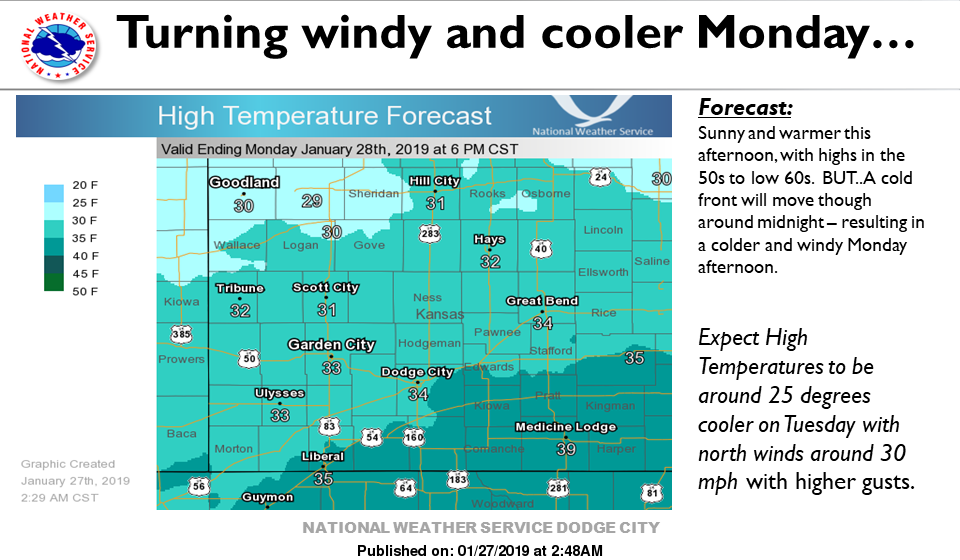
Sunny, warmer Sunday

Today
Partly sunny, then gradually becoming sunny, with a high near 58. West southwest wind 6 to 11 mph increasing to 12 to 17 mph in the afternoon.
Tonight
Mostly cloudy, then gradual clearing toward daybreak, with a low around 30. Blustery, with a southwest wind 13 to 21 mph becoming north northwest after midnight.
Monday
Sunny, with a temperature falling to around 28 by 5pm. Very windy, with a north northwest wind 22 to 32 mph, with gusts as high as 45 mph.
Monday Night
Mostly clear, with a low around 18. Wind chill values as low as 5. Blustery, with a west wind 16 to 21 mph decreasing to 6 to 11 mph in the evening.
Tuesday
Sunny, with a high near 38. Northwest wind 11 to 18 mph, with gusts as high as 30 mph.
Tuesday Night
Partly cloudy, with a low around 10.
Wednesday
Sunny, with a high near 25.
Wednesday Night
Partly cloudy, with a low around 13.
Thursday
Mostly sunny, with a high near 39.

🎥 KU-led research shows drug critical to fighting opioid addiction remains underused

By KRISTI BIRCH
KU News Service

LAWRENCE – It will take many weapons to fight the epidemic of opioid addiction, but one medication critical to fighting the worst drug crisis in U.S. history remains woefully underprescribed and underutilized, according to research from the University of Kansas Medical Center.

The number of Americans with an opioid addiction has more than doubled in the last 10 years. Meanwhile, drug overdoses have become the leading cause death in the United States for people under 50 years of age and the overall leading cause of death by injury (overdoses are categorized as unintentional injuries by the Centers for Disease Control and Prevention).

Yet there remains a huge gap in the number of prescriptions for buprenorphine, a medication effective in treating opioid addiction, and the skyrocketing number of people who have that addiction, according to research led by Andrew Roberts, Pharm.D., Ph.D., assistant professor in the Department of Preventive Medicine and Public Health at the University of Kansas School of Medicine.

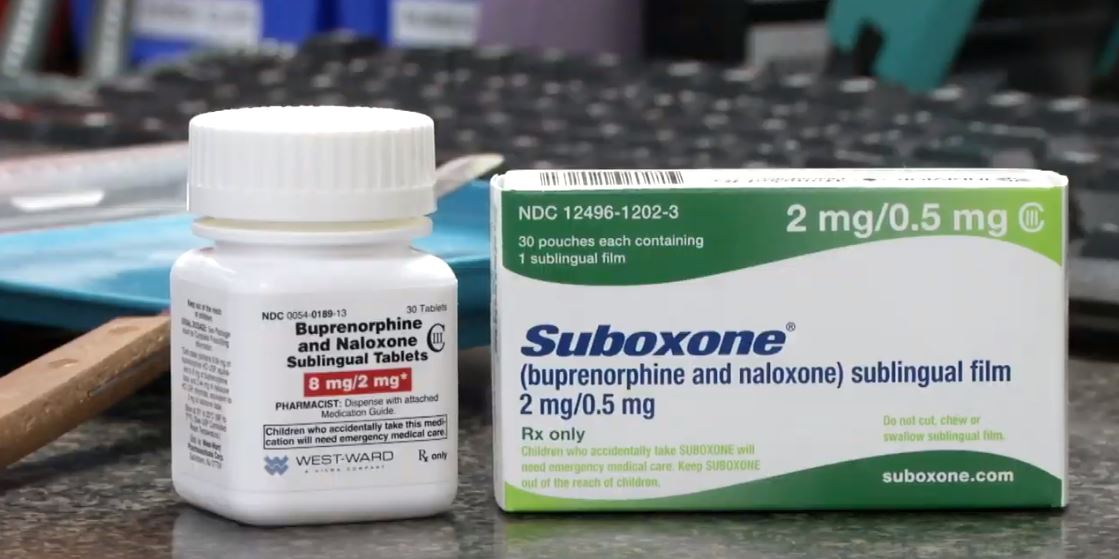
First approved by the Food and Drug Administration in 2002 to treat opioid use disorder, buprenorphine is a partial opioid itself. Also known by its brand name, Suboxone, buprenorphine reduces cravings and relieves withdrawal symptoms but does not produce a high at typical doses. People in recovery from addiction can take buprenorphine to stay physically comfortable while stopping their abuse of riskier prescriptions such as oxycodone or street opioids such as heroin.

Watch the video below of Dr. Roberts and Roopa Sethi, M.D., of the KU addictions clinic discussing buprenorphine barriers and treatment.

Methadone, the better known, older opioid replacement therapy, does the same thing, but is often harder for people to access: in the United States, methadone must be administered to the patient at a clinic certified by the Substance Abuse and Mental Health Services Administration; the methadone clinic system was developed in the 1960s and then carved into law in the Narcotic Addict Treatment Act in 1974. But patients can take buprenorphine at home on a schedule, as they would for any other chronic condition. “It can be prescribed by any physician trained to prescribe it, and you just pick it up at the pharmacy,” said Roberts. “It’s much easier for people to obtain.”

There’s the irony. Of the more than 2 million Americans with opioid addiction, just one in five obtain any treatment. Studies show that the most effective therapy for opioid addiction is medication-assisted treatment: behavioral therapy combined with a medication such as buprenorphine or methadone. In 2016, the same year that more Americans-more than 40,000-died from opioid overdoses than from car accidents, Congress passed the Comprehensive Addiction and Recovery Act to increase treatment access. One provision of the law is an increase the number of people for whom a doctor can prescribe buprenorphine, from 100 to 275 patients per year. Expanding access to the drug has become a major federal priority.

Meanwhile, Roberts and his colleagues were thinking ahead. “Assuming that the provider supply issue could be addressed, we were wondering what other barriers there might be to getting and adhering to treatment.”

They immediately thought of cost, a known treatment barrier with other chronic conditions such as asthma and diabetes. When the price of a medication for those diseases goes up, the less likely people are to take it and the worse their clinical outcomes are.

Roberts also points to the risk of price gouging. The obvious headline-making example is the price of the EpiPen-the life-saving injection device used by millions of Americans to treat lethal allergic reactions-which rose 500 percent over a decade. There’s already some evidence of price gouging happening in the opioid treatment arena. The cost of a twin-pack of injector device to administer naloxone, a drug that can reverse an opioid overdose, has risen to $4,500 in 2018, from $690 in 2014. “We wanted to see if we needed to be worried about the cost of buprenorphine as we try to connect people with treatment,” Roberts said.

Working with researchers from Vanderbilt and Johns Hopkins, Roberts analyzed outpatient prescription claims data from 2003 to 2015, looking at buprenorphine utilization and expenditures for both health plans and insured patients. The database captured 20 million people annually during those years who were in a commercial health insurance plan provided by a large or medium-sized U.S. employer. They wanted to look at privately insured people in particular because these people are more likely to be affected by higher out-of-pocket prescription costs than are Medicare and Medicaid patients.

What they found, Roberts calls a “pleasant surprise”: the median amount paid by private payers (health plans) for a 30-day supply of buprenorphine has remained relatively stable since 2003, and the out-of-pocket median expenditure for privately insured adults has actually steadily decreased over time, from $67 to $32 for a 30-day prescription. Buprenorphine appears to be insulated from the large spending increases that have affected life-saving drugs for other chronic diseases.

But they also saw something worrisome in the data. The number of people taking buprenorphine for treatment increased until 2013, but then the number of people initiating treatment declined from 2013 through 2015. “This is in the face of a massive treatment gap,” said Roberts. “We would have hoped to have seen an exponential increase in the number of people starting treatment-we know they are out there.”

If cost isn’t the barrier to buprenorphine being more widely used, then the question becomes, what is?

One issue, Roberts said, is that although it’s less complicated than methadone, prescribing buprenorphine is more regulated than for other medications. Physicians must take a short training course to get permission to prescribe it. “So there’s that hoop to jump through, and sometimes physicians are leery into wading into that territory [of addiction] clinically. There’s a fear it might invite scrutiny from authorities,” he said. “And then there’s the whole stigma around addiction.”

Brendan Saloner, Ph.D., assistant professor in the Department of Health Policy and Management at the Johns Hopkins Bloomberg School of Public Health and a co-author on the study, also cites stigma as a barrier. “Many patients and doctors still harbor antiquated ideas about how addiction medication works, and there is a pervasive and untrue myth that medication substitutes one form of addiction for another,” he said.

Roberts notes that their data go only through 2015, and the jury is still out on how much of a difference the 2016 regulations, including increasing the number of people doctors can treat with buprenorphine, will make. “But according to our data, the uphill battle to close these treatment gaps is getting providers to participate in this fight,” said Roberts. “And one of the easiest ways to fight it is to get trained and treat patients with this drug.”

UConn backcourt leads Huskies past Wichita State

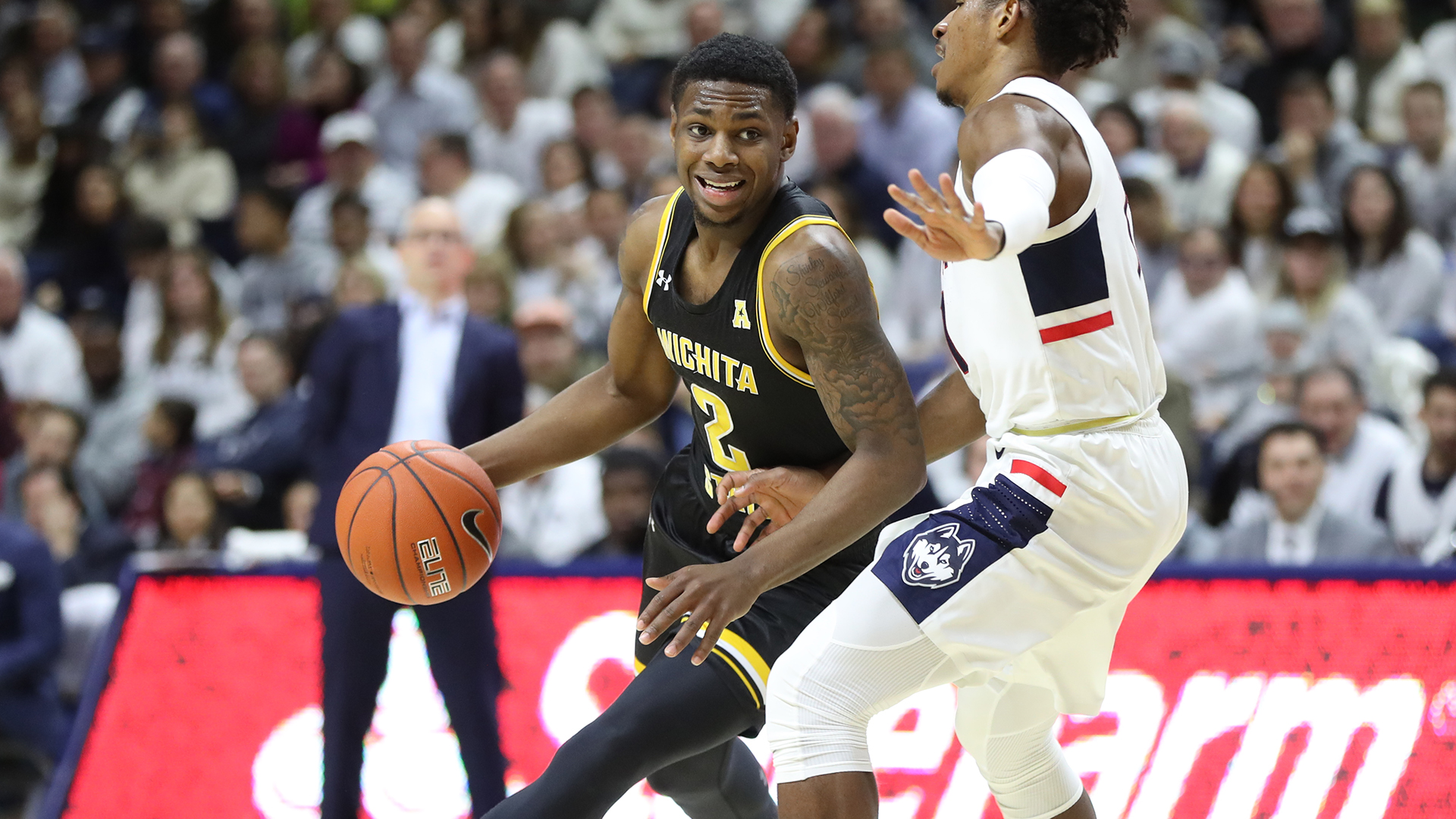
STORRS, Conn. (AP) — Christian Vital scored 21 points and Jalen Adams added 19 points and 12 rebounds as UConn beat Wichita State 80-60 on Saturday night in the American Athletic Conference.

Tyler Polley added 12 points and Josh Carlton 11 and four blocks for the Huskies (12-8, 3-4 American), who have won two straight games for the first time since mid-December.

Jamarius Burton had 16 points for Wichita State (8-11, 1-6), which has lost three in a row and seven of its last eight.

UConn never trailed.

Vital opened the game with a steal and layup and UConn ran out to a 10-0 lead.

It took the Shockers more than five minute to score their first points. Those came on a pair of free throws by Samajae Haynes-Jones. It was another two minutes before they scored their first basket on a driving layup from Dexter Dennis.

A long 3-pointer by Vital at the halftime buzzer gave the Huskies a 43-28 lead.

The Huskies led by as many as 26 in the second half.

BIG PICTURE

Wichita State: The Shockers, who have been to seven straight NCAA Tournaments, were coming off their worst offensive game under Greg Marshall, a 41-point effort in a 13-point loss to USF. They continued to struggle in this one, shooting just 34 percent, including 29 percent in the first half

UConn: UConn point guard Alterique Gilbert, who missed most of his first two seasons in Storrs because of injuries to his left shoulder, took a hard screen just over five minutes into the second half and went to the floor writhing in pain. He left the game under his own power, holding that shoulder. He went to the trainer’s room and later returned to the bench wearing his warm-ups and did not return. Forward Mamadou Diarra, who has been out all season with a knee injury, saw his first action late in the second half and scored two points.

UP NEXT:

Wichita State: The Shockers return home for two games, the first on Wednesday against SMU

UConn: The Huskies travel to Orlando for a game Thursday at UCF, which beat the Huskies by 12 points in Hartford earlier this month.

Courtesy Wichita State Athletics

Second half surge lifts Wildcats past Jayhawks

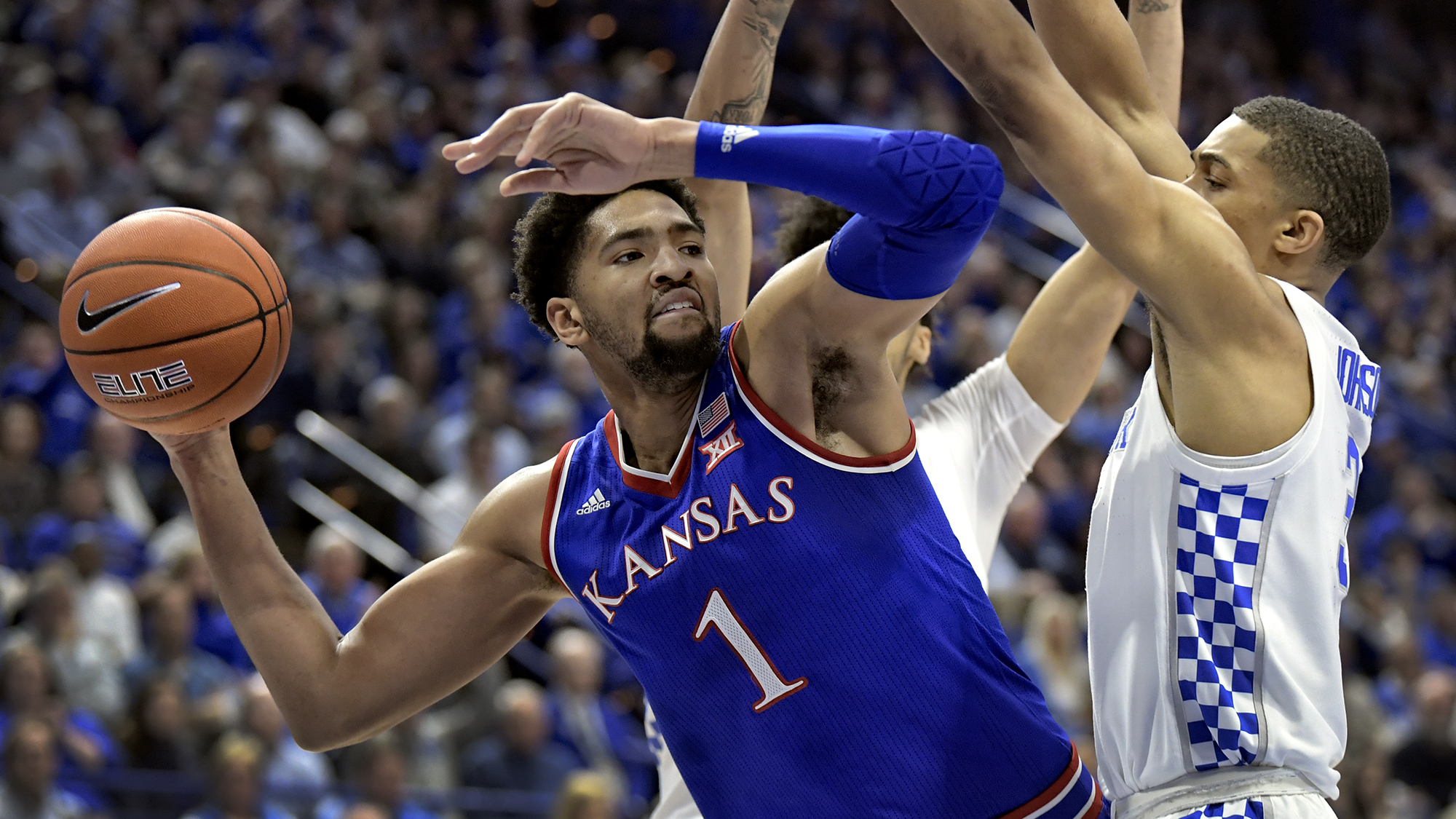
LEXINGTON, Ky. (AP) — PJ Washington scored 14 of his 20 points in the second half, and No. 8 Kentucky beat No. 9 Kansas 71-63 on Saturday in the SEC-Big 12 Challenge.

Washington also had 13 rebounds, helping the Wildcats to a 49-36 advantage on the glass. Reid Travis had 18 points and 12 boards, and Keldon Johnson also posted a double-double with 15 points and 10 rebounds.

Neither team reached 40 percent shooting, but the Wildcats (16-3) were much better in the second half and held the Jayhawks in check down the stretch of the marquee matchup between college basketball’s two winningest programs.

Kentucky had dropped its last three games against Kansas.

Dedric Lawson had 20 points and 15 rebounds for the Jayhawks, and Quentin Grimes added 13 points. It was Lawson’s 14th double-double this season.

Kansas shot 37 percent (23 for 63) from the field in its second loss in three games.

POLL IMPLICATIONS

Kentucky could rise in the AP poll after beating its third ranked opponent in a week. Kansas could tumble out of the top 10 with its recent trouble.

BIG PICTURE

Kansas: Lawson had a double-double by halftime, and the Jayhawks held their own on the glass for one half. They finished 9 of 23 from behind the arc but couldn’t match Kentucky’s athleticism in the second half.

Kentucky: The Wildcats still have their share of challenges ahead when Southeastern Conference play resumes next week, but they are coming along. Travis got off to a nice start, and his teammates picked up their play in the second half.

UP NEXT

Kansas returns to Big 12 play on Tuesday at Texas, seeking a season sweep of the Longhorns. The Jayhawks won the previous meeting 80-78 on Jan. 14.

Kentucky returns to SEC competition at Vanderbilt on Tuesday after beating the Commodores 56-47 two weeks ago.

Tigers upset bid comes up short against No. 2 Bearcats

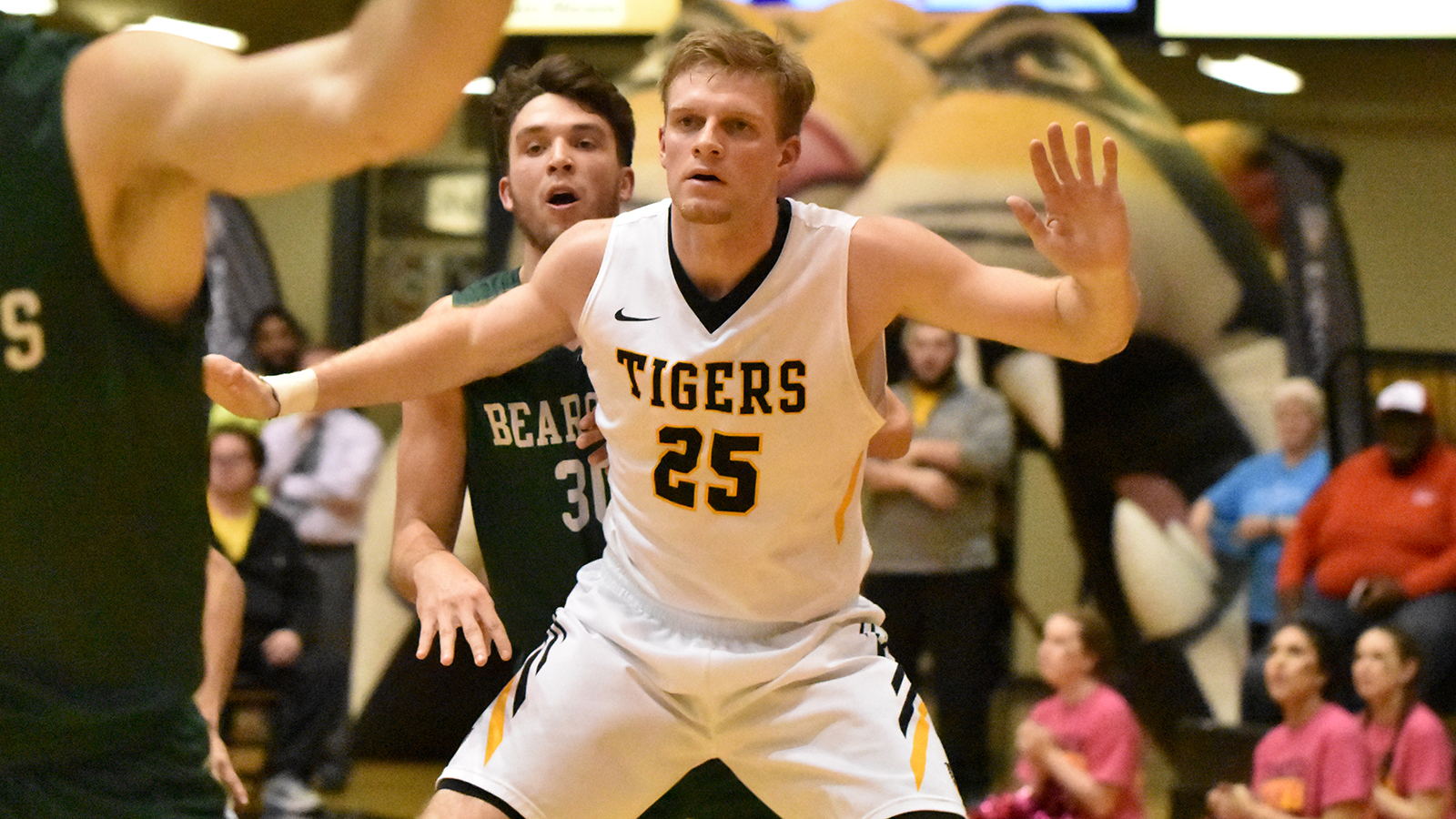
HAYS, Kan. – Northwest Missouri State hit five of their 14 three-pointers in the first five and a half minutes and had an answer to every Fort Hays State run and beat the Tigers 81-69 in front of 3,855 Saturday afternoon at Gross Coliseum. The second ranked Bearcats remain unbeaten and run their road winning streak to 10 games while picking up their 14th straight conference win going back to last season. They have also won eight straight over the Tigers.

Mark Johnson Postgame Interview

Kyler Kinnamon Postgame Interview

Game Highlights

Brady Werth hit a couple of threes for the Tigers (13-6, 7-3 MIAA) to give them a five-point lead three minutes in but the Bearcats (19-0, 9-0 MIAA) answered with a 13-0 run and never trailed again.

The Tigers, who suffered their first loss of the season on their home floor, pulled within five on a Devin Davis put back with 10:42 to play in the game but a 9-2 Bearcat run pushed their lead to 12 with 7:28 left.

Werth finished 4-for-6 from beyond the arc and led the Tigers with 18 points. Davis came off the bench to add 10.

Redshirt freshman Trevor Hudgins led four Bearcats in double-figures with a career-high 30 points. Joey Witthus hit six threes and added 24 points. He and Hudgins combined to go 9-for-14 from beyond the arc.

No. 8 Tiger women outshoot Bearcats

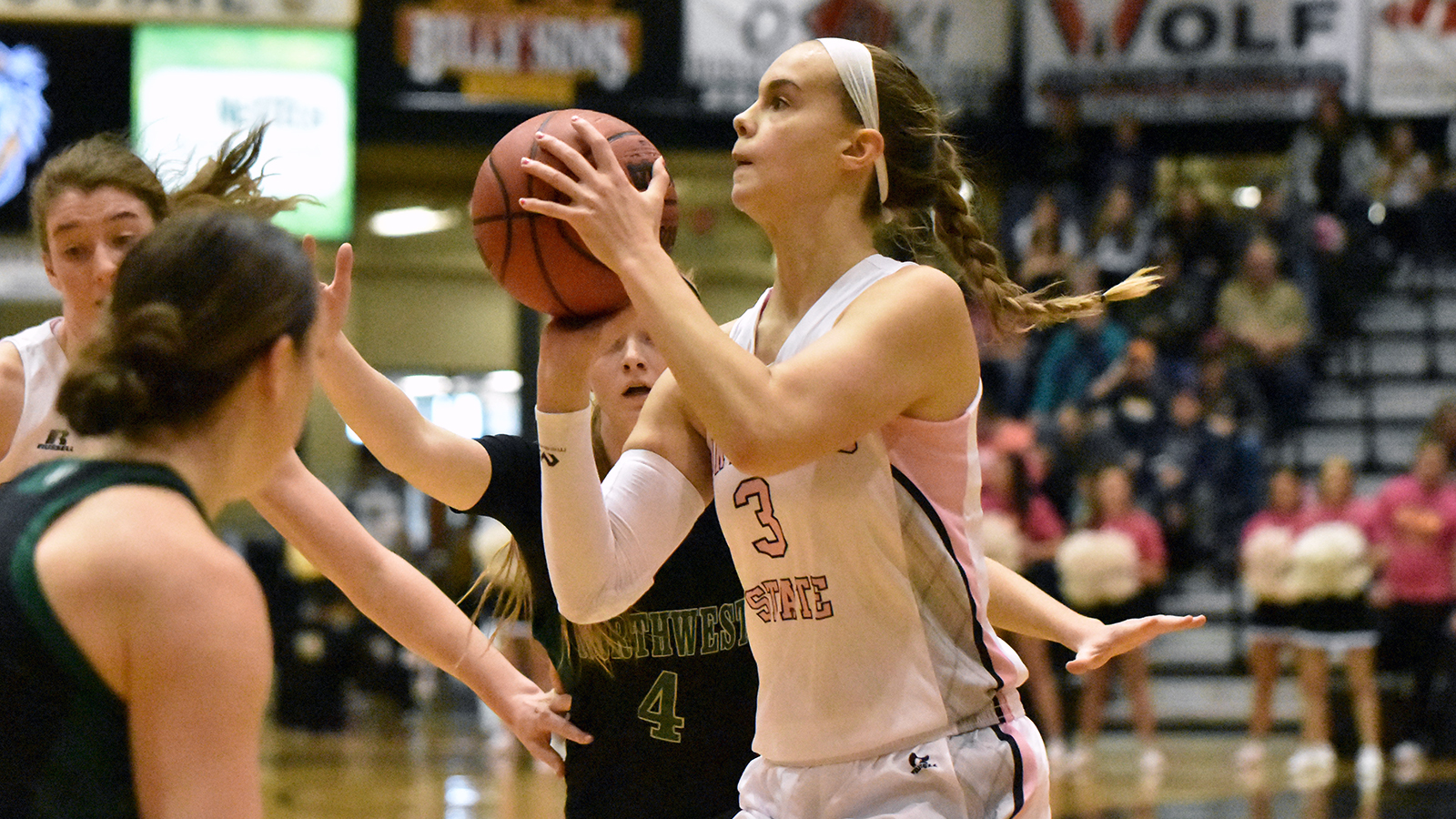
HAYS, Kan. – Lanie Page scored a game-high 20 points, Tatyana Legette had a double-double with 16 points and 10 rebounds and the No. 8 Fort Hays State women retained sole possession of first place in the MIAA with a 91-63 win over Northwest Missouri State in front of 3,413 Saturday afternoon at Gross Coliseum.

The Tigers (18-1, 9-1 MIAA) overcame an early three-point barrage from the Bearcats to lead by four after the first quarter and by nine at halftime. They then scored the first 20 points of the third quarter and led by as many as 31 in the second half.

Tony Hobson Postgame Interview

Game Highlights

Page hit four of the Tigers seven 3-pointers as they shot 52-percent from the floor and 7-of-17 from beyond the arc.

Kacey Kennett and Whitney Randall both scored 14 points for the Tigers who shot 52-percent from the floor.

The Bearcats (7-11, 3-6 MIAA) hit eight of their 11 threes in the first half including five in the first quarter.

They had four score in double-figures led by Kendey Eaton’s 14 points.

Big second half lifts Texas A&M past Kansas State

COLLEGE STATION, Texas (AP) — Texas A&M coach Billy Kennedy figured the Aggies had nothing to lose in trying to snap a three-game losing streak, so he overhauled his defensive strategy entering Saturday’s game against Kansas State.

“We took a chance and played zone the whole game, and I thought it disrupted Kansas State and took them out of their offense,” Kennedy said. “I thought we’d have a hard time guarding them man to man.”

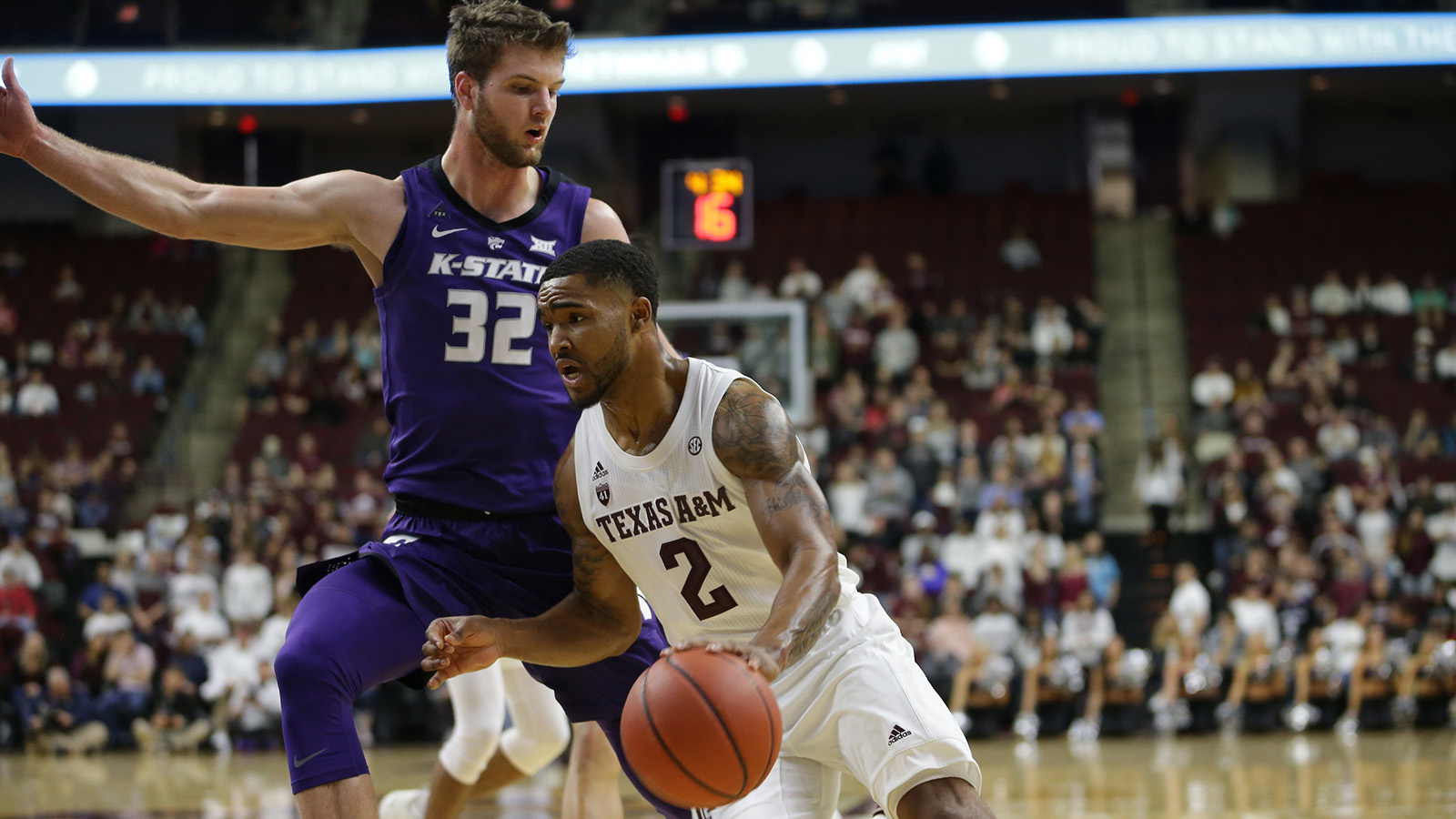
Turns out the Wildcats had a hard time guarding A&M’s Wendell Mitchell, but only after halftime. Mitchell scored a game-high 22 points, all in the second half, and A&M dashed past KSU 65-53 in the annual Big 12/SEC Challenge.

“On (Friday) night I talked about expecting the unexpected,” Wildcats coach Bruce Weber said of the Aggies going with a zone defense throughout. “In the first half we should have got the lead to 10 or 12 points, but we didn’t make the plays we needed to.”

The Wildcats (15-5) led 30-26 at halftime before the Aggies (8-10) outscored their former Big 12 brethren 39-23 over the final 20 minutes. A&M relied on an 18-3 run early in the second half to overcome a seven-point deficit just after the break.

Mitchell, who started his college career at Baylor of the Big 12, made 7 of 9 shots in the second half, and 7 of 12 overall, after sitting out all but six minutes in the first half in foul trouble. The Aggies had lost their four prior home games, including a nonconference contest against Texas Southern, before earning their first double-digit victory since prior to Christmas.

“Communication was at a high level today,” Mitchell said. “And I was just feeding off of my teammates.”

Dean Wade led the Wildcats with 17 points and the Aggies’ Savion Flagg led all rebounders with 12. The Wildcats held a 16-14 advantage in points in the paint in the first half, but the Aggies wound up with a 32-20 edge on that front.

“If we’re going to have a chance, we have to really be locked in defensively every time,” said Weber, whose squad is tied atop the Big 12 standings with Kansas at 5-2.

A&M exited the Big 12 and entered the SEC in the summer of 2012.

BIG PICTURE

KSU: Weber figured the Wildcats might step into a trap in College Station, and he was right. KSU stumbled into a desperate SEC team, although the Wildcats’ five-game win streak in Big 12 play still stands. KSU was on the cusp of re-entering the Top 25, but that likely won’t happen coming off a double-digit setback against a team with an overall losing record.

A&M: Even if it’s not SEC action, the Aggies needed this one in the worst way after dropping five of their first six league games. This was the first of three consecutive homes games for A&M, and a solid start to trying to get back on track in conference play before it’s too late.

UP NEXT

KSU: The Wildcats stay on the road at Oklahoma State on Feb. 2.

A&M: The Aggies stay home against LSU on Wednesday.

INJURY REPORT

A&M starting guard Jay Jay Chandler sat out with a sprained shoulder, and Kennedy said he hopes the sophomore returns to practice on Monday.

HIGHLIGHT REEL

The Aggies likely knew things were going to go their way when, on their first shot of the second half, a short jumper by Christian Mekowulu rolled across the top of the backboard and smoothly dropped through the hoop, in cutting the Wildcats’ lead to 33-28.

STAT OF THE DAY

A&M shot 51 percent from the floor (25 of 49), only the third time this season the Aggies have shot better than 50 percent in a game.

HE SAID IT

“We’re still in first place. We need to learn from this, grow from it and move forward.”

Bruce Weber

Woman whose assailants also raped Kan. deputy critical of police

INDEPENDENCE, Mo. (AP) — A woman who was raped in front of her 2-year-old daughter several months before prosecutors say her two assailants abducted and sexually assaulted a Kansas sheriff’s deputy says police seemed to doubt her when she sought their help.

Luth and Newman-Caddell

During a hearing Thursday in which one of the men, 41-year-old William Luth, pleaded guilty to raping her, the Independence, Missouri, woman told the court that the officers who investigated the February 2016 attack in her home “made it abundantly clear that they were pretty sure I was just being dramatic.”

No suspects were identified in that attack until Luth and Brady Newman-Caddell were arrested for the October 2016 sexual assault of the Johnson County, Kansas, sheriff’s deputy and authorities say DNA evidence linked them to the earlier attack.

The Missouri woman said from the outset, the Independence police seemed to doubt her story that she was raped in the same bed as her toddler. She said they asked her about her past sexual partners and pored over her social media history and phone contacts.

“They made me feel insane,” she told the court.

She also said it made her sick when she found out that Luth had raped another woman. “I owed this woman so much gratitude for being strong enough to endure what they had done, and to have the courage to seek justice,” she said. “Without her, I wouldn’t be here facing William Luth today.”

She said her case was solved because she underwent a rape examination and “forensic scientists did their job,” and that she hasn’t received an apology or acknowledgement from the police department even though her account was proven true. She said at least with Luth, she gets an admission of guilt, which she described as proof that “I was telling the truth.”

Officer John Syme, an Independence police spokesman, didn’t immediately respond to an Associated Press phone message Friday seeking comment.

Both Luth and Newman-Caddell pleaded guilty to kidnapping and raping the deputy, with Luth getting sentenced to 41 years in prison in that case and 30 years for the Missouri attack, to be served at the same time.

Newman-Caddell was scheduled to be sentenced Wednesdayin attack on the deputy, but the hearing was called off when he told the judge he wanted to withdraw his guilty plea. The charges against him in the Missouri attack are still pending.

The Star and the AP don’t generally identify victims of sex crimes.

Update: 2 small earthquakes shake portions of central-Kansas

SALINE COUNTY — A pair of small earthquakes shook portions of central-Kansas Saturday.

The first quake just after midnight measured a magnitude 2.8 and was centered approximately four miles east of Salina, according to the U.S. Geological Survey. A 2.7 quake was also reported in the same area just before 10:30p.m.

These quakes follows a 3.8 magnitude quake Friday afternoon in Sumner County. And a series of five quakes ranging from a magnitude 2.5 – 4.5 in Sumner County since January 16 according to the USGS.

There are no reports of damage or injury from Saturday’s quakes. Saline County dispatch said they received no calls on the quake.

2 new KC-46 air refueling tankers arrive at Air Force base in Kansas

WICHITA, Kan. (AP) — The first new KC-46 air refueling tankers have arrived at McConnell Air Force Base in Wichita.

Two of the tankers landed at the base Friday afternoon.

The tanker uses the Boeing 767 passenger airplane as its airframe, and McConnell is the first base to receive the next-generation tanker. Boeing has said McConnell is slated to receive two more of the aircraft next week.

The long-awaited tankers replace KC-135 air refueling tankers used by McConnell’s two air refueling wings, the 22nd and 931st Air Refueling Wings. Eventually, McConnell will have 36 KC-46s to replace its aging fleet.

Copyright Eagle Radio | FCC Public Files | EEO Public File