We have a brand new updated website! Click here to check it out!

Hays High DECA to host Entrepreneurship Promotion Week

Entrepreneurship is the cornerstone of our local economy and provides opportunities for those who desire to own their own business. Local entrepreneurship provides jobs and generates tax dollars that support our schools and local government entities. Hays High DECA wishes to celebrate those individuals who have jumped at the opportunity to be their own boss.

During the week of January 21-25, 2019, Hays High DECA is sponsoring an entrepreneurship week at Hays High School and throughout the city of Hays. The theme of this year’s campaign is Passion to Paycheck. The co-chairs of the campaign are Hays High DECA members Brooke Denning, Cassidy Prough, and Madelyn Waddell. Signage will be hung throughout the building informing students and faculty about entrepreneurship and the events that will take place during the week.

On Monday, January 21, 2019, information regarding the week’s activities will be launched on www.hayshighindians.com, the Hays High DECA social media websites, and Hays High social media websites. Ads will run on various Eagle Radio stations as well.  The purpose of this week is to further educate people about the value of entrepreneurship.

On Wednesday, January 23 and Friday, January 25, 2019, Hays High DECA members will be instructing Wilson first graders in Julie Brown’s class about entrepreneurship. The elementary students will be creating a product prototype, determining the cost of materials, setting the price of the product, and developing an advertising campaign for their product. DECA members will assist the first graders in this process. We are looking forward to fun-filled class times with the Wilson first graders.

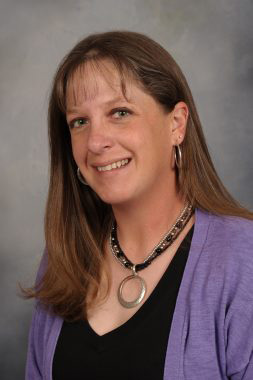
Also on Wednesday January 23, 2019, local entrepreneur and Hays High DECA alum Allyson Werth will be coming to Hays High to share with us her experience of starting and owning multiple businesses. TMP FBLA, JagK, Helping Hands, and Hays High entrepreneurship students have been invited to attend.

DECA prepares emerging leaders and entrepreneurs for careers in marketing, finance, hospitality, and management in high schools and colleges around the globe. Currently, there are 215,000 members worldwide.

Hays High DECA is active in the community by organizing and conducting the annual Trick or Treat So Others Can Eat Food Drive, supporting and raising funds for Ronald McDonald House Charities of Wichita,  and conducting various public relations campaigns as well as various related marketing projects. Hays High DECA members compete at a state and international level.

To find out more about the Passion to Paycheck project, feel free to contact Brooke Denning at [email protected] , Cassidy Prough at [email protected] , Madelyn Waddell at [email protected] and Shaina Prough at [email protected]. Contact may also be made via Hays High’s phone number, 785-623-2600.


BOOR: Seminar will help farmers and ranchers plan for future

The past several years have been a challenge to be in agriculture to say the very least. Farmers and ranchers currently are experiencing one of the biggest downturns in history with many drawing parallels to the 1980s.

Planning for the future is critical for both the short-term viability of the farm business as well as for the long-term growth and sustainability of the farming legacy.

The Cottonwood District along with the South Central Kansas Farm Management Association will be hosting a program that will offer a variety of outlook talks to assist in planning for the upcoming years. Having a grasp of input costs and projected prices can assist in making equipment purchasing decisions, land rental arrangements, cattle and grain marketing plans, and more. Managing a farm’s financials will also be discussed, as it pertains to the current economic times.

The scheduled sessions for the day are as follows:

“Understanding Your Financial Position”- Bryan Manny
“Determining Your Cost of Production and how it relates to marketing” – Clay Simons and Aaron Meisenheimer
“Recognizing Signs of Extreme Stress and Who’s There to Help.”- Alicia Boor
“Making Communication a Part of Your Business”- Joni James and Camille Claassen

The seminar is sponsored by Barton County Kansas Farm Management, Barton County Farm Bureau, and First Kansas Bank. It will be held on January 29th in Hoisington at the Knights of Columbus – 114 N. Main Street. The program begins with registration at 9 am and will end at 4. You must RSVP at 620-793-1910 or by email at [email protected] by January 22 to ensure that enough materials will be available.

Sternberg shares intricacies of food webs on Darwin Day

Caleb, 7, Chloe and Julie Robben learn about the Arctic food web during the Sternberg Museum Darwin Day.

By CRISTINA JANNEY

Hays Post

Visitors took advantage of a free admission at the Sternberg Museum of History on Sunday to learn more about predator and prey relationships.

Staff and volunteers shared museum specimens with guests and talked about how different creatures integrate into to complex food webs.

David Levering, camps manager, and Chase Shelburne, curatorial assistant, discussed the food web in western Kansas and how energy moves through the food web.

The major source of energy is sunlight, which plants use for photosynthesis to grow leaves, seeds and berries.

“In insects and small mammals and small birds eating those plant products, they grow their bodies and sustain themselves, but then they will be frequently eaten by predators,”Levering said. “So what we will see is lots of little animals that eat those plant products and then fewer animals that eat other animals because there is less and less energy and it can’t keep as many alive.”

You might see hundreds of mice in fields, but only a few hawks or foxes, he said.

Primary consumers or plant eaters in Kansas can include cottontail rabbits, prairie dogs or cotton rats.

Kimberly and Gage, 6, Pfanenstiel of Victoria learn about the western Kansas food web at Sternberg’s Darwin Day.

“Then we have a lot of these snakes and lizards, which form a strange section in a trophic area. Like I mentioned they can eat a lot animals that are on the food web, and they can be eaten by some of the animals on the same level. And then of course they are prey for bigger animals like our shrikes and hawks and some owls. We have tons of snake species — some of which eat each other as well.”

Birds of prey have adaptions such as a hooked beaks to better eat their prey. Least weasels change color from a brownish grey to white during the winter months.

Evolution and adaptation is a constant weapons race that is in a perpetual tie.

Trevor Williams, Fort Hays State University graduate student in geoscience, gave the example of a crab trying to eat a shellfish. The shellfish grow thicker shells with more defensive spikes to keep the crabs from eating them. The crabs grow bigger claws to better crack the shells.

Williams said it is like “Alice in Wonderland” when Alice is in the Red Queen’s castle. She is running as fast as she can, but it as if she is standing still.

Faythe, 8, Madison, 8, Evelyn, 4, and Jace, 1, Stropes of Ellis learn about adaptations of crabs and shellfish at the Sternberg Darwin Days.

“That is a way to explain what is going on in the evolutionary arms race,” he said. “Every species is evolving in response to other species. That includes both predators and prey and competition, so it is trying to get any edge it can. When everyone else is doing the same thing, everyone is stuck in one place. They call that the Red Queen’s Hypothesis.”

Another example is rattlesnakes and squirrels. Over time squirrels have developed a tolerance to snakes’ venom. The snakes with the strongest venom are the ones that eat. As a result the snakes’ venom grows stronger with successive generations.

Amber Michels, FHSU graduate students in geoscience, discussed the arctic food web, which is supported by the tiny phytoplankton and krill.

When the sun is up from March to September, there are large plankton blooms. Baleen whales only feed on the tiny krill, so they constantly move from the Arctic to the Antarctic in search of food. Arctic birds, such as terns, puffins and loons, eat fish that eat the krill. Freshwater fish in the arctic have a type of anti-freeze that keeps them from freezing.

Julie Robben said the event was an opportunity for her family to get out of the house after so much cold weather.

“We wanted to learn lots about animals and science,” Caleb Robben, 7, said.

Most of Kan. congressional delegation support Trump’s shutdown-ending compromise

WASHINGTON — In a bid to break the shutdown stalemate, President Donald Trump offered to extend temporary protections for young people brought to the U.S. illegally as children and those fleeing disaster zones in exchange for his long-promised border wall.

Over the weekend, republican members of the Kansas congressional delegation offered their support of the proposal.

Democrats were quick to dismiss the proposal as a “nonstarter.” Kansas Third District Congresswoman Sharice Davids has not released a statement on the President’s proposal.

Patriots make 3rd straight Super Bowl, beat Chiefs in overtime

KANSAS CITY, Mo. (AP) — It’s the dead of winter, meaning the weather in New England can be brutal. And that the Patriots are headed to the Super Bowl.

It took them overtime and more of Tom Brady’s brilliance to get there — for the third straight year. While the folks back home dealt with a frigid storm, Brady blew through Kansas City’s exhausted defense on a 75-yard drive to Rex Burkhead’s 2-yard touchdown run in a 37-31 victory Sunday for the AFC championship.

The drive, during which New England (13-5) had three third-down conversions, was reminiscent of when the Patriots beat Atlanta in the only Super Bowl to go to OT two years ago.

“Overtime, on the road against a great team,” Brady said. “They had no quit. Neither did we. We played our best football at the end. I don’t know, man, I’m tired. That was a hell of a game.”

Awaiting them in Atlanta are the Los Angeles Rams, who won 26-23 in overtime in New Orleans for the NFC championship. The Rams (15-3) last made the Super Bowl in 2002 while based in St. Louis, losing to the Patriots.

New England benefited from two critical replay reviews and made its ninth Super Bowl with Brady at quarterback and Bill Belichick as coach.

“This is crazy,” said Brady, who was 30 of 46 for 348 yards. “What a game.”

It’s the first time both conference title games went to OT. The last time both visitors won conference championship matches was 2012; New England was 3-5 on the road this season.

“We knew what our record was, but we didn’t let that dictate us,” said defensive end Trey Flowers, who led a staunch charge on Patrick Mahomes. “Whatever happened in the regular season happened. We came out and did it when it counted.”

Several times, the Patriots appeared to have it won, only to see Kansas City (13-5) come back in spectacular fashion.

Brady, at 41 already the oldest quarterback to have played in a Super Bowl, drove New England 65 yards in 1:24 to Burkhead’s go-ahead 4-yard touchdown with 39 seconds left in regulation. That was enough, though, for his far younger counterpart, the 23-year-old All-Pro Mahomes, to take the Chiefs 48 yards to Harrison Butker’s 39-yard field goal with 8 seconds left to force overtime.

It was a sizzling offensive showing in the fourth quarter after defense had been in charge most of the way. Indeed, the Chiefs were blanked in the opening half for the first time all season.

And they never saw the ball in overtime, which along with the two replay decisions might call into play NFL rules and officiating.

“I thought if we got the chance,” Mahomes said, “we’d score.”

Mahomes finished 16 of 31 for 295 yards and three touchdowns.

New England became the third franchise to reach three Super Bowls in a row. And Belichick now has 30 postseason victories, more than Bill Walsh and Don Shula combined. That Hall of Fame coaching duo also won five Super Bowls; Belichick shoots for No. 6 in two weeks.

An apparent muff by the usually reliable Julian Edelman on a fourth-quarter punt return was overturned by a lengthy video review, prompting raucous booing and some demonstrative arguing from the usually laid-back Andy Reid. Edelman definitely touched his next try when Brady’s pass deflected off his hands directly to safety Daniel Sorensen. His 22-yard return set up Kansas City at the Patriots 23, and Damien Williams, who scored three times, had no defender near him down the left sideline for the score that made it 21-17, KC’s first lead.

Back came Brady, engineering a 75-yard march on which Chris Hogan’s diving one-handed catch on third down appeared to touch the ground. Reid challenged — and lost.

Minutes later, rookie Sony Michel scored from the 10, his second TD of the night.

With 3½ minutes remaining, there was plenty of time for more points. Williams’ 2-yard run gave the Chiefs a 28-24 edge that New England took up most of the remaining time overcoming. The Patriots were helped by an offside call on linebacker Dee Ford that negated an interception which would have clinched a KC victory.

Butker’s field goal sent it to overtime.

“We put ourselves in position to win the game, that’s what makes it so tough,” Reid said. “If it’s a rout, you chalk it up to experience. But this one right here, where you’re in it to win it, that’s a tough deal. We gave ourselves every opportunity to do it, and they got us in overtime.”

The Chiefs hadn’t been blanked in any half this season, but they barely were a presence in the first 30 minutes, when they had the ball for 8:53. Mahomes was sacked three times for 43 yards; Kansas City’s record-setting attack ran only 16 plays and gained a mere 32 yards.

The zero disappeared quickly in the third quarter. Finally given solid protection, Mahomes unleashed a 54-yard completion to Sammy Watkins over All-Pro cornerback Stephon Gilmore. He then hit another All-Pro, tight end Travis Kelce, on a slant to make it 14-7 — and awaken the slumbering crowd.

But one of several bad decisions further damaged Kansas City when Tyreek Hill, the All-Pro flex player, retreated deep in Chiefs territory returning a punt. Eventually, KC had to punt and the Patriots had excellent field position, setting up a 47-yard field goal by Stephen Gostkowski.

Not one to be shy about innovation, Mahomes completely sidearmed a throw to Watkins for 10 yards on a third down, then a dump-off to Williams covered 33. Kelce drew a pass interference call on J.C. Jackson in the end zone, and Mahomes threw a strike to Williams for the score.

Although the Chiefs were on their heels much of the night, they were down only 17-14.

LOPSIDED FIRST HALF

Just as they did last week in manhandling the Chargers early and cruising, the Patriots delivered a message — and a touchdown — on their first series. It was a classic, covering 80 yards in 15 plays and using up more than eight minutes. Michel, who had 113 yards rushing, scored from the 1.

But Brady made a rare mistake on the next dominant drive. His third-down pass from the 1 for Rob Gronkowski was short and Reggie Ragland picked it off.

Brady had never thrown an interception from the 1.

When the Chiefs finally got a trademark big play on Mahomes’ 42-yard completion to Hill, it went for naught. Mahomes overthrew a wide-open Williams near the end zone, then took a 14-yard sack to send KC out of field goal range.

Big mistake.

The Patriots kept dominating the line of scrimmage, Brady took them 90 yards and connected with Phillip Dorsett over sloppy coverage by Steven Nelson to make it 14-0 with 27 seconds left in the half.

STATS

In Week 6, the Patriots beat the Chiefs 43-40 in a game featuring 946 yards total offense. This one had 814. … New England has played in eight straight AFC title games, but this is its first road playoff win since the 2006 season vs. San Diego. … Brady matched former Patriots K Adam Vinatieri, now with the Colts, for the most wins in NFL history (236). … Kansas City’s defense tied for first in the NFL with 52 sacks, but had none on Sunday. New England had four.

COIN TOSS

Reid’s decision to defer after winning the opening coin toss proved unwise as New England had 22 plays in the opening period, and Kansas City had seven. Then, the Chiefs lost the more important toss before overtime. Less than five minutes later, they were headed to the offseason.

UP NEXT

The Patriots head to Atlanta to play the Rams in the Super Bowl.
Cloudy, cold Monday

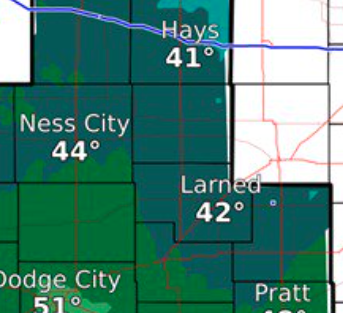
M.L.King Day Patchy freezing fog before 7am. Mostly cloudy, with a high near 41. East southeast wind 11 to 15 mph.

Monday Night A slight chance of rain, freezing rain, and sleet before 3am, then a chance of sleet between 3am and 4am, then a chance of snow and freezing rain after 4am. Mostly cloudy, with a low around 28. Southeast wind 8 to 18 mph becoming north after midnight. Winds could gust as high as 28 mph. Chance of precipitation is 30%.

Tuesday A chance of freezing rain before 7am, then a chance of snow and freezing rain between 7am and 9am, then a chance of snow after 9am. Mostly cloudy, with a high near 29. Windy, with a north northwest wind 22 to 25 mph, with gusts as high as 39 mph. Chance of precipitation is 30%.

Tuesday NightA 20 percent chance of snow before 7pm. Partly cloudy, with a low around 18. Blustery, with a north northwest wind 16 to 21 mph decreasing to 8 to 13 mph after midnight. Winds could gust as high as 31 mph.

WednesdaySunny, with a high near 42.

Wednesday NightPartly cloudy, with a low around 25.

ThursdayPartly sunny, with a high near 34. Breezy.

2-for-1: Total lunar eclipse comes with supermoon bonus

CAPE CANAVERAL, Fla. (AP) — The only total lunar eclipse this year and next came with a supermoon bonus.
On Sunday night, the moon, Earth and sun lined up to create the eclipse, which was visible throughout North and South America, where skies were clear. There won’t be another until the year 2021.
It was also the year’s first supermoon, when a full moon appears a little bigger and brighter thanks to its slightly closer position.
The entire eclipse took more than three hours. Totality — when the moon’s completely bathed in Earth’s shadow — lasted an hour. During a total lunar eclipse, the eclipsed, or blood, moon turns red from sunlight scattering off Earth’s atmosphere.
In addition to the Americas, the entire lunar extravaganza could be observed, weather permitting, all the way across the Atlantic to parts of Europe.

————–

CAPE CANAVERAL, Fla. (AP) — The celestial curtain will be rising soon on a lunar extravaganza.

Sunday night, the Earth will slide directly between the moon and the sun, creating a total lunar eclipse. There won’t be another until 2021.

It will also be the year’s first supermoon, when a full moon appears a little bigger and brighter thanks to its slightly closer position.

The entire eclipse will exceed three hours. Totality — when the moon’s completely bathed in Earth’s shadow — will last an hour. Expect the eclipsed, or blood moon, to turn red from sunlight scattering off Earth’s atmosphere.

Everyone everywhere can catch the supermoon, weather permitting. But the entire eclipse will be visible only in North and South America, and across the Atlantic to western and northern Europe.

Kan. man found with cocaine, loaded gun at DUI checkpoint

KANSAS CITY – A Kansas man has been sentenced in federal court for illegally possessing crack cocaine and a firearm, according to the U.S. Attorney’s office.

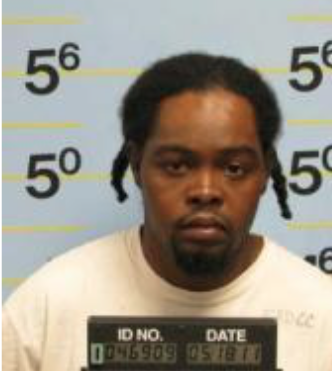
Willis -photo MDC

Antonio E. Wills, 43, was sentenced by U.S. District Judge Roseann Ketchmark on Thursday, Dec. 20, 2018, to 19 years in federal prison without parole. Wills was sentenced as a career offender due to his prior felony convictions. The court ordered the federal sentence to be served consecutively to the upcoming sentence in the District of Kansas for violating his supervised release in a separate federal case.

On Feb. 9, 2018, Wills pleaded guilty to possessing cocaine with the intent to distribute and to being a felon in possession of a firearm.

Wills was a passenger in a vehicle that attempted to avoid a DUI checkpoint on March 19, 2016, by making a U-turn in the middle of Main Street.

Kansas City, Mo., police officers stopped the vehicle and directed the driver back to the checkpoint. Officers at the checkpoint smelled a strong odor of marijuana and observed Wills trying to conceal something inside his front hoodie pocket. Wills and the driver were both instructed to get out of the vehicle, at which time an officer saw a clear plastic baggy that contained cocaine in Wills’s hand. An officer instructed Wills to drop the clear bag. Wills failed to comply and placed the bag back in his front hoodie pocket. The officer attempted to take Wills into custody, but he refused to comply and a struggle ensued. Additional officers responded to assist with taking Wills into custody.

When officers searched Wills, they found another clear plastic baggy that contained cocaine in his cargo shorts pocket and a loaded Glock .45-caliber handgun (with an obliterated serial number) in his waistband. They also found marijuana and $2,186 in Wills’s pocket. Wills was in possession of 71.5 grams of powder cocaine and 7.7 grams of crack cocaine.

At the time of his arrest, Wills was on supervised release after being convicted in a separate drug-trafficking case and serving more than 10 years in prison. A federal warrant had been issued for his arrest, based on his absconding from supervision.

Under federal law, it is illegal for anyone who has been convicted of a felony to be in possession of any firearm or ammunition. Wills has prior felony convictions for possession with intent to distribute crack cocaine, possession of a controlled substance and driving while a habitual violator.

More lenient state laws could chill low-alcohol beer market

OKLAHOMA CITY (AP) — Beer snobs are raising their mugs to a stronger brew in three states that once forbade grocers from selling anything but low-alcohol brands, and the changes could indirectly chill the industry in two others where such regulations remain.

Until October, Oklahoma grocery and convenience stores could stock beer with only up to 3.2 percent alcohol content — considerably lower than even leading light beer brands. Liquor stores were able to sell stronger 8.99 percent beer but were prohibited from selling cold beer of any strength.

Voter-approved changes now allow stronger ales to be sold in Oklahoma grocery and convenience stores. And many of the changes are being adopted this year in the adjoining states of Colorado and Kansas.

The beer revolution will leave just two states — Utah and Minnesota — where only 3.2 percent beer may be sold in grocery and convenience stores. Beer industry observers say how lawmakers in those states react to the changes could determine whether the future of low-point beer in the U.S is as flat as a week-old lager. Half of the nation’s 3.2 beer market was in Oklahoma and an additional 20 percent was in Colorado.

“It is a dramatic drop,” said Brett Robinson, president of Beer Distributors of Oklahoma, which represents some beer distributors in the state. “In Oklahoma now, beer is just beer. There is no more definition or classification.”

Oklahoma was the first of the nation’s five 3.2-beer states to make the switch. That’s ironic considering alcohol was illegal until voters repealed statewide prohibition in 1959 — 26 years after Prohibition was repealed nationally.

“It was a long time coming,” said Lisette Barnes, president of the Oklahoma Beer Alliance, a beer industry trade association. “It’s refreshing. I think overwhelmingly people are excited about it. It’s been a good thing for both industry and consumers.”

As the market for “baby beer” continues to shrink, brewers must decide whether it’s profitable to continue to make it — a decision that could cause low-point beer supplies to dry up in Utah and Minnesota.

Anheuser-Busch, the world’s largest beer producer, said it will work to meet the needs of consumers in 3.2 percent beer states even amid declining demand.

“While we will continue to produce 3.2 percent beer, regulatory and legislative changes in Oklahoma, Colorado and Kansas that affect demand for 3.2 percent beer will impact our national production,” the company said in a statement in December.

But some brewers are already cutting back on their 3.2 percent beer production. Oklahoma City-based craft brewer COOP Ale Works, which distributes in six states, including Oklahoma and Kansas, has discontinued two of its three 3.2 percent brews.

“The only reason we produced those other two beers was to have beer in grocery and convenience stores,” said Sean Mossman, director of sales and marketing for COOP. “Now that we can sell our more popular styles in the grocery stores, we just don’t see any need to continue manufacturing those beers.”

And selling COOP’s flagship beers in grocery stores “has been a boon for us,” Mossman said. He said the brewer’s business has increased 50 percent in the months since Oklahoma grocers began stocking its stronger beers. New regulations go into effect in Kansas in April, when grocery and convenience stores can start selling beer with an alcoholic content of 6 percent.

“Overall, we’re very happy about the death of 3.2 beer,” he said. “The death of 3.2 beer is good for us.”

Dwindling supplies of low-point brew is something state regulators have considered.

“That’s the question we’ve been facing for a couple of years.” said Terry Wood, director of communications for Utah’s Department of Alcoholic Beverage Control. “Business decisions may be made that make it just a financial choice for the breweries to stop producing 3.2 beer.”

Former Minnesota state Rep. Jenifer Loon, who authored legislation that repealed a longstanding ban on Sunday liquor sales in 2017, said regulatory changes in other states will likely force Minnesota lawmakers to consider allowing full-strength beer in grocery and convenience stores.

“The market’s probably going to control this. Within the foreseeable future, there probably will have to be a change,” Loon said.

Grocers have expressed support for selling strong beer in the past, but any effort to expand beer sales will probably be met with stiff opposition, she said.

“It’s been very difficult to kind of drag our liquor laws into the 21st century,” Loon said.

For now, low-point beer will continue to be produced by the New Belgium Brewing Co., a craft brewery based in Fort Collins, Colorado, spokesman Bryan Simpson said. Production of 3.2 percent comprises just one-half of 1 percent of the brewery’s overall production, and the company will shop it exclusively to Utah, Simpson said.

“It makes sense for us to do it because we want to have a presence there,” Simpson said. He said the company’s breweries are already set up to produce low-point beer and “there’s really no sense to hit the brakes.”

Police: Kan. man has life-threatening wound after altercation

SHAWNEE COUNTY — Law enforcement authorities are investigating a shooting.

Just after 11 p.m. Friday, police responded to a Topeka hospital where a man was dropped off with what appeared to be a single gunshot wound to the leg, according to Lt. John Trimble.

Officers were able to determine that the victim was involved in an altercation with an acquaintance of his who retrieved a handgun and shot the victim in the leg.

A crime scene related to the shooting was located in the 1300 block of NW Van Buren.

The victim remains in the hospital with life threatening injuries, according to Trimble. Police have not reported an arrest.

FHSU grad is new ABBB accountant

ABBB

The certified public accounting firm of Adams, Brown, Beran & Ball, Chartered (ABBB) is pleased to announce the addition of Brittany Brock to their professional team.

Brock is already familiar with the firm, having served as an intern in the fall of 2017 and a student worker for the previous year. She now steps into the role of staff accountant.

“Throughout the course of her time with us as an intern and a student worker, she has gone above and beyond for our clients,” said Brian Staats, CPA, CGMA, managing partner of ABBB. “We look forward to watching her continued growth as a full-time member of the ABBB team.”

A recent graduate of Fort Hays State University, Brock earned a Bachelor of Business Administration in Accounting in 2018. Prior to that, she attended Barton Community College, earning an associate degree. Brock currently resides in Hays.

OPINION: Moran is ‘part of the resistance’

Jim McLean

He’ll cringe when he reads this but, Republican U.S. Sen. Jerry Moran is part of “the resistance.”

Not always in obvious ways. Moreover, not in ways that come close to comforting those who view President Donald Trump as a clear and present danger to the nation.

But in his own quiet, Kansas way, Moran resists the chaos of Trump’s Washington by advocating for a return to “regular order” in the U.S. Senate and the nation.

Different in style but still much like his late colleague, Sen. John McCain of Arizona.

An institutionalist, Moran says there is no excuse for the federal shutdown. For the failure of Congress and the White House to negotiate compromises and fund the government.

Just before Christmas, Moran voted against a stopgap measure that would have averted a shutdown — but only for a few weeks. He said congressional leaders on both sides of the aisle had grown used to cutting corners, taking the easy way out. “Punting” instead of staying at the negotiating table and resolving differences.

“We’ve done this too many times,” he said.

Indeed, they have. Congress managed to pass all of its required appropriations bills only four times since the mid-1970s.

To resolve the current stalemate, Moran is urging his colleagues and the White House to agree to a compromise. One that would give the president some of the border security funding he wants in exchange for reinstating protections for undocumented immigrants brought into the country as children.

There are other examples of Moran breaking ranks.

Just the other day, despite pressure from the White House and GOP leaders, Moran voted with Senate Democrats to stop the administration from lifting some of the sanctions imposed on Russia for its attack on our democracy. His vote backed penalties on three companies controlled by oligarch closely tied to both Russian President Vladimir Putin and Paul Manafort, the one-time manager of Trump’s 2016 campaign.

Moran was one of only 11 Republican senators to support the resolution, which fell three votes short of the number needed to advance it to a final vote.

He also was quick to speak out when the New York Times reported recently that Trump was once again on the verge of pulling the U.S. out of NATO. Moran made his opposition clear, saying a “unified NATO alliance is essential to sustaining American security and prosperity.”

A few weeks earlier, Moran criticized the president’s abrupt decision to withdraw U.S. troops from Syria. That decision triggered the resignation of Defense Secretary James Mattis, whom Moran praised as a leader who provided needed “stability” during a time of “transition and uncertainty.”

Perhaps Moran’s most celebrated maverick moment came in July 2017 when he voted against an Obamacare repeal bill that Trump and Republican leaders desperately wanted. He cast his “no” vote on a procedural motion that temporarily stopped the repeal effort in its tracks.

Characteristically, Moran didn’t oppose replacing Obamacare with something else. He just didn’t like the closed-door process used to write the bill or that it was little more than a Republican power play.

“Trying to do something with one party alone is a mistake,” Moran told me at the time. “I’ve called for all 100 senators to be involved in the process by which we repeal and replace or we fix the Affordable Care Act.”

Moran the institutionalist. Imagine every member of the Senate — Republican and Democrat alike — participating in an open process of give-and-take resulting in something that resembles consensus on an important piece of legislation.

Naïve perhaps. Nevertheless, an ideal worth shooting for.

So there’s no misunderstanding, I’m not making the case that Jerry Moran is a one-man bulwark against the chaos and disorder of the Trump presidency.

He carefully picks his battles. And when he does speak up, his criticism of the president is often muted.

But that’s understandable. He’s a right-center Republican from a state that Trump carried by a wide margin. Plus, he’s cautious by nature. Just ask his congressional colleagues or those he served with in the Kansas Legislature.

But he’s also a Kansan. As such, he understands that much of what is under attack these days belongs to the legacy of fellow Kansan Dwight Eisenhower. The post-World War II order built by the U.S. and its European allies to defend democracy and keep the peace.

Jim McLean is the chief political reporter for the Kansas News Service. He’s covered politics and state government for more than 35 years. You can reach him on Twitter @jmcleanks

Copyright Eagle Radio | FCC Public Files | EEO Public File