Laddie E. Merryfield, 87, formerly of Russell, Kansas, died on Saturday, Feb. 23, 2019, in Lenexa, Kansas.
Laddie was born to Clyde E. and Virginia C. (Emery) Merryfield on October 20, 1931 in Minneapolis, Kansas.
He graduated from Minneapolis High School in 1949. Laddie married Lola Mae Rasmussen on June 1, 1950 and together they enjoyed a lasting marriage of over 50 years. Laddie and Lola Mae moved to Lindsey, Kansas where they planned to be farmers.
The flood of 1951 changed those plans, and Laddie enlisted in the United States Air Force later that year. After training in Natchitoches, Louisiana, Laddie was sent to Wichita Falls, Texas, for training and service as an Airman First Class for four years.
Laddie and Lola Mae’s first son, David, was born there in 1953. Laddie was then posted to McClellan Air Force Base in Sacramento, California. His service ended in 1955, and he and Lola Mae decided to return to Kansas to be closer to family. Laddie was offered the State Farm Insurance agency in Russell, Kansas, a job he held for the next 40 years.
Soon after arriving in Russell, their second son, Roger, was born in 1957. While raising their family, Laddie and Lola Mae built his State Farm agency into a successful business that continues today. Laddie was an active member of the community and contributed in multiple ways, including constructing two office buildings on Main Street, and serving in leadership roles for both the Kiwanis Club and St. John’s Lutheran Church.
Laddie retired from State Farm in 1996. In early retirement in Russell, Laddie enjoyed bridge, gardening and woodworking, building heirlooms for his children and grandchildren at his shop.
In 2003, Laddie and Lola Mae moved to Lakeview Village, a retirement community in Lenexa, Kansas. They didn’t have long together at Lakeview, as Lola Mae was diagnosed with lymphoma and passed away in 2005. Laddie later met and married Sally Stokes in 2008 and they enjoyed an active life at Lakeview, including volunteering at the Lakeview thrift shop. Sally’s family embraced Laddie and he enjoyed his time with them. As Laddie’s needs increased, Sally served as his truly loyal caregiver.
Laddie was predeceased by his parents, his brother Ronald, his sister Trula (Merryfield) Cox and his first wife, Lola Mae (Rasmussen) Merryfield.
He is survived by his wife, Sally (Stokes) Merryfield, his son, David Merryfield (Sue), his son, Roger Merryfield (Zoann), his stepsons Steve Stokes (Karen) and Stan Stokes (Donna), his grandchildren Jessica (Merryfield) Blanford (Adam), Alex Merryfield (Stephanie Grass), Cassandra Merryfield (fiancè Julian Garcia) and Spencer Merryfield (Jacquelyn); his step-grandchildren Erica Stokes Spielbusch (Donovan), Shawna Patch (Andrew), Jaymie Davis (Tyler), Scott Dixon, Joel Dixon (Sarah), Will Dixon (Melissa), two great-grandchildren and nine step-great-grandchildren.
A gathering service will be from 1 to 3 p.m. Saturday, March 2, 2019 at Pohlman-Varner-Peeler Mortuary in Russell, Kansas. A private inurnment of the ashes will be performed at a later date.
Memorials have been established to the St. John’s Lutheran Cemetery in Russell or to the Good Samaritan Fund—Lakeview Village Foundation.
Donations may be sent in care of the mortuary at 610 N. Maple, Russell, KS 67665. If you are moved to remember Laddie, we encourage donations in lieu of flowers.
William H. “Bill” Gillespie, 93 of Ft. Collins, Colorado, formerly of Ellis, Kansas, passed away on Feb. 20, 2019 at Centre Avenue Rehab in Ft. Collins, Colorado.
He was born in Elk City, Oklahoma, on Nov. 30, 1925 to parents Millard F. and Bettie (Davis) Gillespie. He spent his early years in Oklahoma, moving to California shortly after the start of WWII in 1941.
He moved to Kansas in 1943 at age 17 where he met and married Verneita Fischer. They were both working at Boeing Aircraft on the second B29 that Boeing was building for the war.
He joined the US Navy in January 1944 and was originally trained as a tail gunner for the Douglas SBD plane but the war had ended in Europe so he was sent to Hawaii for radar counter measure training and was assigned to a night Air Group VTN 52 aboard the carrier ‘Bon Homme Richard’.
After leaving Pearl Harbor, he was put on hold at the Island of Guam because two atomic bombs had been dropped on Japan. He was fortunate not to have been in actual combat and was discharged in February 1946.
He had several business ventures in his long life from owning the Fairlawn Dairy, the Firestone store and oil hauling truck in Kansas. After moving back to California in 1955 he worked for Helm’s Bakery and Coca Cola while waiting to be begin the Los Angeles Sheriff’s Academy. Bill had many interesting experiences working as a Sgt. homicide detective for Los Angeles County, unfortunately he suffered a severe heart attack in July 1974 and was medically retired.
He and Verneita moved back to Kansas in 1977 and spent several years traveling and visiting their family. They traveled to all 50 states in their lifetime plus Germany, Hong Kong, China, Egypt, Philippine Islands, and England. Bill visited veteran memorials with the Honor Flight in Washington DC in 2010.
He was preceded in death by his wife, Verneita, of 56 years in 1999. Also two brothers, Millard C. Gillespie and Eugene L. Gillespie.
He is survived by his wife Lois (Kelsch-Geyer) Gillespie of the home in Ft. Collins, Colorado; sons Ron Gillespie (BettyJo) of Alpine, Utah; Gene Gillespie (Rinda) of Ft. Collins, Colorado; daughters Pat Deutscher (Steve) of Clay Center, Kansas; Karen Ware (Danny) of Blanchard, Oklahoma; 10 grandchildren, 20 great-grandchildren, four step-children, four step-grandchildren, seven step-great-grandchildren.
The funeral service will be at 10 a.m. Thursday, February 28, 2019 at the Ellis United Methodist Church. Burial with military honors will be at 1 p.m. Thursday at the Plainville Cemetery, Plainville, Kansas.
Visitation will be from 6 to 8 p.m. Wednesday at Keithley Funeral Chapel, 400 E. 17th St., Ellis, KS 67637 and9 a.m. until the service time Thursday at the church.
Memorials are suggested to the Ellis Public Library .
Kansas Common crude at CHS in McPherson gained a quarter Friday (2/22) to $47.50 per barrel. That’s two dollars more than at the start of the month, and $12 more than the price at the first of the year.
Baker Hughes reported 1,047 active drilling rigs across the U.S. last week, down four oil rigs. Oklahoma’s rig count was down two, while Texas, New Mexico and Colorado each dropped by one rig.
Rig count totals from Independent Oil & Gas Service were unchanged last week, with three active rigs east of Wichita and 26 in Western Kansas. Operators are about to spud one new well in Barton County and one in Russell County.
Regulators approved 15 permits for drilling at new locations across the state last week, three east of Wichita and 12 in Western Kansas. One new permit was filed in Barton County.
Operators reported 26 new well completions last week, 11 in eastern Kansas and 15 west of Wichita. There were completions noted in Barton and Russell counties, but both were dry holes.
Alberta, Canada is preparing a giant oil-by-rail operation to help its oil-sands producers cope with a pipeline crunch. Reuters reports the Canadian province expects a big profit from the venture. Alberta holds the world’s third-largest crude reserves, but has been losing money because of shortages in pipeline takeaway capacity. Premier Rachel Notley has taken numerous steps to turn that around, including mandatory production cuts, and the railroad operation. They will spend roughly $2.8 billion (US) to lease tanker cars and buy service from rail providers. Officials expect to get a $4.48 billion return, or a net profit o $1.7 billion.
Lawmakers in Texas learned that the state agency responsible for plugging abandoned oil and gas wells can’t seal them as quickly as they’re being abandoned. During the last legislative session, regulators said there were around 10,000 such wells in the state, and lawmakers gave them more money to plug them. Observers say the problem is getting worse. Out of 440,000 wells in the state, about 130,000 aren’t producing and will eventually be abandoned.
Lawmakers in North Dakota are considering quite a few new measures for the oil patch. House members approved “Operation Prairie Dog,” a bill that would distribute up to $250 million from oil tax revenue to cities, counties, townships and airports for infrastructure projects throughout North Dakota. The North Dakota Senate opted to keep a provision in oil tax policy that requires companies to pay more taxes when oil prices rise. A bill that sets the groundwork for a new oil tax agreement with three native tribes in North Dakota passed the state Senate Wednesday. It’s projected to send an additional $33 million in oil tax revenue to the tribes. The House approved legislation Thursday that would use money from the voter-approved oil tax savings account to help offset income taxes.
U.S. operators shipped 7,645 tanker cars in petroleum and petroleum products last week, an increase of 17.8%. The Association of American Railroads says the running total so far this year is up 23% over the same period last year. Canada continues to increase its oil-by-rail shipments as well, posting an increase of 6.5% last week, and a 23.5% increase in the running total.
Russia’s third-largest bank has frozen the accounts of Venezuelan state oil company PDVSA. Reuters reports Gazprombank halted transactions with the firm to avoid U.S. sanctions. The Venezuelans have labeled the story “fake news.” The Kremlin has been among Venezuela’s staunchest supporters.
Continental Resources reported annual profits of nearly $1 billion in 2018. The Oklahoma-based shale producer posted net income for the year of $988 million. Company officials say they boosted average daily total production to more than 298-thousand barrels, an increase of 23 percent over the year before. The company reported production in North Dakota’s Bakken shale of more than 183-thousand barrels per day during the last three months of the year.
The Texas oil and gas industry paid more than $14 billion in state and local taxes and state royalties in fiscal year 2018. According to the Texas Oil and Gas Association that’s an increase of 27 percent from fiscal year 2017, and the second-highest total in Texas history. Since 2007 the industry paid over $133 billion in taxes and royalties.
A spike in drilling permit applications, and increases in court challenges, have created a backlog that regulators in Colorado say could take up to three years to clear. At the end of January the Colorado Oil and Gas Conservation Commission had 406 pending applications on their docket. Of those, 30 percent have been protested. It doesn’t help that the COGCC is short one hearing officer, but officials say it would still likely take three years to clear the backlog, even at full staff.
After losing a court fight with the Colorado Oil & Gas Conservation Commission last month, Democrats in the state legislature will try to redefine the commission’s mission in a bill expected soon. The Colorado Springs Gazette reports they hope to place a higher priority on public health and safety. In January, the state’s highest court ruled that under current law, the commission cannot make permitting decisions based solely on health and safety, but must consider other interests. The measure is also likely to give local governments more control over permits, rather than maintaining that oversight at the state level.
The Permian Basin of Texas and New Mexico already leads the nation, and most countries, in crude-oil production. According to the U.S. Energy Information Administration, Permian production will rise above four million barrels per day for the first time in history next month. Already the fastest-growing shale play in the U.S., the Permian is currently producing an average of 3.98 million barrels per day. Next month, EIA predicts that total will rise by 43-thousand barrels per day to 4.024 million. Total U.S. production this year will rise to 12.4 million barrels per day, according to government reports.
The Fort Hays State University women’s basketball team won its second regular season MIAA title on Saturday after going 2-0 on the road last week with a 70-48 win over Central Oklahoma on Thursday and a 90-66 win over Northeastern State Saturday afternoon. The Tiger women have now won 10-consecutive games and will close out the regular season at home this week with games against Missouri Southern on Thursday and Pittsburg State on Saturday at Gross Memorial Coliseum. Both games can be heard on Tiger Radio (103.3 FM).
The Tiger men split their road games last week with a 69-66 win against Central Oklahoma on Thursday to clinch a spot in the MIAA tournament and a 72-62 loss to Northeastern State on Saturday. FHSU will wrap up the regular season at home at home this week with games against Missouri Southern on Thursday and Pittsburg State on Saturday at Gross Memorial Coliseum. Both games can be heard on Tiger Radio (103.3 FM).
Hays High girls split back-to-back games
The Hays High Lady Indians wrapped up the regular season with a 56-49 win over Dodge City to wrap up Western Athletic Conference play on Thursday and a 52-40 loss to the #4 team in 4A Abilene on Friday at home. Jaycee Dale led the Indians with 14 and Brooke Denning scored 10 against Abilene. Hays finishes the regular season at 13-7. The Indians will play at home as the No. 7 seed in the 5A sub-state Wednesday at 7 p.m. against Kapaun Mt. Carmel to open postseason play. You can listen to the game on 96.9 FM KFIX.
The Hays High boys dropped both games last week with losses to Dodge City and Abilene. The Indians lost the last four games of the regular season to end at 9-11. Hays will be the 12-seed in the 5A sub-state and will play Salina Central in Salina on Thursday at 7 p.m. You can listen to the game on 96.9 FM KFIX.
TMP swept by Hutchinson-Trinity Catholic
The TMP girls and boys both lost at home to end the regular season on Thursday. The Monarch girls had their eight-game win streak come to an end in the loss and ended the season at 15-5. The Lady Monarchs will play Hoisington in sub-state playoffs tonight at 7 p.m. You can listen to the game on 99 KZ Country (99.5 FM).
The TMP boys end the season at 10-11 and will take on Lyons at home Tuesday at 7 p.m. in the first round of sub-state. You can listen to the game on 99 KZ Country (99.5 FM).
OVERTIME
The class 1A regional in Hill City took place last week. The Thunder Ridge Lady Longhorns defeated the Osborne Lady Dogs on Sunday 57-23 in the regional final. It was Thunder Ridge’s fourth win over Osborne this season. Thunder Ridge will play Otis-Bison in the first round of the WaKeeney sub-state on Thursday. Osborne will play Central Plains in the Russell sub-state Thursday at 7:30 p.m.
The Osborne Bulldog boys moved to 20-0 on the year with a 63-52 win over 6-seed Stockton in the Hill City regional championship game Sunday. Osborne will play Quinter at 7:30 p.m. Friday in Russell. Stockton will take on Central Plains in WaKeeney Friday at 7:30 p.m.
The Wichita County sub-state, featuring Ellis, Hoxie, Leoti-Wichita County, Oakley, Oberlin-Decatur Community, Plainville, Smith Center, and WaKeeney-Trego Community, will have the semi-finals and finals broadcasted on 101.9 The Bull this Thursday, Friday and Saturday.
Have highlights you want to share for next week’s Hoops Highlights? Email them to C.D. DeSalvo. Photos are encouraged!
TOPEKA, Kan. (AP) — Kansas regulators have ordered Kansas Gas Service to return more than $17.9 million in tax savings to its customers.
The Kansas Corporation Commission said in a news release Monday that its order will mean a one-time bill credit of $22.78 for residential customers.
The agency says the savings are the result of a federal law that reduced the corporate tax rate from 35 percent to 21 percent in January of last year. The Commission had required utilities to track and keep separate savings from the tax cut pending its review.
Kansas Gas Service had asked to keep the savings to offset its service costs, but the Commission determined that was not in the public interest.
Kansas Deputy Transportation Secretary Lindsay Douglas; Congressman Roger Marshall; Representative Ken Rahjes; Senator Rick Billinger, and Kansas Commerce Secretary David Toland
By BECKY KISER Hays Post
“Partnership” was the most-often used word by local, state and federal officials during a tour Friday afternoon of the Ellis County Northwest Business Corridor road improvement project.
Those riding on the two-hour bus tour, initiated by Rep. Barb Wasinger of Hays (R-111th Dist.), included numerous government and business representatives of Ellis County, Hays, and the state of Kansas, along with First Dist. Congressman Roger Marshall (R-Great Bend).
The corridor is north of Hays, defined as U.S. Highway 183 and Feedlot Road running two miles west to 230th Ave., then south two miles on 230th to Interstate-70 and the Highway 183 Bypass.
Planned road improvements to the Ellis Co. Northwest Business Corridor. (Click to enlarge)
The plan calls for a paved 8-inch concrete road capable of handling large truck traffic and oversized loads.
Wasinger is a former Ellis County and Hays city commissioner. She’s very familiar with the concerns.
“I told him [interim Kansas Commerce Secretary David Toland] how important it was, how dangerous the road was and how much we needed the support of the governor and all the different divisions of the state,” Wasinger said after the tour. “It doesn’t take much to learn once you’re on that road how dangerous it is for these enormous vehicles to be going down there.”
The corridor carries a high percentage of large truck traffic with Midwest Energy’s Goodman Energy Center and Hess Services both located on 230th Avenue. The bus stopped at both facilities for quick guided tours.
Between the bypass exit and the entrance to Goodman Energy Center, the hills on 230th Avenue vary 67 feet in elevation.
Midwest Energy’s Bill Dowling talks about the dips in 230th Ave.
Midwest Energy actually has a safety directive in place for when big contractor loads drive in and out of the Goodman driveway
“These are long trucks with 80-foot poles on them,” Bill Dowling, Midwest Energy Center Engineering and Energy Supply Vice President, told the tour group.
“We station a pickup up on the top of the hill with its flashers on in an attempt to slow down the traffic. The sight lines on that road are terrible,” Dowling said. “It is a bit of a risk every time you get on and off 230th.”
A semi drives past the USD 489 bus transporting the tour group on 230th Ave.
The traffic is often speeding and there are no shoulders along the road.
“When you go through these facilities, you see what commerce is and you see what’s important to Hays, Ellis County and all of northwest Kansas,” said Dustin Roths, Ellis County commissioner.
Hess Services currently has 355 employees and about 50 contractors working at its primary facility at 1789 230th. Co-owners and brothers Dan and Mark Hess told the tour they plan to expand their company if it can acquire the necessary infrastructure, including the corridor project.
Dan Hess leads a tour of Hess Services with 1st. Dist. Congressman Roger Marshall, state representative Ken Rahjes of Agra, Ellis Co. Commissioner Dean Haselhorst and county public works director Bill Ring, immediately behind him.
Ellis County has already approved $800,000 for road improvements for the Northwest Business Corridor.
“When I got on the commission, this project looked vitally important to me,” Roths said. “We’re hoping we can find other people to make this happen.”
Roths heard a lot of comments about Hess from tour participants from outside of Hays who “couldn’t believe this exists in this part of the world.”
“Huge credit to Hess Services and their company, its growth and their vision. So now it’s time for us to do our part, in my opinion. It’s time for the government to do what it’s supposed to do which is provide that infrastructure so that they can continue to grow and thrive.”
Interim Kansas Commerce Secretary David Tolan talks with Susan NeuPoth Cadoret, KS Dept. of Commerce, (L) and State Representative Barb Wasinger of Hays (R) following Friday’s tour.
Also on the tour were Kansas deputy Transportation Secretary Lindsey Douglas, state Sen. Rick Billinger of Goodland and Susan NeuPoth Cadoret, Business & Community Development Director for the Kansas Dept. of Commerce (KDC).
Admittedly, KDC doesn’t focus much on infrastructure in the state, but she “saw some really impressive job opportunities,” NeuPoth Cadoret said following the tour. “There’s also some potential for additional growth that’s coming so I can see the importance and the value of having this road hard-surfaced and completed.”
A private developer has approached the city of Hays in the past year about constructing a travel plaza at the intersection of 230th Ave. and 55th Street. There has also been discussion about potential housing and a commercial site just north of I-70 on the west side of 230th.
Wasinger said she has “accomplished the first step” in the road improvement plan “with collaboration and the help of everybody.”
“It just shows we all want to work together to take care of the needs of rural Kansas and Ellis County. The next step is to not let this excitement die.”
Those on the tour also included representatives from Fort Hays State University, Grow Hays, and the Northwest Kansas Economic Innovation Center.
According to information provided by Ellis County to tour participants, the Northwest Business Corridor improvements would cost $11,079.33. Additional improvements on 55th Street would increase the total to $15,734.862.
TOPEKA, Kan. (AP) — Kansas Gov. Laura Kelly pledged Monday to give legislators and the general public more information about children who run away or go missing from the state’s foster care system, starting with a daily count.
The new Democratic governor announced the launch of a website for the state Department for Children and Families that will provide statistics about missing foster children. Kelly also promised that multiple legislative committees will receive information about specific cases if they sign a confidentiality agreement.
The announcements came less than a week after a Republican-controlled Senate committee had a hearing on a bill aimed at ensuring that the governor and Legislature would be notified within 72 hours of a foster child going missing. The Public Health and Welfare Committee endorsed the measure Monday, sending it to the full Senate for debate.
Kelly was a state senator before her election as governor last year and had criticized DCF over what she saw as its lack of transparency under Republican governors. She said in October 2017 that she was “flabbergasted” when state foster care contractors disclosed that more than 70 children were missing, though DCF officials said it was in line with national averages.
“The additional transparency can only help to educate the public and legislators about the processes used by DCF to locate these vulnerable citizens,” Kelly said in a statement.
On its new website, DCF reported that 80 foster children were missing as of Friday, and almost all of them were runaways. Fifty-seven of them, or 71 percent, were 16 or older.
Kelly said information about specific cases would be made available to legislative committees that deal with the budget, the court system, juvenile justice and child welfare, as well as an audit committee. She also said DCF will release demographic information about missing children to local news organizations.
In recent years, the department has faced questions about several high-profile deaths of abused children after DCF was alerted to problems. Until September, some children in state custody slept overnight in foster care contractors’ offices, including a 13-year-old girl who in May was raped in an officeby an 18-year-old man also in state custody.
The bill before the Senate would require contractors to notify DCF within 24 hours when a foster child goes missing and DCF to notify the governor and the Legislature within another 48 hours. The department initially opposed it, expressing concern that the state could lose federal dollars if missing children’s names became public.
Sen. Molly Baumgardner, a Louisburg Republican, said Monday that putting a notification requirement in state law will prevent DCF officials or future governors from backing off Kelly’s promises of transparency. She saw Kelly’s announcement as positive.
“There isn’t enough information being shared,” she said. “It’s wonderful when people are listening.”
Other lawmakers in both parties also praised Kelly’s actions.
“We all are in agreement that we to do the best for our kids and keep them safe,” said House Speaker Ron Ryckman Jr., an Olathe Republican. “Transparency and accountability are things that we’re striving for, especially inside DCF.”
We are at halftime of the 2019 Kansas Legislative session. At the time I am writing this column, we have a few days of being on the floor debating and voting on many bills, then those that pass will move to the Senate and vice-versa. While we have not had a huge number of bills, we are at the point in the session where some important topics are being worked on.
On Friday, the House unanimously approved SB9, 117-0, that would pay $115 million of what is owed to Kansas Public Employee Retirement System of KPERS.
Some of the highlights of the bill include: 1) Meet the actuarial required payment (ARC). This will be the first time this has occurred in 25 years. 2) Increase the school group’s funding ratio, which is hovering too near critical status. The school group has the lowest funded ratio currently at 61.6%, which is close to the critical code red status of funded ratio of 60% or lower. 3) The overall funded ratio of 70%, a milestone accomplishment. 4) KPERS states that postponing the payment costs $630K monthly or approximately $20K/day. While Governor Kelly was not pleased with this bill, every Republican, Democrat and Independent voted in favor of the legislation. It is assumed this will be the first bill she will sign as Governor.
We have been busy in taxation committee. Last Monday, a hearing was held on HB 2261, which would reduce the state sales tax rate on food from 6.50% to 5.50%.
The fiscal note from the Division of the Budget noted that the state’s revenues would decrease by $50 million for FY 2020, and roughly $55 million for FY 2021 and beyond. It is estimated that the cost to implement modifications to the sales tax system would be $2.8 per year and would require six full time employees in addition. Because 16.154% of the total state sales tax revenue is devoted to the State Highway Fund, the fund would decrease by approximately $11 million per year.
Proponent testimonials primarily focused on the fact that the state sales tax rate (6.50%) and local sales tax rates are applied to groceries results in tax up to 11% on food in some areas of the state. Any reduction of the sales tax rate on food would provide financial relief on all Kansas families, and would chiefly assist low income households. Additionally, some proponents drew attention to food deserts and how a high rate of sales tax on food hurts rural grocers.
Opponents to lowering the food sales tax asserted that low income families would stand to benefit greater with a lower sales tax rate in general, rather than a reduction specifically on food. It was also argued that the bill ought to be more inclusive of other items such as candy, which is excluded from the bill’s provisions. It was also noted that some states pick and choose which foods and food products may be excluded from a lower sales tax rate, such as candy and soda. Per the Tax Foundation’s report Sales Tax on Soda, Candy, and Groceries, 2018, 38 states and the District of Columbia fully or partially exempt food sales tax, and 62% of those states exclude either candy or soda from that exemption.
While I have been a strong advocate for reducing sales tax on food, I continue to believe we need to make meaningful reform and a 1 percent decrease, while helpful, seems more like politics that real relief for individuals and families in Kansas.
The other big issue has been SB 22. This is a bill that would make several changes to Kansas income tax provisions in response to changes to the federal tax code in 2017. The bill would decouple state and federal tax codes from changes made in the 2017 tax cuts and allow Kansans to itemize deductions on their state returns when using the standard deduction on their federal returns.
On the first day of testimony, the committee concentrated on the individual components of the bill. The Olathe Chamber of Commerce, the Overland Park Chamber of Commerce, and the Regional Wichita Chamber of Commerce, the National Federation of Independent Businesses, the Kansas Realtors Association, the Kansas Chamber and several other organizations voiced their support for this bill. They stated that decoupling from the federal tax code would allow individuals and businesses to be protected from an unfair tax increase. This would be a tax increase if no remedy is made at the state level, a tax increase that some Kansans cannot afford.
Opponent testimony included the Kansas Center for Economic Growth, Kansas Interfaith Action, the Mainstream Coalition, and the Kansas Appleseed Center for Law and Justice. The opponents asserted that SB 22 proposes a huge new tax experiment that Kansas cannot afford. It was stated that the bill is not revenue-neutral and would solely favor multinational corporations.
On the second day of testimony, the committee focused on the corporation components of SB 22. The committee heard from Brian Hamer, counsel at the Multistate Tax Commission and Michael Hale, Kansas Department of Revenue on what is happening in other states. In addition, the committee reviewed the Global Intangible Low-Taxed Income (GILTI) information provided by the Tax Foundation on January 28. From testimony, GILTI is a guardrail, “intended to tax what are deemed the supernormal returns of foreign subsidiaries, less a deduction, less a calculated partial credit for foreign taxes paid.” GILTI would help curb international tax avoidance techniques like profit shifting to low-tax countries.
During the hearing, the committee heard from proponents Eric Stafford (Kansas Chamber), David Rankin (Seaboard), and Alex Orel (Kansas Bankers Association). Stafford’s testimony was the for businesses, conformity without modification results in a significant tax increase and that Kansas should decouple from the federal corporate income provisions. Rankin also supports decoupling, which would prevent the state from taxing foreign income that historically has not been taxed. Orel’s testimony centered on the FDIC premiums income tax modifications. Orel supports the bill, which treats all financial institutions the same, rather than how the federal tax reform treats them (eliminated the ability of certain financial institutions to deduct the costs of their FDIC premiums). The Bankers Association is asking for Kansas to reinstate the full deductibility of this cost.
Additional written testimony notes that without SB 22, Kansas businesses will pay more in Kansas taxes. Passage of the ill, would “ensure Kansas remains competitive internationally as well as competitive with other states” (Century Link testimony). Other considerations raised where that taxing foreign source income raises serious legal and policy issues, likely to be challenged in court. Most states do not tax this income. If Kansas were to tax, it would place businesses at a competitive disadvantage with other states (Cargill testimony).
We will take action on this bill soon.
I was happy to welcome legislative pages from Palco this week: Samantha Clark, Luke Voss and Austin Stohs, they were accompanied by Shawn Clark.
Reps. Wasinger, Rahjes and Cong. Marshall tour Hess Services, Hays, Feb. 22. (Photo by Hays Post)
Also on Friday, Commerce Secretary David Toland and a group from Ellis County toured portions of the city and learned more about a proposed project to work on the Highway 183 by-pass north of Interstate 70. Representative Wasinger and I were pleased to host the secretary and representatives from the Department of Transportation along with Congressman Dr. Roger Marshall.
We are having town hall meetings in the 110th District on Friday: 8:00-9:00 a.m. at the Ellis Pubic Library; 9:45-10:45 a.m. at the Stockton City Building; 11:15-12:15 a.m. Branding Iron II in Phillipsburg; 1:30 -2:30 p.m. Norton Public Library and 3:15-4:15 p.m. at the Graham County Courthouse in Hill City.
If you come to Topeka during the session, my office is in Room: 149-S. My phone number is (785) 296- 7463 and email is: [email protected] and you can always try my cell number is (785) 302-8416.
I hope to see you at one of the legislative updates on March 1st. It is my honor to by your representative.
Rep. Ken Rahjes (R-Agra), is the 110th state representative and chairman of the Higher Education Budget Committee. House District 110 includes Norton and Phillips counties as well as portions of Ellis, Graham, and Rooks counties.
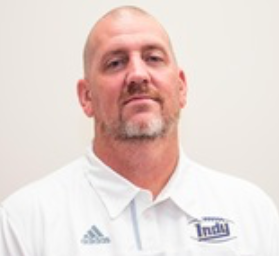
INDEPENDENCE, Kan. (AP) — Jason Brown, the junior college football coach whose program was chronicled in the Netflix series “Last Chance U,” has resigned after an inflammatory series of text messages in which he allegedly told a German player: “I’m your new Hitler.”
Coach Brown photo courtesy Independence CC athletics
Brown said in a statement posted on social media that a story on the texts in the Montgomery County Chronicle made it “nearly impossible to say” at Independence Community College.
The story reported a text exchange between Brown and freshman Alexandros Alexiou, who had posted the messages on social media. In one text message, Brown referred to disciplinary points that the German player had accrued, berated him and said, “I’m your new Hitler.”
School President Dan Barwick said in a statement it was investigating the text messages.
Brown’s team was profiled by “Last Chance U” during the 2017 season and again last season, when the Pirates finished 2-8. That season is scheduled to air later this year.
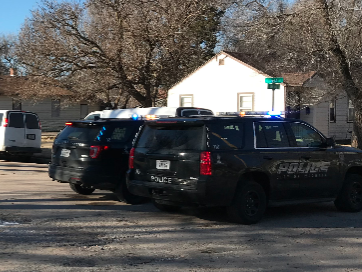
SEDGWICK COUNTY—Law enforcement authorities are investigating a shooting and asking the public for assistance with information.
Police on the scene of Sunday’s shooting investigation -photo courtesy KWCH
Just after 5a.m. Sunday, police responded to report of a shooting in the 1100 Block of South Fern in Wichita, according to officer Paul Cruz. Offices found a 27-year-old victim with in a vehicle with a gunshot wound to the head. EMS transported to man to a local hospital for treatment of critical injuries.
Police are working to determine if the victim was shot someplace other than in the vehicle. They have not released whether or not the victim lives at the address.
Anyone with information on the incident is asked to contact police.
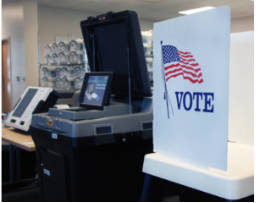
TOPEKA, Kan. (AP) — Kansas lawmakers are considering a proposal that would require election officials to notify voters before they throw out ballots because of problems with signatures.
The proposal comes after last year’s GOP primary for governor between Kris Kobach and then-Gov. Jim Colyer was decided by only a few hundred votes.
Currently, Kansas law allows election officials to throw out ballots with signature problems unless the voter fixes the signature by the end of Election Day.
The proposed law would require election officials to try to notify voters whose write-in ballots are missing signatures before the ballots are counted at county canvass meetings. The change would also apply to voters whose ballot signatures don’t match signatures on file with county offices.
A legislative committee on Friday sent the bill to the Senate floor.
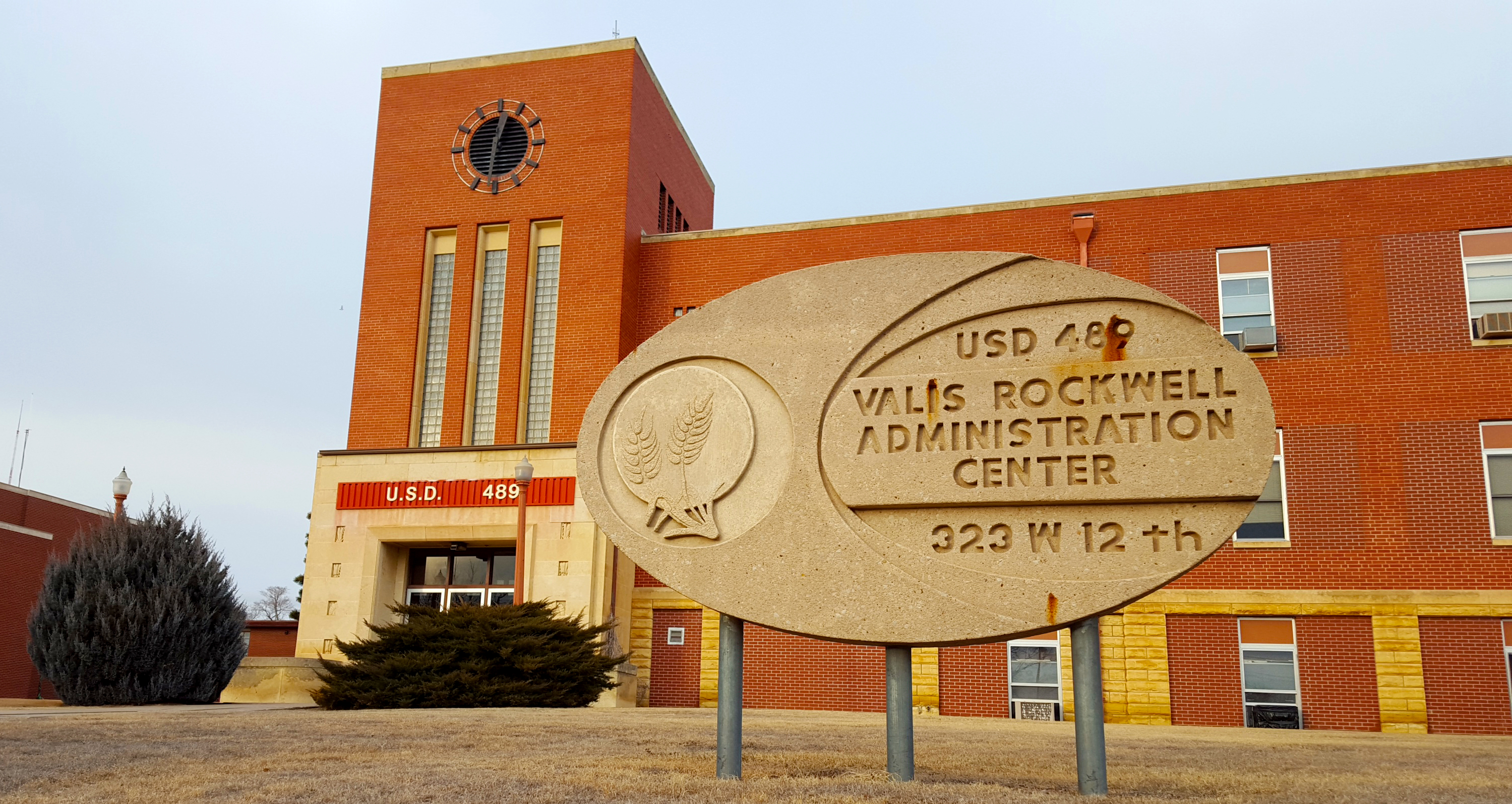
Despite a study on migrating Hays Middle School to Chromebooks next year, the Hays USD 489 Technology Committee is recommending the district purchase more iPads for HMS.
The Hays USD 489 school board will consider the iPad purchase at its meeting tonight.
A cost analysis compared iPads, Chromebooks and a Dell Windows operating system. The windows system was over budget.
The iPads came in at $254,320, and the Chromebooks came in at $317,612. The committee based the estimates on a purchase of 680 iPads with the staff using the machines they have now.
However, a switch to a new platform, would mean 40 more devices would have to be purchased for staff. The committee also took into account that the district would be able to continue to use the software it has now and additional training would not be needed for the iPads.
The iPads also scored higher on potential resale after four years, when the devices will be cycled out of use at the school. The iPads had an estimated resale value of $60, whereas Chromebooks only had a projected resale value of $10 each.
Board members asked the district to study the use of Chromebooks to determine if the devices would be cheaper than the iPads the district is currently using.
The district has a one-to-one policy for computers. Devices are on a four-year replacement plan, which administrators hope will decrease costs and keep budgets more consistent.
Interest-based bargaining
The school board will also consider moving negotiations to a interest-based bargaining system. Board member Paul Adams suggested the change at a recent meeting.
IBB is a collaborative approach to resolving labor and management disputes, according to the Federal Mediation and Conciliation Service. Through the process, parties proactively identify durable solutions to outcomes at the bargaining table. Agreements are based on mutual and individual interests rather than positions.
Kathy Rome, KNEA UniServ director, said the district used IBB in the past, but moved back to position bargaining.
During a recent public comment session with incoming Hays superintendent, Ron Wilson, she said local teachers are interested in going back to IBB.
Wilson is the current superintendent at Heringotn and has used IBB in teacher negotiations there.
Bond work
The district will continue to discuss a future school bond issue.
At the Jan. 28 school board meeting, DLR Group, the district’s architect, along with Nabholz Construction presented a list of possible bond projects totaling $29.4 million. These included finishing air conditioning projects at the Hays High School, expanding the cafeteria at HMS and renovating Roosevelt Elementary School to accommodate five sections of each grade.
The board is set to:
• Designate agents for teacher negotiations.
• Adopt a renewal of the five-year capital outlay resolution. The capital outlay mill levy is now at 8 mills.
• Review the administrative contracts for building-level certified administrators for the 2019-2020 school year.
• Review the proposed 2019-20 school year calendar created by the calendar committee.