We have a brand new updated website! Click here to check it out!

Update: Mueller’s Russia probe report rules out Trump criminal collusion

WASHINGTON (AP) — Special counsel Robert Mueller did not find evidence that President Donald Trump’s campaign “conspired or coordinated” with Russia to influence the 2016 presidential election but reached no conclusion on whether Trump obstructed justice, Attorney General William Barr declared. That brought a hearty claim of vindication from Trump but set the stage for new rounds of political and legal fighting.

page 2
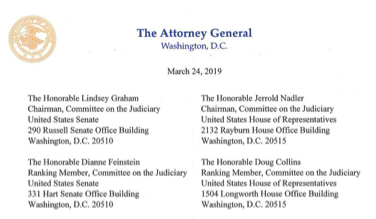
U.S. Attorney General’s letter on the Mueller investigation -courtesy U.S. Dpt. of Justice (click to expand)

Trump cheered the Sunday outcome but also laid bare his resentment after two years of investigations that have shadowed his administration. “It’s a shame that our country has had to go through this. To be honest, it’s a shame that your president has had to go through this,” he said.

page 4

Democrats pointed out that Mueller found evidence for and against obstruction and demanded to see his full report. They insisted that even the summary by the president’s attorney general hardly put him in the clear.


page 3

Mueller’s conclusions, summarized by Barr in a four-page letter to Congress, represented a victory for Trump on a key question that has hung over his presidency from the start: Did his campaign work with Russia to defeat Democrat Hillary Clinton? That was further good news for the president on top of the Justice Department’s earlier announcement that Mueller had wrapped his investigation without new indictments. The resolution also could deflate the hopes of Democrats in Congress and on the 2020 campaign trail that incriminating findings from Mueller would hobble the president’s agenda and re-election bid.

But while Mueller was categorical in ruling out criminal collusion, he was more circumspect on presidential obstruction of justice. Despite Trump’s claim of total exoneration, Mueller did not draw a conclusion one way or the other on whether he sought to stifle the Russia investigation through his actions including the firing of former FBI director James Comey.

According to Barr’s summary, Mueller set out “evidence on both sides of the question” and stated that “while this report does not conclude the president committed a crime, it also does not exonerate him.”

Barr, who was nominated by Trump in December, and Deputy Attorney General Rod Rosenstein, who appointed Mueller in May 2017 and oversaw much of his work, went further in Trump’s favor.

The attorney general said he and Rosenstein had determined that Mueller’s evidence was insufficient to prove in court that Trump had committed obstruction of justice to hamper the probe. Barr has previously voiced a broad view of presidential powers, and in an unsolicited memo last June he cast doubt on whether the president could have obstructed justice through acts — like firing his FBI director — that he was legally empowered to take.

Barr said their decision was based on the evidence uncovered by Mueller and not affected by Justice Department legal opinions that say a sitting president cannot be indicted.

Mueller’s team examined a series of actions by the president in the last two years to determine if he intended obstruction. Those include his firing of Comey one week before Mueller’s appointment, his public and private haranguing of then-Attorney General Jeff Sessions for recusing himself from the Russia investigation because of his work on the campaign, his request of Comey to end an investigation into Michael Flynn, the White House’s first national security adviser, and his drafting of an incomplete explanation about his oldest son’s meeting with a Russian lawyer during the campaign.

Mueller’s findings absolve Trump on the question of colluding with Russia but don’t entirely remove the legal threats the president and associates are facing. Federal prosecutors in New York, for instance, are investigating hush-money payments made to two women during the campaign who say they had sex with the president. Trump’s former personal lawyer, Michael Cohen, implicated Trump in campaign finance violations when he pleaded guilty last year.

The special counsel’s investigation did not come up empty-handed. It ensnared nearly three dozen people, senior Trump campaign operatives among them. The probe illuminated Russia’s assault on the American political system, painted the Trump campaign as eager to exploit the release of hacked Democratic emails to hurt Hillary Clinton and exposed lies by Trump aides aimed at covering up their Russia-related contacts.

Thirty-four people, including six Trump aides and advisers, were charged in the investigation. Twenty-five are Russians accused of election interference either through hacking into Democratic accounts or orchestrating a social media campaign to spread disinformation on the internet.

Sunday’s summary — and its suggestion that Mueller may have found evidence in support of obstruction — sets up a fight between Barr and Democrats, who called for the special counsel’s full report to be released and vowed to press on with their own investigations.

“Attorney General Barr’s letter raises as many questions as it answers,” House Speaker Nancy Pelosi and Senate Minority Leader Chuck Schumer said in a statement.

“Given Mr. Barr’s public record of bias against the special counsel’s inquiry, he is not a neutral observer and is not in a position to make objective determinations about the report,” they said. Trump’s own claim of complete exoneration “directly contradicts the words of Mr. Mueller and is not to be taken with any degree of credibility,” they added.

Trump was at his Florida estate when lawmakers received the report. Barr’s chief of staff called Emmet Flood, the lead White House lawyer on the investigation, to brief him on the findings shortly before he sent it to Congress. Mueller submitted his report to Barr instead of directly to Congress and the public because, unlike independent counsels such as Ken Starr in the case of President Bill Clinton, his investigation operated under the close supervision of the Justice Department.

Barr did not speak with the president, Mueller was not consulted on the letter, and the White House does not have Mueller’s report, according to a Justice Department official.

Though Mueller did not find evidence that anyone associated with the Trump campaign coordinated with the Russian government, Barr’s summary notes “multiple offers from Russian-affiliated individuals to assist the Trump campaign.”

That’s a likely reference not only to a June 2016 Trump Tower meeting at which Donald Trump. Jr. expected to receive damaging information on Clinton from a Kremlin-connected lawyer, as well as a conversation in London months earlier at which Trump campaign aide George Papadopoulos was told Russia had “dirt” on Clinton in the form of thousands of stolen emails.

Rep. Jerrold Nadler of New York, the House Judiciary Committee chairman, said Congress needs to hear from Barr about his decision and see “all the underlying evidence.” He said on Twitter, “DOJ owes the public more than just a brief synopsis and decision not to go any further in their work.”

Barr said that Mueller “thoroughly” investigated the question of whether the Trump campaign coordinated with Russia’s election interference, issuing more than 2,800 subpoenas, obtaining nearly 500 search warrants and interviewing 500 witnesses. Trump answered some questions in writing, but refused to be interviewed in person by the Mueller team.

Barr said Mueller also catalogued the president’s actions including “many” that took place in “public view,” a possible nod to Trump’s public attacks on investigators and witnesses.

In the letter, Barr said he concluded that none of Trump’s actions constituted a federal crime that prosecutors could prove in court.

____

WASHINGTON (AP) — The Justice Department said Sunday that special counsel Robert Mueller’s investigation did not find evidence that President Donald Trump’s campaign “conspired or coordinated” with Russia to influence the 2016 presidential election.

Mueller also investigated whether Trump obstructed justice but did not come to a definitive answer, Attorney General William Barr said in a letter to Congress summarizing Mueller’s report.

The special counsel “does not exonerate” Trump of obstructing justice, Barr said, and his report “sets out evidence on both sides of the question.”

After consulting with other Justice Department officials, Barr said he and Deputy Attorney General Rod Rosenstein determined the evidence “is not sufficient to establish that the president committed an obstruction of justice offense.”

page 2
U.S. Attorney General’s letter on the Mueller investigation -courtesy U.S. Dpt. of Justice (click to expand)

Barr released a four-page summary of Mueller’s report Sunday afternoon. Mueller wrapped up his investigation on Friday with no new indictments, bringing to a close a probe that has shadowed Trump for nearly two years.

Barr’s chief of staff called White House counsel Emmet Flood at 3 p.m. Sunday to brief him on the report to Congress. Trump was at his Mar-a-Lago resort in Florida, about to return to Washington after spending the weekend there.

Mueller’s investigation ensnared nearly three dozen people, senior Trump campaign operatives among them. The probe illuminated Russia’s assault on the American political system, painted the Trump campaign as eager to exploit the release of hacked Democratic emails to hurt Democrat Hillary Clinton and exposed lies by Trump aides aimed at covering up their Russia-related contacts.

page 4
page 3

Mueller submitted his report to Barr instead of directly to Congress and the public because, unlike independent counsels such as Ken Starr in the case of President Bill Clinton, his investigation operated under the close supervision of the Justice Department, which appointed him.

Mueller was assigned to the job in May 2017 by Rosenstein, who oversaw much of his work. Barr and Rosenstein analyzed Mueller’s report on Saturday, laboring to condense it into a summary letter of main conclusions.

Fort Hays State Historic Site ‎Vintage Base Ball Game March 30

Join us for Vintage Base Ball at Fort Hays State Historic Site in Hays!

This game is played with original rules from 1867. The Post Nine from Fort Hays, the Westerns Club from Topeka, and the Colorado vintage base ball teams will face each other in three games. The teams will be wearing uniforms styled from the 1860s to 1880s. An umpire will preside and an interpreter will help explain the rules of the game. There are several differences in vintage base ball from today’s games. Most teammates play without gloves and the ball is softer. No one strikes out, so everyone gets a hit.

All ages are welcome. Games begin at 10 a.m., 1 p.m., and 3 p.m.
10 a.m. – 3 p.m. Saturday, March 30, 2019.

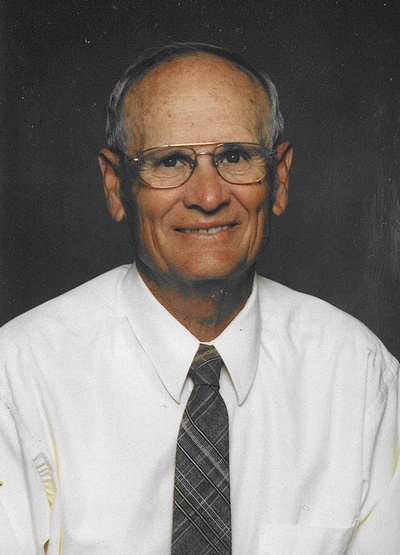
Donald Lynn Ohlemeier

Donald Lynn Ohlemeier, 82, passed away Friday, March 22, 2019, at Great Bend Health and Rehabilitation Center, Great Bend. He was born Nov. 21, 1936, at La Crosse, to Henry and Irma (Lynn) Ohlemeier. Donald married Pat Schwindt June 18, 1961, in LaCrosse, and were later divorced. Donald then married Mary (Spitznagel) Spillar December 19, 1987, at Lawrence.

Don, a longtime resident of Great Bend coming from LaCrosse, was a veteran of the U.S. Army. He was a self-employed carpenter and belonged to the First Church of the Nazarene. Don loved fishing and playing golf, enjoying the challenge that golf presented, especially being proud of his hole-in-one.

Survivors include his wife, Mary of the home; two sons, Doug Ohlemeier and wife Brenda of Tampa, Fla., and Todd Ohlemeier of Leander, Texas; step sons, Bill Spillar and wife Mandy of Leawood, and Steve Spillar of Columbine, Col.; one step daughter, Sharon Spillar of St. Louis, Mo.; one brother, Bill Ohlemeier of Topeka; and six grandchildren, Brandon Spillar, McKenna Spillar, Lindsey Spillar, Riley Spillar, Parker Henzel and Anais Henzel. Also surviving is his Shih Tsu, Tiny. He was preceded in death by three brothers, Merlin Ohlemeier, Marlin Ohlemeier and Gene Ohlemeier; one sister, Janice Lawrence; and long-time canine companion, Danny Boy.

Funeral services for Don will be held at 10:00 a.m. Monday March 25, 2019, at First Church of The Nazarene, 4811 Broadway, Great Bend, with Pastor Josh Foster and Pastor Amy Foster. Interment will follow at Hillcrest Memorial Park, Great Bend, with military honors conducted by the Kansas National Guard Honor Guard. Visitation will be from 1:00 to 9:00 p.m. Sunday, March 26, with the family receiving friends from 6:00 to 8:00 p.m., all at Bryant Funeral Home. Memorials may be given to the Alzheimer’s Association or First Church of the Nazarene, in care of Bryant Funeral Home.

Cloudy, mild Monday

Monday Patchy fog before 8am. Otherwise, mostly cloudy, with a high near 54. North wind 5 to 8 mph becoming east in the afternoon.

Monday Night Partly cloudy, with a low around 38. East southeast wind around 6 mph.

TuesdayMostly sunny, with a high near 65. South wind 6 to 16 mph.

Tuesday NightMostly clear, with a low around 49. Breezy, with a south southeast wind 15 to 20 mph, with gusts as high as 30 mph.

WednesdayMostly sunny, with a high near 76. Breezy.

Wednesday NightPartly cloudy, with a low around 55. Breezy.

ThursdayMostly sunny, with a high near 75.

Kansas woman dead, man hospitalized after head-on crash

GEARY COUNTY — One person died in an accident just after 3p.m. Sunday in Geary County.

The Kansas Highway Patrol reported a 1995 Dodge Ram 2500 driven by Dwight Dean Sharp, 66, Council Grove was northbound on Kansas 177 two miles south of Interstate 70.

The pickup traveled left of center and struck a 2011 Subaru Outback driven by Jacobson, Kayla Marie Jacobson, 31, Alta Vista, head-on.

Jacobson was pronounced dead at the scene and transported to Johnson Funeral Home in Junction City. Life Flight transported Sharp to a hospital in Topeka. Both drivers were properly restrained at the time of the accident, according to the KHP.

Kansas State Fair announces grandstand acts

HUTCHINSON, Kan. — The Kansas State Fair on Monday announced acts for the Nex-Tech Wireless Grandstand concert series.

According to a media release, a Kansas native will kick off the 10-day event. Successful Nashville songwriter Nicolle Galyon, who hails from Sterling, will grace the grandstand stage Sept. 6. In February, she was honored with a Country Music Association Triple Play Award, which honors songwriters who have achieved three No. 1 hits in a one-year period.

Galyon will open for American radio personality and 2018 “Dancing with the Stars” mirrorball winner Bobby Bones, who will perform with his comedy show Bobby Bones and the Raging Idiots.

Meanwhile, longtime country crooner Billy Currington with 11 chart-toppers will perform on Sept. 7.

Contemporary Christian singers Francesca Battistelli and Zach Williams, both with Grammy and Dove awards on their resume, will perform Sept. 11.

The lineup also includes rock band Skillet on Sept. 8 and rising country star Lauren Alaina with Mitchell Tenpenny on Sept. 13.

Tickets go on sale at 8 a.m. Friday, April 5.
.
Residents can snag tickets one day earlier on April 4 by signing up for the fair’s email list at www.KansasStateFair.com.

Prices include gate admission if purchased by Aug. 11.

Hays USD 489 board to discuss HMS computers, capital projects

By CRISTINA JANNEY
Hays Post

The Hays school board will again consider the purchase of new computers for Hays Middle School at its meeting Monday night.

The district’s technology committee has recommended the district buy new iPads for $238,000 as part of a four-year technology replacement plan.

Some members of the school board have advocated for Chromebooks. However, the district Technology Committee in a report determined Chromebooks with the same capabilities as the iPads would cost more than the iPads — $267,048.

Some members of the board asked if the touchscreen capability was necessary.

The Technology Committee went back to the teachers to determine how often they use the touchscreen function and how eliminating touchscreens would affect student learning.

Of the 36 teachers surveyed, 21 of the 36 said their students used the touchscreen function hourly. Thirty-one of 36 teachers said student learning would be negatively impacted by the elimination of touchscreens.

The teachers were then asked to elaborate on how the touchscreens were used in their classes. Many of them said the students took notes or completed assignments by writing or drawing using the touchscreen function.

Capital improvement
The board also will review several capital projects Monday night.

The board is set to vote on Roosevelt and HMS roof bids. The low bid for the Roosevelt roof was $241,298 from High Plains Roofing. The low bid for the HMS roof was $46,120 from Wray Roofing of North Newton.

The HMS project will fix a leak over the cafeteria.

The board will review a plan to add secure entrances at Hays High School and HMS. The district has received more than $86,000 in grants for the project. The district’s portion of these projects is $16,693. The district hopes to have the entrance projects completed this summer.

The projects will funnel visitors through the schools’ offices after the start of the school day.

The board will also review bids for a project to pull wiring for new clock, phone and security camera systems at the high school. The low bid was from Nex-Tech for $129,337.

In other business, the board will:

• Discuss a possible bond issue
• Discuss dissolving the Oak Park Condominium Association
• Discuss the Oak Park Medical Complex tax-exemption application

KC man sentenced for 3-month crime spree, 13 armed robberies

KANSAS CITY – A Kansas City man was sentenced in federal court today for his role in an armed robbery that was part of a three-month-long spree of armed robberies at metropolitan area businesses, according to the United State’s Attorney.

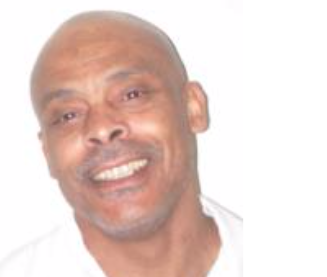
Donald L. Boggess -photo NDC

Donald L. Boggess, also known as “Old School,” 57, was sentenced by U.S. District Judge Brian C. Wimes to 11 years and nine months in federal prison without parole. The court also ordered Boggess to pay $19,796 in restitution, for which he is jointly and severally liable.

On Dec. 19, 2017, Boggess pleaded guilty to the Aug. 30, 2015, armed robbery of a 7-Eleven store at 1701 Independence Ave., Kansas City.

The crime spree, which lasted from July 25 to Oct. 20, 2015, involved 13 armed robberies of businesses in the metropolitan area in which $19,796 was stolen.

Boggess is the fourth and final defendant to be sentenced in this case. Isaac J. Williams, also known as “Dat Flyguy,” 26, of Kansas City, Mo., also pleaded guilty and was sentenced to 11 years in federal prison without parole. Rahnice J. Clay, 25, of Kansas City, Mo., also pleaded guilty and was sentenced to eight years in federal prison without parole. Deitra M. Turner, also known as “Detrix Mob Turner,” 26, of Kansas City, Mo., also pleaded guilty and was sentenced to eight years in federal prison without parole.

During the armed robbery of the metroPCS store at 4513 Independence Ave., Kansa City, Mo., on Aug. 18, 2015, metroPCS robbery, Boggess was armed with a silver handgun while Williams stood by the door looking out. When Boggess demanded money, the sales clerk motioned to the cash register and Boggess opened the drawer, took approximately $2,627, and stuffed it into his hooded sweatshirt pocket. While taking the cash from the drawer, Boggess continued to point the handgun at the clerk and another employee. Williams and Boggess then fled the store and got into the getaway car with the Turner and Clay. All four divided and shared in the proceeds from the robbery.

During the armed robbery of the Phillips 66 gas station at 7531 Troost Ave., Kansas City, Mo., on Aug. 21, 2015, Williams and Turner entered the store, while Clay was at the gas pump as the lookout and Boggess remained in the car, as he was the getaway driver. The cashier was in the middle of a transaction with a customer who had just handed her a $100 bill when Williams pushed the customer out of the way and demanded the money in the register. He then pulled out a silver handgun that was wrapped in a t-shirt and pointed it at her. The cashier opened the cash register and took out all of the cash and placed it onto the counter. Williams grabbed the cash, then he and Turner (who was standing by the door as a lookout) left the store. They got into Boggess’s vehicle and Boggess drove away. The money from the robbery was split equally among the four of them.

Clay admitted that, in two robberies, she entered the store prior to the robbery then left the store when there were no other customers. A short time later, Williams and Turner entered the store. Williams, armed with a handgun, demanded money.

During the armed robbery of the metroPCS store at 723 Southwest Blvd., Kansas City, Mo., on Sept. 11, 2015, Turner grabbed a blue metroPCS bag from the store to put the money in to. The employee handed over approximately $312. Williams and Turner ordered her to the back to unlock the safe, but she was unable to unlock the safe.

During the armed robbery of the GameStop store at 906 Westport Rd., Kansas City, Mo., on Sept. 12, 2015, Turner took one of the employees to the back and collected game systems. The employee stated he handed over approximately $555 and games. Two witnesses outside the GameStop store saw Williams and Turner run to and get into Clay’s red Toyota; Clay, the getaway driver, was already in the car. Williams, Turner, and Clay split the money and video game systems.

Haynes-Jones carries Wichita State past Clemson in NIT

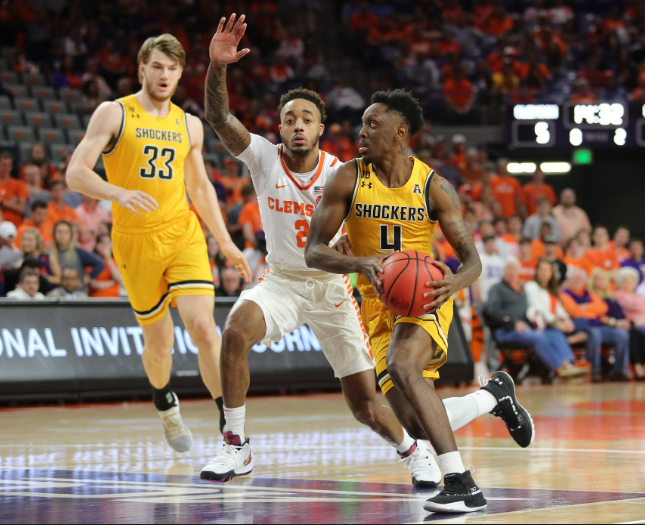
CLEMSON, S.C. (AP) — Samajae Haynes-Jones tallied 10 points and 10 rebounds to carry Wichita State to a 63-55 win over Clemson in the second round of the NIT on Sunday.

Jaime Echenique had 18 points and three blocks for Wichita State (21-14), which has reached 20 wins in 10 straight seasons. Markis McDuffie added 16 points. Dexter Dennis had nine points, 11 rebounds and three blocks for the road team.

Wichita State plays top-seeded Indiana on Tuesday night in the quarterfinals.

The Tigers’ 28.3 field-goal percentage represented the worst mark by a Wichita State opponent this season.

Marcquise Reed had 18 points for the Tigers (20-14). Elijah Thomas added eight rebounds. David Skara had three blocks.

FHSU tennis drops home opener to No. 4 Bronchos

HAYS, Kan. – In their first home match of the spring season, the Fort Hays State women’s tennis suffered a 6-1 loss at the hands of No. 4 Central Oklahoma in Hays. The Tigers drop to 3-5 on the season and 0-3 in MIAA play, while the Bronchos improve to 8-2 overall and a perfect 3-0 in conference battles.

In singles play, the Tigers picked up one win as Ellea Ediger claimed a 2-6, 6-4, 10-8 win over Nikki Boyer. However, Fort Hays State faltered in its other singles bouts. Laura Jimenez-Lendinez fell in a 4-6, 2-6 contest to Isabella Dunlap, while UCO’s Kirtana Bhat claimed a 1-6, 1-6 win over Lauren Lindell. Natalie Lubbers fell 3-6, 2-6 to Paola Landin. Haley Weidemann slipped in a 2-6, 0-6 loss to Alix Williams. Nicole Lubbers rounded out the singles play for FHSU as she suffered a 3-6, 2-6 loss to Jessica Le.

Doubles play went to the Bronchos as they took all three contests. The duo of Natalie Lubbers and Lindell were shutout 0-6 by Adel-Byanu Abidullina and Bhat. Nicole Lubbers and Jimenez-Lendinez were bounded 2-6 by Sarah Van Eeckhoudt and Boyar, while Ediger and Weidemann were defeated 2-6 by the Bronchos duo of Williams and Le.

The Tigers are back in action at home on Monday (March 25) at 10 am as they play host to Northeastern State.

O’Loughlin Elementary students collect change for the ARC Park

USD 489

O’Loughlin Elementary School ambassadors helped lead a service project to benefit the Accessible Recreation Park project, which will allow children and adults with all abilities to play in a new facility that is currently in its fundraising stage.

Ambassadors helped promote the project with signs throughout the school and were able to raise $626 for the ARC Park.

USD 489 is proud of these young students for putting service learning into action.

Suddenly, cost-cutting states turn friendly to teachers

AUSTIN, Texas (AP) — Schoolteacher raises of $5,000 are on the table in Texas — a proposed pay hike that ranks among the biggest in the U.S. since a wave of teacher unrest began last year. But protests aren’t why the money is suddenly available.

Texas hasn’t even had a teacher strike. But as in other GOP strongholds this spring, lawmakers who have spent years clashing with public schools by slashing budgets, ratcheting up testing and cheerleading private schools are blinking in the face of election pressure as much as picket lines.

Rattled by a dreadful midterm election for Republicans — and looking ahead to 2020 — conservative-leaning states including Georgia, Oklahoma and South Carolina are pouring new money into schools. And to ensure it doesn’t go unnoticed, Republicans are making a show of a renewed commitment to public classrooms, courting voters turned off by years of cost-cutting that catered to the party’s base.

Nowhere is this political whiplash more on display than in Texas, where just two years ago conservatives pushed heavily for private school vouchers and restrictions on which bathrooms transgender students could use. That was followed last November by Republicans losing 14 seats in the Statehouse, their worst election in a generation.

To some, the message was clear. Said Republican state Sen. Kel Seliger, quoting a top GOP official “way up” whom he wouldn’t name: “Urban Texas is now blue. Suburban Texas is purple and it’s rural Texas that is still red. And then what does that mean for the future” of the party?

Seliger added, “You’re not hearing anything about a bathroom bill. You’re not hearing anyone utter the word ‘vouchers’ this session. And I think that’s significant.”

A nationwide teacher revolt that began with walkouts in West Virginia in early 2018 is still kicking. In Kentucky, recurring “sickouts” for teacher protests forced schools to cancel classes, and a six-day teacher strike in Los Angeles ended with a 6 percent pay hike and commitment to smaller classes.

Elsewhere, new worries over elections are moving Republicans to act on their own.

In Oklahoma, the state’s new CEO-turned-governor , Kevin Stitt, made giving teachers another pay boost a key plank of his campaign. He’s pushing ahead with an additional $1,200 pay increase for classroom teachers, a year after several Republican opponents of a pay package were ousted in GOP primaries. In South Carolina, a state budget passed by House lawmakers would give all teachers a 4 percent raise and bump the minimum salary for first-year teachers to $35,000. Teachers there have asked for a 10 percent raise.

Public concern about education is growing, said Pat McFerron, a GOP pollster and strategist in Oklahoma. “In a red state where Republicans are in control, it’s going to fall on Republicans.”

Texas is in the middle of the pack nationally in classroom funding for the state’s 5.5 million public school students, and teacher pay is about $7,000 below the national average. In recent years, conservatives have pushed for directing some funding to students attending private and religious schools.

That talk has now gone silent. Republican Lt. Gov. Dan Patrick, who pushed the “bathroom bill” in 2017, is now calling for $5,000 teacher raises, while House Republicans have called for an extra $9 billion for public schools.

“There’s no doubt about it. When Dan Patrick goes from bathrooms and vouchers to, ‘We need to give every teacher a $5,000 pay raise,’ his pollsters are telling him you took a bath with educators this time around,” said Louis Malfaro, president of the Texas chapter of the American Federation of Teachers. “We’re nine seats off from flipping the House.”

Not all Republicans are running scared: Some GOP lawmakers in West Virginia and Arizona have proposed measures that would effectively punish striking teachers, but those bills have had little support. And while governors in at least 18 states have proposed teacher pay hikes this year, elections are not always the driving factor, said Michael Leachman of the Washington-based Center on Budget and Policy Priorities.

For both parties, “you do have a political constituency that supports public schools that reaches deep into the business community, deep into school boards and parent groups,” Leachman said.

Near Austin, Shea Smith brings home about $55,000 in her 10th year teaching in the Del Valle school district. She took a half-day from work to take part in a rally for more funding this month at the Texas Capitol, where some Republican lawmakers stood side-by-side with union leaders.

“I think people are fired up because of the results in November,” Smith said.

Kansas death penalty case has implications for mentally ill

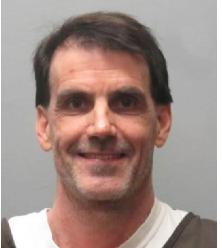
By ROXANA HEGEMAN Associated PressWICHITA, Kan. (AP) — The day after Thanksgiving in 2009, James Kahler went to the home of his estranged wife’s grandmother, where he shot the two women, along with his two teenage daughters.

Kahler-photo Kan. Dept. of Corrections

No one — not even Kahler’s attorneys — disputes that he killed the four relatives. Instead, his lawyers argue that he was suffering from depression so severe that he experienced extreme emotional disturbance, dissociating him from reality.

What had been an open-and-shut death penalty case — Kahler was convicted and sentenced in 2011 — was upended when the U.S. Supreme Court said this past week that it would consider whether Kansas unconstitutionally abolished his right to use insanity as a defense. A ruling from the nation’s highest court could have far-reaching implications for mentally ill defendants across the nation.

Kansas is one of five states where a traditional insanity defense in which a person must understand the difference between right and wrong before being found guilty of a crime isn’t allowed. Instead, someone can cite “mental disease or defect” as a partial defense but must prove that he didn’t intend to commit the crime. The other states with similar laws are Alaska, Idaho, Montana and Utah.

“A favorable decision in this case would make it clear that the Constitution requires that a defendant be able to understand the difference between right and wrong before being found guilty, and, in cases like Mr. Kahler’s, put to death,” his defense attorney, Meryle Carver-Allmond, said in an email.

Kahler’s lawyers argued in their petition to the Supreme Court that although Kahler knew that he was shooting human beings, his mental state was so disturbed at the time that he was unable to control his actions.

“We’re hopeful that, in taking Mr. Kahler’s case, the United States Supreme Court has indicated a desire to find that the Constitution requires better of us in our treatment of mentally ill defendants,” Carver-Allmond said.

The state argues that it hasn’t abolished the insanity defense, just modified it.

“We think the state’s approach, providing for an insanity defense based on mental disease or defect, satisfies constitutional requirements,” Kansas Attorney General Derek Schmidt said in an emailed statement. “We look forward to defending the statute and arguing our case before the Justices in the fall.”

Kahler was in the middle of a contentious divorce when he went to Dorothy Wight’s home in Burlingame, where his wife, Karen, and three children were spending the Thanksgiving holiday amid contentious divorce proceedings. He found Karen in the kitchen and shot her twice, then shot Wright and his daughter Emily in the living room. He found his daughter Lauren in an upstairs bedroom. His son, Sean, fled to a neighboring house.

Sherrie Baughn, executive director of the Kansas chapter of the National Alliance for Mental Illness, said her organization opposes execution of individuals who have a serious mental illness or mental disability when committing a crime.

“I am happy that they are looking at it and reviewing this,” Baughn said of the Supreme Court decision to take up the Kansas case. “Despite constitutional protections, the death penalty is still somewhat applied to people with mental illness or mental disabilities.”

It is unclear how often an insanity defense would be used in Kansas, because the state hasn’t really had one for so many years now, Carver-Allmond said. Without the option, seriously mentally ill defendants are often left to go to trial with little-to-no defense or forced to plead guilty on bad terms.

Copyright Eagle Radio | FCC Public Files | EEO Public File