GREAT BEND – Adams, Brown, Beran & Ball, Chtd. (ABBB) is pleased to announce that the firm has been recognized as a Midwest Regional Leader by Accounting Today.
ABBB is one of three firms headquartered in Kansas named as a Regional Leader. The Midwest Region is comprised of firms in Iowa, Kansas, Minnesota, Missouri, Nebraska, North Dakota, and South Dakota. This region accounted for $1,650.38 million in total revenue. Firms in the Midwest averaged 8.30% growth.
“It is truly an honor to be recognized among this group of leading accounting firms,” said Brian Staats, CPA, CGMA, managing partner of ABBB. “This recognition is made possible by our incredible team and clients!”
Adams, Brown, Beran & Ball, Chartered provides a wide range of traditional and non-traditional CPA and consulting services to clients throughout Kansas, including agriculture organizations, construction companies, feed yards, financial institutions, governmental and not-for-profit organizations, manufacturers, medical practices, oil and gas companies, professional service firms, real estate companies and small businesses. Founded in 1945, today the firm maintains 13 office locations throughout the state.
For more information about Adams, Brown, Beran & Ball, please visit www.abbb.com.
DOUGLAS COUNTY — Law enforcement authorities are investigating a Friday shooting in Lawrence that sent two teenagers to the hospital.
Just after 4p.m. police were dispatched to 2700 West 27th Street, Holcom Park Recreation Center in Lawrence in response to a reported shooting, according to a media release.
EMS transported two male victims, ages 16 and 18, from the scene to area hospitals. The 18-year-old victim was reported in critical condition with potentially life-threatening injuries, and the 16-year-old victim in serious condition.
Witnesses at the scene gave officers a description of a possible suspect vehicle. Police located a vehicle matching the witness description shortly afterward and two persons in the vehicle were detained for questioning and then police arrested 17-year-old Benson J. Edwards Jr. and 17 year-old Sahavione K. Caraway both of Topeka. Both were booked into the Juvenile Detention Center on aggravated robbery charges. Both victims remain hospitalized Saturday, according to police.
Findings validate voluntary conservation efforts in northwest Kansas
MANHATTAN – When a group of farmers in northwest Kansas decided to voluntarily reduce their use of groundwater, no one really knew how that might affect their profitability.
Five years later, they have an answer.
In what can be considered a win for agriculture, Kansas State University agricultural economist Bill Golden is reporting that when farmers in the Sheridan County No. 6 Local Enhanced Management Area reduced water use by 20 percent, they actually made more money on their crops.
“There’s no two ways about it: What this has shown is that producers can reduce water use; they can slow the decline of the aquifer; and they can do this while making healthy profits,” Golden said.
A LEMA is a producer-driven conservation program in which farmers form a contract with the Kansas Division of Water Resources to voluntarily reduce their use of water. The agreement can be for any amount of time and include whatever goals the farmers want.
In the case of the Sheridan No. 6 LEMA, the farmers decided to reduce water use by 20 percent for five years. That agreement meant that the farmers were agreeing to an allocation of 55 inches of water per acre over a five-year period. In dry years, they might use a little more, or perhaps a little less in years when it rains more.
“What we saw is that they reduced corn acres, and when they did that, they also reduced the amount of water they were using on those corn acres,” said Golden, adding that many farmers instead increased irrigated wheat and grain sorghum acres.
Overall, the LEMA reported a decrease in groundwater use of 23.1 percent. Golden noted that a hydrology study done through the Kansas Geological Survey indicated that the decline rate of the Ogallala Aquifer in the area of the LEMA went from two feet per year to less than a half foot per year.
At the same time, producers reported greater profits due to less inputs and increased management.
“What we are seeing is that producers reduced fertilizer and seeding rates, and they have increased what I will call management,” Golden said. “Increasing management is hard to get a handle on, but when I talk to these guys, what they tell me is, ‘Bill, where we used to water, if we thought the crop needed water, today we look ahead four or five days and we ask is it going to rain or is it not going to rain. If we think it’s going to rain, we don’t water.’”
Producers inside the LEMA reported 4.3 percent more cash flow than their higher-yielding counterparts just outside the LEMA. Complete data is not available for crops other than corn, but Golden suspects that the trend will be very similar.
Another surprise finding – and one that may encourage producers to consider this approach in the future – is that the water that producers save remains available to them later on.
A related hydrology study “has shown that the water that the producers are saving is staying under their property,” Golden said. “And that’s important for producers to realize that whatever they save today, they get to use that water at some point in the future.”
Golden said the study relied on self-reported data from producers. The LEMA was monitored from 2012 through 2017, and the arrangement worked so well that the farmers applied to the Kansas Division of Water Resources to extend the project an additional year.
“That tells you something about how effective the LEMA has been for irrigation conservation and its effects on producer’s economic returns,” Golden said.
Golden’s full report is available online through the K-State Department of Agricultural Economics, located at AgManager.info. The work was completed with assistance of the Kansas Geological Survey and the Kansas Division of Water Resources, in addition to other local partners.
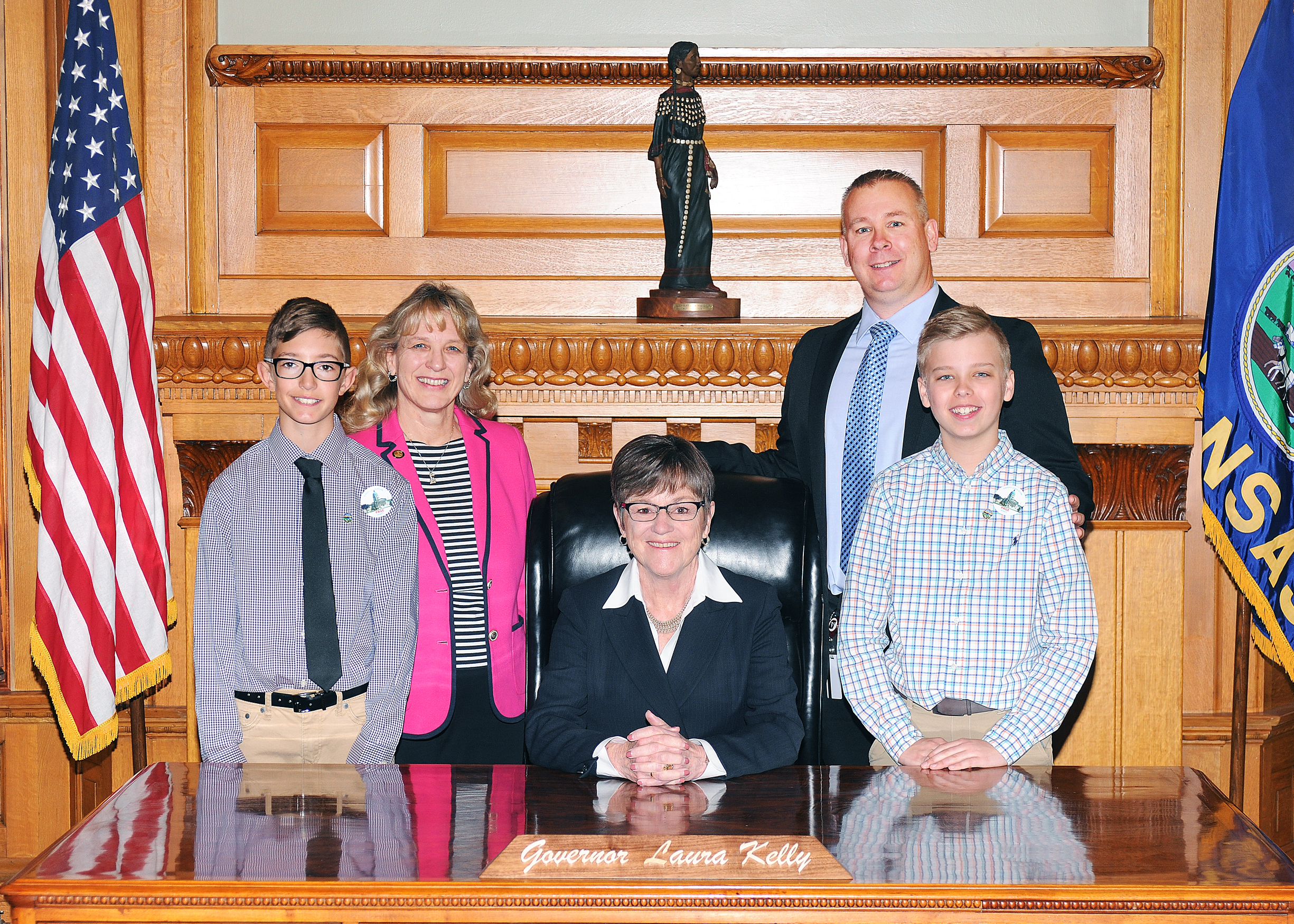
TOPEKA – Lewis VanMeter and Payton Breese of Concordia served as pages for 36th Dist. Senator Elaine Bowers (R-Concordia) in the Kansas Senate on March 21, 2019.
Pictured here with Governor Laura Kelly, Senator Bowers, and Quentin Breese, they spent the day taking a Dome Tour, attending committee meetings and running errands for the Kansas Senate.
Elaine Bowers, R-Concordia, is the 36th Dist. state senator and serves as the Senate Majority Whip. The 36th Senate District includes Cloud, Jewell, Lincoln, Mitchell, Osborne, Ottawa, Republic, Rooks, Russell, Smith and Washington counties and portions of Marshall and Phillips counties.
OAKLEY — Switchback is the award-winning duo of Brian FitzGerald and Martin McCormack. Switchback draws on traditional Celtic music and original Americana songs that reflect their Irish heritage and Midwestern roots. Western Plains Arts Association will present Switchback, Sunday, April 7, at 3 p.m. at the Oakley High School Auditorium. Admission is by WPAA season ticket or is $10 adults, $5 students at the door.
Playing an exciting mix of mandolin, guitar, and bass, their harmonies have won them comparisons to famous duos, such as the Louvin Brothers, Everly Brothers, & Simon and Garfunkel. Music Connection Magazine said: “The words ‘American Roots & Celtic Soul’ only begin to describe this unusual act, whose vocal prowess is as pure as it is unique. There is no denying the stunning vocal blends that are achieved by this duo.”
Their Celtic music is authentically Irish, drawing praise from such traditional players as Matt Molloy of the group the Chieftains. Ireland has taken Switchback to her heart, with performances at art centers throughout the country and appearances on RTE (Raidió Teilifís Éireann). At the same time, their music is modern Celtic, with songs capturing the Irish of today as accurately as the Pogues and singer-songwriters like Christy Moore.
But to pay attention only to the Celtic side of Switchback would be a disservice to the unique American roots music crafted by FitzGerald and McCormack. None other than the Grammy Award-winning producer Lloyd Maines chose to work with Switchback in producing three of their albums and considers the duo one of the most important acts playing Americana music today.
Switchback tours throughout the United States, Canada, Ireland, the United Kingdom, Italy, and the Netherlands playing over 200 engagements a year. Their television specials “The Americana Sessions”, “The Celtic Sessions” and “Music on the Mayne Stage” have aired on PBS stations throughout the U.S. The band has also been working with Paul Mertens (who arranged the music for “Brian Wilson Reimagines Gershwin”) on orchestral scores for some of their original music.
On top of their usual tour schedule, Switchback regularly presents outreach programs for schools, community events, senior citizen groups, and special needs audiences. They offer outreach programs on Celtic music, songwriting, and music appreciation as well as music residencies.
Unusual, honest, heartfelt, humorous, personable, talented, spiritual, and spirited – these all describe the band Switchback.
Visit Switchback’s website at waygoodmusic.com for information about their music and photos. Switchback has created over 15 albums to date, as well as three PBS specials and concert DVDs.
Grievances generated by policy and personality clashes in a southeast Kansas community have spilled onto the statewide stage in the battle over Democratic Gov. Laura Kelly’s nominee to head the state Department of Commerce.
David Toland at a Thrive Allen County event. He served as the economic development group’s CEO and critics have used that to attack his nomination to be the next Kansas secretary of commerce. FILE PHOTO / THE KANSAS NEWS SERVICE
David Toland often found himself at odds with Virginia Crossland-Macha when he was the CEO of Thrive Allen County, a community health-improvement and economic development organization based in Iola.
Crossland-Macha is the daughter of the late Ivan Crossland, founder of Crossland Construction, one of the nation’s largest general contractors. She is also the newly elected vice-chair of the Kansas Republican Party and she’s been working behind the scenes to scuttle Toland’s nomination.
The intensity of the battle has rattled many in the town of approximately 6,000, said John McCrae, a former mayor and current president of Iola Industries, a business development group.
“They’re kind of stunned that Virginia is leading the charge against the hometown boy who has done so much and so well,” McRae said.
They’re also stunned, McRae said, that abortion has now become an issue in the confirmation fight that was already complicated by Toland’s flippant jibes at prominent Republicans.
On Monday, Kansans for Life, the state’s most powerful anti-abortion organization, charged in a letter to senators that Toland was unfit for the commerce post because of his “ties” to the late Wichita abortion provider George Tiller.
“It is unconscionable that anyone wishing to sit in the governor’s Cabinet would be part of honoring the legacy of an individual who took so many innocent lives,” KFL said in the letter.
The connection consists of two small grants Thrive Allen County obtained from a memorial fund established after Tiller’s murder in 2009. Neither paid for abortion services.
The first, a $9,380 award received in 2015, went mainly to fund a campaign to reduce the smoking rate among pregnant women in Allen County. The grant application pegged that rate at the time at “an astounding 26.1 percent.”
The second was a $10,000 grant awarded in 2018 that Thrive immediately transferred to the SEK Multi-County Health Department based in Iola.
“It arrived one day and exited the next,” said Lisse Regehr, Thrive’s incoming CEO.
The money funded a health department program to curb the incidence of premature and low-birth-weight babies.
She said that using those grants to the organization to connect Toland to abortion politics shows that Crossland-Macha and Republican legislative leaders are “desperate” to “take him down.”
“It’s a personal vendetta,” she said. “It’s despicable.”
Crossland-Macha didn’t return multiple calls or texts seeking comment. But she said in a recent email to McRae, a longtime friend, that she opposes Toland’s politics and his attempts to punish her and other Iola business owners who spoke out against Thrive initiatives.
Thrive’s successful campaign to raise the legal age for purchasing tobacco products in the city from 18 to 21 was among the examples of recrimination cited by Crossland-Macha in the letter. She said the truck stop that she and her husband, Larry, own lost $100,000 in sales during the first month of the new policy.
The truck stop owned by Virginia Crossland-Macha, a Kansas Republican Party official, that lost business when Allen County raised the age for tobacco purchases.
CREDIT THRIVE ALLEN COUNTY
“This was my punishment from David,” Crossland-Macha wrote. “What a great way to silence … a critic.”
At one point, a harassment campaign directed at Toland prompted him to call the Iola police. They questioned a handful of people who Toland suspected were producing and distributing leaflets attacking him and his family. The investigation didn’t result in any charges but it did stop the harassment, according to the report.
McRae, a lifelong Republican who served 12 years as mayor, said he believes most Iola residents who know something about the battle are backing Toland because his of work to transform the community. Under his leadership, McRae said, Thrive facilitated public-private partnerships to develop a new apartment complex, recruit a new grocery store and build miles of hiking and biking trails.
“Mr. Toland’s version of economic development has displaced local small businesses and jobs in Iola,” she told The Topeka Capital-Journal.
Crossland-Macha and various companies under the Crossland Construction umbrella contributed $52,000 to the political action committee of the Kansas Chamber shortly after Kelly was elected governor. The Chamber mostly backs Republican candidates.
McRae said politics are at the root of the battle over Toland’s nomination.
“David is an incredibly talented young man,” he said. “And I think he’s probably seen as a future legislator, a future governor and part of the motivation is to cut him off at the ankles.”
In addition, McRae said he believes GOP leaders are “trying to slap Governor Kelly in the face.”
“As a Kansan who supports whoever our governor is, I’m sick of it,” he said.
Some of Toland’s problems with Republicans also come down to political missteps. In a 2018 social media post intended to draw attention to a sleep study, Toland joked that former Republican Gov. Sam Brownback and sitting GOP Sen. Caryn Tyson kept him up at night.
“He said I’m one of his biggest nightmares,” Tyson said in an interview, “so it was a personal attack.”
Even so, Tyson said, other factors will determine her vote on whether to confirm Toland to Kelly’s cabinet.
“It would be nice to have some representation from southeast Kansas,” she said, emphasizing that she hasn’t yet made a decision.
Sen. Dennis Pyle, a Republican from Hiawatha, said if the vote had occurred Monday, he would have voted for Toland’s confirmation. Then came objections from anti-abortion activists.
“Now,” Pyle said, “I don’t think I can.”
Meanwhile, Kelly’s office orchestrated letters of support for Toland from across the state.
In a joint letter, the directors of the chambers of commerce in Manhattan, Emporia, Topeka and Lawrence said Toland’s experience in both urban and rural settings “make him the ideal candidate to take Kansas’ business development to the next level.”
Before returning to his native Iola to take the helm at Thrive Allen County in 2008, Toland directed planning for the mayor of Washington, D.C., and later headed development and planning for a real estate firm that specialized in transforming blighted areas of the city.
By all accounts, the vote on his confirmation, expected next Monday, will be close.
FHSU Science Café Presents: “Artificial Intelligence and the Future of Humanity”
Monday, April 1; 7:00 p.m.
The Venue @ Thirsty’s, 2704 Vine Street, Hays, KS 67601
Presenter: Dr. Nicholas Caporusso, Assistant Professor, Informatics, FHSU
Sponsored by Science and Mathematics Education Institute
Free and Open to public
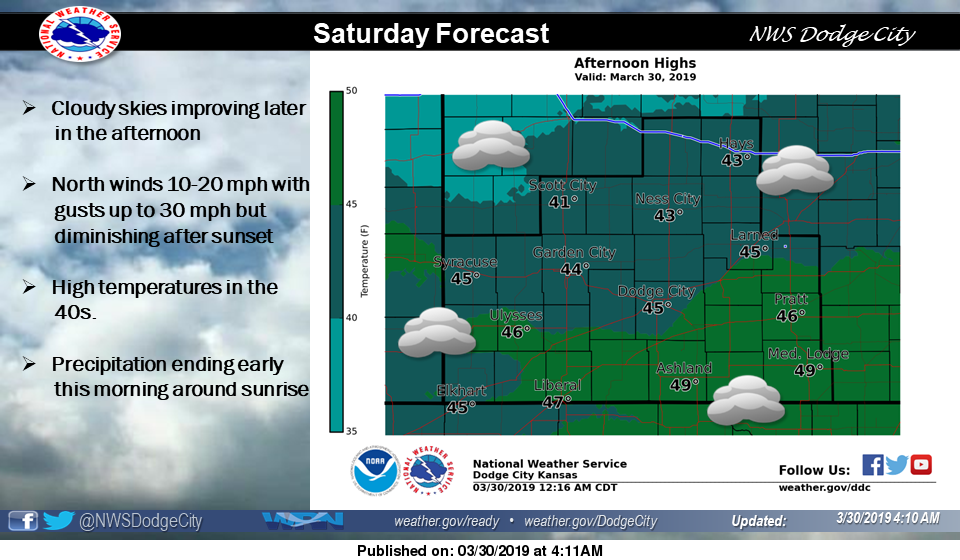
Today A chance of snow or flurries before noon, then a chance of flurries between noon and 2pm. Cloudy through mid morning, then gradual clearing, with a high near 42. Windy, with a north wind 23 to 25 mph.
Tonight
Clear, with a low around 20. North wind 13 to 18 mph decreasing to 5 to 10 mph after midnight.
Sunday
Sunny, with a high near 52. Southwest wind 5 to 8 mph.
Sunday Night
Mostly clear, with a low around 30. South wind 5 to 7 mph.
Monday
Sunny, with a high near 61. South southwest wind 6 to 11 mph.
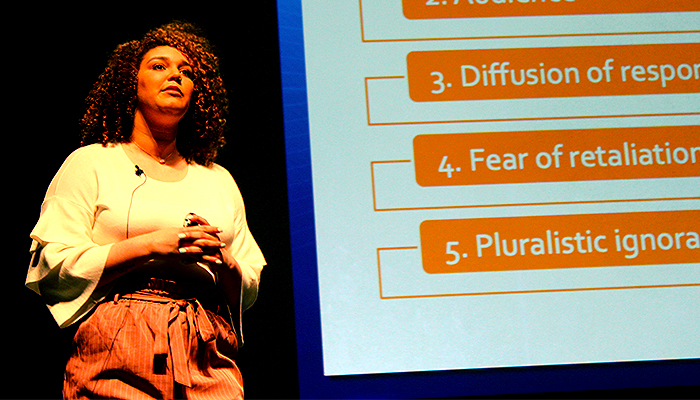
Jetta Smith, Fort Hays State University senior, spoke during “The Power of She” on bystander intervention in gender violence.
Jetta Smith, Fort Hays State University senior, organized an event Thursday on the FHSU campus, “The Power of She,” in which lecturers spoke on preventing gender violence, finding equality in the work world and encouraging women to be their best selves.
Smith, a communications major, is the reigning Miss Butler County and has logged more than 1,000 community service hours in the last year.
Her platform is to raise awareness of gender violence, especially through empowering bystanders to intervene.
Smith said the idea for the “Power of She” came to life after a very heated discussion over who was the best super hero. Smith insisted that it was the modern-day woman.
“The modern-day women has the ability to empower, encourage and enlighten millions of people around her,” she said. “So why do we as women silence ourselves and not use our ability to our full potential? I hope today when you leave this presentation you are enlightened, encouraged and empowered to speak up, to speak out and to know that your voice has power.”
A bystander can step in and prevent an act of gender violence from happening, can prevent an outcome as well as deal with an outcome, said Smith, who herself is a survivor of sexual assault.
Sixty-six percent of all violent crimes happen in front of a bystander, and bystanders are present during 29 percent of all acts of sexual violence.
“It can be something as simple as body language and you see something happening and you make eye contact from across the room, crossing your arms, changing your body language,” she said. “As a communication major, that was something that I took on instantly.”
A bystander can distract or interrupt, such as spilling a drink if you see someone in an uncomfortable situation with a person of the opposite sex.
“Choosing not to laugh at a joke … Intervention is not always about confrontation,” she said. “It can be the simplest things such as movement or body language or just saying, ‘Hey, that wasn’t funny.”
There are four stages of intervention: notice the event, interpret it as a problem, feel responsible for dealing with it and possessing the necessary skills to act.
Smith explained our personal biases may affect our choice to intervene. She described a recent video she watched on Facebook.
A man dressed in rags was lying in the street. No one stopped to help him. When the same man dressed in a suit re-enacted the scene, people rushed to his aid.
“Why are we afraid to step in when we know we can?” she wondered.
Smith said there are a variety of reasons people choose not to intervene. These can include social influence, audience, diffusion of responsibility, fear of retaliation, or ignorance. Some examples of this could be a fear you might not be thought of as cool; shyness or fear of bringing attention to yourself; and the rationalization that someone else will intervene.
Smith related an instance she wished had intervened during her first year at FHSU. She was at a bar and she noticed a young women who was being pressured by a man. She said she could tell by the woman’s body language she was definitely not interested, but he was overly interested.
“All I had to do was sit at that bar and turn, and say, ‘Girl, I haven’t seen you forever!’ I have never seen this girl in my life. All I have to do is that simple thing, give her hug, the guy gets the hint and he walks away,” Smith said.
All you need is your voice and your body to intervene.
“The Golden Rule is to only intervene when it is safe for you to do so,” she said. “If it is not safe and an emergency, dial 911, call campus security, call another friend over. That way it is not just you in a one-on-one intervention.”
When Smith was a freshman and a sophomore, she was a student athlete. She used her influence to promote parties or trips with her friends.
“When the situation flipped and I became a victim of sexual assault, I didn’t think my voice mattered any more,” she said. “I did know I had a voice. But in reality that same voice I was using to promote those parties and whether we were going to Hays or not was that same voice that could have been promoting that one in three women will be victims of sexual assault.”
Power of she in the workplace
Dr. April Park, associate professor, spoke on disparities between the genders in her field of psychology. Behind her is a picture of her with her mom.
Dr. April Park, associate professor, spoke on disparities between the genders in her field of psychology.
When Park came to the United States to study psychology, more than half of her classmates were women. However, that has not always been the case.
In 1970, only 20 percent of the PhD recipients were women. Now it is more than 70 percent. The trend has been a increase in white women, and, to a degree, minority women receiving doctorates in psychology.
Despite these increases, the profession has not seen a correlating increase in the number of women in tenure positions on college campuses or in leadership positions in the field.
At the lecturer level, there are more women, but those numbers decrease as you move up in the academic ranks. Less than 30 percent of full professors in psychology are women.
Among the American Psychological Association’ more than 130 presidents, there are only 11 women. Of those 11, eight of them have been elected in the past 10 years.
Pay gaps are also found in the field of psychology. At a two-year university as of 2010, female employees made 80 percent of what male employees earned.
“What was a little bit more disturbing to me was that trend wasn’t really reducing, but it was actually widening in the past years,” Park said.
She said the culture and tradition in the tenure process plays a role. The makeup of the tenure committees and the leaders in the departments tend to be men.
“Also if you think about the high demands of the job to reach a full professor rank and you think about the work that has to be done in the house, and if women can’t find a good and work life balance, that is going to put them at a disadvantage,” she said.
APA is recommending women advocate for gender wage equity, encourage policies for salary transparency and promote leadership skills in women.
One factor research has determined that contributes to lower pay for women was a lack of salary negotiation skills.
“When you first get a job, the base salary is going to be very important because all of the additional bonuses you get and incentives you get will be proportionate to the base salary,” Park said. “If you are not making an equitable base salary compared to a man, then you are going to have a hard time reducing that gap.”
Park said she also thinks having a mentoring system for women is important.
With her own students, she tries to encourage them, but also urges them to readily accept encouragement.
“The female students I work with are very, very strong, they are so extremely talented, but when I encourage them, ‘Hey you are doing a good job, just keep on doing that,’ a lot of times they will say, ‘I don’t think I did it enough or I don’t think I did it good enough.”
She also encourages students to get involved in organizations and take responsibility for their actions.
“But as you do so be very gracious to yourself and other people,” she said.
‘It’s your deal’
Dr. Teresa Clounch, FHSU assistant vice president of student affairs and compliance, spoke to a group Thursday on how she dealt with the death of her father.
Dr. Teresa Clounch, FHSU assistant vice president of student affairs and compliance, spoke to the group on the theme, “It may not be ideal, but it’s your deal.”
Clounch first gave this advice to a student who was asking for guidance about taking a job after graduation. The student was unsure if the job would be right for her.
Clounch found a few years later she was saying this to herself.
Only about a month after Clounch moved to Hays to take her position at FHSU in 2017, her father died.
“Understand while I was stricken with grief and thought someone who was such an integral part of my life, from whom I get my good looks and great sense of humor, has now left this world. Now I am in a new place, where people just barely know who Dr. TLC is. I go back into my mind when I think about that spring of 2013 when I told that student who was ready to graduate and step into a new chapter of her life, ‘This may not be ideal, but it is your deal.'”
She had to look at a world without her father in it.
“I looked for support from my family, my siblings, neighbors, my new colleagues her at Fort Hays State, my sorority sisters and everyone who was willing to provide me support,” she said.
Clounch said it was difficult for her to take support because she is a proud person.
“Yet, I knew at this point in time, at a new place and being four and half hours away from my family, while this was not ideal, it was my deal to work with,” she said.
She created a new support system.
“I also realized I needed to encourage others in this process,” she said. “I did that for my family; I did that for the friends who were near by. I did that for my colleagues because someone else had gone through what I was getting ready to go through.”
HAYS – A 24 year-old Hays woman has been charged for her alleged role in a homicide in Hays last month.
According to Ellis County Attorney Tom Drees, Kylie Jo Waldschmidt was charged Friday afternoon in Ellis County District Court with aiding and abetting felony first degree murder with the alternative charge of aggravated assault or aggravated battery.
Drees said the charges are off-grid felonies and carry a mandatory sentence of 25 years in prison if convicted.
The charges stem from Waldschmidt’s alleged involvement in the shooting death of 26 year-old Diego Gallaway on Feb. 27 in the 2700 block of Indian Trail.
Waldschmidt was also charged with felony interference with law enforcement.
She is currently in the Ellis County jail in lieu of bond.
Thirty-four-year-old Ryan Paul Thompson was charged earlier this month with premeditated first-degree murder in Gallaway’s death.
DENVER — WildEarth Guardians (WEG) and the Prairie Dog Coalition of the Humane Society of the United States this week released a tool for communities interested in creating prairie dog management plans, preventing conflict, and conserving these keystone species.
The guide covers everything from prairie dog ecology, to the role of state and federal agencies in conserving prairie dogs, to the components of a conservation plan. It also covers barrier installation and best practices for relocation. The guide is intended for local governments and stakeholders.
“Prairie dogs are a key part of the prairie ecosystem,” said Taylor Jones, endangered species advocate for WildEarth Guardians. “This guide provides communities with the tools they need to protect wildlife and wild lands by protecting prairie dogs.”
“For years, concerned citizens and wildlife managers have asked for a next step to manage prairie dogs to reduce conflict and offer non-lethal options. This is that document,” said Lindsey Sterling Krank, director of the Prairie Dog Coalition of the Humane Society of the United States. “We were fortunate to have assistance from Pam Wanek, who is a fourth generation Coloradoan and prairie dog expert who contributed significantly to the work.”
Prairie dogs are one of the most controversial and widely misunderstood native wildlife species in North America.
Since early European migration onto the North American grasslands, prairie dogs have been celebrated as an essential keystone species for healthy grasslands ecosystems, but also vilified and in some locations managed as destructive rodent pests. Human-caused threats stemming from crop agriculture, livestock grazing, energy development, residential and commercial development, prairie dog shooting, poisoning campaigns and plague (an introduced disease) have caused the five species of prairie dogs to disappear from an estimated 87 to 99 percent of their historic range, depending on the species.
Prairie dogs are a key species to nine other species, such as hawks, owls, foxes and ferrets, and many others depend on prairie dogs for food, or their burrows for shelter. “If we want all these Great Plains species to survive, we need healthy prairie dog populations,” Jones said.
Since most species of prairie dog are not protected under federal or state law, local communities can play an important role in prairie dog conservation by including prairie dogs in their planning processes. The guide introduces many options for non-lethal management, including advanced planning, development agreements, barrier installation and relocation.
“Every acre of prairie dog towns conserved is a win for these social and intelligent animals,” concluded Jones.
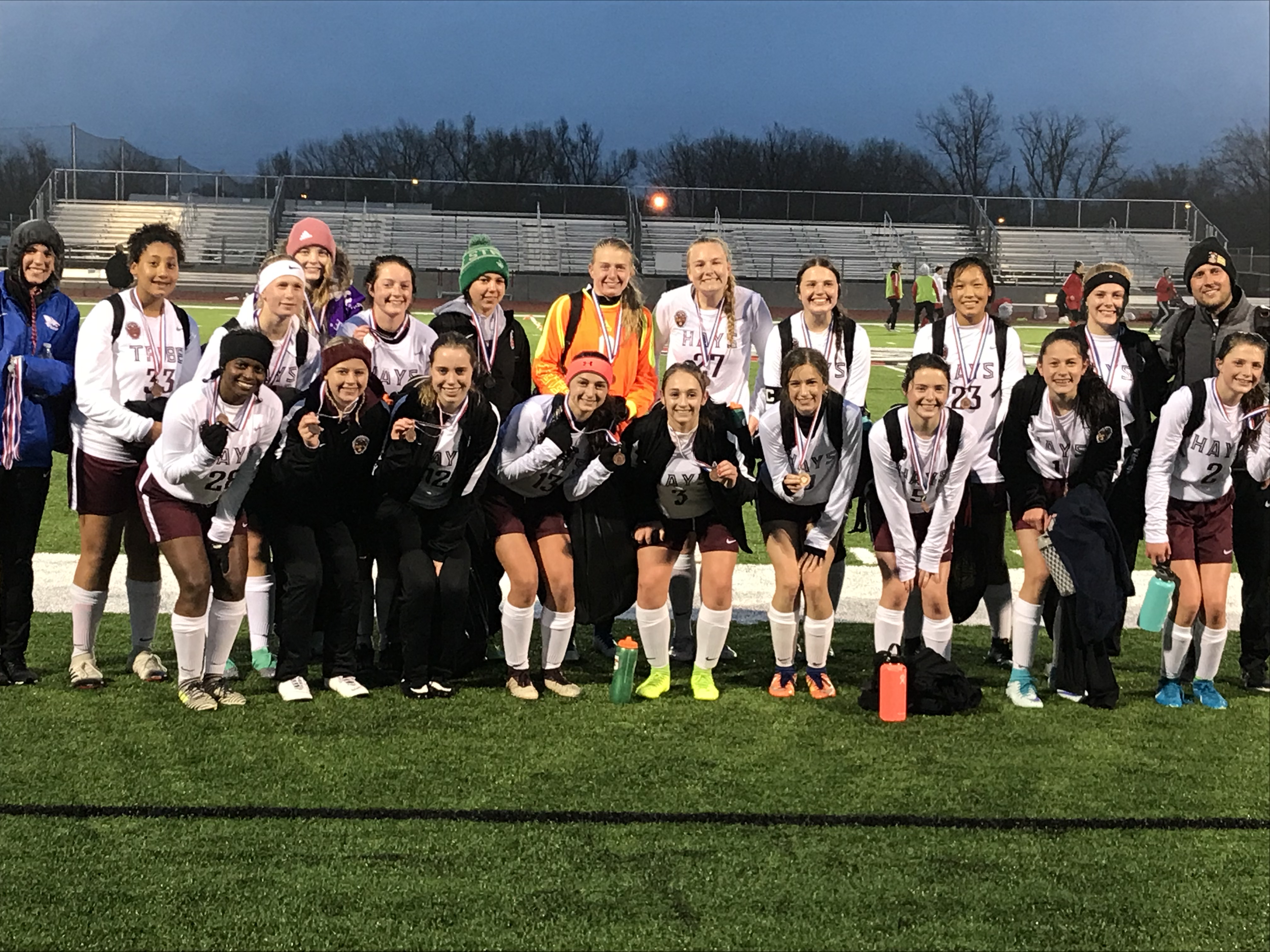
McPHERSON, Kan.-A year ago at this time Caroline Robben was playing middle school soccer and leading her team to an undefeated season. In 2019 the freshman has changed uniforms and is helping the Hays High Lady Indians soccer team off to a strong start. Friday night in McPherson she continued her hot start against Andover Central in the 3rd place game of the McPherson Invitational.
The two teams played to a scoreless tie in the first half and it looked like a game that was destined for overtime. Enter Robben. In the 76th minute she wound up from 35 yards out and sent a shot on the line that found the upper right corner of the net to put Hays High up 1-0.
Andover Central would have a great chance to tie late but Isabel Robben made a lunging save to keep the ball out of the net and defender Sophie Humphrey was right where she needed to be to clear the loose ball away from the goal. The Jaguars would not threaten again as Hays picked up the 1-0 win to finish third.
Caroline and Isabel were both named to the all tournament team. The Lady Indians improve to 3-1 on the season and will travel to Dodge City on Tuesday to open up Western Athletic Conference play.

 ABBB
ABBB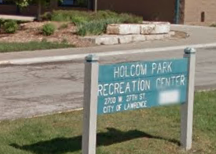











 Today
Today