We have a brand new updated website! Click here to check it out!

Kansas man dies after 2-vehicle Hodgeman Co. crash

HODGEMAN COUNTY —One person died in an accident just after 11:30a.m. Monday in Hodgeman County.

The Kansas Highway Patrol reported a 2008 Chevy Impala driven by Aaron Christopher Shelton, 27, Jetmore, was west bound on Kansas 156 six miles east of Jetmore.

The Chevy traveled left of center and struck an eastbound 1994 Ford truck driven by Barbara Cossman, 59, Jetmore. After the collision, the Chevy spun off into the north ditch and came to rest on its top.

Shelton was pronounced dead at the scene and transported to Beckwith Funeral Home. Cossman was not injured and not wearing a seat belt, according to the KHP.

Philop delivers walk-off hit to five Tiger softball sweep with Pitt State

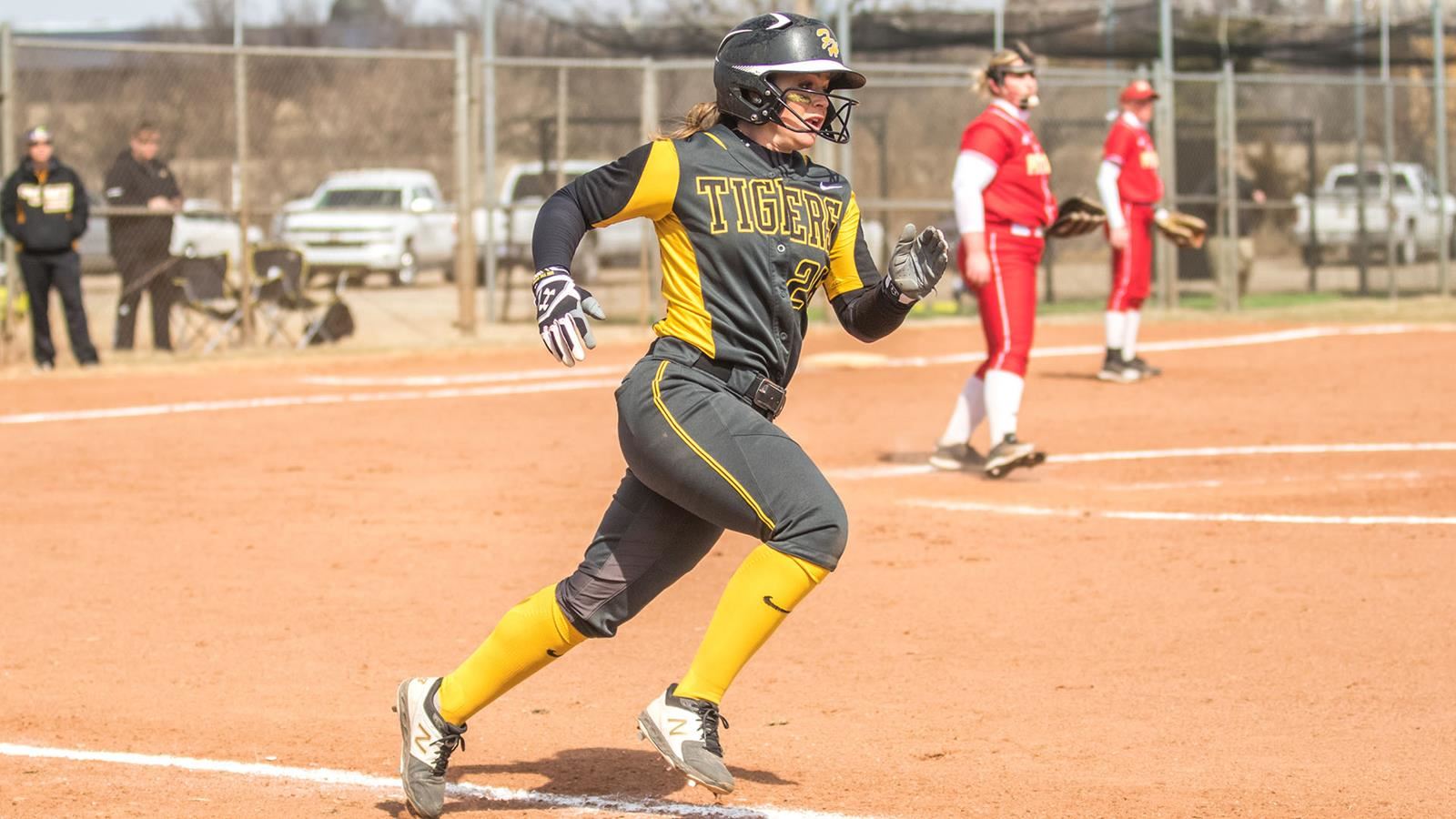
HAYS, Kan. – Fort Hays State picked up a split of an MIAA doubleheader with Pittsburg State on Monday (Mar. 18) at Tiger Stadium. After falling 1-0 in the first game, FHSU rallied for three runs in the final inning of game two and won on a walk-off RBI single by Grace Philop. FHSU moved to 10-9 overall and 3-1 in the MIAA.

Game 1: Pittsburg State 1, Fort Hays State 0
Fort Hays State had a tough time solving Pittsburg State starting pitcher Halle Brin in the first game of the day. Bailey Boxberger was the only Tiger to muster a hit off Brin, a double in the fourth inning.

The lone run of the game came on back-to-back doubles by the Gorillas in the fifth by Keelah Griffith and Dru Collins. Michaelanne Nelson surrendered the run after throwing four shutout innings prior. Nelson recorded one out in the fifth before turning the ball over to Hailey Chapman, who held the Gorillas scoreless over the final 2.2 innings. Nelson had three strikeouts in the game, while Chapman had two.

Brin finished with four strikeouts in her compete-game effort for PSU. She allowed only one walk.

Game 2: Fort Hays State 9, Pittsburg State 8
Runs were hard to come by in game one, but the second game had plenty of offensive fireworks as the Tigers rallied back from an 8-6 deficit in the bottom of the seventh to win 9-8.

Pittsburg State jumped out to a 2-0 lead with a pair of runs in the first, but the Tigers finally broke through on the scoreboard for the first time with a big six-run second inning. Jeni Mohr and Sierra Rodriguez combined for the first run with back-to-back doubles. Terran Caldwell knotted the game at 2-2 with a clutch two-out RBI single. Three batters later, Sara Breckbill unloaded the bases with a two-RBI single. A third run came in on the play due to an error and pushed the Tigers in front 5-2. Bailey Boxberger extended the lead further with another RBI single.

The Gorillas steadily mounted a comeback, scoring two in the third, one in the fifth, two in the sixth, and one in the seventh. PSU took the lead back in the sixth, 7-6, with an RBI single and RBI double. They added on to the lead in the seventh with a sacrifice fly.

After struggling to solve Halle Brin in game one, the Tigers broke through against her in the seventh inning of game two. Elise Capra started the rally with a smash-shot base hit off the third baseman’s glove. Mohr then immediately tied the game when she had a hit fall in front of the diving right fielder. Selling out for the ball was a mistake by the PSU player, allowing the ball to get all the way to the right field wall. Mohr motored all the way around to score, earning an inside-the-park two-run homer. Lily Sale and Caldwell each reached base moments later and then Grace Philop delivered the clutch two-out RBI single to left field that plated Sale from second.

Brin took the loss for PSU in 2.1 innings of relief work. Michaelanne Nelson was able to break even on the day record-wise in the circle, grabbing the win after throwing 1.1 innings of relief. Nelson is now 4-5 overall on the year. Hailey Chapman started the game for FHSU and went five innings. She allowed five runs on eight hits with a walk and four strikeouts. Sierra Rodriguez threw 0.2 innings of relief, allowing two runs before turning the ball over to Nelson. PSU starter Shelby Smith allowed six runs (five earned) to the Tigers in 4.1 innings.

Up Next
Fort Hays State hits the road for a pair of conference series this coming weekend. The Tigers take on Lincoln at 1 pm on Friday (Mar. 22) before traveling to Lindenwood on Saturday to play at 12 pm.

County Commission gives approval to Blue Sky Acres

HAYS – Following a second vote before the Ellis County Commission the Blue Sky Acres residential subdivision will be allowed to move forward.

The Ellis County Commission voted 3-0 Monday to approve the final plat of the proposed subdivision south of Hays.

The plat failed to pass a previous commission.

The approval allows development to more forward

Check back with HaysPost.com for more.

Linfred Oster

November 13, 1949 ~ March 17, 2019

An obituary and services are pending with Koons-Russell Funeral Home.

Betty Lou (Sill) Schechinger

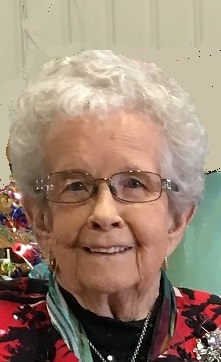
Betty Lou (Sill) Schechinger, age 90, of Hutchinson, Kansas, in the early morning of March 17, 2019, was reunited with family and friends awaiting her in God’s kingdom.

She was born March 30, 1928, the second child of George H. and Myrtle Mae (Cox) Sill, of rural Odebolt, Iowa. She married Carl H. Schechinger on November 16, 1953, in Carroll, Iowa. They celebrated their 65th anniversary on November 16, 2018. Carl and Betty lived in Omaha from November 1953 to June 1957. While there, they co-owned and operated the Ten Mile Inn, a restaurant, gas station and motel.

During her childhood and school years, Betty, and her family lived on a farm near Ralston, Iowa. She graduated from Glidden High School in 1946. After high school, she attended St. Anthony School of Nursing in Carroll, Iowa, graduating in 1949. Following nurses training, Betty worked for Dr. A. Reas Anneberg, in Carroll, and the VA Hospital in Omaha, Nebraska.

Betty’s 45-year nursing career included private-duty nursing; Kansas Neurological Institute in Topeka, Ks; St. Anthony Hospital (Obstetrics) in Hays, Ks; and 19 years at The Medical Center as a pediatric nurse for Dr. David Tweito in Hutchinson, Ks. She retired from nursing in 1994.

Betty dearly loved gardening, fishing, camping, trying new recipes, making Holiday treats, such as rosettes and divinity. While in Colby, she also rescued many unwanted farm animals. Betty never hesitated to assist neighbors in need and was affectionately recognized by many community members, who knew her as children. She modeled compassion, honesty, friendship, morality and a committed work ethic. Betty was a parishioner of Holy Cross Catholic Church, in Hutchinson, Kansas for 45 years.

Survivors include her husband, Carl H. Schechinger, of the home; four daughters, Mary Smith and husband, Bernard, Hutchinson, KS; Lou Ann Geist and husband Gary, Hays, KS; Peggy Potter and husband, Dick Ness City, KS; and Janet Mishler and husband, Brian Arnold, KS; eight grandchildren: Lindsay Kubina and husband, Tony; Aaron Smith; Emily Palmer and husband, Nick; Brandon Geist; Kelly Geist; Alison Nuttle and husband, Jesse; Michelle Geist; Braden Mishler; six great-grandchildren, Gage Smith; Gracie Palmer; Brinley Smith; Liam Nuttle; Lyla Nuttle; and Claire Kubina.

She was preceded in death by her parents and one brother, Russell Dean Sill.

A funeral mass celebrating Betty’s life will be at 10:00 A.M. Thursday, March 21, 2019, at St. Joseph Catholic Church, 215 West 13th Street, Hays, Kansas. Burial will be at St. Joseph Cemetery, Hays, Kansas.

The family will receive friends from 9:00 to 10:00 A.M. Thursday, at St. Joseph Catholic Church.

In lieu of flowers the family suggests memorials to The Reins of Hope (therapeutic horseback riding program) of Hutchinson, Kansas in care of Cline’s-Keithley Mortuary of Hays
1919 East 22nd Street, Hays, Kansas 67601.

Condolences can be left by guestbook at www.keithleyfuneralchaples or can be sent via e-mail to [email protected]

Update: Court hears Kan. case to resurrect proof-of-citizenship voting law

SALT LAKE CITY (AP) — Kansas’ solicitor general on Monday called on a federal appeals court to reinstate the state’s law requiring people to provide proof of citizenship before they can register to vote, saying problems with how it was enforced during the three years it was in place are fixable.During a hearing before a three-judge panel of the 10th Circuit Court of Appeals in Salt Lake City in a case with national implications for voting rights, Judge Jerome Holmes questioned attorneys for the state and for plaintiffs who succeeded in getting a lower court to overturn the law, which was in effect from 2013 until 2016. He pointed to evidence that it kept more than 30,000 people from registering to vote even though nearly all of them were citizens.

Solicitor General Toby Crouse said there were problems with the way the law was implemented, but he argued that the state should be able to ensure that ballots are cast legally and called on the court to resurrect the law.

“The rollout is problematic and concerning and should be improved, but that’s not a reason to undermine the law and strike it down as unconstitutional,” he said.

Dale Ho, director of the American Civil Liberties Union’s Voting Rights Project, disagreed. He said cases where people can’t find their birth certificate or afford a new one are inevitable, and the Kansas law contains few fail-safes to ensure citizens can cast a ballot.

“The difficulties of implementing a law like this, which is unique in the country, are baked into the statute,” he said.

The judges didn’t indicate when they might rule.

The legal fight has drawn national attention as Republicans pursue voter ID laws aimed at preventing in-person voter fraud, including by people who are in the country illegally. Many experts say such voter fraud is extremely rare, and critics contend that the Republican-led efforts are actually meant to suppress turnout from groups who tend to back Democrats, including racial minorities and college students.

The law was championed by former Kansas Secretary of State Kris Kobach, who led President Donald Trump’s now-defunct voter fraud commission and was a leading source for Trump’s unsubstantiated claim that millions of immigrants living in the U.S. illegally may have voted in the 2016 election.

Kansas Gov. Laura Kelly, a Democrat, supported the legislation when she was a state senator but opposes resurrecting it. Kobach, who is an attorney, personally defended the statute in the courts while he was secretary of state. Kansas’ Republican attorney general, Derek Schmidt, has taken up its defense during the appeal, saying in an emailed statement that the law was passed by large bipartisan majorities in the Legislature.

“The Legislature is free to repeal the statute if it is no longer favored, but as long as the law requiring documentary proof of citizenship to register to vote remains on the books, we think it, like other duly enacted state laws, deserves a full and vigorous legal defense,” Schmidt said.

Kansas argued in court filings that it has a compelling interest in preventing voter fraud. It contended its proof-of-citizenship requirement is not a significant burden and protects the integrity of elections and the accuracy of voter rolls.

Critics countered that the documentary proof-of-citizenship law was “a disastrous experiment” that damaged the state’s voter rolls, disenfranchised tens of thousands and eroded confidence in the state’s elections.

The National Conference of State Legislatures has counted 35 states that have laws requiring some form of identification at the polls, but the Kansas voter registration statute at issue goes further by requiring people to provide documents such as a birth certificate, U.S. passport or naturalization papers before they can even register to vote. Arizona is the only other state with a similar law in effect, but it is far more lenient and allows people to satisfy it by writing their driver’s license number on the voter registration form. Proof-of-citizenship laws in Alabama and Georgia are not currently being enforced.

Judge Robinson found that between 1999 and 2013 a total of 39 noncitizens living in Kansas successfully registered, mostly due to applicant confusion or administrative error. That is .002 percent of the more than 1.76 million registered voters in Kansas as of Jan. 1, 2013. Eleven of those 39 noncitizens voted.

The registration law took effect in January 2013. In the three years before the appellate court put it on hold, more than 30,732 Kansans were not allowed to register to vote because they did not submit proof of citizenship. That figure represented about 12 percent of voter registration applications.

————–

SALT LAKE CITY (AP) — A federal appeals court will hear arguments Monday over the constitutionality of a struck-down Kansas statute that had required people to provide documents proving their U.S. citizenship before they could register to vote.In a case with national implications for voting rights, Kansas faces an uphill battle to resurrect the law once championed by former Kansas Secretary of State Kris Kobach , who led President Donald Trump’s now-defunct voter fraud commission.A three-judge panel of the 10th Circuit Court of Appeals temporarily blocked Kobach in 2016 from fully enforcing the law, calling it “a mass denial of a fundamental constitutional right.” The issue is back before the appellate court after U.S. District Judge Julie Robinson struck it down last year and made permanent the earlier injunction.

“Kansas was the tip of the spear of an effort to make it harder for people to register under the guise of protecting elections from a nonexistent epidemic of noncitizen voting. Those efforts haven’t stopped as this case illustrates, and I think this case will be closely watched,” said Dale Ho, director of the American Civil Liberties Union’s Voting Rights Project.

The legal fight has drawn national attention as Republicans pursue voter ID laws they say are aimed at people who are unlawfully in the country. Critics contend such efforts amount to voter suppression that target Democratic-leaning minorities and college students who may not have such documentation.

Kobach, a conservative Republican, was a leading source for Trump’s unsubstantiated claim that millions of immigrants living in the U.S. illegally may have voted in the 2016 election.

Kansas Attorney General Derek Schmidt said in an emailed statement that the statute was enacted by large bipartisan majorities in the Legislature.

“The Legislature is free to repeal the statute if it is no longer favored, but as long as the law requiring documentary proof of citizenship to register to vote remains on the books, we think it, like other duly enacted state laws, deserves a full and vigorous legal defense,” Schmidt said.

Kansas argued in court filings that it has a compelling interest in preventing voter fraud. It contended its proof-of-citizenship requirement is not a significant burden and protects the integrity of elections and the accuracy of voter rolls.

Critics countered that the documentary proof-of-citizenship law was “a disastrous experiment” that damaged the state’s voter rolls, disenfranchised tens of thousands and eroded confidence in the state’s elections.

The National Conference of State Legislatures has counted 35 states that have laws requiring some form of identification at the polls, but the Kansas voter registration statute at issue goes further by requiring people to provide documents such as a birth certificate, U.S. passport or naturalization papers before they can even register to vote. Arizona is the only other state with a similar law in effect, but it is far more lenient and allows people to satisfy it by writing their driver’s license number on the voter registration form. Proof-of-citizenship laws in Alabama and Georgia are not currently being enforced.

Judge Robinson found that between 1999 and 2013 a total of 39 noncitizens living in Kansas successfully registered, mostly due to applicant confusion or administrative error. That is .002 percent of the more than 1.76 million registered voters in Kansas as of Jan. 1, 2013. Eleven of those 39 noncitizens voted.

The registration law took effect in January 2013. In the three years before the appellate court put it on hold, more than 30,732 Kansans were not allowed to register to vote because they did not submit proof of citizenship. That figure represented about 12 percent of voter registration applications.

Lynnetta S. Bratton

Lynnetta S. Bratton, 67, of Russell, Kansas, died on Sunday, March 17, 2019, at Wheatland Nursing Center in Russell, Kansas.

Lynnetta was born on June 04, 1951, in Union City, Indiana, the daughter of William and Edith (Ebbing) Bratton. She attended Trinity United Methodist Church in Russell. She enjoyed puzzles, reading the bible and spending time visiting with old and new friends. Most of all she enjoyed spending time with her family.

Lynnetta is survived by her brother Daniel Bratton (Renee) of New Port Richey, Florida and several nieces and newphews.

She was preceded in death by her parents, 2 sisters and 1 brother.

A private family memorial will be held at a later date. Memorials may be given to help with funeral costs and can be made an sent to the mortuary. Pohlman-Varner-Peeler Mortuary of Russell, Kansas, is in charge of the arrangements.

Blue Sky Acres back on Ellis County Commission’s agenda

By JONATHAN ZWEYGARDT
Hays Post

The issue of the Blue Sky Acres residential subdivision is set to go before the Ellis County Commission once more.

Property owner Mary Alice Unrein is again asking the commission to approve the final plat of the proposed housing addition south of Hays.

In November 2016, the Ellis County Commission rejected the final plat on a 1-1 vote. Commissioner Dean Haselhorst voted in favor of the plat while then-Commissioner Marcy McClelland voted against the plat. Commissioner Barb Wasinger recused herself from the vote because of a conflict of interest.

McClelland said she voted against the plat because of the possibility of groundwater contamination from septic systems and lack of available water in the area.

The commission’s failure to approve the plat led Unrein to sue the commission and McClelland in December 2016 in an effort to force her to change her vote.

A year and eight months later, in August 2018, a judge ruled in favor of McClelland and commission.

McClelland was defeated by Butch Schlyer in the Aug. 7, 2018, primary election, and Schlyer won a seat on the commission by winning a three-way race in the November general election.

In that same election, Wasinger was elected to the 111th District Kansas House of Representatives and Dustin Roths, Ellis County Republican Party chairman, was appointed to fill the remainder of Wasinger’s term.

The new commission will take up the issue at Monday’s commission meeting.

The commission will also continue discussing the 2020 budget at Monday’s meeting. The commission had previously requested each department within the county present a 2020 budget proposal with a 1.5 percent reduction from 2019. Those budgets will be presented to the commission Monday.

Monday’s meeting is scheduled for 5 p.m. at the County Administrative Center.

Kan. governor, Senate ready to end school spending battle, House not so much

 
Kansas News Service

Republicans in the Kansas Senate seem ready to end a long-running lawsuit by complying with a court ruling that said the state sends too little money to local school districts.

The Kansas House? Not just yet. It’s advancing a plan that would continue adding school spending for another year, and only another year.

That sets up a potential fight between the two chambers and threatens Democratic Gov. Laura Kelly’s hopes for a plan to finally settle the court battle and carve out increased funding for public schools for several years to come.

House Speaker Ron Ryckman, left, and Senate President Susan Wagle are leading chambers that could be headed for conflict in the school funding debate.
CELIA LLOPIS-JEPSEN / KANSAS NEWS SERVICE

Leaders in the House want to mix conservative policies with a funding plan that only boosts spending for the coming fiscal year. They’d also strip away future funding increases already in state law.

Senators have approved a bill mirroring Kelly’s plan for a multi-year funding hike, which many lawmakers hope could end the lawsuit.

“It is our best attempt to provide a reasonable solution for the Supreme Court,” Republican Sen. Molly Baumgardner said last week when pitching the bill to her fellow senators.

In a way, the Senate vote marks a change of fortune for Kelly. Republican leaders have blasted and blocked many of her major proposals. But Kelly’s school funding plan, based on numbers from the Department of Education, has garnered bipartisan support.

The Senate sent the bill to the House on a 32-8 vote with support from Democrats, moderate Republicans and conservatives such as Senate Majority Leader Jim Denning.

But House Speaker Ron Ryckman said he has concerns the boost in school funding would leave lawmakers unable to fund other services like roads and mental health care.

“We have to balance everything out and not always do what is politically easy to do,” Ryckman said. “We need to protect other core functions of government.”

The House will continue to work first on a proposal introduced last week, Ryckman said.

That bill includes an initial injection of cash for local school districts, but it cancels future funding increases and mixes in some controversial policies. For instance, it would let bullied students transfer to private schools on the state’s dime. Letting students use public money for private schools already draw criticism from a teachers’ union and school districts.

The Kansas Supreme Court mostly signed off on a funding boost lawmakers approved last year. But the justices said that previous spending plan needs to be adjusted for inflation. Kelly’s bill offers that added money.

Rep. Tom Sawyer, the Democratic Party leader in the House, wants to simply approve the Senate plan and move on. He said the House Republicans’ bill reopens the entire school funding debate.

“That causes all kinds of problems with the court,” Sawyer said. “Do the Senate bill. Get it behind us. Fund our schools the way we should.”

A committee will continue work this week on the House plan.

If the House approves its bill, the two chambers will have to find a compromise between proposals that have a wide disparity in funding and policy ideas.

Kelly will stay out of the fight for now and won’t pitch her plan to House lawmakers.

“They would prefer just operating on their own,” Kelly told reporters.

The issue is further complicated by a group of dozens of school districts, including the four that sued the state in the latest lawsuit, that now say even the bill approved in the Senate falls hundreds of millions of dollars short.

Baumgardner said lawmakers can’t afford what the school districts want without crippling the state budget.

“A $900 million price tag over four years will be devastating to our state,” she said during the Senate debate.

Republican Sen. Kevin Braun said if the Senate bill doesn’t satisfy the high court, it’s time to change the state constitution so courts can’t weigh in on school spending. He’s not interested in another round of fighting over a funding increase.

“This is not an opening bid,” Braun said. “This is a final offer.”

Stephen Koranda is Statehouse reporter for the Kansas News Service Kansas. Follow him on Twitter @kprkoranda.

Rural & Remote hopes to connect NW Kan. workers with telecommuting opportunities

NWK Economic Innovation Center

Northwest Kansas Economic Innovation Center announced on March 5 a new, full-fledged program through Rural & Remote. 

Rural & Remote, an initiative of Ogallala Commons,  is a program that provides job placement support for many different career tracks for people who want to live in northwest Kansas and work for companies across the nation that hire remote workers.  Remote positions can include, but are not limited to, marketing, office administration, sales, graphic design, and more.  Leads are given to those who inquire and are qualified for positions.  It is then up to the Northwest Kansas prospect to follow up with these leads and secure the work.  These positions often offer above average wages and benefits, beyond what currently exists in Northwest Kansas. 

This Rural and Remote initiative will bring new and increased job opportunities to the Northwest Kansas territory of twenty-six counties that the Dane G. Hansen Foundation and NWKEICI serve.  Remote work, also referred to as telecommuting, is work done outside of a traditional office environment. This could mean working from home, a coworking space, or a coffee shop.  Over the last 10 years, remote work opportunities have been on the rise, as employers become more comfortable with having remote employees. It is estimated that 43 percent of U.S. workers spend at least some time working remotely.  This provides a huge opportunity for people living in rural communities to access higher paying jobs, have more career options than currently exist, and to use degrees and training.

NWKEICI’s Coding Academy is also housed within Rural & Remote.  The Coding Academy provides scholarships for applicants who want to stay in Northwest Kansas and learn computer programming through full-time or part-time online training.  Computer programmers are in high demand nationally and internationally.  Individuals that have been successful in this training are self-motivated, hardworking, open to learning, comfortable with technology, and good at communicating in a timely fashion through many different mediums.  Basic knowledge of or experience in html, css, and other coding languages is helpful but not required. 

“The Rural and Remote program works toward many of the goals that NWKEICI has for northwest Kansas,” said Scott Sproul, president and CEO of NWKEICI. “We think that the program will give new, higher paying, opportunities to allow people to stay home and come home to Northwest Kansas. We are excited to launch this program and see the changes that it brings!”

“I am excited to partner with NWKEICI and the Dane G. Hansen Foundation to help the residents of Northwest Kansas stay home or come home by being able to work remotely. The economic impact that we have the opportunity to create is tremendous,” said Rural and Remote’s Kade Wilcox.

Partnerships in Northwest Kansas will be essential to the success of Rural and Remote.  If you are an employer, parent, grandparent, educator, foundation board member, community member, alumni organization, Chamber, or Economic Development entity that could use Rural and Remote, know someone who would be a good fit for Rural and Remote, or want to help spread the word, contact Wilcox at [email protected].  For more Rural and Remote or to sign up for assistance go to www.ruralandremote.org.   

Richard David Webster

Richard David Webster, 73, passed away March 16, 2019, at his home in Great Bend. He was born April 8, 1945 at Kingman, to Richard Leslie & Marietta (Fitzsimmons) Webster. He married Ann F. Reeder August 18, 1996 at Great Bend, She survives.

Coming from Pratt in 1996, Richard was a Great Bend resident. He was a truck driver for R.C. Williams and Rainbow Trucking. He was a member of St. Ann Catholic Church in Olmitz and the NRA and loved ham radios. He served in the U.S. Army during the Vietnam war. He was a loving husband, father and grandfather.

Survivors include, his wife, Ann of the home; four sons, David Webster and wife Starr of Fort Collins, CO, Dustin Mitchell of MO, Brandon Clark of Kimberling City, MO and Kevin King of Hutchinson; one daughter, Evelyn Harr and husband Carl of Great Bend; one sister, Wendy Sloan and husband John of Norton; and 13 grandchildren. He was preceded in death by his parents.

Cremation has taken place and services will be announced at a later date. Memorials are suggested to the National Rifle Association, in care of Bryant Funeral Home.

Copyright Eagle Radio | FCC Public Files | EEO Public File