The Dreiling Business Occupations Center at NCK Tech, Hays Campus, was near overflowing with approximately 200 students and 35 vendors for the annual NCK Tech Job Fair. Students had the opportunity to visit with businesses locally and the western third of the state.
Boot Hill Casino and Resort were looking for employees in their summer intern program in both culinary and business. Lizzie Mendoza, Director of HR, was excited to talk to students about the opportunities at Boot Hill Casino.
“Our paid internship program will train individuals in the management aspect of each department,” said Mendoza. “Boot Hill Casino prides itself from promoting from within, so individuals who start out entry level have a great opportunity to move up in the organization. We were pleased with the number of students that stopped by.”
Rebecca Shadduck, pre-nursing student and a CNA/CMA took time off to visit the job fair.
“Even though I have a great job, I wanted to see what this was all about,” she said. “I am impressed with all the opportunities here for all of NCK Tech students, not just nurses.”
Shadduck actually ran into her supervisor and assured her that she was not looking for employment.
“My supervisor just smiled and asked me to leave her all my resumes,” said Shadduck.
Dick Werth of Auto World staffed a table for his business hoping to visit with potential employees.
“We met a bunch of excellent kids that want to make auto a career,” he said.
Vendors represented a wide range of career opportunities for attendees. Healthcare, construction, welding, automotive, business and the armed services were just a few of the businesses present.
The NCK Tech Job Fair began nearly 25 years ago with a handful of vendors primarily for the nursing program. The fair has grown between 35-40 vendors consistently to provide NCK Tech students the opportunity to implement their hands-on skills in a career they have trained and studied.
When in life does one come to confront the tough truth that each of us will eventually die? In my years as an internist caring for young and old alike, some people understand this early, and some people never get it. In denying death, we intensify our fear of it. Usually, however, it is sometime during their 50s that people first look into the eyes of death. Put it off as we may, the hard certainty is that we are all aging and one day an end will come. Shakespeare described advanced age in his play As You Like It, Act II, Scene VII (All the world’s a stage):
“. . . Last scene of all, That ends this strange eventful history, Is second childishness and mere oblivion, Sans (without) teeth, sans eyes, sans taste, sans everything.”
Shakespeare’s description of advanced age during the 1600s is rather bleak and scary. I think, with modern medicine and the support of a loving family, we could do better. I clearly believe that advanced age and facing our own death should not fill us with dread. The following is a more hopeful version to end Shakespeare’s excerpt:
“. . . He did not have to end his life alone; If over time he’d shared his caring, raised
the worth of others, fed the love he’d sown. His death would find him kindly prized and praised, While kin sang festive songs of joy, amazed.”
Fear comes from the oldest reptilian part of our brain. Fear helps us run from attackers but can also make us run from making important choices about our health. Fear can even bring us to push forward with treatment that may cause significant suffering, even when we are very old and even when treatment is futile and it’s time to quit.
Fear of dying can prevent us from making plans about end-of-life care and, most importantly, prevent us from talking to our families about those wishes. How do we want to be cared for if we should lose mental capacity from a stroke or dementia? Do we wish to have a feeding tube, resuscitation, antibiotics when there is no quality of life left, when one doesn’t recognize family and when the only option will be residing in a bed somewhere “sans everything.”
I would rather die and be:
“. . . kindly prized and praised, While kin sing festive songs of joy, amazed.”
For free and easy access to the entire Prairie Doc® library, visit www.prairiedoc.org and follow The Prairie Doc® on Facebook, featuring On Call with the Prairie Doc® a medical Q&A show streaming live most Thursdays at 7 p.m. central.
John Richard Schrock is a professor at Emporia State University.In many regions across the United States, the number of out-of-field teachers is growing while the number of college students entering teaching continues to fall and more teachers are leaving the classroom. While pundits want to target a major cause, there are likely a combination of factors that have caused this 20-year decline that varies by region, grade level and discipline.
The National Education Association just released the 2016-2017 average starting teacher salary data; state-by-state averages are on its website. The national average starting salary was $38,617 with New Jersey at $51,179 and Missouri at $31,842. Oklahoma was second lowest; it recently increased its education budget by 19 percent, only to see its teacher shortage grow larger.
Money can be a factor driving a shortage in rich communities and in select disciplines. Even within one state, the cost-of-living can vary dramatically. In affluent areas in California and Colorado, teachers cannot afford to live in the communities where they teach. In some states, affluent suburban schools hire away teachers from sparsely populated rural districts. Failure to consolidate leaves those rural students with out-of-field teachers and fewer academic opportunities.
While graduates do not enter teaching for the money, more are leaving teaching as their salaries continue to fall behind inflation. Science teachers in particular find they can double their salary in other science jobs. While there is regional variation, in most portions of the country the purchasing power of the average teacher was greatest in the early 1970s, and has fallen behind ever since. Some teachers are frustrated with lack of student discipline and lack of administrator support. The end of corporal punishment, new “no touch” policies, and the ending of out-of-school suspension have also to some teachers leaving the classroom.
Loss of teacher tenure in Kansas, and loss of new teacher tenure in North Carolina caused immediate drop-offs of college students pursuing teaching careers, actions that students nationwide witnessed.
Some states eliminated an automatic pay raise for a master’s degree. While research showed a master’s degree in education provided no student improvement, a master’s degree in math or science did raise their students’ scores. When districts threw away that incentive across-the-board, it resulted in a decrease in teachers pursing higher degrees.
Viewed across the last 20 years, the decline in teachers shows several patterns. With the implementation of No Child Left Behind external testing in the early 2000s, many high school students observed their teachers’ loss of professional authority. By the mid-2000s, it then became harder to recruit those students, now in college, into teaching when they had seen that professional erosion. At this same time, more veteran teachers were taking early retirement while a new generation of student teachers were being trained in education schools to teach to external assessments. School administrators lauded this young malleable cohort of teachers who, unlike the veteran teachers, could be ordered from above to adopt an unending array of new reforms and be rewarded with merit pay.
This era of “transformational leadership” and reform-from-above may be coming to an end. The recent Denver strike was not just about pay, but also sent a clear signal that the ProComp merit pay system of controlling teachers by awards was no longer being tolerated.
Because a major portion of each state’s general fund goes to K–12 education, the 2008 Great Recession cut school spending nationwide. While the U.S. economy has recovered and a few states have seen boosts in funding, a recently released analysis by the Center on Budget and Policy Priorities finds about half of state funding formulas have not recovered to pre-recession levels.
However, “dissatisfaction with how I am treated as a teaching professional” ranked highest on a survey given at the beginning of this millennium. It was a greater concern than pay or student discipline. That question has not appeared on a major teacher survey since, leading education commentators to only look at other factors. Would that item be heavily marked today…or have we now lost too many of our best?
John Richard Schrock is a professor at Emporia State University.
SHAWNEE COUNTY — Authorities are investigating the cause of a Sunday fire that destroyed a Kansas home. Just after 5a.m. Sunday, fire crews responded to a report of smoke in the area of the 3100 block of SW Randolph in Topeka, Fire Marshal Michael Martin.
Sunday fire caused $130K damage to a Kansas home-photo courtesy WIBW TV
After receiving additional calls reporting a fire, firefighters located the fire in a home at 3210 SW 30th Street.
Upon arrival, firefighters found the split level home fully involved with fire. During the course of the investigation, it was discovered that the occupants were out of town at the time of the fire. Firefighters did locate a deceased dog.
The estimated dollar loss – $130,000.00; of which $87,000.00 is associated with structural loss and $43,000.00 associated with contents loss.
Working smoke detectors were not located within the home, according to Martin.
Any individuals with information about the circumstances of this fire are being asked to please contact Crime Stoppers at (785)234-0007 or Toll Free at 1-800-222 TIPS (8477).
RENO COUNTY — An earthquake shook portions of Reno County early Monday.
Image courtesy Kansas Geological Survey
The quake just after 12:30a.m. measured a magnitude 2.8 and was centered approximately 2 miles southwest of South Hutchinson, according to the U.S. Geological Survey.
Monday’s quake follows a 2.8 magnitude quake in Harper County on March 7. There are no reports of damage or injuries from the Monday quake.
Monday Increasing clouds, with a high near 46. East wind 6 to 10 mph.
Monday Night Showers, mainly after 10pm. Low around 39. East southeast wind around 10 mph. Chance of precipitation is 90%. New precipitation amounts between a quarter and half of an inch possible.
Tuesday Showers likely, mainly after 1pm. Cloudy, with a high near 55. Breezy, with a south wind 10 to 15 mph increasing to 16 to 21 mph in the afternoon. Chance of precipitation is 70%. New precipitation amounts between a tenth and quarter of an inch possible.
Tuesday NightShowers and possibly a thunderstorm. Low around 48. South southeast wind 15 to 18 mph. Chance of precipitation is 90%. New rainfall amounts between a half and three quarters of an inch possible.
WednesdayShowers and possibly a thunderstorm before 4pm, then showers likely. High near 56. Breezy. Chance of precipitation is 90%. New rainfall amounts between a half and three quarters of an inch possible.
Wednesday NightRain showers likely before 1am, then rain and snow showers likely between 1am and 2am, then snow likely after 2am. Cloudy, with a low around 33. Very windy. Chance of precipitation is 70%. New precipitation amounts between a tenth and quarter of an inch possible.
ThursdayA chance of snow before 9am, then a chance of rain and snow between 9am and 11am, then a chance of rain after 11am. Cloudy, with a high near 40. Very windy. Chance of precipitation is 50%.
Before Dot Nary received her Ph.D. and began working at the University of Kansas as an assistant research professor at the Research and Training Center on Independent Living, she had been discriminated against while entering the workforce because she uses a wheelchair. Nary is currently researching ways to expand independent living for disabled people, and teaches others about disability in order to lessen the stigma.
“I went to a temp force company and I took the typing test and did fine,” Nary said. “I had a bachelor’s degree, magna cum laude, but I didn’t get one call. I think they didn’t want to send out a person in a wheelchair.”
Although the Kansas Disabilities Act prohibits employers from discriminating against candidates with disabilities, the unemployment rates for these individuals remains higher than that of the average citizen. The Bureau of Labor Statistics says that compared to an average of 4.2 percent, the unemployment rate for disabled individuals is about 9.2 percent. These numbers don’t account for disabled individuals who never enter the workforce.
According to the United States Census one in five Americans have a disability according to the broad definition of disability with only half having said that their disability is severe enough to interfere with their day-to-day life. The Bureau of Labor Statistics says that means one in five will have a much harder time finding work. Nary says discrimination is largely due to the stigma of what it is like working with a person of disability.
Kansas’s House Bill 2044 is just one step toward bringing more disabled individuals into the workforce. Most recently Nary held a forum at KU in the Dole Center to talk about proper language when speaking to or about a disabled individual. She regularly holds similar equity talks that are open to the public to come and learn. She believes by educating and normalizing disabilities, the stigma will dissolve and society will begin to see disability as part of our everyday culture.
Nary, along with the director of the Disability Rights Center of Kansas, Stephanie West-Porter, wants to let the public know how capable these individuals are and how providing them with an employment opportunity can benefit companies. West-Porter discussed her own struggle with disclosing her mental disabilities WHAT ARE THEY? to coworkers.
According to West-Porter, invisible disabilities can be just as stigmatized and dangerous to finding a job if known. West-Porter defines invisible disabilities as mostly mental illnesses including anxiety, bipolar disorder, schizophrenia, and others.
Tax incentives from this bill would bring more disabled individuals into the work force and West-Porter believes that she sees it as a way to rid society of the discrimination that she and Nary have experienced.
West-Porter talked about a time that she did disclose her disability, saying “I actually had a coworker, after I told her I had bipolar disorder, said “You’re not going to come in with a gun and kill us all one day, are you?’”
This type of misinformation is a reason why finding employment remains tough.
The Americans with Disabilities Act (ADA) requires employers to provide reasonable accommodations for. Nary says that employers could be scared of this idea because it makes the person seem more difficult to work with but oftentimes, depending on the disability, accommodations aren’t hard to make. Sometimes, like Nary, only the office desk must be lowered for wheelchair access.
The Research and Training Center on Independent Living hopes to keep the conversation going and plans to hang up posters across KU’s campus indicating what a person should or shouldn’t say to a disabled individual. They hope alongside the new bill, that by lessening the stigma and starting a bigger conversation, people with disabilities will then be given further opportunities.
The House passed Bill 2044 with only one nay and sent it along to the Senate. After hearing the bill in the Committee on Commerce, the Senate passed the bill Feb. 27, with only one nay as well.
Samantha Gilstrap is a University of Kansas senior from Charlotte, North Carolina, majoring in journalism.
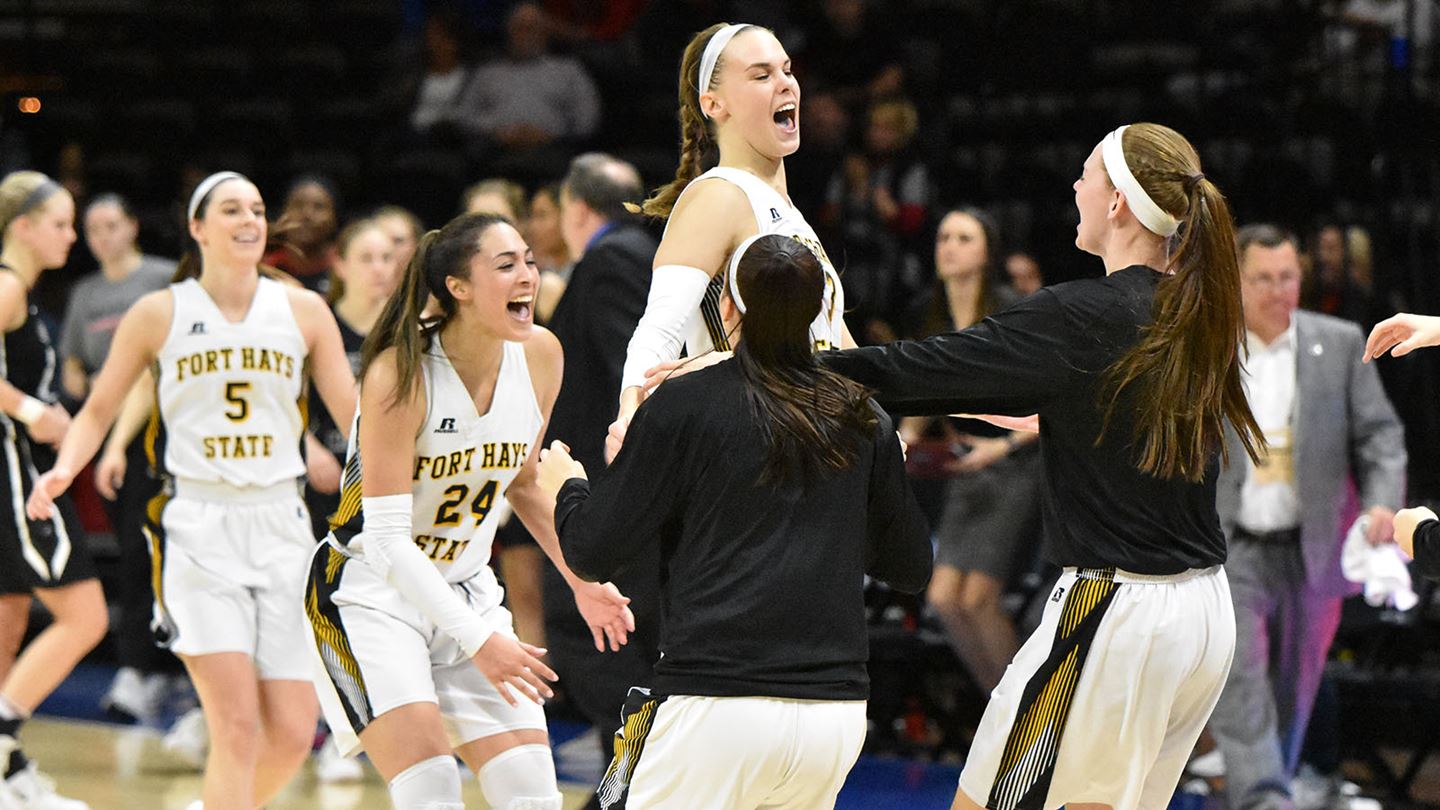
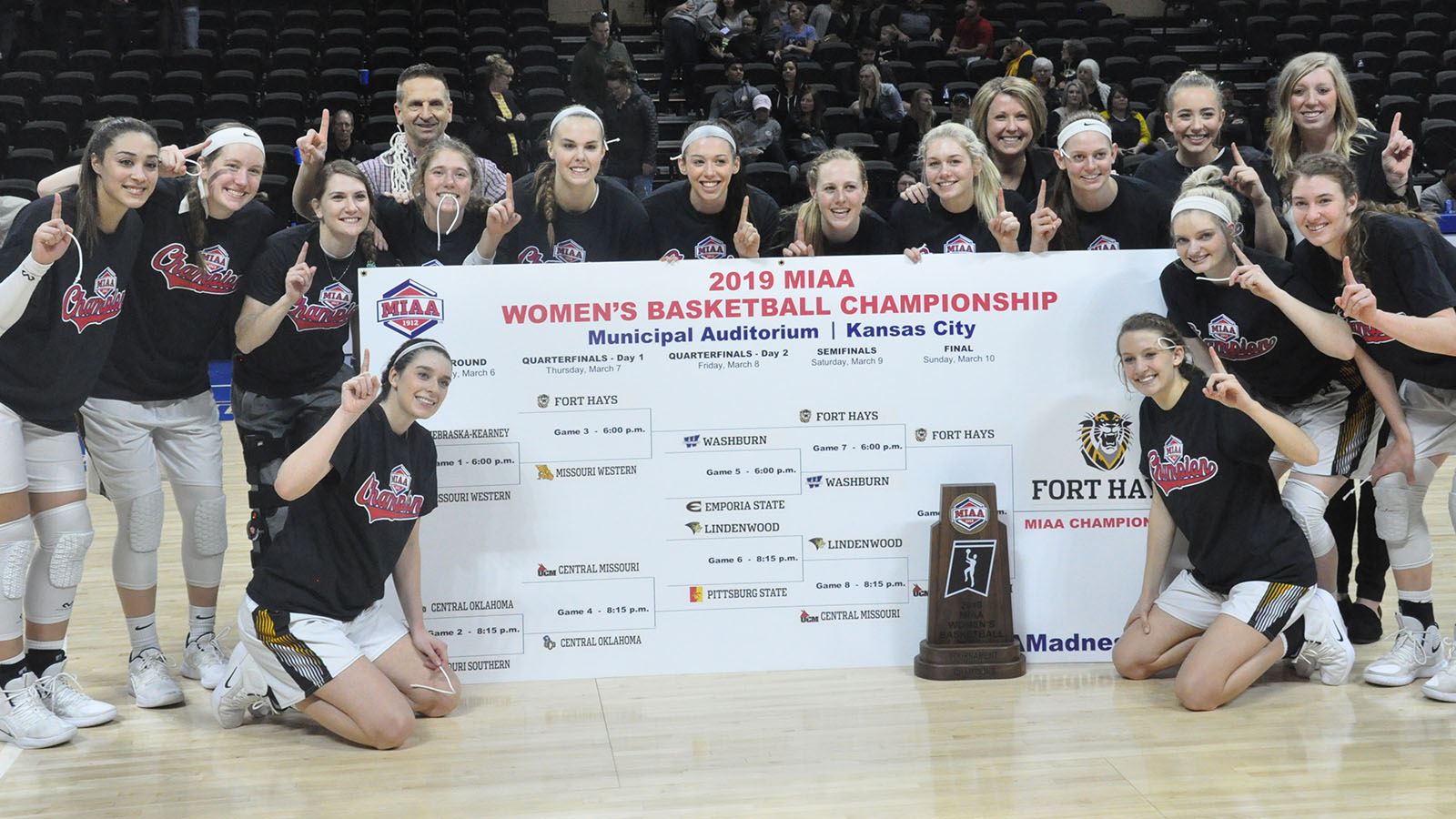
INDIANAPOLIS – After winning both regular season and postseason MIAA championships, the third-ranked Fort Hays State women’s basketball team has been selected as the No. 1 seed in the Central Region of the 2019 NCAA Division II Women’s Basketball Championship. As a result, the Tigers will host the Central Region tournament for the second time. The tournament will be played inside Gross Memorial Coliseum March 15, 16 and 18.
The Tigers (30-1) will play No. 8 seed Pittsburg State in the regional quarterfinals on Friday, March 15. The Tigers and Gorillas are two of five MIAA programs to qualify for this year’s regional tournament, joined by Central Missouri, Emporia State and Lindenwood.
This is the Tigers’ fifth trip to the NCAA tournament and the fourth in the last five years. Fort Hays State is 3-4 all-time in the big dance.
After sitting in second in the final regional ranking, Fort Hays State’s MIAA tournament title was enough to convince the selection committee to bump the Tigers to the top spot. GAC champions Southwestern Oklahoma State, also 30-1, will enter the tournament as the No. 2 seed. Rounding out the tournament field are two schools from the NSIC – Minnesota Duluth and Minnesota State Moorhead.
The winner of the Central Region tournament will advance to Columbus, Ohio for the Elite Eight March 26, 27 and 29.
2019 NCAA Division II Women’s Basketball Championship Central Region Tournament Quarterfinal Matchups
No. 1 Fort Hays State (30-1) vs. No. 8 Pittsburg State (21-8)
No. 4 Minnesota Duluth (23-6) vs. No. 5 Minnesota State Moorhead (26-6)
No. 2 Southwestern Oklahoma State (30-1) vs. No. 7 Emporia State (22-8)
No. 3 Central Missouri (24-6) vs. No. 6 Lindenwood (21-7)
All games played inside Gross Memorial Coliseum on Friday, March 15. Game times TBA.
KANSAS CITY, Mo. – After coming up short in its previous two trips to the MIAA Championship title game, the third-ranked Fort Hays State women’s basketball team got the job done on the third try, defeating Central Missouri 63-56 to win its first MIAA Tournament championship Sunday (March 10). As a result, the Tigers (30-1) have earned an automatic bid into the NCAA Division II Women’s Basketball championship.
This is Fort Hays State’s 11th conference championship in program history and its second conference tournament title (1993 RMAC Shootout). The Tigers now have 30 wins on the season, tied for the second most in program history. It was the 103rd victory over the last four years, matching the team’s best four-year stretch.
FHSU Postgame Press Conference
Game Highlights
The Tigers never trailed in the contest, taking the lead 11 seconds in on a layup from tournament Most Outstanding Player Tatyana Legette and never letting up. Fort Hays State scored the first seven points of the game and scored on its first eight possessions, racing out to an 18-5 lead less than five minutes into the game. Both teams were highly efficient in the first quarter, combining to hit nearly 70 percent from the floor (16-of-23).
But Central Missouri proved why it was the No. 2 seed in the tournament, fighting back within four by the end of the first quarter, 22-18, before closing within a bucket to start the second stanza. The teams cooled off significantly in the second quarter, scoring just 16 total points. Fort Hays State padded its lead back to eight by the halftime break, 32-24.
Lanie Page scored six quick points out of the break to stretch the lead to 14, putting the lead in double figures where it would remain for the rest of the third quarter. The lead grew as high as 15 in the final quarter, 50-35, before the Jennies put together one final run. UCM went on a 17-8 run to close within two possessions with less than a minute to go, 58-52. The Tigers iced the game thanks to a 5-for-6 effort from the free-throw line over the final 32 seconds.
Tatyana Legette was joined on the All-Tournament team by Lanie Page and Taylor Rolfs. Rolfs led the team with 17 points while Legette put together her ninth double-double, totaling 14 points, 12 rebounds, four assists and three steals. Page contributed 10 points, four steals, two blocks and three assists while Belle Barbieri added 10 points and two steals.
The Tigers turned Central Missouri over 19 times, totaling 12 steals and three blocks. The Tigers shot 46.0 percent from the floor (23-of-50), their 16th game with a shooting percentage of 45 percent or better.
Fort Hays State is the first No. 1 seed to win the MIAA Championship since 2013, ending the longest drought in tournament history.
The Tigers will now await the official announcement of the field of 64 in this year’s NCAA Division II Women’s Basketball Championship, set to be released tonight at 9 p.m. via NCAA.com.
KANSAS CITY, KAN. – For the second time, a Kansas man has pleaded guilty to federal child pornography charges, according to U.S. Attorney Stephen McAllister.
Allison -photo KBI Offender registry
Curtis Allison, 56, Leavenworth, pleaded guilty Friday to one count of possessing child pornography. In his plea, Allen admitted he was on supervised release from a prior child pornography conviction when investigators found more than 5,000 images of child pornography and 1,012 child pornography videos on his computer and storage devices.
In 2006, Allison pleaded guilty to one count of trafficking in child pornography and sentenced to 121 months in federal prison. In October 2014, he began a three-year term of supervise release. Within six months, he violated the terms of his release by using the internet to search for child pornography. The court revoked his supervised release and sentenced him to 24 months. He began a second supervised release in January 2017. Investigators found the child pornography in this case on his computer in August 2017.
Sentencing is set for May 20. Both parties have agreed to recommend a sentence of 10 years in federal prison.
SEDGWICK COUNTY — One person was injured in an accident just before 4p.m. Sunday in Sedgwick County.
Images from Sunday’s crash courtesy KHP
The Kansas Highway Patrol reported a 1996 Honda Accord driven by Timothy Lee McKown, 51, Wichita, was southbound on Interstate 135 taking the exit to Kellogg Eastbound.
The driver lost control of the vehicle. It ran off the roadway on the right side and collided with the bridge pillar.
McKown was transported to Wesley Medical Center in serious condition. He was not wearing a seat belt, according to the KHP.