Small town communities along Kansas’ borders lose business when residents cross state lines to save money on groceries.
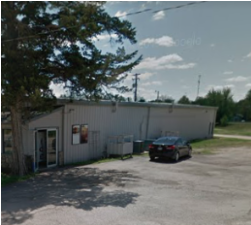
Marmaton Market in Moran, Kansas google image
In a February hearing on House Bill 2261, which would lower the food sales tax by 1 percent, residents of these border communities testified about the struggle to compete against businesses with lower or no food sales tax.
Some residents of Moran, Kansas, make the three-and-a-half-hour round trip to Kansas City, Missouri, to shop for food products. The selection in Kansas City, Missouri, is wider and the food sales tax is 1.225 percent, as opposed to Kansas’ current 6.5 percent tax.
“Sometimes, it is worth it to make the trip when they save a significant amount of money,” Rachel Henderson, general manager of the Marmaton Market in Moran, said. “The overall impact of this habit is huge.”
A 2016 report by the Kansas Public Finance Center at Wichita State University shows that Kansas’ sales tax on food harms economic activity, especially in border counties.
“Our community misses out on any tax revenue, and it hurts business when we have to compete with a lower sales tax,” Henderson said.
According to the report by Wichita State each percent increase in the tax, (assuming surrounding counties have a lower food sales tax), results in $101 drop in food sales per capita.
“This is a tax burden that Kansans shouldn’t have to bear,” Henderson said. “If you aren’t wealthy enough to make regular trips to the city for groceries, you are forced to have a reduced budget for food.”
Of the 105 counties in the state of Kansas, 35 share a border with at least one other state, according to the Wichita State report.
The city of Oberlin, in northwest Kansas, faces the same challenges with losing business to bordering states.
“My grocery store is the only one in the entire county, not only do I enjoy this, but I understand my business also provides a critical service,” Kirk Brown, owner of Reyes Grocery in Oberlin, said in a testimony to the committee.
Halley Roberson, Oberlin’s City Planner, also reflected the same notion.
“This independent grocery store has to try and compete with national chain stores with higher prices for delivery because of lower volume and in addition a 6.5 percent tax his competitors do not have,” Roberson said.
Roberson says a reduction in the food sales tax would help the success of businesses in border towns.
“It is a push-pull situation for sure, but a serious food tax reduction or elimination would at least give border towns like Oberlin some ground to stand on,” Roberson said.
Grant Heiman is a University of Kansas junior from Wichita majoring in journalism.
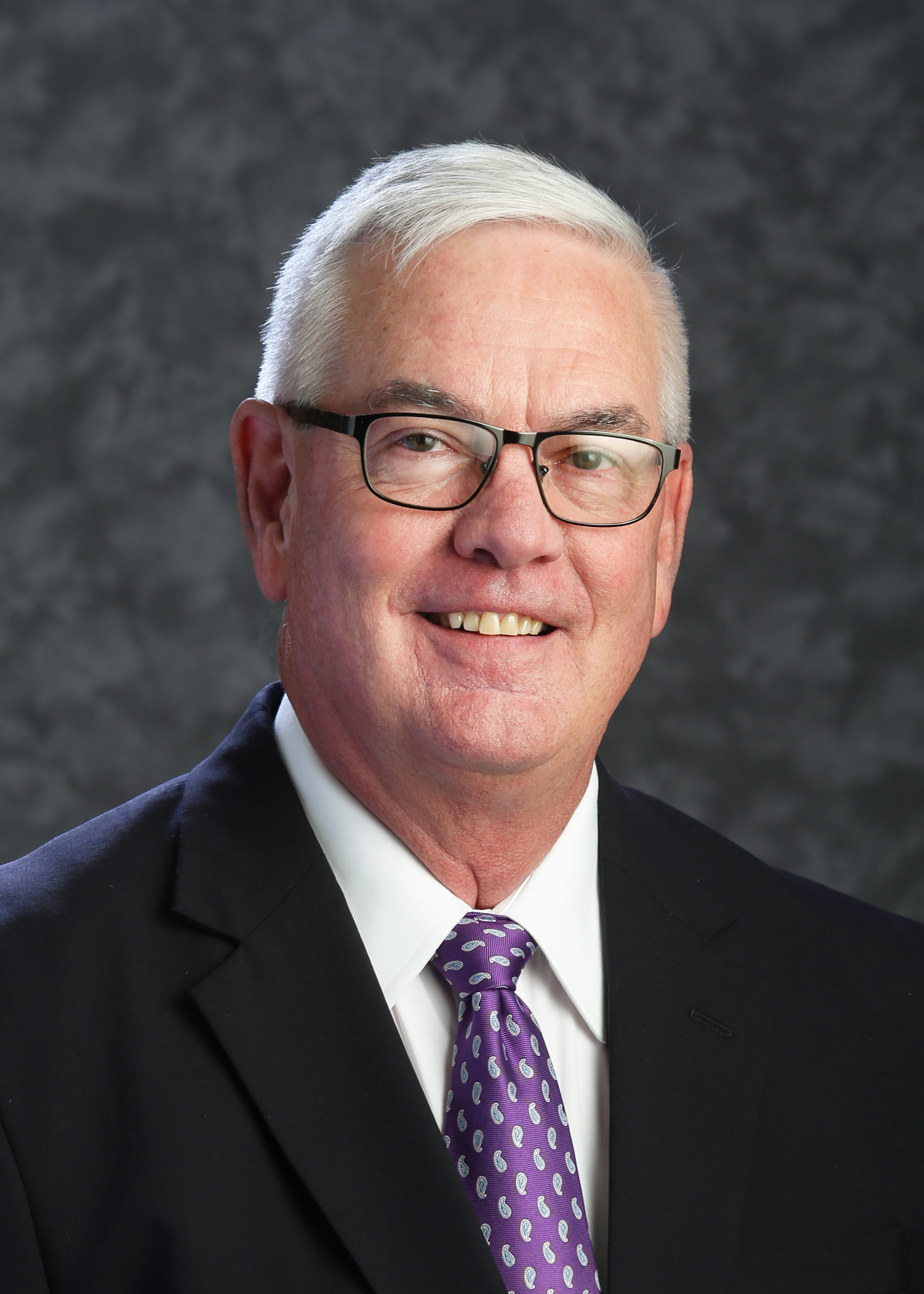
Richard Cox, Automotive Instructor and Department Chair of NCK Tech, Hays Campus Automotive Program, recently was awarded the prestigious Educator of the Year Award from VISION. The conference, held in Kansas City, draws over 3,500 attendees from 44 states, Canada and countries as far away as Zimbabwe.
The VISION High Tech Training conference meets annually and is educator-specific training. Industry experts that employ innovative teaching methods and cutting-edge technology to create incredible learning experience for their students present the training.
The previous years’ winner announces the award, presented at the conference’s luncheon.
“Even though this educator has only six years’ experience he has accomplished a lot. He is being nominated by many of his past students who signed a letter with the application,” the statement read.
“You try so hard to give a student the knowledge for a career and a chance to succeed,” Cox said. “It is nice to be recognized but we do not do what we do to receive awards. We do what we do to help our students be the best. The teaching profession makes all other professions possible.”
NCK Tech offers a two-year Associated Degree of Science in Automotive Technology at both campus locations. For more information visit www.ncktc.edu. Applications are now being accepted for the 2019-20 school year.
Ron Wilson is director of the Huck Boyd National Institute for Rural Development at Kansas State University.
By RON WILSON Huck Boyd National Institute for Rural Development
“Let’s blow up a giant bale of hay!” That comment might not be what one would expect to hear in a typical corporate brainstorming session, but it was the type of tongue-in-cheek idea which surfaced among the creative marketers at one rural Kansas company. The people in this company are not only having fun, they represent one of the nation’s leading producers of agricultural, turf, and hydraulic power equipment.
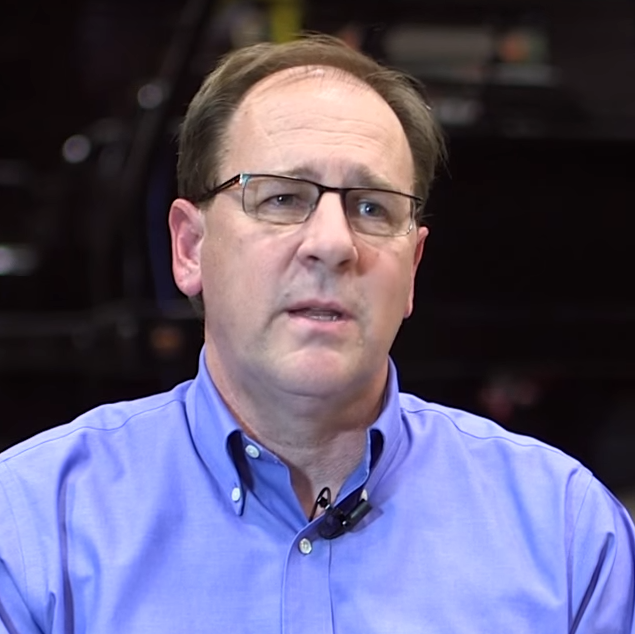
Tim Penner is president and CEO of Harper Industries in Harper, Kansas. Tim explained that the company began with a man named Dewey Hostetler. “He had a knack for seeing how a farmer could use equipment,” Tim said. In his farm shop near Harper, Dewey started designing equipment for handling hay. It worked so well that it spawned a company to make these products. The business was incorporated in 1974.
As a play on his first name, the products came to be called DewEze. The DewEze product line has grown and expanded over time.
The manufacturing company grew in Harper. Tim Penner came from Nebraska and joined the company as an administrator in 1991. The company was bought by out-of-state investors, but in 1998, they decided to divest themselves of the business.
Tim Penner and his staff in Harper stepped up to buy the business. It became Harper Industries and remains a locally owned and operated business today, producing DewEze products and others.
The results are remarkable. The company has gone from a $5 million dollar business in 1998 to a $25 million business today. Employment has more than doubled and the product line has advanced.
The DewEze hay handling truck beds remain a staple of the company’s business, as these have been refined over time. “We make more of these (hay handling flatbeds) than any other company,” Tim Penner said. The product line now includes various types of bale beds, feeders and related equipment. The company is represented by some 200 dealers across the U.S. and Canada.
Penner
Another product line, Harper turf products, relates to turfgrass management. Harper Industries engineers designed a piece of self-propelled equipment that includes a self-leveling, tilting mower deck so that hillsides can be mowed safely. This product was recognized as one of the top 50 innovations by the American Society of Agricultural and Biological Engineering.
Harper Industries has continued to innovate. Company leaders point out that the hydraulic systems used for handling big round bales can have other applications too. “We are now getting into the automotive wrecker market, aerial lifts, and snow removal,” Tim said.
“People are our greatest strength and our number one asset,” Tim said. He proudly notes that the average tenure of Harper Industries employees is 11 years – remarkable in the manufacturing industry.
Company employees also like to have fun. They came up with a creative idea as an April Fools’ Day project. They decided to stage a video which demonstrated a mock new product through which big round bales were blown up in the field.
I thought this was hilarious. The video includes a producer testimonial saying how easy it is to “distribute” the hay at the touch of a button. They also videoed Luke Thornton, Harper Industries vice president of operations. With a straight face, Luke talked about how blowing up the hay bale achieved “superior hay dispersal” for the cows. The crew even used an open field to, very carefully, explode a hay bale.
The video was released right before April 1, 2018. As one might guess, it became popular on YouTube. The video reached an estimated three million people on Facebook. Wow. The video ends with the words, “DewEze – April Fools’.”
It’s just one example of the fun, creative approach followed by Harper Industries. For more information, see www.deweze.com or www.harperindustries.com.
“Let’s blow up a hay bale!” It’s probably not the typical corporate brainstorm, but it did make a fun idea for Harper Industries. We salute Tim Penner, Luke Thornton, and all the people of Harper Industries for making a difference with an innovative, successful, home-grown business in rural Kansas. I’m glad to see that their business has blown up.
It’s been a grueling winter. We’ve had record snowfalls in parts of Kansas, and cabin fever has taken its toll on all of us.
The time has come for a hearty dose of sunshine.
There could be no better time to be observing National Sunshine Week, a time for citizens and elected officials alike to recommit themselves to the ideals of open government.
National Sunshine Week is March 10 through 16. The week is a joint effort between the American Society of News Editors, the Reporters Committee on Freedom of the Press and the various associations that promote open government across the nation, including the Kansas Press Association, the Kansas Association of Broadcasters and the Kansas Sunshine Coalition for Open Government.
Why should Kansans care about this?
Because although public officials often talk a good line on transparency when running for office, when it comes time to walk the walk in Topeka or Washington, they hide behind a myriad of excuses for why secrecy is preferable.
Here are just a few of the excuses we hear almost every year at the Kansas Statehouse:
We can’t have frank discussions about the issues when the press is breathing down our necks.
We can’t record all committee votes because they will be used against us in the next election.
We can’t have a hearing on every bill filed or we’d be here forever.
We can’t get the best results legislatively unless we use procedures such as “gut and go” and bill bundling to break logjams.
We can’t afford the technology to video stream from every hearing room at the Capitol.
Do you detect a recurring theme here?
“Can’t” seems to be the stock answer to every attempt to open up the political process.
It would be far more productive to discover ways to instead say “yes we can.”
The 450 newspaper and broadcast station members of KPA and KAB try to do their part to make sure public bodies are following the law, but they could use your help. Citizens who take their participatory form of government seriously can provide effective oversight when they attend meetings, seek records or observe their public officials in action.
You may wonder how you can help.
Do your local public bodies give proper notice of their meetings, well in advance so the public can attend?
When they do meet, do they discuss policy issues in public or do they seem to have their minds made up when the meeting begins, as if they’ve ironed out all the wrinkles in advance and behind closed doors?
Do they abuse the closed session exceptions to the Kansas Open Meetings Act?
And does it ever appear the body has voted outside the public meeting room, which is illegal?
If you observe any of the above, contact your local news organization and tell a staff member what you have observed. Or you might consider writing a letter to the editor. Those who like to work in secret prefer not to be called out in public for their transgressions.
KOMA and the Kansas Open Records Act require that meetings and records of public bodies be open to the public.
While some elected and appointed officials often carry out their duties lawfully, there are some who don’t believe they owe the public anything, that they can meet when they want, where they want, sometimes without telling their constituents about it at all. Others believe they can charge such exorbitant rates for access to public records that they make such access unaffordable for citizens and even most members of the press.
When you attend meetings, seek public records and question those in authority about how they are conducting themselves, you are doing your part to help keep government open, accessible and accountable.
“Sunshine” is a perfect description of how government should operate. It means that the public’s business is discussed thoroughly in public, with the public’s participation, and it means decisions are never made behind closed doors.
Please join us in making sure meetings and records remain open to the public and that our government officials not only understand the law, but follow it.
Doug Anstaett is the former executive director of the Kansas Press Association and serves on the board of the Kansas Sunshine Coalition for Open Government.
Hays Post/Eagle Communications is a member of both the Kansas Press Association and the Kansas Association of Broadcasters.
If you’re like many Americans, the answer is the grocery store. And frankly, that disturbs me. The grocery store isn’t where food comes from – it is just from where it is distributed. In reality, far too many people are unaware of the role of American agriculture in their daily lives… and what it really takes to have food on their dinner table.
You, I and 163 other people ate today because of one American farmer… a dramatic increase from 19 people in the 1940s. Quite simply, American agriculture is doing more – and doing it better. Agriculture is this nation’s #1 export and vitally important in sustaining a healthy economy.
A majority of us know our food and fiber don’t just arrive at the grocery or clothing store… or magically appear on our dinner table or in our closet. There is an entire industry dedicated to providing consumers with the safest, most wholesome and nutritious products possible… as well as a wide range of comfortable, fashionable clothing choices. We rely on agriculture for the very necessities of life. From beef and pork to cotton and wheat, agriculture is working harder than ever to meet the needs of Americans and others around the world.
The role of farmers will become even more critical with the exploding world population. Today, approximately 7.4 billion people call earth their home. By 2050, the population is projected to reach 9.7 billion and 11.2 billion by 2100 (UN DESA, 2015a, p.3). Growth in the human population is mainly a product of declining mortality from improvements in food production, medication, sanitation, and energy sources.
And it’s not just the farmer who makes our food possible. The entire agriculture industry, all the way to the grocery store, are vital links in a chain which brings food to every consumer – and millions of people abroad.
Frankly, it’s easy to take agriculture for granted in America. Our food is readily accessible and safe. For this, we’re unbelievably fortunate…but that doesn’t mean we don’t have an obligation to recognize how it’s made possible.
Just a few generations ago, most people were a part of – and had friends or relatives involved with – agriculture. Today, that’s no longer the case. That’s why I’m writing, because agriculture is responsible for providing the necessities of life… food, fiber, and fuel. And it’s about time Americans recognize that contribution!
Americans continue to enjoy a food, fiber and fuel supply which is abundant, affordable overall and among the world’s safest, thanks in large part to the efficiency and productivity of America’s farm and ranch families.
We officially recognize our farmers and all they do to make our lives better during Agriculture Week, March 10-16, 2019, hosted by The Agriculture Council of America (www.agday.org). Agriculture Week is a good time to reflect – and be grateful for – American Agriculture! This marks a nationwide effort to tell the true story of American Agriculture and remind consumers, agriculture is a part of all of us.
Be part of America’s Agriculture, if even just for one day. Take a drive in the country with your family, as there is no prettier green than winter wheat fields waking from winter dormancy. And give a big wave if you see a farmer. I guarantee they’ll wave back.
Happy Agriculture Week! #AgDay365
Lesley Schmidt is Vice President of Education for American Agri-Women, Park City.
At first hearing, President Trump’s recent announcement of a planned presidential order to mandate free speech on college campuses might seem to be just what free expression advocates would support.
However, regrettably, they should not. Keep reading, please.
Taking a shortcut through the First Amendment in the name of free speech is not a good idea — and that’s what Trump’s approach will be, no matter how admirable the stated goal of encouraging and protecting the rights of all in university communities to speak freely.
Trump’s approach is to tie freedom of speech to federal funding for universities: “If they want our dollars, and we give it to them by the billions…Free speech. If they don’t, it will be costly. That will be signed soon,” he told the Conservative Political Action Conference annual convention.
Conservatives have long complained — in my view, with justification at some higher-ed institutions — that liberal academics have created an atmosphere where views of faculty or outside speakers from “the right” are unwelcome. In recent years, a number of high-profile, controversial speakers claiming conservative credentials have been heckled, harassed or prevented from speaking.
In 2017, conservative author Ann Coulter canceled a speech at the University of California, Berkeley, amid fears of violent student protest. At Texas Southern University, Houston, a speech by Sen. John Cornyn, R-Texas, was cancelled because of student opposition.
In announcing his initiative last weekend, Trump cited a Feb. 19 incident in which a man recruiting for a conservative group was punched by one of two men who confronted him at UC Berkeley. But even that example raises questions about how Trump’s proposed “carrot and stick” approach would work and whether it is appropriate there or elsewhere.
Neither the recruiter nor his assailant was reported to be connected to the university. The attacker was arrested, as existing law provides, regardless of where the punch was thrown. Presumably, local justice will run its course without need of a federal, campus-focused “back-up.”
How would — and should — a university be held accountable for the actions of non-university persons? How many incidents, and what kinds of incidents, must occur to rise to the level of a “free speech penalty” that will punish a campus community of thousands or tens of thousands of students? One, two, 10? Who decides and by what measure? Does a punch count 10 times more on the “penalty tally” than a shouted insult?
And what if the punch takes place on a private university campus? Do we want government bureaucrats imposing “free speech” rules on those institutions now constitutionally outside the government’s purview?
Conservatives and liberals alike would historically seem to stand together in opposing government intervention or control over such private enterprises. We ought not hysterically surrender such rights without considering what might be the next “justified” need to trample the independence of non-public colleges and universities.
Another, larger question: Just how widespread is the conflict over conservative speakers, or the entire issue of liberal versus conservative campus speech conflicts? In recent years, as the Freedom Forum Institute has gathered information, made campus visits and convened discussions nationwide, a few observations have emerged: At the vast majority of colleges and universities, speakers of all stripes come and go without objection — the larger battle is not student protest, but student distraction and disinterest regardless of subject matter.
Perhaps 50 campuses out of 4,000-plus higher-education institutions have been embroiled in controversies that directly engage free speech. Granted, in that small group, a number are high-profile or highly-respected institutions. Worrisome, but not worthy of a blanket government surveillance and review system that would be required to fairly impose such draconian penalties on entire campuses for what are likely the actions of a few.
Rather, let us say openly and clearly that colleges should be held by all of us to the high standard of being marketplaces of ideas. Make that criterion one when considering what college to attend or where to make an alumni donation.
Some would say academic freedom means the right to evaluate and exclude some ideas — to focus on the proven and accepted. However, that can quickly morph into intellectual ossification — the collegiate equivalent of what the French scholar Alexis de Tocqueville warned in the 1830s would be the greatest danger to the United States’ new and innovative commitment to free expression and democracy: The “tyranny of the majority,” in which alternative views would cease to be heard.
Let us follow principles already set out by some leaders in the academic world that decry overt or hidden censorship and disavow the false gods of safety, security and “ideas just too dangerous to be heard.”
As to the latter, yes, there are indeed dangerous ideas and inflammatory speakers with no goal other than self-promotion. But it is a futile and dangerous tactic to attempt to suppress a bad idea or arbitrarily extinguish a flame-throwing speaker — particularly in the Internet Age.
Better to propose a new idea and listen to anyone with ideas worth considering — on or off campus.
Gene Policinski is president and chief operating officer of the Freedom Forum Institute. He can be reached at [email protected], or follow him on Twitter at @genefac.
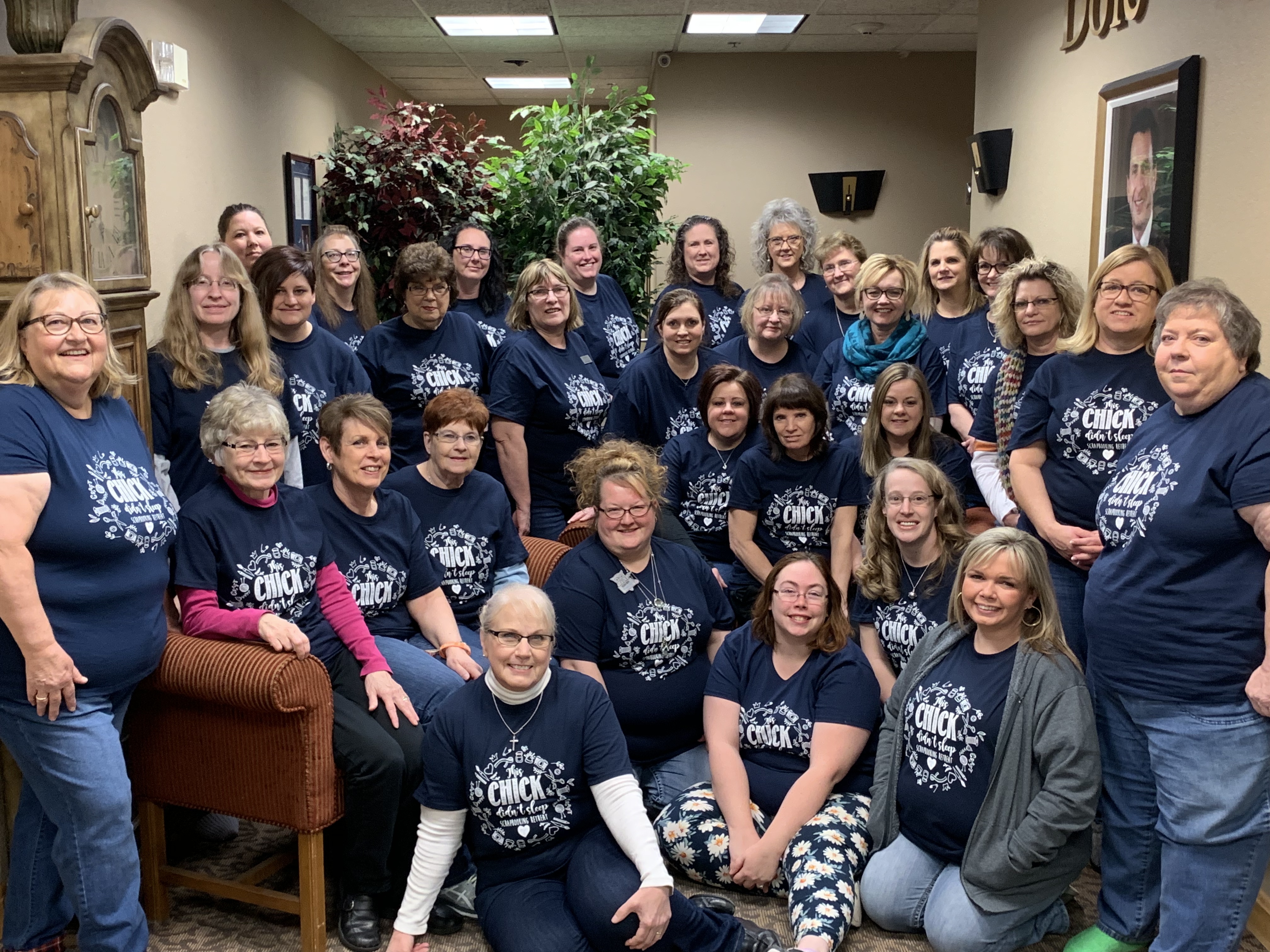
RUSSELL — End of winter? Not so. Ladies came to Russell to declare the “End of Winter” with a Scrapbooking Retreat from Friday, March 1, straight through Sunday, March 3. These talented ladies proved they could craft and create without stopping. Three ladies went without sleep at all, and all ladies scrapped into the night without sleeping.
Those attending the Retreat were from a wide area, including Hill City, Plainville, Damar, St. John, Ellsworth, Great Bend, Hutchinson, Hays, Hoisington, Salina, Nebraska, and Missouri. A total of 33 ladies attended this End of Winter Scrapbooking Retreat. Several brought family members to town for their own adventures.
Fossil Creek helped everyone out following the winter storm. They scooped and shoveled and helped dig out cars from being stuck. The 5 1/2 new inches of snow and high winds moved in on an existing 6 inches of snow made for treacherous and below freezing cold circumstances.
Russell Economic Development and Convention and Visitors Bureau were instrumental in helping host this event. Accommodations and advertising were part of the fun at the Retreat. Joni Driscoll, at Getting Noticed in Russell, made T-shirts. The shirts declare: “This Chick Didn’t Sleep at the Scrapbooking Retreat, Russell, KS.”
Local restaurants were happy to deliver meals and Teri Helwer delivered homemade bierocks. The bierocks were so delicious, the group tried to order more for the next day. Among the towns represented, bierocks were also referred to as Runzas and Cabbage Burgers. Our German heritage and traditions are of interest to visiting people.
Such complimentary expressions were received regarding the hospitality of Russell. Registrants chose this event over similar events in other towns and states. They look forward to coming back to Russell. Many are already signed up for the next Scrapbooking Retreat coming in September 2019, Let’s Flamingle!
The Olathe City Council on last week passed a resolution to promote diversity and equality in the city. However, many community members attending the meeting said it did not go far enough.
Olathe resident Chad Palmer looks on as the city council discusses a resolution to protect LGBTQ people from discrimination. photo by MICHELLE TYRENE JOHNSON
“A proclamation is nothing but lip service,” Olathe resident Chad Palmer told the city council, expressing that they needed to go further in making a stand against discrimination.
The measure passed by Olathe encourages the city to reject discrimination against any group, including on the basis of sexual orientation and gender identity and to seek mediation with the city if there is an issue. But it falls short of the protections offered by non-discrimination ordinances passed in Merriam, Prairie Village, Roeland Park, Mission and Kansas City, Kansas.
Council member John Bacon, who voted against the measure, said there was not enough opportunity to discuss it and that he didn’t think it was necessary.
“Some of the concerns I’m hearing from citizens, I’m not aware of. I hear them, but I’ve lived in this community a long time. And I’ve always known Olathe as a very loving community, and we treat everybody, or I treat everybody, the way I want you to treat me,” said council member Karin Brownlee, who also voted against the resolution.
However, Brett Hoedl, who chairs the area chapter of Equality Kansas, said mediation is encouraged but not required under the resolution, making it toothless.
“I’m frustrated because for two years you’ve had people coming in and asking about this,” Hoedl said to the city council. “This doesn’t provide protection, but it provides the illusion that there is protection.”
Mayor Michael Copeland and the other council members who voted for the resolution discussed how they would be willing to revisit the issue if the legislature failed to pass statewide protection for the LGBT community.
More than 60 people stayed until the end of the three-hour-long meeting to hear public comments on the resolution that the city council passed at the beginning of the meeting. Although most of the approximately 20 or so people who spoke supported a more pointed approach to LGBT discrimination, a few people spoke against the need to have a stronger anti-discrimination ordinance.
The United States Supreme Court legalized same-sex marriage nationwide in 2015, but no federal laws protect LGBTQ people from discrimination in housing, employment and public accommodations.
Twenty-one states and the District of Columbia have laws prohibiting discrimination against LGBTQ people, and about 225 cities – including Kansas City, Missouri – offer similar legal protections.
Overland Park and Mission Hills are also considering non-discrimination ordinances protecting LGBTQ residents.
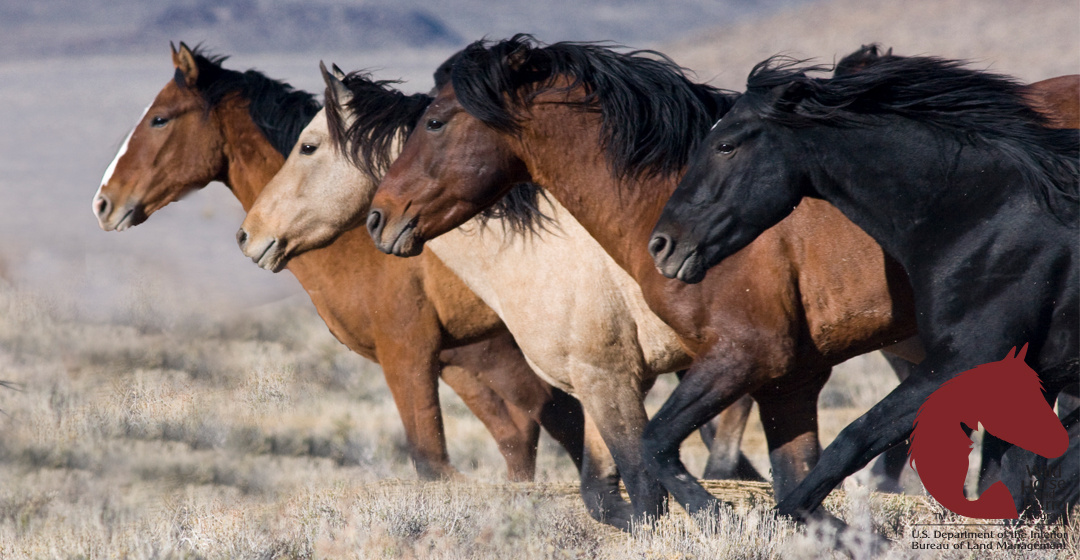
WASHINGTON— The Bureau of Land Management (BLM) announced Tuesday that it is seeking contractors for off-range pastures to provide a free-roaming environment and quality care for wild horses removed from Western public lands. The BLM will award multiple contracts that can accommodate 200 – 5,000 head of wild horses, with a four-year or nine-year renewal option. All contracts require supplemental feed for a minimum of four months to ensure that animals maintain a quality body condition throughout the dormant months.
Bids will be accepted from the following states through May 3, 2019: Colorado, Idaho, Kansas, Montana, Nebraska, Nevada, North Dakota, Oklahoma, Oregon, South Dakota, Texas “Panhandle” (only north of Hwy 82 and 84), Utah, Washington and Wyoming. The area west of the Cascade Mountain. Range in Oregon and Washington is excluded.
Applicants who are new to conducting business with the government must first obtain a Duns and Bradstreet number at www.dnb.com and then register at www.sam.gov/ to respond to the solicitation. No fee is involved. The solicitation describes what to submit to the BLM and where to send it. To obtain the contract solicitation: (1) Go to www.fedconnect.net;
(2) Click on “Search Public Opportunities”;
(3) Under Search Criteria, select “Reference Number”;
(4) Enter the solicitation’s reference number “140L0119R0002;
(5) Click Search” and once the solicitation’s information appears, download the information on the right.
For assistance, please contact Kemi Ismael at (202) 912-7098 or [email protected]. Ms. Ismael can assist with general questions. A list of frequently asked questions is available at: www.blm.gov/whb.
As of March 1, 2018, the wild horse and burro population on public lands was estimated at 82,000 animals, which is more than triple the number of animals the land can support in conjunction with other legally mandated land uses. To learn more about the wild horse or burro program, visit https://blm.gov/whb
PRATT – Good fishing spots can be hard to come by because anglers can be tight-lipped, so to speak, about their favorite fishing holes.
However, the Fisheries Division staff at the Kansas Department Wildlife, Parks and Tourism (KDWPT) can’t keep a secret and they want nothing more than for you to catch fish, so they produce a couple of handy publications every angler should keep in their hip pocket: The 2019 Kansas Fishing Atlas and the 2019 Kansas Fishing Forecast. Both are available online at www.ksoutdoors.com and in printed form, just in time for anglers to begin planning fishing trips this spring.
The forecast is a compilation of data district fisheries biologists gather throughout the year, sampling waters using a variety of methods, including electroshocking, trap nets, and gill nets. Fish are measured and weighed before being released, and data such as length, weight and number of fish caught is compared to that from previous years’ sampling. Creel surveys may also be conducted to find out what anglers are catching and what they prefer to catch.
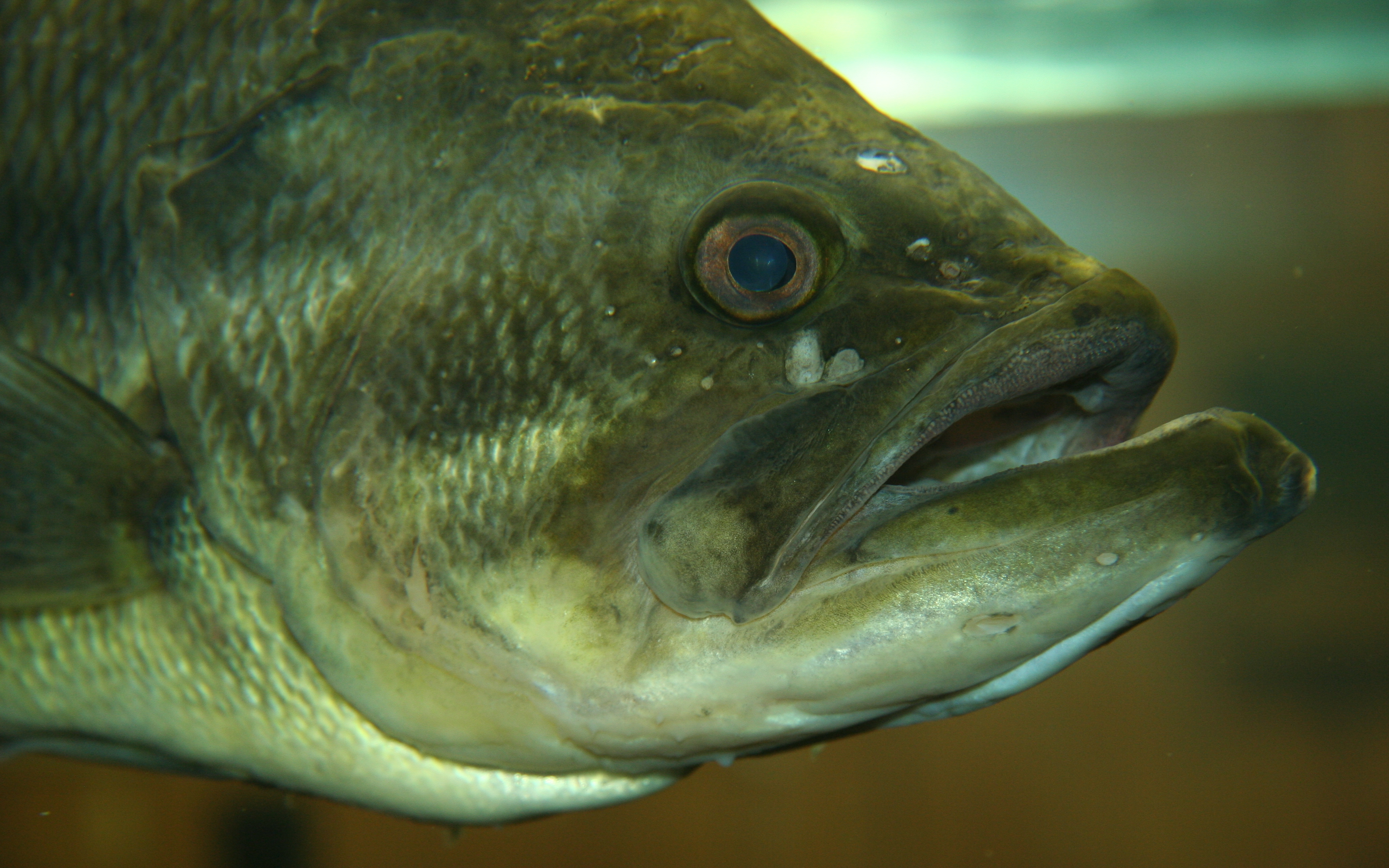
The forecast ranks waters for each species based on numbers of fish within length categories caught per sampling effort, which could be “per hour of electroshocking” or per “gill or trap net set.” Each species has a different set of length categories. For largemouth bass, the Density Rating is based on the number of fish caught per sampling effort that measured 12 inches or longer. The Preferred Rating for largemouths is the number of fish longer than 15 inches, and the Lunker Rating for largemouths is the number of fish longer than 20 inches.
Incidentally, the No. 1 reservoir for largemouths this year is Sebelius Reservoir in Norton County where 63 bass 12 inches or longer were caught per hour of electroshocking and 26 of those fish were 15 inches long or longer. But while Sebelius ranks first in the Density Rating, La Cygne Reservoir is tops for big bass. Of the 51 12-inch-long-or-longer bass caught per hour at La Cygne, 39 were longer than 15 inches and seven of those were 20 inches long or longer! La Cygne also had the biggest bass sampled, by far – 9.31 pounds.
The forecast also includes Biggest Fish, Biologist’s and Three-year Average ratings. The weight of the biggest fish sampled is included just to give anglers confidence that big fish are present and the Biologist’s Rating of excellent (E), good (G) or poor (P) allows for human input. Occasionally, the Biologist’s Rating may not agree with the numbers and this can happen when environmental conditions impact the sampling results. The Three-year Average Rating lets anglers see trends.
Once you’ve found some lakes with the kind of fishing you’re interested in, the 2019 Kansas Fishing Atlas will show you where they are located. And the fishing atlas maps also show you where private ponds and streams are open to public fishing through the Fishing Impoundments and Stream Habitats (F.I.S.H.) program. You can view and download the electronic version of the fishing atlas online or you can pick one up wherever licenses are sold. An angler willing to do a little map research and walk in to a private pond enrolled in F.I.S.H. is likely to find a fantastic fishing spot. But don’t tell anyone – that’s KDWPT’s job.
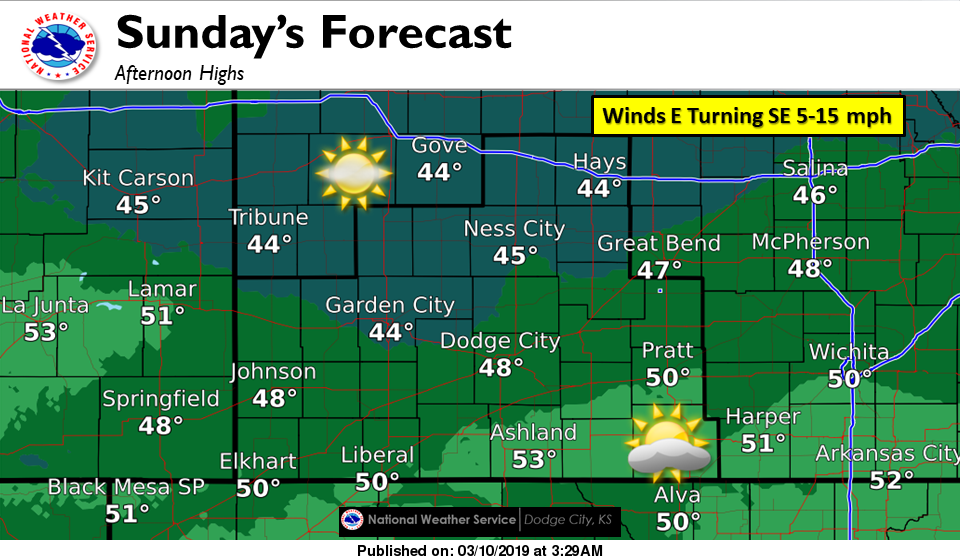
Mostly sunny, with a high near 44. Northwest wind 6 to 8 mph becoming east in the afternoon.
Tonight
Partly cloudy, with a low around 23. East wind 6 to 8 mph.
Monday
A slight chance of drizzle after 1pm. Partly sunny, with a high near 45. Southeast wind 5 to 9 mph.
Monday Night
Showers likely with a chance of drizzle before 7pm, then showers, mainly after 7pm. Low around 37. Southeast wind around 9 mph. Chance of precipitation is 80%. New precipitation amounts between a tenth and quarter of an inch possible.
Tuesday
Showers likely, mainly after 1pm. Cloudy, with a high near 55. South wind 9 to 17 mph. Chance of precipitation is 70%. New precipitation amounts between a tenth and quarter of an inch possible.
Tuesday Night
Showers and possibly a thunderstorm. Low around 47. Chance of precipitation is 90%. New rainfall amounts between three quarters and one inch possible.
Wednesday
Showers likely and possibly a thunderstorm, then showers after 7am. High near 56. Very windy. Chance of precipitation is 80%. New precipitation amounts between a half and three quarters of an inch possible.
Wednesday Night
Rain showers likely before 1am, then a chance of rain and snow showers between 1am and 2am, then a chance of snow showers after 2am. Mostly cloudy, with a low around 32. Very windy. Chance of precipitation is 60%. New precipitation amounts of less than a tenth of an inch possible.
Thursday
A chance of snow showers before 10am, then a chance of rain and snow showers between 10am and noon, then a chance of rain showers after noon. Mostly cloudy, with a high near 39. Very windy. Chance of precipitation is 50%.
La Crosse native Vanessa M. (House) Sabee was recently featured in a story in the Martha’s Vineyard Times on her new role as head chef at the Ritz Cafe in Martha’s Vineyard.
She started working at restaurants in La Crosse as a teenager. She attended college for two years in Pratt before moving to Hays, where she attended Fory Hays State University for a time. She worked at the Golden Q, Sip N Spin, and Professor’s before going on to culinary school in Colorado.
Sabee’s mother, Kelly House, taught her how to cook.
“She was always working in restaurants when I was younger, and I guess it was just destiny that that’s where I am now,” Sabee said.
Her mother started her cooking lessons with gravy.
“She is very proud of it. At the time I didn’t know it, but she gave me the proper technique on how to make a roux correctly,” Sabee said.
Sabee said her family has been in Rush County for a very long time. Although she said she doesn’t make it home as much as she would like, most of her direct family still lives in either Hays or La Crosse.
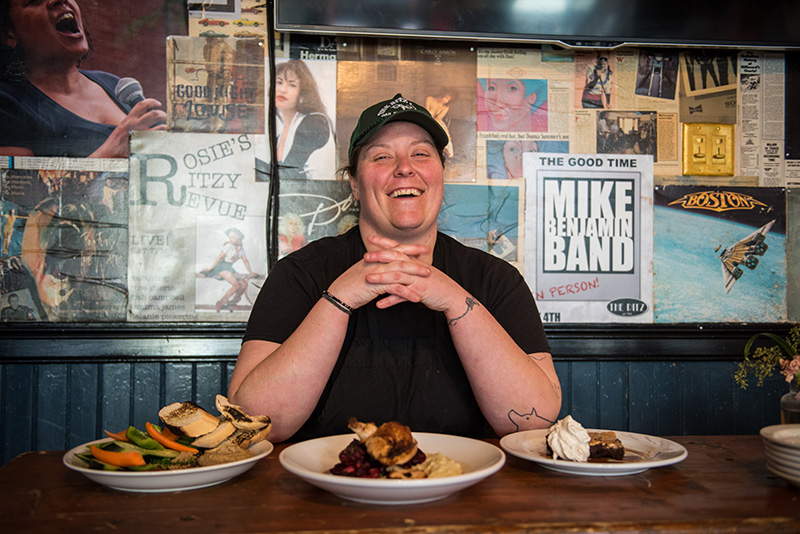
Vanessa Sabee is the new executive chef at the Ritz. Photo by Gabrielle Mannino/ Martha’s Vineyard Times
Since the Ritz Cafe in Oak Bluffs changed hands in 2014, the bar has undergone a number of transformations, and there’s another one on deck: When the Ritz reopens its doors on March 14, after a three-week winter break, they will introduce a new executive chef, Vanessa M. Sabee, and a new menu. You may recognize Vanessa as the first of six chefs who lent their expertise and creativity to the Ritz’s recent six-week Kitchen Takeover series of Wednesday night pop-up dinners, which featured a different chef and menu each week.
Sabee, 34, hails from “middle of nowhere Western Kansas,” and spent five or six years in Boulder, Colo., before she and her then-boyfriend (now husband), Ross Sabee, also a trained chef, came to Martha’s Vineyard in the spring of 2017 to work as line cooks at the Sweet Life Cafe, owned by chef Hal Ryerson and his wife Erin.
“It was awesome,” Vanessa says. “Hal and I have a very similar style of food theory, and so it was really easy to transition into that kitchen.” Vanessa returned to the Sweet Life as the sous-chef for the 2018 season, and prior to being offered the head chef position at the Ritz, she had planned to return for a third season. “We cooked really, really great food that we were very proud of,” she says of her time at Sweet Life.
The couple met Ritz manager Kelly Feirtag while hanging out at the bar their first summer here, and Ross now works at the Ritz doing security. Feirtag, general manager at the Ritz since July 2017, has seen at least three kitchen changes since that time. She said she’s excited to bring Vanessa onboard. “I feel like I’ve been searching for her for a long time,” Kelly says, “and I feel very lucky that she was willing and interested, and up for the challenge.”
Vanessa Sabee, the new Ritz head chef, plates an entree in the kitchen. Photo by Gabrielle Mannino/ Martha’s Vineyard Times
Feirtag is thrilled to have a woman running the kitchen, which is in keeping with Ritz history. “I had a woman chef when we opened the kitchen in 1987,” says former Ritz owner Janet King. Local chef Christina Napolitan ran the kitchen for about six years, King says. More recently, Sai Mai, a Thai restaurant that leased the Ritz kitchen for about four years before closing in 2013, was also run by women.
Vanessa Sabee’s culinary roots go deep, starting with her childhood in Kansas, where her mother, who “was a cook forever,” got Vanessa her first job at 14, flipping burgers in a small local place that her mom was running. “I’ve always been in restaurants,” Vanessa says. “It was a part of my life.”
Eager for change, Sabee got an associate’s degree in journalism after high school. She then transferred to a four-year school, at which point she had to get a job. “I knew I could get one in a kitchen,” she says. After one semester, she decided not to go back to school, and to continue cooking.
Vanessa worked at a couple of sports bars and a steakhouse in Hays, Kan., and did occasional catering gigs. She spent about a year at the steakhouse, where she replaced another cook who left to attend culinary school. Vanessa was in her mid-20s when she started thinking about going to culinary school herself. That meant relocating. “In order for me to further my culinary technique and skill and knowledge,” she says, “I had to move.”
Sabee attended the Auguste Escoffier School of Culinary Art in Boulder, Colo., a six-month program that she describes as “boot camp for the culinary world.”
After completing school, Sabee stayed in Boulder and worked at Shine Restaurant and Gathering Place, where she moved from prep cook to line cook, and departed as head line cook. After Shine came Bramble and Hare, a gastropub focusing on farm-to-table “modern American” food.
Bramble and Hare, sister restaurant to the well-known Black Cat Bistro, also in Boulder, had a farm that raised pigs, and they grew their own vegetables. “Whatever was in the walk-in was what you had,” she says. At times it was easy, particularly in summer, but “in the winter you had to get really creative,” Vanessa said. The restaurant also focused on pickling, preserving, processing, and freezing ingredients from the summer’s abundance so they were available for winter.
The Ritz kitchen has faced challenges over the years, one of which is its small size. Vanessa is accustomed to working in small spaces, particularly at Bramble, where her setup consisted of “an Easy-Bake oven, a two-plate burner, and a steam well,” out of which she did 40 to 60 covers a night. Of the Ritz, she says, “It’s luxurious!”
Sabee says she likes to construct dishes based on their cook time, “but also I like to put a lot of hot and cold elements together.” For Valentine’s Day, she prepared a pork belly dish, cured and smoked beforehand, and then, she says, “all we had to do was sear it.” The set was cold, and included a black-eyed pea purée, a salad of the same peas, collard green kimchi, and a charred pepper purée. “I don’t find the size of the kitchen challenging,” Vanessa says. “My kitchen surrounding basically builds my menu, based on what I think the kitchen, myself, and the staff are capable of executing.”
When the Ritz reopens on March 14, the menu will be mostly new, but will retain some popular staples — the Frito chili pie, wings with house dry-rub, and burgers made with locally butchered meat from Reliable Market, including the $5 burger special (without sauce or sides), which is available year-round from 12 to 2 pm, for dine-in or takeout. The $10 blue plate special, which changes daily, will also remain.
“I’m going to add a lot of vegetables,” Sabee says. She’s looking forward to incorporating produce from local farms, and catering primarily to locals looking for a good meal that won’t break the bank. “The summer people come, and they’ll do what they want,” she says, “but to cook at a year-round establishment, getting the locals back is more important than the weekender.”
There will be separate lunch and dinner menus, and Vanessa is hoping to have a happy hour menu by June, as well as an eventual Sunday brunch with “solid breakfast food” like biscuits and gravy, a build-your-own breakfast plate, and pork shoulder with grits and seared greens. “But that’s down the road,” she says.
Appetizers will include the wings, of course, as well as a pickle and cheese plate, a marinated olive dish, a black-eyed pea dip that is similar to hummus, and other “bar-friendly” items that you can eat “with your hands, in a crowd,” while catching a live band.
There will be a few new salads, sandwiches including a cod sandwich for lunch, chicken salad with roasted garlic aioli, and a vegan-friendly option made with the black-eyed pea spread. There will be a full dinner menu, with composed entrées at reasonable prices. Sabee looks forward to putting more emphasis on the food at the Ritz, but she’s not looking to reinvent the wheel. “Nothing fancy,” she says, “just really good, properly seasoned, properly executed [food].”
Dinner entrées will include dishes featured at the pop-up and on Valentine’s Day: Milk-braised pork shoulder with roasted Brussels sprouts, creamy grits, mustard cream sauce, and fried shallots; blackened cod; and chicken breast with orange-roasted beets, smoked mashed potatoes, and chicken jus (I tasted it, it’s phenomenal). Entrées will be priced at $16 to $21. There will be several dessert items, including a tahini-swirled brownie with salted caramel and fresh whipped cream.
For customers with allergies or dietary restrictions, Sabee is flexible and accommodating. “I’m not in the business of saying no,” she says. “I’d rather say yes.”
“I think it’s important for the community to have affordable, flavorful food that they might not necessarily expect to get from a place like this,” Vanessa says.
Kelly Feirtag agrees. Feirtag, herself a culinary school graduate in culinary management, has known she wanted to open her own restaurant someday, but never expected to get her start in a dive bar. “I love this place,” she says. “I love my job.”
Feirtag has put a lot of energy into growing the Ritz brand, introducing new bands and DJs to bring in new clientele, changing the decor to more accurately reflect the bar’s musical personality, and working to dispel the unsavory reputation that has followed the Ritz for years.
“It’s a safe place for a woman to come and have a drink by herself,” Kelly says. “Our staff doesn’t really put up with a lot.” Although the negative rumors aren’t accurate, she also insists, “We’re not fancy. That’s not at all what we’re going for; we are still a dive bar. We’re more quirky and funky … we don’t take ourselves seriously at all.”
“I don’t know anything about the past here,” Vanessa says. “I don’t want to focus on that. I want to focus on the future [and] my menu, and I think that it’ll be fun for people, to see what’s capable of coming out of this place.”



















 Today
Today