Last year was the third wettest year on record for the city of Hays.
In 2018, Hays received 37.55 inches of moisture, just a quarter-inch shy of 37.99 inches that fell in 1993 – the second wettest year.
Official daily records have been kept by the K-State Agricultural Research Center south of town since 1868.
Still, the abundant moisture does not mean an end or even slowdown of the city’s water conservation programs started in 1992.
Holly Dickman, Hays water conservation specialist
“We’re in really great shape right now. The seasonal drought outlook is good for us showing no drought at least through April,” said Holly Dickman, Hays’ water conservation specialist. “The soils are very saturated right now.”
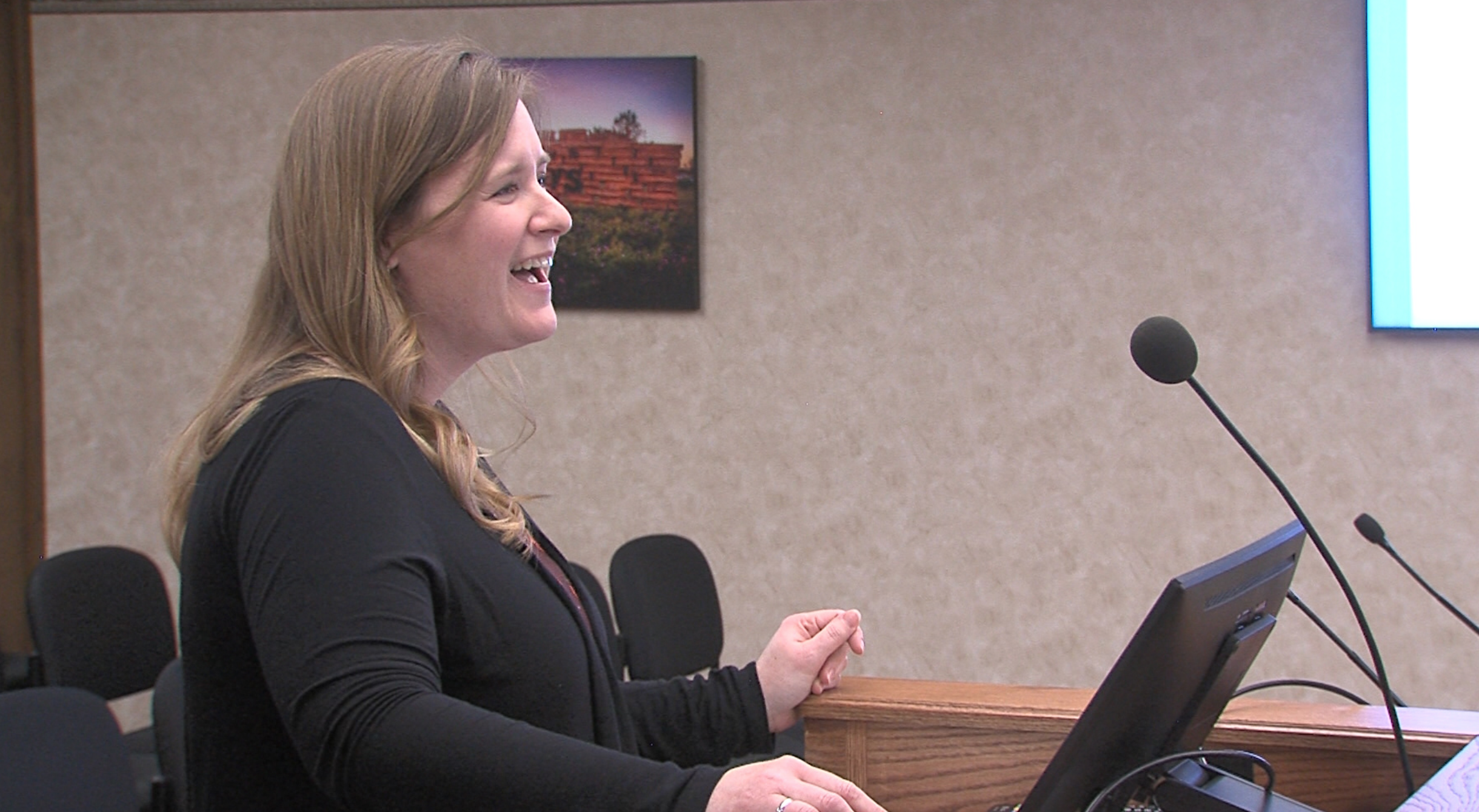
She presented a wrap up of the water conservation programs in 2018 to city commissioners last week and talked about what will be done in 2019.
The high efficiency toilet rebate program was the most popular in 2018 and Dickman expects the same this year. Most of the rebates were for residences.
TOILET REBATES 2018
449 toilets replaced at a cost of $38,200 to the city
289 replaced in 2017
Potential 2,934,853 gallons of water saved
WASHING MACHINE REBATES 2018
91 washing machines replaced at a cost of $9,100 to the city
89 replaced in 2017
81% of machines had Integrated Water Factor (IWF) of 3.2 gallons or less
Potential 691,849 gallons of water saved
URINAL REBATES 2018
3 urinals replaced at a cost of $900 to the city
Potential 191,625 gallons of water saved
Urinal rebate eliminated for 2019
TURF CONVERSION 2018
9 turf conversions of 12,734 sq. ft. at a cost of $9,023 to the city
26 conversions in 2017
Average rebate of $931.40
Pending conversions of 18,864 sq. ft.
LOW FLOW SHOWER HEAD PROGRAM 2018
146 shower heads distributed
103 distributed in 2017
Potential 852,640 gallons of water saved
Last year was slow for turf conversions due to the plentiful rain. Several pre-inspections are pending. Property owners have one year to complete the work.
The urinal rebate is not a popular program according to Dickman and has been eliminated for 2019. She noted the Golden Q Sports Bar & Grill was the sole participant last year.
“If there is a commercial business that would like to replace their urinals, I encourage them to contact me. There are other ways we can help facilitate that,” she added.
Notable projects of 2018 included the change out in Jan. of 98 toilets by the Fort Hays Inn, 2524 Vine, to models with a 1.28 gallon per flush (gpf).
In 2017, the motel used an average 7,890 cu. ft. of water per month. In 2018, that was reduced to 2,704 cu. ft. per month.
Tiger Mart convenience store, 335 W. 8th St., changed out a water-cooled ice machine for an air-cooled model in Aug. Average monthly water use for the ice machine was reduced to 620 cu. ft. from 2,400 cu. ft.
“Those are phenomenal,” said Commissioner Sandy Jacobs.
Commissioner James Meier agreed. “Of course, we’re excited about the water savings, but the monetary savings. Think what that means to them. That has to be thousands of dollars.”
(Click to enlarge)
Dickman shared a list of 18 types of education and outreach she uses, “in all ways, shapes and forms,” saying it all comes down to communication. “The more variety, the better.”
Dickman also noted the revamped city of Hays website includes a blue topic button on the front page and a featured column for water conservation information.
A new mascot, Water$mart Wally,” was created last year and first introduced to the Lincoln School third-graders.
The city of Hays and KSU Big Creek Middle Smoky Hill River Watersheds will host a free World Water Day Fun Fest for children 10 a.m. – 12 p.m. Thu., March 14 in the lobby of the Sternberg Museum of Natural History, 3000 Sternberg Drive.
WICHITA, KAN. – A jury returned guilty verdicts Wednesday in the federal trial of a Russian-born woman accused of unlawfully taking her child out of the United States and keeping the child away from the child’s father in Kansas, according to U.S. Attorney Stephen McAllister.
Mobley is being held in Harvey Co.
Bogdana Alexandrovna Mobley, 38, was found guilty on one count of international parental kidnapping and two counts of attempting to extort money from the child’s father.
During trial, the prosecutor presented evidence that in April 2014 Mobley took a child of hers (identified as S.M. in court records) to Russia despite the fact the biological father, Brian Mobley, had been awarded joint custody in Sedgwick County District Court. At the time, the Mobleys had a pending divorce case before the court. The defendant did not obtain the permission of the court or Brian Mobley before going to Russia with the child. The child still has not returned to the United States.
Between April 2014 and November 2016, the defendant only permitted Brian Mobley to communicate with S.M. via cell phones and Skype applications. She told Brian Mobley that he needed to send her money in order to see the child.
Sentencing is set for May 20. She faces up to three years in federal prison on the kidnapping charge and up to 20 years on the extortion counts.
Rural Long Island resident Henrietta June Van Kooten passed away Wednesday, March 6, 2019, at the Kearney Regional Medical Center in Kearney, NE at the age of 90.
She was born April 22, 1928 in Phillips County, KS, the daughter of Garrit & Gradda (Veldhuizen) Tien. On May 7, 1947, she married Alfred Earl Van Kooten in the Luctor parsonage in Phillips County. He preceded her in death on July 2, 1988.
Those left to mourn her passing include her five children, Conrad Van Kooten of Long Island, KS, Judith Horne of Grand Island, NE, Karen Van Kooten of McCook, NE, Ann Griffin and Cynthia Schemper, both of Almena, KS; her siblings, Marie Bousema of Worthington, MN; Dorothy Huyser of Des Moines, IA; Rosalee Verhoef of Artesia, California; Arlo Tien of Prairie View, KS; Edward Tien of Phillipsburg, KS; Carmen VanBeek of Sioux Center, IA; 14 grand-children, 32 great-grandchildren, and 1 great-great-grandchild.
Funeral services will be Saturday, March 9, 2019 at 11:00 a.m. in the Luctor Christian Reformed Church, Phillips County, KS, with Gale Tien officiating. Burial will follow in the Luctor Cemetery.
Visitation will be Thursday, March 7, from 5:00 – 9:00 p.m. and Friday, March 8, from 9:00 a.m. – 9:00 p.m. at the Olliff-Boeve Memorial Chapel, Phillipsburg, where the family will receive friends from 6:00 – 8:00 p.m. Friday evening.
Memorial contributions may be given to the Henrietta Van Kooten Memorial Fund, to be designated at a later date. Online condolences to: www.olliffboeve.com.
Olliff-Boeve Memorial Chapel, Phillipsburg, is in charge of arrangements.
In 1936, when America was plunged into the worst economic depression in its history, President Roosevelt told us that “the school is the last expenditure upon which America should be willing to economize.” He understood then that creating an outstanding public educational system was worth the cost, but is it worth the cost to Kansans today?
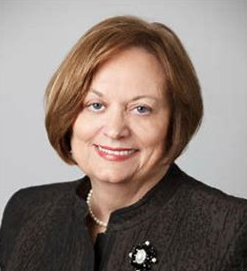
Dr. Sharon Hartin Iorio is Professor & Dean Emeritus at Wichita State University College of Education.
At this writing, the Legislature appears reluctant to respond to the Kansas Supreme Court directive to add approximately $100 million to the more than $500 million over five years the court ordered in 2018. Can the mid-April deadline set by the court be accomplished?
Despite the urgency for closure, school funding remains an ongoing point of contention. Moreover, allocating funds to meet the court order may not guarantee an ending to contention.
Already there are three propositions the Legislature may consider that would weaken and decrease recent court-ordered appropriations to public schools that currently serve 90 percent of Kansas students.
The first proposal would introduce Education Spending Accounts, which are a restructured form of vouchers allowing families to decide whether to use their student(s) per-pupil funding for public school or a private school of their choice. Thus, some of the recently allocated funds would be pulled away from public schools.
Increasing tax credits now going to private school scholarships, if passed into law, would reduce the number of tax dollars coming into the general fund because of the 70 percent, or perhaps more, tax write off that would go to those who can afford to purchase the scholarship tax credits.
The third proposal would broaden charter school independence; thus, drawing per-pupil state dollars away from existing public schools while allowing charters to follow even fewer state policies.
Legislators should address the court mandate that is due in April, then take a comprehensive look at Kansas schools. Recommendations regarding school finance presented to the public by political parties and political action groups are numerous, confusing—even contradictory.
The turmoil pushes the general public into political divides that stem more from ideologies than the educational problems facing our state. It is impossible to correlate the amount of money spent with student achievement or lack thereof.
The resolution of Kansas’ current education finance dilemma does not need to be an economic killer or require a flood of new money that guarantees acceptance of schools’ current status quo. Plus, neither of these alternatives will get us the educational system that President Roosevelt envisioned that envisioned continuous improvement in achievement for all students.
Education is a responsibility beyond the Legislature and shared by all of us even though individuals can only do what we can with the time that we have. Reaching out doesn’t always mean organized, ambitious work of political parties or political action groups. Here’s some suggestions to help move schools forward: Text a friend or post a note about your ideas on education on your Facebook page, tutor or volunteer at a school or not-for-profit children’s center.
Simply do what you can to shift your and others’ thinking away from contentious games played out in the Legislature and toward collaboration and problem solving.
Realistically, this work may go no farther than just you. If it doesn’t we shouldn’t consider that a failure. None of us know how simply trying to help schools may shape the larger public sphere. Even though school choice disputes continue, mutuality, compromise and good will really can lead to more positive outcomes.
Sharon Hartin Iorio is a Professor and Dean Emerita of Wichita State University College of Education.
Hays USD 489 is showing strong results in directing students to post-secondary education.
Measuring post-secondary success is part of Kansas’ new state accreditation process. Hays staff released data compiled by the state during the school board meeting Monday.
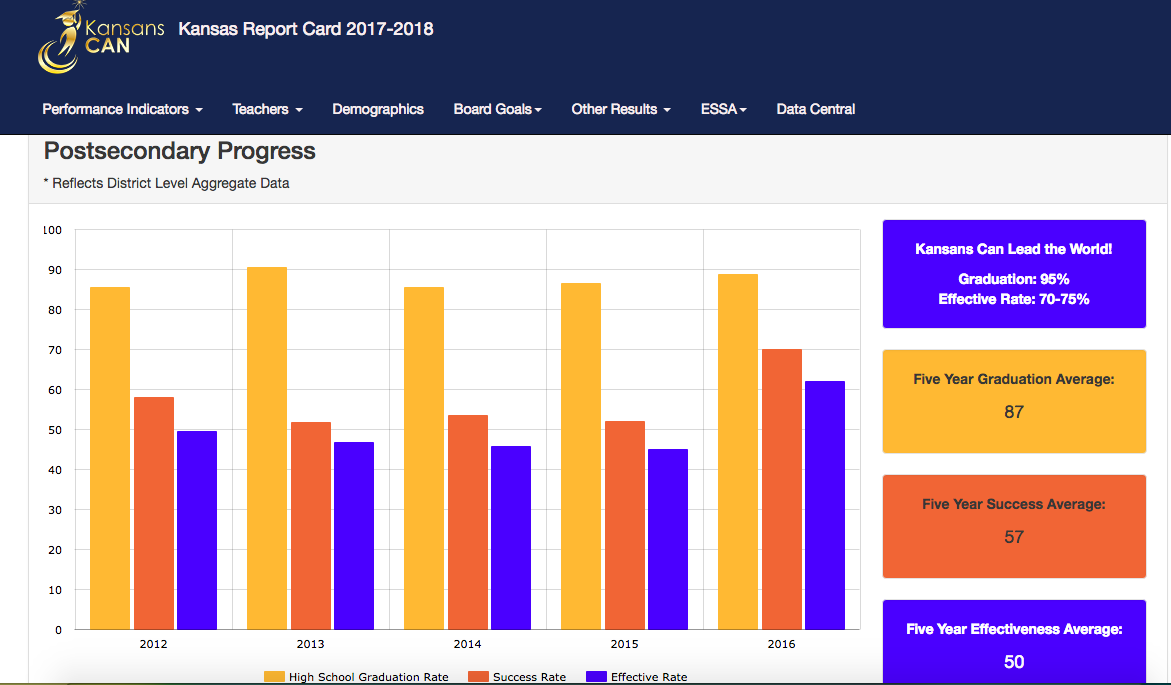
In 2016, HHS had a 88.7 percent graduation rate. 69,9 percent of HHS students reported post-secondary advances in the two years after graduation.
This includes earning an industry-recognized certification while in high school, a postsecondary certificate, a postsecondary degree or being enrolled for two years in a postsecondary education program.
The district earned a 62.1 percent effective rate.
“We are not just responsible for getting the students across the stage during graduation, but we want them to be successful beyond graduation. … This is something to celebrate,” Shanna Dinkel, assistant superintendent, said.
The district had a significant jump from 2015 when the district’s effectiveness rate was 44.9 percent.
Although reporting is improving and that might have played a role in the increase, Dinkel also said she thought individual plans of study and an emphasis in the district in building relationships with students is affecting students’ success after graduation.
The school still has a long way to go to meet the Kansans Can state goals, which are a 95 percent graduation rate and at least a 70 percent effectiveness rate.
However, Hays is outperforming many of its comparable schools.
For example, Salina had a 50.7 percent post-secondary success rate and a 44.6 percent effectiveness rate. Manhattan had a 53.6 percent postsecondary success rate and 41.2 percent effectiveness rate.
Another measure of relevance in education is attendance.
“Are students wanting to come to school?” Dinkel said.
The district’s absentee rate is slightly higher than the state average.
The district is looking harder at students who are chronically absent, which is defined as students who miss 10 percent or more of their school days.
“That does impact at an early age if you are chronically absent,” she said. “Those gaps get wider and wider and will really make an impact on whether you graduate or not.”
Chronic absenteeism for the district is at 10.25 percent compared to 13.9 percent for the state.
Dinkel said schools will be looking at working with individual students as they approach or pass that chronic absenteeism mark to reduce missed days.
DENVER (AP) — Avalanches are causing more travel problems in Colorado’s mountains.
Firefighters say an avalanche at around 5 a.m. Thursday near Copper Mountain ruptured a natural gas pipeline. Nearby highways, including a stretch of nearby Interstate 70, the state’s busy east-west highway, was shut down as a precaution as crews work to shut off the gas.
Meanwhile, a tow truck was caught in an avalanche just after midnight on I-70 at Vail Pass. The Colorado State Patrol said he was doing OK.
The highway is closed there until road crews can trigger controlled avalanches to bring down more snow during the day.
WASHINGTON D.C.-This week, Kansas First District congressman Dr. Roger Marshall and members of the Republican Study Committee (RSC), on which he serves as the Chairman of the Health Care Task Force, met with President Trump in the Oval Office to discuss advancing the committee’s agenda forward.
Photo courtesy Dr. Roger Marshall
“We discussed our plans to drive down health care costs and other market-based reforms that would give patients choice, access, and protect those with preexisting conditions.”
Congressman Marshall said. “These have been top priorities for my office, and as the Health Care Task Force Chairman, I was honored to sit down with the President and outline what fixing our broken health care system looks like.
In the nearly two-hour long meeting, President Trump expressed his support and commitment to the conservative agenda.
“Whether it’s a closed-door discussion, or an event open to the press, the President is transparent in expressing exactly what he feels. In the meeting, he was very positive and asked for our opinions. He was engaged and open to hearing our solutions.” Congressman Marshall said.
As the largest caucus of conservatives in Congress, the RSC plays a critical role in shaping Republican policies, and challenging Democrat leadership when faced with misguided policies.
In the meeting, President Trump also discussed pending trade agreements with Congressman Marshall.
“Point blank, he assured me that he would not sign a bad trade deal for Kansas farmers. The president confidently said that they are making great progress with China and will prioritize the approval of USMCA by Congress.”
Southeast corner of Commerce Parkway and 27th Street (Click to enlarge)
By BECKY KISER Hays Post
Hays city commissioners Thursday will discuss exercising the city’s option to purchase property near Interstate 70 and Commerce Parkway.
In April 2018, the commission purchased an 18-month irrevocable option to buy 91 acres in the southheast corner of the 27th Street and Commerce Parkway intersection at the east I-70 Exit 161. That option expires September 19 of this year.
The property, currently owned by the Cathy A. Braun Revocable Trust of Hays, has significant potential for future retail, commercial, and business park development.
According to a memo from City Manager Toby Dougherty, the cost to exercise the option is the original price of $800,000, less the credited option payment of approximately $17,500 if paid the day following the regular March 14 commission meeting, and prorated taxes of $108. The total remaining purchase price would be $782,608 plus shared closing costs and title insurance.
Staff is recommending the city commission approve the purchase.
(Click to enlarge)
Commissioners will also see an engineering design proposal to build an additional waterline under I-70 to the north. There is currently just one 16-inch water main going under I-70 to the 500,000-gallon water tower constructed in 1993.
The lowest cost proposal is from Kaw Valley Engineers, Junction City, for $59,860. It would be funded from Water Capital.
The project is included in the Capital Improvement Plan within the 2019 Budget.
On April 1, Kansas laws change to allow for the sale of beer with up to 6% alcohol under Cereal Malt Beverage (CMB) Licensing.
Commissioners will review an ordinance amending the current City of Hays Code of Ordinances to include the reference to 6% beer.
There are no changes needed to CMB licensing procedures or qualifications in the City Clerk’s office, according to Kim Rupp, finance director. All current CMB licenses in Hays will remain in effect and will automatically qualify under the new ordinance.
Rupp will also talk about improvements which have been completed in two areas:
• Heart of America Second Addition (Resolution No. 2016-010) – Water, Sanitary
Sewer, Storm Sewer, and Street improvements (extension of 9th Street east to Commerce Parkway)
• King’s Gate First Addition (2012-004) – Park improvements (south of I-70 between Hall Street and the Highway 183 Bypass)
The city will begin the process of assessing property owners in the improvement districts.
Heart of America Second Addition will be a fifteen-year assessment of $277,836.51 spread against each lot.
King’s Gate First Addition will be a ten-year assessment of $82,163.49 split equally per square foot within the improvement district.
WASHINGTON —As the U.S. Supreme Court weighs whether the Trump administration can ask people if they are citizens on the 2020 Census, the Census Bureau is quietly seeking comprehensive information about the legal status of millions of immigrants.
Photo courtesy US Census Bureau
Under a proposed plan, the Department of Homeland Security would provide the Census Bureau with a broad swath of personal data about noncitizens, including their immigration status, The Associated Press has learned. A pending agreement between the agencies has been in the works since at least January, the same month a federal judge in New York blocked the administration from adding the citizenship question to the 10-year survey.
On Wednesday, a federal judge in California also declared that adding the citizenship question to the Census was unconstitutional, saying the move “threatens the very foundation of our democratic system.”
The data that Homeland Security would share with Census officials would include noncitizens’ full names and addresses, birth dates and places, as well as Social Security numbers and highly sensitive alien registration numbers, according to a document signed by the Census Bureau and obtained by AP.
Such a data dump would be apparently unprecedented and give the Census Bureau a view of immigrants’ citizenship status that is even more precise than what can be gathered in door-to-door canvassing, according to bureau research.
Six former Census and DHS officials said they were not aware that individuals’ citizenship status had ever before been shared with the Census. “Generally, the information kept in a system of records is presumed to be private and can’t be released unless it fits with a certain set of defined exceptions,” said Leon Rodriguez, who led the DHS agency responsible for citizenship under the Obama administration.
The move raises questions as to what the Trump administration seeks to do with the data and concerns among privacy and civil rights activists that it could be misused.
Census spokesman Michael Cook said the agreement was awaiting signatures at DHS, but that Census expected it would be finalized “as soon as possible.”
“The U.S. Census Bureau routinely enters into agreements to receive administrative records from many agencies, including our pending agreement with U.S. Citizenship and Immigration Services, to assist us in our mission to provide quality statistics to the American public,” Cook said in a statement. “By law, the Census Bureau does not return any records to the Department of Homeland Security or any of its components, including Immigration and Customs Enforcement.”
Jessica Collins, a spokeswoman for Citizenship and Immigration Services, said no agreement has been finalized. She said the purpose of such agreements is to help improve the reliability of population estimates for the next Census.
“The information is protected and safeguarded under applicable laws and will not be used for adjudicative or law enforcement purposes,” Collins said.
Civil rights groups accuse the White House of pursuing a citizenship question because it would discourage noncitizens from participating in the Census and lead to less federal money and representation in Congress for states with large immigrant populations. Census researchers say including the question could yield significant underreporting for immigrants and communities of color.
Under the pending three-year information-sharing agreement, the Census Bureau would use the DHS data to better determine who is a citizen and eligible to vote by “linking citizenship information from administrative records to Census microdata.”
“All uses of the data are solely for statistical purposes, which by definition means that uses will not directly affect benefits or enforcement actions for any individual,” according to the 13-page document signed by a Census official.
Amy O’Hara, who until 2017 directed Census Bureau efforts to expand data-sharing with other agencies, said she was surprised a plan was in the works for sharing alien numbers, which are assigned to immigrants seeking citizenship or involved in law enforcement action.
“I wish that we were not on this path,” she said. “If the citizenship question hadn’t been added to the Census, this agreement never would have been sought.”
In previous administrations, government lawyers advised Census researchers to use a minimal amount of identifying data to get their jobs done, said O’Hara, now co-director of Georgetown University’s census research center. During her tenure, the bureau never obtained anything as sensitive as alien numbers, which O’Hara called “more radioactive than fingerprints.”
Some privacy groups worry the pending agreement is an end-run around the courts.
“What’s going on here is they are trying to circumvent the need for a citizenship question by using data collected by another agency for a different purpose,” Jeramie Scott, an attorney at the Electronic Privacy Information Center. “It’s a violation of people’s privacy.”
The agreement would bar the bureau from sharing the data with outside agencies. But confidentiality provisions have been circumvented in the past.
During World War II Congress suspended those protections, and the bureau shared data about Japanese-Americans that was used to help send 120,000 people to internment camps. Most were U.S. citizens. From 2002-2003, the Census Bureau provided DHS with population statistics on Arab-Americans that activists complained was a breach of public trust, even if the sharing was legal.
The quiet manner in which the agencies pursued sharing records could stoke concerns that the Trump administration may be seeking to create a registry of noncitizens, said Kenneth Prewitt, who was Census director from 1998-2001 and is now a Columbia University professor.
Census scholars say that could not happen without new legislation, which is not likely under the Democratic majority in the House of Representatives.
In mid-April, the Supreme Court will hear arguments as to whether the 2020 Census can include a citizenship question, with a decision expected weeks later.
Next week, Commerce Secretary Wilbur Ross, whose department oversees the census, is set to testify before Congress on his role in the controversy.
California Democratic Rep. Jimmy Gomez, who sits on the House Committee on Oversight and Reform, said he was concerned to learn of the data-sharing proposal and that Ross would face related questions.
“The news of this proposed plan will surely send shockwaves through immigrant communities across the country,” Gomez said Wednesday. “This new development raises even more questions about the motivations behind this untested citizenship question and Secretary Ross better be ready to answer them.”
About 44 million immigrants live in the United States — nearly 11 million of them illegally. The 10-year headcount is based on the total resident population, both citizens and noncitizens.
The Census figures hugely in how political power and money are distributed in the U.S., and underreporting by noncitizens would have an outsized impact in states with larger immigrant populations. Political clout and federal dollars are both at stake because 10-year survey results are used to distribute electoral college votes and congressional district seats, and allocate more than $880 billion a year for services including roads, schools and Medicare.
The push to get a clearer picture of the number of noncitizens in the U.S. comes from an administration that has implemented hard-line policies to restrict immigration in numerous agencies.
Against advice of career officials at the Census Bureau, Ross decided last year to add the citizenship question to the 10-year headcount, saying the Justice Department requested the question to improve enforcement of the federal Voting Rights Act.
Some prominent GOP lawmakers endorsed the citizenship question, saying it would lead to more accurate data, and a joint fundraising committee for Trump’s re-election campaign and the Republican National Committee used it as a fundraising tool. Immigrants’ rights groups and multiple Democratic-led states, cities and counties filed suit, arguing that the question sought to discourage the Census participation of minorities.
A citizenship question has not appeared on the once-in-a-decade headcount since 1950, though it has been on the American Community Survey, for which the Census Bureau annually polls 3.5 million households.
Documents and testimony in a New York trial showed that Ross began pressing for a citizenship question soon after he became secretary in 2017, and that he consulted Steve Bannon, President Donald Trump’s former chief strategist, and then-Kansas Secretary of State Kris Kobach, a vocal advocate of tough immigration laws who also has advised the president. Emails showed that Ross himself had invited the Justice Department request to add the citizenship question.
A March 2018 memo to Ross from the Census Bureau’s chief scientist says the DHS data on noncitizens could be used to help create a “comprehensive statistical reference list of current U.S. citizens.” The memo discusses how to create ‘baseline citizenship statistics’ by drawing on administrative records from DHS, the Social Security Administration, State Department and the Internal Revenue Service, in addition to including the citizenship question in the census.
In January, New York federal judge Jesse Furman ruled that Ross was “arbitrary and capricious” in proposing the question.
The new data comes from Citizenship and Immigration Services, a DHS agency that has taken on a larger role in enforcing immigration restrictions under Trump.
After Francis Cissna took over as director in October 2017, the agency initiated a “denaturalization task force” aimed at investigating whether immigrants obtaining their citizenship fraudulently. The agency also has slashed the refugee program to historic lows and proposed reinterpreting immigration law to screen whether legal immigrants are likely to draw on the public welfare system.
Cissna also rewrote the agency’s mission statement: “Securing America’s promise as a nation of immigrants” became “Securing the homeland and honoring our values.”
—————-SAN FRANCISCO (AP) — The Trump administration’s decision to add a citizenship question to the 2020 census “threatens the very foundation of our democratic system” because it would cause a significant undercount of immigrants and Latinos that could distort the distribution of congressional seats, a U.S. judge said Wednesday.Judge Richard Seeborg said the commerce secretary’s decision to add the question was arbitrary and capricious and would violate a constitutional requirement that the census count everyone in the country.”The record in this case has clearly established that including the citizenship question on the 2020 census is fundamentally counterproductive to the goal of obtaining accurate citizenship data about the public,” Seeborg said.Seeborg became the second judge to declare the move illegal, so the effect of his decision is limited. A federal judge in New York had previously blocked the administration from adding the question to the population count that occurs every 10 years, and the U.S. Supreme Court last month agreed to review that decision.The ruling in California, however, differed from the January decision by U.S. District Judge Jesse Furman in a significant way. Furman also found the question violated administrative requirements, but he rejected an argument that it violated the Constitution.
Seeborg found a constitutional violation, which could present another issue for the U.S. Supreme Court to consider if federal officials appeal his decision.
An email to the U.S. Department of Justice seeking comment on the ruling was not immediately returned.
Seeborg’s decision came in lawsuits by California and several cities in the state that asserted the citizenship question was politically motivated and should be kept off the census.
“Justice has prevailed for each and every Californian who should raise their hands to be counted in the 2020 census without being discouraged by a citizenship question,” state Attorney General Xavier Becerra said in a statement.
California argued that the question would cost it a substantial amount of money and at least one congressional seat by reducing the percentage of Latinos and immigrants who respond to the survey. It said that would lead to an undercount in the state with a substantial number of people from both groups.
Census numbers are used to determine states’ distribution of congressional seats and billions of dollars in federal funding.
The Justice Department had argued that census officials take steps such as making in-person follow-up visits to get an accurate count. Households that skip the citizenship question but otherwise fill out a substantial portion of the questionnaire would still be counted, Justice Department attorneys said in court documents.
The Commerce Department announced the addition of a citizenship question a year ago, saying the Justice Department asked for it and it would improve enforcement of a 1965 law meant to protect minority voting rights.
The move sparked an outcry from Democrats, who said it would disproportionately affect states favoring their party. People were last asked whether they were U.S. citizens in the 1950 census.
Seeborg rejected the claim that the citizenship question stemmed from a request by the Justice Department, calling that a “pretext” for the real reason to add it.
He cited an email from Commerce Secretary Wilbur Ross to a Commerce Department official nearly a year before the question was announced, in which Ross said he was “mystified” why nothing had been done in response to his “months old request that we include the citizenship question.”
“What ensued was a cynical search to find some reason, any reason, or an agency request to justify that preordained result,” the judge said.
Donald E. Copper, 93, passed away Wednesday, March 6, 2019 at Smith County Health & Rehab of Smith Center.
Funeral services will be held at 11:00 a.m., Monday, March 11, 2019 at All Faiths Funeral Chapel, Smith Center, KS, with Pastor Lance McDowell officiating. Visitation will be held on Sunday, March 10, 2019 from 1:00 p.m. – 8:00 p.m. with family present to greet friends from 5:00 p.m. – 7:00 p.m. at the funeral chapel. Burial with military honors will take place in Fairview Cemetery, Smith Center, KS. Memorials may be given to VFW Post #1141, Smith Center, KS and can be sent in care of the funeral chapel.
A full obituary is pending with All Faiths Funeral Chapel.
Lawrence “Larry” Joseph Havlas passed away on Saturday, March 2, 2019 in Wichita, Kansas at the age of 74.
He was born on January 17, 1945 in Kansas City, MO to the late Joseph and Clara (Seck) Havlas. Larry spent the majority of his life in Plainville and he graduated from Plainville High School in 1963. After his graduation he managed the family farm until he switched occupations and became a motor carrier. He was united in marriage to Glenda Anderson and was blessed with three children: Mike, Melissa, and Matt. They later divorced.
Larry was a member of the Sacred Heart Catholic Church of Plainville. He enjoyed sporting events, especially going to Royals and Chiefs games, and working on puzzles. He was a pheasant hunter for many years and hunted with the same group of hunters for over 30 years.
Larry is survived by his children Mike Havlas of Olathe, KS, Matt Havlas and wife Daryl of Quinter, KS, and Melissa Blake and husband Richard of Wichita, KS; 11 grandchildren Jessica Shumway and husband Jordan, Jacob Havlas and wife Sophia, Jaci Havlas, Rick Blake Jr. and wife Brooke, Amanda Kruse and husband Matt, Monica Blake, Joshua Blake, Peyton Havlas, Conner Havlas, Preston Havlas, Cooper Havlas; and 6 great-grandchildren Liam Shumway, Spencer Shumway, Brody Havlas, Brinley Blake, Jaxson Kruse, and Emma Kruse; and 3 more great-grandkids on the way.
Preceding Larry in death are his parents, Joseph and Clara Havlas.
A Mass of Christian Burial will be held at 10:30am on Thursday, March 7, 2019 at the Sacred Heart Catholic Church in Plainville. Visitation will be from 1:00-8:00pm on Wednesday with family receiving friends from 5:00 – 7:00pm and a Prayer Vigil at 5:30pm at the funeral home in Plainville.
Memorials are suggested to Avita Health and Rehab at Reeds Cove and may be sent in care of Plumer-Overlease Funeral Home, 320 SW 2nd St., Plainville, KS 67663.
 By BECKY KISER
 Notable projects of 2018 included the change out in Jan. of 98 toilets by the Fort Hays Inn, 2524 Vine, to models with a 1.28 gallon per flush (gpf).
 A new mascot, Water$mart Wally,” was created last year and first introduced to the Lincoln School third-graders.