We have a brand new updated website! Click here to check it out!

Kansas legislature adjourns, allows veto of tax relief measure to stand

TOPEKA, Kan. (AP) — Democratic Gov. Laura Kelly’s veto of a Republican tax relief bill will stand because GOP lawmakers did not attempt to override it.

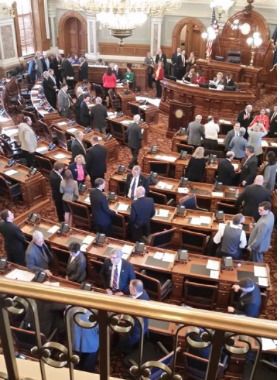
The Republican-controlled Legislature adjourned Friday for its annual spring break without an override attempt. The deadline for trying to override will pass before lawmakers reconvene May 1.

The bill was designed to prevent individuals and businesses from paying more in state income taxes because of changes in federal tax laws at the end of 2017.

Republican leaders said it would have prevented an unlegislated tax increase.

Kelly and fellow Democrats said the bill was fiscally reckless.

Republicans hold the two-thirds majorities needed in both chambers to override a veto but at least a few GOP lawmakers were expected to vote against overturning Kelly’s action, making an attempt futile.

Police: Missing Kansas woman found safe

SEDGWICK COUNTY —The Wichita Police Department needs help locating 29-year-old Nickole “Sarah” Donahue.

Nickole “Sarah” Donahue photo Wichita PD

Just after 8:30 p.m. Friday, officers responded to a check the welfare of a citizen call at the apartments in the 2000 block of north Old Manor in Wichita, according to officer Charley Davidson.

Upon arrival, officers contacted a 32-year-old female, who reported Donahue leaving home at approximately 12 p.m. stating she was going to Wichita State University. She did not return.

Donahue was last seen wearing a yellow shirt, white pants with white stripes, a white yarmulke. Donahue is confined to a battery powered wheelchair which has an orange flag and orange backpack on it. Donahue has been diagnosed with cerebral palsy and has no use of her legs and limited use of her arms.
If you know the whereabouts of Donahue or see her, please call 911 immediately.

First Five: Free speech makes hypocrites of us all

Lata Nott

President Trump recently signed an executive order to withhold federal funding from public and private colleges and universities that do not protect free speech on their campuses. Despite the dramatic lead-up, the order itself doesn’t say all that much. It requires public colleges to comply with the First Amendment and private colleges to comply with their own speech policies — things they’re already required to do — and unsurprisingly, it’s been described as redundant (it’s also been referred to as a “nothingburger”).

Of course, there’s still potential for the order to be enforced in a way that threatens civil liberties and comprises federal overreach, but that’s for our future selves to worry about. Today, I’m thinking about the impetus behind the order and Trump’s words when he signed it. “Under the guise of speech codes and safe spaces and trigger warnings, these universities have tried to restrict free thought, impose total conformity and shut down the voices of great young Americans,” he said last Thursday. Is that true? Are colleges actually eroding free speech and undermining First Amendment values?

Sure. But no more so than anyone else.

The Knight Foundation’s 2018 survey on campus free expression showed that a majority of college students think that free speech rights are extremely important to democracy — but at the same time think that campuses should be able to restrict things like hate speech and stereotypical costumes. Yes, this means students believe in free speech in the abstract more than they support it in reality — but they’re certainly not alone. The First Amendment Center’s annual State of the First Amendment survey consistently demonstrates that while a majority of Americans of all ages are generally supportive of the First Amendment, they’re less enthusiastic about it when it comes to real life scenarios.

In 2017, its results showed that conservatives were more likely than liberals to believe that government officials who leak information should be prosecuted and that the government should be able to hold Muslims to a higher level of scrutiny. Liberals — even the non-student variety — were more likely than conservatives to think that colleges should be able to ban speakers with controversial views and that people should not be able to express racist views on social media. And I probably don’t need to point out that the president’s call for free speech from young Americans is at odds with many statements he’s made in the past, about, say, taking a knee during the national anthem.

While everybody loves the First Amendment in theory, nobody’s all that fond of it in practice. We love speakers who articulate thoughts we were already thinking and barely tolerate the ones who contradict our world view. Most of us, even those of us long since graduated from college, struggle with the desire to relentlessly censor one another. Free speech makes hypocrites of us all.

That said, it’s hard to ignore the high-profile controversies that specifically involve campus speakers being shouted down by angry audiences or disinvited due to pressure from students. Considering that we live in a nation with more than 4,700 colleges and only about 50 have been embroiled in such controversies, I wouldn’t call it an epidemic, but it’s indisputable that these sorts of incidents happen on college campuses. But then again — where else would they happen?

The college campus is a unique and paradoxical place in our society. It’s where young people are supposed to learn to be adults. It’s also where they can engage in the kind of debates, activism and inquiry that most of them will, frankly, never have time for as adults. It’s a venue that’s frequently open to the public and it’s also the place that many students call home. It’s a bastion of elitism and it also provides more exposure to racial, economic and intellectual diversity than some students will ever get again. Colleges are, all at the same time, molders of the next generation, institutes for high-level research, conveners for the exchange of thoughts and ideas and businesses catering to the needs of their customers.

Fostering an environment for free speech is a tricky business, one that involves balancing numerous interests. Students and faculty should be allowed to express themselves and speech codes that prohibit offensive speech are almost always too broad or too vague to be constitutional. But that doesn’t negate the legitimate concern that speech from some students can have a chilling effect on the speech of other students. Student groups have the right to invite campus speakers, even if they’re controversial. But to punish students from protesting these speakers deprives them of their own First Amendment right to peacefully assemble. Of course, there’s another concern that allowing students to shout down a speaker deprives the audience of — their First Amendment right to listen and receive information. My point is that ensuring free speech for all is complicated.

In contrast, the narrative of free speech on college campuses under attack is refreshingly simple and, ironically, has led to some unnerving anti-speech laws — not just last week’s executive order; there’s nothing nothingburger-ish about proposed laws in Illinois, Minnesota, Missouri and South Carolina that would require public college administrators to suspend or expel students found guilty of “infringing the expressive rights of others” by protesting a campus speaker, or the one in Arkansas that would create criminal sanctions for that. Yet another example of First Amendment hypocrisy — defending one First Amendment right by limiting another.

Lata Nott is executive director of the First Amendment Center of the Freedom Forum Institute. Contact her via email at [email protected], or follow her on Twitter at @LataNott.

Kansas lawmakers OK mandating notice on abortion ‘reversal’

TOPEKA, Kan. (AP) — Kansas legislators passed a measure Friday that would require abortion providers to tell patients who are taking medication to terminate their pregnancies that the process can be reversed after they take the first of two pills.

Senator Mary Pilcher-Cook

Abortion opponents contend the bill ensures that women who harbor doubts about ending their pregnancies will learn of a safe procedure for reversing a medication abortion. Abortion rights supporters contend that it’s based on junk science and the state would force doctors to provide dubious information to their patients.

The action in Kansas comes after other states, including Kentucky and Mississippi, have moved to ban abortions when a fetal heartbeat is detected , as early as the sixth week of pregnancy. Kansans for Life, the state’s most influential anti-abortion group, has long favored an incremental approach and restrictions that it believes will survive court challenges.

The Republican-controlled Kansas House approved the abortion “reversal” bill on an 85-35 vote, and the GOP-dominated Senate passed it on a 26-11 vote. The measure goes next to Democratic Gov. Laura Kelly, a strong abortion rights supporter.

Kelly staff would not say whether she will veto the bill, but she told reporters last month, “I’m not sure that’s based on science.” Supporters appear to have the two-thirds majorities necessary in both chambers to override a veto.

Medication abortions using Mifepristone, also known as RU-486, are the most common way of terminating a pregnancy in Kansas, accounting for nearly 60% of the total, according to statistics from the state health department.

Supporters of the bill argue that a medication abortion can be safely reversed if a doctor gives a woman a dose of progesterone, a hormone, before she takes the second abortion pill. They base their arguments on a 2018 studyled by an anti-abortion doctor and medical school professor in California and note that progesterone has been used for decades to prevent miscarriages.

“This simply gives a woman more information about what she can do to save her unborn child,” said state Sen. Mary Pilcher-Cook, a Kansas City-area Republican.

The bill’s opponents have said that while progesterone has been used to prevent miscarriages, its use for reversing a medical abortion hasn’t been adequately tested. The American College of Obstetricians and Gynecologists has disputed the usefulness of the procedure .

“It is not appropriate for the Legislature to practice medicine or mandate how a physician practices medicine,” said Sen. Barbara Bollier, a Kansas City-area Democrat and retired anesthesiologist.

Under the bill, an abortion clinic would have a display a sign with the abortion reversal notice, and the physician would have to tell a patient in writing that a medication abortion can be reversed. A clinic that failed to post a sign could be fined $10,000, and a doctor who failed to notify a patient could be charged with a misdemeanor for a first office and a felony for a second.

FHSU Management Development Center to offer two workshops in April

Dr. Nicholas Caporusso
FHSU University Relations

Two workshops focusing on accountability and technology tips in business will be offered by Fort Hays State University’s Management Development Center in April.

The first workshop will be from 8:30 a.m. to noon Thursday, April 11, and the second workshop will be from 8:30 a.m. to noon Wednesday, April 17. Both workshops will be held in the Memorial Union’s Stouffer Lounge.

“Building Powerful Teams with Accountability” will address how to hold others on a team accountable to achieve desired results, the importance of setting clear expectations, delivering in a shorter timeframe and more.

While many companies are utilizing massive and complex project management, customer relationship and inventory management systems, there are an abundance of other cost-effective ways companies can use technology to increase productivity and efficiency in businesses of all sizes.

“Tech Tips for Business” will provide individuals with a better understanding of tools, systems and topics such as responsive and progressive websites and applications, chatbots, blockchain, cybersecurity, artificial intelligence and more. Interactive examples and tutorials will demonstrate applications for businesses of any type, size and sector.

At the end of the workshop, you will be able to quickly adopt and implement cost-effective solutions that can help improve productivity, business performance and customer engagement regardless of your current technical proficiency.

A completion certificate and 3.0 continuing education units will be given to each workshop participant.
The accountability workshop will be facilitated by Gina Riedel, owner of Gina Riedel Results, and Tech Tips will be facilitated by Dr. Nicholas Caporusso, assistant professor of informatics. The workshops will cost $119 each. A 15-percent discount applies for all Hays Area Chamber of Commerce Members for a single session. Contact the MDC Department to receive the discount.

Registration is available online through the Registration link in the sidebar on the page at www.fhsu.edu/mdc. To learn more about this workshop or additional upcoming trainings, contact Hilker by phone at 785-628-4121 or by email at [email protected].

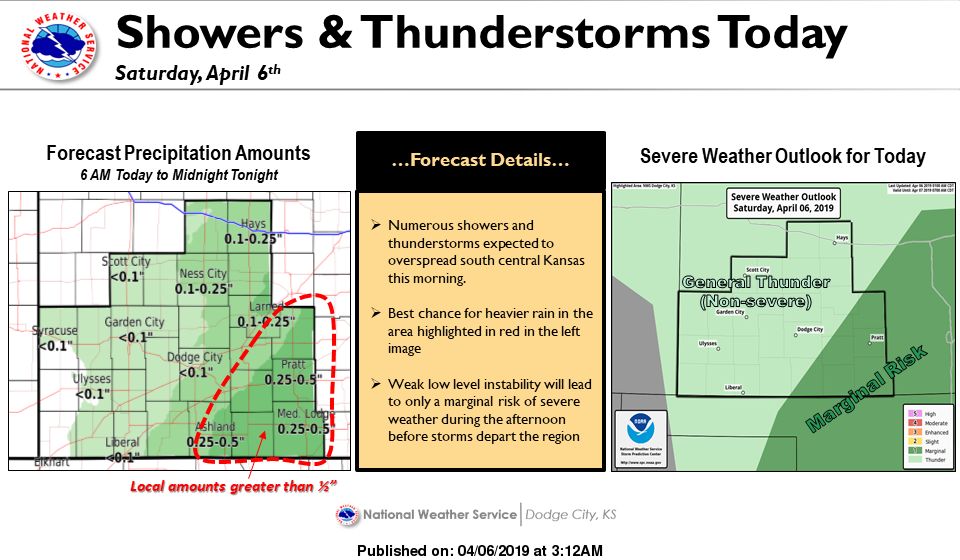
Cloudy, breezy Saturday, chance of rain

Today
A 50 percent chance of rain and thunderstorms after 2pm. Mostly cloudy, with a high near 69. South wind 13 to 18 mph, with gusts as high as 28 mph.
Tonight
A 50 percent chance of rain and thunderstorms, mainly before midnight. Mostly cloudy, with a low around 47. South southeast wind 5 to 13 mph becoming west southwest after midnight.
Sunday
Mostly sunny, with a high near 72. Breezy, with a north northwest wind 8 to 13 mph increasing to 15 to 20 mph in the morning.
Sunday Night
Mostly clear, with a low around 46. North wind 5 to 8 mph becoming light and variable.
Monday
Sunny, with a high near 77. West northwest wind 7 to 14 mph, with gusts as high as 24 mph.
Monday Night
Mostly clear, with a low around 49.
Tuesday
Sunny, with a high near 78.
Tuesday Night
Partly cloudy, with a low around 52.
Wednesday
A 20 percent chance of rain after 1pm. Mostly sunny, with a high near 70. Breezy.

KDWPT commissioners approve hunting seasons, removal of duplicate license fee

KDWPT

PRATT – During the public hearing portion of its March 28 meeting, the Kansas Wildlife, Parks and Tourism (KDWPT) Commission voted on several items, to include greater flexibility in hunting equipment and approving 2019-2020 big game season dates. However, the first order of business during the public hearing session may have outdoor enthusiasts excited for an entirely different reason. Commissioners approved staff recommendations to eliminate a $10 fee previously associated with obtaining a duplicate license or permit. Beginning in early May, KDWPT customers who require a replacement license or permit will be able to reprint any license or permit purchased online for free or simply pay a $2.50 fee through a license vendor.

Other items voted on and approved by the Commission include:

  • Allowing hunters to use lures, decoys (except live decoys) and calls (to include electronic calls) when hunting rabbits, hares and squirrels
  • Designating tumble-upon-impact bullets as legal equipment for hunting big game
  • Moving the resident either-species deer and elk permit application deadlines to the second Friday in June, coinciding with the firearm antelope application deadline

Hunting season dates approved at the March 28 meeting are as follows:

ELK

Fort Riley

Muzzleloader – Sep. 1-30, 2019

Archery – Sept. 1-30, 2019

Firearm ­– Oct. 1-31, 2019, Nov. 1-30, 2019, and Dec. 1-31, 2019

Outside of Fort Riley

Muzzleloader – Sep. 1-30, 2019

Archery – Sept. 16-Dec. 31, 2019

Firearm – August 1-31, 2019, Dec. 4-15, 2019, and Jan. 1-March 15, 2020

DEER

Youth and Hunters with Disabilities – Sept. 7-15, 2019

Muzzleloader – Sept. 16-29, 2019

Archery – Sept. 16-Dec. 31, 2019

Pre-rut Whitetail Antlerless-only – Oct. 12-14, 2019

Firearm – Dec. 4-15, 2019

Extended Firearm

Units 6, 8, 9, 10, and 17 – Jan. 1-3, 2020

Units 1, 2, 3, 4, 5, 7, 11, 14, and 16 – Jan. 1-5, 2020

Units 10A, 12, 13, 15, and 19 – Jan. 1-12, 2020

Extended Archery

Units 10A and 19 – Jan. 13-31, 2020

For more information on the Commission, including future meeting details, visit www.ksoutdoors.com.

Hays assistant city manager heading to Salina

Wood
Salina Post

SALINA — Jacob Wood has been named the city of Salina’s new deputy city manager.

City Manager Mike Schrage announced Friday that he has appointed Jacob Wood as the new deputy city manager. Wood was selected from a pool of 60 candidates from across the country.

Wood will begin his new role at the end of April.

“We received a terrific number of applicants for the deputy city manager position which is certainly beneficial, but also makes selection of a finalist much more difficult,” Schrage said.

Wood has served as assistant city manager for the City of Hays, Kan., since 2015. Prior to Hays, he was the city administrator in Oakley, Kan.

A native of Bennington, Wood is returning to the City of Salina where he previously held positions as a city management intern and interim manager of the Bicentennial Center.

Along with his public administration experience, Wood has served for 15 years in the United States Army Reserve, including deployments to both Afghanistan and Iraq. Wood currently holds the rank of major and serves as the Detachment Commander for the 863rd Quartermaster Detachment in Great Bend, Kan.

Wood holds a bachelor’s degree in social and political science, and a master’s degree in public administration from Kansas State University.

“Jacob’s past experience, skill sets and professional interests made him an outstanding fit for the Salina Deputy City Manager role going forward. Having worked directly with him for the two years that he was previously employed by the city was also very beneficial since it gave me firsthand knowledge of Jacob’s skills, style and fit for our organization,” Schrage said. “I am pleased that he was interested in returning to Salina and look forward to him taking on the deputy city manager role in our community.”

Wood succeeds Schrage in the deputy city manager role, which has been vacant since June 2018, when Schrage began serving as interim city manager before being promoted to city manager in January 2019.

Police: Kansas teen hospitalized after hit and run crash

HARVEY COUNTY — Law  enforcement authorities are investigating a hit and run accident and looking for a vehicle.

Just after 4:10p.m. Friday, police responded to a hit-and-run accident in the 500 block of West Fifth Street in Newton, according to a social media report.

A teen on a skateboard was struck by a green passenger car. The car then left the scene. The teen was transported to the hospital by ambulance.

Police are looking for the driver of the green car. Anyone with information is asked to call 911 to report it.

Kansas lawmakers pass bill to allow Farm Bureau health plan

TOPEKA, Kan. (AP) — Republican lawmakers in Kansas pressed ahead Friday with allowing the state Farm Bureau to offer health coverage to members that doesn’t satisfy the Affordable Care Act, a state-level effort to circumvent an Obama-era law President Donald Trump wants to replace.

The Kansas House approved an insurance bill on an 84-39 vote that includes provisions to exempt health coverage offered by the Farm Bureau from state insurance regulation, anticipating that the nonprofit group could offer lower-cost products to thousands of individuals and families. The Senate approved the bill Thursday on a 28-12 vote, so it goes next to Democratic Gov. Laura Kelly.

The bill had overwhelming support from GOP legislators and faced strong opposition from Democrats, but Kelly hasn’t taken a public position on it. The Kansas proposal is patterned after a Tennessee law in place for decades, and an Iowa enacted a law last year.

The votes in Kansas demonstrated the Farm Bureau’s political clout, particularly in rural areas, where Republicans dominate politics. The bill also had the support of most urban and suburban GOP lawmakers who continue to oppose the 2010 federal health care overhaul and argue that its mandates have driven up health insurance premiums and hurt the economy.

“It’s just another option,” said House Majority Leader Dan Hawkins, a conservative Wichita Republican and insurance agent.

Passing the bill was among the last significant actions Kansas legislators took before starting an annual spring break set to last until May 1. They put off a vote on a proposed $18 billion-plus budget for the state fiscal year beginning in July until after the break.

Some Democratic critics of the Farm Bureau bill tried unsuccessfully to block its passage by appealing to rural Republicans who support expanding the state’s Medicaid health coverage for the needy in line with the Affordable Care Act. The House passed a modified version an expansion plan from Kelly last month, but the Senate has yet to take it up.

“There’s more than one piece that’s going to solve what we’re facing,” said Rep. Jason Probst, a Democrat from south-central Kansas. “We should hold this part of the puzzle up until they take

Farm Bureau officials said they expect about 42,000 people eventually to take its coverage if the law passes, promising lower rates than plans complying with federal mandates. They believe the takers would be individuals who either have no coverage or struggle to pay for individual coverage.

Kansas has seen the number of individual coverage plans offered through the federal ACA marketplace decline to 23 for 2019 from 42 in 2016, according to the Kansas Insurance Department. While average rate increases for 2019 were smaller than in past years, they’ve sometimes previously topped 25 percent, according to annual reports from the department.

Republicans repeatedly have cited premium increases as a reason to repeal the ACA since Trump’s election in 2016, but a drive in Congress to do it stalled when they couldn’t agree on a replacement. Trump this week deferred another push until after the 2020 election.

The Farm Bureau’s new coverage would avoid state regulation because the new Kansas law simply would declare that it’s not insurance.

Critics said companies offering traditional health insurance coverage would face unfair competition. They also focused on how Farm Bureau would be able to set higher rates or reject coverage for people who have pre-existing medical conditions, something the Iowa law allows.

To drive home their argument that legislators don’t know yet what a Farm Bureau plan might cover, critics said the lack of regulation would allow it to pay for elective abortions. A 2011 state law prohibits such coverage in group health plans, requiring people to buy separate abortion policies.

Supporters of the bill — many of whom strongly oppose abortion — brushed aside the criticism as desperate.

Farm Bureau officials have said they pushed for permission to offer health coverage because members are asking for more choices.

“They are clamoring for some kind of solution,” said Rep. Don Hineman, a moderate Republican from western Kansas who also supports Medicaid expansion. “The potential consumers for this product are begging us to do it.”

___
Police arrest 2 teens in SW Kansas for alleged attempted murder

FORD COUNTY —Law enforcement authorities are investigating a shooting and have two suspects in custody.

Just before 2:30p.m. Thursday, police received reports of gunfire in the area of the 1200 to 1100 block of Ave C in Dodge City, according to a media release.

Police arrived immediately in the area and identified a vehicle fleeing the scene.

Before officers got the vehicle stopped, the front passenger fled on foot from the vehicle.

Multiple witnesses reported to other responding officers that they had witnessed one car chasing the other and the passenger of the vehicle officers had stopped reached out of the window with a handgun and began shooting at the subjects in other vehicle.

The victims in the other vehicle also contacted officers and provided statements of what happened.  There were no injuries reported.

The driver of the alleged suspect vehicle was captured with the vehicle but the alleged shooter escaped, until Friday. When officers spotted him and took him into custody without further incident.

The DCPD has filed a case with the Ford County Attorney’s office on the 18-year-old alleged shooter for the charge of attempted 2nd degree murder and on the 19-year-old alleged driver for the charge of aid and abet attempted 2nd degree murder, according to the release.

KJ Lawson decides to leave Kansas as graduate transfer

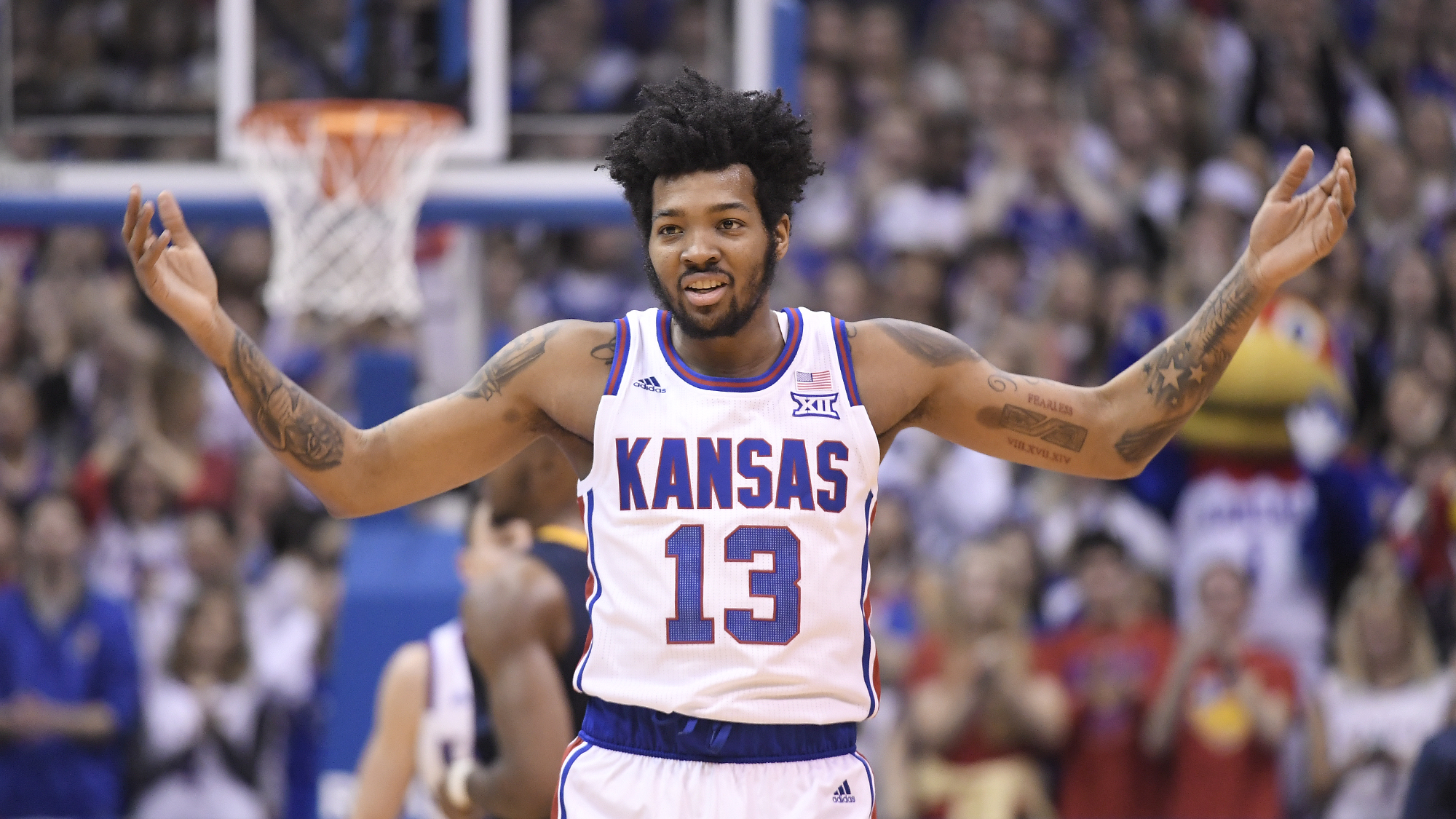
LAWRENCE, Kan. (AP) – Kansas forward K.J. Lawson says he plans to transfer for the second time, this time as a graduate transfer. That would leave him with two years of eligibility remaining.

Lawson and his brother, All-Big 12 forward Dedric Lawson, sat out last season after transferring from Memphis. K.J. Lawson appeared in 35 games, averaging 3.1 points and 2.0 rebounds.

He appeared in 42 games and averaged 11.5 points and seven rebounds while at Memphis.

His decision on Friday could be a sign that Dedric Lawson is planning to declare for the NBA draft a year early. Dedric Lawson averaged 19.3 points and 10.3 rebounds last season.

Earlier this week, point guard Charlie Moore announced he would be transferring from Kansas.

3rd federal judge blocks citizenship question on 2020 census

GREENBELT, Md. (AP) — A third federal judge has blocked the Trump administration from adding a citizenship question to the 2020 census, ruling Friday that it poses a “substantial risk” of undercounting Hispanics and non-citizens.

Image courtesy U.S. Census Bureau

U.S. District Judge George Hazel in Maryland also concluded that a citizenship question is “arbitrary and capricious” and violates the Constitution and the federal Administrative Procedure Act.

Federal judges in New York and California previously barred the Trump administration from adding a citizenship question to the census for the first time since 1950. The U.S. Supreme Court has agreed to hear arguments on April 23 for the Justice Department’s appeal of the New York judge’s decision.

Hazel heard six days of trial testimony in January before ruling.

“Overwhelming evidence supports the Court’s finding that a citizenship question will cause a differential decline in Census participation among noncitizen and Hispanic households,” he wrote in his 119-page decision.

The Supreme Court justices are expected to rule by late June, which the Trump administration said is soon enough to allow printing and distribution of census forms next April.

Because of the tight timeframe for printing census forms, the high court granted unusually quick review of the first decision that went against the administration. That ruling, from a federal judge in New York, held that Commerce Secretary Wilbur Ross’ decision to have the census ask about citizenship was “arbitrary and capricious” under federal law. The second ruling, from a court in California, also found that asking about citizenship would violate the Constitution, which calls for a count of all people, not just citizens.

Former U.S. Census Bureau director John Thompson, the first plaintiffs’ witness for the bench trial in Maryland, testified Ross disregarded “long established” Census Bureau protocols in adding the citizenship question. Thompson, who oversaw the bureau from 2013 through June 2017, said he doesn’t think officials properly tested the question for the 2020 census.

“It’s very problematic for me,” Thompson said of Ross’ decision.

In a court filing, plaintiffs’ attorneys said Ross communicated with former White House Chief Strategist Steve Bannon, former Attorney General Jeff Sessions and other administration officials before issuing the March 2018 directive “to further the unconstitutional goal of diluting the political power of non-white immigrant communities.”

The Census Bureau began collecting citizenship data through the annual American Community Survey in 2005. Government lawyers said in a court filing that Ross decided to use the same wording from that “well-tested question” on the ACS for the citizenship question on the 2020 census.

The plaintiffs for the Maryland case include residents of Texas, Arizona, Nevada and Florida. Attorneys from the Mexican American Legal Defense and Educational Fund also sued on behalf of more than two dozen organizations and individuals. The court agreed to consolidate the claims in December.

Plaintiffs’ attorneys had urged Hazel to proceed with the Maryland trial as scheduled since the judge’s ruling in the New York case could be reversed on appeal.

Copyright Eagle Radio | FCC Public Files | EEO Public File