We have a brand new updated website! Click here to check it out!

Many factors helped save lives in Jefferson City twister

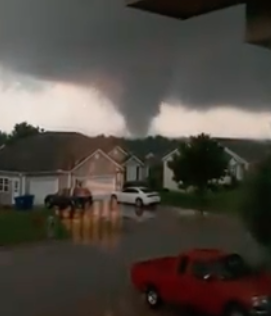
JEFFERSON CITY, Mo. (AP) — Eight years to the day after a devastating tornado killed 161 people and injured more than 1,100 others in Joplin, another big twister ripped through Missouri — this time the capital of Jefferson City — but with a far different result: no deaths or serious injuries.

Tornado approaching Carl Junction, Missouri Wednesday night photo courtesy Sarah Harreus

The two storms hit Missouri cities roughly the same size on the same day of the year, May 22. And they both ravaged residential neighborhoods and business districts. But several factors created completely different scenarios — factors that worked against Joplin and helped spare the lives of Jefferson City residents like Debra Gary, who along with her husband, mother and four kids hunkered down in the basement before emerging to find their home badly damage.

“I always tell my kids, ‘Keep God first,’ because God was there for us,” Gary said Friday. “He kept us and our home safe when the tornado was going on.”

The Jefferson City twister was a big one, an EF-3 with winds estimated at 160 mph. But the Joplin tornado was a rarely-seen monster, an EF-5 with winds in excess of 200 mph. It was on the ground for 22 miles and 38 terrifying minutes, tearing through one-third of the town.

Then there was the timing. The Joplin tornado hit on a Sunday afternoon, as people were out and about, including hundreds who had just left the high school’s graduation ceremony.

“You had many more people potentially in the path, in vulnerable locations,” said Bill Bunting, chief of forecast operations of the National Oceanic and Atmospheric Administration’s Storm Prediction Center in Norman, Oklahoma.

The Jefferson City twister arrived in the middle of the night, which was actually a good thing, said Brian Houston, a communications professor and director of the University of Missouri’s Disaster and Community Crisis Center.

“We think of nighttime tornadoes being pretty dangerous because people might be asleep and not aware of them, but one of the good things is people tend to be at home, in structures,” Houston said. “It’s always better to be inside somewhere when a tornado strikes, rather than being out.”

The ability to find safe refuge from the storm also favored Jefferson City. Joplin sits in an area of southwestern Missouri where the soil is rocky, so basements are uncommon. In 2011, only about one in five Joplin homes had basements, which forced people to take shelter in far less secure places like bathtubs and closets. Basements are far more common in Jefferson City, which was built on rolling hills along the Missouri River.

Those warnings are now more precise, too. Houston said storm warnings are now more localized, meaning people “are hopefully more likely to take it seriously because you’re not getting these warnings for a tornado that’s on the other side of the county that might be dozens of miles away.”

National Weather Service image shows the track of the deadly storm moving from Kansas to Jefferson City-click to expand

Radar is more advanced, too. Forecasters were warning as far back as last week that the Plains and Midwest faced a highly dangerous storm scenario. On Wednesday night, central Missouri TV stations tracked the approaching storm and sirens in Jefferson City first sounded at 11:10 p.m., which was at least 30 minutes before the first property damage was inflicted. Gov. Mike Parson credited the warning system for saving lives.

As Jefferson City residents began the long task of cleaning up, they faced additional challenges: Flooding and heat.

The Missouri River topped a levee on the north side of town, threatening the airport and a few homes and businesses, including a golf course and events center Danny Baumgartner owns.

“It’s part of Mother Nature — these things happen, and you make the best of it and help each other out,” Baumgartner said. “With the tornado and this going on, it’s a lot of activities for a small community. But we’ll all make it.”

Flooding also forced the closure of some roads around the state Capitol, though the building itself sits on a bluff overlooking the river, out of harm’s way. The tornado also spared the Capitol building.

Ameren Missouri crews worked in sweltering humidity with a temperature nearing 90 degrees, replacing about 200 broken power poles and re-stringing lines in Jefferson City and Eldon, another central Missouri community hit by a tornado.

Ameren Missouri division director Chip Webb said it may be late Saturday before power is fully restored in Jefferson City.

___

Trade opportunities with Mexico showcased in upcoming Hays session

TOPEKA – The Kansas Department of Commerce and the Kansas Small Business Development Center are hosting several upcoming info sessions on export opportunities to Mexico.

To help Kansas companies gain traction in the Mexican market, Kansas Department of Commerce Mexico Office representative Tom Johnston will give presentations on export opportunities to Mexico on June 4 in Manhattan, June 5 in Hays, and June 6 in Dodge City.

These free sessions will focus on market trends, economic landscapes, trade concerns and opportunities for Kansas products and services. One-on-one meetings are available on a first-come-first-served basis. Companies interested in exploring the Mexican market are highly encouraged to attend these events.

Mexico is an important export market for Kansas, traditionally ranking as one of the state’s top three trading partners. In 2018, Mexico exports to Mexico totaled $2.1 billion, accounting for more than 18 percent of that state’s total exports. Compared with the previous year, Kansas exports to Mexico increased by $237 million. Mexico represents abundant trade opportunities for Kansas companies.

Registration for these events can be done via the following links:
• Manhattan (June 4)
• Hays (June 5)
• Dodge City (June 6)

KU prof’s debut book tracks down China’s ‘Missing Girls’

John James Kennedy

KU NEWS

LAWRENCE — When University of Kansas professor John James Kennedy began working in rural China, he would get introduced to villagers with multiple children – despite the country’s strict one-child policy.

“Some of these villagers would have three kids. They’d introduce eldest daughter and youngest son by their name, but the middle daughter was the nonexistent one,” said Kennedy, associate professor of political science.

“They’d call them that with a nod and a wink: ‘hei hu’ — ‘the black child.’ When saying that, they meant unregistered.”

While China’s controversial mandate has led to an estimated 20 million “missing girls,” Kennedy asserts at least half of them aren’t truly gone. Instead, they are more a product of policy noncompliance between families and local officials to keep the births covered up.

That’s the contention of Kennedy’s debut book, “Lost and Found: The ‘Missing’ Girls in Rural China” (Oxford, 2019). The paperback, co-written with Yaojiang Shi of Shaanxi Normal University in China, publishes June 3.

Kennedy and Shi started researching this topic in 1995 and continued into 2015, mostly in the Shaanxi province in northern China. They interviewed residents, hospital employees, family planning administrators, registration officials and those responsible for issuing birth certificates – from the national, county and village levels.

He said this one-child policy, instituted in 1979 to curb the country’s rapid population growth, was easier to implement in cities because urban employment was connected to housing and social welfare. However, the execution of this proved far trickier in agrarian areas.

“The assumption was rural farmers had a son preference,” said Kennedy, who is also the director of KU’s Center for East Asian Studies. “The reason was they didn’t have insurance or pensions like urban folks, so they relied on their sons in old age to take care of them. Daughters were married out so they don’t live with their natal family; they take care of their husband’s family.”

By the mid-1980s, the government realized it was too hard to enforce this singular policy in rural areas. So they decided if the firstborn was female, families could have a second child without a fine. Families would have a girl, then go for a second child. If that baby was a girl, they would not register the infant.

Whereas urban households attempting this tactic had a much greater chance of getting caught, those in rural communities proved more successful.

“It’s because the street-level bureaucrats are not just agents of the state, they’re also villagers. They have to live with these people,” he said. “But by mutual noncompliance, they’re turning a blind eye to the deeper issues.”

Although estimates have often been inflated by academics and the media, many demographers believe the number of missing girls is in the 20 million range.

“They are either nominally missing – in that they are hidden – or are truly missing, which is through sex-selective abortion or infanticide,” he said.

Despite researching this topic for decades, Kennedy said the subject was previously too sensitive for his Chinese colleagues to publish at the time. The one-child policy ended in 2015, prompting greater scrutiny of its consequences.

A Los Angeles native who has taught at KU since 2003, Kennedy actually lived with the Chinese family who is featured on the cover of “Lost and Found.” He said this quintet was a fitting example of his findings: The son was registered as a second child, the oldest daughter as a first child, and the middle daughter went unregistered.

Kennedy, who is fluent in Mandarin and an expert in Chinese local governance, said of his inaugural book, “I hope it opens a broader discussion about our assumptions of villagers and their behavior.”

LATURNER: Saving for the future

Jake LaTurner, Kansas State Treasurer

Graduation weekends are upon us. This is a time of year to celebrate the hard work and dedication of students and teachers and congratulate those we know who have succeeded at earning a degree and advancing into their next phase of life. For some that can mean going on to college, technical school, or a higher degree. And while these are worthy pursuits, the reality is they usually come with a pretty big price tag attached.

Paying for college is a big endeavor for most, but with some planning and foresight, it doesn’t have to be impossible. The State of Kansas offers some very simple solutions for getting a jumpstart on college savings, and the sooner you get started the better. Here’s a brief summary of a couple of very easy options and how they work:

529 Accounts: These are investment savings accounts you as a parent or grandparent can contribute to, tax-deferred. Put a little bit in automatically from each paycheck or set aside something each month to contribute. Large or small, these investments earn dividends over time and you get to choose how and when to contribute. With regular contributions to this kind of investment, you can watch your money grow into an amount that could fund your child’s future educational goals, at accredited higher education institutions anywhere in the United States. These funds can be used for qualified expenses at 2- or 4-year college, vocational school, technical college, graduate school, and even K-12 education institutions. The state of Kansas also allows you to take an annual tax deduction of up to $3,000 in 529 contributions if you’re single or $6000 if you’re married.

K.I.D.S. matching grants: The State of Kansas wants college to be achievable for all students. For families that may struggle financially to come up with the money to fund a child’s higher education goals, K.I.D.S. matching grants are a wonderful option to grow your money faster than you could on your own. You must live in Kansas and earn an income less than 200% of the federal poverty level. With these qualifications you can open a 529 account with any amount you wish and the state will match whatever you contribute, up to $600/year.

Year after year there are success stories of students graduating whose parents and grandparents took the time to think ahead on their behalf, putting away a little at a time and watching that money grow into a debt-free college experience for their new graduate.

Elaina was one such student. Her grandmother, Guadalupe Martinez started an account for her when she was little, contributing $25 per paycheck whenever she could. Upon Elaina’s graduation from high school, her grandmother presented her with a check that brought Elaina to tears. It was enough to get her through college debt free, which she did.

This is not an uncommon tale.

Kids across Kansas have been blessed with the opportunity of education because of the wise planning of someone in their life who cared enough to think ahead and save. Whether it is one of the above options or another kind of savings vehicle, I challenge Kansans during this special time of year to think ahead for someone they love and find a way to save. Every little bit adds up, and investing in a child’s future education now is one of the best gifts you can give them.

Jake LaTurner is the  Kansas State Treasurer.

The Latest: Kansas online gamer in hoax case may have charges dropped

WICHITA, Kan. (AP) — A Kansas online gamer whose dispute over a $1.50 bet sparked a hoax call that resulted in police shooting a man who lived at his old address has struck a deal with prosecutors that could allow the charges against him to be dropped.

U.S. District Judge Eric Melgren approved on Friday the joint motion for deferred prosecution that had been filed earlier in the day by prosecutors and the attorney for 20-year-old Shane Gaskill of Wichita.

Such agreements typically result in charges being dropped if a defendant fulfills all its conditions.

The judge deferred court proceedings and discovery during a period ending on Dec. 31, 2020 and ordered Gaskill to pay $1,000 in restitution, costs and penalties as required under the agreement.

The death of Andrew Finch, 28, in Wichita drew national attention to the practice of “swatting,” a form of retaliation in which someone reports a false emergency to get authorities, particularly a SWAT team, to descend on an address.

“I think the diversion agreement recognizes in part that Gaskill’s involvement in swatting was less than the others,” said Jim Cross, spokesman for the U.S. attorney’s office.

Gaskill is charged with conspiracy, obstruction of justice, wire fraud, and making false statements.

The other online player, Casey Viner, 19, of North College Hill, Ohio, has pleaded guilty to conspiracy and obstruction of justice under a deal in which both sides recommend two years of probation. He will be sentenced on June 26.

Authorities said Viner recruited Tyler R. Barriss to “swat” Gaskill in Wichita stemming from a dispute on the game Call of Duty: WWII. Barriss, a 26-year-old Los Angeles man with an online reputation for “swatting,” called police from Los Angeles on Dec. 28, 2017, to falsely report a shooting and kidnapping at that Wichita address. Finch, who was not involved in the video game or dispute, was shot by police when he opened the door.

Barriss was sentenced in April to 20 years in prison after pleading guilty to 51 counts for making fake emergency calls and threats around the country, including the deadly hoax call in Kansas.

————-

WICHITA, Kan. (AP) — The government has agreed to an alternative to prosecution of a Kansas online gamer whose dispute sparked a hoax call that resulted in police shooting a man who lived at his former Wichita home.

Police body camera images of The December 2018 fatal response to a hoax call -courtesy Wichita Police

A joint motion filed Friday by federal prosecutors and the attorney for 20-year-old Shane Gaskill of Wichita asks the court to approve the agreement.

Gaskill is charged with conspiracy, obstruction of justice, wire fraud, and making false statement during an investigation.

Deferred prosecution agreements typically result in charges being dropped if a defendant fulfills all its conditions.

Under terms of Gaskill’s May 15 pretrial diversion agreement, the government agreed not to pursue prosecution for at least 18 months.

Gaskill agreed to waive any speedy trial defenses and pay $1,000 in restitution, costs and penalties.

IMCA Stock Car ShootOut set for Tuesday, Wednesday at RPM Speedway

RPM Speedway

The Inaugural IMCA Stock Car ShootOut, “Goin’ Back to the Wild West” will be Tuesday and Wednesday,  May 28 and 29 at Rolling Plains Motor Speedway, Hays.

The ShootOut offers not only $5,000 to the winner, but many contingency prizes and awards for the stock car drivers.

The legendary RPM Speedway staff has been hard at work to ensure the Inaugural IMCA Stock Car ShootOut presented by 1st Class Chassis Race Cars, Hoisington, is the biggest paying prize money and contingency event the Great Plains has ever seen.

The IMCA Stock Cars are one of the most competitive classes right now and put on three- and four-wide racing on any given night and the speedway wants to showcase that here in Hays.   

Race fans will see the top national, regional, state and local stock car drivers, including Mike Nichols, Harland, Iowa, an eight- time National Stock Car Champion that has over 700 career wins in nine states and one Canadian province. Currently drivers from nine states, including Colorado, Iowa, Minnesota, Nebraska, North Dakota, Oklahoma, Utah, Wisconsin plus our Sunflower State racers are registered for this special event. 

A unique qualifying procedure will be used for the IMCA stock cars. Drivers will draw for their starting spots on Tuesday for one of two heat races they will compete in. Drivers will earn passing points that qualify for Wednesday night’s line ups. The second heat race will be a complete invert of their first heat race.

Night two will see last-chance heats along with one last-chance feature, qualifying them for the 24-car minimum $400 to start A- main event.

IMCA Sunoco Hobby Stocks and Karl Kustoms Northern SportMods race for $500 to win both nights.

Pits open at 3 p.m., the grandstand opens at 5 p.m. and racing starts at 7 p.m. both days. Grandstand admission is $15 for adults and free for kids 12 and younger thanks to Heim Body Shop of Hoxie,  while pit passes are $30 or $10 for kids 12 and younger with a parent or guardian.

Unable to make it trackside, this special event will be broadcasted live on SpeedShift TV as part of their monthly $40 subscription.

More information about the Stock Car Shootout is available on facebook at rollingplainsmotor.speedway or on the web at www.rpmspeedway.net.

Amtrak Leaves The Future Of Kansas Passenger Rail In Question

Passenger trains will keep rolling through rural communities in Kansas, for now. But Amtrak still hasn’t committed to operating the long-distance routes that connect small towns to larger cities long-term.

Train station in Garden City -photo courtesy Kansas News Service

Earlier this year, Congress agreed to an additional $50 million to keep the Southwest Chief, which travels from Chicago to Los Angeles with stops in several small Kansas cities, running through September.

U.S. Sen. Jerry Moran and a handful of his senate colleagues then pressed Amtrak for answers about future plans for long-distance routes. The rail service responded with a letter this week.

CEO Richard Anderson wrote that Amtrak will not alter or truncate any long-distance routes before the end of the 2019 fiscal year. But he didn’t make any promises beyond that.

Instead, the head of the federally funded rail service pushed questions back at Congress about whether to maintain current routes or make changes.

“While we strongly believe that there is a permanent place for high-quality long-distance trains in our network,” Anderson wrote, “the time to closely examine the size and nature of that role is upon us for numerous reasons.”

Amtrak is slated to submit its proposal for reauthorization later this year.

In his letter, Anderson highlighted the increased demand for services in metropolitan areas, where the majority of its ridership occurs on short-distance routes such as the Northeast Corridor.

The long-distance routes, he wrote, ate up nearly $922 million in the 2018 fiscal year — nearly half the $1.94 billion in federal support for Amtrak’s network, while accommodating a relatively small share of passenger trips, 4.5 million rides annually.

While ridership numbers have fluctuated from year to year, Anderson noted the number of long-distance passengers fell 4 % between fiscal years 2017 and 2018.

The rail service is eyeing the development of new routes to meet demand for shorter trips in areas of the country where the population is growing.

Anderson wrote that routes connecting cities and towns within 400 miles or less are the “sweet spot” for passenger rail. He identified a number of new potential corridors, including a route between Fort Worth, Texas — now a stop along the Heartland Flyer — and Newton, Kansas, which is currently a stop along the Southwest Chief.

Moran said he expects Congress to agree to continued funding for Amtrak to support current long distances routes, but that it would be a “battle.”

“I need to make sure that Amtrak, its board of directors, its management has a commitment to long-term passenger services in places in the country in which it’s not probably ever going to be profitable,” Moran said in an interview.

The senator got some of the assurances for the continued operation of the Southwest Chief he wanted from a meeting with Anderson Wednesday.

But Moran said through a spokesperson later that while the meeting was a, “step in the right direction,” it prompted further questions. The senator is keeping holds on nominees to Amtrak’s Board of Directors while he awaits more answers.

Corinne Boyer is a reporter for the Kansas News Service.  Follow her @Corinne_Boyer or email [email protected]

Paraprofessional serves as link to Hispanic families; HMS student named Best of Best

Maria Lozano, a kindergarten and ELL paraprofessional at Lincoln Elementary School, was honored Monday with the staff Best of the Best Award for May.

By CRISTINA JANNEY
Hays Post

Maria Lozano, a kindergarten and ELL paraprofessional at Lincoln Elementary School, was nominated as the staff Best of the Best for May by Lincoln Principal Kerri Lacy.

Lozano is also a translator for USD 489. She has been with the district 10 years.

“Every day, Maria can be seen giving hugs and holding hands with our little ones,” Lacy said at the school board meeting Monday. “Maria is our connection between school and our Hispanic families. Any time we need someone to communicate with our Spanish-speaking families, Maria comes to the rescue.

“Maria knows so much about our families when a little one is not feeling well, she not only knows who to call but where to call,” Lacy said. “No matter what is going on in her life, Maria always has a smile on her face and is dependable and willing to help, no matter what we need.”

Joelene Vitztum, Lincoln kindergarten teacher, sent in her compliments of Lozano after she heard she had been awarded Best of the Best.

“I just wanted to say Maria is truly the Best of the Best,” Vitztum wrote. “She goes above and beyond with her work with children. She is patient, kind and loving to each child in the classroom as well as the students outside of the kindergarten classroom. She is just simply a wonderful coworker and a friend to all.”

Lacy concluded by saying Lincoln and USD 489 are lucky to have Lozano.

Hays Middle School student Seth Sumaya was nominated by Jerry Braun, gifted teacher, for the student Best of the Best Award.

Sumaya was not present to receive his award.

“I have been Seth’s teacher for the last three years, having the opportunity to watch him grow and mature into an amazing young man,” Braun wrote.

Braun wrote Sumaya‘s transition to middle school was challenging and stressful.

“Upon his return after that summer, a new Seth emerged, matching the qualities that we knew existed within him. Seventh grade was a new start, and he was blossoming. His achievement improved. His motivation was intrinsic and his social circle grew.

“He became a leader among his peers and a friend to all. A kind spirit and giving nature emerged from a ounce sullen adolescent,” Braun wrote.

“His eighth-grade year is a magnificent extension of his progression,” Braun wrote. “Seth continues to succeed academically and continues to be a model student in the classroom. His artistic talents have been showcased both in and out of school. His dedication and determination to improve, not only his classroom experiences, made him Best of the Best.”

Man from Ellis hospitalized after motorcycle strikes deer

NORTON COUNTY — Two people were injured in an accident just before 11p.m. Friday in Norton County.

The Kansas Highway Patrol reported a 1980 Harley Davidson motorcycle driven by Michael D. Gaschler, 55, Ellis, was eastbound on U.S. 283 seventeen miles south of Norton. The motorcycle struck a deer standing in the road.

Gaschler and a passenger Barbara Root, 54, Lyons, were transported to the hospital in Norton. They were not wearing helmets, according to the KHP.

Kansas Water Authority RAC membership drive drawing to a close

KWO

TOPEKA – The Kansas Water Office is currently accepting applications from those who would like to participate as a member of one of the 14 Regional Advisory Committees (RACs) which are established by the Kansas Water Authority (KWA). Interested individuals are encouraged to apply soon as the deadline is only two weeks away.

These committees play a key role in advising the KWA on implementation of each region’s water supply priorities as part of the Kansas Water Vision and the Kansas water planning process as a whole. They help identify and provide input on other emerging water resource related issues and concerns. The committee selection process will ensure all of the water users and interests within the region are represented.

Kansans can have a definite lasting impact on the future of water resources through RAC membership. Interested persons can apply at www.kwo.ks.gov. The application deadline is May 31, 2019.

As the state’s water office, KWO conducts water planning, policy coordination and water marketing as well as facilitates public input throughout the state.  The agency prepares the Kansas Water Plan, a plan for water resources development, management and conservation.

FHSU’s Landrum 15th in 200m prelims at national meet

KINGSVILLE, Texas – After entering the 2019 NCAA Division II Outdoor Track & Field Championships in the 24th and final spot of the 200m dash, freshman Philip Landrum finished well above that mark in the preliminary round Friday evening (May 24).

Competing in the fastest of the three heats, Landrum placed 15th at the national meet after crossing the line in 21.48. The Wichita, Kan. native was the second-fastest freshman in the field.

The race capped off a successful freshman campaign for Landrum, who placed 14th in the 60m dash at the Indoor National Championships after capturing the indoor MIAA title in the same event. Landrum also climbed the podium at the outdoor conference meet after placing third in the 100m dash earlier this month.

Three Tigers will wrap up the national meet Saturday, beginning with junior Alexcia Deutscher in the javelin throw at 11:30 a.m. Kolt Newell will compete in the high jump beginning at 5:30 p.m. while the gun is set to go off in Brett Meyer’s 1,500m finals at 5:45 p.m.

Kan. felon jailed after deputy finds him slumped over in vehicle

CLOUD COUNTY — Law enforcement authorities are investigating a Kansas felon on new charges after an arrest.

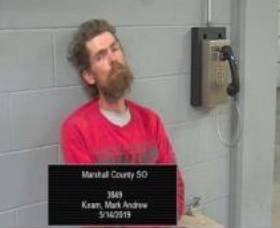
Mark Kearn photo Marshall County

Just after 8:30a.m. Thursday, a Cloud County Sheriff’s Deputy located a vehicle where an individual appeared to be slumped over in the driver seat in the 300 block of West 6th  Street in Concordia, according to a Sheriff Brian Marks.

While doing a public safety check, deputies arrested 40-year-old Mark Kearn of Concordia on requested charges that include possession of methamphetamine and possession of drug paraphernalia. 

Kearn has previous convictions for aggravated endangerment of a child, battery and intro contraband; non firearm, ammo, explosive, controlled substance by non employee, according to the Kansas Department of Corrections.

He remains  jailed in  Cloud County Law Enforcement Center. 

Kansas man dead, 5 hospitalized after pickups collide

HAMILTON COUNTY —One person died in an accident just after 10:30a.m. Friday in Hamilton County.

The Kansas Highway Patrol reported a 2019 Chevy Silverado driven by Garland Gould Smith, 57, Syracuse, was southbound on County Road Y three miles south of Kendall. The pickup crossed the center line and collided with a northbound 2012 Chevy Silverado driven by Payton Cole Chambless, 40, Kendall.

Smith was pronounced dead at the scene and transported to Don Fellers Funeral Home.

Eagle Med transported Chad Ryan Vanatta, 47, Lakin, from the 2019 Silverado to a hospital.

Chambless, one passenger in the 2012 Silverado Huston Hays, 15, and a passenger in the 2019 Silverado Michael C. William, 48, Kendall, were transported to the Hamilton County Hospital.

A third passenger in the 2012 vehicle Chance Weston Hobrok, 29, St. Francis, was transported to the hospital in Garden City.

None of the occupants in the collision were wearing seat belts, according to the KHP.

Copyright Eagle Radio | FCC Public Files | EEO Public File