The Uptown Fox, 1202 Main St., has reopened, bringing with it something new to Hays while restoring the classic feel to the historic downtown building.
During the next two weekends, the establishment will be open for dinner reservations only, giving a taste of what is to come when the restaurant will open for regular hours later this month.
“We do an inspired menu,” said David Proffitt, owner. “We decided instead of trying to create a menu we just took all the best restaurants we had ever eaten at or ever heard of and we would bring them all into Hays.”
A Hofbräuhaus Pork Knuckle sandwich will also be served along with a selection of beer from the Munich, Germany, tourist spot.
“We’ll have that great German beer on tap,” Proffitt said.
The menu will continually change, bringing something new to repeat customers.
“You’ll be able to come here and have some of the best dishes and drinks from around the country, and we will be constantly be changing it,” he said.
Along with the re-creations, the restaurant will feature steak and seafood unique to the area.
“They are easily the greatest steaks you will ever have,” Proffitt said.
Fish served in the Fox will come from a market where the restaurant can look at what was caught and have them shipped in the next day.
“We will be able to bring in a lot of great fish dishes to the middle of Kansas,” he said.
But great food is only part of the appeal of the new location.
They offer memberships that include a personal locker with an included humidor, a $100 restaurant credit every month, first right to show tickets and access to the cigar and private lounge.
“We have a $50,000 in-house cigar inventory,” Proffitt said, along with extremely high-end liquors.
Service is also a part of Fox’s appeal.
“We want to provide a level of service that you would get a steak house in Chicago, Dallas or New York,” Proffitt said.
Proffitt said he plans to schedule acoustic musical sets in the location and hopes to bring in notable comedians.
While the old theater has been restored to its original look, the technology in the space is cutting edge, including integrated phone app door locks, new lighting and enhanced sound dampening.
The Fox also has the largest movie theater screen in Hays, Proffitt said, with access to first-run movies.
“We will be able to give some cool experiences,” he said. “That’s what it is really about.”
Restoration work to create the original look in an old building was a challenge, but important to Proffitt.
“We really wanted to keep that ’50’s vibe,” he said, calling the people that worked on the building “artists.”
Proffitt hopes this is just the first project that will help to establish downtown Hays as a regional destination.
“There is no reason Hays is not a shopping capital and restaurant capital of the area,” he said. “We have monster visions with what we want to do with downtown.”
“There is not any place to go nearby that can offer more than Hays can in such a safe, great community.”
If things go well Proffitt hopes the Fox will be a launching point to demonstrate the value of Hays to the area.
“It’s a place you can bring people from out of town and show them Hays can do it as well as anybody,” he said.
Following the limited dinner weekends, the Fox will be open for lunch from 11 a.m. to 2 p.m and dinner from 5 p.m. to 10 p.m. with hours extended until midnight on Fridays and Saturdays.
Run for the Wall support will be Sunday the 19th of May. We will be at the Commerce Parkway I-70 overpass. We will be there at 12:45 p.m. and set up flags. The Hays American Legion Riders Chpt. 173 will be holding the big flags and if there are any more big flags they will be given out on a first come first serve basis.
This event is open to public to show support for this great mission.
TOPEKA, Kan. (AP) — A state report says that safety doors in a Sumatran tiger’s enclosure at a Kansas zoo were left unlocked before the animal attacked and injured a veteran zookeeper.
Kristyn Hayden-Ortega-photo courtesy Topeka zooSanjiv photo Topeka Zoo
The report released Friday by the Kansas Department of Labor agreed with the Topeka Zoo’s assessment that no equipment failure or other problem with the enclosure led to the April 20 attack.
Zookeeper Kristyn Hayden-Ortega was hospitalized after suffering puncture wounds and lacerations to her head, neck and back.
Hayden-Ortega had gone into the outdoor area of the tiger’s enclosure to clean it. The animal was supposed to be in an indoor area, behind two doors. The report says the doors “had been locked in the open position.”
The report said the zoo is now requiring that two employees check the doors.
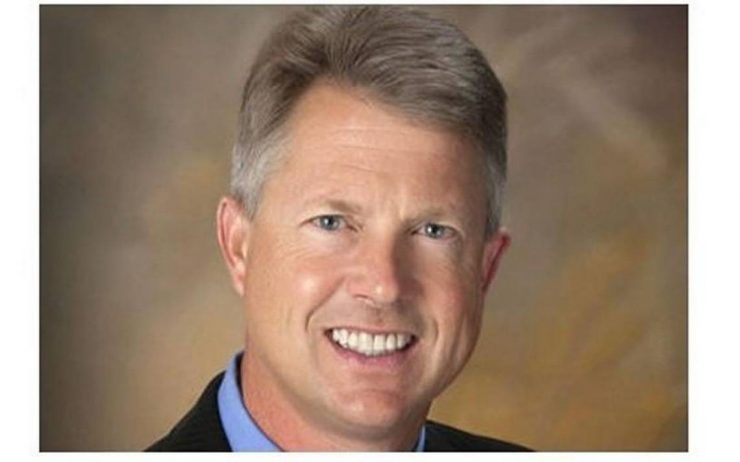
Dr. Roger Marshall, R-Great Bend, is the First District Kansas Congressman.
Friends,
As many of you are aware, the negotiations with China have soured recently. Last weekend, we saw the trade talks get complicated when the Chinese began to waffle on previously-agreed-to terms, walking back their commitments on a new agreement. In response, the trade war escalated with President Donald Trump announcing today raising tariffs on China from 10 percent to 25 percent on $200 billion worth of Chinese goods.
I have been assured that this does not mean that discussions for a trade deal have broken down completely. To the contrary, negotiations are continuing, and the President is making his stance clear. I am hopeful that a great deal will be result of this back and forth with China.
We need a deal; our farmers cannot withstand another round of tariffs.
Talking Trade With Ambassador Doud
Earlier this week I had the opportunity to visit with U.S. Trade Ambassador, Gregg Doud, a native of the Big First from Mankato, Kansas and KSU graduate. As the Country’s Chief Agricultural Negotiator, Ambassador Doud is well positioned to help advance trade agreements and policies that directly benefit our farmers and ranchers back home in Kansas. We discussed the work that is being done by the administration to secure agreements on the pending trade deals with China, Japan, Mexico and Canada, as well as ways Members of Congress from ag districts can help educate our colleagues about the benefits of finding new export markets around the world. Gregg is a true patriot and I am proud to call him a friend. EMAW!
Kansas Aviation Manufacturers- Flying in!
I had a wonderful meeting with the General Aviation Manufacturers Association (GAMA) this week. In our meeting, we discussed the important role that the aviation industry plays and the ways it impacts our economy. It was great to meet with some of the manufacturers from Kansas.
We also had the opportunity to talk about the funding concerns for the Federal Aviation Administration (FAA). The FAA’s mission focuses on making sure that air travel is as safe and efficient as possible. America is a global leader in airline manufacturing, and we need to do what we can to keep it that way!
Ending Sticker Shock at the Doctor’s Office
The GOP Doctors Caucus held a special round-table discussion this week, inviting their medical colleagues from across the aisle to discuss the importance of addressing surprise medical bills. Surprise medical bills occur when you receive a bill from an out-of-network provider during an in-network hospital visit. This has rightly received a lot of attention and is a priority issue for many Americans facing sky-rocketing medical bills.
To address this, we went straight to the source at the state level to a see what can be done at the federal level. Some proposals brought to us included ‘baseball arbitration’ where the provider and insurer would submit a proposed amount to an independent arbitrator that would the set the final amount. This would eliminate patients from being stuck in the middle. We also discussed limiting patient cost-sharing to the amount they would owe to an in-network provider and setting a payment standard regarding what insurers owe providers in these situations.
This remains a complicated issue, and one that my colleagues and I will continue to work on.
Looking Out For Our Local Pharmacies
Yesterday, my colleagues and I joined together for a Special Order on the House floor in support of pharmacists and seniors across America. The Centers for Medicare and Medicaid Services have proposed a rule that would reform the use of pharmacy direct and indirect remuneration (DIR) fees, or pharmacy price concessions, in the Medicare Part D program.
DIR fees by plan sponsors and their pharmacy benefit managers (PBMs) have increased by more than 45,000 percent over the past seven years. The increase of DIR fees over the last several years has raised out-of-pocket costs for our seniors and put our local pharmacies at financial risk, often operating in negative margins. Far too regularly PBMs collect DIR fees from pharmacies months and months after the claim. It’s completely unpredictable and unfair… while the benefit all goes to the pocket of the PBM. The proposed rule would end this issue by requiring that all DIR Fees are done at the point of sale.
Earlier this year I led a letter from proposing to have this rule finalized and implemented by 2020. There are 506 chain drug stores and 253 independent community pharmacies across Kansas and we need to make sure that they are being treated fairly!
Video of my speech can be found here!
Celebrating Kansas Small Businesses!
This week is national Small Business Week! We honor the millions of people across the country that take risks, invest in their communities and create jobs!
In Kansas, more than 80% of all businesses are considered to be small businesses, in industries ranging from manufacturing to retail, construction to health care. Each year, small businesses bring more than 15,000 new jobs to the state, according to the Small Business Administration, boosting both the rural and overall state economy.
Over the past two years I’ve had the privilege of touring many small businesses across my district, companies like Vortex in Salina, which designs and manufactures components for handling and processing dry bulk solids, such as cement, grain, or rubber. Sugar Creek Country Store in St. Mary’s is a family owned specialty grocery store and deli that was also awarded the 2018 Emerging Business of the Year by Kansas Small Business Development Centers. In Atwood, Carlson Choke Tubes has been manufacturing a variety of chokes for a wide range of shotgun models, and was recently named a top pick for turkey gear by Outdoor Life Magazine.
Of course, these are only a handful of the amazing small businesses found in the Big First, working to grow our local economies and bring jobs to rural America. I have loved getting to know many of the wonderful and creative entrepreneurs across the district, and it’s been a priority of mine to ensure that we continue to roll back regulatory burdens, increase access to capital, and provide training and support to small businesses so that these startups can continue to grow and contribute to the vibrant business landscape found in Kansas.
Kansas is home to hundreds of small, innovative agribusinesses, retailers, restaurants and more that play an integral part in keeping our Kansas economy strong.
US Army War College: “Congress Must Work Together”
A group from the United States Army War College (USAWC) stopped by my office this week. The USAWC was founded in 1901 and for well over 100 years now has educated and produced leaders invaluable to the United States military. They were on the Hill to discuss a wide range of issues important to our armed forces.
Diplomacy plays a huge role in our national defense and the team from USAWC stressed the importance of strengthening our alliances around the world. These partnerships allow the United States to promote our values and share information as we work with foreign leaders and military personal to keep our nation safe and prosperous.
We also touched on how important it is that Congress bridge the partisan divide. We must move past polarizing politics and get to working for the American people; this is particularly true when it comes to our national defense and our military. I am ready to work across the aisle and make sure that the brave souls responsible for protecting America have all of the support their government can offer. I want to thank those from the Army War College for coming to the office and assure you all that our troops have my full support.
Discussing the Road to Recovery For Substance Use Disorder
This week I met with the leadership team at Valley Hope, an organization that helps Kansans with substance use disorder (SUD). I had toured their facility in Atchison a few weeks ago and was so happy to have the opportunity to follow up with them to learn more about their what they do and the issues they face.
Last year, the Republican led 115th Congress passed the Consolidated Appropriations Act of 2018 and the Bipartisan Budget Act of 2018, together appropriating nearly $10 billion to help the help against substance use disorder and mental health issues – the largest investment to date. This funding goes to enhancing state grants, public prevention programs, and law enforcement activities related to SUD and mental health programs.
I was happy to share with them available funding opportunities through the Substance Abuse and Mental Health Services Administration that would help provide additional grant funding for medication assisted treatment. I look forward to working with Valley Hope or any organization in the district that seeks to help patients suffering from substance use disorder get on the road to recovery.
Railroads – Vital to Our Ag Producers
The American Short Line and Regional Railroad Association (ASLRRA) and the Association of American Railroads (AAR) were in Washington for their “Railroad Day on Capitol Hill”.
I am fully aware of how important short line railroads are to the agricultural industries in Kansas. The farmers and ranchers of Kansas work incredibly hard, and it is vital that they have the infrastructure necessary to get those commodities, such as wheat, corn, sorghum, and beef to market. I appreciated these operators coming to D.C. to share their thoughts with me about the upcoming infrastructure package, as well as the importance of things like trade and workforce development.
Dr. Roger Marshall, R-Great Bend, is the First District Kansas Congressman.
KANSAS CITY (AP) — The Missouri River is causing new problems in a flood-battered part of northwest Missouri where the river broke through levees in March.
The rain-swollen waterway has again inundated the tiny village of Big Lake in Holt County, where some of its approximately 160 residents were beginning to clean up after the last deluge.
Water levels haven’t dropped enough to fix the failed earthen levees intended to protect the area, Holt County emergency management director Tom Bullock said Friday. That means even moderate rises in river levels can cause problems. He calls it “a continuous mess.”
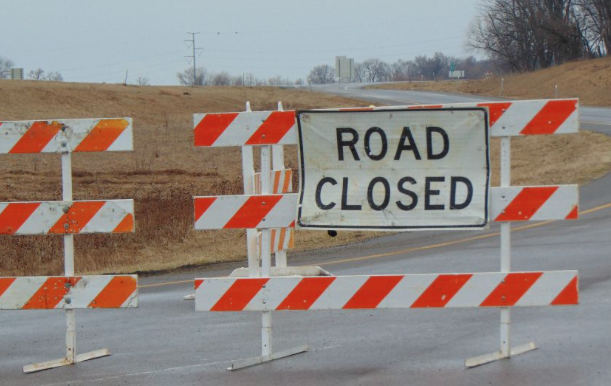
Several roads in the region are closed again, including a portion of U.S. 59, a key transportation artery between northeast Kansas and northwest Missouri.
In eastern Missouri, water levels are falling along the Mississippi River after some levees were busted.
Northwestern Missouri’s new troubles come just as some areas were showing signs of improvement. A stretch of the Kansas Turnpike near the Oklahoma border has reopened, as has the Iowa Highway 2 approach to a Missouri River bridge that links southwest Iowa to southeast Nebraska.
The Kansas Turnpike section near Wellington, which is about 30 miles (48 kilometers) south of Wichita, flooded Wednesday when up to 10 inches (254 millimeters) of rain fell across parts of the state in just 24 hours. Flooding also forced evacuations and school closures.
The National Weather Service says the rain is expected to move across the Deep South this weekend, putting millions of people in the path of potentially dangerous weather. The Storm Prediction Center says there’s a marginal risk of severe storms from eastern Texas — where parts of Houston have already seen flooding this week — to South Carolina and western North Carolina.
Forecasters say wind damage and hail could be seen in Louisiana, Mississippi, Alabama, Georgia and South Carolina on Saturday. On Sunday, there’s a chance of storms across central Georgia, South Carolina and North Carolina.
In Louisiana, the U.S. Army Corps of Engineers planned to open a major spillway Friday, four days earlier than expected due to torrential rains that saw the Mississippi River rise 6 inches (15.24 centimeters) in the past 24 hours. Officials said opening the Bonnet Carré (BAH-nee KEHR-ee) Spillway relieves stress on New Orleans levees.
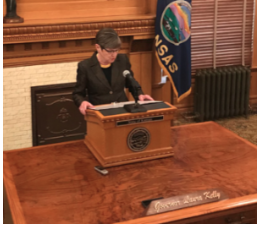
TOPEKA, Kan. (AP) — Gov. Laura Kelly says she hopes that extra state funding for the Kansas higher education system will lead to lower tuition for students and their families.
Kelly on Friday touted the additional $33 million included for higher education in a proposed $18.4 billion state budget for the fiscal year beginning in July.
She said during a Statehouse news conference that legislators included the extra money hoping that the Kansas Board of Regents could keep university tuition flat.
Kelly said she would like the regents to go further and reduce tuition. She said she’s worried that students are being priced out of higher education.
The regents have complained in the past that tight state funding has forced them to increase tuition to pay for vital programs on the campuses.
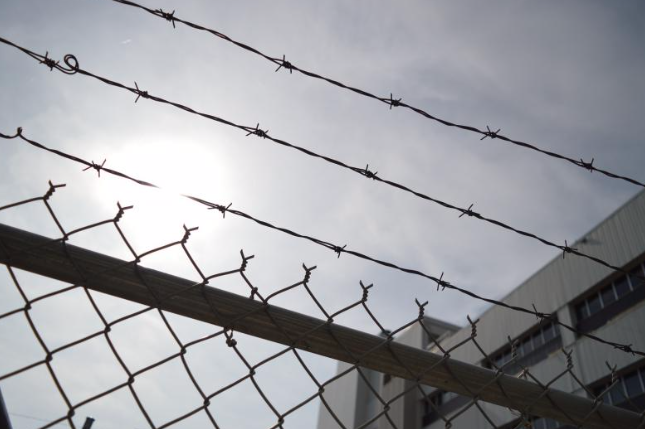
Kansas may soon turn to private contractors to take the overflow from its crowded prisons, raising questions about growing costs and the reliability of for-profit jails.
Kansas prisons are currently over capacity. Contracting with outside facilities could relieve the state’s underpaid and overworked prison staff. JOBS FOR FELONS HUB / CC BY 2.0
That plan ran into complications over the weekend when lawmakers insisted on a closer review from a state commission to OK some of the line-by-line spending. But taxpayers could soon be spending almost $36 million more to deal with a range of problems in the prison system.
Last month, Gov. Laura Kelly proposed changes to the state’s budget that included:
$16.4 million in contracts for 600 outsourced prison beds
$11.5 million in raises for the state’s prison staff
$4.5 million worth of Hepatitis C treatment for inmates
$3 million to move 120 inmates from the state’s women’s prison to an empty unit in its juvenile prison
$340,000 for stab-proof vests for staff
But following a heated week at the Statehouse, the Kansas Legislature only gave a fraction of that money immediately.
Lawmakers added just $5.5 million to the corrections budget for contracts next year, enough funding for only 200 prison beds. The Legislature also decided to give a pay raise only to employees of El Dorado Correctional Facility, at a cost of another $2.5 million. It also funded the stab-proof vests.
The State Finance Council, a board consisting of Gov. Laura Kelly and high-ranking members of the Legislature, will decide the rest of an additional $27.6 million in spending.
Now the Kansas Department of Corrections will have to make its case for that funding in front of the State Finance Council later this year.
Kelly, speaking to reporters on Monday, said she hopes to use her position on the finance council to clear the way for the added spending on prisons.
“That’s sort of a pain,” she said, “but certainly doable.”
But Corrections Secretary Roger Werholtz said the state’s prisons need the money now. The DOC has already taken contract bids to outsource 600 inmates to county jails or private prisons next year.
“The problem’s immediate,” he told reporters on Saturday. “I don’t know when that money is going to be released.”
Solutions For Overcrowding
State prisons currently have a capacity of 9,916 people. As of May 6, they hold 10,022 people, with a projected population of 10,655 by next year.
Werholtz said he had repeatedly told the Legislature about overcrowding problems, including increased inmate violence, danger to staff and inmates not getting the mental health treatment or training that they need.
“I want something to lower the pressure in the system so we can operate it more safely,” he said. “We’ve laid out in detail, with money figures attached, what it would cost to fix the problem.”
With that in mind, Kelly last week asked legislators to put an additional $16.4 million in the state’s budget for “contract beds” — agreements with outside prisons to house Kansas inmates for a fee. The proposal would essentially rent 600 prison beds and everything else it takes to keep inmates locked up for $75 each per day.
Now that the Legislature has awarded enough funding for only 200 beds, Werholtz said the DOC will still consider bids from outside contractors. But it is still deciding how those beds will be used. He said in a phone interview that the department has three major needs: to reduce crowding in the system overall, to increase the number of solitary confinement units and to move some inmates out of El Dorado Correctional Facility to relieve staff, some of whom work 16-hour days.
“We have to choose,” he said. “Two hundred beds is only sufficient to partially address any of those three.”
Some of those contract bids could go to county jails in Kansas. The state already contracts with two county jails, in Jackson and Cloud counties in the north-central part of the state, to house about 80 inmates at a cost of about $45 per inmate per day.
But most likely, contracts will be awarded to private prisons outside of the state with room to take in more inmates and the ability to ship them to the new locations.
Private prisons may have a poor reputation, but Werholtz said the state could successfully monitor any contracts with them.
“There’s nothing inherently good or inherently bad about either a public or a private prison,” Werholtz said. “It all hinges on who’s operating it, what resources they have available to them, and how closely you monitor the terms of the contract.”
Werholtz said the DOC would track security, operations and mental and behavioral health programs, possibly sending a full-time staff member to work on site if one contract facility takes on hundreds of inmates.
However, he said he would prefer to contract with county jails in Kansas, where inmates can be closer to their families and the medical services provided by the DOC provides in state prisons. But the state’s county jails won’t have enough beds.
“We’ll look at those first,” Werholtz said. “But I’m not optimistic that that will satisfy all our needs.”
Among those needs are 300 beds for people assigned to solitary confinement.
As of May 6, nearly 900 people were in solitary confinement in Kansas. It’s used as a form of discipline or to isolate inmates who exhibit suicidal tendencies, have a contagious illness, intimidate witnesses or attack others. The state has to swap them in and out because there aren’t enough beds.
“In order to put somebody in who’s engaged that kind of behavior, we’ve got to take somebody out who just did the same thing, maybe two or weeks prior to that,” Werholtz said. “That makes it much more difficult to discourage that sort of behavior.”
Staff in private prisons, however, are often inexperienced and paid less than employees of public prisons, said Marc Mauer, executive director of the nonprofit Sentencing Project, based in Washington, DC.
“Private prison operators have promised many things to public officials. They say that they can keep people housed in prison at less cost to the state. They told their shareholders that they’re going to make a profit,” Mauer said. “If you want to cut costs in order to meet both of those goals, the main cost is personnel.”
Mauer says moving inmates out of state can affect inmates’ quality of life in other ways.
“If you’re far away from your home state, that means your family visits are going to be limited,” he said. “If you have a legal case pending, it’s going to be very difficult to meet with your attorney.”
Sentencing Reform
Ultimately, Werholtz said, lawmakers will have to contend with the root cause of the problem: the ever-growing prison population. He credits the growth to the state’s sentencing guidelines, which determine the length of prison or probation time.
Those recommended sentences can only be reduced through legislative action. And the DOC’s aging computer system would need time to adjust to those changes, Werholtz said.
“You’re looking at, at an absolute minimum, a two-year process,” he said. “More likely a three or three-and-a-half-year process.”
In the meantime, he predicts the state’s prisons will remain full, with contract beds catching the overflow, and costs increasing every year.
“We’re going to be overcrowded,” he said, “for the foreseeable future.”
Nomin Ujiyediin is a reporter for the Kansas News Service. You can send her an email at nomin at kcur dot org, or reach her on Twitter @NominUJ.
We are giving away the Chicken Soup for the Soul book “Mom Knows Best.”
Listen during a KZ Country Morning with Theresa Trapp Monday, May 13-Friday May 17, 2019 for chances to call 785-628-2995 and win.
No age requirement to win.
Winners will need to pick up their books at the KZ Country Studio, 2300 Hall, Hays, KS within 30 days of winning.
Every mom knows that she’s usually right. It just takes a while for the kids to catch on. These stories celebrate the experience, understanding and wisdom of mothers, grandmothers, stepmothers, and mothers-in-law.
What a great way to show the mothers in your family that you know they were right all along. New moms and experienced moms will enjoy these stories of love and appreciation from grown and almost grown children of all ages. This is a popular gift for mothers, grandmothers, stepmothers, and mothers-in-law all year round.
Congratulations Mark Kranawitter, Roger Legleiter, Mila Burns, Michael Hiss and Linda Palmberg!
WICHITA, Kan. (AP) — Authorities say a suspected drunken driver who fled from police with two children in his car crashed into a parked vehicle outside a Wichita senior center.
Adkins photo Sedgwick County
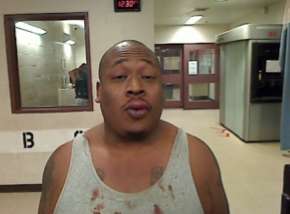
34-year-old Markston Adkins, of Wichita, was booked into jail on suspicion of driving under the influence, aggravated child endangerment and several other charges.
The Kansas Highway Patrol says a trooper attempted to stop him Wednesday for a traffic violation. The crash report says the trooper stopped the pursuit before Adkins’s car jumped a curb and struck the parked vehicle.
Adkins was taken to a hospital with a suspected minor injury. The crash log says a 3-year-old boy and a 7-year-old girl in his car had complaints of pain, but the report indicates that they weren’t taken to a hospital.
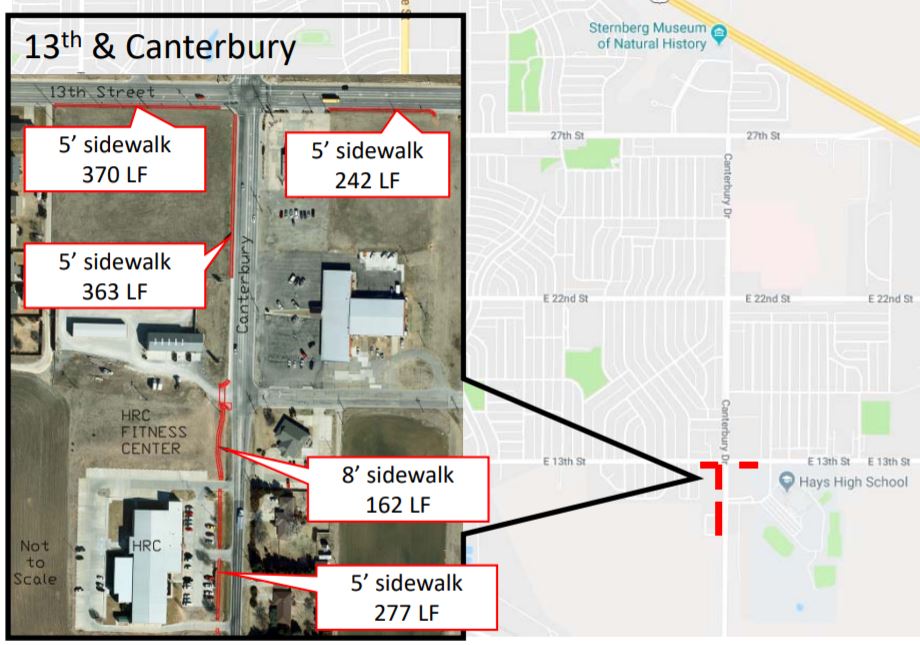
Low bids from DHC (Dustin Hynes Construction) of Hays were approved by the Hays city commission Thursday night for new sidewalks at Rolling Hills Park – $26,841.90 – and at 13th and Canterbury – $35,135.53.
Both projects will offer safer options for walkers, Jeff Boyle, director of parks, told commissioners.
“At 13th and Canterbury, generally speaking, all of these areas that are basically just grass and dirt right now are going to be connecting to existing sidewalks at the Hays Recreation Commission (HRC) and Hays High School,” said Boyle.
One section of the sidewalk on the north end of HRC will be eight foot wide instead of the standard five foot width in anticipation of a proposed multi-use path to be built in east Hays. “We’re just trying to plan ahead,” he explained.
“That concept will actually be brought back to the commission later this year during the 2020 budget process,” interjected City Manager Toby Dougherty.
The southwest corner of 13th and Canterbury is a vacant lot which is for sale.
Hays Mayor Henry Schwaller, who abstained from the vote, said he is one of 11 owners of the property.
“Some people think as mayor, I’m getting a free sidewalk. I didn’t ask for the sidewalk. I didn’t know about the sidewalk,” said Schwaller. “In fact, I kinda don’t want the sidewalk.”
Vice-Mayor Shaun Musil pointed out that current city policy requires developers to put in sidewalks.
“This is a situation where we are addressing past oversights,” Dougherty said.
“The current development policy says that if you build a property out, you put a sidewalk in. For example, if you’re in a residential area you have three years from 50% build-out to put the sidewalk in to eliminate the connectivity issues.”
“This was a remnant of the policy that said if it’s not built-out, you don’t put a sidewalk in, and we’re not going to take into consideration what gets built-out past that,” explained Dougherty.
“So what happened here is we had a somewhat undeveloped intersection – there’s actually still two corners of this intersection that are still undeveloped – and we built a high school on one quadrant and Hays Rec Commission on the other quadrant.
“The mindset back then was we’ll just put the sidewalk in whenever we deal with it. It’s led to some of the areas we’ve been addressing over the last few years in the sidewalk program. We’re trying to infill areas that were developed.”
He cited as an example another area in east Hays where a sidewalk was installed last year between Indian Trail and Donald.
“You had a sidewalk going through a commercial corridor, and then nothing, because it was undeveloped, and then residential housing that goes a quarter mile to the east to a park without thought of how you’re going to get there. There was, and is, a well-worn path in all these areas where people are actually (walking). That’s how we identified all these areas. We looked where the paths were in the dirt.”
Rolling Hills Park, bordered by 41st Street to the north and Autumn Lane to the east, has no connecting sidewalks for pedestrian traffic.
“We want to go from the existing curb cut sidewalk area all the way down 41st. It’ll actually drop off down into the park area and go all the way to Autumn Lane where it will turn south,” explained Boyle. “That’ll provide full connectivity for everybody in the neighborhood to get up to the walking path on 41st. We’ve seen a lot of folks trying to walk on 41st Street and it’s just not safe.”
Commissioner Sandy Jacobs agreed.
“I’m really happy that we’re doing this. It is a dangerous area and there are a lot of people up there walking.”
RUSSELL – The Downtown Russell Market Pop-up Event will take place the Saturday before Father’s Day, June 15 from 9:00 a.m. to 2:00 p.m. We would like to invite all types of vendors to join us for a busy weekend in Russell, with over 1,000 spectators planned to arrive in our community for a Father’s Day Softball Tournament, we are anticipating a lot of foot traffic.
The market event will take place outdoors on the bricks in Downtown Russell. We are currently searching for vendors of all categories ranging anywhere from antiques to clothing. Food and children’s activities will also be available. Vendors will be set up in the parking stalls between 6th and 8th street while Downtown businesses utilize the sidewalks for sales and specials.
If you are interested in joining us the cost per vendor booth is $30.00 for Non- Members and $20 for Members. Booth space is approximately 12’x15’. We ask that all booths be set-up before 8:30 am the day of the event. Event will take place rain or shine. Each vendor is responsible for all their own display tables, racks, tent, etc. Power is limited, please document on the registration form if electricity is needed, there will be an additional $10 fee for electricity. Please call before scheduling if you plan to bring a food truck or trailer.
To be included in this year’s Russell Downtown Market, vendors must register online at russellmainstreet.com/downtown-market or mail registration form and payment to 207 E. 8th Street in Russell.
For more information call the Russell Main Street, Inc. office at 785-483-2897.












 We are giving away the Chicken Soup for the Soul book “Mom Knows Best.”