SALINE COUNTY — Students on a summer outing avoided injury after an accident just after 2p.m. Tuesday in Saline County.
The Kansas Highway Patrol reported a 2008 USD 418 McPherson School Activity bus driven by Ernest Clifton White, Jr., 75, Assaria, was south bound on Interstate 135.
A southbound 1996 Peterbilt semi driven by Thomas Edward Smith, 59, Dakota City, NE., sideswiped the bus as the bus attempted to pass just south of Mentor Road.
Smith, White, thirteen students and one other adult on the bus were not injured, according to the KHP. Both drivers were properly restrained at the time of the accident, according to the KHP.
Throughout the day Monday over 800 riders from Biking Across Kansas rolled into Hays to enjoy the sites and sounds of the city.
On the outside of town, members of the Donlay family greeted riders as they passed by hoping to see friends that were participating in the ride.
“We’ll see some of the bikers and head home,” said Chelsea Donlay.
Donlay said she believes the ride encourages healthy behaviors and with her three children — Rowyn, Brynn and Ethan — she waved and greeted riders as they passed by.
“I think it tries to show people to get healthy and fit and just encourages people,” she said, adding she felt the brief words shared as the riders passed by help motivate them on their journey.
She saw it as a benefit to Hays as well.
“It brings some people that may not normally travel through Hays. It shows them what we have as far as our community and our downtown area,” she said.
Melissa Dixon, executive director of the Hays Visitor and Convention Bureau, agreed.
“If it is people that have not been here before, we want to show off what we have and to show them a good time,” Dixon said.
While local attractions extended hours and days for the riders to enjoy, Dixon also noted the benefits to the community by having the tour come through and hopes they will request to come through Hays again.
“They are definitely going to visit our attractions and eat at our restaurants while they are here, so we want to take care of them and show them a good time and have them back again,” she said.
BARTON COUNTY — Law enforcement authorities are investigating the circumstances surrounding the chase of a wanted suspect who died on Monday.
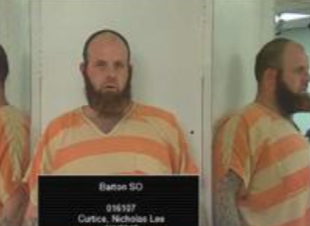
Curtice photo Barton County
Just after 11p.m., a Sheriff’s Deputy attempted to stop a 2002 Chevy Avalanche driven by 36-year-old Nicholas Curtice of rural Ellinwood, according to Sheriff Brian Bellendir. He was wanted on Barton County District Court warrants and had been involved in numerous encounters with law enforcement.
Curtis fled from the intersection of 5th and Odell in the City of Great Bend. The deputy pursued the suspect through the City of Great Bend and south toward the Arkansas River on Washington Street. The suspect vehicle struck the ravine near the north bank of the river, at which point it was disabled. Curtice exited the vehicle with a firearm and placed it to his head. The deputy ordered Curtis to drop the weapon repeatedly. He then waded into about 4 feet of water and fired a single round.
Barton County Sheriff’s Deputies, Great Bend Police Officers and members of the Great Bend Fire Department searched for Curtice for several hours after the incident. We were unable to locate him due to the swift current and darkness. The search resumed at about 8 AM this morning. Members of the Great Bend Fire Department “swift water rescue team” located the body. A boat from the Kansas Department of Wildlife and Parks assisted and were able to locate the body at about 10:45 a.m. approximately 1200 feet downstream from a location where he had been involved in a confrontation with law enforcement, according to Bellendir.
Curtice had previous convictions for criminal damage to property, flee or attempt to elude law enforcement, driving while suspended and for drugs, according to the Kansas Department of Corrections.
In April of 2018, Curtice had been jailed after a high-speed chase in Barton County. In April of 2017, Curtice was captured after a high-speed motorcycle chase following an alleged domestic disturbance in Hoisington.
BARTON COUNTY — Law enforcement authorities are investigating the circumstances surrounding the chase of a suspect who died on Monday .
Just after 11p.m., sheriff’s deputies attempted to stop a vehicle driven by a wanted person that fled south on Washington Street in Great Bend, according to Sheriff Brian Bellendir.
The vehicle crossed over the flood control dike, enter the riverbed, proceeded approximately ½ mile west when it became disabled.
The driver exited the vehicle with a firearm, entered the Arkansas River and shot himself. The suspect disappeared into deep, fast-moving water, according to Bellendir.
As of 9a.m. Tuesday, emergency personnel have not been able to locate the body. The Sheriff’s Office has contacted Kansas Department of Wildlife and Parks, Kansas Highway Patrol and the Great Bend Fire Department swift water rescue team for assistance.
NEW YORK (AP) — A group of state attorneys general led by New York and California filed a federal lawsuit Tuesday to block T-Mobile’s $26.5 billion bid for Sprint, citing consumer harm.
The state attorneys general said the promised benefits, such as better networks in rural areas and faster service overall, cannot be verified, while eliminating a major wireless company will immediately harm consumers by reducing competition and driving up prices for cellphone service.
The T-Mobile/Sprint merger would cause irreplaceable harm to millions of subscribers nationwide, particularly affecting low-income & communities of color.
It's exactly the sort of consumer-harming, job-killing megamerger our antitrust laws were designed to prevent. #MegaBlockpic.twitter.com/XfO68fShoy
New York Attorney General Letitia James said in a statement that combining the two companies would reduce access to affordable, reliable wireless service nationwide and would particularly affect lower-income and minority communities in New York and other urban areas.
Other attorneys general joining Tuesday’s lawsuit are from Colorado, Connecticut, the District of Columbia, Maryland, Michigan, Mississippi, Virginia and Wisconsin. All 10 attorneys general are Democrats. The lawsuit was filed in U.S. District Court in New York.
The lawsuit is an unusual step by state officials ahead of a decision by federal antitrust authorities. The Justice Department’s decision is pending. The Republican majority of the Federal Communications Commission supports the deal , though the agency has yet to vote.
Too many “mega mergers have sailed through the governmental approval process,” so it’s up to the states to “step up,” James said at a news conference.
“There’s no rule or regulation that we have to wait for the DOJ,” she said. She added the attorneys general will “continue to litigate whether the DOJ approves the merger or not.”
Diana Moss, the president of the American Antitrust Institute and an advocate for tougher antitrust enforcement, said the states’ lawsuit could signal to other potential merger partners that there would be tougher enforcement from states even if the federal government permitted deals to go through.
James said Tuesday that her office’s renewed focus on mergers and anti-competitiveness goes beyond the tech industry, though she did not elaborate.
T-Mobile and Sprint have argued that they need to bulk up to upgrade to a fast, powerful “5G” mobile network that competes with Verizon and AT&T. The companies are appealing to President Donald Trump’s desire for the U.S. to “win” a global 5G race.
Consumer advocates, labor unions and many Democratic lawmakers worry that the deal could mean job cuts, higher wireless prices and a hit to the rural cellphone market.
Amanda Wait, an antitrust lawyer and former Federal Trade Commission lawyer, said states are acting because they disagree with what they have seen the federal government doing.
“They see the FCC accepting certain remedies and concessions that don’t, in their minds, solve the problem,” she said.
T-Mobile declined comment. Sprint and the Justice Department did not immediately respond to requests for comment.
One famous example of when the states and federal government diverged on a big antitrust case was in the fight against Microsoft, although that was not a merger case. Several states dissented from the Justice Department’s settlement roughly 20 years ago, pushing for tougher sanctions to curtail Microsoft’s ability to use its dominance in the Windows operating system to thwart competition in other technologies.
More recently, in the Bayer-Monsanto agribusiness merger, five states last year criticized the federal government’s approval.
T-Mobile and Sprint previously tried to combine during the Obama administration but regulators rebuffed them. They resumed talks on combining once Trump took office, hoping for more industry-friendly regulators.
T-Mobile has a reputation for consumer-friendly changes to the cellphone industry. T-Mobile and Sprint led the return of unlimited-data cellphone plans, for example.
T-Mobile, trying to reassure critics, promised the FCC it would build out a 5G network and invest in rural broadband on a specific timeframe or pay penalties. It also promised to sell off Sprint’s prepaid Boost Mobile brand and keep price increases on hold for three years.
That was enough for FCC Chairman Ajit Pai to back thedeal. The other two Republican commissioners indicated they would join him.
But public-interest advocates said these conditions did not address concerns about higher prices and reduced competition— and would be difficult for regulators to enforce.
The Justice Department evaluates deals using stricter criteria than the FCC’s “public interest” standard — namely whether they harm competition and raise prices for consumers. Staff attorneys at DOJ have reportedly told the companies they won’t approve the deal as proposed, but the ultimate decision lies with Makan Delrahim, the top antitrust official who is a political appointee.
The state attorneys general said in Tuesday’s lawsuit that combining Sprint and T-Mobile would make the industry as a whole — Verizon and AT&T, too — less likely to offer plans and services that consumers like. And they say the companies have already been working to roll out 5G and don’t need to combine to do so.
Japanese tech conglomerate SoftBank owns Sprint, while Germany’s Deutsche Telekom owns T-Mobile.
Lewis Wayne “Bud” Eulert, 87, of Hays and Paradise, Kansas, died on Friday, May 31, 2019, at the family farm in Paradise, Kansas.
Bud was born on October 18, 1931, in Rural Paradise, Kansas, the son of Otto C. and Elsie (Reich) Eulert. He grew up in Paradise and graduated from Paradise High School. After high school he graduated from Ft. Hays State University. After achieving his degree, he served his country by joining the United States Army. He met, fell in love and was united in marriage to Kathryn A. Wolf on March 06, 1954, in Natoma, Kansas. From this union they were blessed with 6 children David, Max, Peggy, Anna Lou, Amy and LuAnn. Bud and Kathryn were happily married for 54 years before preceding him in death on September 13, 2008 . Losing his wife was devastating for him, but Bud was fortunate to find love again and was united in marriage to Ann (Morgan) McGlocklin on December 24, 2010, in Hawaii. Bud enjoyed working as a farmer and rancher and spent countless hours managing his cattle and farm. Bud would tell you he loved his farm but later in life, what really intrigued him was managing his oil investments. He was co-owner of ESP Development. He was a member of the Elks Lodge, Kansas Herford Association, Kansas Wheat Growers Association and was on the Paradise School and Township Boards. He enjoyed collecting Indian Artifacts, painting and gun collecting. Most of all he enjoyed spending his time with his family.
Surviving family include his wife Ann of Hays, Kansas, sons David Eulert of Lenexa, Kansas, Max Eulert (Sally) in Ellis, Kansas; daughters Peggy Eulert of Paradise, Kansas, Amy Groom (Tim) of Wellington, Kansas and LuAnn Eulert of Kirkland, Washington; brother Donald Eulert and companion Ute of San Diego, California; sisters Irene Schmidtberger (Linus) of Corpus Christi, Texas and Lynda Koelling (Warren) of Paradise, Kansas; nine grandchildren, Reese Eulert, Fay Eulert, Otto Eulert, Oliver Eulert, David Keil (Gela Parish) Drew Keil (Crystal Hill), Owen Keil, Ian Groom and Brody Groom, 2 great grandchildren Elsie & Scarlet Woods; step daughters Heather McGlocklin of Wichita, Kansas and Bobbi Hase (Collin) of Miami, Florida, step grandchildren Memphis and Liberty Hase.
He was preceded in death by his parents, wife Kathryn; sisters Eleanor Laubhan and Joyce Gillett; brother Harold Eulert and infant daughter Anna Lou Eulert.
A memorial service to celebrate Bud’s life will be held at 11 A.M., Saturday, June 15, 2019, at the Pohlman-Varner-Peeler Mortuary in Russell, Kansas with Pastor Wes Oakley officiating. The family will have a 2 P.M. graveside service, at the Fairport Cemetery in Fairport, Kansas. Memorials may be given to Hays Hospice or the Russell County Area Community Foundation and sent in care of the mortuary. Pohlman-Varner-Peeler Mortuary of Russell, Kansas, is in charge of the funeral service arrangements.
Shirley May Brungardt, age 86, of Hays, Kansas passed away Monday, June 10, 2019 at Via Christi Village, Hays.
Funeral services will be 11 AM Friday June 14, 2019 at Brock’s-Keithley Funeral Chapel and Crematory 2509 Vine Hays, KS 67601. Burial will follow in the St. Joseph’s Cemetery, Hays.
Visitation will be Thursday 6 PM – 8 PM and Friday 10 AM until service time all at the funeral chapel.
Condolences may be left by guest book at www.keithleyfuneralchapels.com or by email at [email protected]
MANHATTAN, Kan. (AP) — Prosecutors say DNA from a Manhattan man who is standing trial this week has connected him to the sexual assaults of four women.
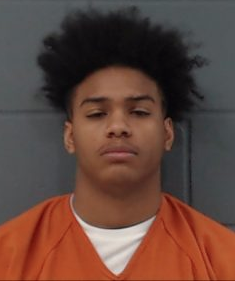
Baggett photo Geary Co.
18-year-old Tommie Baggett is charged with one count of rape, three counts of attempted rape, one count of criminal sodomy, one count of aggravated criminal sodomy, one count of aggravated robbery, three counts of aggravated burglary and three counts of aggravated battery.
One woman said she was assaulted in August 2016 after meeting Baggett in Manhattan through an escort service. Two other women were roommates who said they were assaulted in their home in February 2017. Prosecutors say Baggett then slipped through an open window a month later and choked a third roommate when she refused to have sex with him.
Plainville Livestock CommissionBy CRISTINA JANNEY Hays Post
PLAINVILLE — An auction has been set for June 27 for the Plainville Livestock Commission’s real estate, vehicles and equipment in attempts to recoup some of almost $14.5 million in debt the business owes in its bankruptcy.
The real estate will sell at 11 a.m. and will be administered by the bankruptcy trustee, James Overcash. The equipment, vehicles and other property will be sold by Bud Palmer Auction starting at 1 p.m. at the livestock commission property at 907 NW Third in Plainville.
The Gillums are charged with 31 counts of bank fraud, one count of making a false statement to the Small Business Administration in an application for a $1.5 million loan, and one count of making a false statement to Almena State Bank in an application for a $500,000 line of credit.
The indictment alleges investigators examined unfunded checks and wire transfers totaling more $2 billion sent by Tyler Gillum as part of the scheme.
The indictment alleges the Gillums defrauded Almena State Bank in Almena; Landmark Bank in Manhattan; Colorado East Bank and Trust in Lamar, Colo.; Astra Bank in Scandia; TBK Bank in Dallas; Guaranty State Bank in Beloit; and The Bank in Oberlin.
Dozens of cattle producers were caught up in the scheme after money that was supposed to be set aside to pay cattle sellers was transferred from a custodial account to the Plainville Livestock Auction’s operating account. The Almena Bank froze both accounts, which resulted in bounced checks amounting to tens of thousands of dollars per producer.
Almena Bank filed an interpleader case, which is legal action that seeks to determine to whom the money that was transferred out of the custodial account belongs. In the interpleader case, Almena bank indicated Plainville Livestock Commission had defaulted on three loans with its bank totaling more than $3.49 million.
The interpleader case has been transferred from Norton District Court to federal bankruptcy court. That case is pending separate from the main bankruptcy proceedings and is still working its way through the court system.
According to court documents filed May 31 in federal bankruptcy court, the trustee indicated Almena State Bank has the first lien on the real property to be sold at the upcoming auction and the the second lien on the equipment.
The property consists of two tracts, one of which is 21 acres and the other 0.65 acres. The property is valued at $734,030, according to the Rooks County Appraiser’s office.
The trustee determined TBK Bank has first lien on the equipment. According to court records, TBK Bank is owed $227,238.
The attorney for TBK did not wish to comment on the bankruptcy or the pending auction, Almena Bank did not return previous calls regarding this story.
There are also secured loans on four trucks and a skid loader. The creditors that hold those liens will be paid first on the sale of those items. The claim on these items amount to more than $92,000.
The machinery, equipment, vehicles and office equipment were valued at about $542,000 with cash, equivalents and accounts receivable worth an additional $211,000 according to court records.
According to court documents, Plainville Livestock Commission debt is almost $14.5 million of which $3.7 million is secured debt. Landmark Bank of Manhattan is listed as an unsecured creditor with the commission owing $8 million.
In the time leading up to the Livestock Commission’s bankruptcy filing and the Gillums’ indictment, records show the Livestock Commission earned $2.2 million in 2017, $1.9 million in 2018 and $225,000 before the commission was shut down in 2019.
Some of the personal property to be auctioned includes office and kitchen equipment from the cafe, such as tables and chairs, computers, refrigerators, ice machine, and a grill.
Some of the stockyard equipment includes tractors, ATVs, mowers, chutes, trailers, gates, tanks, and a welder.
A representative of Bud Palmer Auction said a sale bill will be posted on the company’s website in the coming days.
The trustee has leased the sale barn to Lloyd and Judy Schneider dba Heartland Regional Stockyards, a livestock market agent with a separate license from the Gillums. They are also listed as creditors in the bankruptcy. Hays Post has also tried to contact the Schneiders about the case.
According to court documents, Heartland’s lease will be terminated within six days following the approval of the sale of the real estate by the bankruptcy court.
Any funds from the auction that are greater than what is owed to Almena Bank, TBK or other lien holders will go to the bankruptcy estate, according to court records.
Overcash is set to appear before the bankruptcy court to report on the sale at 9 a.m. June 28 or as soon after the sale as possible.
Any other remaining assets that are not listed in this sale will be sold at a separate, future sale, according to court records.
That includes trucks, a Chevy Camaro, more trailers, semi and other items.
Check Hays Post for more on this developing story as details become available.
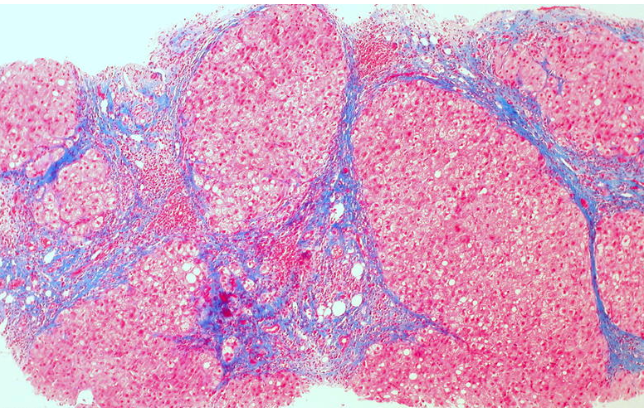
Cirrhosis of the liver as shown with staining. ED UTHMAN, CREATIVE COMMONS (BIT.LY/31QRFNM)
Kansas can no longer put off care for Medicaid patients with hepatitis C because of a recent legal settlement. But hundreds of the state’s prison inmates not covered by that lawsuit will have to wait another year for the pricey treatment.
That raises concerns about whether the delay constitutes cruel and unusual punishment under the U.S. Constitution, civil rights lawyers say, because inmates have the right to medical care.
“This is a fairly clear Eighth Amendment violation,” said Lauren Bonds, legal director for the ACLU of Kansas, which brought the Medicaid lawsuit. “Delayed treatment is unconstitutional.”
Kansas prison officials say more than 700 inmates currently have hepatitis C, a virus that attacks the liver and that’s most commonly contracted by sharing needles to inject illegal drugs. The state Department of Corrections expects about half will receive treatment this year, starting with those who’ve developed liver cirrhosis from the virus.
That’s on top of about 100 inmates treated in recent months, agency spokeswoman Jeanny Sharp said.
“The treatment strategy,” she said, “aligns with what many other states that were sued were asked to do.”
Kansas, she said, is doing it voluntarily.
Legal challenges
States landed in legal hot water in recent years for limiting hepatitis C treatment for their Medicaid and prison populations in response to the sky-high cost of new drugs. The drugs offered highly effective treatment to clear infections up, but with price tags that could total nearly $100,000 per person.
Kansas settled the Medicaid lawsuit, agreeing to no longer limit coverage of hepatitis C medication to those with more advanced liver scarring, while forcing others to wait.
Read the state’s settlement with the ACLU over Hep C coverage.
The suit didn’t cover prisons, but last fall, Kansas began screening all inmates for hepatitis C.
The corrections department says costs vary, but tend to run between $15,000 and $17,000 to treat the typical inmate. That can involve several months of daily medication.
The state will spend $6 million in fiscal 2020 on treating about half of its inmates with hepatitis C, a corrections official last week told a meeting of state leaders charged with signing off on the expense. Gov. Laura Kelly and the legislative leaders agreed unanimously.
Waiting for treatment
As it stands, inmates with less advanced hepatitis C will need to wait until fiscal 2021.
The corrections department wanted more funding to treat them this year instead, but the governor’s office didn’t request the full amount from the Legislature.
A spokeswoman said Tuesday Kelly is committed to ensuring inmates get treatment.
The state “will move as quickly as possible to treat every prisoner affected,” Dena Sattler wrote, “and if additional funding is required to keep providing treatment before the next fiscal year, the Governor will make additional budget recommendations as necessary.”
More inmates are testing positive for hepatitis C than initially estimated — about 13 percent of people entering the prison system.
It can take years for the outward signs and symptoms of the virus to develop, such as jaundice and fatigue.
About one in four people who get hepatitis C fend it off naturally. For most, the disease takes its toll, causing chronic infections.
As many as one in five eventually develop cirrhosis and one in 20 get liver cancer. Some cases require liver transplants.
Studies suggest early hepatitis C treatment benefits patients, while delaying treatment can harm their long-term health.
The costs of hepatitis C treatment are just one of the woes the corrections department is juggling. It’s struggled, for example, to pay guards well enough to keep prisons adequately staffed.
Bonds, of the ACLU, wouldn’t rule out heading back to court to press for speedier hepatitis C treatment in prisons. At the same time, she said the ACLU understands the system is facing budgetary hurdles.
“We do want to recognize and at least acknowledge that there has been some progress made,” she said. “We do want to be reasonable and see if there is a non-litigation means to get prisoners treated more quickly.”
The ACLU is continuing to monitor hepatitis C treatment for Medicaid patients, too. Under the terms of the state’s settlement with the group, Kansas agreed to hand over quarterly updates on how many patients are prescribed treatment and whether their requests get approved.
Previously, the state’s privatized Medicaid program, KanCare, approved only patients with the most serious liver scarring. It made them pass extensive sobriety tests, too.
The settlement says Kansas can only impose a three-month drug-free period instead of six, and that it can’t reject patients for using alcohol or illegal drugs that aren’t taken by needle.
Celia Llopis-Jepsen is a reporter for the Kansas News Service. You can reach her on Twitter @Celia_LJ
Sixteen outside agencies presented requests Monday night to the Ellis County Commission for a total of $1.073 million.
The commission is facing a budget shortfall for the coming budget year and has already indicated cuts to outside agencies will be between $150,000 and $300,000.
Despite the prior notification the agencies’ funding would be reduced for 2020, few agencies presented reductions in their requests.
The Aging Council recommended total reductions for all its programs from $133,627 in 2019 to $112,750 for 2020. The Humane Society of the High Plains decreased its request from $4,500 to $3,000.
The county is required by law to fund High Plains Mental Health, which has the largest allocation at $280,000. Its uses a formula to determine its request based in part on population, resident usage and county valuation. Its request was down about $1,000.
Lee Dobratz, historical society director, received sharp criticism from Commissioner Butch Schlyer for its lack of a long-rang plan for sustainability.
Area in one of the Ellis County Historical Society buildings where plaster collapsed June 1. Photo courtesy of Ellis County Historical Society
A portion of the plaster on a wall collapsed in historical society’s main brick building June 1, Dobratz said. The damage was caused by water seepage. Emergency repairs were made, but collections from two rooms had to be moved to the adjoining brick church for safe keeping.
“We currently face two large obstacles, Dobratz said. “Our building is becoming direly in need of replacement and our funding continues to lower. Just a few years ago, we were allocated $120,000 per year from the county. … When I took over in 2016, thrifty spending was not as common as it is now. I immediately cut expenses until I better understood the needs of our organization.
“By the time I created the budget proposed here for 2020, I had cut line items to the bare minimum that it takes to stay open. Our fixed costs of utility, maintenance, insurance and off-site rental are rising mostly due to emergency repairs to the structures we possess.”
Dobratz said the historical society is working on a plan for a new building as well as a fundraising for an endowment.
However, she said if funding is reduced at this time, the historical society would have to cut staff.
Schlyer reminded Dobratz the county already has left positions in many departments unfilled as a result of the budget crisis.
“If you have to eliminate positions, so be it,” he said. “I guess I am not going to be heart-felt for that at this point in time. Our staff in Ellis County could be looking at some real dire hardships coming next year.”
GrowHays, formerly the Ellis County Coalition for Economic Development, presented a request for $50,000. The agency did not request any funds in 2018 and 2019, but received between $125,000 and $47,500 in past years. It has been spending down reserves. However, director Doug Williams said that is not sustainable over time.
Despite changing its name, location, board makeup and director, the mission of the organization remains the same, Williams said — business creation, retention, expansion and recruitment.
“What it boils down to is growing the tax base — that is what we are supposed to do,” he said. “As I look at issues facing Ellis County, and I realize they are substantial, the most productive method of solving these problems is absolutely growing the tax base, increasing taxes and sales tax. While cuts may be necessary, growing the tax base is overall the best long-term solution by far.”
GrowHays has enough funding to last through 2019 and part of 2020, depending on private funding. However, long-term, Williams said the organization will not be sustainable if it does not receive public funding.
Commissioner Dustin Roths served in the past on the Ellis County Coalition for Economic Development board.
“This is something at the most micro level of government we have to be aggressive about in terms of growing our tax base,” Roths said, “especially in western Kansas, northwest Kansas and rural America in general. If you are not aggressive, if you are not growing, you’re dying. …
“My thought for fellow commissioners is that if we don’t figure out a way to do some sort of funding for economic development for Ellis County, we are going to have to do it on our own with our own staff, and we can see the money they are asking for here —$50,000 … we all know that is basically one employee.”
During the KAYS Morning Show on Tuesday, Schlyer also said he thought supporting economic development is important.
County Administrator Phillip Smith-Haines said although funding is tight this year, if the commission decides to fund GrowHays, the county will come up with the money in the budget.
The Center for Life Experience was not funded last year through the regular budget process, but received a $1,000 special allocation from the county commission. For 2020, it has requested $6,000 as it transitions from the umbrella of the First Presbyterian Church to an independent community nonprofit organization.
The center offers grief support groups as well is the support agency for the local chapter of the National Alliance on Mental Illness.
Roths said he understood the need for the center and other outside nonprofits for funds and valued the services they provide, but he said he thought nonprofits should be supported through donations and not taxes.
“One of my biggest concerns about government funding of a lot of these types of organizations that we are talking about for outside funding is the difference between a tax and a donation,” he said. “I think it is why we keep harping on it. I think anybody who has been successful and has extra money to give should look at this list of organizations that we are funding and really consider a donation to them.
“I love the idea of funding through church organizations,” he said. “The main reason for that is I feel that is coming from a point of love. It is not from coercion. It is great because it really ties into the people who give actually caring about the organization and becoming a part of the organization and becoming part of its success.”
Smith-Haines and Schlyer said Tuesday morning they did not anticipate cuts to the agencies would be across the board. The commissioners will begin to discuss specific funding amounts for the agencies at their meeting next Monday.
ATCHISON COUNTY —The search for a convicted felon suspected in a weekend shooting continues. Kevin Maxey, Jr., 31, Atchison is wanted for the Sunday morning shooting of a 42-year-old Atchison man near a city park, according to Police Chief Mike Wilson.
Kevin Maxey, Jr. photo KDOC
On Tuesday, Wilson said they had expanded the search beyond the city of Atchison and are doing a number of things in an attempt to locate him.
Officers raided Maxey’s home Sunday evening but he wasn’t there. The victim, whose name wasn’t released, suffered two gunshot wounds.
Wilson said about 20 people had gathered in the area when an argument broke out, primarily between two people. He says the victim apparently was not involved in the argument and was standing in the area when the shots were fired.
Maxey has been imprisoned for aggravated robbery, aggravated battery and Contraband: Non firearm, etc non employee, according to the Kansas Department of Corrections.

 The Kansas Highway Patrol reported a 2008 USD 418 McPherson School Activity bus driven by Ernest Clifton White, Jr., 75, Assaria, was south bound on Interstate 135.