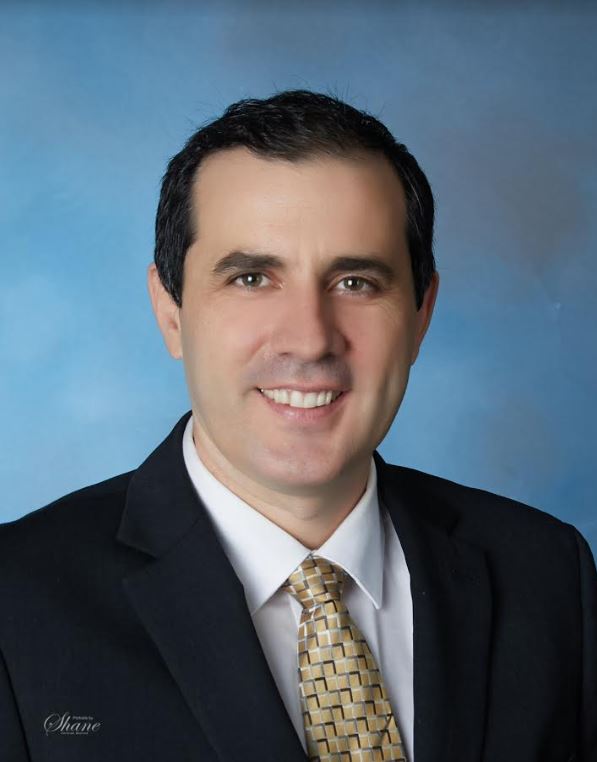
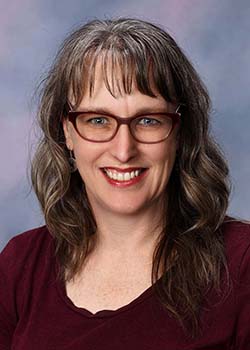
Zachary Jacob McFall is 5-foot-5 and 135 pounds -photo Topeka Police
SHAWNEE COUNTY —Law enforcement authorities are attempting to locate and speak with 16-year-old Zachary Jacob McFall in reference to Thursday’s fatal shooting in the in the 400 block of SE 37th Street, according to Lt. Andrew Beightel.
If you know the location of McFall, do not attempt to apprehend him yourself. Call 911 to report his whereabouts or you can leave an anonymous tip by calling Shawnee County Crime Stoppers at (785) 234-0007 or online at www.p3tips.com/128.
————
SHAWNEE COUNTY — Law enforcement authorities are investigating a fatal shooting and continue to search for suspects.
Just after 3:30 pm, Thursday, police were dispatched to the report of gunshots in the area of SE Fremont and SE Irvingham in Topeka, according to Lt. Andrew Beightel. While officers were in route to the gunshots call other citizens reported a possible shooting near SE 37th & SE Adams.
Officers then responded to that area, where at SE 37th and SE Pennsylvania they found a white passenger car with a 16-year-old identified as Joaquin Aj McKinney of Topeka. suffering from life threatening injuries. EMS transported the boy to an area hospital where he died, according to Beightel.
Initial reports from witness state the suspect(s) from the shooting were in a blue 4-door passenger car and they fled the area in an unknown direction of travel.
TOPEKA, Kan. (AP) — Two brothers from Colorado whose contaminated cantaloupe killed 33 people and hospitalized many more in 2011 are facing drug charges in Kansas related to an industrial hemp shipment.
Eric and Ryan Jensen head into the federal courthouse on Oct. 22, 2013 photo courtesy KCNC Denver
Eric and Ryan Jensen grow industrial hemp — a non-intoxicating cannabis plant — at a farm run by Eric’s son in Holly, Colorado, where industrial hemp is legal. They are accused of attempting to ship industrial hemp by FedEx through Kansas, where the crop is illegal.
The Jensens pleaded guilty in 2013 to causing a nationwide outbreak of listeria through infected cantaloupe grown at their farm. They were sentenced to home detention and ordered to pay thousands of dollars in restitution.
“We’re still so far in debt from that deal that I don’t know when we’ll ever come out of it,” Eric Jensen said of the cantaloupe case. “Both our reputation tarnished and everything else. We’ve been trying to dig out of it and was kind of hoping my son’s deal with the hemp would kind of help us both to get out of it and we just keep getting deeper and deeper.”
In January 2017, a Fed Ex truck picked up about 300 pounds of boxed up hemp from the Jensen farm in Holly, about 10 miles from the Kansas border for shipment to California. The shipment went to a FedEx warehouse in Liberal, Kansas, to California. The Kansas Highway Patrol seized the shipment after employees reported that the shipment smelled like marijuana.
That seemed to be the end of it, but in January of this year, the Seward County Attorney’s Office charged the brothers with four drug offenses, including three felonies, that accuse them of distributing marijuana or possession of marijuana with the intent to distribute.
Kade Goodwin, an assistant county attorney prosecuting the case, said he couldn’t explain why two years passed before the charges were filed. Eric Jensen successfully fought an attempt to extradite him to Kansas, and authorities have not tried to extradite Ryan Jensen.
Colorado requires industrial hemp to have less than 0.03% of THC, the chemical that produces a high in marijuana. Eric’s attorney, Dodge City lawyer Van Hampton, is meeting roadblocks in his effort to have the THC concentration tested.
Hampton said Kansas authorities wouldn’t let an independent lab in Denver test a sample. He said the Colorado Bureau of Investigation would conduct a test if Kansas requests it, but Kansas hasn’t asked. And the judge in the case, Seward County District Court Judge Clint Peterson, is refusing to hear a motion to order testing, he said.
The Kansas Department of Agriculture, which has the only lab in the state able to run the test, “”hasn’t been as cooperative as we’d like and we don’t want to ship it off to a third party in another state,” said Goodwin, who said he wants the package tested.
The state Agriculture Department does not test samples in criminal investigations, instead limiting its role to administration and regulation with the Kansas Industrial Hemp Research Program, said spokesman Jason Walker.
Without testing, the case is at a standstill.
Goodwin at first suggested he would likely drop the case if a test showed the THC concentration at 0.3 percent or below. But he later clarified that “the prosecutor’s office will look at it from all angles and make a determination, but we’re not guaranteeing everything will be dismissed.”
LAWRENCE — As American policymakers and health care providers try multiple approaches to reduce the number of deaths related to the opioid epidemic, treatment facilities are commonly recommended. But there’s a major obstacle: Many facilities that serve individuals with opioid-related needs often won’t accept people who have been prescribed medications to combat the addiction.
University of Kansas researchers have written a study examining why treatment facilities decide whether to accept people on medications to fight opioid addiction and how rejections can be avoided and services streamlined.
Doctors increasingly prescribe medications such as methadone, buprenorphine and naltrexone to help individuals diagnosed with opioid use disorder, or OUD. But KU researchers found many Greater Kansas City area treatment facilities have zero or low acceptance rates for such individuals, for a wide range of reasons.
“Forty percent of the service facilities we tracked either are not willing to serve individuals with OUD, express reservations for serving them or impose more severe monitoring and/or restrictions in order to serve them,” said Nancy Kepple, assistant professor of social welfare and lead author of the study. “Of those, they tended to focus on social services or substance use disorder services only. Facilities providing recovery support services were the most likely to have a zero to low acceptance rate.”
Kepple and co-authors surveyed 360 area treatment facilities to determine their acceptance rates of individuals with OUD who have been prescribed medications to treat the disorder. They established four acceptance levels:
Zero acceptance, which would not accept individuals on medications for OUD
Low acceptance, facilities that accept these individuals with reservations/restrictions
Moderate acceptance, in which such individuals are accepted but their medication use is not monitored onsite
High acceptance, which accepts these individuals and administers/monitors their medication use.
Staff at 89 of the treatment facilities provided researchers with their rationale for whether they accept individuals taking medications for OUD. There was a wide range of responses for facilities not being willing/able to accept individuals using medications for OUD, from facilities staff who said they focused on providing a drug- and alcohol-free living environment to some who said they simply did not have the infrastructure to manage medication use. The study, co-written by Amittia Parker, doctoral student in the School of Social Welfare; Susan Whitmore of First Call Alcohol/Drug Prevention & Recovery; and Michelle Comtois of First Call Alcohol/Drug Prevention & Recovery, was published in the Journal of Substance Abuse Treatment.
While a stigma was attached to the medications at some facilities, others simply lacked the resources to serve individuals taking the medications. Respondents at low acceptance facilities reported they had concerns about how allowance of medications of OUD might affect the therapeutic community. Others reported not having the necessary staff or funding to devote to monitoring the medication use of individuals in their care.
The study grew out of a larger partnership between KU and First Call Alcohol/Drug Prevention & Recovery to find out what services are available to people struggling with opioid addiction in the Kansas City area and to prevent others from facing addiction before the opioid crisis worsens. The findings show that increased federal funding to provide such medications to people with OUD is only addressing part of the problem, Kepple said, and that there should be greater focus on recovery and maintaining life free from addiction, not simply stopping the addiction.
“Policymakers should think about funding services across the spectrum of recovery service, not just funding access to medications to address the opioid epidemic,” Kepple said. “We need to rethink what we prioritize in funding and think about how to more effectively address providers’ fears and beliefs about these medications. If you prescribe someone these medications but don’t provide other services, they could still overdose six months down the road. These medications alone are not a magic bullet; the most effective treatment includes complementary recovery-oriented and recovery support services.”
Individuals who receive medications but do not have access to safe housing or mental health services may be more likely to relapse on opioids, the authors argue. The reasons facilities gave for not accepting individuals on OUD medications are addressable, however, and provide an opportunity for funders and policymakers to help improve collaboration between facilities that build a more supportive service infrastructure, such as connecting stand-alone SUD services providers with local psychiatrists approved to administer and monitor the medications.
“These are all facility-level factors that can be addressed and that could increase services for individuals who are increasingly prescribed these medications,” Kepple said. “Medications for OUD are not going away, so improved understanding and tangible supports would help.”
The authors point out federal funding to provide prescriptions to fight OUD has increased in recent years, as fatalities from the opioid epidemic continue to mount. Ensuring recovery past breaking the addiction and fighting stigma of the medications is key.
“Recovery is not only about sobriety,” Kepple said. “These medications help individuals to stop using opioids and initially maintain recovery. However, to best serve these individuals, we need to have a more holistic view of the entire recovery process.”
The Hays Police Department has canceled a Silver Alert for a Hays woman reported missing since Friday evening.
The HPD has reported Gail M. Thal has been located and is home safe with her family.
“The Hays Police Department and her family would like to thank everyone for their assistance,” the HPD said in a news update.
———————
The Hays Police Department is requesting assistance in locating Gail M. Thal.
Gail is a 77 year old Hays resident that was last seen at 7:00pm in the area of the 200 Block E. 16th in Hays. She has been reported missing by her family.
Gail is 5-foot-4 and weighs 140 pounds. She has blonde hair and blue eyes. Last seen wearing a white jacket, blue shirt, and dark pants.
Please contact the Hays Police Department at (785) 625-1011 if you have any information.
SEDGWICK COUNTY — Law enforcement authorities are investigating a shooting that left one man dead and three other individuals injured early Saturday.
Police on the scene of the shooting investigation early Saturday photo courtesy KWCH
Just after 2 a.m., police responded to a disturbance with shots fired at the Horizons East Apartment complex located in the 500 block of North Rock Road, according to officer Kevin Wheeler.
Upon arrival, officers found a 20-year-old man who was shot and was unresponsive in the parking lot. Officers rendered aid until medical personnel arrived, who continued life-saving measures. The man was shortly after pronounced deceased.
The victim’s name is being withheld pending notification of next of kin. Two of the three other victims include a 21 year-old-male and a 22-year-old male. They were transported to a local hospital where they were treated and released for non-life threatening injuries. A 19-year-old female was also transported by private vehicle to a local hospital with a gunshot wound. Her injury is considered to be serious, but she is expected to survive.
The preliminary investigation revealed that a party was being held at one of the apartment units. There was a disturbance that occurred in the parking lot and shots were fired by an unknown suspect.
Police detectives are interviewing multiple witnesses and have not reported an arrest.
GREAT BEND – The certified public accounting firm of Adams, Brown, Beran & Ball, Chartered (ABBB) is pleased to announce the addition of Milan Simic to their professional team.
Simic joins the firm in a newly created role, Strategic Solutions Advisor. In this capacity, he will focus on developing CFO-level service strategies for clients in the oil & gas and manufacturing industries. His responsibilities include defining tailored solution sets as well as identifying industry enhancements, joint ventures, and potential merger and acquisition targets for clients.
“Welcome to the ABBB team, Milan! His energy and passion for our clients will help drive these new initiatives within the firm,” said Brian Staats, CPA, CGMA, managing partner of ABBB. “Our clients will benefit greatly from the new relationship and revenue opportunities that this position opens up to them.”
In 2001, Simic graduated from Stephen F. Austin State University with a bachelor’s degree in finance and accounting. He spent five years as an internal auditor at a large oilfield service company and two and a half years as a business risk services consultant with a Big Four accounting firm. Before joining the firm, Milan served as the president of a family office operation. In this role, he was responsible for growing the business, including overseeing seventeen different oil and gas project acquisitions which ranked in the top 300 operators in Texas. Simic lives in Hoisington with his wife Sarah and their three daughters, Sofia, Mila, and Ana.
Adams, Brown, Beran & Ball, Chartered provides a wide range of traditional and non-traditional CPA and consulting services to clients throughout Kansas, including agriculture organizations, construction companies, feed yards, financial institutions, governmental and not-for-profit organizations, manufacturers, medical practices, oil and gas companies, professional service firms, real estate companies and small businesses. Founded in 1945, today the firm maintains 13 office locations throughout the state. For more information about Adams, Brown, Beran & Ball, please visit www.abbb.com.
Cattle graze on a cover crop mixture of peas, oats, barely, rapeseed and flaxseed on Jay Young’s farm. (Photo courtesy Della Rambo)
ByCorinne Boyer Kansas News Service
GARDEN CITY — Three years ago, rancher and farmer Jay Young got intrigued by a YouTube video.
A North Dakota farmer championed the idea of cover crops — plants that would be considered weeds in many other contexts — as robust plants for his cattle to graze on.
Young applied the cover crop strategy – rotating rye, radishes, turnips, oats and barley – to his land just east of the Colorado border. The plants held the soil in place, trapped nutrients in the ground and made the ground nicely spongy.
Partly as a way to prop up farmers who lost crops to flooding this spring, and partly as a way to protect the soil, a federal farm program now offers farmers in 67 flooded Kansas counties from $30 to $45 an acre to put down cover crops.
Meantime, a fledgling private effort is beginning to offer another cover crop bonus: payments intended to capture more carbon in the soil and reduce greenhouse gasses that contribute to climate change.
This spring, heavy rainfall destroyed crops and delayed the planting season throughout the state.
By comparison, some farmers who used cover crops like Young fared relatively well. Less ponding, more absorption. That’s paying off now when he needs to irrigate the land.
“If I … use less water because I’m utilizing cover crops and capturing more water that is coming out of my sprinklers,” he said, “then I’m being a better steward of the water.”
Karen Woodrich, a state conservationist with the federal Natural Resources Conservation Service, said planting cover crops helps restore soil nutrients.
“Standing water, it might have killed what was already there and kind of pulled the nutrients right out of those fields,” Woodrich said.
Through photosynthesis, plants grab carbon from the air and store it in the soil through their roots.
“Every time you till the soil, you actually are releasing carbon back into the atmosphere,” said Steve Swaffar, the executive director of the No-Till on the Plains.
If plants continuously cover the ground, the root system creates porous soil. Swaffar says healthy soil resembles cake.
“It’s full of small holes. It holds together when you hold it in your hand,” he said. “That allows water to infiltrate down through that soil and then be stored in the soil.”
The plowing of cropland crumbles that cake-like dirt. That prevents water from seeping into the ground. Swaffar says once tilled soil dries out, it’s almost like dust.
“When you get a rain on top of that, you essentially, in the first half inch, seal that structure,” he said. “It just creates kind of like a mud that seals over the surface of the soil and then water can’t infiltrate.”
Ag tech company, Indigo Agriculture, has created a carbon marketplace where growers who sequester carbon are paid and businesses, nonprofits or anyone interested in investing in the marketplace can purchase carbon credits, typically used to offset the release of greenhouse gases from some other activity. The company aims to reduce carbon dioxide by 1 trillion tons.
The company will pay farmers $15 to $20 dollars per acre for every ton of carbon dioxide captured in their soil.
John Niswonger grazes his cattle on cover crops in western Kansas.
“We do our best to raise the crops,” he said. “You’ve got to plant the cover crop out there and keep those roots growing and the photosynthesis is what pumps that carbon back into the soil.
“I don’t understand why they would pay us, but if they do, I guess we’ll take the money,” Niswonger said.
Ed Smith is the head of Indigo Carbon, and oversees the company’s Terraton initiative. If a farmer has a 100-acre field, and puts three tons of carbon dioxide into the ground, Smith says that farmer would be compensated $45 per acre — for a total of $4,500 for the entire field.
Indigo Agriculture began by selling microbes that helped seeds grow faster. After working with farmers utilizing regenerative practices, the company noticed the soil transform from a pale to a dark color.
“The difference in that color is soil organic carbon levels,” Smith said. “They are also doing a service for the planet by taking carbon out of the atmosphere and putting it in the soil, which led us to Indigo Carbon.”
Niswonger signed up for Indigo’s Carbon marketplace, but he says soil carbon sequestration is a more of an industry term.
“It’s more for your university people than it is for anybody that works on the land. I mean … the process happens, and it’s not like we try for it not to happen or try for it to happen,” Niswonger said.
Corinne Boyer covers western Kansas for High Plains Public Radio and the Kansas News Service. You can follow her on Twitter @corinne_boyer or ror email cboyer (at) hppr (dot) org.
GEARY COUNTY— One person was injured in an accident just after 12:30a.m. Saturday in Geary County.
The Kansas Highway Patrol reported a 2007 Suzuki motorcycle driven by Connor Arthur Amiot, 22, Junction City, was fleeing from law enforcement west bound on Interstate 70. He lost control of the motorcycle and it overturned as he took the Fort Riley exit at a high rate of speed.
EMS transported Amiot to the Irwin Army Community Hospital. He was wearing a helmet, according to the KHP.
Brett Schmidt, Learning Cross owner and director, right rear, takes Tony Brummer, Via Christi Village resident, and Olivia Feldt, 4, Casen Byer, 4, from the center on a ride in the center’s new pedaled-powered buggy.
By CRISTINA JANNEY Hays Post
Lincoln Brown, 3, Liam Nuttle, 4, Nora Park, 4, play at the Learning Cross Child Care Center, which is in the basement of Via Christi Village.
This pedal-powered Berg E-Gran Tour cart is the newest means Learning Cross Child Care Center has of connecting elderly residents at the Village with the child care center’s kids.
The child care center and preschool bought the buggy with a $5,000 grant from the Heartland Community Foundation.
Four people can ride in the buggy a one time — one staff person, one elderly resident and two children in the front. The staff person pedals, which helps energize a small motor in the back. The senior’s pedals have no resistance, so it is a very gentle workout.
Brett Schmidt, Learning Cross owner and director, said the kids and seniors alike have loved the buggy.
The children at Learning Cross Child Care, such as Dalton Schumacher, 5, and Levi Leuenberger, 5, seen here playing cards, interact weekly with the residents of Via Christi Village during activities such as exercise and church services.
Tony Brummer, Village resident, said the rides are the highlight of his days. It also gives Brummer a chance to share stories with the kids. Brummer, a former farmer, has been caring for a large sunflower in the Village’s courtyard and has been using the short outings as a time to talk about the sunflower and gardening.
Schmidt said he hopes to integrate more learning opportunities in these times in the buggy by getting the elders to share stories or pictures with the children during their rides. They may also share prayer time on the buggy in the future.
“Once they are on the buggy, they are a captive audience — the kids are,” Schmidt said. “The residents are free to talk about whatever.”
The kids love the rides so much, the center uses the buggy rides as one of the rewards for good behavior.
Music and Memory
The organization also received a grant from Heartland Community Foundation to purchase a Music and Memory program about a year ago. The program is geared toward residents who suffer from Alzheimer’s disease or dementia. Each resident in the program receives an MP3 player programmed with music popular from the younger eras of their lives.
“It is kind of like a hardwire back to your memories,” Schmidt said. “So as you listen to a song, music is the last part of your brain that will go with those memories tied with it. You get a long way back to a memory. You get 10 to 15 minutes of kind of the person is back. You can have conversations with them.”
The program can help people with anxiety and depression. Some people experience fewer behavior issues when they engage with music and a as result their physicians can reduce their medication.
One of the residents was becoming very agitated and when she was introduced to the music, she became very calm, Schmidt said. The music makes her smile.
Grandfriends and Via buddies
Learning Cross, an Christian intergenerational child care center, has been at Via Christ Village for four years. Schmidt, a former kindergarten teacher, gleaned the idea for the child care and preschool from a similar program in Coffeyville. He said he could see the benefits to both children and their elders through the two groups interacting.
Every year, families with children at Learning Cross adopt elders at the Village as a “grandfriends.” The families share holiday gifts and drop-by visits throughout the year.
All the children at the child care center participate weekly in activities with both assisted living and long-term care residents. This includes church services and exercise.
Daisy Miller, 4, and Nora Park, 4, from Learning Cross Child Care Center play in the courtyard of Via Christi Village.
“For the children, they learn empathetical responses, and learning sympathy and they are part of a larger community. They are part of a larger community they get to help with,” Schmidt said. “They get to go and do what we call ‘smile power.’ They go and smile and wave. They have created hug power, singing power — anytime they can get someone to smile — that is what their goal is.
“That has been awesome seeing that grow just out of the kids. That was not something out of my program that I developed.”
The residents often call the preschoolers their “grandkids” or their “Via buddies.”
“The residents, when you see the kids come up, you just see a magical moment. A new spark forms or a spark that was there comes back to life. …
“Some of them want the hugs, and some of them will just sit out and watch them, especially in the courtyard when we play out there. Windows open up and shades open up and they just sit in their rocking chairs and just listen to the kids play.”
Many older Americans today live far away from their families, and they fall victim to the three plagues of aging — boredom, loss of purpose and depression. However, Schmidt said he believes the presence of the children helps with all three of those issues.
“We give them a purpose. The grandfriends basically become grandparents again to these kids. They get to tell them stories. They get to play with them. They get to watch them. But also the depression piece, having that life — basically we are injecting life back into the building with the kids. We run down the hallways sometimes. There are always laughs. There are sometimes cries, but it is real life that we get to bring back. It is a magical, symbiotic relationship.”
Sandy Dinkel has worked at the Village for more than 20 years. She said the presence of the children has resulted in a calmer atmosphere that feels less institutional.
“It feels more home-like,” Dinkel, admissions director, said, “You have the kids going through. You’ve got more spiritual activities and the kids involved in the spiritual activities. That is a big, big thing.”
‘I am so blessed’
The “grandfriends” leave a lasting impression even when they are gone. One young girl became particularly attached to one of the Village resident. She often wanted to sit on the resident’s lap, but that resident recently passed away.
“The little girl we told her she is not going to be here anymore. She is in heaven with God. She said, ‘I am so blessed that I got to be with her when she was here.’
“That is what we want to teach is the positive. She was able to affect this lady’s life that much. She was a happy grandfriend that just loved everybody. She didn’t care what was going on. All your worries, everything melted away, when she gave you a hug. That is what we are trying to develop, letting them give back. That girl will remember that for the rest of her life.”
Schmidt said the partnership is wonderful. The children can play in the courtyard and in the a adjoining playground when the weather is nice, and they have many long corridors to walk in when the weather is inclement. Schmidt said they once tracked the children’s activity and found they walked a mile a day even when they were indoors.
The children have play-based learning and preschool. They learn phonics, and most can read before they begin kindergarten. Social/emotional learning is a foundation of the program, Schmidt said.
“We try to get the kids to express their emotions, identify their emotions,” he said. “It is the key to get to high-order thinking, so when they go into school — kindergarten, first grade, second grader, they are learning how to learn from us not what to learn. No matter the environment they are in, we are hoping they will be successful in any classroom.”
The program had seven children when it started. It will have 24 children in the fall and has a wait list until 2022.
“I would say this has been a God journey,” Schmidt said. “It started out so small. I can’t still believe the success we’ve had.”
As Harbor Freight took over a large portion of Big Creek Crossing, 2918 Vine, the facility offices and restrooms needed to be moved and, as the discount tool retailer prepares to open Tuesday, the new BCC facilities are almost ready as well.
Construction of the facilities is slightly behind, but for James Younger, Big Creek Crossing property manager, quality is more important than speed with the new construction.
“Obviously with a project as big as the buildout we are doing with Harbor Freight and construction on both ends, we were expecting a few hiccups and a few delays,” he said, “but we want to choose quality on this project over getting it done quicker.”
Delayed construction on the facilities, he said was mostly due to scheduling conflicts with subcontractors, but ensuring the construction was done correctly was more important than hiring sub-par contractors who would speed through the project, Younger said.
“We are using local subcontractors. We are talking about guys that are doing really good work, quality work,” he said. “If that involves us enduring a week or two extra in a temporary office, or a temporary restroom accommodation, that is something that we are definitely going to view as the lesser of two evils.”
The office will feature an open layout with large windows into the main hallway on the north end of the facility.
The new restrooms are near the north entrance with doors directly off of the hallway.
Construction should be completed this week, and Younger expects to begin moving into the offices over the weekend.
The restrooms’ fixture placement will begin after the new tile has had a chance to settle and the grout has completed drying and is expected to be opened in the next week.
“We definitely want to see a good finished product and a really nice new fresh look amenity for the public,” Younger said.
High Plains Mental Health Center this week announced the addition of two new psychiatric service providers who will be available to see northwest Kansas patients close to home. The two additional providers, who will see patients via Telemedicine, join our existing full-time and local medical staff: Dr. Virginia Patriarca, Dr. Mark Romereim, Jamie Malone, APRN, and Joseph Mindrup, APRN.
The additional psychiatric service providers are Cheryl Gore, APRN, and Kelsey Daugherty, DNP. They have begun seeing patients in High Plains’ 20-county service area via telemedicine units in six service locations: Hays, Colby, Goodland, Osborne, Norton and Phillipsburg through a new partnership between High Plains and InnovaTel TelePsychiatry.
Cheryl Gore is a nationally certified APRN specializing in psychiatry. She completed her bachelor’s of science degree in nursing from the University of Arkansas for Medical Sciences and then earned her Master of Science in nursing at Western Kentucky University. She is currently pursuing her PhD in Clinical Psychology. She has completed specialized training in several areas of study, including autism, suicide prevention, chemical dependency, Cognitive Behavioral Therapy and telemedicine. Over the past 24 years, she has held several positions in the behavioral health field, working with patients of all ages.
Kelsey Daugherty holds a Doctor of Nursing Practice from the University of Missouri-Kansas City. She has experience working with children, adolescents and young adults both in-person and through Telemedicine platforms. The majority of her career has been spent in the outpatient setting working as the sole prescriber in a large private practice alongside therapists of varying specialties. Kelsey values having a close, collaborative relationship with the clinicians and specialists with whom she shares patients and fosters these relationships to provide a truly integrated service.
“The additional psychiatric providers will be an important addition to our medical team, allowing us to expand medical access for our patients and reduce wait times. We are glad to welcome them to our team of local service providers,” Executive Director Walt Hill said. “Our staff has been working diligently to offer new patients same-day access to mental health services. We take our mission to provide quality health care to our communities very seriously and are always working to make mental health services more accessible and patient-friendly.”
High Plains has identified rapid access to mental health services as a high priority and is proud to offer same-day access to new patients. Telepsychiatry services are traditional services provided over a secure connection between two computers. The experience will be similar to a traditional office visit in many ways: Patients will be greeted by a nurse and will be able to communicate directly with their medical providers. Any prescriptions resulting from Telemedicine appointments can be filled at local pharmacies. High Plains Mental Health Center is proud to have been an early adopter of Telemedicine services, providing more than 50 service sites throughout northwest Kansas over the past 15 years. High Plains also offers a sliding fee scale for qualifying patients, and patients are not refused services if unable to pay. Medicare, Medicaid and commercial insurance policies are also accepted at High Plains.
“Our motto is we’re here for you, and we take that to heart. We want our communities to know it is OK not to be OK – there should not be any shame or negative stigma associated with seeking care at local facilities,” Hill said. “Mental health care is health care. There is always hope, and there is help.”
Locally owned and operated since 1964, High Plains employs approximately 140 staff members throughout its 20-county service area in northwest Kansas. With a main office building in Hays, High Plains also has full-time Branch Offices in Colby, Goodland, Norton, Osborne and Phillipsburg, in addition to community outreach offices in 14 counties. Other specialized services include Schwaller Crisis Center, a 24-hour crisis hotline and community-based support services for adults and youth. To learn more about High Plains Mental Health Center, visit www.hpmhc.com or find us on Facebook, Twitter and Instagram.
High Plains Mental Health Center is a licensed community mental health center dedicated to the aggressive pursuit of providing a comprehensive mental health program to the residents of northwest Kansas. Embodied in this pursuit are fundamental principles of establishing quality services as close to home as possible, at an affordable fee, and delivered in the least disruptive manner available. Such services will offer a continuum of care so that treatment can be individualized, and our staff can respond quickly and compassionately to those reaching out to us. We’re Here for You.
Fort Hays State University’s Dr. Ginger Loggins, assistant professor of informatics, recently received a $4,250 Scripps Howard Foundation Visiting Professors in Social Media grant.
Only six Association for Education in Journalism and Mass Communication (AEJMC) members were selected to receive the grant, which has been funded for nine years this year.
Loggins will work with Scripps Washington Bureau in Washington, D.C. In addition to teaching traditional introductory classes, she helps students produce weekly news and entertainment shows for Tiger Media Network. Her primary research interests include the history of local television news and how racial depictions on television can impact viewer prejudice.
Loggins is spending two weeks working in the news industry and learning first-hand how technology is shifting and changing the way news is delivered. After completing the two-week externship, each visiting professor shares the newfound knowledge and skills to his or her classroom, sharing with students what was learned.
“I am really supportive of these experiences, because they are a win-win for everyone,” said Angela Walters, interim chair of the Department of Informatics. “Dr. Loggins will share what she has learned with her students, and they are the key players in future of news reporting and delivery.”
The second phase of the program funds the travel of a news media outlet representative to the faculty’s campus for a three- to five-day visit.
Each grant provides $3,000 for the visiting professor’s travel, housing and other expenses for the two-week media outlet visit and $1,250 for expenses related to the outlet representative’s campus visit.
The Scripps Howard Foundation is the corporate philanthropy of the E.W. Scripps Company, a news and information company with 52 television stations in 36 markets.
“This will be an outstanding experience for Dr. Loggins,” said Walters. “Her expertise in journalism, storytelling forms and convergent media will serve her well as she takes part in important conversations regarding how technology is changing the news delivery model,” she said.
AEJMC is a nonprofit, educational association of journalism and mass communication educators, students and media professionals, founded 106 years ago in Chicago by a group of 23 journalism educators and practioners. For more information about AEJMC, email Lillian Coleman, AEJMC project manager at [email protected].






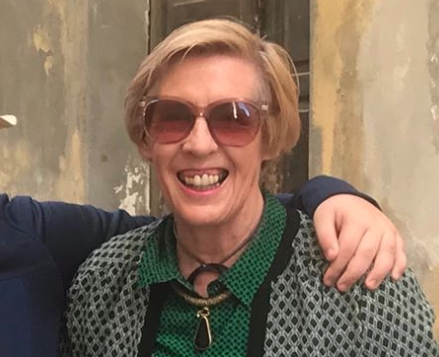
 The Hays Police Department is requesting assistance in locating Gail M. Thal.