O’Loughlin Elementary School will receive new playground equipment next week.
The O’Loughlin PTO donated more than $62,000 to purchase the new equipment and pay for installation. This included a $10,000 grant from the Heartland Community Foundation.
Alaina Cunningham, parent and PTO member, said the existing playground equipment was in poor shape. Bolts had fallen out of the equipment and some of the features had to be boarded up for safety reasons.
The new equipment will be ADA accessible and has facets that will address children’s sensory needs. A physical education curriculum also comes with the equipment.
The USD 489 staff members have been working to prepare the school grounds for the new equipment. The new equipment will be installed beginning next week. The project also includes new wood chip surfacing for the playground.
Some of the existing playground equipment that is still in good condition will be kept.
KIRWIN — With Phillips County now being in the midst of its 2019 County Fair in Phillipsburg, and Kirwin on its way to celebrating its sesquicentennial in October, it can be noted that the first fair here did not take place in the county seat of Phillipsburg as might be assumed. Instead the county’s first such celebration was held 144 years ago in Kirwin, which at the time was one of the most prominent communities in northwest Kansas.
The Kirwin Fair during the 1870s and 1880s was a huge enterprise, with one particularly successful episode being hailed in the local press as “one long to be remembered in the history of this city.”
Of course that prediction turned out not to be true — should you ask any native of the town about the rousing fairs that were once held there you are likely to receive a quizzical look; go a step further and ask them about an immense fairgrounds formerly in their midst and you will probably be met with downright skepticism.
Confectionery Ice Cream
Rousing those fairs were, though. Acclaimed by an early-day booster as having a “fairgrounds second to none in the state,” thousands of people flocked in from counties throughout the region to attend the festivities, which were held annually between mid-September and mid-October.
Located in the southeast corner of town on 40 acres of land that is now a soybean field in the 21st century, that early-day 19th century Kirwin Fairground boasted a half mile horse race track featuring off-track betting at Kirwin’s Monarch Billiards Hall. The large fairground also had grandstands, floral halls, display halls, stables, and row after row of show pens.
While some of the pens and stables would survive into the 1960s, the display halls, race track and grandstands all were destined to disappear within decades of being built.
The fair was first held in 1875, just a little over a half decade after Kirwin, Phillips County’s oldest town, was founded. One of the largest Indian battles ever fought in Kansas, the three-day Battle of Prairie Dog Creek, had taken place in Phillips County just eight years before the first fair. A mere four years before that fair a siege of Kirwin by 500 Indians had been broken only after the cornered handful of town residents built a breastworks of logs and made a display of their repeating rifles.
Initially a hardscrabble collection of sod houses and cabins made of mud-chinked rough-hewn logs, in 1875 major prosperity descended upon the community when President Ulysses S. Grant named Kirwin to be the site of the U.S. Land Office for the filing of claims that made millions of acres of western Kansas available for pioneer settlement.
With the new land office opening for business on Jan. 9, 1875, almost overnight Kirwin became a major frontier boomtown, setting the stage for a fairground to be constructed and a regional fair to open its gates by September.
Kirwin received yet another major boost in 1879 when the Atchison, Colorado and Pacific Railroad (later renamed Central Branch Union Pacific Railroad and then Missouri Pacific Railroad) laid track that reached Kirwin, opening the fair up to a larger group of attendees, including daytrippers.
Northeast Square
The exact same week the first Kirwin Fair got underway in September 1875, not only was Ulysses Grant president, the nation was also still in the midst of Civil War Reconstruction. In addition, that same week George Armstrong Custer was leading an expedition through the Black Hills that within months would culminate in the massacre of his command at the Little Big Horn, Wyatt Earp was a lawman in Wichita, Jesse and Frank James robbed $20,000 from the Huntington Bank, Buffalo Bill was touring North America with one of his early Wild West shows, Billy the Kid was arrested for the first time, Calamity Jane was carrying dispatches for the U.S. Cavalry along the Platte River, Wyoming Territory resident Wild Bill Hickok was soon to move on to his grim fate in Deadwood, Annie Oakley was holding shooting exhibitions across the Midwest, and the great Apache war chief Geronimo was fighting U.S. army troops in the Southwest while Sioux leaders Sitting Bull and Crazy Horse were doing the same on the Northern Plains.
It was in the very midst of this rich historical background that the intrepid citizens of Kirwin started their fair.
“The Greatest Enterprise in the Northwest,” as it was billed, was christened not the Phillips County Fair, but instead the Quad County Fair, at first, and then later on the much more grandiose Upper Solomon Valley District Fair as it became more popular and expanded.
Originally marketed towards entrants and attendees from the four corners area of Phillips County, Rooks County, Osborne County, and Smith County, the fair was so successful that it was soon also opened to Mitchell, Jewell, Norton, and Graham county contestants.
General admission for the public could be had for 25 cents, or $1 for a three-day family pass. Prizes were handed out not just for the usual categories of livestock, baked goods, fruit, grain, and vegetables, but also for floral displays, beadwork, embroidery, farm implements, and even collections of fossils and stuffed birds.
The centerpiece and main attraction of the fair, however, was the horse racing, with the initial competition on the fairgrounds racetrack taking place just four months after the first Kentucky Derby was held.
Northwest Square
Kirwin Fair horse racing events featured sprinters and trotters, as well as a comedic slow-walking race in which would-be jockeys were give unbroken mounts to ride. With top prizes for the regular exhibits running from 50 cents to $2, the purse for the premier horse race of sprinters was a princely $150.
(According to the U.S. Bureau of Labor Statistics the average farm laborer in Kansas earned $20.14 per month in 1875, and that 1875 $150 purse has a 2019 value of $3,492).
One particularly anticipated contest occurring during the 1885 Kirwin Fair involved three nags by the name of Fred H., Minnie, and Ned. According to one colorful post-race report at the time, Ned “the king of the Northwest and the pride of Kirwin,” finally made his appearance guided by the well-experienced hand of Ben Arbuckle, “the prince of Missouri horsemen.”
According to the account, “Ned’s noble carriage, as if holding his competitors in disdain, won the admiration of all and $20 to $5 was offered without any takers. The gong was sounded, the start given, and away dashed the antagonists. But it was no use. The king of the valley, the pet of Kirwin, was unequaled and passed under the wire.”
Adding to the overall festive atmosphere during the three days of celebration was a general revelry not just at the fairgrounds, but also throughout the entire town of Kirwin.
“Drs. Watkins and Shively, the Tooth Extractors and Lightning Liniment Men” set up a booth one year during the fairtime merrymaking and attracted lines of customers with promises of public tooth extractions “without excruciating pain; without lacerating or breaking the jaw-bone.”
Opera House
And then there was a “Professor Warren,” who offered up harp playing, juggling, and clog dancing.
During the Kirwin Fair oysters were quite popular with the attendees, with fried ones being offered in town at Miller’s Eating Saloon, and canned ones at the Philadelphia Oyster House.
A visitor to the fair could also find specials on fine candies to be had at Miller’s Confectionary, ice cream at Gilbert’s, “cyclone prices” for shoes at the Bee Hive Store, and the “finest line of jewelry in the city” at the Kirwin Jeweler.
For the kids there was a half-mile foot race on the horse track and skating at Fenton’s Roller Rink, while adults had entertainment of a different type — dancing at the Opera House, spirits and ten-pin at the Eagle Saloon, spirits at the Senate Saloon, and more spirits at the Exchange Saloon, Kirwin’s version of a modern-day brewpub since it was the Kirwin Brewery’s local public retail outlet.
Kirwin had a lot of saloons.
With the Logan Silver Cornet Band performing on the fair midway during the day, the Kirwin Silver Cornet Band had to content itself playing in town during the night, as the local newspaper, the Kirwin Chief, was reporting it was banned from the fairgrounds.
Banned? The reason went unstated, but one might wonder whether silver cornet musicians of one era and rock n’ roll guitar musicians of a future era might not have had similar propensities.
With Kirwin having a legal drinking age of just 15-years-old at the time, a large local brewery, horse racing with an off-track betting parlor, a dozen or so saloons and billard halls, a town council committee specifically tasked with regulating gambling and houses of ill fame (this is a whole other story), and a reputation that survived well into the following century — well, the temptations were certainly there.
But still the question is begged — exactly what do musicians have to do to get 86’d from the biggest celebration on the northwest Kansas frontier in the 1870s?
One year it was innocently reported after one of the earliest fairs, a little tongue in cheek perhaps given Kirwin’s wild and woolly repute and the vast number of entertainment venues it had, that while “a few men from other counties were at time intoxicated, the locals made a good accounting of themselves.”
Not so a year or two later when one Frank Dixon of Phillipsburg was found to be raising a ruckus at fair time, hollering that no Kirwin man could best him in a brawl (a common Phillipsburg-Kirwin rivalry practice made repeatedly by others in decades to follow).
Loutish and fully lubricated, Mr. Dixon promptly found himself in tow to the hoosegow after being brought to heel by the Kirwin city marshal on charges of disturbing the peace and using foul language. Houses of ill fame, legal. Foul language, illegal.
On his way to the lockup the prisoner sighted one of the town’s attorneys and requested that he be permitted to discuss retaining his services; accordingly a detour was made and his captor’s grip was loosened so a consultation might take place.
And, almost immediately, say the reports, “the place that knew Dixon knew him no more, and there was nothing to be seen but a long streak of grey overcoat.”
Not to despair though, law and order would yet prevail in Kirwin that balmy autumn night as the miscreant ultimately ended up in the town jail after he was located — discovered not by searching the highways and byways back to Phillipsburg. No — the marshal found Dixon simply by scouting through the town’s night-time business establishments and soon finding him lurking near the rear exit of Snell’s Billiard Hall.
Such was the essence of the briefly famous but soon forgotten Kirwin Upper Solomon Valley District Fair, heralded far and wide in its heyday as being an event that was long to be remembered but instead ended up becoming just another chapter in The Forgotten History of Phillips County.
There’s something about being outside that soothes the soul. It doesn’t matter if you’re working, taking a casual stroll or just sitting on the porch watching the world go by. One of my favorite excuses to be out of doors is fishing.
My father, an avid hunter, didn’t have the patience for fishing, but he also never discouraged me from casting a line. Most of my adolescent angling adventures were the result of a neighbor who was kind enough to take me along almost whenever I would ask to hit the water.
Though sometimes, like when he would take me limb-line fishing, some advanced planning was necessary. I still remember the first time we took an aluminum Jon boat down Pottawatomie Creek setting lines off tree branches hanging over the water.
Checking the lines a couple days later turned up a 35-pound blue catfish, which is still the biggest I’ve ever seen in person. The fish was only slightly smaller than I was at the time, but it also was only a baby in the world of blue cats, which can top 100 pounds.
Like my father, I too lack the patience to go after trophy fish. Instead, I’m happy to reel in anything that swims. While I enjoy the occasional challenge posed by fishing reservoirs, lakes and rivers, there’s nothing quite like fishing a well-stocked farm pond.
I’m never going to catch a record-setting bass or catfish from a pond, but I’m also not going to go home empty handed either. My favorite pond is at the ranch back home. It’s stuffed full of bass less than a pound, but I did snag a four-pounder a couple years ago.
Ponds always hold the promise of hooking something just big enough to put a big bend in the rod and put up a decent fight. The best fishing hole offers plenty of action in between catching those lunkers.
I recently found a new pond close to Manhattan that fits the bill. Thanks to my brother who scored an invite from the landowner, I got to tag along with him and my nephew one Saturday morning.
My nephew is my usual fishing buddy, and we’ve had some tough luck this year with weather, high water and schedules that haven’t always aligned. We got skunked at a public fishery in late April but managed to find a few catfish at another open access lake in June.
This private pond, however, was nestled in a Flint Hills valley, and it was stocked with bluegill, channel and bullhead catfish and largemouth bass. The water was clear enough to see the bass’ white bellies flash as they hit our lures. Though none were really big enough to bend our rods.
We spent the morning pulling in bass and bullhead with the occasional bluegill. It looked like we were going to go home without anyone hooking into a channel cat. Though my nephew could see a decent sized one in the water on the face of the dam.
Just as we were getting ready to pack up and head home, I heard him shout. I looked over to see his rod doubled over while he cranked the reel shouting, “I got you! I finally got you!”
He flung a channel cat up onto the bank, still shouting, as his dad and I rushed over to eye the beast. By my eyes, the fish checked in at a little over four pounds. It was, by far, the day’s biggest catch from the water. The best part for me, though, was seeing the equally large smile on my nephew’s face.
“Insight” is a weekly column published by Kansas Farm Bureau, the state’s largest farm organization whose mission is to strengthen agriculture and the lives of Kansans through advocacy, education and service.
The Orthopedic Institute at HaysMed, part of The University of Kansas Health System, was recently reaccredited as an Accredited Durable Medical Equipment facility from the Healthcare Quality Association on Accreditation.
Durable Medical equipment is any medical equipment used in the home to aid in a better quality of living. The accreditation ensures the public that Hays Orthopedic Institute has demonstrated its expertise and commitment to quality patient care by meeting or exceeding a wide set of stringent criteria and standards undergoing on onsite review by an Accreditation Field Specialist. It assures that a facility will maintain the highest quality of standards for patient healthcare.
Hays Orthopedic Institute was initially accredited in July 2013.
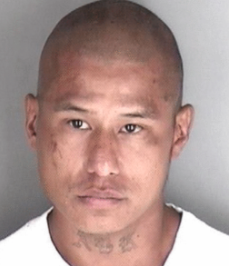
TOPEKA, Kan. (AP) — A man who was angry about his girlfriend’s methamphetamine use has pleaded guilty to beating her to death in a Topeka apartment.
Luke A. Wabaunsee -photo Topeka Police
35-year-old Luke Anthony Wabaunsee pleaded guilty Monday to second-degree murder in the October 2018 killing of 42-year-old Michelle Stadler. He initially was charged with premeditated first-degree murder.
A detective testified at the preliminary hearing that Wabaunsee’s DNA was found on the handle of a bloody glass mug recovered from Stadler’s apartment.
Her neighbor, Shawn Cunningham, testified that Wabaunsee wanted her to quit using meth. Another neighbor, Marcia Paden, said she heard a man’s voice say he “wasn’t going to take it anymore.”
He sentencing is scheduled for Oct. 3. He faces 12 to 54 years in prison.
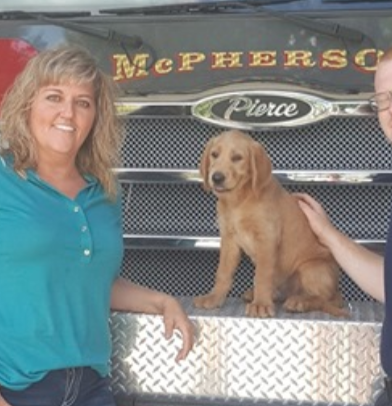
MCPHERSON —The McPherson Fire Department introduced the public to their new fire dog Tuesday. According to the department’s social media page, MAC was donated to the Fire Department by Michaela Divoll. MAC will become a Fire Prevention/Therapy Dog.
MAC is the new Fire Dog in McPherson
Captain Graham will be the handler for MAC and he will go home every night. MAC is the third dog for MFD. No tax payer funds will be used to support the MFD K-9 program. Anyone wanting to support the program with food or donations should contact them on their social media page. You can also watch MAC master his skills as a Fire Prevention K-9 on the page.
TOPEKA – The Kansas Senate Oversight Committee Monday approved Dr. DeAngela Burns-Wallace, Shawnee, to serve as Secretary of the Kansas Department of Administration and Herman Jones, Berryton, as Superintendent of the Kansas Highway Patrol, along with other appointments to state boards and agencies.
“I appreciate the Senate committee’s action in approving the appointments of Kansans who are all well qualified and committed to public service,” Governor Laura Kelly said. “It’s truly an outstanding group, and I look forward to seeing the work they do in helping to move our state forward.”
Burns-Wallace was the Vice-Provost of Undergraduate Studies at the University of Kansas, and also served as the assistant dean in the Office of Undergraduate Admission at Stanford University.
Before working in education, Burns-Wallace worked for the U.S. Department of State as a management officer in the foreign service in China, South Africa and Washington D.C., experience she says helped prepare her for her new role at the Department of Administration.
“Managing a foreign mission for the U.S. government is a complex set of challenges that touch on logistics, construction, budgeting, HR – these issues also line up closely to the mission of the Department of Administration,” Burns-Wallace said. “I’m excited to start working on some of these issues for the State of Kansas.”
Burns-Wallace holds a dual bachelor’s degree in international relations and African American studies from Stanford University, a master’s degree in public affairs from the Woodrow Wilson School of Public and International Affairs at Princeton University, and a doctorate in education from the University of Pennsylvania.
Herman Jones began his law enforcement career as a police officer with the Emporia Police Department. He then served as a state trooper with the Kansas Highway Patrol from 1982 to 1992. Later, he was an instructor at the Kansas Law Enforcement Training Center.
He returned to the Kansas Highway Patrol as the director of administration from 2000 to 2011. In 2011, he became Undersheriff of Shawnee County, and later was appointed Shawnee County Sheriff in April 2012, elected in November 2012 and re-elected in 2016.
Jones is a graduate of Emporia State University, the Federal Bureau of Investigation National Academy, the Kansas Highway Patrol Academy, and the Kansas Law Enforcement Training Center.
“I’m honored to be Governor Kelly’s choice to serve in this important law enforcement position,” Jones said. “I’ve dedicated my career to public safety and take great pride in working with the men and women of the Kansas Highway Patrol to strengthen our agency and improve public safety across Kansas.”
Additionally, the following appointments by the governor were approved Monday by the Senate Confirmation Oversight Committee:
Cheryl Harrison-Lee, Gardner, Shellaine (Shelly) Kiblinger, Cherryvale, and Jonathan Rolph, Wichita; Kansas Board of Regents
Emily Hill, Lawrence, Kansas Public Employees Retirement System Board of Trustees
Earl Lewis, Topeka, director, Kansas Water Office
Constance Owen, Overland Park, chair, Kansas Water Authority
Joni Franklin, Wichita, Jonathan Gilbert, Dodge City, and Michael Ryan, Junction City; Public Employee Relations Board
Doug Jorgensen, Topeka, State Fire Marshal
Kelly Kultala, Basehor, Kansas Racing and Gaming Commission
Kala Loomis, Lawrence, executive director, Kansas State Gaming Agency
Stephen Durrell, Lawrence, executive director,Kansas Lottery
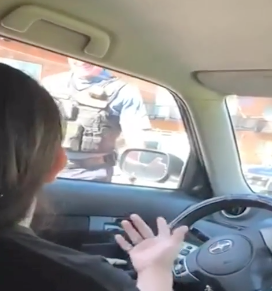
KANSAS CITY (AP) — Federal immigration officers trying to arrest a Mexican man who is in the U.S. illegally smashed a car window and dragged him from the vehicle in front of his girlfriend and two young children, prompting condemnation from the woman’s Missouri congressman.
Image from facebook broadcast during the arrest
A Facebook Live video taken during the arrest of Florencio Millan-Vazquez in Kansas City on Monday shows Immigration and Custom Enforcement and Kansas City police officers trying to persuade him to leave the vehicle. Millan-Vazquez and his girlfriend, Cheyenne Hoyt, repeatedly ask to see a warrant. After officers warn that they plan to break the window, an immigration officer smashes the glass and others help to drag Millan-Vazquez out of the car.
“I’m still in shock,” a crying Hoyt told The Associated Press Tuesday. “You think that it’s not going to happen to my family, like I never thought this was going to happen. You hear the things (President Donald) Trump says but (Millan-Vazquez) is not a rapist, he’s not a murderer, or a drug dealer. And the way they did it in front of the kids, they didn’t care.”
Hoyt, who shot and posted the video, said they had been on the way to a doctor’s appointment for their disabled 7-month-old daughter when immigration officers blocked them in at their apartment complex and ordered Millan-Vazquez out of the vehicle. The immigration officer asked several times to see proof that Millan-Vazquez is allowed to be in the U.S. and tells the couple that ICE doesn’t need a warrant to arrest someone who has entered the country illegally.
Hoyt acknowledged Millan-Vazquez was in the country illegally but said he is a hard-working chef and family man who never caused any trouble. Immigration officials said Millan-Vazquez re-entered the country twice after being voluntarily deported in 2011 and that he has misdemeanors on his record.
“Millan-Vazquez was uncooperative and refused to exit his vehicle or follow lawfully issued commands issued by ICE and local police,” said Shawn Neudauer, a spokesman for ICE. “After attempting to negotiate with Millan-Vazquez for about 25 minutes, the ICE officers were left with no other choice than make the arrest by physically removing him from the vehicle.”
The arrest occurred on the same day the Trump administration announced that it was extending the authority of immigration officers to quickly deport immigrants who have been in the U.S. illegally for less than two years without putting them before a judge.
U.S. Rep. Emmanuel Cleaver of Missouri said on Twitter that he has contacted all parties involved in the arrest to determine what had happened.
“This video is very concerning as to the traumatization of children and the reasonable use of force,” Cleaver wrote.
On the video, the couple’s 11-year-old son is heard crying as the window is broken and his father is taken away. Millan-Vazquez can later be heard asking to say goodbye to his son. An ICE agent turns down his request.
“Right now we’re being extremely nice to you, but what you just put us through, what we had to go through, you’re lucky I’m letting you talk to (Hoyt) right now,” the agent says. “So no, you can talk to him later, she can bring him up to where you’re gonna be and you can see them there.
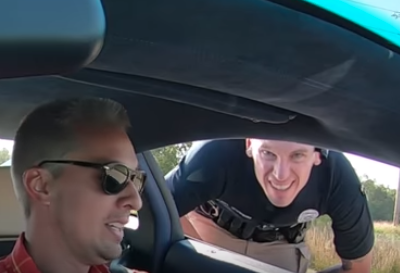
WICHITA, Kan. (AP) — A YouTuber from Kansas who makes videos about cars matched the cost of his ticket with a donation to a local law enforcement foundation.
Hoover and the Sedgwick County deputy from the video
Tyler Hoover said in a video posted Friday that he was ticketed speeding in a new Lamborghini. When a Sedgwick County sheriff’s deputy stopped him, he didn’t have his license and insurance with him.
Hoover, who runs popular YouTube channel “Hoovie’s Garage,” said he matched the cost of his ticket with a donation to the Honore Adversis Foundation. The nonprofit provides financial assistance to families of law enforcement officers seriously injured or killed in the line of duty in Sedgwick County. Hoover didn’t say the cost of his ticket.
The Sedgwick County Sheriff’s Office shared the video on Facebook.
TOPEKA — Law enforcement authorities are investigating an armed robbery and asking the public for help to identify suspects.
Armed robbery suspects image Topeka Police
Just after 10:00 p.m. Monday, police responded to the Quick Stop at 1107 SW 6th Avenue in Topeka. on reports of an aggravated robbery, according to Gretchen Koenen with Topeka Police.
Three male suspects ran into the store, each armed with a gun, and demanded money from the store clerks. The suspects took cash and were last seen running into the alley on the south side of SW 6th Avenue from SW Clay Street.
Witnesses describe the suspect vehicle as being a silver or white passenger car.
Police have released video of the suspects and are asking for the public’s assistance in identifying them. Anyone with information regarding this crime is encouraged to contact the Topeka Police Criminal Investigation Bureau at (785) 368-9400 or Shawnee County Crime Stoppers at (785) 234-0007. Y
SHAWNEE COUNTY — Law enforcement authorities and the Shawnee County Coroner are investigating the death of a child in Shawnee County.
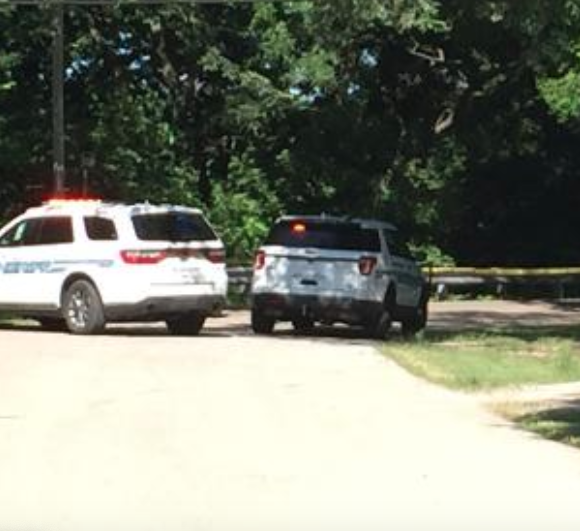
Deputies on the scene of the investigation early Tuesday photo courtesy WIBW TV
Just after 7a.m. Tuesday, deputies and additional emergency crews responded to the 300 block of South Masche Street in Silver Lake in reference to an unresponsive child identified as a 4-year-old girl, according to Shawnee County Sheriff’s Captain Danny Lotridge. Upon arrival, first responders triaged her as deceased.
Investigators have surveyed the scene, spoken to potential witnesses and were still processing the scene late Tuesday afternoon. The Coroner’s Office is looking for a medical cause related to the death of the girl.
Members of the Silver Lake Fire Department, AMR and Silver Lake Police Department also responded to the scene.
Authorities have not released the girl’s name.
—————
SHAWNEE COUNTY — Law enforcement authorities and the Shawnee County Coroner are investigating the death of a child in Shawnee County.
Just after 7a.m. Tuesday, deputies and additional emergency crews responded to the 300 block of South Masche Street in Silver Lake in reference to an unresponsive child, according to Shawnee County Sheriff’s Captain Danny Lotridge. Upon arrival, first responders triaged the child as deceased.
Members of the Silver Lake Fire Department, AMR and Silver Lake Police Department also responded to the scene.