KANSAS CITY, Kan. (AP) — Prosecutors in northeastern Kansas have charged a man suspected of killing two people inside a Kansas City, Kansas, market earlier this week.
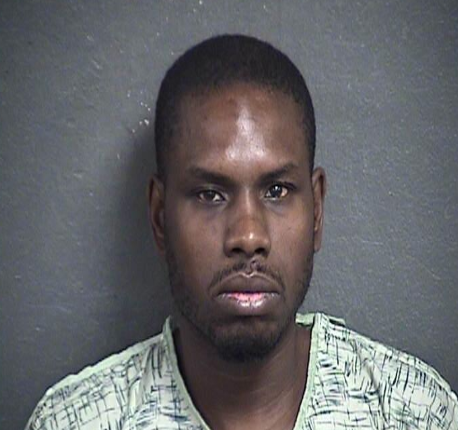
Byers photo Wyandotte Co.
39-year-old Jermelle Andre-Lamont Byers has been charged with first-degree and second-degree murder and other counts. Those charges were filed Friday.
The shooting Wednesday at the Edwards Original Corner Market & Deli killed market owner, 62-year-old Dennis Edwards, and fatally injured 42-year-old Lachell Day, who died Thursday. Officers who arrived on the scene of the shooting say the suspect, later identified as Byers, pointed a handgun at them. Officers fired at the man and sought cover. He was taken into custody after a two-hour standoff.
Police say the shooting was related to a domestic disturbance between Byers and Day.
Byers is being held in the Wyandotte County Detention Center on $500,000 bail.
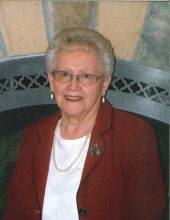
Betty Jane Robinson, 77, passed away July 12, 2019, at Via Christi Village of Hays. She was born August 22, 1941, at Great Bend, to Alvin Henry and Emma Louise (Hommon) Otte.
A lifetime Great Bend resident, living in Colorado for a while, Betty worked at Larned State Hospital for over 17 years as an RN, more recently volunteering for RSVP. She was a member of Trinity United Methodist Church, 4-H Alumni and GBHS Class of 1959. She loved her dog, Susie, and enjoyed playing Pitch.
Survivors include, her daughter, Cherish Anne Robinson-Smetek and husband Robert of Spring, Texas; one brother, Vern Otte and wife Brenda of Leawood, Kan.; and three sisters, Arnita Schultz and husband Ron of Haviland, Alvina Mabry and husband Don of Golden, Col., and Myrna Holthaus and husband Gerald of Great Bend. She was preceded in death by her parents.
There will be no viewing, as cremation has taken place. The family will receive friends 6:00 p.m. to 8:00 p.m. Monday, July 15, 2019, at Bryant Funeral Home. Memorial services will be held at 2:30 p.m., Tuesday, July 16, at Trinity United Methodist Church, with Rev. Seong Lee and Rev. Reuben Lang’at presiding. It has been requested by the family that you would please jot down a story or two of how Betty influenced your life, as the family will be collecting them for a scrap book. Memorials are suggested to Golden Belt Humane Society, RSVP or Trinity United Methodist Church, in care of Bryant Funeral Home.
Frieda Bernice Karst, 97, passed away July 12, 2019, at Wheatland Nursing Center, Russell, Kansas. She was born July 26, 1921, in Russell, Kansas, the daughter of Gotfried and Helene (Stoppel) Mai. She grew up in Russell County and attended Mount Brokaw to 8th Grade. Frieda was baptized and confirmed in the St. John Lutheran Church in Russell, Kansas.
On November 20, 1938 she was united in marriage to Robert Karst at the Emmanuel Lutheran Church in rural Russell, Kansas. To this union two daughters were born, Bonita and Brenda. They shared 75 years of marriage together.
Frieda loved to bake, quilt, crochet and help other people. She enjoyed spending time with her family, grandchildren, and great grandchildren. She was a former member of the Prairie Mates E.H.U., the Milberger Church circle and helped the quilting women at the St. Mary Catholic Church at Russell, which she enjoyed very much.
She is survived by her two daughters; Bonita Ney and husband Merlin of Russell, and Brenda Riedl and husband Frank of Great Bend; six grandchildren, Bruce Ney of Austin, Texas, Kevin Ney of Long Beach, California, Merlin Ney, Jr. and wife Brandy of Russell, Jason Ney and wife Nicale of Russell, Annette Stahl of Topeka, and Matthew Riedl and wife Lori of Omaha, Nebraska; ten great grandchildren, Shannon and Shelby Ney, Kale and Luke Stahl, Jacob Ney, Jaden Ney, twins Cooper and Camry Ney, and Maci and Trent Riedl; two sisters, Nadene Albrecht of Topeka, and Jude Scheck of Hays; and many nieces, nephews and friends.
She was preceded in death by her parents, husband, a sister, Esther Stettinger, and a brother, Karl Mai.
Visitation will be 9 a.m. to 8 p.m. Tuesday, with a Prayer Service at 7 p.m., all at Nicholson-Ricke Funeral Home, Hoisington.
Funeral Service will be 10:30 a.m., Wednesday, July 17, 2019, at United Emmanuel Lutheran Church in Milberger, with Sharon Custer, PMA and Rev. Martin Albrecht presiding. Burial will follow in Fairview Cemetery, Galatia.
Memorials may be made to the United Emmanuel Lutheran Church, Fairview Cemetery Fund, or Wheatland Nursing Center, in care of Nicholson-Ricke Funeral Home, PO Box 146, Hoisington, KS 67544.
Ronald J. “Ron” Stecklein Sr., 70, Olathe, died Thursday, July 11, 2019 at his home.
He was born October 30, 1948 in Hays, the son of Joe C. and Catherine (Wasinger) Stecklein. Ron served in the United States Army during the Vietnam War. On September 4, 1971 he was united in marriage to Linda Stecklein at Immaculate Heart of Mary Catholic Church in Hays, and they celebrated over 47 years of marriage. He enjoyed playing the drums and played polka and country music with The Younger Band.
Survivors include his wife Linda of the home in Olathe, four sons; Ronald “Ronnie” Stecklein, Jr. and Melanie Rohe of Clay Center, Kelly Stecklein and wife Karmen of Russell, Mike Stecklein and wife Michelle of Olathe, and Eric Stecklein and wife Susan of Olathe, a daughter; Amy Stecklein of Olathe, a brother; Leroy Stecklein of Osawatomie, two sisters; Theresa Gottschalk of Hays and Charlene Weigel and husband Dennis of Gorham, seventeen grandchildren, three great-grandchildren, and numerous nieces and nephews.
He was preceded in death by his parents, three brothers; Rich, Elmer, and Donnie Stecklein, and two sisters; Dolores Dreher and Rose Koerner.
Mass of Christian Burial will be at 10:00 am on Wednesday, July 17, 2019 at Immaculate Heart of Mary Catholic Church with Fr. Nick Parker officiating. Burial with military honors by the Hays VFW Post No. 9076 Honor Guard and the Expendables Motorcycle Club of Kansas will follow at the Kansas Veterans’ Cemetery in WaKeeney. Visitation will be from 5:00 pm until 7:00 on Tuesday and from 9:00 am until 9:45 on Wednesday, all at Hays Memorial Chapel Funeral Home. A vigil service and rosary will be at 6:30 pm on Tuesday at the funeral home. Memorials are suggested to the Expendables Motorcycle Club of Kansas or to Disabled American Veterans (DAV). Condolences and memories of Ron may be shared with the family at www.haysmemorial.com
SEDGWICK COUNTY —Law enforcement authorities are investigating the accidental death of a 2-year-old boy.
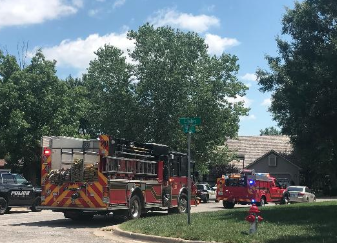
First responders on the scene of the drowning Saturday afternoon photo courtesy KWCH
Just after 11:30 a.m. Saturday, police responded to a home in the 2200 block of south Linden in Wichita for a drowning call, according to officer Charley Davidson.
Upon arrival, officers located the boy who had been pulled from a swimming pool and was unresponsive. The boy succumbed to his injuries on the scene, according to Davidson.
The investigation revealed the boy and his parents were temporally staying at the home for the residents. The boy crawled through a dog-door and fell into the pool. The boy was found by his father who pulled him out of the pool and began live saving techniques.
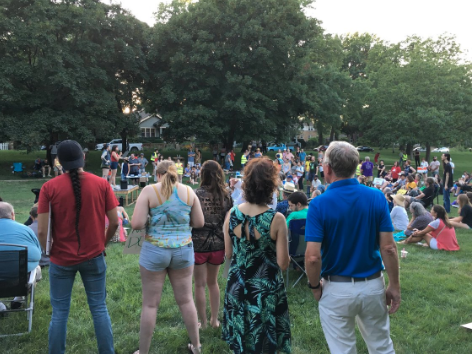
LAWRENCE, Kan. (AP) — Hundreds have rallied in a Lawrence park to call on city officials to declare the northeastern Kansas city a sanctuary for immigrants who are in the U.S. without legal permission.
The Friday night rally was organized by a local coalition of Latino activists. The coalition says more than 300 people signed a petition urging Lawrence leaders to pass ordinances aimed at protecting immigrants, including measures to limit local police cooperation with federal Immigration and Customs Enforcement.
State Rep. Susan Ruiz, a Shawnee Democrat, told the crowd the country needed more sanctuary cities.
The rally also raised more than $1,600 for a fund to help local immigrants and refugees pay for such things as legal fees, groceries and transportation.
In 2017, the City Commission proclaimed Lawrence a “welcoming city,” but proclamations aren’t legally binding.
Dr. Byungsoo Ko, Cardiologist and Director of the Cardiovascular Cathertization Laboratory at HaysMed, part of The University of Kansas Health System, recently presented at the C3 (Complex Cardiovascular Catheter Therapeutics: Advanced Endovascular and Coronary Intervention Global Summit) international conference. The conference was held in Orlando, Florida.
The C3 Conference is specifically designed for physicians who specialize in interventional cardiology, vascular surgery, and interventional radiology, as well as fellows, residents, and other healthcare professionals interested in atherosclerotic cardiovascular disease. Their mission is to deliver educational innovation through a global exchange of scientific research, new techniques, and technologies to improve patient care and utilize best practices to improve lives of countless individuals across the world.
Dr. Ko presented on Impella Supported Left Main Intervention in a Patient with STEMI Complicated by Cardiogenic Shock.
He also was on a panel for the International Joint Session with Korean Complex Cardiovascular Invention (CCI) Group Complex Endovascular and Structural Heart Disease Intervention.
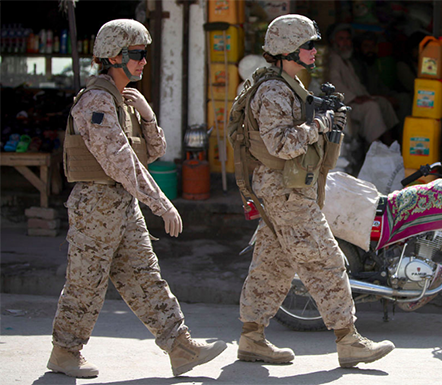
Two members of a U.S. Marine Corps Female Engagement Team patrol a town in Afghanistan during 2010.
LAWRENCE — For more than a century, it was culturally unacceptable for women to join men in the front lines of combat in the U.S. military. Even though the policy banning women from combat roles has been rescinded, their integration into the front line and special operations has been slow and met with resistance.
Two University of Kansas researchers have published a book on factors that have slowed the integration, citing “organizational obliviousness,” or entrenched stereotypes as the primary culprit.
Even when military members are supportive of women taking increased combat roles, ingrained gender stereotypes of both men and women at several levels have held back progress, wrote Alesha Doan and Shannon Portillo in “Organizational Obliviousness: Entrenched Resistance to Gender Integration in the Military,” published by Cambridge University Press. Stereotypes are then normalized by organizational policies and practices, and their subtlety can render them invisible.
Doan, associate professor in KU’s School of Public Affairs & Administration and in the Department of Women, Gender & Sexuality Studies, and Portillo, associate professor of public affairs & administration and assistant vice chancellor of undergraduate programs at KU’s Edwards Campus, conducted focus groups and surveys with men and women — both enlisted and officers — in the U.S. Army for the brief book.
“We’re public administration scholars and the military is the largest public organization in the country, but it is incredibly understudied,” Portillo said. “The fall of 2013 was a very special time in the military as the combat ban policy was lifted, but it wasn’t clear how it would be implemented, from a task standpoint, if women would be able to do the same work men in special forces do and how it would work practically.”
The authors write that resistance to gender integration exists in the organization at three levels: individual, cultural and institutional.
Alesha Doan, assoc. professor, KU School of Public Affairs & Administration
“Gender stereotypes are ingrained in organizational society writ large, so individuals easily — and often unconsciously — draw on them,” Doan said. “Our research findings illuminate how gender stereotypes are frequently used to oppose and resist changes, particularly when the changes have the potential to disrupt an organization’s culture and standard operating procedures.”
Although some of the respondents were supportive of integrating women into combat roles and Special Forces, they had numerous concerns that were shared by those who opposed gender integration.
For example, physical strength was a concern of some soldiers. Many respondents repeated common stereotypes that men are rational thinkers and physically strong while women are emotional and physically weak. Male participants often rationalized that their own wives or girlfriends would not be able to handle the physical demands of special forces; therefore, no women could. Others pointed to a well-known example of four female trainees who were unable to pass a qualification obstacle course as evidence that women couldn’t physically pass muster. What they didn’t cite was that 75 of 100 men were also unable to pass the course.
Leadership was another common obstacle, the authors found. While men routinely pursue leadership roles, women often put off starting a family until they can reach such roles. However, once they are in a position to advance, they are expected to have families as part of fitting the leadership ideal, creating a catch-22. Mentorship in the Army was also important, as respondents and separate research have indicated quality mentorship especially helps women in the military.
Shannon Portillo, asst. professor, KU School of Public Affairs
“That parallels what we know about teaching,” Portillo said. “Everyone benefits from good teaching, but those from disadvantaged backgrounds benefit even more.”
Many men reported wanting to mentor women, but they were afraid to do so for several reasons. Some men said they felt they needed witnesses present when working with women to fend off accusations of impropriety or favoritism, while others said they worried they would be falsely accused of sexual harassment if they tried mentoring women.
Both men and women in the study reported the mandatory sexual harassment training was not helpful, as men said it scared them away from working with women and women reporting it reinforced the idea of their gender as victims. That’s despite the fact that men are much more likely to be victims of sexual assault in the military due to sheer numbers.
That those stereotypes existed widely at the individual level was reflected in the cultural level of the organization and was thus represented in policies and practices, the authors wrote. Therefore, even if there is not malice or actions taken to actively exclude or harm others, in the end both happen. Progress is being made in becoming gender-neutral and integrating women into combat roles, say the authors who have previously written about gender stereotypes and combat, but room for improvement remains.
“We argue that obliviousness is not just on a person-to-person basis,” Portillo said. “We focus here on gender and how resistance to changes regarding gender happen throughout the organization, but the concept could be applied to other identities as well. One of the biggest takeaways in the book is entrenched organizational resistance is not just about policy change. It’s about the individual and structural practices of the organization. Stereotypes and attitudes are so ingrained in the culture it takes time to change.”
TOPEKA, Kan. (AP) — Authorities have charged an 18-year-old man in an April shooting that wounded New York Giants draft pick Corey Ballentine and killed one of his Washburn University teammates.
Francisco Mendez photo Shawnee Co.
The Shawnee County district attorney’s office says in a news release that Francisco Alejandro Mendez was charged Friday with first-degree murder, attempted first-degree murder and five counts of aggravated battery in the April 28 attack.
Authorities say Ballentine and teammate Dwane Simmons were outside of an off-campus party in Topeka hours after the Giants picked Ballentine in the sixth round of the draft when someone opened fire on them from a vehicle. Simmons was killed and Ballentine was shot but has since recovered.
Mendez is being held on a $1 million bond. His case doesn’t appear yet in online court records and his attorney, Victoria Chundak-Gallaway, didn’t immediately reply to a phone message left Saturday at her office.