RAWLINS, Wyo. (AP) — Authorities say a Kansas man has been killed after his pickup truck rolled over in a construction zone on a Wyoming interstate.
Photo courtesy Wyoming Dept. of Transportation
The Wyoming Highway Patrol identified the victim as 38-year-old Christopher Otto of Mound City, Kansas.
The patrol said in a press release that Otto’s Ford F-150 was traveling westbound on Interstate 80 east of Rawlins Thursday night when it exited the highway at a construction zone crossover and overturned.
Otto was not wearing a seatbelt and died at the scene.
Fatigue, speed and inattention were being investigated as possible factors in the crash.
No other vehicles were involved.
The death marks the 85th fataility on Wyoming roads so far in 2019, an increase over the past three years.
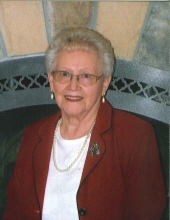
Rosa Lee (Hoppas) Jones passed away Thursday, July 11, 2019 at the Sheridan County Health Complex in Hoxie, Kansas at the age of 90. Rosa Lee was born in Colby, Kansas, December 26, 1928 to Moss and Rosa Lee (Richardson) Hoppas. Three days after Rosa Lee was born her mother died. She was raised by her brother, Raymond and his wife Mable along with several Aunts and Uncles. She attended grade school in Menlo and Dresden. After graduating from eighth grade, Rosa Lee and her friend Ethel Ehlers attended high school in Oberlin, Kansas. During the week, Rosa Lee and Ethel lived in an apartment in Oberlin and went home on the weekends. Rosa Lee graduated from Decatur County High School with the class of 1946. She met the love of her life George Jones, and they were married on January 17, 1948 in Colby, Kansas.
Rosa Lee and George moved to Fountain, Colorado after they were married. While living in Fountain, their first child, Mary, was born. Soon after Mary was born they moved back to Selden, Kansas. They were blessed with two more children, Jonny and Mildred. The family moved to Tasco, Kansas where they lived and farmed until retirement. Rosa Lee took care of the home and worked right along with George in the field and milking cows. She raised rabbits, chickens, ducks, and had a large garden. Rosa Lee and George were hardworking . Besides gardening and raising poultry while living on the farm, Rosa Lee worked at the Hoxie Elk’s Lodge. When Rosa Lee and George weren’t working they enjoyed playing cards with their friends. Once they retired from farming, they moved to Hoxie, Kansas where George worked part time for Fred Pratt.
January 18, 1984, George died leaving a big hole in Rosa Lee’s and the families lives. October 16, 2005, Rosa Lee was baptized and became a member of the Hoxie United Methodist Church. Rosa Lee kept busy by continuing to work at the Elks, Hoxie Sale Barn, Sheridan Inn, and at the last Trish’s. She was a great cook and her specialty was homemade breads and cinnamon rolls which many special ordered from her during the holidays. She never missed a day of going to coffee with her friends at the Mahanna Drug Store. She also did some traveling with them. Later in life, she moved to Ridgewood Manor. Here she enjoyed playing cards, Bingo, and putting puzzles together. As her health declined, she moved in to the Sheridan County Health Complex Long Term Care.
Rosa Lee is survived by her son, Jonny Jones and wife Kanda of Hoxie, Kansas; daughters, Mary Timmons and husband Chuck of Hays, Kansas, Mildred Meier and husband Richard of Grainfield, Kansas, and Carla Jewell of Hutchinson, Kansas; Grandchildren, Bonnie Augustine (Craig), Charlie Timmons (Erika), Troy Meier (Melony), Trent Meier (Melissa), Korey Herl (Darrin), Kyle Jones, Derek Jones (Carey), Drew Jones (Kylee Harris), and Scott Jewell; Great-Grandchildren, Emilee Augustine, Madison Augustine, Makayla Timmons, Kaitlynn Timmons, Austin Timmons, Brey Egbert, Nick Egbert, Cauy Meier, Saige Meier, Sadie Meier, Draden Herl, Jaylen Herl, Jenna Herl, Kenlee Jones, Asher Jones, and Krew Jones.
She was preceded in death by her husband, George Jones and parents, Moss and Rosa Lee Hoppas. Brother Raymond Hoppas and wife Mable, and sisters; Mary Holmes and husband Ed, Helen Pollock and husband James, Mildred Hughbanks and husband Austin, and Nellie Olson and husband Bill.
A Funeral Service is planned for Monday, July 15, 2019, at the Hoxie United Methodist Church, 10:00 A.M. Interment will be in the Dresden Cemetery following the service.. Visitation will be held Sunday, July 14, 2019 from Noon until 7:00 P.M. with family receiving friends from 5:00 P.M. until 6:30 P.M. all at the Mickey-Leopold Funeral Home, Hoxie, Kansas. Memorials are suggested to the Ridgewood Manor, Sheridan County Amusement Company, or Sheridan County Health Complex Long Term Care and may be sent in care of Mickey-Leopold Funeral Home, PO Box 987, Hoxie, Kansas 67740. Online condolences may be left at www.mickeyleopoldfuneral.com.
Rosa Lee was a woman of faith who loved her family dearly and enjoyed her life. As one of her favorite poems said, if you listen with your heart you’ll hear all her love around you soft and clear, and when you must go her way she’ll greet you with a smile and welcome home. Go rest in peace Rosa Lee.
The sewer line contents are being trucked to the Hays wastewater treatment plant.
Residents and pets should not enter these waterways
TOPEKA – Kansas Department of Health and Environment has issued a stream advisory for Big Creek in Hays downstream of the intersection of 27th Street and U.S. 183 Bypass on the west side of town. The stream advisory is a result of a sewer line break earlier in the week. The City of Hays is working to replace the sewer line and no sewage is currently being discharged into Big Creek.
Elevated bacteria levels were recorded at downstream locations of Big Creek and other contaminants may be present in the stream from the sewage spill. Residents and pets should not enter Big Creek at this time.
KDHE is determining if any sources upstream of Hays are contributing to the elevated bacteria levels. KDHE will rescind the advisory once water samples show no health risk and water contact in the creek has been deemed safe.
The 2019 winter wheat harvest was one for the books.
Heavy moisture during the spring and continuing wet conditions kept the wheat growing and maturing late, pushing harvest back more than two weeks from normal in some areas of Kansas. Those wet and cool conditions created heavier than average yields and generally happy producers.
According to the National Agricultural Statistics Service, winter wheat production is forecasted to be up 19 percent from last year, with 330 million bushels expected to be produced.
Across the state, the average yield 50 bushels per acre, up 12 bushels from last year, and some local producers are well above that average.
That production is also coming from less with a drop of 6.6 million harvested acres since last year, according to the service.
But those wet conditions have also created potentially long-term negative effects to the soil and future winter wheat crops.
The problems of soil compaction
When the silty loam in the Hays area is dry, soil compaction is unlikely — but this year was different. Across Kansas, producers have dealt with copious amounts of rain and, in western Kansas, the water that remains in the soil could create deep compaction up to 18 inches below the surface, the effects of which might not be fully realized until next year.
In short, compaction happens when the soil is compressed and the structure of the soil is disturbed.
Topsoil compaction is easier to see but much less of a problem for producers.
“You can obviously see some of this by driving through the fields,” said Augustine Obour, assistant professor of soil science at Kansas State University Agricultural Research Center.
But the deep compaction that occurs when heavy pressure is applied to wet soil is more problematic and a serious concern for long-term crop production.
“There is probability (there is) more compaction out there than a lot of farmers realize,” said Stacy Campbell, K-State Research and Extension agriculture agent. “It definitely is real, and probably some of that was happening this year.”
Sometimes it is not visible when the soil is at its maximum water-holding capacity, according to Obour.
“When it is near its full capacity, it is prone to compaction issues,” he said.
Chart of soil moisture at 20 cm (7.87402 in) on July 11 from the Kansas State Mesonet
Soil moisture around Hays has been decreasing over the last 30 days, but still remains higher than normal up to a depth of almost 20 inches, while the soil in other areas of the state remains almost completely saturated.
That waterlogged soil compacts when heavy loads are applied to it and generally there is little that can be done to prevent compaction outside of staying off of the fields.
“If it is deeper than 6 inches, it can be a big issue,” Obour said. “The problem is that it affects a lot of things, particularly water movement.”
With the no-till crop production that is commonly used in the area, soil compaction may be compounded as no-till fields hold more water because of increased biological matter in the soil that retains more moisture.
Generally, Obour said, those no-till practices are good, but in years with heavy rain, it means producers have to wait longer to avoid compaction risks.
“In my experience, it takes about one more week for our no-tills to dry compared to our traditional till plots,” he said.
It also makes compaction harder to remedy.
“If you get compaction in the no-till field, then it is more difficult to correct because you do not want to till those fields,” Obour said.
Tilling a field that has been developed as no-till will damage the soil structure, he said.
Outside of water flow concerns, once soil is compacted the inability of water to flow properly can impact soil nutrient rates.
Producers will commonly use seed treated with nitrogen fertilizer, but once the soil structure is disturbed through compaction, the nitrogen might not go where it needs to for ideal crop growth.
“With all of the rain that we have gotten, nitrogen does not hold in the soil, it moves, so there will be some leaching of nitrogen fertilizer,” Obour said.
To combat nitrogen loss, he recommends producers sample up to 24 inches to get a good nitrogen profile.
“This year, if you do that with all the rain, I’m afraid it may not be there,” he said.
In order to combat nitrogen loss, producers will often spray fertilizer on the crop, but with heavy rains, this could cause another problem — runoff that spreads the fertilizer into other areas, including waterways.
“It’s very unusual in this environment, but it’s possible this year you may have some of those issues,” Obour said.
Soil compaction can also impact the root system of crops.
“About any of the crops that we produce here, they can get rooted down several feet,” Campbell said. “So if you have compaction at 18 inches, those roots if they hit that compaction layer may not be able to get through that.”
“It can take more than five years to have this corrected,” Obour said.
Producers have options for prevention
Avoiding putting significant pressure on damp soil is the best remedy for issues associated with deep soil compaction, meaning for producers sometimes a difficult choice has to be made; harvest a damp field and risk compaction, or push harvest past the ideal time.
“The bottom line is you have to consider the implications of soil compaction to justify field operations,” Obour said.
It the equipment is light, it may only create surface compaction in the top few inches, but if it is heavy equipment, such as trucks in a loading area, then the high pressure can create deep compaction.
“Iowa State did some work on this and they found that regardless of (design) … once you have about 10 tons per axle of weight and if the soil is wet enough or fairly moist, it can cause deep compaction,” Campbell said.
A report in 2017 by DeAnn Presley, K-State soil management specialist, found a full grain cart can carry more than 17 tons per axle.
An empty combine can weigh over 15 tons as well, pushing into the danger zone of per axle weight when fully loaded.
“The machinery just keeps getting bigger,” Campbell said.
Before producers move equipment into fields they have options to help determine if they are at risk of deep soil compaction.
Obour said pressing soil into a ribbon can help determine the moisture content. If the ribbon does not break apart at a length of 3 inches compaction is a risk, if it is under 2 inches when breaking apart it the risk is lower.
Producers can also take steps if they must enter a field that has high moisture to reduce the risk.
“Two key points for minimizing compaction from heavy axle loads are to limit traffic when fields are wet, and to confine the majority of traffic to end rows when possible,” Presley said in the report. “Keep in mind that the first wheel pass causes 70 to 90 percent of the total soil compaction, so preventing random, unnecessary traffic routes on the field is very beneficial.”
While the risk of compaction this year is high, Obour said he believes most producers around Ellis County know of the risk and he has not heard of any issues so far this year.
A government program is also working with producers that could not work fields due to high moisture content.
The Natural Resources Conservation Service has offered an Environmental Quality Incentives Program that helps producers plant cover crops that will help retain nutrient loads in the soil and prevent soil erosion.
“Cover crops help farmers to manage soil erosion, weeds and pests and to improve soil health,” said Karen Woodrich, NRCS state conservationist in Kansas in a news release for the program. “They can also help your soil health recover after a flood or a long period of remaining wet.”
The application deadline is July 26. Producers interested in the program can call the local NRCS office at 785-625-3081.
THC is the chemical that puts the high in medical and recreational cannabis. Polls show most Americans want it legalized. Kansas is one of a small handful of states with the most restrictive laws against it.
Other vendors who also believe small amounts of THC became legal in Kansas on July 1 geared up to sell, then got cold feet after a hemp advocacy group posted a warning from a high-level Kansas Bureau of Investigation official on its Facebook page.
“Full spectrum is not legal,” says the statement, which Kansans for Hemp organizer Kelly Rippel says he received from KBI executive officer Katie Whisman. “CBD isolate or CBD containing no other controlled substance is what was carved out as legal.”
Full spectrum commonly refers to CBD products that include THC. (Although, buyer beware: Sometimes products labeled “full spectrum” don’t actually contain THC, and sometimes those labeled “THC-free” actually do have it.)
Multiple people who work in the CBD industry said sales of CBD with THC in it are now common across Kansas. The Kansans News Service easily found it for purchase within state lines.
National retailer CBD American Shaman prepped its website to start selling full spectrum to Kansans starting July 1, but postponed that plan when Whisman’s quote surfaced in late June. It remains hopeful the KBI is wrong.
“We’re just not gonna take the chance until it’s really clear,” CEO Vince Sanders said. “It’s all crazy … It is what it is, which is what we deal with in the world that we live.”
His Kansas City-based company sells CBD across the country and has become accustomed to an ever-shifting maze of state-by-state regulations.
“We know the legislators’ intent was to have full-spec oil,” he said. “The revisors (lawyers at the Kansas Statehouse who draw up bills for lawmakers) are writing exactly what the intent was. … We expected to have (a letter of legislative intent) by last Friday. We still don’t have it. So again, we expect it any time.”
A KBI spokeswoman told the Kansas News Service Friday it knows vendors are confused, and that clarification is needed.
“We are currently reviewing the issue, but don’t have specific guidance to offer at this time,” she wrote.
Sen. Mary Ware, who owns two CBD American Shaman stores in Wichita, says she understood the law to legalize full-spectrum products. A revisor and a Department of Agriculture attorney both assured her that was the case, she said, and she has requested clarification from Attorney General Derek Schmidt’s Office.
But a Department of Agriculture spokeswoman said in an email that agency doesn’t directly regulate CBD oil or how it’s used or manufactured, “including determining what the legal level of THC may be.”
“As we read the bill, [full-spectrum CBD] is not directly addressed,” she said.
The bill, she said, “does not regulate end products (other than to prohibit by criminal penalty the production of some specific products) created from hemp.”
“Our intent [was to allow] the growth of industrial hemp and the production of CBD oil,” she continued, “but that all products must meet whatever legal requirement[s] that were already in place.”
The legal requirement already in place for CBD bans THC.
She ultimately referred questions on THC’s legal status in CBD products to the attorney general.
Contacted by the Kansas News Service, Schmidt’s office would not answer the question.
“We have not yet received a request for a legal opinion on this issue,” a spokesman said, and did not answer follow-up questions about whether Schmidt had received an inquiry from Ware.
The Statehouse revisor who worked on the hemp bill wouldn’t comment on whether he had told the senator that full-spectrum products would become legal. He said he had not been approached by anyone seeking a letter clarifying legislative intent.
Revisors can’t answer questions from the public about legal analysis, he said. That includes the Kansas News Service’s question about whether HB 2167 legalized full spectrum CBD products.
How we got here
In 2018, Kansas legalized CBD, or cannabidiol. Vendors could only sell CBD without THC, or tetrahydrocannabinol.
Both substances come from cannabis — the plant with high-THC varieties used for medical and recreational pot, and low-THC varieties used for CBD and hemp products.
CBD legalization led to a flourishing market for the stuff in everything from tinctures and slow-release skin patches to soda drinks and gummy bears.
Ideally, though, vendors want to offer the full-spectrum, THC-laced options, too. Those proved popular in other states. Some sellers say they come with additional health benefits. (The vast majority of claims regarding health benefits of CBD with or without THC have not passed federal vetting.)
This year, Kansas lawmakers passed two laws that relate to cannabis or its extracts.
One was the industrial hemp bill that some vendors believe now allows them to sell full-spectrum CBD with some THC.
The other was Claire and Lola’s law, a narrow bill that may assist certain people if they ever find themselves facing prosecution for possessing some products currently illegal in the state of Kansas.
But do bottles of CBD with small amounts of THC (up to 0.3%, a definition related to federal law) that some vendors now consider fair game even get anyone high?
“You could drink a gallon of the oil in order to get enough THC to get high. You’d be so sick to your stomach and still not be high,” said Ware, the senator who owns CBD shops.
Mallory Loflin, a psychiatry professor at the University of California-San Diego who researches medical cannabis and CBD, had a different take. For some people, a bottle would do it.
“Especially a novice user without much experience with the plant,” she said. “They’re definitely going to be feeling intoxicated.”
But if they chug that much fatty oil, Loflin says, diarrhea is the other effect that likely awaits them.
Celia Llopis-Jepsen reports on consumer health and education for the Kansas News Service. You can follow her on Twitter @Celia_LJ or email her at celia (at) kcur (dot) org.
By RANDY GONZALES University Relations and Marketing
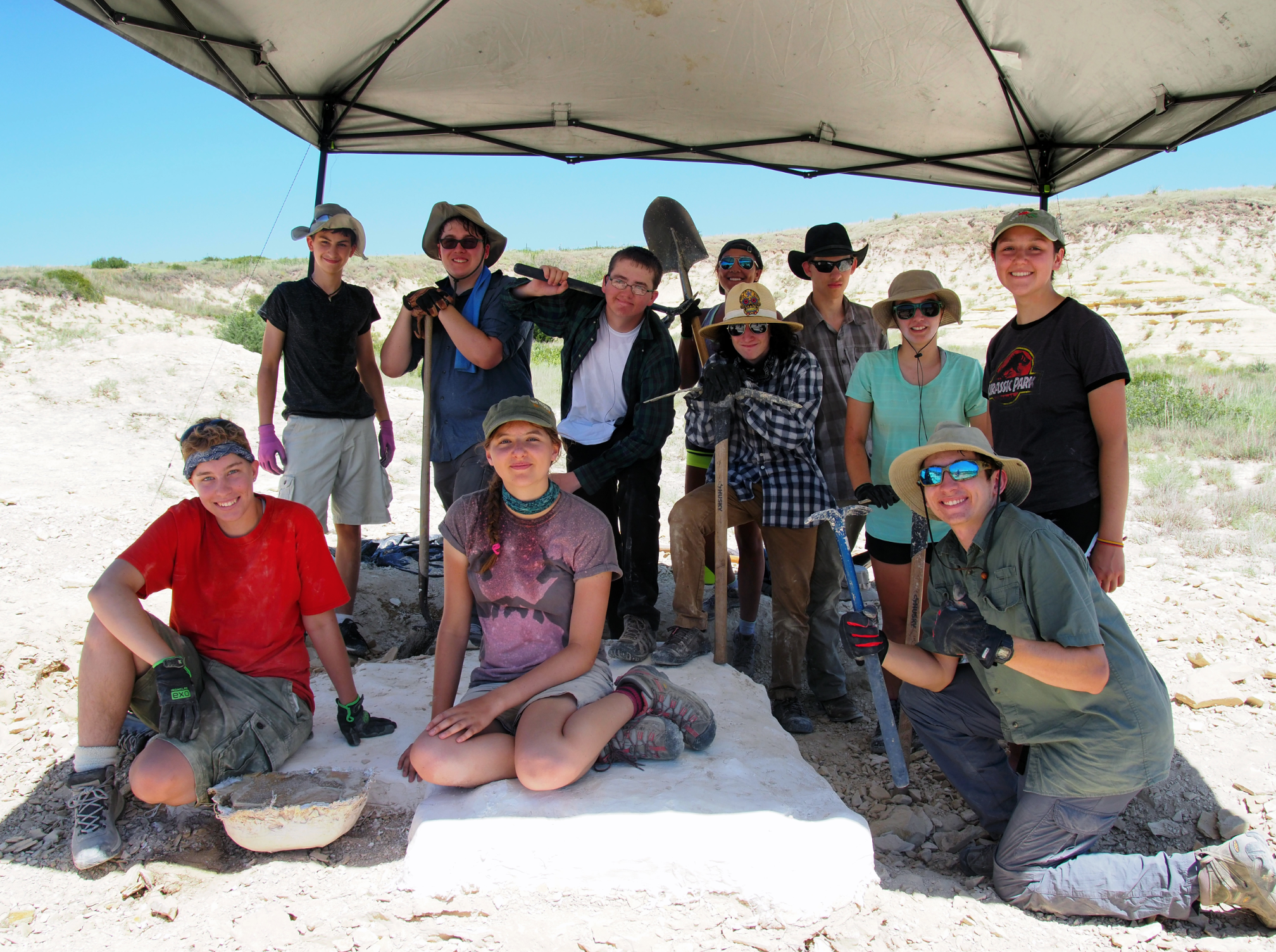
Alex Landwehr loves science. He attended science camps as a high school student. He is now an instructor at science camps. He finished his freshman year at Fort Hays State University this spring dreaming of a scientific career in paleontology.
FHSU’s Sternberg Museum of Natural History helps nourish that passion for science. Its scholarship program provided financial assistance in 2017 and 2018 for Landwehr to attend – and flourish – at summer science camps, which led to a position on camp staff.
“Without the financial aid, I wouldn’t have been able to go,” Landwehr said recently, taking a break from the six daily camps he is involved in this summer as an instructor.
The Sternberg summer science camps, now in their sixth year, have grown both in numbers and income generated. The first summer in 2014 had an enrollment of four students, all from Kansas. The net income generated was $1,200. This summer, there are 51 participants from 22 states enrolled in Sternberg’s camps for elementary, middle school and high school students. The net income for 2019 is $35,000. In addition to the scholarship program, income generated goes toward purchase of new equipment for the camps and marketing.
Camps Director David Levering wants Sternberg’s programs to be both affordable and accessible. They fill a need for youth science camps in Kansas and the surrounding area. He knew of expensive science camps on both coasts, and he wanted just the opposite when he was hired in 2013.
“It seemed to me that a lot of the students benefiting the most from these opportunities were students who already had a leg up, economically,” Levering said. “It occurred to me that if we could get those kinds of opportunities readily available in rural communities, it would be hugely beneficial.
“Having it here, in the middle of the country, is crucial,” he added. “Lower income students don’t have the resources to participate in camps that are across the country.”
That’s where the scholarships come in. Landwehr is thankful for Sternberg’s financial assistance.
“I think it’s really good that they do that,” he said. “They’re providing opportunities for people who aren’t financially able. I know I have friends from other (Sternberg) camps who wouldn’t have been able to go without financial aid.”
Landwehr was able to attend paleontology field camps in 2017 and 2018 with Sternberg’s help.
“I wanted to know if paleontology was something I wanted to do,” he said. “I went to those camps to see if that was what I wanted to major in.”
Landwehr now knows what he wants. He is a double major at FHSU, in biology and geology with a paleontology emphasis.
“I’ve always been interested in the natural sciences,” said Landwehr, a 2018 graduate of Topeka High School. “I really liked geology and biology. Paleontology is a really good mix of those two.”
Levering was originally hired as Sternberg’s museum educator. Dr. Reese Barrick, Sternberg’s museum director, soon realized the camps, as envisioned by himself and Levering, was a full-time job. Levering, who had previous experience with youth science camps, quickly showed that was an area of expertise. Barrick shifted job responsibilities and named Levering as camp director.
“I had wanted to have more connection with high school kids in general,” Barrick said. “That was one of the reasons I hired him as education director. He was at his best when he interacted with high school and middle school kids.”
Levering had a vision of what he wanted to accomplish. Barrick lent his support.
“It’s a big credit to Dr. Barrick,” Levering said. “I told him and the rest of the museum staff when I was interviewing what I wanted to do. I think it is a lot of credit to Dr. Barrick to agreeing with that idea as something that would be hugely beneficial to students in rural western Kansas.”
Barrick said many of the students attend camps in multiple summers. That helps boost attendance, as does word-of-mouth testimonials from students. Sternberg also capitalizes on serving an area previously under-utilized by science camps. And, one summer’s camper can become next year’s Fort Hays State student, like Landwehr.
“Because there are not a ton of camps in the country that do what we do, some of it is just in marketing,” Barrick said. “We’ve had some kids come to Fort Hays State through the camps. That’s pretty exciting.”
As the camps have grown in both the number offered and in participants, the need for additional camp instructors was filled in part by students such as Landwehr, in his first summer on staff.
“I wanted to keep doing camps, and being an instructor is a good way to stay on with the program,” said Landwehr, who is compensated for serving as an instructor. “It helps a lot. If I didn’t get paid I don’t know if I would get to be on summer staff.”
Being able to go to Sternberg’s science camps, and later serving as instructors, can put students on the path to success.
“The long-term benefits can be huge for students participating in these kinds of opportunities,” Levering said.
The current wet weather and standing water has provided “perfect” conditions for mosquitoes. The three primary strategies that must be implemented to avoid mosquito problems and bites are: source reduction, personnel protections and insecticides.
Source Reduction:
It is important to routinely eliminate or reduce all mosquito breeding sites. This will effectively decrease mosquito populations by removing stagnant or standing water from items or areas that may collect water. These include: wheelbarrows, pet food or water dishes, saucers underneath flower pots, empty buckets, tires, toys, wading pools, birdbaths, ditches, and equipment. In addition, check gutters regularly to ensure they are draining properly and are not collecting water.
Personnel Protection:
Protect yourself from mosquito bites by delaying or avoiding being outdoors during dawn or dusk when most mosquitoes are active. Use repellents that contain the following active ingredients: DEET or picaridin. Generally, DEET provides up to 10 hours of protection whereas picaridin provides up to 8 hours of protection. A product with a higher percentage of active ingredient will result in longer residual activity or repellency. For children, do not use any more than 30% active ingredient. Furthermore, do not use any repellents on infants less than two months old. Clothing can be sprayed with DEET or permethrin. However, be sure to wash clothing separately afterward. Before applying any repellent, always read the label carefully.
Insecticides:
For stationary ponds, there are several products that may be used, such as Mosquito Dunks and/ or Mosquito Bits. Both contain the active ingredient, Bacillus thuringiensis subsp. Israelensis which is a bacterium ingested by mosquito larvae that results in death. The bacterium only kills mosquito larvae with no direct effects to fish or other vertebrates. Avoid making area-wide applications of contact insecticides because these are generally not effective, and may potentially kill many more beneficial insects and pollinators (e.g. bees) than mosquitos.
The following items will not control mosquitoes: Mosquito repellent plants (citronella plants) Bug zappers Electronic emitters Light traps or carbon dioxide traps.
Alicia Boor is an Agriculture and Natural Resources agent in the Cottonwood District (which includes Barton and Ellis counties) for K-State Research and Extension. You can contact her by e-mail at [email protected] or calling 620-793-1910
The Ellis County Public Works Road and Bridge Division announced an asphalt overlay project will take place beginning at the intersection of 230th Avenue and Golf Course Road and will commence North on 230th Avenue for three-quarters of a mile.
On Tuesday, weather permitting, that stretch of 230th Avenue will be closed to through traffic beginning at 7 a.m. and will remain closed until the project is completed. The project is expected to be completed on the same day. Motorists traveling in the affected closure area should use alternate routes of travel until the project is complete.
Fort Hays State University’s Dr. Janet Stramel, associate professor of teacher education, was recently elected to serve as president of the Kansas Association of Teachers and Mathematics.
Stramel will serve as KATM president for the 2019-2020 year and will lead more than 30,000 elementary and secondary math teachers across Kansas.
KATM, an affiliate of the National Council of Teachers of Mathematics, fosters an engaged community to advance effective practices in teaching and learning mathematics throughout Kansas.
Goals of KATM include: to create and maintain greater interest in the learning and teaching of mathematics; to provide opportunities for professional growth and development of teachers of mathematics; to provide a forum through which educators can discuss and respond to issues and activities affecting mathematics education in Kansas and the nation; to promote the value of learning mathematics; and to foster cordial relations among and between various groups in Kansas who are interested in and impacted by mathematics education in Kansas.
The Hays Area Chamber of Commerce (HACC) is seeking qualified applicants for the full-time position of Membership Coordinator. This position reports to the President/CEO of the HACC and works closely with the rest of the HACC staff, Board of Directors, Chamber members and other stakeholders. This position is responsible for communicating, connecting and developing quality relationships with existing and prospective chamber members. Furthermore, this position will assist with selling sponsorships and other event programming details.
Must have proficiency in general computer skills in Word and Excel; strong written and oral communication abilities; able to build effective rapport with others; be highly energetic, organized and self-motivated with superior attention to details; be able to understand, assist and promote the Chamber mission. Send cover letter and resume to:
Sarah Wasinger Hays Area Chamber of Commerce
2700 Vine Street
Hays, KS 67601 [email protected]
Resumes will be accepted until position filled. For more information, click HERE.
Benjamin P. Marcus is religious literacy specialist at the Religious Freedom Center of the Freedom Forum Institute.
By BENJAMIN MARCUS Freedom Forum Institute
Can a Latin cross ever be anything other than a symbol of the crucifixion and resurrection of Jesus? Can religious symbols or practices — Christian, Hindu, Native American or other — take on other meanings?
In the “Peace Cross Case” — American Legion v. American Humanist Association — the U.S. Supreme Court was presented with the question of whether it was constitutional for a 32-foot cross, maintained by taxpayer dollars, to remain on Maryland state property, where it has been since 1925.
Justice Samuel Alito, a Roman Catholic, wrote: “The cross came into widespread use as a symbol of Christianity by the fourth century and it retains that meaning today. But there are many contexts in which the symbol has also taken on a secular meaning. Indeed, there are instances in which its message is now almost entirely secular.”
Perhaps the most important question raised by the ruling: Are courts or government agencies competent to adjudicate what is religious and what is not?
I think not. But the more we include religion in government-funded, public spaces, the more that courts and government agencies will be asked to determine the meaning and significance of religious symbols and practices.
Let’s go back to the Peace Cross Case. The cross in question was completed by the American Legion in 1925 to honor fallen soldiers from Bladensburg, Md., during World War I. A Roman Catholic priest and a Baptist pastor took part in the dedication ceremony and U.S. Rep. Stephen W. Gambrill asked attendees to think of the cross as “symbolic of Calvary.”
What did the court say? The cross can stay. It does not violate the Establishment Clause. Why? Justice Alito — writing the majority opinion and joined by Chief Justice Roberts and justices Breyer, Kagan and Kavanaugh — explained that though the cross is certainly religious for some folks, “With sufficient time, religiously expressive monuments, symbols and practices can become embedded features of a community’s landscape and identity. The community may come to value them without necessarily embracing their religious roots.”
Perhaps this ruling, and the court’s reasoning, should not surprise us. After all, 25 years ago, in the majority opinion in Lynch v. Donnelly, the U.S. Supreme Court repeatedly referred to wreaths, garlands, reindeer, carolers and even Santa Claus as “secular images” and “secular figures.” Tell that to the Christian carolers singing “O Come, O Come Emmanuel.” Or to Saint Nicholas of Myra.
The upshot? If religious communities want to spare themselves the pain of having a court say that a Latin cross or Santa are not primarily religious symbols for some people in some circumstances, then religious communities should reconsider whether it is in their best interest to ask governments to play a role in creating or maintaining religious symbols or practices in the public square.
Ultimately this is about what we want our government saying about religion. History tells us that individuals and communities ascribe new meanings to religious symbols and even religious ritual practices, in different times and places. The American Academy of Religion — the world’s largest and most respected professional association for scholars who study religion — affirms that a central premise of the study of religion is that religious interpretations and expressions change over time as they influence and are influenced by culture. But should we ask the government in a religiously diverse democracy to dictate how society should understand specific religious symbols or practices?
To be fair to courts, deciding whether a symbol or practice is religious, secular or both can be an incredibly difficult task that vexes even the most savvy theologians and religious studies scholars. It is precisely because answers to questions of definition and classification are so nuanced — and so important — that we should avoid putting the government in a position to make the call whenever possible.
Take yoga as a reminder of what is at stake. The type of yoga practiced today by tens of millions of Americans in the United States is often considered a secular physical activity that promotes mindfulness. Yet it has its origins in a Hindu religious practice. In 2015, the Court of Appeal for the Fourth Appellate District in California was asked to decide whether a yoga program in a physical education class is a religious activity that violates the California Constitution’s ban on the establishment of religion. Its answer: no. You might agree with the decision. But have you contemplated its effect on the religious identities of the Hindu Americans who started a Take Back Yoga campaign in 2010 because they mourned the fact that “Hinduism has lost control of [yoga’s] brand?”
Or take lacrosse. I would guess that fewer Americans recognize the connection — historic and contemporary — between the stick-and-ball sport and religion. Yet members of the Haudenosaunee, including the Onondaga Nation, consider the game to be sacred. From the Onondaga Nation website: “It is a game that was given by the Creator, to be played for the Creator, and has been known to have healing power.” What pain do we inflict on Haudenosaunee communities when we ignore the religious significance of the game while playing it in our public schools?
I do not mean to suggest it is easy to determine the extent to which yoga and lacrosse are religious — and by extension whether they should be allowed in public schools. But I know that when courts and government agencies decide that yoga and lacrosse are not entirely religious, they can compound the pain of religious communities that already consider themselves marginalized.
Back to Bladensburg. The Supreme Court affirmed the religious significance of the Latin cross, but they also suggested that the cross might be understood as both a religious and secular symbol in certain contexts. That should give pause to those Christians who feel sidelined by secularism but support governmental ownership and upkeep of the Peace Cross.
In the aftermath of the case, Harvey Weiner, the national judge advocate of the Jewish War Veterans of the United States Inc., lamented the suggestion that the Peace Cross is not primarily a symbol of Christ: “Alas, to Christians, that a war memorial Latin cross has significant meanings other than being the ultimate symbol of Christianity.”
So next time you want the government to support a religious practice or display your most cherished religious symbol, consider whether you are willing to have the government later say that those symbols or practices are not entirely religious after all.
Benjamin P. Marcus is religious literacy specialist at the Religious Freedom Center of the Freedom Forum Institute. His email address is: [email protected].







 By JAMES BELL






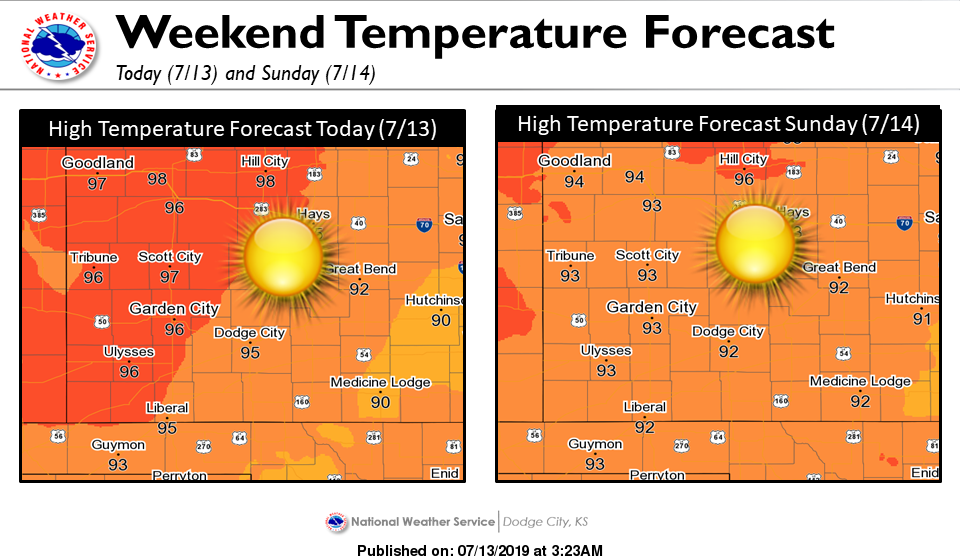
 Today
Today