We have a brand new updated website! Click here to check it out!

Kansas judge won’t give go-ahead for telemedicine abortions

By JOHN HANNA
AP Political Writer

TOPEKA, Kan. — A state-court judge declined Monday to give a Kansas clinic permission to provide telemedicine abortions.

Shawnee County District Judge Teresa Watson rejected a request from the Trust Women Foundation for an injunction to block the state from subjecting the clinic and its doctors to enforcement of state laws against telemedicine abortions. She did so despite another judge’s ruling that no ban can be enforced and a Kansas Supreme Court ruling in April that access to abortion is a “fundamental” right under the state constitution.

The foundation operates a Wichita clinic that in October began providing pregnancy-ending medications to patients who conferred with off-site doctors by webcam. But the clinic stopped Dec. 31, saying it the legal climate was too uncertain, and Julie Burkhart, Trust Women’s CEO, said Monday evening that it has no plans to resume the service because of the court order.

“We cannot broaden that access and feel confident that the clinic or the physicians will not be penalized for that,” Burkhart said. “If we’re putting our physicians or the clinic in jeopardy, we’re working against our mission. The mission is to bring access to people.”

The Legislature has passed three laws aimed at banning telemedicine abortions since 2011, but all were put in limbo by legal challenges in which Trust Women was not a party. Trust Women filed its own lawsuit in January, saying the local district attorney and the state medical board wouldn’t promise in writing that the clinic is allowed to do the abortions.

Mary Kay Culp, executive director of the anti-abortion group Kansans for Life, responded to news of the ruling with, “Good, great, wonderful!” She and other abortion opponents have argued that a ban on telemedicine has been in force for at least several years.

“It’s truly justice,” she said of Watson’s decision.

Watson’s decision is the first lower-court ruling on abortion since the state Supreme Court’s sweeping ruling protecting abortion rights. The judge acknowledged the high court’s decision in her ruling but described as “speculative” Trust Women’s claims that its patients would be irreparably harmed if she did not issue the order it sought.

“There is no evidence the challenged laws decrease access to abortion,” Watson wrote.

Eighteen other states have laws requiring doctors to be physically present when abortion medications are dispensed, according to groups on both sides of the issue, and an Iowa law has been blocked in court. The Wichita clinic has two doctors who live outside Kansas and can be at the clinic two days a week.

The Kansas attorney general’s office had argued that patients aren’t harmed if the clinic does not have permission to do telemedicine abortions.

However, during a hearing in May, Burkhart testified that webcam conferences made the doctors available an extra eight to 12 hours a week and sometimes cut patient wait times to less than two hours from six to eight hours. Trust Women also hopes eventually to open a clinic in rural Kansas offering telemedicine abortions.

The clinic also faces a complaint over its past telemedicine abortions filed with the State Board of Healing Arts from the anti-abortion group Kansans for Life.

The board has 15 members. One position is vacant, and the other 14 members were named by anti-abortion Republican governors. Two members’ terms expired June 30, giving Democratic Gov. Laura Kelly, an abortion rights supporter who took office in January, a chance to replace them.

Kansas enacted its first telemedicine-abortion ban in 2011, only to see it swept up in a broader lawsuit against multiple restrictions filed by father-daughter doctors who operated a women’s health center in the Kansas City-area. Another Shawnee County judge, Franklin Theis, blocked all of the restrictions together.

Theis ruled Dec. 31 that his order on the 2011 restrictions also blocked a 2015 version of the telemedicine-abortion ban. And he declared that a 2018 version was an “air ball” without enforcement provisions. The state has appealed. The Wichita clinic is not a party in that case.

Watson said in her ruling that Trust women’s request for an order had added to “a growing procedural backwater” that hindered her ability “to resolve the underlying merits of the telemedicine abortion issue.”

Kansans for Life launched its complaint against Trust Women’s clinic before Theis’ ruling in December and received a notice in April that it had been assigned to an investigator. The Board of Healing Arts regulates the clinic’s physicians, while the clinic itself is regulated by the state health department, which is under Kelly’s control.
Backpacks For Kids registration deadline approaching; supplies needed

Submitted

School may be out for the summer, but at First Call For Help we are busy preparing backpacks for the 2019-2020 school year.

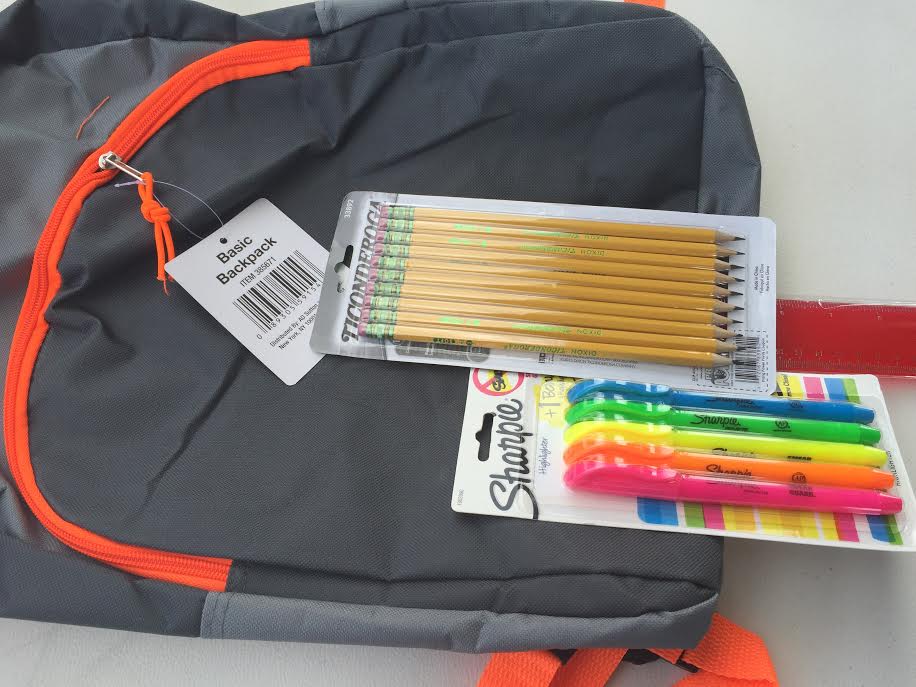
Register today if you are an Ellis County resident in need or enduring a hardship. Students entering grades pre-k thru high school who reside and attend school in Ellis County are eligible to receive a free backpack filled with school supplies and a hygiene bag.

Register for a backpack online at https://firstcallelliscounty.com/Backpacks-for-Kids, or call 785-623-2800 to reserve one over the phone. The registration deadline is Monday, July 22

Our Backpack Distribution Day is Aug. 1, at the National Guard Armory, 200 Main St., Hays. Stop by and pick up your backpack anytime between 7 a.m. and 6 p.m.

Please contact Project Coordinator Laura Shoaff at First Call For Help if you have questions or are interested in volunteering to fill backpacks or assist on distribution day.

If you are not able to volunteer but would still like to get involved, donate some school supplies from the list or make a monetary donation. We appreciate the support of our community in making Backpacks For Kids possible.

Here are a few items that we are out of:

  • Wide-ruled filler paper
  • Wide- and college-rule one-subject, spiral notebooks
  • Washable classic color markers
  • Elmers 4 oz. washable school glue
  • No. 2 yellow pencils
  • Plastic pencil boxes (cigar-box size)
  • 12 pack colored pencils

 For a full list of donation items, go to our website: https://firstcallelliscounty.com/Backpacks-for-Kids

HPD Activity Log July 4-9

The Hays Police Department responded to 5 animal calls and conducted 22 traffic stops Thu., July 4, 2019, according to the HPD Activity Log.

Battery – Domestic–100 block W 7th St, Hays; 1:27 AM; 1:29 AM
Disorderly Conduct–500 block W 7th St, Hays; 1:25 AM; 1:35 AM
Drug Offenses–2000 block Vine St, Hays; 2:15 AM
Animal At Large–200 block E 6th St, Hays; 9:17 AM
Animal At Large–2700 block Thunderbird Dr, Hays; 10:54 AM
Forgery–1200 block Motz Ave, Hays; 11:03 AM
Fire–2000 block Vine St, Hays; 2:10 PM; 2:13 PM
Found/Lost Property–500 block Main St, Hays; 3:23 PM
Battery – Domestic–100 block E 24th St, Hays; 10:45 AM; 3:31 PM
Criminal Trespass–2500 block Canterbury Dr, Hays; 3:47 PM
Animal At Large–600 block E 6th St, Hays; 6:04 PM
Criminal Damage to Property–500 block E 11th St, Hays; 6:45 PM; 7:15 PM
Overdose–2500 block Vine St, Hays; 8:18 PM
Missing Person–1400 block US 183 Alt Hwy, Hays; 10:45 PM

The Hays Police Department responded to 6 animal calls and conducted 39 traffic stops Fri., July 5, 2019, according to the HPD Activity Log.

Warrant Service (Fail to Appear)–1200 block 230th Ave, Hays; 12:22 AM
Assist – Other (not MV)–3600 block Vine St, Hays; 1:18 AM
Driving Under the Influence–600 block Fort St, Hays; 2:06 AM
Assist – Other (not MV)–1200 block E 7th St, Hays; 3:09 AM
Animal At Large–1000 block Reservation Rd, Hays; 9:25 AM
Civil Dispute–400 block E 5th St, Hays; 9:27 AM
Criminal Damage to Property–400 block E 15th St, Hays; 7/3 10 PM
MV Accident-City Street/Alley–300 block 9th St, Hays; 11:21 AM
Found/Lost Property–1100 block Cody Ave, Hays; 12:14 PM
MV Accident-Personal Injury–Hays; 12:49 PM
Animal Call–1900 block Holmes Rd, Hays; 2:20 PM
Abandoned Vehicle–400 block Walnut St, Hays; 2:26 PM
Animal Cruelty/Neglect–3300 block Vine St, Hays; 4:14 PM
MV Accident-City Street/Alley–200 block E 12th St, Hays; 5:35 PM
Alarm – Residential–1300 block Donald Dr, Hays; 6:30 PM
Unattended Death–1100 block Amhurst Dr, Hays; 6:43 PM
Assist – Other (not MV)–2300 block Virginia Dr, Hays; 10:31 PM
Suspicious Activity–200 block E 8th St, Hays; 10:45 PM
Minor in Possession of CMB/LIQ–200 block W 6th St, Hays; 11:47 PM

The Hays Police Department responded to 6 animal calls and conducted 33 traffic stops Sat., July 6, 2019, according to the HPD Activity Log.

Drug Offenses–500 block W 7th St, Hays; 1:11 AM
Minor in Possession of CMB/LIQ–200 block W 6th St, Hays; 1:26 AM
Mental Health Call–2300 block Virginia, Hays; 2:51 AM
Harassment, Telephone/FAX–100 block W 19th St, Hays; 7/5 5 PM
MV Accident-City Street/Alley–400 block W 6th St, Hays; 10:48 AM
Civil Dispute–3600 block Vine St, Hays; 12:30 PM; 12:40:00 PM
Abandoned Vehicle–400 block E 22nd St, Hays; 12:43 PM
Found/Lost Property–4th and Ash St, Hays; 3:01 PM
Theft (general)–1300 block Vine St, Hays; 4:02 PM
Theft (general)–2500 block Vine St, Hays; 5:52 PM; 5:59 PM
Disturbance – General–1900 block Main St, Hays; 6:46 PM
Identity Theft–100 block W 12th St, Hays; 8:46 PM
Lost Animals ONLY–500 block Mission Mt, Hays; 11:01 PM

The Hays Police Department responded to 6 animal calls and conducted 30 traffic stops Sun., July 7, 2019, according to the HPD Activity Log.

Disturbance – Noise–700 block E 6th St, Hays; 12:49 AM
Driving Under the Influence–800 block Fort St, Hays; 1:21 AM
MV Accident-City Street/Alley–1100 block E 17th St, Hays; 1:23 AM
Found/Lost Property–200 block W 9th St, Hays; 1:46 AM
Underage Possession of CMB/LIQ–500 block E 7th St, Hays; 2:24 AM
Burglary/residence–1300 block Anthony Dr, Hays; 2:22 AM; 4:08 AM
Mental Health Call–3200 block Vine St, Hays; 7:52 AM
Found/Lost Property–100 block Main St, Hays; 8:49 AM
Driving While Suspended/Revoked–600 block E 7th St, Hays; 9:39 AM
Found/Lost Property–100 block W 12th St, Hays; 9:41 AM
Criminal Damage to Property–800 block Ash St, Hays; 7/6 6 PM; 8 PM
Animal Bite Investigation–1300 block Donald Dr, Hays; 11:33 AM
Criminal Damage to Property–500 block E 6th St, Hays; 7/6 6 PM; 7/7 10 AM
Animal At Large–100 block E 22nd St, Hays; 3:30 PM
Dead Animal Call–400 block E 6th St, Hays; 3:55 PM
Aggravated Battery–W 6th St, Hays; 7/6 10 PM; 7/7 1 AM
Welfare Check–200 block W 21st St, Hays; 6:39 PM
Lost Animals ONLY–400 block W 6th St, Hays; 6:57 PM
Domestic Disturbance–400 block E 7th St, Hays; 8:15 PM; 8:25 PM
Fireworks Violation–2300 block E 15th St, Hays; 10:38 PM

The Hays Police Department responded to 6 animal calls and conducted 27 traffic stops Mon., July 8, 2019, according to the HPD Activity Log.

Domestic Disturbance–1300 block E 33rd St, Hays; 12:54 AM
Water Use Violation–1800 block E 27th St, Hays; 2:32 AM
Disturbance – General–1300 block E 33rd St, Hays; 3:12 AM
Water Use Violation–1300 block E 41st St, Hays; 3:21 AM
Found/Lost Property–300 block Main St, Hays; 8:10 AM
Animal Call–2000 block Main St Terr, Hays; 9:05 AM
Theft of Vehicle–100 block E 12th St, Hays; 7/6 10 PM; 7/8 9 AM
Animal Call–700 block E 6th St, Hays; 12 PM
Traffic/Driving Complaint–2900 block Vine St, Hays; 12:37 PM
Criminal Damage to Property–400 block W 14th St, Hays; 1:11 PM
Suspicious Activity–1100  block E 13th St, Hays; 1:26 PM
Traffic/Driving Complaint–1300 block Canterbury Dr, Hays; 2:10 PM; 2:19 PM
Animal Cruelty/Neglect–2700 block Epworth St, Hays; 2:22 PM
Suspicious Activity–2100 block Allen St, Hays; 4:06 PM
Assist – Other (not MV)–1100 block E 13th St, Hays; 4:23 PM
Theft (general)–500 block E 11th St, Hays; 7/4 9:30 PM; 9:45 PM
Stalking–2700 block Epworth St, Hays; 2 PM; 2:30 PM
Suspicious Activity–200 block E 18th St, Hays; 8:19 PM
911 Hangup Call–1700 block Wheatland Ave, Hays; 11:07 PM

Winter wheat harvest begins to wrap up in Ellis County

By JAMES BELL
Hays Post
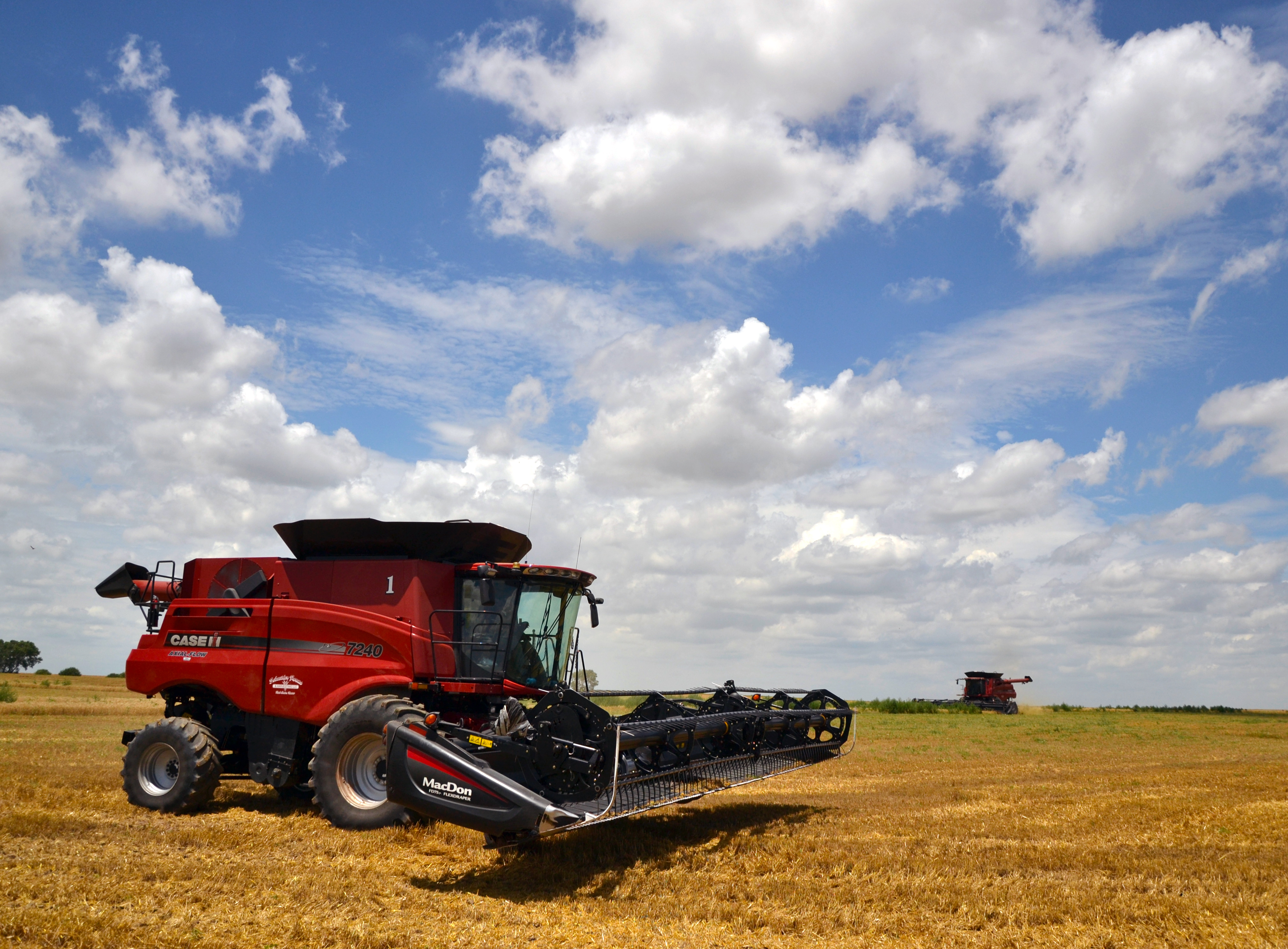
After a week of sporadic rain across western Kansas, generally warm and windy weather dried the fields enough for wheat producers to get back into their combines and begin to wrap up the wheat harvest that started the last week of June around Ellis County.

“It’s a little later than usual and with the rains, it’s a little longer than we anticipated,” said Brian Witt, Hays coordinator at Midland Marketing.

In the southern part of Ellis County, Witt said the harvest is nearly complete. North of Hays, producers have been delayed a bit longer.

He estimated Rush County was already 80 percent to 90 percent complete, with only a few producers in small areas who were hit with rain in the last few days needing to return to the fields to wrap up.

To the north, they are further behind, Witt said, with areas near Rooks County about 50 percent complete.

But with dry conditions through the area most of the day Monday and no rain forecasted past Tuesday, producers should be able to complete the harvest soon.

South of Hays, Witt said by the end of the week he anticipated producers in southern Ellis County should be able to complete the harvest, while northern parts of the county may be a day or two later, pushing through to Monday.

At the Hays elevator, received bushels have gone down drastically since Wednesday, Witt said.

“We are taking about a tenth of what we were four or five days ago,” he said, noting a significant slowdown starting after the rains that fell in the latter part of last week.

While the harvest began later than normal, early indicators of a good crop have held.

“Overall, it was a very good harvest,” Witt said. “Yields came out better than what everyone anticipated.

“It was definitely an above average crop.”

In their weekly crop report released Monday, the National Agricultural Statistics Service rated 16 percent of winter wheat across the state as excellent and 42 percent as good.

Only 4 percent of the crop was rated very poor and 11 percent poor, while the remaining 27 was rated as fair.

In the central district, around 98 percent of winter wheat was rated as mature by the service, with 76 percent harvested.

Across the state, 92 percent has matured and only 61 percent had been harvested.


Outstanding FHSU nursing graduates for spring 2019 recognized

FHSU University Relations

Outstanding spring 2019 graduates were recently awarded Leora B. Stroup Awards by the Department of Nursing at Fort Hays State University at a pre-Commencement pinning ceremony.

The On Campus Bachelor of Science in Nursing award goes to Jordyn Crum, Lakin.

The Registered Nurse to BSN Award goes to Lindsey Johnson, Phillipsburg.

The Master of Science in Nursing award goes to Jordan Petz, Hays.

The Doctor of Nursing Practice award goes to Nicole Stalter, Glenwood Springs, Colo..

The ceremony also recognized graduating on-campus BSN, RN to BSN, MSN and DNP students.

The Stroup awards, named for the founder of FHSU’s nursing program, recognize outstanding clinical performance, community involvement and academic achievement.

Contact the FHSU Foundation to donate to the Leora B. Stroup Fund.

HAWVER: Court decisions will impact next Kan. legislative session

Martin Hawver
The Legislature’s Special Committee on Judiciary will spend at least two days this summer and fall taking a close look at Kansas Supreme Court decisions on two recent high-profile cases: one that officially declared there is a constitutional right to abortion in Kansas, another which held unconstitutional the Legislature-set cap on noneconomic damages.

Now, that’s not unexpected. Both cases have drawn considerable coverage in recent weeks, so the next obvious move was to put them up for review.

The topic specifically proposed for the 11-legislator summer study is pretty simple: “Review the impact of recent Supreme Court decisions on the citizens of Kansas.”

It’s, of course, not specific, but look for abortion and look for that damage cap to become high-profile issues for the upcoming election-year legislature, when members of the House and Senate all stand for reelection, and there isn’t a hotter issue among Republicans than abortion, and there isn’t a hotter issue for everyone else than insurance rates.

And the seldom-called topic of “impact of recent Supreme Court decisions” falls at a time when along with all House and Senate seats, only two Kansas Supreme Court justices will be on the ballot next November, when they stand for retention to another six-year term on the high court.

Those justices? Two former Democrat Gov. Kathleen Sebelius appointments to the court, Eric Rosen and Lee Johnson—both of whom were on the majorities in the abortion and noneconomic damage cases.

Now, the committee’s hearings may sprawl to other issues, but the keys are abortion and noneconomic damages.

The abortion decision? It essentially rejected a state law that prohibits the most commonly used second-trimester abortion procedure known as dilation and evacuation to the medical world, but as “dismemberment abortion” to antiabortion activists.

House Speaker Ron Ryckman, R-Olathe, and Senate President Susan Wagle, R-Wichita, are hoping that the interim committee meetings and study will eventually lead to a Kansas constitutional amendment that will either prohibit abortion in Kansas or allow lawmakers to specify a range of limits that can be applied to the procedure.

That special committee can ponder just what’s possible in the way of restrictions and keep alive the politically hot issue for the upcoming elections.

The noneconomic damages issues, well, that stretches across a lot of political lines, mostly for businesses which buy liability insurance, and for nearly everyone else in Kansas who drives a car and must carry liability insurance for damages that can be caused in a vehicle accident.

It’s not the easily computable damages—repairing the car or the house that it might crash into which can be assessed by adding up receipts. It’s the effect that a wreck or mistake can have on the lives of those who are victims of a wreck.

Is the damage of a wreck adequately compensated when the car is fixed and the bruises and other injuries healed, or does it have a psychological effect that causes suffering every time a survivor hears tires squeal, or sees a car headed in his/her direction? The Legislature initially figured $250,000 would cover those noneconomic damages, raised it to the current $325,000 and headed to $350,000 by July 1, 2022.

It is that uncapped potential liability that has insurers worried. They can compute what a fixed cap on noneconomic damages will cost them—and their policyholders, plus enough profit to stay in business. But no cap? What should insurance rates be to cover those unlimited damage costs?

That’s the “impact of recent Supreme Court decisions” that will probably show up in the Legislature next session, while lawmakers search for the bullet points on their election brochures that they can aim at voters.

Syndicated by Hawver News Company LLC of Topeka; Martin Hawver is publisher of Hawver’s Capitol Report—to learn more about this nonpartisan statewide political news service, visit the website at www.hawvernews.com

CAMPBELL: Don’t forget about chinch bugs after wheat harvest

Stacy Campbell is Agriculture & Natural Resources Extension Agent for the Cottonwood Extension District.
As I was looking back on what I wrote about last year I saw the article on chinch bugs and how the second generation nymphs were moving out of harvest wheat fields and feeding on young grain sorghum and forage sorghum plants along field edges. These young plants can be damaged by the chinch bug feeding.

My guess is this could happen again this year and since we are experiencing planting delays the milo and feed crops could even be more vulnerable this year since they will be smaller. So after wheat harvest keep a close eye on those fields of milo and feed that are close or adjacent to your wheat fields.

The overwintered adults emerge in early spring and fly into small grains where they mate and produce the first generation. Most problems in milo or feed occur when large groups of the immature, wingless nymphs migrate from maturing wheat fields and invade adjacent sorghum or sorghum/sudan hay fields where they attempt to complete development. They typically do not infest the entire field but can take out several rows of milo next to the wheat.

Problems with this insect were historically confined to eastern and central Kansas, with damage beginning in May or June, but in recent years, chinch bugs have become more of a problem further west in the state.
Chinch bugs puncture vascular tissues to extract plant juices and secrete digestive enzymes that cause the breakdown of surrounding plant tissues. Feeding punctures also can allow pathogens to enter the plant.

Consequently, damaged plants present a variety of symptoms including stunting, yellowing, wilting, and necrotic lesions. The effect nymphal feeding has on plants depends to a large degree on the size, health and nutritional status of the plants. Growth stage and water balance are critical because small or drought-stressed plants have less ability to tolerate or recover from chinch bug feeding damage.

Using seed treatments: clothianidin (Poncho), imidacloprid (numerous products) and thiamethoxam (Cruiser) at planting can potentially decrease chinch bug damage and may protect plants for up to 3 weeks, unless the migration is heavy. Growers can use follow-up sprays on border rows if protection wears off before the end of chinch bug migration.

Most often the damage is noticed only after several rows of sorghum or feed have been severely stunted or killed. Ideally treating promptly as migrations begin and before significant numbers of bugs enter the field and small plants are affected is best.

An insecticide spray can be used over the affected rows and approximately an additional 100 feet beyond. Also, spraying about 100 feet into the wheat stubble is advisable if chinch bugs are still coming out of the wheat field.

Most currently approved insecticides have good efficacy against chinch bugs, if three factors are considered. First, it is important to use the full recommended rate of the selected insecticide, preferably applied in 20 to 40 gallons of water per acre. High gallonage ensures good plant coverage and enhances the movement of material into protected plant parts such as leaf sheaths, which increases the probability of contact with bugs. Second, the material should be applied with properly adjusted and calibrated equipment.

Cone nozzles designed for high-pressure use will create smaller droplets and improve coverage. Third, the timing of the insecticide application is critical. Early morning applications are preferred because winds are calm (reducing drift), temperatures are cool (reducing volatilization of chemicals), and a large proportion of the chinch bug population will be on the plants and exposed to the application. None of the materials currently registered for use against chinch bugs has long residual efficacy and plants can outgrow the protection. Because peak migrations may continue for 10 days or more, monitoring is required to determine if additional applications to border rows are necessary.

There are several insecticides labeled for the control of chinch bugs listed in the K-State Research & Extension publication “Sorghum Insect Management 2019 which can be found on our web site at www.cottonwood.ksu.edu

If you have any questions or need further information, contact Stacy Campbell at the Cottonwood District Extension Office, Hays at 785-628-9430 or email [email protected]

Ellis Food Box open pantry rescheduled to tonight

ELLIS – Ellis Food Boxes and Pantry will have an open pantry grocery distribution from 5 to 6 p.m. tonight in its location at 201 Madison (behind Casey’s).

All residents living in USD 388 are welcome to participate.

This month’s food distribution was delayed from Monday due to transportation issues.

For more information, call Leonard Schoenberger, director, at 785-726-1278.

– SUBMITTED –

Update: Statewide Silver Alert for missing Sterling woman canceled

Vonita Renae Colle. Photo courtesy KBI

UPDATE:  RICE COUNTY – The statewide Silver Alert for Vonita Renae Colle has been canceled.

 The Rice County Sheriff’s Office reported Colle was located safe in Rice County Tuesday afternoon, a quarter mile south of her residence. She was transported to an area hospital for assessment.

—–

RICE COUNTY – The Rice County Sheriff’s Office requested that the Kansas Bureau of Investigation (KBI) issue a statewide Silver Alert for a missing Sterling woman.

The whereabouts of Vonita Renae Colle, 87, are unknown, and the public’s assistance is requested to help locate her. Colle is reported to have dementia and Alzheimer’s, according to information from the KBI. She was last seen near 2400 Ave. X in Sterling, Kan. The Rice County Sheriff’s Office provided the following description of Colle:

She is 5 ft., 5 in tall, weighs 115 lbs., with silver hair, and blue eyes.
She is wearing men’s black pants, red collared undershirt, black t-shirt, navy sweatshirt and green tennis shoes.
She is missing her front top two teeth.
If you see Colle, or have information about her whereabouts, please immediately contact the Rice County Sheriff’s Office at (620) 257-2363.

News From the Oil Patch, July 8

By JOHN P. TRETBAR

For the first time, monthly U.S. crude oil production figures topped 12 million barrels per day, while Texas and Oklahoma also set records. According to the Petroleum Supply Monthly report from the Energy Information Administration, U.S. operators tapped nearly 12.2 million barrels per day in April, the latest monthly figures available. Oil production in the Gulf of Mexico, Texas and Oklahoma all hit record highs. Texas reached 4.97 million barrels per day, while Oklahoma notched 617,000 barrels per day. Kansas production in April was 95,000 barrels per day.

The U.S. Energy Information Administration reported a big decline in domestic crude oil inventories to 468.5 million barrels for the week ending June 28. That’s down more than one million barrels for the week. The government reported weekly U.S. production increased slightly to more than 12.2 million barrels per day. Average production over the last four weeks is up nearly 12% over the same four-week period a year ago. Imports increased nearly one million barrels to 7.6 million barrels per day. Imports over the last four weeks averaged about 7.3 million barrels per day, which is 13% less than the same four-week period last year.

Operators reported continuing problems with high water across the area causing delays in drilling activity. Independent Oil & Gas Service reports drilling was underway on one lease in Ellis County, but said flooding delayed work at four other sites. Across Western Kansas there are 24 active rigs, up two. There are seven seven active drilling rigs in eastern Kansas, which is up one over last week.

Baker Hughes reported a big drop in its weekly rig count, with 963 active rigs, a drop of five oil rigs and one seeking natural gas. The count in Oklahoma was down five rigs, Louisiana was down four. New Mexico was up three rigs. The count in Canada was down four at 120 active rigs.

Regulators report 25 new Kansas drilling permits for the week, 480 so far this year, with 15 permits in eastern Kansas and ten west of Wichita. There’s one new permit on file in Ellis County.

Independent Oil & Gas Service reports 27 newly completed wells last week across Kansas, 777 so far this year. There were twenty completions east of Wichita, and seven in Western Kansas, including one dry hole in Stafford County.

One of the world’s largest oil-field service companies, Weatherford International filed for bankruptcy protection on last week. The Wall Street Journal reports bondholders approved a restructuring agreement that will reduce Weatherford’s total debt by 70% or almost $6 billion. Five years ago, the company was worth more than $12 billion, but the Journal reports equity shareholders would be left virtually empty-handed under the agreement.

An Oklahoma company bogged down by earthquakes, disposal limits and lawsuits will face an involuntary bankruptcy case in federal court in Oklahoma. White Star Petroleum tried to get the case dismissed in favor of a voluntary Chapter 11 filing in Delaware. But The Daily Oklahoman reports the hearings will be held locally. The company’s hopes for crude production from the Mississippian Lime play were doused by the huge amounts of water those wells produced, the earthquakes that followed disposal of that water, and the lawsuits that followed one of those earthquakes.

Copyright Eagle Radio | FCC Public Files | EEO Public File