GOVE COUNTY — Two Quinter men were hospitalized after an accident just before 5:30 p.m. Wednesday on a county road east of Gove.
The Kansas Highway Patrol reported a 2012 Ford F150 driven by Randel Porter, 66, was eastbound on County Road S. The KHP said the pickup was struck by a 1998 semi driven by 70-year-old Phillip Mann, who was traveling north on County Road 58.
Porter was taken to Gove County Medical Center for treatment of a suspected serious injury, and Mann was hospitalized for a suspected minor injury.
The KHP reported Mann was wearing a seat belt, and Porter was not.
TOPEKA (AP) — A study has found that Kansas saves more money, on average, than any other state that uses federal grants to mitigate natural disasters.
The Pew Charitable Trusts recently released its data analysis showing that for every $1 of federal funds spent on protecting against flood and tornado damage, Kansas avoided $6.81 in potential recovery costs. Researchers drew from a previous study of federal disaster mitigation grants between 1993 and 2016.
The data shows Missouri trailed close behind, with each federal dollar saving $6.72, the Kansas News Service reported.
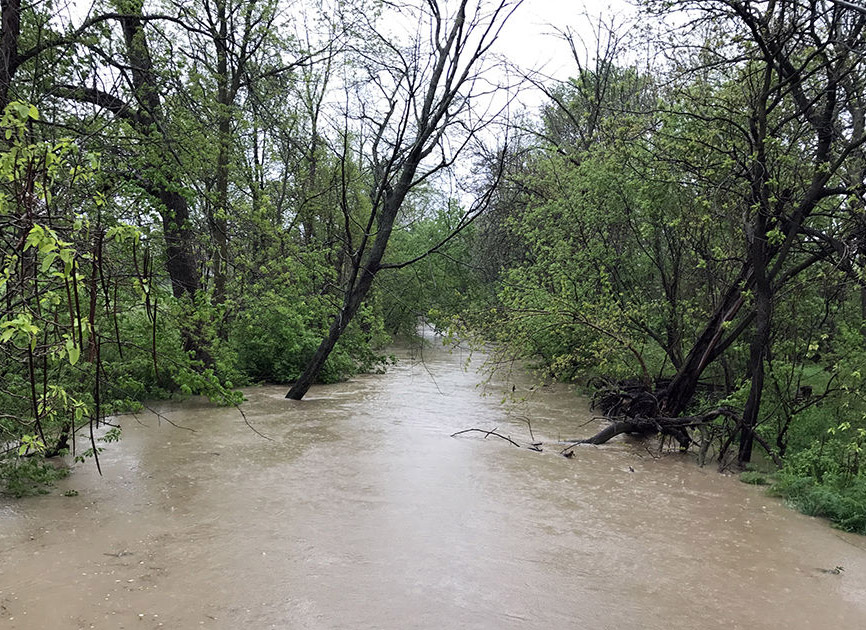
The findings come after Kansas saw heavy rain and flooding this spring, delaying wheat harvests. A May tornado near Pittsburg damaged buildings and toppled power lines and trees.
The mitigation programs in Kansas and Missouri only addressed threats of wind and flooding, but the projects had a large payback in the two states.
Federal programs typically have a match — typically 25% — that must be paid by the state or local government receiving the grant. Researchers found Kansas and the federal government spent roughly $220 million on wind and flood mitigation, which netted about $1.5 billion in savings.
“The mitigation projects that the Kansas Division of Emergency Management are able to support or implement are largely reliant on the federal grants,” said Bryan Murdie, director of the Planning and Mitigation Branch at the Kansas Division of Emergency Management.
California, which is prone to earthquakes and fires, ranked near the bottom of the list, with every dollar of mitigation saving $3.26.
Colin Foard, one of the study’s authors, said governments should find ways to fit mitigation costs into their budgets.
“The takeaway for policymakers really should be that investing in mitigation saves,” Foard said.
TOPEKA (AP) — A former Kansas legislator who also served on a federal parole board will represent the U.S. in meetings of a group that promotes peace in Ireland and Northern Ireland.
Former state Sen. Ed Reilly says he expects to attend meetings of the board of the International Fund for Ireland in November. He was appointed as a U.S. observer last month by President Donald Trump’s administration.
The 82-year-old Reilly is a Leavenworth native who now lives in the Washington area after serving as a member and chairman of the U.S. Parole Commission.
He served 29 years in the Kansas Legislature as a Republican. He was appointed to fill a vacancy in the House in 1964, won a Senate seat that year and served there until 1992.
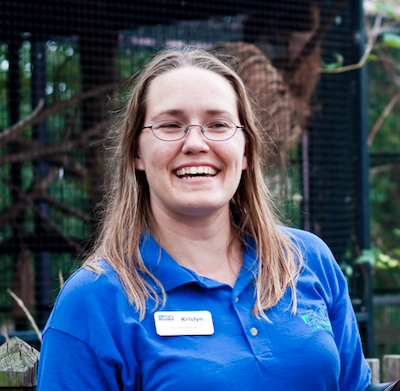
Kristyn Hayden-Ortega-photo courtesy Topeka zooTOPEKA (AP) — A zookeeper who spent two months recovering from a tiger attack at a Kansas zoo is now back to work.
Topeka zoo director Brenden Wiley told KSNT-TV that Kristyn Hayden-Ortega returned to work Tuesday.
She was seriously injured in the April 20 attack by a 7-year-old Sumatran tiger named Sanjiv.
The zoo released a lengthy report last month that said “multiple” protocols and procedures concerning spaces occupied by tigers had prevented any similar attack at the zoo for decades. Its report says protocol was not followed when the keeper entered the tiger’s outdoor habitat without ensuring that the animal was locked inside.
Other zoo employees lured the animal away with meat so emergency responders could treat Hayden-Ortega.
Cyanobacteria is toxic to livestock and other animals, says K-State veterinarian
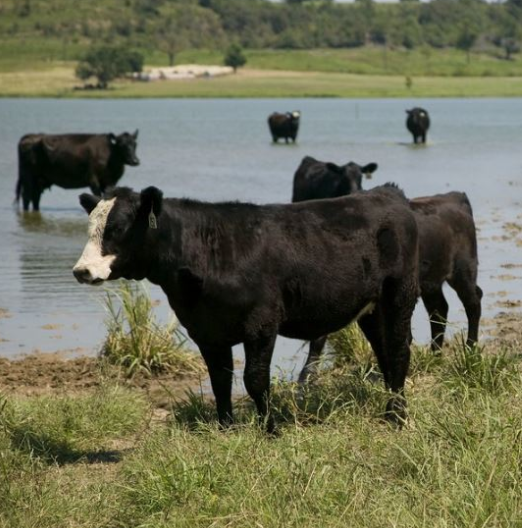
MANHATTAN – The extreme heat that hailed the end of June in Kansas combined with the heavy runoff from rains earlier in the month put many of the state’s waterways at risk to a waterborne toxin that could impact livestock and other animals around the farm.
Kansas State University veterinary toxicologist Steve Ensley said that the incidence of blue-green algae in farm ponds “has become more frequent in the last 15-20 years,” creating headaches for farmers who rely on those ponds to keep livestock hydrated during the hot, summer months.
When blue-green algae blooms, it creates a toxin that can affect the liver or the nervous system of animals that drink affected water. Animals may recover from toxins that affect the liver, but when they ingest toxins affecting the nervous system, those animals often die – sometimes within hours of exposure.
“There is no antidote for this toxin,” Ensley said. “If we have animals that look sick, we’ll try to do supportive care. If the damage is to the liver, there are things we can do to treat animals to get them over the initial damage they may have.”
But, he adds, “neurotoxins are very acute, so typically they lead to sudden death. In the last two years in Kansas, I have had grazing animals that have died…horses, cattle, sheep, goats and even dogs that swim in the water and drink as they’re swimming through the pond.”
Blue-green algae can form in a pond or other waterway from runoff that carries nitrogen or phosphorus into the body of water. The algae grow and bloom as temperatures reach 75 degrees or higher.
Farmers and others should be on the lookout for a blue, green or even orange color in the water. The bacteria will often give the impression of paint in the water, or a growth mat, according to Ensley. Blue-green algae is a threat to surface water only; it does not affect ground water. Well water typically is not affected.
“If you see something different about your pond or surface water, you need to investigate it,” Ensley said. “You need to get a sample taken and send it in to be tested.”
Until water is confirmed safe, Ensley said farmers should keep animals away from the pond, and look for other ways to provide water to the herd.
“It takes about two weeks from when we see a bloom for it to get rid of the toxin,” Ensley said. “That’s kind of the guideline. Get them off that water for two weeks and then we can re-evaluate.”
For the future, Ensley noted that farmers can lessen the risk of toxins forming in their ponds by installing “as much grass and buffer strips between crop fields and surface water as possible so that we can slow down the movement of nitrogen and phosphorus into that water.”
Some short-term solutions to prevent algae blooms include installing solar-powered aerators to keep water moving; or adding water-soluble dyes to the water, which block the amount of sunlight that can get to the pond.
For more information, talk with your local veterinarian or extension agent, or visit the K-State Veterinary Diagnostic Lab at www.ksvdl.org.
KANSAS CITY, MO. -The ‘dog days of summer’ are upon us and millions of Americans will find refuge from the heat at pools, ponds, lakes, rivers and streams across our nation during the Independence Day weekend.
The Kansas City District, U.S. Army Corps of Engineers (USACE) reminds everyone that no matter the size of the water you recreate in you should never forget about water safety.
Here are some tips to remember when you are in or around the water this 4th of July:
* Alcohol and water do not mix. When under the influence of alcohol and underwater, you can suffer from an inner ear condition (caloric labyrinthitis) that causes you to become disoriented and not know which way is up.
* High water and flooding conditions still persist. Many lakes, rivers, and streams are still at flood stage from record rainfall this spring. Keep an eye out for visible and submerged objects while on the water. Avoid swift currents that make boating difficult and unsafe.
* Give your life jacket an annual checkup. Test the buckles, stitches, straps, and fabric to make sure everything is still in good shape. A life jacket will not save your life if it can no longer function as intended. Your life is worth more than a $40 purchase from the local outdoor store.
* Prepare for sudden weather changes. Anyone from the Midwest knows that if you wait 10 minutes the weather will change. Don’t get caught on the water in severe weather. If you are caught in an unexpected storm make sure everyone has on their life jackets and have them sit on the bottom of the boat close to the centerline.
* Leave fireworks at home. Using pyrotechnics poses a high risk of starting fires in parks and habitat areas, and are not allowed on Corps lands, to include all lakes in the Kansas City District. Recreation officials encourage visitors to attend local fireworks displays in nearby communities.
* Campfires and barbecues are only allowed in designated areas. Some locations have restrictions on open fires, so check the information kiosks at recreation areas for site-specific fire restrictions and safety notices. If charcoal briquettes are allowed, be sure they cool completely before disposal — never dump hot coals onto the ground where they can ignite nearby vegetation. Be mindful of fire risks before lighting wood, charcoal or gas fire.
* Wear your life jacket. The majority of water tragedies may have been prevented by simply wearing a life jacket. Please do your friends and loved ones a favor – and wear it.
Please take the time to consider all of these safety tips while recreating over the busy Independence Day weekend. For more information on these and other safety information please follow us on Facebook, Twitter, and visit Pleasewearit.com.
Despite a downpour that cut the opening act short and had people running for cover, A Thousand Horses went on as planned Wednesday night on the first night of the Wild West Festival in Hays.
Area residents also enjoyed carnival rides as long as the sunshine held out Wednesday.
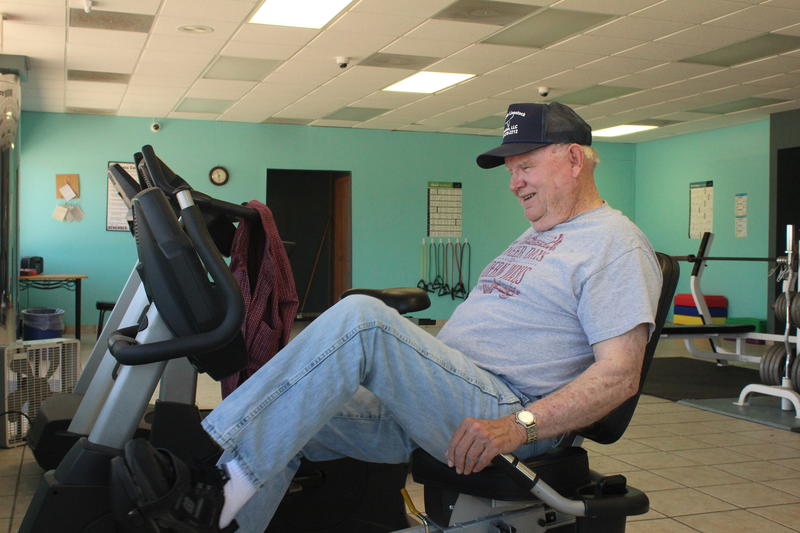
Elmer Drennan works out at 54 Fitness in Moran, Kansas.
By STEPHAN BISAHA Kansas News Service
It’s what you’d expect in a small gym. Treadmills. Squat rack. Elliptical machine.
But 54 Fitness, located in the 500-person town of Moran in Allen County, still holds remnants of the building’s previous lives. Tile flooring. Booth seating. A washroom designed for rinsing off grease, not sweat.
Before becoming the town’s fitness center, the gym was a steakhouse. And before that, a gas station.
“There was a lot of grease dirt that had to be lifted up out of the tile,” said Larry Ross, a retired conformance lab manager who helped with the conversion. “We literally scrubbed each one of these tiles a dozen times.”
Despite the open land and escape from congested cities and suburbs, Kansans living in remote parts of the state often exercise less than city folk. Sidewalks are rare. Driving is more common than walking. And there’s a distinct lack of fitness centers.
Small towns often lack the money for large recreational centers. Or have enough gym rats to tempt a private owner to open up shop.
At least one consequence: higher rates of obesity and other diseases linked to inactivity.
That’s left some communities experimenting with creative, and relatively cheap, ways to help people burn calories.
Farming is becoming increasingly mechanized, even robotized. That’s meant less physical strain on farmers, but also larger waistlines as the job becomes more sedentary.
La Harpe, Kansas, converted part of its city hall into an exercise room.
One fix suggested by the CDC includes building more workout centers.
“Even if you want to be physically active in rural areas,” said Geoffrey Whitfield, an epidemiologist with the CDC’s Division of Nutrition, Physical Activity and Obesity, “you might not have the ability to do so because the facilities just don’t exist.”
While exercise has been linked to reducing the risk for all those factors, getting a gym to move into — or stay open — in a rural town is challenging.
Small, urban and specialized fitness studios have grown in popularity — think hip-hop yoga and swimming pool spin classes. But small, rural gyms lack the membership numbers needed to pay the rent.
“Lots and lots of small gyms have gone out because they just couldn’t make money,” said Greg Ferris, the lobbyist for the Kansas Health and Fitness Association.
Yet economic development group Thrive Allen County said those living in the eastern Kansas county still want a place to work off the fat.
That led Thrive to help small towns in Allen County earn grants to fund creative ways to bring exercise to their communities. Both Elsemore and La Harpe took rooms in their schools-turned-city halls and transformed them into workout spaces.
Thrive made the investment to improve not just residents’ physical health, but also their social well-being.
“I look at it as preventative health,” said Thrive Allen County CEO Lisse Regehr. “The more you breakdown on social isolation, the more you help people as they age be more active and physically fit.”
The town of Moran converted a gas station into a public gym called 54 Fitness in reference to the highway it sits on.
Moran was looking to find its own spot for a fitness center in 2017. That’s when one of its council members thought about the failed gas station-turned-failed steakhouse. Located at the intersection of U.S. 54 and U.S. 59, it was being used as a storage space.
The city decided to convert the old filling station into what is now 54 Fitness.
It lacks personal trainers and locker rooms. Yet the former gas station comes with advantages. Big windows provide a front row view of a wind farm going up above the tree-line. The gym’s located at the (relatively) heavily trafficked intersection.
Moran isn’t the only place to recognize that gas stations tend to sit on prime real estate. Sneaker-maker Reebok hopes to follow Moran’s lead and turn more gas stations into gyms.
Those living and working in Moran have the option to drive 15 minutes to Iola for a workout. But the motivation to go to the gym can be hard enough without adding a 30-minute round trip.
School psychologist Foster LaVon said she wouldn’t bother spending a chunk of her morning on an elliptical machine if it wasn’t for the convenience of having a workout spot in Moran.
The Kansas Department of Health and Environment says gyms can be helpful, but it doesn’t provide funding for them.
Instead, it suggests towns invest in improving their man-made environment. Sidewalks that make a town more walkable can help the health of everyone, not just those willing to drag themselves to the gym or with the extra money to spend on a membership.
But improving that can prove expensive. A mile of sidewalk can be a six-figure cost. Making a town more dense for easier walking is a huge undertaking.
Meanwhile, a grant shy of $30,000 covered the equipment for Moran’s 54 Fitness. Volunteer and donations covered most of the rest.
Other rural towns with deeper pockets have decided that new gyms are worth the investment. Humboldt in Allen County recently built an 11,000-square-foot recreational center. Wichita County in western Kansas is looking to do the same.
Local boosters in Wichita and Allen County said gyms are also a way to attract and retain young people. Millennials value a good sweat, along with a nice place to do it, more than previous generations.
Even a small center like 54 Fitness holds appeal for young people. Hanna Hoffman recently moved out of Moran with her fiance. Both value fitness and in her argument to move back to Moran, having that exercise option is a clear selling point.
“We have a gym and there’s a restaurant and a gas station,” Hoffman said. “That’s really all we need.”
Stephan Bisaha reports on education for KMUW in Wichita and the Kansas News Service, a collaboration of KMUW, Kansas Public Radio, KCUR and High Plains Public Radio covering health, education and politics. Follow him on @SteveBisaha or email bisaha (at) kmuw (dot) org.
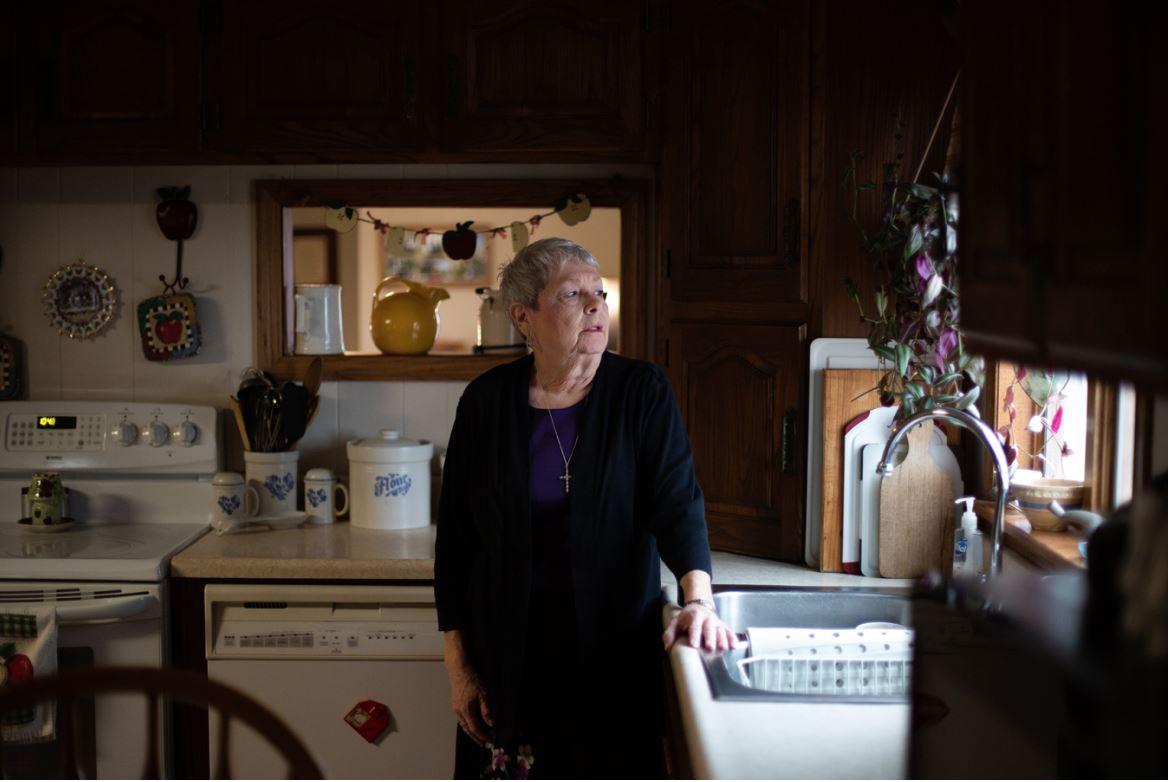
When the cancer clinic at Mercy Hospital Fort Scott closed in January 2019, cancer patients such as Karen Endicott-Coyan had to continue their treatment in different locations. Endicott-Coyan has a rare form of multiple myeloma and now drives an hour from her farm near Fort Scott to Chanute for weekly chemotherapy injections. Credit Christopher Smith for KHN
By SARAh JANE TRIBBLE Kaiser Health News
One Monday in February, 65-year-old Karen Endicott-Coyan gripped the wheel of her black 2014 Ford Taurus with both hands as she made the hour-long drive from her farm near Fort Scott to Chanute. With a rare form of multiple myeloma, she requires weekly chemotherapy injections to keep the cancer at bay.
She made the trip in pain, having skipped her morphine for the day to be able to drive safely. Since she sometimes “gets the pukes” after treatment, she had her neighbor and friend Shirley Palmer, 76, come along to drive her back.
Continuity of care is crucial for cancer patients in the midst of treatment, which often requires frequent repeated outpatient visits. So when Mercy Hospital Fort Scott, the rural hospital in Endicott-Coyan’s hometown, was slated to close its doors at the end of 2018, hospital officials had arranged for its cancer clinic — called the “Unit of Hope” — to remain open.
Then “I got the email on Jan. 15,” said Reta Baker, the hospital’s CEO. It informed her that Cancer Center of Kansas, the contractor that operated and staffed the unit, had decided to shut it down too, just two weeks later.
“There are too many changes in that town” to keep the cancer center open, Yoosaf “Abe” Abraham, chief operating officer of the Cancer Center of Kansas, later told KHN. He added that patients would be “OK” because they could get treated at the center’s offices in Chanute and Parsons.
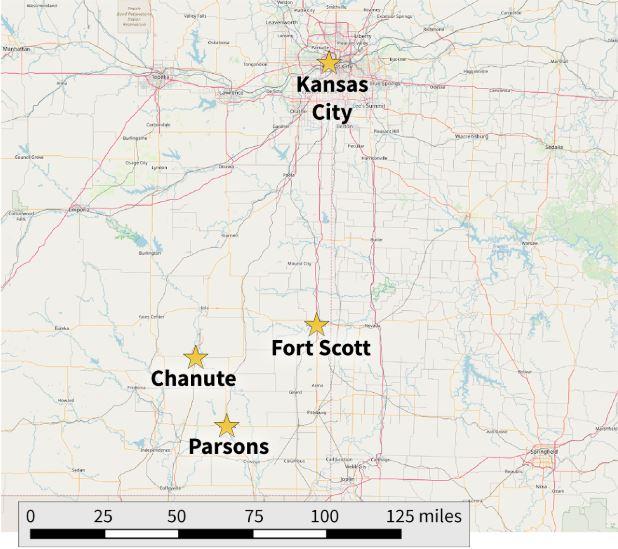
From Fort Scott, those facilities are 50 and 63 miles away, respectively.
For Endicott-Coyan and dozens of other cancer patients, the distance meant new challenges getting lifesaving treatment. “You have a flat tire, and there is nothing out here,” Endicott-Coyan said, waving her arm toward the open sky and the pastures dotted with black Angus and white-faced Hereford cattle on either side of the shoulderless, narrow highway she now must drive to get to her chemo appointment.
Nationwide, more than 100 rural hospitals have closed since 2010. In each case, a unique but familiar loss occurs. Residents, of course, lose health care services as wards are shut and doctors and nurses begin to move away.
But the ripple effect can be equally devastating. The economic vitality of a community takes a blow without the hospital’s high-paying jobs and it becomes more difficult for other industries to attract workers who want to live in a town with a hospital. Whatever remains is at risk of withering without the support of the stabilizing institution.
The 7,800 residents of Fort Scott are reeling from the loss of their 132-year-old community hospital that was closed at the end of December by Mercy, a St. Louis-based nonprofit health system. Founded on the frontier in the 19th century and rebuilt into a 69-bed modern facility in 2002, the hospital had outlived its use, with largely empty inpatient beds, the parent company said. For the next year, Kaiser Health News and NPR will track how its citizens fare after the closure in the hopes of answering pressing national questions: Do citizens in small communities like Fort Scott need a traditional hospital for their health needs? If not a hospital, what then?
When Wichita-based Cancer Center for Kansas closed its Fort Scott location, patients were told to travel to Parsons or Chanute to continue seeing their oncologist and receiving treatment. This map provides a look at what that meant in miles.
Credit Lydia Zuraw / KHN
Reta Baker, the hospital’s president who grew up on a farm south of Fort Scott, understood that the hospital’s closure was unavoidable. She scrambled to make sure basic health care needs would be met. Mercy agreed to keep the building open and lights on until 2021. And Baker recruited a federally qualified health center to take over four outpatient clinics, including one inside the hospital; former employees were bought out and continue to operate a rehabilitation center; and the nonprofit Ascension Via Christi Hospital in Pittsburg reopened the emergency department in February.
But cancer care in rural areas, which requires specialists and the purchase and storage of a range of oncology drugs, presents unique challenges.
Rural cancer patients typically spend 66% more time traveling each way to treatment than those who live in more urban areas, according to a recent national survey by ASCO, the American Society of Clinical Oncology. Dr. Monica Bertagnolli, a cattle rancher’s daughter who is now chair of ASCO’s board, called this a “tremendous burden.” Cancer care, she explained, is “not just one visit and you’re done.”
ASCO used federal data to find that while about 19% of Americans live in rural areas, only 7% of oncologists practice there.
People in rural America are more likely to die from cancer than those in the country’s metropolitan counties, according to a Centers for Disease Control and Prevention report in 2017. It found 180 cancer deaths per 100,000 people a year in rural counties, compared with 158 deaths per 100,000 in populous metropolitan counties.
The discrepancy is partly because habits like smoking are more common among rural residents, but the risk of dying goes beyond that, said Jane Henley, a CDC epidemiologist and lead author of the report. “We know geography can affect your risk factors, but we don’t expect it to affect mortality.”
From an office inside a former Mercy outpatient clinic, Fort Scott’s cancer support group, Care to Share, continues its efforts to meet some of the community’s needs — which in some ways have increased since the Unit of Hope closed. It provides Ensure nutritional supplements, gas vouchers and emotional support to cancer patients.
Lavetta Simmons, one of the support group’s founders, said she will have to raise more money to help people pay for gas so they can drive farther to treatments. Last year, in this impoverished corner of southeastern Kansas, Care to Share spent more than $17,000 providing gas money to area residents who had to travel to the Mercy hospital or farther away for care.
The group expects to spend more on gas this year, having spent nearly $6,000 during the first four months of 2019.
And the reserves of donated Ensure from Mercy are running out, so Simmons is reaching out to hospitals in nearby counties for help.
With Mercy Hospital Fort Scott closed, the likelihood of residents here dying from their cancer will grow, experts worry, because it’s that much harder to access specialists and treatments.
Krista Postai, who took over the Fort Scott hospital’s four primary care clinics, said it’s not unusual for her staff to “see someone walk in [with] end-stage cancer that they put off because they didn’t have money, they didn’t have insurance, or it’s just the way you are. … We wait too long here.”
‘If they can’t cure me, I’m done’
Art Terry, 71, a farmer and Vietnam veteran, was one of them. Doctors discovered Terry’s cancer after he broke a rib while baling hay. When they found a mass below his armpit, it was already late-stage breast cancer that had metastasized to his bones.
With his twice-weekly chemotherapy treatment available in the “Unit of Hope,” Terry spent hours there with his son and grandchildren telling stories and jokes as if they were in their own living room. The nurses began to feel like family, and Terry brought them fresh eggs from his farm.
“Dad couldn’t have better or more personalized care anywhere,” said his son, Dwight, bleary-eyed after a factory shift.
Art Terry, center, stands for a family photo at the Mercy Hospital Fort Scott cancer unit before its January closure. From left are Terry’s daughter-in-law, Sabrina; granddaughters Aubry and Shaylee; son Dwight; and grandson Blaiton. Credit Courtesy of Dwight Terry
Terry knew it was difficult to find trustworthy cancer care. The shortage of cancer specialists in southeastern Kansas meant that many, including Mercy Hospital Fort Scott’s patients, counted on traveling oncologists to visit their communities once or twice a week.
Wichita-based Cancer Center of Kansas has nearly two dozen locations statewide. It began leasing space in Fort Scott’s hospital basement in the mid-2000s, the center’s Abraham said. The hospital provided the staff while the Cancer Center of Kansas paid rent and sent roving oncologists to drop in and treat patients.
At its closing, the Unit of Hope served nearly 200 patients, with about 40% of them on chemotherapy treatment.
When Art Terry was diagnosed, his son tried to talk to him about seeking treatment at the bigger hospitals and academic centers in Joplin, Mo., or the Kansas City area. The elder Terry wasn’t interested. “He’s like, ‘Nope,’” Dwight Terry recalled. “I’m going right there to Fort Scott. If they can’t cure me, I’m done. I’m not driving.’”
In the end, as the elder Terry struggled to stay alive, Dwight Terry said he would have driven his father the hour to Chanute for treatment. Gas — already a mounting expense as they traveled the 20 miles from the farm near tiny Prescott, Kan., to Fort Scott — would be even more costly. And the journey would be taxing for his father, who traveled so little over the course of his life that he had visited Kansas City only twice in the past 25 years.
As it turned out, the family never had to make a choice. Art Terry’s cancer advanced to his brain and killed him days before the hospital’s cancer unit closed.
What happens next?
As Endicott-Coyan and her friend Palmer drove to Chanute for treatment, they passed the time chatting about how the hospital’s closure is changing Fort Scott. “People started putting their houses up for sale,” Palmer said.
Like many in Fort Scott, they had both spent their days at the Fort Scott hospital. Endicott-Coyan worked in administration for more than 23 years; Palmer volunteered with the auxiliary for six years.
The hospital grew with the community. But as the town’s fortunes fell, it’s perhaps no surprise that the hospital couldn’t survive. But the intertwined history of Mercy and Fort Scott is also why its loss hit so many residents so hard.
Fort Scott began in 1842 when the U.S. government built a military fort to help with the nation’s westward expansion. Historians say Fort Scott was a boomtown in the years just after the Civil War, with its recorded population rising to more than 10,000 as the town competed with Kansas City to become the largest railroad center west of the Mississippi. The hospital was an integral part of the community after Sisters of Mercy nuns opened a 10-bed hospital in 1886 with a mission to serve the needy and poor. Baker, Mercy Hospital Fort Scott’s president, said the cancer center was an extension of that mission.
The Unit of Hope began operating out of the newest hospital building’s basement, which was “pretty cramped,” Baker said. As cancer treatments improved, it grew so rapidly that Mercy executives moved it to a spacious first-floor location that had previously been the business offices.
“Our whole purpose when we designed it was for it to be a place where somebody who was coming to have something unpleasant done could actually feel pampered and be in a nice environment,” Baker said.
The center, with its muted natural grays and browns, had windows overlooking the front parking lot and forested land beyond. Every patient could look out the windows or watch their personal television terminal, and each treatment chair had plenty of space for family members to pull up chairs.
When Endicott-Coyan and Palmer arrived at the Cancer Center of Kansas clinic in Chanute in February, things looked starkly different. Patients entered a small room through a rusted back door. Three brown infusion chairs sat on either side of the entry door and two television monitors were mounted high on the walls. A nurse checked Endicott-Coyan’s blood pressure and ushered her back to a private room to get a shot in her stomach. She was ready to leave about 15 minutes later.
The center’s Abraham said the Chanute facility is “good for patients for the time being” and not a “Taj Mahal” like Mercy’s Fort Scott hospital building, which he said was too expensive to maintain. Cancer Center of Kansas plans to open a clinic at a hospital in Girard, which is about 30 miles from Fort Scott, he said.
Some oncology doctors would say driving is not necessary. Indeed, a few health care systems across the country, such as Sanford Health in South Dakota and Thomas Jefferson University Hospitals in Pennsylvania, are administering some chemotherapy in patients’ homes. Oncologist Adam Binder, who practices at Thomas Jefferson in Philadelphia, said “over 50% of chemotherapy would be safe to administer in the home setting if the right infrastructure existed.”
But the infrastructure — that is, the nurses who would travel to treat patients and a reimbursement model to pay for such care within our complex health care system — is not yet in place.
Back in the car, Palmer took the wheel and Endicott-Coyan began planning for future cancer treatments in the void left by Mercy Hospital Fort Scott’s closure. “I put a note on Facebook today and said, ‘OK, I have drivers for the rest of February; I need drivers for March!’”
This is the first installment in KHN’s year-long series, No Mercy, which follows how the closure of one beloved rural hospital disrupts a community’s health care, economy and equilibrium.
Stock / Clay County, Mo., photoLIBERTY, Mo. (AP) — Authorities suspect foul play in the death of a man who was assaulted and shot at less than two months ago at a suburban Kansas City home where a man’s dismembered remains were found.
The body of 56-year-old Floyd Wood’s body was discovered Monday night in the Kansas City suburb of Claycomo. Police haven’t said how he died.
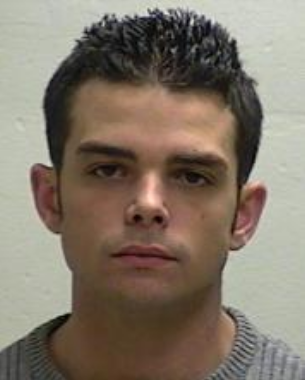
He was a key witness in the first-degree murder case against 30-year-old Colton Stock. Court documents in that case say Wood fled in May after Stock assaulted and shot at him. The gunfire led police to Stock’s house, where officers saw a fire.
After firefighters extinguished the flames, police found the remains of Matthew Calkins of Gardner, Kansas.
Stock is jailed on $1 million bond. He’s entered a not guilty plea.
Dr. Tisa Mason, FHSU presidentWhat are you doing for your summer vacation? I love to listen and learn about travel. Education is available all over the globe, and, at Fort Hays State, one of the creative ways we fulfill our mission to help transform minds and advance futures is by providing experiences in other countries.
This past year, I marveled at Student Body President Adam Schibi’s exploration of our world. He studied last summer in London at the London School of Economics – a great experience for an accounting major like Adam. Over the winter break he traveled to Italy with his younger sister to help her begin a semester study abroad. Then, in May, he traveled with the FHSU delegation to China. Discussing his experience in China, Adam said, “It was a great opportunity to meet faculty and students at our partner institutions, learn about their culture, and see what it is like to be a Tiger from the other side of the globe.”
What an opportunity for Adam! At his age, my only international experience was stepping over the border into Canada.
I love that our students have wonderful opportunities to travel abroad – beginning in their freshman year. Some of our learning communities, such as Everybody’s Business (a learning community for freshmen from any major who have an interest in business or entrepreneurship) created innovative opportunities for students to learn more about their majors through travel. Students in this learning community had the opportunity to travel to the Caribbean to serve as interns in start-up companies. Amazing!
Students have several options to help them enhance their “world readiness.” Faculty-led programs are short-term study tours over breaks. This year, leadership studies students traveled to Belize in January while students in applied business traveled to Costa Rica and Ecuador, and graduate students traveled to Italy.
During spring break, art students traveled to Germany, Prague, and Vienna. This summer, some teacher education students will travel to England and/or Costa Rica; geoscience students to Ireland; economic students to Berlin, Prague, Vienna, and Budapest; health and human performance students to Italy and Greece; modern language students to Germany; nursing students to the Dominican Republic; and biology students to the African country of Senegal.
In addition to short, faculty-led study trips, our students have the opportunity to study a semester or a year through exchange programs. The great thing about FHSU exchange programs is that our students pay FHSU tuition and fees (among the lowest in the nation) while attending a different university in the United States or abroad. These experiences can really enhance an education. I once heard about a biology student who did a year exchange in Florida to learn more about marine biology. What a great idea.
We also have travel opportunities through our international partners, including China, Germany, Paraguay, South Korea, Spain and the United Kingdom, and not just for students. Faculty also have the opportunity to travel. Through the faculty exchange program, our professors share their scholarly expertise, foster research relationships with their international colleagues and increase their cultural knowledge. For example, faculty traveling to China this summer presented their research on a wide variety of topics, including bat sensory ecology; teaching communication skills to children; adapting to western writing expectations; business aviation around the world; enterprise risk management in banking; precision agriculture; the historical relationship of international trade to world and regional peace; stress reduction for college students; ethics and social responsibility; managing burnout in the workplace; and governmental response to natural destruction.
Stacey Lang, FHSU study abroad coordinator, said, “One thing is for sure – study abroad can transform a student even in just a few weeks! The transferrable skills obtained and the personal development that a student undergoes while stepping out of their comfort zone is so rewarding to witness. It truly does impact them academically, personally and professionally.”
I really appreciate the fact that we offer strong support for students and faculty who choose to travel. That support includes scholarships and financial aid, information sessions, assistance with all of the paperwork that goes along with traveling, and, most importantly, helpful advice and enthusiastic encouragement from those who have traveled before them.
Traveling is indeed a deep, exciting learning opportunity. Aimee Johnson graduated this May with a degree in communication studies with an emphasis in public relations and advertising. She is spending her summer working for a public relations firm in Barcelona! Aimee said: “Traveling abroad can only teach me more about myself, and I am incredibly ready for that experience. I desire to explore other cultures and to learn about life outside the United States. I see traveling as so much more than a stamp on my passport. Everyone can gain something from being outside their comfort zone. I am ready for this experience.”
Our faculty and students are traveling, sharing, learning, growing and modeling what it means to be a world ready Tiger!
MANHATTAN — Kansas Secretary of Agriculture Mike Beam congratulated two Kansans recently appointed by U.S. Department of Agriculture Secretary Sonny Perdue to serve on two of six commodity specific Agricultural Technical Advisory Committees (ATACs). The ATACs offer technical advice and information about specific commodities and products.
Thad Geiger, Troy, was appointed to the Agricultural Technical Advisory Committee for Trade in Animals and Animal Products. Ron Suppes, Dighton, has been named to the Agricultural Technical Advisory Committee for Trade in Grains, Feed, Oilseeds, and Planting Seeds.
“These outstanding Kansans bring a wealth of production agriculture knowledge and international experience to these USDA committees. By providing insight and practical application into discussions to help advance opportunities to expand trade of agricultural goods, these Kansas leaders will be an asset,” said Beam. “Not only will they represent our state’s agricultural industry well through their service to these committees, their contributions will help drive the entire agriculture sector forward.”
In 2018, over $3.8 billion dollars of Kansas’ agricultural goods were shipped around the globe to 74 different countries.
Congress established the advisory committee system in 1974 to ensure a private-sector voice in establishing U.S. agricultural trade policy objectives to reflect U.S. commercial and economic interests. The USDA and the Office of the U.S. Trade Representative jointly manage the committees.
WICHITA — Wichita State University has announced the names of more than 3,000 students who were on the WSU dean’s honor roll for spring 2019.
To be included on the dean’s honor roll, a student must be enrolled full time (at least 12 credit hours) and earn at least a 3.5 grade point average on a 4.0 scale.
The following northwest Kansas students earned honors:
Bird City
Bergan W. Bock
Colby
Bailey Jurek
Cheyenne Miller
Goodland
Sarah Bieker
Amanda Coon
Hays
Maci Gerhard
Bridget Heimann
Akim Niyonzima
Michaela Spalsbury
Hill City
Taylor Gobin
Kayla M Keith
Hoxie
Billi Wilson
Kensington
Maira Banuelos Galicia
Oakley
Lauren Baalman
Oberlin
Kristy Ostmeyer
Osborne
Emma Carlin
Palco
Mindy Wiebke
Quinter
Brice Hackler
Rebekah Kitch
Russell
Caitlyn Hammack
Audra Henne
Tammy Miller
Joseph Oste
Christopher Pummell