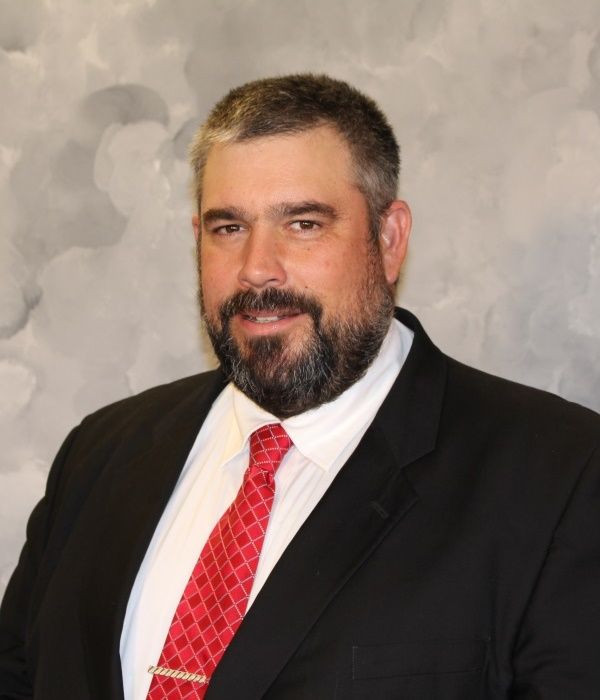
LEAWOOD (AP) — A doctor who ran three Kansas anti-aging clinics has surrendered his medical license.
The Kansas City Star reports that the Kansas Board of Healing Arts issued an emergency suspension of Michael Simmons’ license in March after evaluators said it wasn’t safe for him to practice medicine.
The reasons weren’t disclosed, although his Kansas license was temporarily suspended in 2002 because he had sexual relationships with patients and a co-worker. Simmons also ran into trouble in Missouri in 2013 for prescribing controlled substances without state registration.
Simmons sued before agreeing to voluntarily give up his license. The Simmons Center for Health and Wellness is located in the Kansas City suburb of Leawood. His website says he also has clinics in Frontenac and Galena.
Simmons’ attorney didn’t respond to a request for comment.
HILL CITY – The TMP-Marian Monarchs 17U American Legion team ran their win streak to four games in-a-row Tuesday with a double-header sweep of Hill City, their second in less than a week.
In game one the Monarchs scored in all but the first inning in an 11-4 win. Ethan Atherton had three RBI’s in the win. Kade Harris allowed just two runs in four innings for the win.
Atherton got the scoring started with an RBI double in the top of the second. Two batters later Nick Herrman drove in Atherton to give the Monarchs a 2-0 lead.
Hays added three more in the top of the third scoring a run on an error, a bases loaded walk by Atherton and a wild pitch on a strike out putting the Monarchs up 5-0.
After Hill City got two runs back in the bottom of the third the Monarchs blew the game open with five in the top of the fourth.
The Monarchs scored a run on an error, a bases loaded walk by Atherton and a passed ball before Noah Gibson plated two with an RBI double giving Hays a 10-2 lead.
Hays added one more in the fifth on a wild pitch and Hill City scored two in the bottom of the inning as the Monarchs earned the 11-4 win in five innings.
In game two the Monarchs scored three in the first and four in the second in an 8-3 win.
In the first inning Hays’ Jace Wentling got the scoring started with an RBI single in the top of the first.
A Hill City error allowed the second run of the inning to score and then Atherton followed that with an RBI single.
In the four-run second the Monarchs scored their first run on an error. Mark Rack drove a ball to center for an RBI double and then Jace Wentling tripled to center scoring Rack to put Hays up 6-1. In the next at bat Atherton singled home Wentling to put the Monarchs up 7-1.
The Monarchs added another run in the top of the fifth when Wentling scored on a wild pitch as the Monarchs went on to the 8-3 win in five innings.
Rack earned the win on the mound for the Monarchs. He allowed two runs on four hits in two and a third innings.
Atherton and Wentling each collected two hits and drove in two runs.
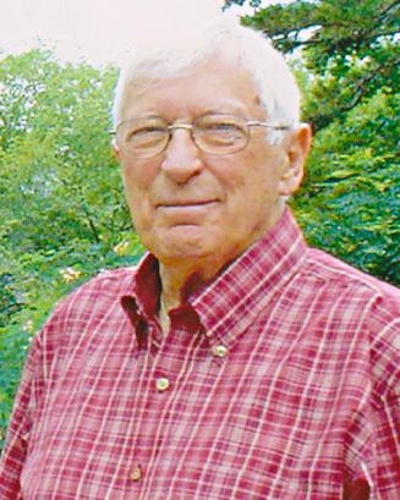
Michael Lee Jeffery, age 66, of Goodland passed away Monday, July 1, 2019.
Mike was born September 13, 1952 to John and Romona (Swartz) Salyers in Flint, Michigan.
Mike loved spending time with his family, he enjoyed old cars, model cars, nice clean new looking trucks, especially his dump truck.
Preceding him in death are his parents; sister, Brenda Young; and brother, Leavy.
He is survived by his daughter, Danyale (Travis) Yarger of Goodland; son, Kevin (Crystal, aka “Nurse Rachit”) Milke of Goodland; sister, Margo Swartz of Yankton, SD; sister, Kay (Cap) Benthin of Texarkana, TX; nieces, Kathy Ziegler and Theresa Stump; 9 grandchildren and many nieces and nephews.
Graveside service will be Friday, July 5, 2019 at 10:30 a.m. MT at the Goodland Cemetery, North Main Street in Goodland. Visitation will be Thursday, July 4, 2019 from 3 to 6 p.m. MT at Bateman Funeral Home. Memorials will be designated by the family later and may be left at the services or mailed to Bateman Funeral Home, P.O. Box 278, Goodland, KS 67735. Online condolences and information www.batemanfuneral.com
Irving J. Gotsche, 90, passed away July 2, 2019, at River Bend Assisted Living, Great Bend. He was born Aug. 23, 1928, at Racine, Wis., to Irving and Ethel (Davis) Gotsche. Irv married Norma Jeanne Horsley Nov. 27, 1954, at Salina.
Coming to Great Bend in 1965, Irv previously lived in Racine, Salina, Ellinwood and Wakeeney. Graduating from the University of Wisconsin at Platteville, Irv was employed as a petroleum engineer for Amoco from 1956-1958, Imperial Oil from 1958-1965, and NCRA from 1965 until he retired on Oct. 1, 1988, as drilling superintendent. He was a member of the First Christian Church, VFW Post 3111, KIOGA, API, AME and Golden Belt Community Concert. He served his community as Panther Booster Club past president, Chamber Ambassador, Lake Barton board member, Petroleum Club board member, United Way oilfield chairman, Barton County Historical Society board member, past commander of American Legion Argonne Post 180, CKMC volunteer, youth sports coach, Family Crisis Center past board president and Great Bend Public Library board chairman. He also enjoyed listening to the children of USD 428 read. Irv served in the U.S. Air Force as a B-29 pilot during the Korean War, earning the rank of 1st Lt.
Survivors include, wife, Jeanne Gotsche of the home; three sons, Kurt Gotsche of Wichita, Steve Gotsche and wife Linda of Manhattan, and Eric Gotsche and wife Carol of Great Bend; one daughter, Pam Gabel of Kansas City, Mo.; five grandchildren, Ali Gabel, Meghan Gabel, Brad Gabel, Adam Gotsche and wife Kelsey, and Ryan Gotsche; and one great granddaughter, Collins Gotsche. He was preceded in death by his parents; sister, Karen Gill; and a son-in-law, Chip Gabel.
Visitation will be held from 12:00 p.m. to 9:00 p.m., Friday, July 5, 2019, at Bryant Funeral Home, with family receiving friends from 6:00 p.m. to 8:00 p.m. Funeral Service will be held at 10:00 a.m., Saturday, July 6, 2019 at First Christian Church with Pastor Sue Bishop presiding. Military Honors will be conducted by the United States Air Force Honor Guard. A private family inurnment will be in the Great Bend Cemetery North at a later date. Memorials are suggested to the Barton County Historical Society or Great Bend Public Library, in care of Bryant Funeral Home.
John Thyfault, Ph.D., professor in the Department of Molecular and Integrative Physiology at the KU School of Medicine. Photo by Selena Jabara, KU Medical Center
By KRISTI BIRCH KU News Service
A researcher in the Department of Molecular and Integrative Physiology at the University of Kansas School of Medicine has launched a new study to investigate some surprising ways that statins, which are some of the most prescribed medications in the world, can adversely impact a person’s health over time.
In the United States, where cardiovascular disease is the leading cause of death, slightly more than half of American adults, more than 40 million people, take a statin to lower their cholesterol and ward off heart attack and stroke, according to the Centers for Disease Control and Prevention.
John Thyfault, Ph.D., who is also a research scientist at the Kansas City VA Medical Center, is collaborating with Darrell Neufer, Ph.D., director of the East Carolina Diabetes and Obesity Institute and professor in the Department of Physiology at Brody School of Medicine at East Carolina University, to conduct a clinical trial to determine how atorvastatin, the most prescribed statin in the United States, can impede skeletal muscle function and, ironically, lessen the benefits of the simplest, most effective way to improve cardiovascular health: aerobic exercise. The study is supported by a $3 million grant from the National Institutes of Health.
Statins were designed to fight cardiovascular disease by blocking the liver’s production of low-density lipoprotein, also known as “bad” cholesterol, that at high levels forms blockages that stop the flow of blood to the heart and brain. In 2013, the American Heart Association and the American College of Cardiology jointly recommended that statins be prescribed not only when a patient has survived a cardiovascular event or has high levels of bad cholesterol, but also for prevention of cardiovascular disease when a patient has other metabolic risk factors, such as obesity and high blood pressure. This change in guidelines encouraged providers to prescribe statins for primary prevention (before disease even occurs) to patients with even a moderate risk of a heart attack.
“That’s a big question: should statins be used for primary prevention or not?” said Thyfault.
Thyfault and Neufer both stress that the purpose of the study is not to discount the life-saving benefit that statins offer people with, or at high risk for, cardiovascular disease. “Millions of people take and benefit from them,” said Thyfault. “Statins are important. “But we don’t know enough yet about the risk-benefit ratio for taking them. That’s why we’re doing this study.”
Dr. Thyfault and a cardiologist at the University of Kansas Health System discuss this research and how it could impact patient care
A Catch-22
Before joining forces, Thyfault and Neufer each conducted research separately on the effect of statins on a critical biological component of metabolic health: skeletal muscle mitochondria. Mitochondria are tiny energy factories in the cell that consume oxygen and use it to convert food into energy. The more high-functioning mitochondria that skeletal muscles have, the more they can consume oxygen. Muscle mitochondria plays a key role in aerobic fitness, which is the capacity for the body to use oxygen during exercise and a critical indicator of a person’s cardiovascular health.
Research in animals had shown that some statins reduce the number of mitochondria in muscles and their ability to use oxygen. Neufer’s research team in North Carolina wanted to see if the same thing were true in humans. They put study participants on a high dose of a daily statin, and took skeletal muscle biopsies before and throughout the eight-week study period. The result? By the end of the study, the capacity of the mitochondria to consume oxygen was cut in half. “We’d never seen anything like that in a human,” said Neufer. “It was kind of shocking.”
Meanwhile, Thyfault had led a 2013 study looking at how taking statins impact the benefits of doing regular aerobic exercise. Aerobic exercise improves aerobic fitness, the body’s ability to consume and utilize oxygen, and skeletal muscle is a key component. Aerobic fitness has been shown to be a significant predictor of a person’s cardiovascular health and their risk for early death. Regular aerobic exercise should lead to higher aerobic fitness and better skeletal muscle mitochondrial function, important exercise adaptations that improve health.
In this study, a group of overweight, sedentary participants were put on a 12-week exercise program, either jogging or walking on a treadmill for 5 days each week. Meanwhile, half the participants took a daily statin, while the other half did not. At the end of 12 weeks, the statin-free participants increased their aerobic fitness and their skeletal muscle mitochondrial content by at least 10 percent. Meanwhile, those on the statin had no increase in their aerobic fitness — and the number of mitochondria in their muscles actually declined.
Thyfault and Neufer knew the drop in mitochondrial function demonstrated in both studies was meaningful as well as concerning. For one thing, it could explain statins’ already-known potential side effects: mild muscle pain and weakness and an increased risk for type 2 diabetes.
But it also presented an interesting catch-22: People on statins are routinely advised to get regular aerobic exercise to further minimize their chance of having a cardiovascular problem. At what point does the benefit of a statin cease to outweigh its potential to curtail the cardiovascular gains made by exercising?
Cost-benefit analysis
Instead of looking at the impact of just one dosage of statins, Thyfault and Neufer’s ongoing new study will measure the effects of both low (20 milligrams) and high (80 milligrams) dosages of atorvastatin at multiple points in time over the course of a year. In doctor’s offices all across the country, patients are routinely prescribed the high dose because previous large trials had shown that dose lowered mortality in patients who had already had a heart attack or stroke. “But the truth is, 20 milligrams also lowers cholesterol significantly, and many people might not need that 80 milligram dose,” said Thyfault.
At different timepoints during the study year, skeletal muscle biopsies will be taken and put into a machine that measures the capacity of mitochondria to “respire,” or use oxygen. Mitochondrial content in muscle will also be measured. Participants will also undergo blood tests, as well as assessments of skeletal muscle function, strength, and performance as well as aerobic capacity. These measures will show whether the statin causes a progressive decline in muscle mitochondrial function and aerobic fitness, and how the decline is determined by the dose of the statin and how long it was taken.
In the second part of the study, the researchers will also examine how low or high statin therapy affects the ability of the participants to improve aerobic fitness following a 12-week exercise intervention. The participants will exercise — either on a bike, treadmill or elliptical machine — five times per week. At the beginning and end of the trial, the researchers will measure aerobic fitness and other indicators of skeletal muscle mitochondrial function. Participants will breathe into a machine that measures how much oxygen they consume while they are exercising. The more oxygen they take in, the better their aerobic capacity.
By comparing these measurements as well as other factors such as heart rate after exercise, the researchers can determine if the statin lessens the aerobic fitness benefits of exercise, and if so, how that impairment is determined by the duration and dose of the statin.
They expect the high dose of the statin, and longer durations of taking it, to lead to decreased mitochondrial function. Their hope is that the 20 milligram dose will not have a negative effect on skeletal muscle mitochondrial function or interfere with a person’s ability improve their aerobic fitness. Ultimately Thyfault and Neufer want their research to help both physicians and patients understand the cost-benefit ratio of prescribing and taking a statin.
“If we’re right, that means some patients could potentially take the low dose of a statin and exercise, and get all the benefits of both without the negative effects of the statin,” said Thyfault. “That seems like a better way to go.”
And as Neufer points out, the study has other implications as well. It could, for example, indicate how different doses of a statin affect the natural muscle loss that occurs with aging. People lose muscle mass gradually after age 30, and reason for that is believed to be that muscles lose mitochondrial function over time. “One of our concerns is that statins could accelerate that process,” he said. “This study is a starting point to understand that.”
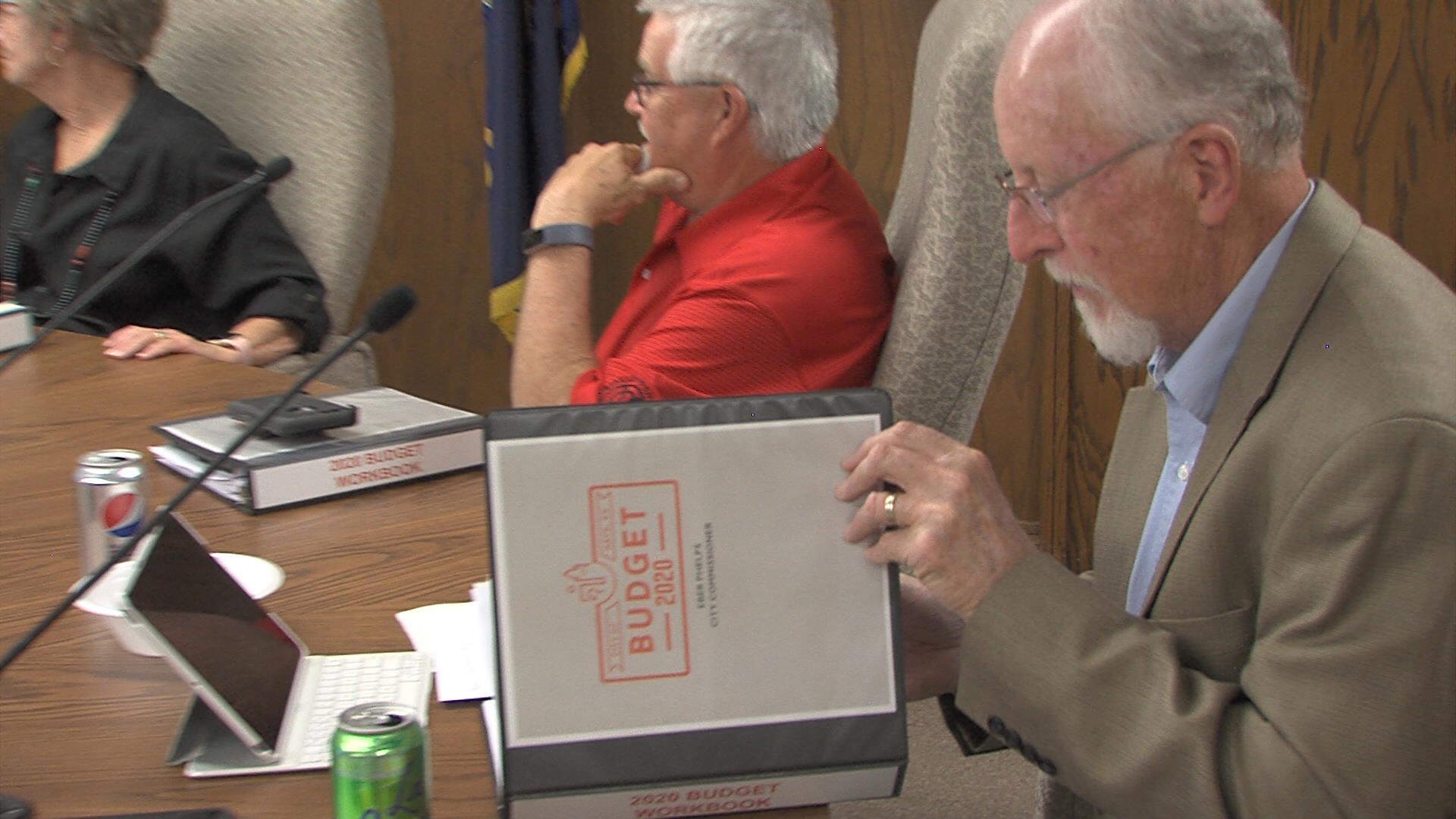
Commissioner Eber Phelps looks at the 2020 draft budget for the cit of Hays Tuesday night.
By BECKY KISER Hays Post
“Relatively routine without a lot of shiny things” is how Hays City Manager Toby Dougherty described the draft 2020 budget to city commissioners Tuesday night.
Kicking off a 40 minute review with the commission, Dougherty noted “the budget is balanced, the mill levy is maintained at 25, and we are not adding any employees this year.”
This will be the 10th year the number of full-time Hays city employees has remained at 181.
“We have expanded the scope of what we do and our reach, but we’ve kept the employees the same,” said Dougherty.
The 2020 budget contains a programmed step and cost of living increase for all city employees.
Total assessed valuation for the city of Hays is up 1.6%.
Sales tax revenues, which make up most of the city’s general fund, are projected to be up 3% this year. A 1% increase is budgeted for 2020.
The proposed 2020 budget is $41,916,819 compared to the 2019 budget of $39,504,844.
The city commission met Tuesday instead of Thursday which is the July 4 holiday.
Further discussion of the 2020 budget will continue at the July 18 work session. The July 11 meeting has been canceled.
You found it! Click on the Golden Egg for a chance to win FREE Wild West Festival VIP tickets!
Marion Schmidt with one of his miniature horses during a tour at Blue Sky Ranch. Photo courtesy of Stanley Schmidt
By CRISTINA JANNEY Hays Post
After almost three decades, Marion and Donna Schmidt’s Blue Sky Ranch will be sold at auction Saturday.
The Schmidts’ miniature horse farm was host to thousands of visitors from the Hays area and even internationally. Marion Schmidt, a former teacher and Thomas More Prep-Marian coach, in all his endeavors on the farm tried to emphasis the importance of the bond between animals and humans, two of his children said in recent interviews with Hays Post.
The family collectively decided to sell the ranch after Marion died in August. Although the ranch will be in new hands, the family said Marion’s and Donna’s legacy will carry on in the horses they bred and the joy they brought to so many people in the tours they gave at Blue Sky.
Marion Schmidt as a child with members of his family on the family’s farm north of Hays. Photo courtesy of the Schmidt family
Garret Schmidt, Marion and Donna’s son, said his father’s love of horses was sparked at an early age. Marion Schmidt grew up on a farm 5 miles north of Hays where his family also had horses. He said his father also enjoyed teaching and coaching and interacting with young people.
“He kind of felt like his calling was the combination of the animals and the youth,” Garret said. “So what he decided to do was raise and breed championship miniature horses and put on what he called, ‘tours.’ ”
Marion Schmidt giving a cart ride drawn by a miniature horse at Blue Sky. Photo courtesy of Stanley Schmidt
Busloads of youngsters visited the ranch, and Marion gave an hour or two presentation about the horses and what it is like to take care of an animal. He hoped to educate children who grew up in the city and did not have contact with animals.
“What he found was that children who were maybe hyperactive — the energy kids — when they got out there and they got out there around the horses and were grooming the horses and petting the horse and in their presence, many times they would calm down,” Garret said. “They would focus on the horse, and it would relax them. A well-trained horse is a very relaxed animal.”
The Schmidts found the elderly also benefited from contact with the horses, and Marion also took horses into elderly residential facilities in Hays.
Marion and Donna from the time the horses were born spent hours with the horses getting them acquainted with human contact.
A Blue Sky visitor with one of the horses. Photo courtesy of Stanley Schmidt
“You have to gain that horse’s trust, and that is what he did from day one after these foals were born,” Garret said. “He would hold them, touch them, brush them, get them to understand that he could be trusted. So when the children came out and the horses were very calm, it would have a calming effect on them.”
Garret said this was one of the reasons the family decided to re-home the horses and sell the ranch. Although the family had help to feed and water the horses after Marion died, they did not have the ability to give the horses the one-on-one human contact they were used to.
Garret said he thought the best tours his dad had was his first tour.
Dan Johnson, one of Marion’s and Donna’s neighbors, was an expert on local history. He joined Marion on the tour and talked about Custer and Historic Fort Hays. Custer was known to take his men on excursions north of the fort, and it was believed based on historical accounts, Custer camped at what is now Blue Sky.
His children say Marion Schmidt loved introducing his horses to children. He made special time during tours at Blue Sky for children to pet the horses. Photo courtesy of Stanley Schmidt
“It was a beautiful day and a good turn out, and the people just really enjoyed the horses,” Garret said. “That is probably one of my fondest memories.”
Although Marion was the one who liked to speak and give the tours, Garret said his mother was an integral part of the ranch. She kept up the horses’ registration paperwork and dedicated many long hours to grooming the horses.
Pam Schmidt, Marion’s and Donna’s daughter, said Blue Sky was always a part of the larger family. Garret, a vet, handled the medical needs of the horses. Pam and her other two siblings helped with events, and all of the grandkids spent showed the miniatures at some point.
At its height, Blue Sky had about two dozen horses. To be classified as a miniature horse, the animal has to be 34 inches or less measured from the withers. The Schmidts’ horses were Class A, which is the smallest class of miniature horses. Garret said his dad dreamed of breeding a record small horse. Despite some very small foals, he never quite reached that record.
All of the horses were double registered with the two major miniature horses associations in the United States. In more recent years, the Schmidts had about eight to 10 horses in their stable.
Donna Schmidt, Marion’s wife, was also very involved with the horse and spent much time grooming the miniatures. Photo courtesy of Stanley Schmidt
“They were all kind of members of the family,” Pam said of the horses. “They were all very, very gentle. … In his talks and tours, Dad tried to help young people and adults have empathy for animals and understand how to care for animals and see what richness animals can bring into our lives by caring for an animal and training an animal.
“It was something that was very important to him,” she said. “We really did call him the ‘Horse Whisperer,’ because he really did have a bond with the animals and he really understood them.”
The Schmidts showed the horses in several categories, including halter, pleasure driving, and obstacle course and had several horses that achieved national champion status. Her father was able to train some of the horses so they responded to voice commands, Pam said.
She said she remembered being very touched during one particular tour.
Marion Schmidt in the ring with one of his miniature horses. Photo courtesy of Schmidt family
“One of the young horses who was still getting trained did everything perfectly in front of a tour. When my dad called him in, the horse came in and instead of reaching for grain or a reward, the horse put his head on my dad’s lap, just nuzzled up to him,” Pam said.
“It showed how much of a bond he had with them, how much trust all of the animals had in him. They knew they were safe. They knew they were cared for.”
Several of the horses have been re-homed to Allen and Brett Schmidt. Marion was Allen’s uncle, and Brett is Allen’s son. Allen and Brett are partners in Resurrection Vineyard, and they hope to include the horses and cart rides in wine tastings at the vineyard. Resurrection is located on the original Schmidt farm, where Marion grew up.
Brett also runs the intergenerational preschool at Via Christi and hopes to bring the children to the vineyard for visits with the horses. Brett and Allen are trying to get the horses settled in to their new home, but they also hope to breed the miniatures and continue the bloodline.
Allen Schmidt’s grandchildren: Travis, 6, and Tucker Schmidt, 4, and Lexi, 8, Makaely, 6 and Layla, 4, Clay with two of the miniature horses. Horses Cocoa Belle and Snow Princess will now make their home at Resurrection Vineyard. Photo by Cristina Janney
Several other horses were sold to area residents. The remaining two horses went to the ROARR program in Calgary, Canada. This program is similar to the Schmidts’ in that youth from metro areas as well as seniors are able to come to the ranch and spend therapeutic time with horses.
“We were very happy to place the final two at the facility, because that is exactly what dad would have wanted,” Garret said.
Garret said he hopes whoever buys the ranch will continue its legacy of promoting animal and human companionship.
Travis Schmidt, Allen Schmidt’s grandson, brushes Cocoa Belle at Resurrection Vineyard. Photo by Cristina Janney
“It doesn’t have to be somebody who wants to carry on the program, just somebody who enjoys the property and uses it for a purpose that promotes animal/human bond,” Garret said.
“I think that is one of the strongest things that dad wanted to promote — about how integral animals are in our lives. With more people being in the city and less in the country, fewer people are having the opportunity to be exposed to that bond. Anything along that would be wonderful. We don’t expect anyone to do it as well as dad. If they can enjoy the property as much as he did, then that’s enough.”
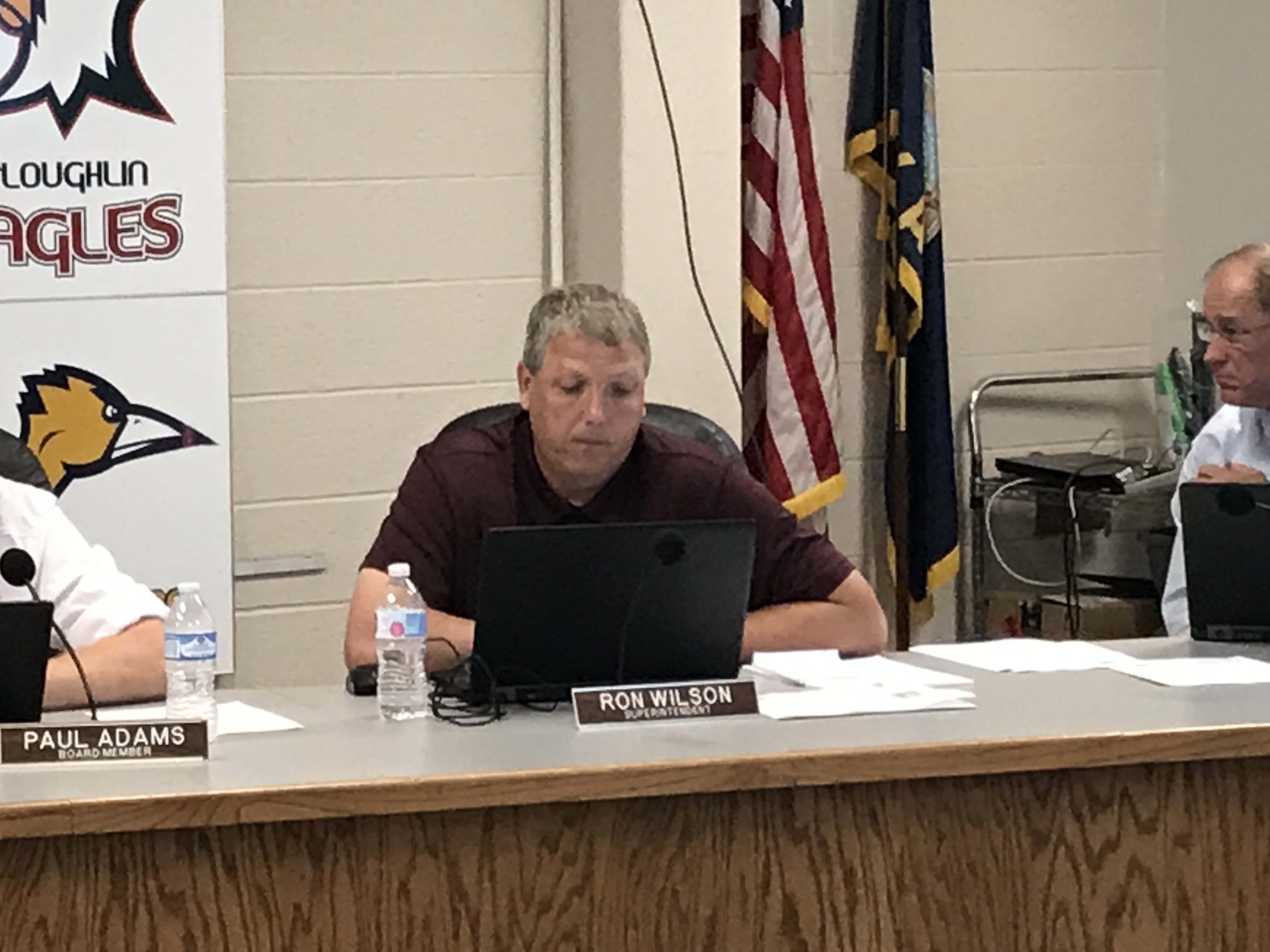
New USD 489 Superintendent Ron Wilson at the school board meeting Monday night.
By CRISTINA JANNEY Hays Post
New Hays USD 489 Superintendent Ron Wilson’s first day in his new job was Monday, and he told the school board Monday night he will seek to be visible in the district and build relationships.
Wilson was selected as the new superintendent in February to replace John Thissen, who resigned citing personal reasons. Wilson comes to Hays after serving as the superintendent at Herrington.
“I think what I will be doing this month and going past this month is doing a lot of listening, a lot of learning and then I will be able to do some leading,” Wilson said.
He said he will be sending invitations to meet with each board member one-on-one.
Wilson said he had four things he will strive to do.
“The first one is that I am going to be visible. I am going to be around the district. I am going to ask at times to visit with you, ” he said referring to the board. “I also want to build relationships with all our stakeholders in our district.
“I am also interested in maintaining the culture and building a positive culture in this district. I think the last thing that is required, but is probably the most important, is that I have to manage people and manage this district.”
He said he hoped to add to the great work the board is doing with his work on the ground.
Board reorganization
Mike Walker, left, was elected Hays USD 489 board president and Lance Bickle, right, was elected board vice president at the school board meeting Monday night.
The board also conducted its annual reorganization. Mike Walker was elected board president. Lance Bickle was elected board vice president, and Jess Reling was appointed board clerk. Reling is taking over for Sarah Wasinger, who is leaving the district to become the new president/CEO of the Hays Area Chamber of Commerce.
In other business, the board:
• Approved student handbook changes.
• Approved a new contract will Bill Jeter to serve as the board attorney.
• Approved DFAC board policy updates. These are necessary for Early Childhood Connections to apply for grants.
• Discussed a contract with USD 407 Russell for gifted services. Under the agreement, USD 489 would receive a portion of the Russell students’ state funding to provide the services. The addition of the new students would not require the special education co-op to add any more staff, but would bring in more revenue for the co-op, co-op director Chris Hipp told the school board.
Photo courtesy of the U.S. Army Corps of Engineers
OMAHA, Neb. (AP) — The amount of water flowing into the lower Missouri River will remain high throughout the summer and fall, and that water will likely continue to exacerbate flooding downstream.
The U.S. Army Corps of Engineers says it plans to keep releases from Gavins Point Dam on the Nebraska-South Dakota border near current levels — which are more than double the average amount.
The high releases will likely continue worsening flooding downstream — in Iowa, Nebraska, Missouri and Kansas — where many levees were damaged during severe March flooding.
Officials say the releases of 70,000 cubic feet per second of water are needed because the upstream reservoirs remain quite full. The amount of water entering the dams in June was 159 percent of normal, and it has been a wet year.
KANSAS CITY, Mo. (AP) – Jake Bauers matched a career high with four hits while driving in three runs, the Cleveland bullpen bailed Trevor Bauer out of a late jam and the Indians held on to beat the Kansas City Royals 9-5 on Tuesday night.
Pitching a day after the death of his former teammate and friend Tyler Skaggs, Bauer (7-6) left nursing a 7-4 lead with the bases loaded and nobody out in the seventh. Oliver Perez managed an out before surrendering a sacrifice fly, and Adam Cimber used his sinker-style motion to induce the final two outs and preserve the Indians’ lead.
The Indians scored twice more before All-Star closer Brad Hand wrapped up the ninth inning.
Five others also drove in a run for the Indians, who have picked up in July right where they left off in June. They went 17-9 last month to match the Yankees for the best mark in the American League.
Most of their damage came against Jakob Junis (4-8), who matched a season high by allowing six earned runs over 4 2/3 innings. The right-hander is 0-3 with a 5.91 ERA over his last six starts.
He didn’t get a whole lot of help from his defense, either.
The Royals’ circus was summed up when Carlos Santana led off the fifth with a hard-hit ball to first base. It popped out of the glove of Cheslor Cuthbert and was fielded by second baseman Nicky Lopez, who then had his throw bounce out of the glove of Junis covering first.
Kansas City also committed an error during the Indians’ five-run third inning.
It began when Tyler Naquin and Francisco Lindor led off with singles, and continued when Santana walked to extend his league-leading on-base streak to 25 games. Jason Kipnis walked in a run, Jose Ramirez plated another with a fielder’s choice grounder, and Bauers added two more runs with a double.
Roberto Perez kept the inning going when he reached on an error by third baseman Hunter Dozier.
The only bright spots for the Royals were Jorge Soler and Adalberto Mondesi. Soler’s towering solo home run in the second traveled an estimated 451 feet, while Mondesi trumpeted his return from the injured list with a two-run homer in the fifth.
Dozier tried to add an inside-the-park homer in the sixth, running through the stop sign at third when the throw from the outfield went awry. Dozier was easily thrown out at the plate.
Soler promptly followed with a single that would have scored him anyway.
“TS45”
Bauer had Skaggs’ initials and No. 45 written on his cap and also scratched “TS45” into the dirt on the back of the mound before throwing his first pitch. He and Skaggs played together in the Arizona Diamondbacks organization. The 27-year-old Los Angeles Angels pitcher was found dead in his hotel room Monday.
ROYALS MOVES
The Royals recalled Mondesi (right groin strain) from a minor league rehab stint and RHP Jake Newberry from Triple-A Omaha. They also optioned RHP Scott Barlow and INF Humberto Arteaga to the same club. Mondesi had been sidelined since June 19.
INDIANS INJURIES
RHP Danny Salazar (right shoulder) will make another rehab start in Arizona after experiencing no problems in 1 2/3 innings Sunday. “The reason is they want to keep him as much as they can consistent,” Indians manager Terry Francona said. … RHP Bradly Zimmer (right shoulder) is throwing from 105 feet and RHP Corey Kluber (fractured right ulna) is throwing from 90 feet, Francona said.
UP NEXT
Indians RHP Mike Clevinger (1-2, 5.89 ERA) makes his second start since coming off the IL when he faces LHP Danny Duffy (3-4, 4.43) and the Royals on Wednesday night. Clevinger allowed seven runs over 1 2/3 innings against Baltimore last Friday.
By GLENN BRUNKOW Pottawatomie County farmer and rancher
I am here, in the house, writing this column because we had another round of rain, and I cannot be out mowing hay. I said last summer I was not going to complain about rain, but here we are a year later, and it is hard not to. It appears the whole universe is against those of us in agriculture, and we can’t catch a break.
Between weather, trade wars and record-low farm income, it is easy to get down. We all get down at times, I know I did this winter. We had wave after wave of bad weather; it never let us catch a breath or fully recover from the havoc it wreaked on our livestock. I remember one night coming in and telling Jennifer, my wife, I could not take it anymore.
She listened to me and consoled and counseled me the best way she knew how. I was lucky, I had a support team around me who helped me with chores and things got better. That is not always the case. Every day I read stories about the mental health crisis in agriculture and the rising rates of suicide among our friends and neighbors. I understand, and I am worried.
Several times I have been asked what Kansas Farm Bureau can do about this crisis, and I must admit I don’t have any easy answers. We have talked about it. Kansas State Extension and Research has a wonderful program to connect farmers and ranchers with the help they need. Resources and mental health professionals are often just a call away. However, these resources are seldom used.
I get it — it’s tough to admit we need help. I don’t see my medical doctor as often as I should, and medical problems do not have the stigma mental health issues do. That is a downfall of our society, and one we had better get over in a hurry. We have also been raised with the idea that emotions should not be shown, things will get better, just suck it up and go on. Nothing could be farther from the truth.
I don’t know what the answer is. I know we need more resources funneled into mental health. I know it is going to be a bigger and bigger problem if this economy and weather don’t straighten out. While I may not have all the answers, I do know one thing we can all do.
Take care of each other. Watch your neighbors and friends, offer support and, most importantly, if you think someone is struggling talk about it. Let their family know, talk to them, don’t ever let anyone think they are going through this by themselves and don’t be afraid to intervene. Take the time to check on friends and neighbors you haven’t seen for a while. The best thing about farmers and ranchers is the community, and communities care for everyone. Together we will get through this.
“Insight” is a weekly column published by Kansas Farm Bureau, the state’s largest farm organization whose mission is to strengthen agriculture and the lives of Kansans through advocacy, education and service.