We have a brand new updated website! Click here to check it out!

Kansas Academy of Mathematics and Science to hold fall 2019 information sessions

FHSU University Relations

High-achieving high school students who have high ambitions, and their families, are invited to meet with staff from Fort Hays State University’s Kansas Academy of Mathematics and Science at information sessions around the state in September, October and November.

KAMS, the state’s premier early-entry-to-college program, will host 12 free information sessions across the state.

The academy offers high school juniors and seniors an opportunity to live and learn at Fort Hays State and get a head start on their college educations while completing the last two years for their high school diplomas.

Students and guests can learn about KAMS and visit with representatives from the academy at these sessions.

All information sessions are free and open to the public, but attendees must register in advance. The registration website, https://www.fhsu.edu/kams/Info-session-registration/, will also help people find find sessions in their areas.

For more information, contact Abby Anderson, coordinator for marketing and recruitment, at 785-628-4719, [email protected], or visit www.fhsu.edu/kams for more information.

The information sessions are listed chronologically.

Tuesday, September 24 – 6 p.m.
Great Bend Public Library, Lower Level Meeting Room
1409 Williams St.
Great Bend

Thursday, September 26 – 6 p.m. 
Fort Hays State University Memorial Union, Trails Room 
600 Park St. 
Hays 

Monday, September 30 – 6 p.m.
Lawrence Public Library, Meeting Room A
707 Vermont St.
Lawrence

Thursday, October 3 – 6 p.m.
Salina Public Library, Prescott Room
301 W. Elm St.
Salina

Monday, October 7 – 6 p.m.
Shawnee County Public Library, Marvin Auditorium 101B
1515 SW 10th Ave.
Topeka

Thursday, October 10 – 6 p.m.
Antioch Library, Large Meeting Room
8700 Shawnee Mission Parkway
Merriam

Thursday, October 17 – 6 p.m.
Manhattan Public Library, Auditorium
629 Poyntz Ave.
Manhattan

Monday, October 28 – 6 p.m.
Advanced Learning Library, Conference Room A
711 W. Second St. North
Wichita

Thursday, November 7 – 6 p.m.
Dodge City Public Library, Lower Level Meeting Room
1001 N. Second Ave.
Dodge City

Tuesday, November 12 – 6 p.m.
FHSU Higher Education Center
311 N. Campus Drive, No. 102
Garden City

Wednesday, November 13 – 6 p.m.
Emporia Public Library, Large Meeting Room
110 E. Sixth Ave.
Emporia

Monday, November 18 – 6 p.m.
Colby Public Library, Meeting Room
375 W. Fourth St.
Colby

About KAMS:
KAMS is an early college program that focuses on advanced mathematics and science coursework. While studying at KAMS, students live on the FHSU campus in a select residence hall with other Academy students from around the world. Over the course of two years, students complete over 60 hours of college credit and complete their high school diploma. These classes are taken alongside traditional college undergraduates and are taught by college professors while simultaneously contributing to their high school graduation requirements. KAMS also provides hands-on research, leadership and civic engagement opportunities.
NCK TECH auto instructor receives ETL certification

NCK Tech

Richard Cox

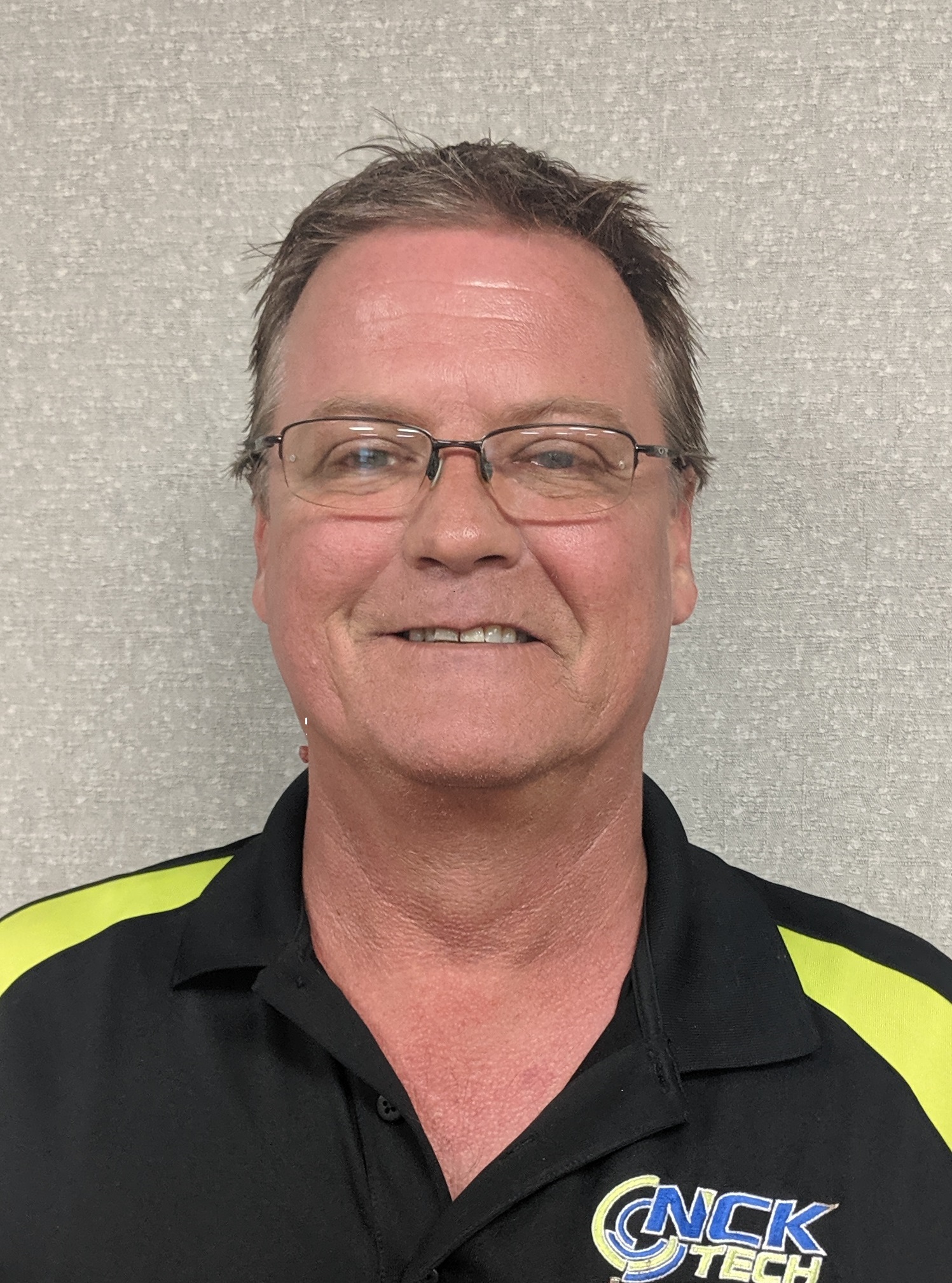
Richard Cox, Automotive Instructor for NCK Tech-Hays recently completed the requirements to become a certified ETL (Evaluation Team Leader). The evaluation team leader is in charge of a team that evaluates automotive programs and recommends them for accreditation. Final training was held at the ASE (Automotive Service Excellence) Education Foundation in Frisco, Texas, along with extensive online classes.

“I am excited to give back to the industry that makes us (educators) do what we do, “ Cox said. “And that is to educate our students at the highest level of the trade.”

NCK Tech has a two-year automotive technician program at both campus locations — Beloit and Hays. For information and to learn more about NCK Tech, visit  www.ncktc.edu.

Tyson plant fire sends ripples of uncertainty through cattle industry

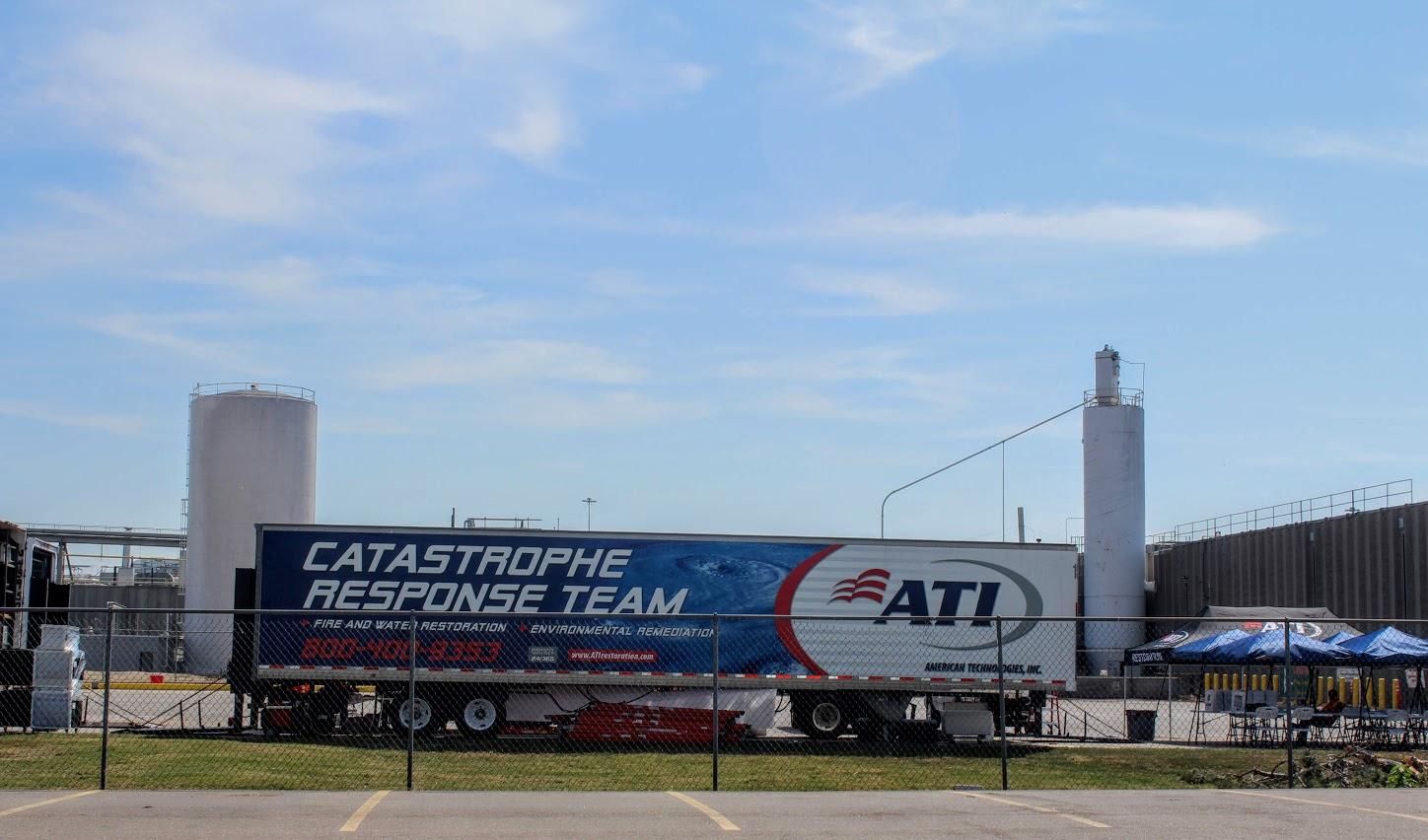
GARDEN CITY — Ali Abdi usually cuts meat at the Tyson plant in Holcomb, and was at the plant when a fire broke out and destroyed part of the structure.

Smoke rising from the Tyson plant fire  photo courtesy Shrimplin Photography

He didn’t see it as he and the other workers evacuated, but, he said, “Yes, I was scared.”

The Holcomb Tyson plant processed approximately 5,600 cattle per day, which represents 5% of the beef processed in the U.S. and nearly a quarter of cattle processing in Kansas. No cattle died in the fire, Tyson spokeswoman Liz Croston said.

Tyson also operates beef plants in Texas, Nebraska, Illinois and Washington state and will transport cattle destined for Holcomb elsewhere.

“We will leverage our entire supply chain to meet customer demands for our products,” she said.

But without a large number of trucks hauling livestock to feedlots and the Tyson plant itself, Garden City and Finney County will lose out on truckers fueling up their vehicles and themselves, County Administrator Randy Partington said.

Additionally, when livestock truck drivers take longer routes, they face “hours of service” regulations, requiring 10 hours of rest for every 14 hours of driving, according to Colin Woodall, senior vice president of government affairs with the National Cattlemen’s Beef Association.

A crane towers over Tyson’s plant in Holcomb, Kansas, after a fire burned a section of the plant.
CREDIT CORINNE BOYER / KANSAS NEWS SERVICE

The association has asked the Federal Motor Carrier Safety Administration for an exemption, but as of Wednesday, the request had not been granted. Woodall said he’s not sure when the government may have an answer.

“Every day is opportunities lost here as we’re trying to move cattle to the other plants in order to pick up the slack and try to recover in the market as best we can,” Woodall said, adding later that if the exemption doesn’t come, that “ultimately just slows down the movement of cattle and then you get cattle that are stacking up and these feedlots and they need to be moved.”

For feedlots, time is money. If cattle spend more time in feedlots, it costs the operation more money, according to Clint Alexander, an animal and food science professor at Garden City Community College.

“Now they’re going to worry about the overall cost of things going up, because (the cattle) may spend more time on feed, you’re going to have a higher percentage of health products that might have to be used, especially in this heat …” he said.

The Kansas Livestock Association is also working with the National Cattlemen’s Beef Association and federal regulatory agencies on waiving rules that would keep cattle moving to other plants. It’s also working with the U.S. Department of Agriculture to make sure more meat inspectors and graders are available where more cattle are being processed, KLA spokeswoman Scarlett Hagins said.

After the fire, the price of boxed beef went up and the price of live cattle went down, Hagins said, and “created a lot of uncertainty in the market,” she said.

“We’re seeing some improvement there and it’s kind of starting to get a little more leveled out than it was … right after the fire.”

Meat team sidelined

Earlier this week, the Holcomb plant’s parking lot was full of cars, disaster cleanup crews and a large crane that towered over the plant.

All of the full-time employees at the Tyson plant are getting 40 hours of pay per week, Croston said, but  part-time employees are not being compensated.

“There will be opportunities for them to work during the reconstruction,” she added.

Across town at Garden City Community College, Alexander coaches the school’s meat-judging team, which has won a national championship and several awards. The fire is having a major impact on the team.

“… (W)e practiced at Tyson quite regularly and obviously that’s not available anymore,” Alexander said.

He also said that in September, 100 to 150 students from as many as 15 schools were expected to attend a Beef Empire Days contest at Tyson.

He hasn’t found another meatpacking plant to hold the competition, and in the last 30 years, Alexander said he only knows of one other time the competition was cancelled.

The GCCC program also runs a business matching ear tags from cattle heads to tags on carcasses. Alexander said the feedlots paid for the carcass data service, which brought in $4,000 to $6,000 per month.

“That was a good income for our program. And now we’ve lost that for a couple months,” he said.

The effect on the city

On Tuesday, Garden City commissioners voted on a resolution that declared no “financial emergency” existed due to the Tyson plant.

The city uses a set of financial guidelines to assess a “financial emergency” — it can be triggered if the unemployment rate increases by 2 percent should a major employer leave or if repairs from a catastrophic event costs a city department more than 20 percent of its budget.

Garden City Manager Matt Allen said the city began discussing steps to take after the county’s largest employer caught fire. Had the plant not reopened, city officials would have looked for ways to reduce spending by not filling open positions and putting off approved expenditures and while finding new sources of revenue.

“We knew we weren’t dealing with a long-term closure of the plant or employees not getting paid,” Allen said.

For now, Finney County has not been financially impacted by the fire, but could see a reduction in sales tax revenue in the coming months.

Corinne Boyer covers western Kansas for  the Kansas News Service. You can follow her on Twitter @corinne_boyer or email cboyer (at) hppr (dot) org.

FHSU fills need for teachers in rural areas

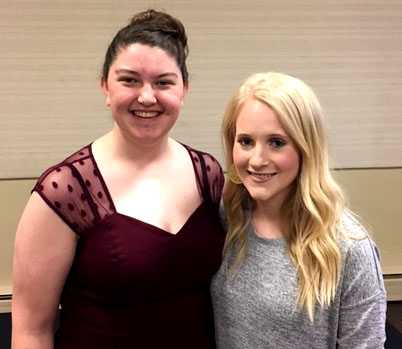
Fort Hays State University Noyce scholars Cayla Steinert and Kate Westerhaus

By RANDY GONZALES
FHSU University Relations and Marketing

HAYS, Kan. – Cayla Steinert’s interest in science started at a young age. Her road to becoming a biology teacher got a boost last spring when she was named a Noyce scholar at Fort Hays State University.

Steinert is on campus this fall as the first transfer student to receive a Noyce scholarship through FHSU’s partnership with five Kansas community colleges.

Steinert, who transferred to FHSU from Garden City Community College, is one of six FHSU students who received $13,750 for tuition, books, and room and board, through the Robert Noyce Scholarship Program. Noyce scholars agree to teach in high-need areas, mainly rural, for two years for every year a grant is accepted.

Choosing FHSU to continue her education especially pleases Steinert’s mom, Tina, who has two teaching degrees from Fort Hays State. It also was her mom who got her Steinert interested in science in the first place.

When she was in first grade, Steinert wanted to know all about her mother’s cancer diagnosis. It was her way of coping with her mom’s illness.

“I was really interested in how everything worked,” Steinert said. “That kind of kick-started my love for science.”

Steinert’s mom remembered her then 7-year-old’s approach to that scary “C” word, cancer. Explaining the jargon to her daughter provided a little understanding for her.

“The nurses and doctors allowed her to ask questions and be involved,” Tina Steinert said. “She had always been interested in how the human body works. Science was something she gravitated to.”

Now, Steinert is on to track to receive her bachelor’s in two years and pursue her master’s degree at FHSU while teaching at the high school level.

Fort Hays State has been helping students with college expenses through the Noyce Scholarship Program since 2012.

The university applied to the National Science Foundation for a grant seven years ago and received $1.2 million for scholarships. The NSF awarded Fort Hays State an additional year of funding, and the school was encouraged to apply again. FHSU successfully wrote another grant, and the $1.45 million it was awarded covers five years of scholarships and will run through 2023.

Steinert said she had no preference where she teaches after graduation but knows it will be where she is needed most.

Dr. Paul Adams, dean of the College of Education and professor of education and professor of physics at FHSU, calls Noyce “the Super Bowl of scholarships.”

“The NSF wants institutions that will prepare the best science and mathematics teachers who can be leaders in their communities, who will make a difference in these high-need communities,” he said.

The scholarship, eligible for juniors and seniors only, can be renewed for a second year.

“The process of getting this means you have to be a scholar, must have potential to be a leader, to work in an area in our state and nation that needs the best possible science and mathematics teachers,” Adams said.

Steinert is eager to meet others in the program. She already connected with a Noyce scholar at a ceremony on campus recognizing first-time recipients last spring.

Kate Westerhaus, a Junction City senior at Fort Hays State, completed her first year as a Noyce scholar in May. Like Steinert, she plans to teach biology upon graduation.

Westerhaus, former president of the STEM education club, said Noyce scholars are required to fulfill six hours of community service each semester.

“With this scholarship, it’s not just about the money,” Westerhaus said. “There are so many connections. Our university truly is unlike any other because of our science and math programs.”

The 2019-2020 Noyce scholarship recipients are listed with their classifications, hometowns, and majors:

First-time recipients
Seth Boxberger, junior, Russell, mathematics education
Kole Clarke, senior, Lyons, biology education
Nicolas Schmidt, senior, Hays, (TMP-Marian) mathematics education
Ethan Shippy, junior, Hays, (Hays High) biology education

Cayla Steinert, junior, Olmitz, (Garden City CC) biology education
Judson Tillotson, junior, Whitewater, mathematics education

Second-time recipients
Alexis Meinert, senior, Garden City, mathematics and secondary education
Diana Sabados, senior, Brighton, Colo., mathematics and secondary education
Chantal Solozano, senior, Dodge City, biology and secondary education
Joshua Stark, senior, Liebenthal, chemistry and secondary education
Kate Westerhaus, senior, Junction City, biology and secondary education
Lauren Zerr, senior, Russell Springs, mathematics and secondary education

Hays youth orchestra to begin season

The Hays Youth Orchestra’s fall season will start up at 10:30 a.m. on Saturday, Sept. 7, in Fort Hays State University’s Malloy Hall for an orientation meeting.

All students between sixth and eighth grade who play the violin, viola, cello or bass are welcome to attend.

Younger students are also welcome to participate with the approval of the director. Older students are invited to participate as assistants and mentors.

Shawn Demuth will serve as this year’s conductor. He is a graduate of the FHSU Department of Music. He plays the violin and piano, composes music and teaches music at USD 388 in Ellis.

“We’re looking at doing fun but challenging music,” said Demuth. “My goal is to bring young musicians together to help build relationships and to increase their passion for music.”

Rehearsals are on Saturday mornings starting in September, with performances scheduled for December and May.

Students interested in playing are should contact Demuth at [email protected] for an application form or additional details.

The Hays Youth Orchestra Program is supported in part by the Hays Symphony Guild, which believes that nurturing the joy of musical performance in today’s youth is critical to developing strong and skilled performers for tomorrow.

— FHSU University Relations

KU study examines how media frames climate change coverage

(Photo credit: Pexels.com)

KU NEWS SERVICE

LAWRENCE — Climate change is a problem facing countries around the world, but media coverage of the topic differs from one nation to the next. A new study from the University of Kansas shows the way media frame climate change coverage can be predicted by several national factors, yet none tend to frame it as an immediate problem requiring national policies to address the issue.

While richer countries tend to frame climate change coverage as a political issue, poorer countries more often frame it as an international issue that the world at large needs to address.

Hong Vu, KU School of Journalism and Mass Communication

“Media can tell people what to think about. At the same time, framing can have an effect on how people think about certain issues,” said Hong Vu, assistant professor of journalism at KU and the study’s lead author. “Not only can framing have an impact on how an issue is perceived but on whether and how policy is made on the issue. With big data, machine-learning techniques, we were able to analyze a large amount of media climate change coverage from 45 countries and territories from 2011 to 2015.”

Vu and co-authors Yuchen Liu, graduate student at KU; and Duc Vinh Tran of Hanoi University of Science and Technology published their findings in the journal Global Environmental Change. They analyzed over 37,000 articles and considered national factors such as economic development, weather and energy consumption. They reviewed headlines from nationally circulated publications of varying political ideologies that contained the keywords “greenhouse gas,” “climate change” and/or “global warming,” or the local language equivalent.

The most consistent predictor of how the issue was framed was a nation’s gross domestic product per capita.

“We showed that the issue is more politicized in richer countries. In poorer countries, it was framed more as an international issue,” Vu said. “Which makes sense, as poorer countries don’t have the resources that richer countries do to fight it.”

Even when richer countries framed the issue as one they could address with their more plentiful resources, it was often also framed as a political issue and would focus on debate or argument about political approaches as opposed to proposing policy solutions. Media from richer countries also focused more on the science of climate change.

When climate change was framed as an economic issue, it was in countries that had the most severe climates and those that have experienced the most adverse consequences of climate change and natural disasters, loss of life and property, and economic effects.

In terms of social progress framing, richer countries framed the issue in terms of energy policy and use. Those that emit the most carbon dioxide framed content in terms of energy issues, while poorer countries and those that had experienced the most severe climates focused more on natural impact.

The study also used independent nation-level variables from several databases, including the World Bank, the Center for Research on the Epidemiology of Disasters, the Global Carbon Atlas Project and Freedom House, all nongovernment organizations working in development or on climate change.

The authors argue that the international relations frame being the most widely used reflects the fact that climate change is a problem every nation needs to address. Economic effects being second most popular reflects that fighting climate change will have impacts on every economy and that when natural disasters and climate change were discussed, they were nearly always brought forth in an economic sense. They also contend that richer countries framing the issue as political reflects that climate change skeptics in those nations gaining more media prominence and the efforts of multiple groups trying to politicize the issue, influence media agendas and policymaking.

The study helps add to the understanding of media influence on climate change coverage, Vu said. Future work will address questions of framing the topic, if it’s done on local, national or global levels, if communicators suggest solutions, if such solutions are attributed to individuals, businesses or governments and efficacy of proposed solutions. Three decades of communications on the topic show there is not a sense of immediacy in covering the problem and influencing policy.

“As communications researchers we want to know why, if climate change entered public discussion more than 30 years ago and we’ve been covering it as a global problem since, why can’t we slow the warming climate down,” Vu said. “If we want the public to have better awareness of climate change, we need to have media imparting it in an immediate sense. By looking at how they have portrayed it, we can better understand how to improve it, and hopefully make it a priority that is reflected in policy.”

New Chief Information Technology Officer appointed for Kansas

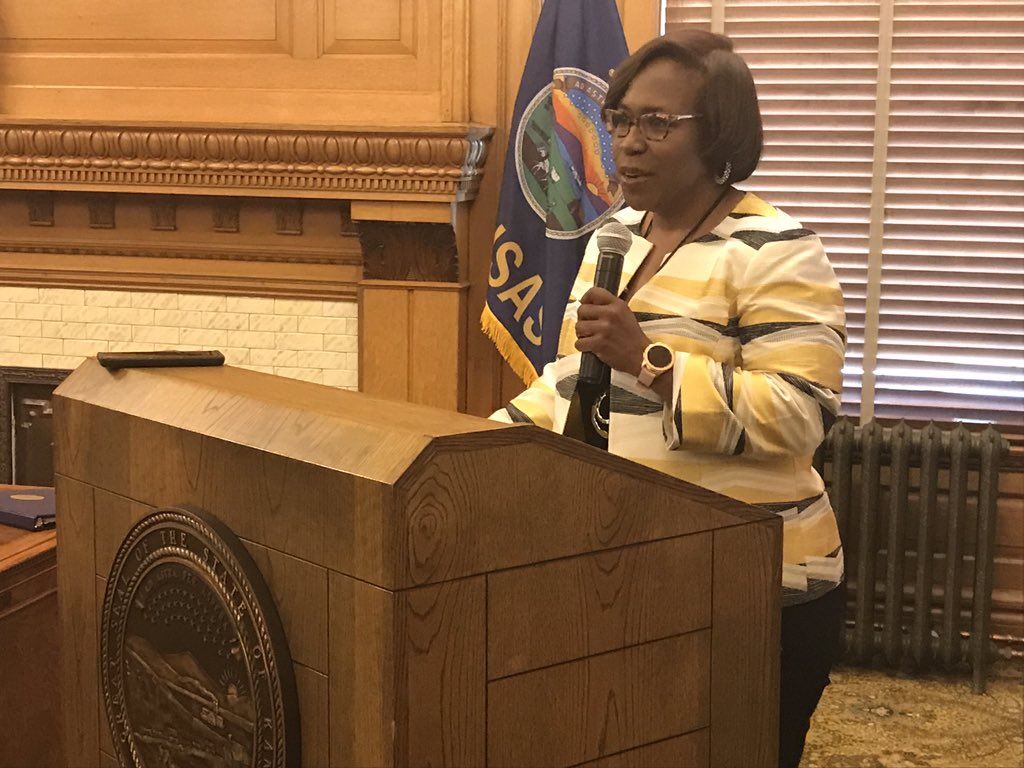
Dr. DeAngela Burns-Wallace

OFFICE OF GOVERNOR

TOPEKA – Governor Laura Kelly has announced Kansas Department of Administration Secretary DeAngela Burns-Wallace will be the new Chief Information Technology Officer for the Kansas Office of Information Technology Services (OITS). The appointment is effective immediately, with the OITS duties done in addition to her work leading the Kansas Department of Administration.

“Secretary Burns-Wallace has the leadership skills and executive experience necessary for a successful Chief Information Technology Officer to possess,” Governor Kelly said. “Our state’s computer systems are vulnerable to both domestic and international security threats. Secretary Burns-Wallace understands these threats and will ensure that our state’s infrastructure is prepared to handle them and keep Kansans’ information secure.”

Prior to joining the Kelly administration earlier this year, Burns-Wallace served as vice provost of undergraduate studies at the University of Kansas. Previously, Burns-Wallace was assistant vice provost for undergraduate studies at the University of Missouri. She earned a bachelor’s degree in international relations from Stanford University, a master’s degree in public policy and international affairs from Princeton University and a doctorate in higher education management from the University of Pennsylvania.

“I’m honored to be selected by Governor Kelly to serve in this important role,” Secretary Burns-Wallace said. “I believe in public service and I look forward to working with Governor Kelly, the Legislature and the OITS and Department of Administration teams to serve the people of Kansas. We must ensure that the state has the IT systems in place to conduct its daily business and maintain the safety and security of our data in today’s ever-changing and interconnected world.”

OITS was created under Governor Sam Brownback. Previously, OITS was known as the Division of Information Systems and Communication (DISC) and was a division of the Kansas Department of Administration. OITS is an independent agency, but the two agencies still maintain close operational relationships in several areas because the transition was never completed.

“The relationship OITS has had with the rest of state government has been challenging, and communication between the agency and its customers has been difficult. This was not the fault of the agency’s previous leadership. It is, however, a direct result of the fact that the previous administration split OITS from the Department of Administration and then failed to properly support the move, convey its mission and get buy-in from the rest of state government,” Kelly said.

Burns-Wallace replaces Lee Allen, who has decided to leave the agency.

“I appreciate the work Lee has done for OITS, and thank him for his service to the State of Kansas,” Governor Kelly said.

TMP volleyball hosts preseason scrimmage

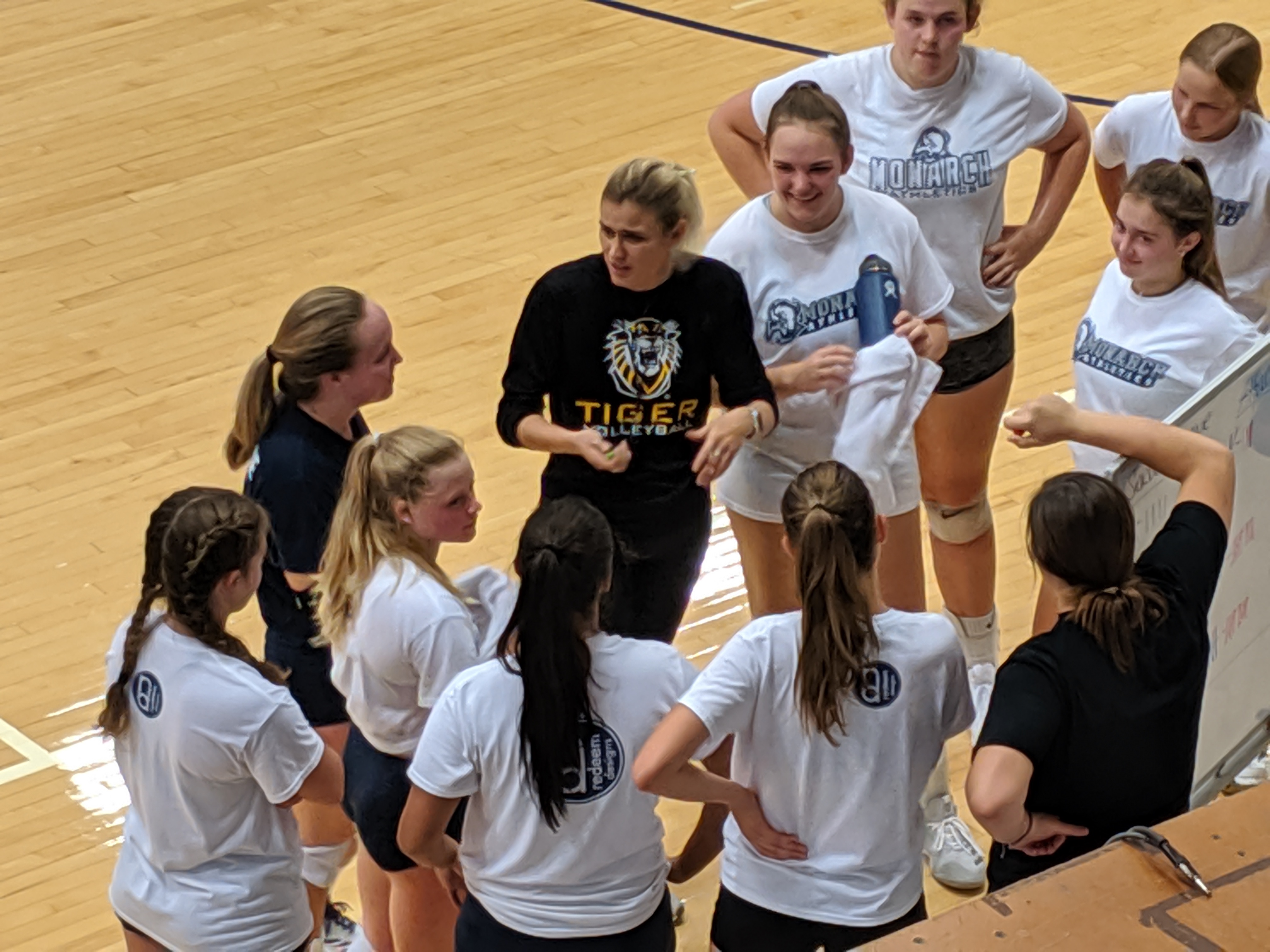
With a little more than two weeks to go before the start of the 2019 season the TMP-Marian volleyball team took part in a preseason scrimmage Friday at Al Billinger Fieldhouse.

TMP finished 20-16 last season and is two years removed from claiming their first state title in program history.

Coach Natausha Dreher said Friday they have 22 girls out for volleyball this season. They have several players back from last year’s team that saw varsity action.

Among those is sophomore Emilee Lane. She was one of three unanimous first-team All Mid-Continent League selections last season.

Dreher said they are still working on communication and that Friday’s action was another step in the right direction.

“I feel like this was a good building block and they know what they want to work on and tomorrow morning when we step into practice they know that that was the base and we build from there,” Dreher said.

The varsity team will open their season on Aug. 31 at the Hays High Invitational while the C-team will travel to Phillipsburg for a tournament.

Kan. sex offender admits he was involved in a web site for child porn

KANSAS CITY, KAN.– A registered Kansas sex offender was sentenced this week to 10 years in federal prison for possessing child pornography, according to U.S. Attorney Stephen McAllister.

Ben Grace photo KBI offender registry

In addition, the defendant was ordered to pay $5,000 to the fund established by the Justice for Victims of Trafficking Act.

Benjamin Grace, 32, Lawrence, pleaded guilty to one count of possession of child pornography. In his plea, he admitted he was identified during an FBI investigation of a service on the internet that was involved in the production, advertisement and distribution of child pornography.

After executing a search warrant at his home in Lawrence, FBI agents interviewed him at his workplace in Overland Park. He admitted viewing child pornography, including images of children as young as five years old.

At the time, Grace was listed on a Kansas Bureau of Investigation web site because of a 2008 felony conviction in Johnson County on a charge of electronic sexual solicitation of a child.

11-year-old Kansas boy struck by semi after fall from bicycle

FINNEY COUNTY— One person was injured in an accident just before 6p.m. Friday in Finney County.

The Kansas Highway Patrol reported a 2020 Peterbilt semi driven by Robert J. Baldridge, 55, Holcomb, was northbound on Business 83 just north of U.S. 83.

Emilio Corrales, 11, Garden City, was  southbound on a bicycle on the walkway portion of the bridge off the east edge of the roadway. Witnesses observed the bicycle drive off the bike path, causing it and the boy to fall out into the northbound lane of Business 83 right in front of the semi.

The passenger side of the semi struck both the bike and the boy. The semi came to an abrupt stop to render aid the boy.

EMS transported Corrales to Wesley Medical Center.  Baldridge was not injured and had been wearing a seat belt at the time of the accident, according to the KHP.

Chiefs Training Camp Reports with Mitch Holthus

Listen to updates from Kansas City Chiefs Training Camp in St. Joseph, Mo. with the “Voice of the Chiefs” Mitch Holthus. The reports originally air weeknights at 6:30 p.m. on 96.9-FM, KFIX.

Friday, August 23

Thursday, August 22

Wednesday, August 21

Tuesday, August 20

Monday, August 19

Friday, August 16

Thursday, August 15

Wednesday, August 14

Tuesday, August 13

Monday, August 12

Friday, August 9

Thursday, August 8

Wednesday, August 7

Tuesday, August 6

Monday, August 5

Friday, August 2

Thursday, August 1

Wednesday, July 31

Tuesday, July 30

Monday, July 29

Police: 14-year-old pointed handgun at girls near Kansas school

SEDGWICK COUNTY — Law enforcement authorities are investigating a Kansas teen after a incident involving a gun.

Woodman Elementary google image

Just after 4p.m.Thursday, police responded to a disturbance with a weapon call at Woodman Elementary in the 2500 block of South Hiram in Wichita, according to officer Charley Davidson. An employee reported that teens were on scene and that they possibly had guns.

The investigation revealed there was a verbal disturbance between a group of five boys and a group of six girls known to each other, who were walking from Truesdell Middle School to Woodman Elementary School.

During the disturbance, a 14-year-old boy pointed a handgun at the girls, according to Davidson.

No shots were fired and no one was injured. The 14-year-old was arrested on scene and recovered the gun. Woodman Elementary was briefly placed on lockdown.

USD 259 spokeswoman Susan Arensman said the incident happened in a neighborhood south of Woodman Elementary school and not on the school’s property.

The boy is being held in juvenile detention on requested charges that include six counts of aggravated assault with a firearm, criminal possession of a firearm by a juvenile and unlawful use of a weapon.

Kansas felon arrested during drug raid in Great Bend

BARTON COUNTY — Law enforcement authorities  in Barton County developed information of drug trafficking at a home in Great Bend and made two arrests.

Ricketts photo KDOC

Just before 11a.m. Thursday, detectives executed a search warrant developed at a residence at 1445 Park Street in Great Bend, according to Sheriff Brian Bellendir.

They discovered drugs and paraphernalia and arrested Eligus R. Ricketts, 34 of Salina.

He was booked on requested charges of conspiracy to distribute methamphetamine, possession of methamphetamine, possession of drug paraphernalia and interference with law enforcement officer. Ricketts was found hiding in a closet at the time of his arrest. Ricketts also had an outstanding warrant from Saline County. The Saline County warrant was a no bond warrant, the charges in Barton County carry a $100,000 bond, according to Bellendir.

He has nine previous convictions that include criminal possession of a firearm, aggravated escape from custody, aggravated assault, fee and attempt to elude law enforcement and for drugs, according to the Kansas Department of Corrections.

Johnson photo Barton Co.

Deputies also came in contact with Howard L. Johnson age 23 of Great Bend Johnson was taken into custody on three outstanding warrants for parole violation. The bond on Johnson’s warrants range from $1500-$5000.


Copyright Eagle Radio | FCC Public Files | EEO Public File