SHAWNEE COUNTY — Law enforcement authorities are investigating a Kansas woman on felony charges after a drug investigation.
Luker photo Shawnee Co.
The Drug Enforcement Unit (DEU) for the Shawnee County Sheriff’s Department followed up on information regarding a non-school aged juvenile boy who was being exposed to unsafe living conditions that include a drug environment, according Sgt. Todd Stallbaumer.
The DEU served a search warrant on the mother’s residence located in the 1100 block of SW Lincoln in Topeka. They located narcotics and paraphernalia that would be in reach of the child. Members of DEU located the child and placed him into Police Protective Custody.
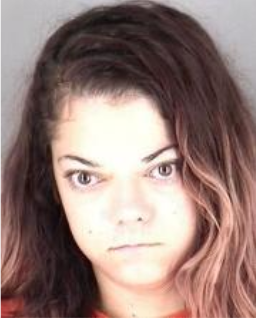
Police arrested the boy’s mother 26-year-old Montanna L. Luker of Topeka and booked her into the Shawnee County Jail on felony narcotic charges.
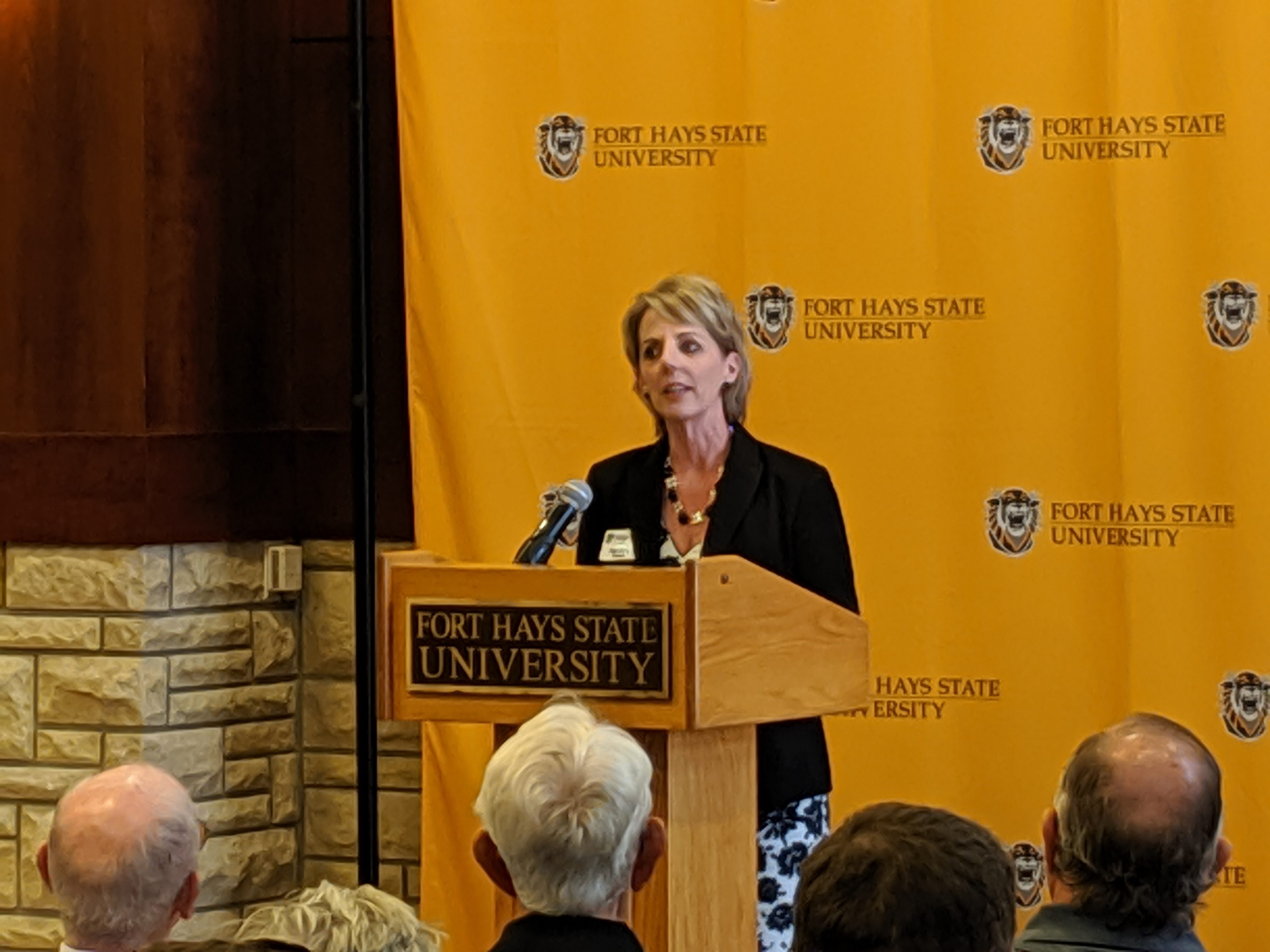
Fort Hays State University and the FHSU Foundation announced today that their five-year capital campaign has raised $88 million toward its $100 million goal to support scholarships, academics, student life and athletics.
Student Government Association President Brad DeMers, a junior political science major from Osceola, Neb., was on hand to testify to the benefit of the scholarship pillar of the campaign.
“FHSU offered me a scholarship, and that was the deciding factor for me,” he said. “I am honored to be up here today speaking on behalf of all FHSU students on the magnitude of our Journey campaign.”
Brad DeMers
“Today is a big day and I want to thank all of the generous donors and the Fort Hays State Foundation for making the Journey campaign possible. To announce that the campaign is ahead of schedule just proves the dedication our friends, family, alumni and supporters have to this great institution. It’s like no other place,” said DeMers.
DeMers shares the story of his journey to FHSU, and why he ultimately chose to become a Tiger, in this video available on Youtube: https://bit.ly/30s6P1z.
“The Journey campaign is the largest, most aggressive campaign in school history,” said Jason Williby, president and CEO of the FHSU Foundation, at a news conference in the university’s Memorial Union to announce the progress of the campaign.
“We kicked off the campaign in the fall of 2016 with a goal of raising $100 million in support of scholarships, academics, student life and athletics. We are grateful and humbled to have already raised $88 million toward this effort.”
The campaign’s status was announced by alumnus Steve Shields, entrepreneur, Journey campaign co-chair and a trustee of the FHSU Foundation.
“I get the good job,” he said. “I get to announce how well we’re doing. I’m really pleased to announce that we’re not only on schedule, we’re ahead of schedule. As of June 30, we have raised $88 million.”
Shields also shared the story of his goddaughter Lydia, who is a freshman this year on a track scholarship. He said he did not influence her in any way, but asked her why she chose FHSU.
“And she said well, she got a track scholarship,” said Shields. “And that was good. That helped. But then she said, ‘You know, the coaches were so personal, so interested in me and they’re interested in more than just how I do in track. I could feel they were interested in being who I wanted to be.”
She also told Shields that the campus is so beautiful, “and it’s growing.” Then, Shields said, she told him, “So if there’s growth with the university, there’s going to be growth opportunities for me.”
That is also why, Shields said, that he is a member of FHSU’s Wooster Society, whose members have arranged planned gifts, including estate gifts, to the FHSU Foundation.
“Eighty-eight down, 12 to go,” he said. “This is a great university to invest in, and a great university to remember in your estate plans. Fort Hays State University is generously remembered in my estate plans, and I invite you to join me in including FHSU in yours.”
FHSU President Tisa Mason concluded the news conference by thanking the many donors who have contributed to the Journey campaign.
“I am proud to share that our donors have made the dream of a college education an affordable reality for more of our students,” she said. “To date, your participation in the Journey Campaign allowed us to offer more than $13.8 million in student scholarships.”
“You have probably heard me or Jason say many times, ‘All gifts, large and small matter,’ and I am elated to report that of the 58,000 total campaign gifts we have received to date, nearly 22,000 – more than a third – are gifts under $100. Every gift matters.”
For more information on the Journey campaign and the FHSU Foundation, visit https://foundation.fhsu.edu/journey or contact the Fort Hays State Foundation by phone at 785-628-5620 or via email to [email protected].
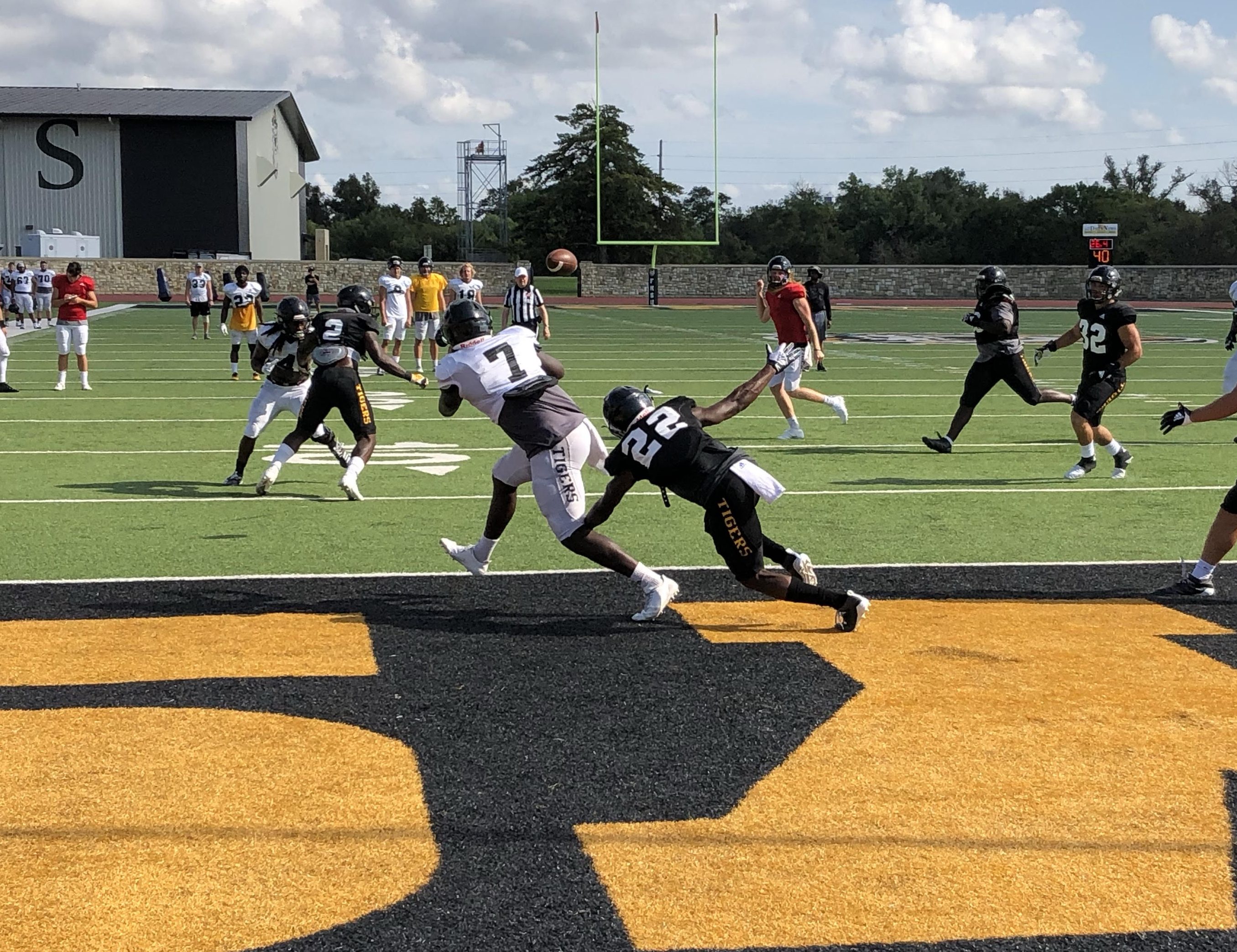
The Fort Hays State football team wrapped up their second week of preseason camp with their second of two scheduled scrimmages Thursday afternoon at Lewis Field.
Head coach Chris Brown visited with the media afterwards and said he was pleased with both sides of the ball.
The Tigers open the 2019 season in less than two weeks (September 5th) at Central Missouri.
As of Thursday, city of Hays employees had taken 303 loads of downed tree limbs to the Ellis County Landfill.
The city began picking up the limbs Monday, following three severe thunderstorms with high wind last week. More thunderstorms rolled through Hays Wednesday starting at 6 a.m. with a rainfall total of 1.47 inches measured at the K-State Agricultural Research Center south of town.
Mayor Henry Schwaller says the curbside limb collections will continue through next week.
“We appreciate everyone’s patience as we pick up tree limbs free of charge,” Schwaller said during Thursday night’s city commission meeting.
He noted that other debris which may be been created by the storms will not be collected by the city.
“If you have something else in your yard that is not a tree limb, we can’t pick it up because we have no where to take it.”
Schwaller thanked Ellis County Public Works Director Bill Ring and the Ellis County commissioners for allowing the city to dump the trees at no cost.
“That kind of collaboration is important as was their help with the culvert on W. 27th Street.”
The Hays Public Works Department along with the Ellis County Public Works Department recently installed the new culvert under 27th Street just east of Thunderbird Drive where it is part of the Fort Hays Municipal Golf Course water shed.
“We upgraded from an 18-inch culvert to a 42-inch culvert to help facilitate the movement of more (storm) water to the south side of 27th Street and the to the west,” explained Toby Dougherty, city manager.
The Ellis County employees assisted with equipment and manpower. They also installed a deflecting panel at the culvert exit so the water doesn’t cause erosion.
“I checked it out a couple of times during the most recent rains,” Dougherty told city commissioners, “and it’s working pretty well.”
Another 0.14 inches of rain fell in Hays early Thursday morning, with a total so far in Aug. of 7.22 inches.
For the year-to-date, Hays has received 21.86 inches of moisture.
Dougherty also noted a new informational sign has been erected near the Big Creek levee walking trail east of Main Street which describes the history of flooding in that area and the creation of the levee.
The informational sign project was done in cooperation with the Kansas State Historical Society.
Courtesy photoMcCaffrey will travel the state starting in January to represent the sport of rodeo. Courtesy photo
By CRISTINA JANNEY Hays Post
Your son has a better chance of being an NFL player than your daughter being Miss Rodeo America.
Hays resident and recent FHSU graduate Tiffany McCaffrey, 23, will be one of 30 young women to vie for that title next year, after being elected Miss Rodeo Kansas 2020 on Aug. 3.
The Miss Rodeo Kansas is held in conjunction with the Dodge City Roundup Days. McCaffrey will be a lady in waiting until Jan. 1 when she will assume her full duties as rodeo queen. She will serve a year and will compete for Miss Rodeo America in December 2020.
“I am so excited,” she said. “I have spent so many years watching rodeo queens and following their journeys on Facebook, and now that I get to go do that, I am so awestruck. I have spent so many years imagining, but now I get to go live it.”
McCaffrey grew up on a small farm near Burlington, Colo., participating in 4-H and FFA.
McCaffrey said she looks forward to keeping her Western heritage alive during her reign as Miss Rodeo Kansas. Cristina Janney/Hays Post
She fell in love with rodeo while attending the local county fair, which hosted an annual PRCA rodeo. However, she didn’t learn to ride until she was a senior in high school.
“I always loved horses. From the time I can remember, my favorite animal was a horse,” she said. “Learning how to ride when I was a senior in high school, I was coming late to the game, but one thing I like to say is no matter how old you are or what you want to do, if you have a dream, if you have a passion, you should go ahead and do it no matter how old you are.
“It started at a really young age that I loved horses, so I knew someday my life was going to be involved in rodeo. The fact that I am here now is kind of God’s plan.”
On her road to her current title, she won a local rodeo title and then was named Miss Rodeo Fort Hays State for 2018.
McCaffrey’s degree is in tourism and hospitality management. She just finished an internship with the Hays Convention and Visitor’s Bureau. She said her studies at FHSU and internship were good foundations for the role as Miss Rodeo Kansas.
“My job is to spread awareness of rodeo and teach people what it’s about and keep our Western heritage alive,” she said.
“One great thing I like about rodeo is its rich history. Rodeo is based on agriculture, farming and our ranching background. I grew up on a ranch raising cows and bucket calves, so that really resonated with me. As cowboys, that is where it all really started was with ranching and the competitive side to see who could tie the calf the fastest and stuff like that.”
As Miss Rodeo Kansas, McCaffrey also will fundraise for the Justin Cowboy Crisis Fund, which helps injured professional cowboys financially when they are unable to perform.
McCaffrey said she hopes her year as Miss Rodeo Kansas will help jump-start her career. Her dream job is to be a hospitality director for the PRCA.
She said she thinks the rodeo queen system is a good place for girls and young women to develop leadership skills.
“Having a passion for leadership and helping others is right along with what I believe as a rodeo queen,” she said. “Rodeo queens are servant leaders. You are there to serve your purpose of helping the rodeo committee and teaching others. With that leadership comes responsibility. It teaches you to be the best leader possible.”
Patrick R. Miller is an Associate Professor of Political Science at the University of Kansas.
As policymakers manage the daily reality of Kansas’s prison crisis, let’s understand the core issue and its implications. Kansas has a growing prison population, but lags other states on criminal justice reforms that could curb that growth, ease managing prisons, and reduce budget strain from prisons.
Kansas state prisons have about 10,000 inmates. Per Kansas Sentencing Commission numbers, that population grew 16 percent in the last decade. However, per Census estimates, the Kansas population only grew 2 percent in that time, so we are growing our prison population much faster than our state is growing.
As the Prison Policy Initiative reports, Kansas is at about the national average for prisoners per 100,000 people. Like the nation, Kansas imprisons more people per 100,000 than any Western country. Kansas also has higher imprisonment rates than authoritarian regimes like Iran, Cuba, Russia and China.
The Kansas Sentencing Commission estimates our prison population will grow to over 12,000 by 2028, growing faster than the state’s population and possibly even any growth in crime rates, if recent numbers hold. Plainly, if nothing changes, the prison crisis will worsen.
Kansas is one of just 20 states where prison populations grew in the last decade. Nationally, Bureau of Justice statistics show that violent crime and property crime decreased in that time, though in surveys most Americans incorrectly perceive an increase. Of course, how those rates changed varies by location.
Let’s dissect Kansas statistics from the Kansas Bureau of Investigation. From 2009 to 2014, the number of violent and property crimes committed in Kansas was generally decreasing, including murder, rape, robbery, assault, arson and theft. However, during that five year period of decreasing crime, Kansas’s prison population grew by about 12 percent.
In 2014, the number of violent and property crimes started to increase in Kansas, which overlapped with ongoing growth in our prison population. So, regardless of whether crime increased or decreased in Kansas, prisoner numbers grew. That suggests crime rates and prisoner numbers may not be as cause and effect as many think.
The logic of the incarceration trap is temptingly simple: “tough on crime” means harsh punishments. That same mentality boomed Kansas’s prison population in the 1990s when national trends were building more prisons, enacting new felonies, and increasing sentences.
But, reality is often more complex. Absolutely, many criminals should be in prison. They are not the issue here. The issue is whether our policies grow our prison population no matter what happens with real world crime, and whether the cost benefits public safety.
One advantage to Kansas lagging other states on criminal justice reform is that we can learn from them. Conservative and liberal states alike have adopted numerous reform measures, some even while experiencing increasing crime rates. As policymakers examine this issue, they should study what other states have done on things like alternative sentencing, incentive plans, equitable policing and sentencing, re-entry, parole, and juvenile justice.
If Kansas is not smart about prisons, then we are doubling down on crisis. We are also choosing either more money to build prisons, or continued expensive relationships with sketchy private prison contractors like CoreCivic. Setting Kansas prisons on a different course will take study, experimentation, and political spine, both from policymakers and the public that shoulders the future cost of doing nothing differently.
Patrick R. Miller is an Associate Professor of Political Science at the University of Kansas.
SEDGWICK COUNTY—Law enforcement authorities report that they have seen a decrease this summer in the number of guns stolen from cars in Wichita.
According to Lt. Scott Bruno, 47 guns were stolen from cars during June and July in 2018. Only 26 were stolen in 2019 for a total of 120 guns so far this year after 250 were reported stolen in 2018.
The majority of the guns are stolen between midnight and 5a.m. after they are left in in cars overnight, according to Brunow.
The Wichita police department has started the Operation Save-A-Casing program. It is a partnership with law enforcement agencies at the local, state and federal level and the community to combat firearm-related crime, according to the department web site.
The campaign works by submitting two firearm casings to a Wichita Police Department Officer after a gun theft has occurred. These casings are then submitted into National Integrated Ballistic Information Network known as NIBIN, a national database containing digital images of spent bullets and cartridge casings that were found at crime scenes or test-fired from confiscated firearms. This database can be searched for possible matches and if a “hit” occurs, the NIBIN lab sends that information to WPD investigators.
Participation is completely voluntary, however, we encourage the community to take part in an effort to reduce violent crime involving firearms.
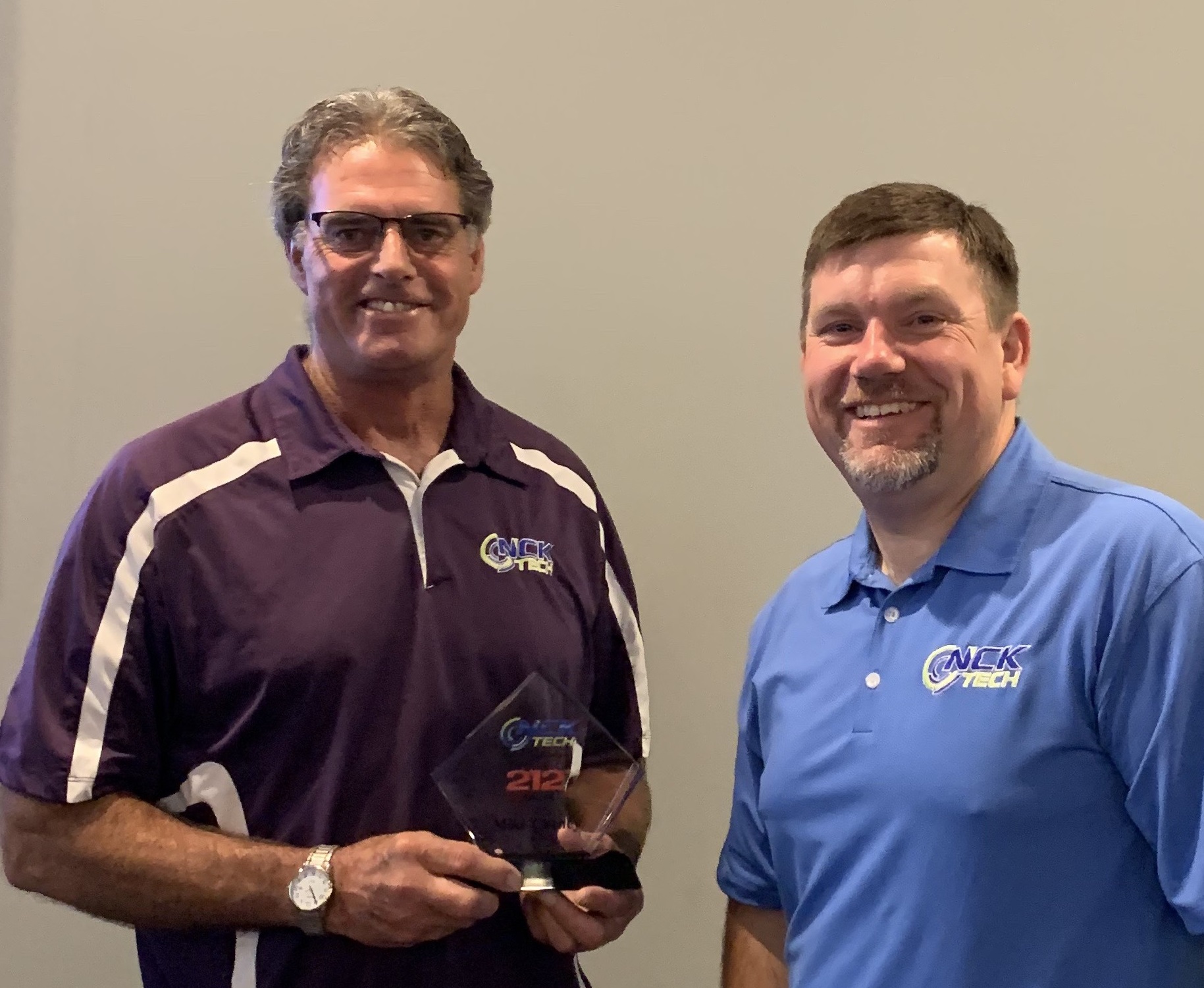
Each semester NCK TECH awards an employee who has gone beyond expectations in their job responsibilities. The premise of the 212 Award is that water is hot at 211 degrees, but that one degree more causes water to boil. Thus, the 212 Award recognizes those who go that extra degree to make a difference in their job with students and co-workers.
Employees are nominated by their peers and chosen by a panel of past 212 Award winners. Mike Cheney, carpentry/cabinetmaking instructor for the Beloit Campus, received the award from President Eric Burks at the recent college in-service.
“Mike is a talented and creative craftsmen dedicated to seeing students succeed. He is always willing to lend a helping hand and respected for the time and effort he invests into the house project each year. I am happy to see Mike’s positive approach to his job recognized through this award, “ Burks said.
Cheney has been with the college since fall 1998 and is only the second carpentry instructor of the program since its start in 1964. Cheney replaced instructor (John Lackey) who taught Mike when he was a student at then NCKAVTS. Cheney holds a BS in Technology Education from FHSU and has experience as a self-employed contractor and other construction projects.
“I encourage my students to work hard to achieve their goals,” Cheney said. “It won’t be handed to you, so you have to go after it. Similar to building a house, the more effort you put into it, the better the house will be.”
For information and to learn more about NCK TECH, visitwww.ncktc.edu.
Alicia BoorStress is cumulative. In other words, trees and shrubs can be affected by stresses that happened up to several years in the past.
Recent stresses in Kansas include winter damage as well as the extremely dry winter of 2017-2018 which often resulted in damaged root systems. This damaged root system may have been further weakened due to too much rain this spring. The excess water harmed root systems due to saturated soils driving out oxygen. Roots need oxygen as much as they need water.
Though the roots were able to keep up with moisture demands during the cooler spring weather, they may not have been able to keep up when the weather turned hot and dry. Such trees and shrubs may suddenly collapse and die or slough off branches they can no longer support. I have never seen lilacs collapse due to stress like they have this year.
This does not mean that all of our plants are doomed. As a matter of fact, plants that have survived thus far into the growing season will likely make it. Also, some plants are just better adapted to our tough Kansas conditions and have suffered little to no harm.
However, it is a good idea to check the overall health of your trees. So how do you tell? One of the most important clues in determining the health of your trees is the amount of new growth that tree has produced. A healthy tree should have a minimum of 4 to 6 inches of new growth each year and usually much more. Check branches with the tips in the open and not shaded by the tree itself. Anything less than 4 inches on the majority of branches suggests the tree is under a great deal of stress.
So, how do you tell where the new growth stops? Look for a color change in the stem. New growth is often greener than that from the previous year. There is also often an area of what looks like compressed growth where growth transitions from one year to the next.
Lastly, look at leaf attachment. Leaves are only produced on current seasons’ growth. Therefore, new growth stops where leaves are no longer attached directly to the twig but to side branches. However, pay attention as leaves may be appear to be attached directly to last year’s growth but are actually borne on short spurs. If you look closely, you can tell the difference.
All this clue tells you is whether a tree is under stress or not. It does not tell you what is causing or has caused poor growth. This year, the most common cause by far is environmental stress caused by the excess rain this spring.
So, what do we do for trees under stress? The most important practice is to water as needed.
Alicia Boor is an Agriculture and Natural Resources agent in the Cottonwood District (which includes Barton and Ellis counties) for K-State Research and Extension. You can contact her by e-mail at [email protected] or calling 620-793-1910
Scroll to the bottom for a map of garage sale locations. Hays Post offers FREE garage sale listings weekly. Having a garage sale next weekend? Click HERE to submit your information.
203 N. Topeka, Ness City
Saturday 8/24 – 8 a.m.-3 p.m.
Multi family garage sale—bedroom furniture, baby crib, bumbo, mattresses, play mat, nursing pillows, strollers, high chair, pack-‘n’-play, toys, women’s clothing and shoes, maternity clothing, scrubs, boy clothes NB-3T, shop equipment, and lots more!
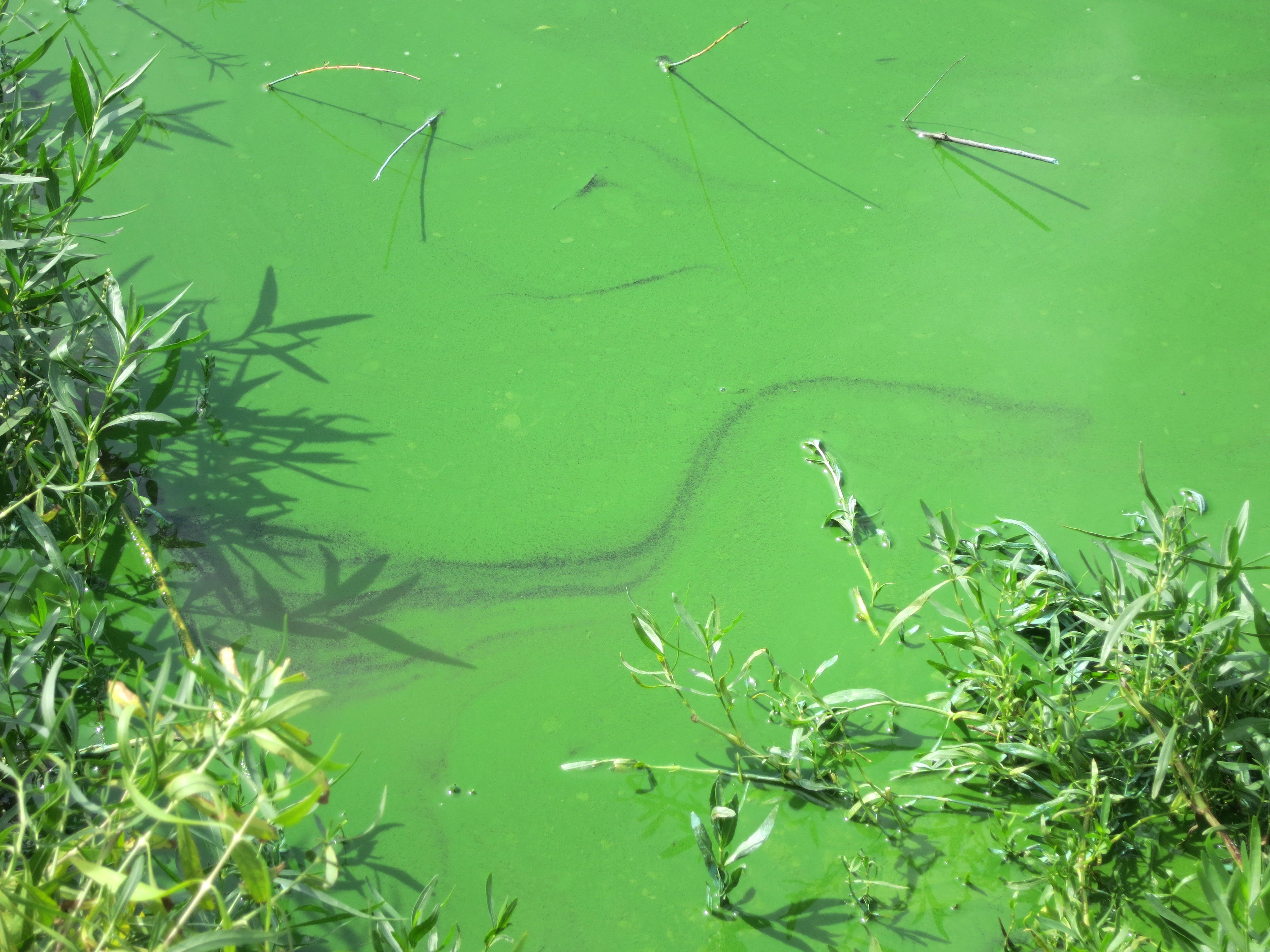
TOPEKA – The Kansas Department of Health and Environment (KDHE), in conjunction with the Kansas Department of Wildlife, Parks and Tourism (KDWPT), has issued public health advisories for Kansas lakes.
Warnings:
Big Eleven Lake, Wyandotte County (unchanged)
Camp Hawk Lake, Harvey County (unchanged)
Gathering Pond near Milford (Hatchery Supply Pond), Geary County (unchanged)
Hiawatha City Lake, Brown County (upgraded from watch 8/22)
Hodgeman County State Fishing Lake, Hodgeman County (upgraded from watch 8/22)
Jerry Ivey Pond, Saline County (unchanged)
Lake Afton, Sedgwick County (unchanged)
Lakewood Park Lake, Saline County (unchanged)
Lebo Kids’ Pond, Coffey County (unchanged))
Marais des Cygnes Wildlife Area (unchanged)
Marion County Lake, Marion County (unchanged)
Melvern Outlet Pond, Osage County (unchanged))
Melvern Swim Pond, Osage County (unchanged))
Neosho State Fishing Lake, Neosho (unchanged)
South Lake, Johnson County (unchanged)
Westlake in Gage Park, Shawnee County (unchanged)
When a warning is issued, KDHE recommends the following precautions be taken:
Lake water is not safe to drink for pets or livestock.
Lake water, regardless of blue-green algae status, should never be consumed by humans.
Water contact should be avoided.
Fish may be eaten if they are rinsed with clean water and only the fillet portion is consumed, while all other parts are discarded.
Do not allow pets to eat dried algae.
If lake water contacts skin, wash with clean water as soon as possible.
Avoid areas of visible algae accumulation.
Watches:
Carousel Lake (Gage Park), Shawnee County (unchanged)
Lake Shawnee, Shawnee County (unchanged)
Lovewell Reservoir, Jewell County (unchanged)
Meadowbrook Park Lake, Johnson County (unchanged)
Mission Lake, Brown County (new 8/22)
Riggs Park Lake, Sedgwick County (new 8/22)
Rock Garden Pond (Gage Park), Shawnee County (unchanged)
A watch means that blue-green algae have been detected and a harmful algal bloom is present or likely to develop. People are encouraged to avoid areas of algae accumulation and keep pets and livestock away from the water.
During the watch status, KDHE recommends the following precautions be taken:
Signage will be posted at all public access locations
Water may be unsafe for humans/animals
Avoid areas of algae accumulation and do not let people/pets eat dried algae or drink contaminated water.
Swimming, wading, skiing, and jet skiing are discouraged near visible blooms
Boating and fishing are safe. However, inhalation of the spray may affect some individuals. Avoid direct contact with water, and wash with clean water after any contact.
Clean fish well with potable water and eat fillet portion only.
KDHE samples publicly-accessible bodies of water for blue-green algae when the agency receives reports of potential algae blooms in Kansas lakes. Based on sampling results, KDHE reports on potentially harmful conditions.
Kansans should be aware that blooms are unpredictable. They can develop rapidly and may float around the lake, requiring visitors to exercise their best judgment. If there is scum, a paint-like surface or the water is bright green, avoid contact and keep pets away. These are indications that a harmful bloom may be present. Pet owners should be aware that animals that swim in or drink water affected by a harmful algal bloom or eat dried algae along the shore may become seriously ill or die.




 The Fort Hays State football team wrapped up their second week of preseason camp with their second of two scheduled scrimmages Thursday afternoon at Lewis Field.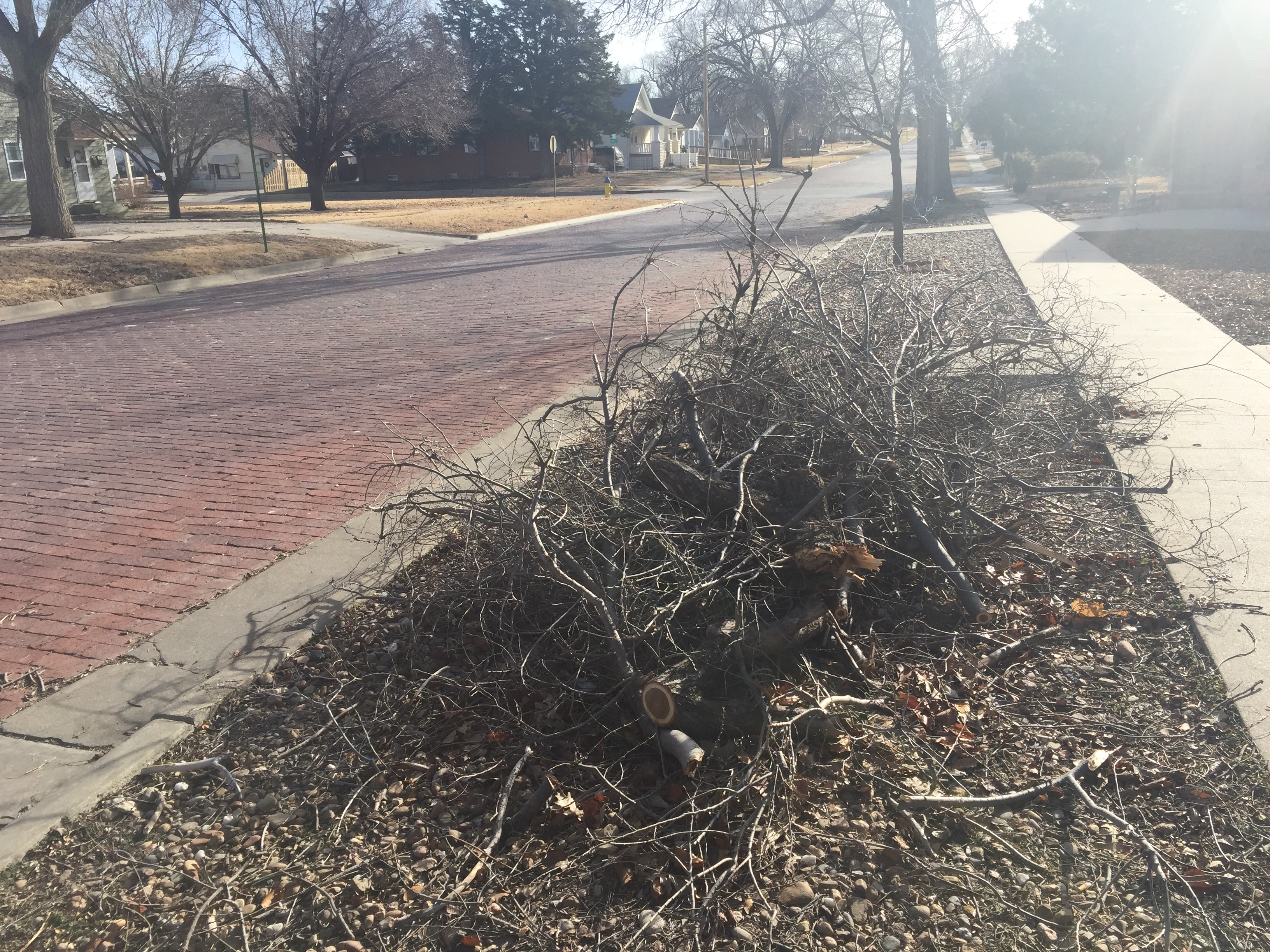












 Hays-area garage sales