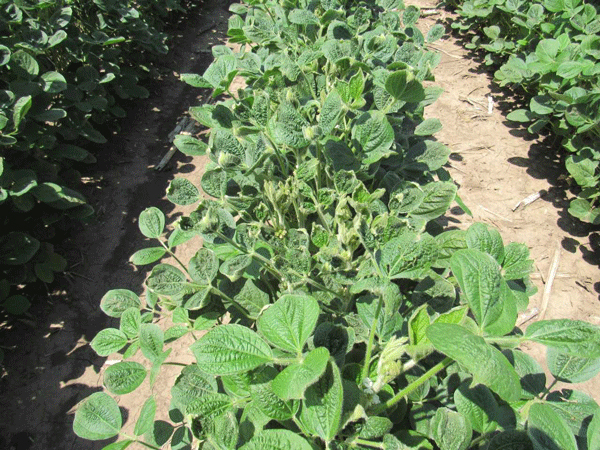
Kansas State University’s Agricultural Research Center in Hays will provide updated management strategies for numerous Kansas crops when it hosts the annual fall field day on Wednesday, August 21.
There is no cost to attend the event, which takes place from 8:30 a.m. to 2 p.m. Lunch will be provided. The research center is located at 1232 240th Avenue in Hays.
The schedule includes a series of field tours beginning at 9 a.m., including:
Pearl millet hybrid performance
Grain sorghum hybrid performance
Occasional tillage in wheat-sorghum-fallow rotations
Integrated weed management in soybeans
Pre- and post-herbicide options for weed management in grain sorghum
Imidazolinone-tolerant grain sorghum: A new technology for weed control.
The afternoon includes a look at insect management in soybeans; and a presentation on alternative crops for western Kansas, including field peas and industrial hemp.
Organizers say that pesticide applicators and certified crop consultants can earn up to four hours of continuing education credits by attending this year’s field day.
Interested persons are encouraged to pre-register by calling 785-625-3425. More information, including a list of speakers for this year’s field day, is available online at www.hays.k-state.edu.
NORTH PLATTE, Neb. (AP) — The Nebraska trial of a Kansas man charged with the 2017 traffic deaths of four Iowa motorcyclists has been delayed again until October.
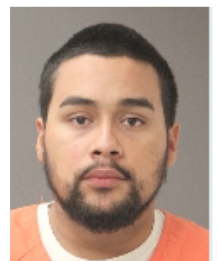
CISNEROS HERNANDEZ- photo Keith County
A judge recently agreed to delay the trial for 24-year-old Jeser Cisneros-Hernandez, of Liberal, Kansas. He’s pleaded not guilty to four counts of vehicular homicide, one of reckless driving and one of failing to drive in his lane.
The new trial date is Oct. 15. Cisneros-Hernandez remains free on bail.
Prosecutors say Cisneros-Hernandez’s vehicle hit two motorcycles carrying two people each on July 1, 2017, near Ogallala.
Authorities say 54-year-old Sheila Matheny and 61-year-old James Matheny, from Bedford, Iowa, were on one motorcycle. The other motorcyclists were 58-year-old Michal Weese and 59-year-old Jerolyn Weese, who lived in Council Bluffs, Iowa.
TOPEKA, Kan. (AP) — A Kansas anti-vaccination group says its membership is growing dramatically since the state added two new vaccination requirements for children returning to school this fall.
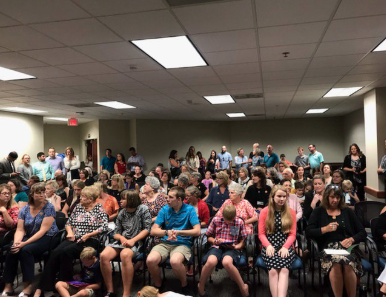
Standing room only on June 27, as Kansas citizens wait to listen and share their opinions on the school vaccine requirements.-photo Immunize Kansas Coalition
As of Aug. 2, Kansas is requiring a meningitis vaccine for students beginning seventh grade and students entering 11th grade who weren’t vaccinated before their 16th birthdays. And students entering kindergarten or first grade need two doses of the hepatitis A vaccine. The vaccines are required for children in public and private schools and are in addition to five other mandated vaccines.
Exceptions are allowed for religious or medical reasons.
Connie Newcome, president of Kansans for Health Freedom, said the nonprofit has grown larger since the Kansas Department of Health and Environment held a hearing on the two new vaccination requirements in June.
“I think most people in Kansas are independent enough that they prefer to make their own family decisions without the government telling them what to do,” said Newcome, a grandmother living outside Hutchinson who says she stopped vaccinating her children decades ago.
The new requirements follow recommendations of the Advisory Committee for Immunization Practices.
“Both of these illnesses are severe and preventable, and the safety profile of the vaccines is well-recognized, in keeping with the CDC (Centers for Disease Control) and other scientific authority,” said Kristi Pankratz, a spokeswoman with the state health department.
Members of the anti-vaccination group told The Star they worry about the pharmaceutical industry’s influence on scientific studies. Many also discussed their children’s illnesses and disorders, which they claim occurred or grew worse after vaccinations — despite research largely showing the contrary.
Christine White, a Johnson County physician, said research shows the benefits of vaccines far outweigh the risks, especially with life-threatening diseases such as meningitis.
“Parents who refuse meningitis (vaccines) often say their children aren’t at risk because they’re homeschooled or aren’t often in group environments. And we try to discuss it only takes one sneeze or one shared drink with a kid who has it to get it,” White said. “I’ve had a few converts with that one. But meningitis scares people. People know that it can kill you.”
In 2017, 72% of Kansas teenagers had been vaccinated against meningitis, lower than the national average of 85%. Kansas ranks sixth from the bottom in meningitis vaccination rates in the country.
Last year, 90% of Kansas children were vaccinated against hepatitis A, due to a previously approved requirement for children in day cares.
DETROIT (AP) — Hunter Dozier and Jorge Soler each homered twice, and the Kansas City Royals beat the Detroit Tigers 10-2 on Sunday for a split of the four-game series between the worst teams in the AL Central.
It was Dozier’s third career multihomer game, all of which have come on the current road trip. He hit two against the Twins on Aug. 2, and then duplicated the feat Thursday in the series opener in Detroit.
Soler went deep four times in the final three games of the series, and Whit Merrifield led off the game with a home run for the second time in three days. The trio combined for 10 homers in the series.
The Royals won their second in a row after losing six of seven. Last-place Detroit fell to 7-23 since the All-Star break.
Jakob Junis (8-10) improved to 7-1 against the Tigers, allowing two runs and six hits in six innings. His seven wins against Detroit in the last three seasons are tied with Corey Kluber for the most in the majors.
Daniel Norris (3-10) allowed three homers in three innings, leaving the Tigers down 4-2.
Merrifield led off with his 14th homer after he opened Friday’s 5-2 loss with an inside-the-park homer against Edwin Jackson. Norris retired the next batter, but Dozier hit his third homer of the series into the Royals’ bullpen in left-center.
Niko Goodrum made it 2-1 in the bottom of the first with his 11th homer, but Soler responded with a two-run drive in the third for his 34th homer.
Soler finished with three hits and five RBIs. He homered again in the eighth against Drew VerHagen and hit a two-run single in the ninth.
HOMER HEAVEN FOR THE ROYALS
Dozier and Soler each have six home runs at Comerica Park this season, more than any Tiger other than JaCoby Jones (seven). Merrifield has four, one more than Miguel Cabrera.
NO SERIES WIN
With a win on Saturday or Sunday, the Tigers would have won just their third home series of the season. They swept the Royals in three games in April and won two of three from Kansas City in May. They are 9-7 against Kansas City this season and 26-73 against the rest of the major leagues.
UP NEXT
Both teams have Monday off before starting a home series on Tuesday. Matthew Boyd (6-8. 4.16 ERA) will start for Detroit against Yusei Kikuchi (4-8, 5.34 ERA) of the Seattle Mariners, while the Royals will have Glenn Sparkman (3-7, 5.71 ERA) starting against the St. Louis Cardinals.
TOPEKA – The Alliance for a Healthy Kansas is hosting a workshop for individuals interested in joining our KanCare Consumer Corps.
We welcome people from all across Kansas who are uninsured or who have struggled to find or pay for health insurance. Your experiences could help thousands of Kansans get access to affordable health care.
At this workshop, you’ll learn how to speak with legislators and the media as a health care consumer and the best way to share your experiences and health challenges.
Participants will receive travel reimbursement, lunch and a financial award for attending. Out-of-town participants will be lodged in a nearby hotel.
What You’ll Get:
Learn how to share your story with legislators and the media
Gain skills for giving legislative testimony
Guidance on fine-tuning your personal story
Travel expenses PAID!
Mileage reimbursement for travel to training
Paid hotel stay, breakfast and lunch
$100 Visa gift card scholarship for attendance
When and Where:
Thursday, Aug. 29
10 a.m. – 2 p.m.
Kansas Leadership Center
325 East Douglas Avenue
Wichita, Kansas 67202
If you have any questions, or for more information, contact Spencer Culver at [email protected]
– SUBMITTED –
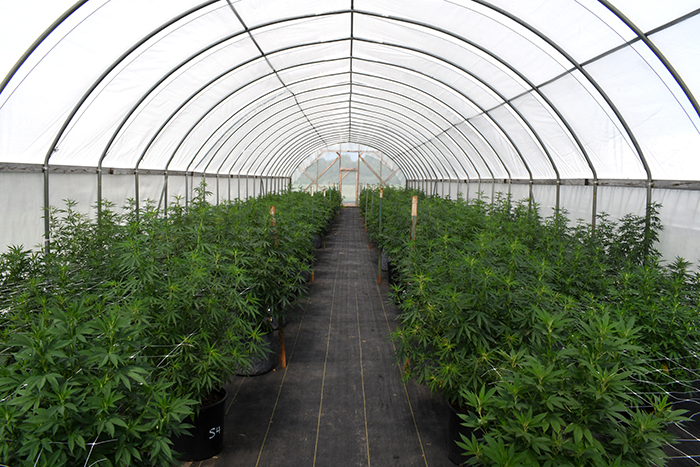
A test crop of industrial hemp grows in a high tunnel at Kansas State University’s John C. Pair Horticulture Center in Haysville.
KSRE
MANHATTAN — The distinctive smell of hemp now wafts through certain test plots at multiple K-State Research and Extension sites across Kansas.
The end goal is to find out whether it’s also the smell of money for farmers seeking a valuable new rotational crop.
The first test crops of industrial hemp have been growing for about two months at the John C. Pair Horticulture Center in Haysville near Wichita, the Olathe Horticulture Research and Extension Center in the Kansas City metro area, and the Northwest Research-Extension Center in Colby.
K-State researchers are seeking answers to many questions, including whether to grow hemp for grain, fiber or CBD (cannabidiol) oil. One can hardly look at a drugstore shelf without seeing CBD as an ingredient in a wide range of products based on its reported health value.
“Right now, the revenue generation is definitely in CBD production, so that’s getting a lot of excitement,” said Jason Griffin, director of the John C. Pair Horticulture Center. But growing hemp for grain, fiber or both, through dual-purpose production, offers what Griffin calls a mind-boggling variety of options.
While some people might think of hemp only in terms of rope, Griffin said hemp uses have expanded far beyond mere ropes. From paper products to flooring materials and even hempcrete – concrete reinforced with hemp fiber to strengthen it – “the uses for industrial hemp are almost limited only by the imagination,” he said.
With all those uses, it’s easy for people to get excited about the prospects of growing hemp. But Griffin recommends caution. “It’s going be an alternative crop to work in with your corn or with your wheat, where you can seed – maybe apply some irrigation, maybe not – but that’s part of the reason we’re doing research to see if dryland industrial hemp will produce as well as irrigated.
“But it is certainly an option for Kansas farmers in the future, for adding a different crop to their rotation.”
K-State Research and Extension is testing several different production techniques, fertilizer treatments, and looking for pests and diseases. In many cases, the test crops are modeled on what Colorado growers have done, including using trellis supports.
The Pair Center is testing 17 different varieties, while the Olathe center planted one variety to observe how multiple environments affect growth.
At both sites, it’s easy to see the plants grown in high tunnels are much more robust than those in open-air beds, but the researchers are seeking far more data points than the “eyeball test.”
Growing well for various end uses is an obvious concern, but another is making sure the plants remain legal and don’t have to be destroyed according to United States drug control laws.
Different kinds of cannabis plants have different uses depending on how much of the chemical compound THC is present. Marijuana has significant levels of THC, which is what produces a high. Industrial hemp, on the other hand, is low in THC which allows for its myriad of uses.
It’s all closely controlled: When test programs launched this year, researchers and independent growers in Kansas had to be licensed by the Kansas Department of Agriculture, which included undergoing a criminal background check and making their fingerprints accessible to the FBI.
The 2018 Farm Bill made all of this possible. Industrial hemp now can be grown in pilot programs under the U.S. Department of Agriculture and state departments of agriculture.
“We’re part of a USDA multi-state industry hemp project, so we have some dual-purpose varieties in the field that we planted with a drill, seeded into the soil,” Griffin said. “We’re going to be looking at grain production; we’re going to be looking fiber production on a per-acre basis; we also have a healthy population of plants for CBD production; we’re looking at fertility in there; we’re also looking at some training systems.”
Noting that K-State scientists are in the infancy of experimentation with the crop, Griffin said they are rapidly gaining time- and cost-saving experience “so that we can get that information out there for the farmers, for the growers who want to grow this, so that they can learn from our mistakes.
“We can make mistakes and give them the good information to let them go forward and grow a healthy crop and let us fail, but the farmers succeed, if that’s what it comes down to.”
KANSAS CITY(AP) — Kansas City authorities are investigating a weekend shooting that killed a boy and wounded a woman.
Kansas City Police said the shooting happened late Saturday in a Kansas City, Missouri, neighborhood. Both the victims were inside when someone fired from outside the home.
Police said the juvenile boy died at a hospital. The woman remained hospitalized Sunday morning with a gunshot wound to her leg.
The victims’ identities were not immediately released
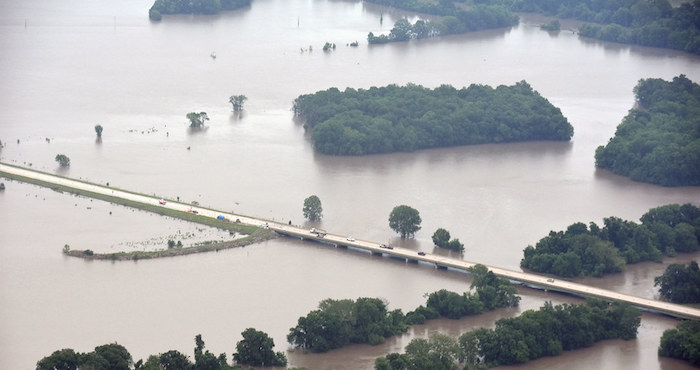
Flooding around the U.S. Highway 169 Neosho River bridge north of Chanute on May 28, 2019. (Photo by Civil Air Patrol – Kansas Wing)
KU NEWS SERVICE
Estimated flood depth grid near the city of Burlington, corresponding to the planned release of 28,600 cubic feet per second from John Redmond Reservoir on May 22, 2019. (Credit: Jude Kastens)
LAWRENCE — When Jude Kastens was developing a new floodplain mapping model more than a decade ago as part of his doctoral dissertation at the University of Kansas, he aimed to address a critical information gap that often hindered officials during major flooding events: the lack of real-time, wide-area predictions for floodwater extent and depth.
Dependable, detailed inundation estimates are vital for emergency managers to have enough situational awareness to quickly get the right resources and information to flood-impacted communities. In 2007, severe flooding in southeastern Kansas put a spotlight on the lack of timely, reliable projections for floodwater spread.
“I worked with the Kansas Water Office in May,” Kastens said. “The ground was saturated, and the reservoirs were getting full, and with a lot more rain in the forecast, major flooding across central and eastern Kansas was looking imminent. Some years ago we’d developed this inundation library largely in collaboration with the Water Office and the Kansas GIS Policy Board but had never had the chance to put it through its paces in real time. It was based on the approach that I developed for my dissertation, and we had flood libraries for the greater eastern half of Kansas, based on the gauged stream network. For instance, if you drive south of Lawrence on Highway 59, you’ll see a USGS stream gauge box by the bridge over the Wakarusa River.
There are about 200 gauges in Kansas that collect real-time stream stage information, and in times of flood, the National Weather Service provides stage forecasts several days out for a lot of these. We can take these data and map estimated current or future flooding, between gauges or around one.”
Kastens’ model (called FLDPLN, or “Floodplain”) maps potential inundation as a function of stage height using basic hydrologic principles and gridded elevation data. Because the approach requires so few inputs and little supervision, it has significant advantages for real-time mapping over existing methods such as the more precise but more complicated hydrodynamic models that FEMA uses to map 100-year floodplains.
Working with Kansas officials as historic rainfalls of 2019 threatened several areas of Kansas with flooding, mapping efforts were focused on three critical locations.
“We modeled the Neosho River south of John Redmond Reservoir in Coffey County down to Oklahoma, which is about a 100-mile stretch,” Kastens said. “We also modeled the Neosho and the Cottonwood rivers above John Redmond, centered around Emporia close to where those two rivers come together in Lyon County. The third area was around Salina, where flooding along the Saline River and Mulberry Creek was approaching historic levels.”
When John Redmond Reservoir just above Burlington on the Neosho River was nearly at capacity and the Army Corps of Engineers was planning the release of large volumes of water, Kastens’ efforts helped inform local leaders of the potential flooding extent — and they shared his flood maps with the public.
“Using projected discharge and stage information from the Corps, we modeled Neosho River flooding at Burlington and down through the rest of Coffey County,” Kastens said. “John Redmond was built by the Corps in the early 1960s to provide flood control along the Neosho, but the reservoir flood pool had reached capacity and needed to have some pressure released to avoid compromising the dam. With the Neosho already running high, city managers and commissioners had a lot of concern with how bad it was going to get because the Army Corps was going to have start releasing a very large quantity of water out of the reservoir. I made some maps using Corps projections supplied by the Kansas Water Office and also by the Coffey County GIS coordinator, Cara Mays. It helped greatly that Cara recently completed her master’s thesis at KU using the FLDPLN model to simulate the historic 1951 flood in Burlington, so she was well aware of its capabilities.”
Going forward, Kastens — who did a lot of this work during his free time in the evenings and weekends as a public service — hopes to automate the task of generating flood maps to lessen the workload when streams and rivers threaten to overspill their banks.
“With my other obligations at KBS, a lot of off-the-clock effort was needed to see this through,” he said. “Time is of the essence during major flood events. We need to develop software tools to help automate the mapping process and hand it off to these other agencies so they have the freedom to map whichever scenarios they want. I think our work in May demonstrated the value of our mapping approach, and hopefully we can pull together a project to help us move forward with the automation. So, when that next flood hits, emergency response personnel can just run the models as they see fit. That’s how we always envisioned this thing — we construct the inundation libraries for others to use during flood emergencies or simulations.”
Kastens’ novel approach to flood mapping has proven to be such an improvement, recently he’s worked with a private firm to commercialize the technology and provide services outside of Kansas to emergency management officials and entities with property in flood-prone areas.
“In 2015, we entered an agreement with Riverside Technology Inc. based in Fort Collins, Colorado, working through KU Center for Technology Commercialization to try to commercialize this stuff,” Kastens said. “They did their homework and market research and saw a real opportunity to develop inundation mapping solutions built around our flood libraries. Our contract with Riverside expires next year, so we will just have to see what happens after that. We made sure we carved out Kansas from the agreement, which allows us the freedom to provide direct assistance during flood events like we did in May.”
Kastens likens the projected inundation maps to predicted storm tracks or tornado watch or warning maps.
“They are never perfectly accurate, but then again neither are more sophisticated models. No two floods are the same, and a lot of resources are being expended in the public and private sectors to do what we are already capable of doing cheaply and efficiently right now here in Kansas.”
The Kansas Biological Survey, a KU Designated Research Center, was established at KU in 1911. It houses a diverse group of environmental research and remote sensing/GIS programs. The survey also manages the 3,700-acre KU Field Station, established in 1947; it offers sites for faculty and student study in the sciences, arts, humanities and professional schools.
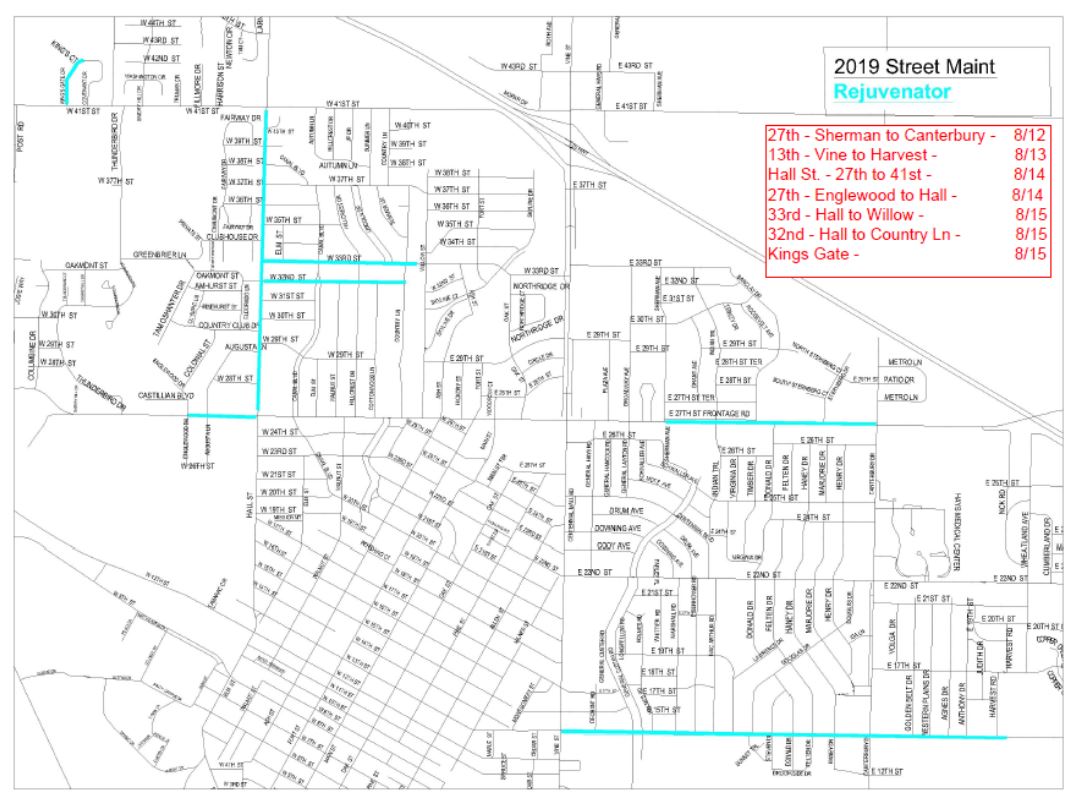
Please be advised that beginning Monday, August 12, 2019, Proseal Inc. will begin application of an asphalt rejuvenator on various street throughout the city of Hays. See map below for street locations and anticipated dates.
The asphalt rejuvenator is a preservative seal that is used on newer asphalt streets that do not yet warrant more advanced treatment.
On the date scheduled for treatment, all cars need to be moved from the street by 8:00 a.m. Streets being sealed will be closed or partially closed for a short duration during the time of the application. Access can be achieved in cases of emergency. Parking on adjacent streets is recommended during the daytime. Parking in driveways is okay if you DO NOT plan on moving the vehicle during the daytime hours.
After application, the surface should not be driven on until the fine overlay of sand is applied. If tracked upon before curing is complete, the product may stain surfaces such as concrete, carpet, or flooring if tracked from construction areas.
Please have all lawn watering devices turned off the evening before the scheduled date. Please help keep the streets clean and dry for a smooth and lasting project.
Traffic control will be set in areas of work being completed and picked up by the end of the work day. This project is scheduled to be completed by August 16 (pending weather conditions).
The city of Hays regrets any inconvenience this may cause to the public. If there are any questions, please call the Office of Project Management at 628-7350 or the contractor, Proseal Inc at (877) 650-9805.
SEDGWICK COUNTY — Law enforcement authorities are working to prevent inmates from making and hiding dangerous weapons at the Sedgwick County jail.
On Thursday, the Sedgwick County Sheriff’s office conducted a search of all 22 pods in the detention facility, according to Lt. Tim Myers. One hundred employees of the Sedgwick County Sheriff’s Office searched the entire Detention Facility, which included 1,158 jail beds, and 1,164 jail inmates. The search was conducted for the safety and security of the employees working in the detention facility and for the inmates housed in the facility.
During the past 4 months, Sedgwick County Sheriff personnel in the detention facility have seen an increase in the number of dangerous weapons found during routine cell searches. The safety and security of our employees and the inmates housed in our facility is paramount.
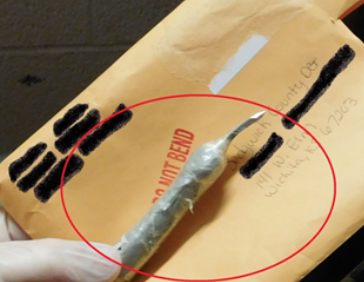
During Thursday’s search, authorities found 3 dangerous weapons in the facility, according to Myers. They also located one metal outlet cover that is commonly fashioned into a weapon.
Photos courtesy Sedgwick Co. Sheriff
These dangerous weapons are commonly referred to as “shanks.” The weapons are typically fashioned by inmates out of common materials, such as a door strike plate or an outlet cover.
Myers said, “We apologize to the citizens of Sedgwick County for the interruption of any of their scheduled visitation time, but the safety and security of our employees and the inmates is our top priority. We are also reviewing preventative ways to combat dangerous weapons being made in the facility.”
Through outings and conversation, mentors for the Empower Families Kansas Project teach children ages 8 to 18 how to trust adults again. (Walter/Creative Commons 2.0)
TOPEKA — Courtney Train spends her days going to nail salons, the pool and the dog park.
As a paid mentor and advocate for children ages 8 to 18 who’ve seen domestic violence at home or experienced it while dating, Train knows quality time — and fun — with a trusted adult can be in short supply for her clients.
So, she talks to them about safer sex. She analyzes media portrayals of relationships. She’s also taken them to the zoo, on college visits and to a county fair art competition.
“The idea of childhood is stolen from them,” Train said. “For them to just play, not have to think about adult issues, it’s really powerful.”
Domestic violence centers across Kansas are often ill-equipped to serve the needs of older children and teens, instead focusing on shelter for adult survivors and the young children they bring with them.
“It’s easy for us to think, ‘Oh, teens aren’t an issue,’” Train said. “It does not seem like there’s a lot of information and support out there.”
But thanks to a pilot project, Train, based in Salina, is one of six mentors at five domestic violence organizations across Kansas who have worked with older children and teenagers over the past two years.
The coalition said results from the first two years are hard to quantify, but look to be promising. It plans to expand the pilot to cover more of the state over the next year.
The mentors, like Train, help connect children with therapists. Older children receive guidance on career paths. That kind of long-term, individual attention is rare.
“Our services are crisis-oriented,” said Kathy Ray, director of advocacy education and rural projects at the Kansas Coalition Against Sexual and Domestic Violence. “But it’s often short term.”
In surveys, kids involved in the program and their parents say they’ve seen an improvement in grades, emotional control and communication between family members.
Rebuilding trust in adults is crucial, Ray said, because it helps children trust their parents again.
“Those relationships have often been undermined by the batterer, by the abuser,” she said. “So it’s helping to rebuild that communication and relationship with the non-abusive parent.”
Train has mentored about 15 children since she started her role in December 2017. She said she’s taught them to give compliments, play games and trust family again.
“Usually at first, when I start working with the kids, they do not like their sibling. They’re screaming at each other,” she said. “It’s been over a year, and the mom will tell me, ‘Oh my gosh, they’re getting along and it’s a completely different household.’”
It’s common for domestic violence programs across the country to lack services specifically for older children and teenagers, said Baonam Giang of Break the Cycle, a national organization that specializes in combating teen dating violence. Parents often don’t want to admit their children are dating, so they don’t know if they need to seek help.
“We know that young people are dating whether you choose to believe it or not,” he said. “They’re having relationships in school.”
Abuse among teens often manifests in digital form, through cyberbullying or sharing explicit photos without consent. Violence in relationships is especially common for teens whose own parents have been abusive.
That makes relationships with other adults especially important, Giang said.
“It’s really modeling to them what a healthy relationship is that they can see,” he added.
If those lessons are never taught, it can become a cycle, where a child witness to domestic violence can later become a perpetrator. Or the child can suffer from the effects of trauma well into adulthood.
“It’s such a pivotal time in a person’s life,” Train said. “That’s where they decide the types of behaviors that they’ll have, the types of relationships that they’ll get into.”
Nomin Ujiyediin reports on criminal justice and social welfare for the Kansas News Service. Follow her on Twitter @NominUJ or email [email protected].
The Kansas News Service is a collaboration of KCUR, Kansas Public Radio, KMUW and High Plains Public Radio focused on the health and well-being of Kansans, their communities and civic life.